


Mengkaji Pola Tenun: Dari Pola Sederhana hingga Neps

Mengkaji Pola Tenun: Dari Pola Sederhana hingga Neps
Waktu pembacaan perkiraan: sekitar 5 menit. Pendahuluan: Pola tenun merupakan tulang punggung desain tekstil yang memengaruhi tampilan, tekstur, dan kinerja kain. Mulai dari pola tenun sederhana hingga pola yang lebih kompleks...
Ringkasan Pembeli
Pengetahuan tentang proses produksi dan penyelesaian produk membantu pembeli mengurangi risiko pengambilan sampel, memahami hal-hal yang secara teknis layak dilakukan, serta menyampaikan persyaratan dengan lebih jelas kepada pabrik.
- Pembeli yang sesuaiMerek mode, tim pengadaan, pengecer grosir, pabrik pakaian, dan pengembang produk.
- Apa yang perlu dikonfirmasiProduk target, arah tekstur kain, finishing, kebutuhan sampel, jumlah, dan pasar pengiriman.
- Risiko pembeliSpesifikasi yang tidak jelas dapat menyebabkan pengambilan sampel yang salah, kualitas produk secara keseluruhan yang tidak stabil, serta proses penentuan harga yang lambat.
- CTA yang DirekomendasikanPermintaan sampel atau penawaran harga sebelum memutuskan untuk memproduksi dalam jumlah besar.
Mengapa Hal Ini Penting bagi Pembeli B2B
Konfirmasi batas proses, standar pengujian, langkah persetujuan sampel, serta konsistensi produk dalam jumlah besar sebelum produksi.
Waktu pembacaan perkiraan: sekitar 5 menit. Pendahuluan: Pola tenun merupakan tulang punggung desain tekstil yang memengaruhi tampilan, tekstur, dan kinerja kain. Mulai dari pola tenun sederhana hingga pola yang lebih kompleks...
Tabel Spesifikasi untuk Pengadaan yang Lebih Cepat
| Titik keputusan | Opsi untuk membandingkan | Mengapa Ini Penting | Pertanyaan pembeli |
|---|---|---|---|
| Tujuan Pembeli | Penelitian, permintaan sampel, pengembangan produk, dan pengadaan massal | menjelaskan apa yang seharusnya dapat dibantu pembaca melalui artikel ini selanjutnya | Keputusan apa yang perlu diambil oleh pembeli? |
| Penerapan produk | Jeans, jaket, kaus, rok, pakaian jalanan atau pakaian kerja | Menghubungkan pengetahuan dengan kebutuhan produksi yang nyata | Di mana kain atau teknik ini akan digunakan? |
| Kustomisasi | Warna, berat, komposisi, permukaan, pola, atau dekorasi | Mengubah proses membaca menjadi ringkasan pengumpulan informasi | Apa yang perlu disesuaikan? |
| Langkah Selanjutnya | Swatch, panjang sampel, penawaran harga, konfirmasi QC | Mendorong pembaca untuk melakukan penyelidikan lebih lanjut | Informasi apa yang perlu dikirimkan kepada pemasok? |
Aplikasi dan Opsi Khusus
Pengembangan Produk
Gunakan panduan ini untuk mengubah ide desain menjadi spesifikasi terkait kain, pakaian, finishing, dan sampel.
Perbandingan Pemasok
Bandingkan para pemasok berdasarkan dukungan sampel, kejelasan teknis, stabilitas dalam jumlah besar, dan kecepatan komunikasi.
Produksi Massal
Konfirmasi standar kualitas, sampel yang telah disetujui, dan jadwal waktu sebelum mengajukan pesanan produksi.
Kontrol Kualitas Points Before Bulk Order
- OKPersetujuan sampel: Konfirmasi bahan kain, warna, tekstur permukaan, struktur, dan finishing sebelum produksi massal dimulai.
- OKKonsistensi massa: Bandingkan sekelompok sampel secara keseluruhan dengan sampel yang telah disetujui dalam kondisi pencahayaan dan pengujian yang sama.
- OKPengujian kinerja: Periksa penyusutan, ketahanan warna, pemulihan setelah regangan, atau ketahanan dekorasi bila relevan.
- OKKlaritas kutipan: Sertakan jumlah pengiriman, destinasi, kebutuhan kemasan, dan waktu penyelesaian yang diharapkan untuk menghindari penetapan harga yang tidak jelas.
Proses Pengembangan Sampel
| Langkah | Pembeli menyediakan… | Pemasok telah mengonfirmasi. |
|---|---|---|
| 1. Ringkasan | Aplikasi, gambar referensi, kualitas dan jumlah target | Kelayakan, bahan yang direkomendasikan, dan opsi khusus |
| 2. Contoh kain | Umpan balik mengenai warna, tekstur permukaan, pola, atau finishing yang diinginkan | Stok yang tersedia, arahan khusus, dan biaya sampel |
| 3. Sampel | Rencana pengujian pakaian, besaran atau panjang yang dibutuhkan | Jadwal pengambilan sampel dan reproduktivitas produksi |
| 4. Penawaran grosir | Jumlah pesanan, tujuan pengiriman, dan kebutuhan kemasan | Harga per unit, MOQ, waktu pengiriman, dan titik pemeriksaan QC |
Panduan Rinci
Waktu baca perkiraan: ~5 menit
Pendahuluan
Pola tenunan merupakan fondasi utama dalam desain tekstil, yang memengaruhi tampilan, tekstur, serta kinerja kain. Mulai dari pola tenunan sederhana hingga pola yang lebih kompleks seperti jacquard dan neps, masing-masing memiliki karakteristik dan aplikasi yang unik. Blog ini akan membahas delapan pola tenunan utama, memberikan wawasan mengenai sifat dan penggunaannya berdasarkan pengetahuan tekstil tahun 2025.
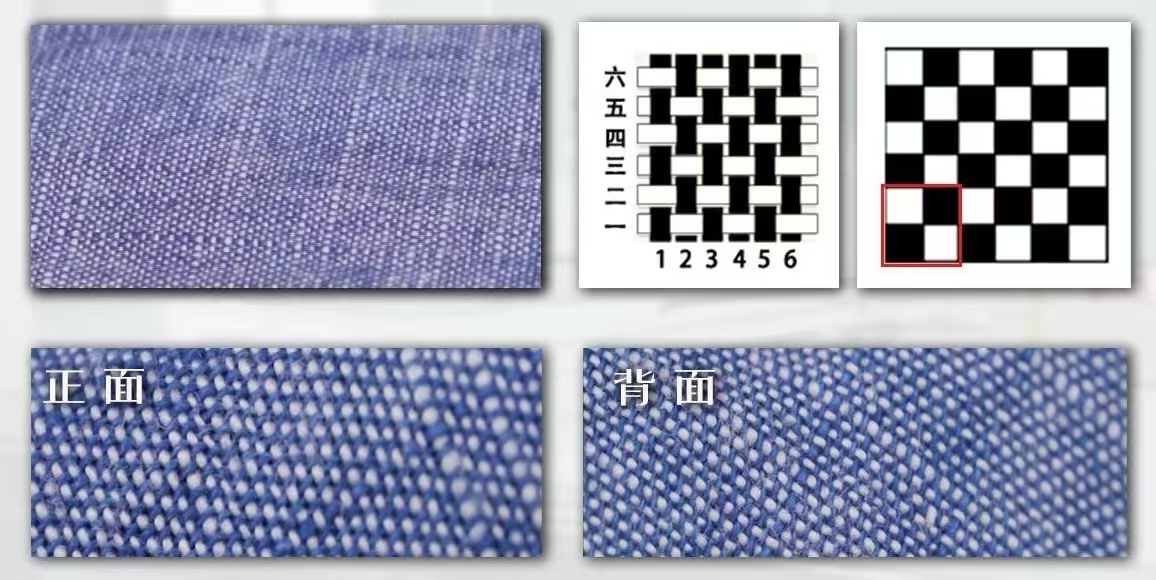
- Deskripsi Tekstur Tenunan Biasa: Tekstur paling dasar, di mana benang warp dan weft saling bersilangan secara bergantian—satu berada di atas dan satu lagi di bawah. Sifat-sifatnya: permukaan datar dan halus; jumlah titik persilangan yang banyak; relatif kaku; elastisitas rendah; kilau lemah; umum digunakan pada bahan tipis. Aplikasinya: banyak digunakan untuk kemeja kasual dan bahan pakaian anak muda, terutama pada kain seperti denim yang menunjukkan kesan kerutan ringan setelah dicuci, sangat cocok untuk pakaian sehari-hari. Tautan Eksternal: Pelajari lebih lanjut tentang tenun biasa

Tenun Polos
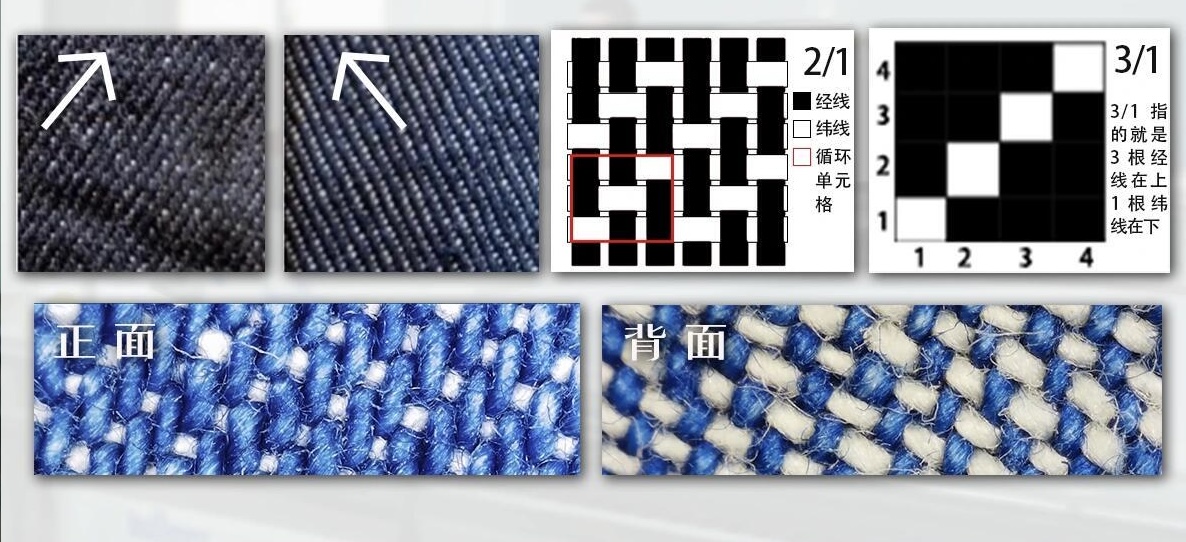
- Deskripsi Tekstur Twill: Benang warp dan weft saling bersilangan setiap dua atau tiga benang, membentuk pola diagonal, dengan jenis umum seperti 3/1, 2/1, dan 2/2 twill. Karakteristiknya meliputi tekstur diagonal, jumlah titik persilangan yang lebih sedikit dibandingkan tekstur biasa, permukaan yang transparan, perbedaan signifikan antara sisi depan dan belakang, ketebalan serta kelembutan yang lebih tinggi, serta ketahanan terhadap kerutan yang baik.Subtipe: Twill kanan (Z twill, membentuk diagonal dari sudut kiri bawah ke kanan atas) dan twill kiri (S twill, membentuk diagonal dari sudut kanan bawah ke kiri atas); twill kiri memiliki tekstur yang lebih lembut dan volume yang lebih besar. Aplikasi: Celana, jas, dan kemeja, yang dihargai karena ketahanan serta estetika. Tautan Eksternal: Eksplorasi tenun twill
Tekstil Twill
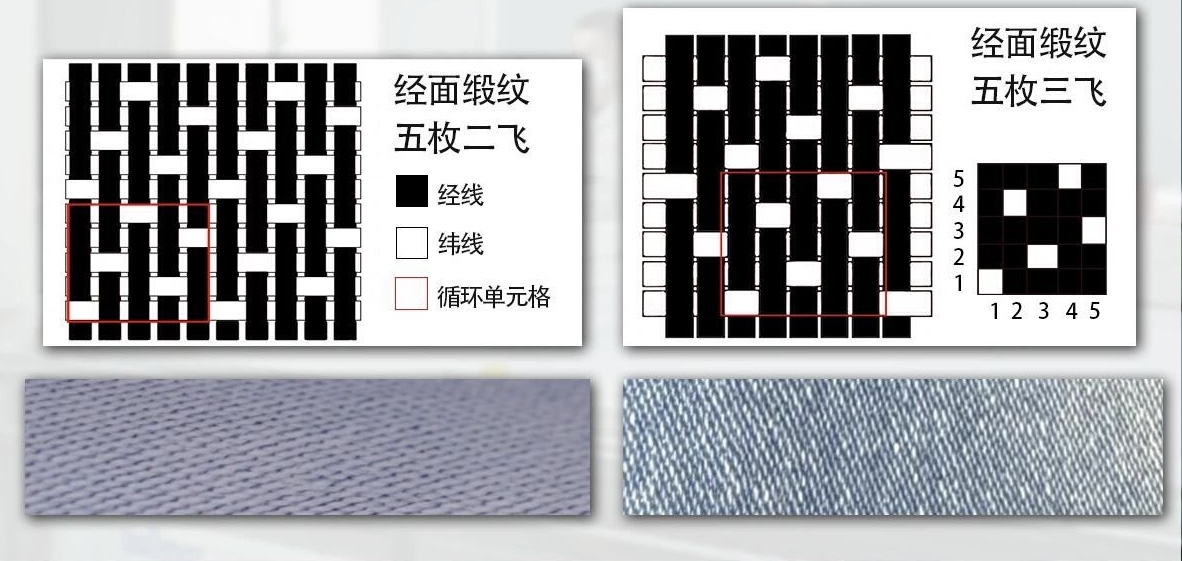
- Deskripsi Tekstur Satin Weave: Benang warp dan weft saling bersilangan pada jarak empat helai atau lebih, dengan permukaan yang sebagian besar ditutupi oleh benang warp; tekstur ini sering digunakan dalam jeans lurus. Sifatnya: tekstur diagonal namun tidak kontinu, jumlah titik persilangan terbatas, permukaan halus dan mengilap, tekstur lembut dengan daya tarik visual yang baik, namun rentan menghasilkan bulu halus atau tersangkut akibat benang yang panjang. Aplikasi: sangat ideal untuk celana pas, elastis, atau ramping, yang menonjolkan kelenturan serta kilau khas.Catatan Teknis: Istilah seperti “end” (panjang dan lebar sel unit yang berulang) dan “pick” (jumlah benang weft antara titik pengaitan) sangat penting; misalnya, satin warp dengan struktur lima ujung dan dua benang di setiap baris. Tautan Eksternal: Baca tentang tenun satin
Tekstur tenun satin
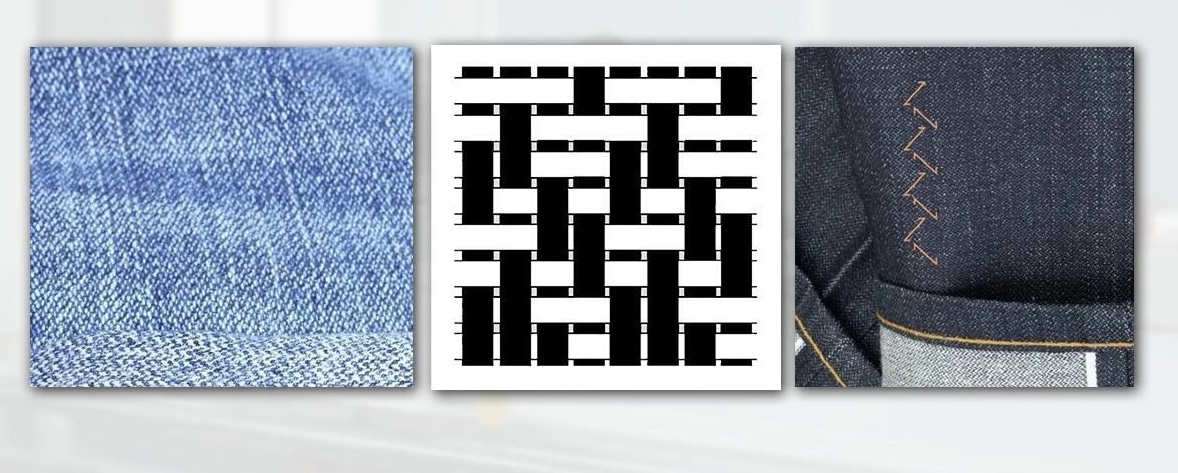
- Struktur Herringbone (Turunan Twill): Variasi dari tenun twill yang menghasilkan pola zigzag atau menyerupai tulang ikan, simetris sepanjang sumbu tengah. Sifat-sifatnya meliputi pola berbentuk “V” atau zigzag, tekstur yang jernih, kesan tiga dimensi dan sensasi sentuh yang khas, ketahanan terhadap kerutan yang baik serta kemampuan merata yang optimal, serta pengurangan distorsi kain. Perbedaan varian terletak pada tekstur sentuhan tangan yang bergantung pada ketebalan benang dan kepadatan tenunan; benang yang lebih kasar dan tenunan yang lebih padat menghasilkan tekstur yang lebih nyata serta struktur yang lebih kaku, sedangkan benang yang lebih halus menghasilkan kain yang lebih lembut.Aplikasi: Umum digunakan pada jas, jaket, dan celana jeans; akar sejarahnya dapat ditelusuri hingga masa Romawi, dan awalnya digunakan untuk pembangunan jalan raya. Tautan Eksternal: Temukan pola herringbone
Struktur berbentuk tulang ikan (turunan dari struktur twill)
- Deskripsi Tekstur Twill yang Rusak: Menggabungkan teknik tenunan twill kanan dan kiri, dengan benang pendamping bergantian di sisi kiri dan kanan setiap dua benang utama, menghasilkan pola zigzag terputus-putus atau menyerupai jaring. Sifat-sifatnya: Tidak menunjukkan pola arah yang jelas pada permukaannya; teksturnya dan rasa sentuhnya mirip dengan denim twill 3/1; mampu mengurangi distorsi kain dengan memecah tekanan seragam, sehingga deformasi yang terlihat setelah pencucian atau penyusutan menjadi minimal. Aplikasi: Digunakan dalam kain denim untuk menjaga bentuk dan mengurangi penyusutan. Tautan Eksternal: Untuk informasi lebih lanjut, lihat informasi umum tentang twill.
Tisu twill yang rusak
- Jacquard (Dobby Weave): Deskrripsi: Hibrida modern yang menggabungkan desain denim tradisional dengan teknik jacquard ala Timur, memungkinkan terciptanya berbagai pola dan desain. Kualitasnya meliputi kemampuan menciptakan pola bunga atau geometris yang beragam, garis yang halus, tingkat keversatilan yang tinggi, serta kompleksitas pola yang bervariasi tergantung pada jenis mesin tenun.Jenis-jenisnya meliputi: jacquard kecil (dobby, dengan variasi pola terbatas, menampilkan tekstur atau titik berwarna yang halus dan seragam), jacquard besar (memiliki kemampuan pola yang luas, sangat ideal untuk pakaian kasual), dan jacquard sulaman (pola disulam langsung ke permukaannya). Aplikasinya: pakaian kasual dengan tekstur yang jelas terlihat, terutama pada kain denim. Tautan Eksternal: Pelajari tentang teknik jacquard
Kain jacquard
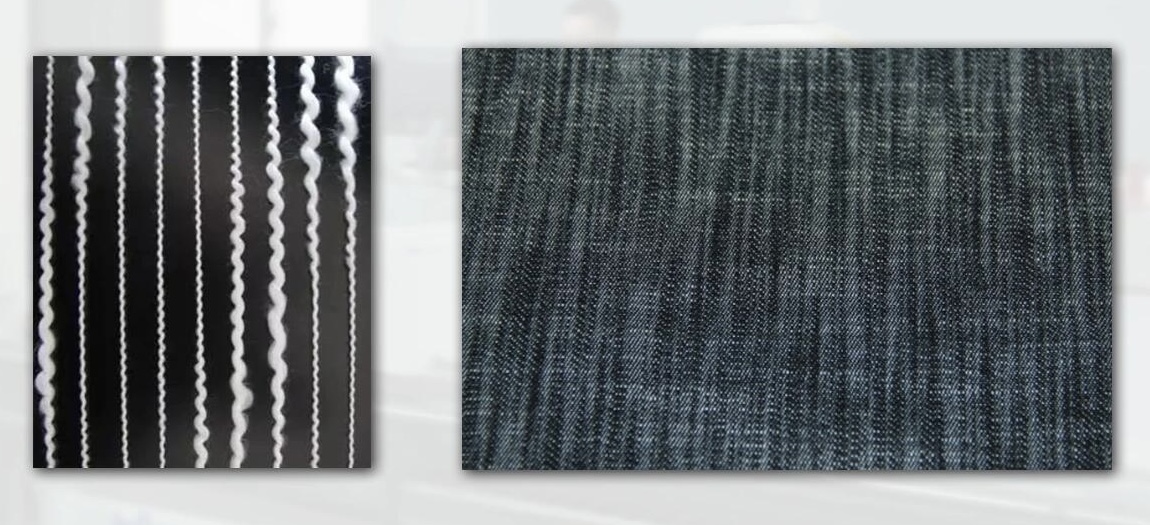
- Deskripsi Tekstur Slub: Awalnya merupakan cacat, kini sengaja diciptakan dengan memintal benang berbeda panjang dan ketebalan untuk meniru simpul bambu, menghasilkan bintik-bintik putih yang menonjol membentuk garis vertikal. Sifat: tekstur tidak teratur dengan tampilan retro dan bergaya tekstur; jika dipintal secara konsisten, dapat menghasilkan pola teratur seperti tetesan hujan yang tersebar, daun willow yang padat, awan, atau efek kabur. Aplikasi: Digunakan pada kain denim untuk menciptakan gaya vintage yang unik serta meningkatkan daya tarik visual. Tautan Eksternal: Periksa benang slub
Tekstur Slub
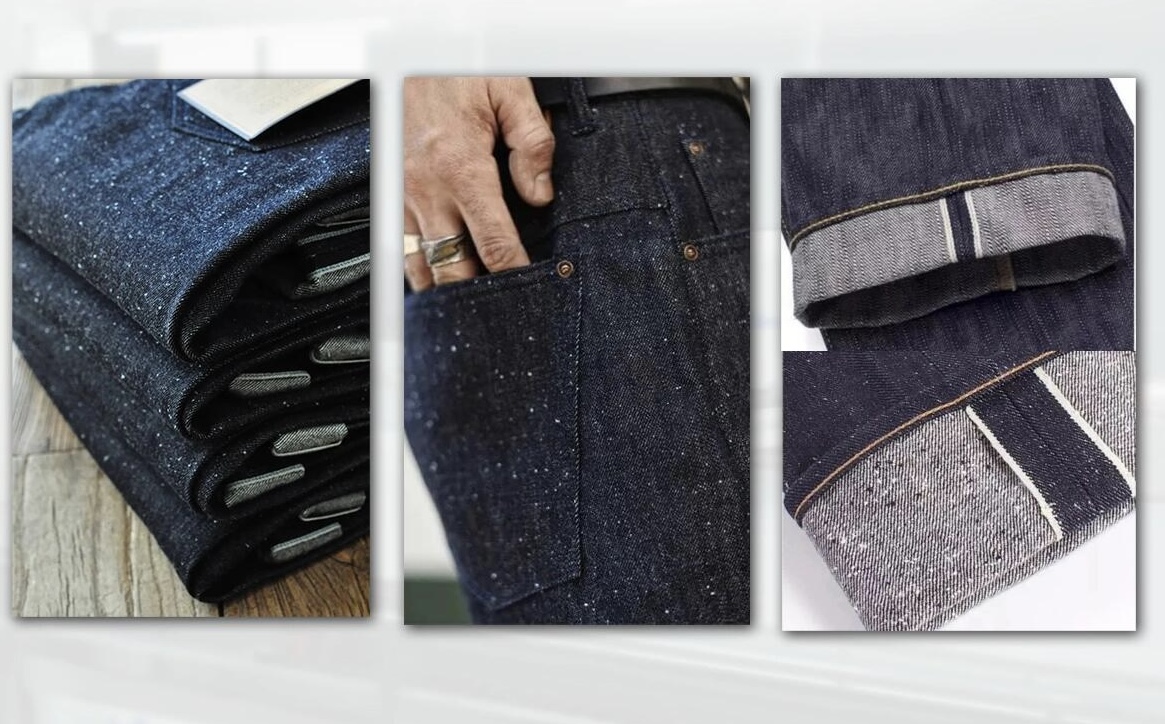
- Deskripsi Tekstur Neps: Sebelumnya merupakan cacat yang disebabkan oleh kotoran atau ketidakseragaman panjang serat selama proses carding, yang menghasilkan simpul kapas yang saling terjalin; kini kadang digunakan untuk menciptakan efek estetika tertentu. Sifat: lebih menonjol dibandingkan tekstur slub, dengan partikel putih halus yang tampak seperti butiran salju pada kain denim; simpulnya terlihat lebih besar dan jelas di sisi belakang. Aplikasi: meningkatkan tekstur dan daya tarik visual kain denim, serta memberikan kesan estetika yang unik. Tautan Eksternal: Eksplorasi Neps
Tekstur Neps


Tabel Perbandingan
Berikut adalah ringkasan pola tenun untuk memudahkan perbandingan:
| Nama Pola | Tekstur | Titik Interleaving | Perasaan saat menyentuh | Aplikasi |
|---|---|---|---|---|
| Tenun Polos | Rata dan halus | Tinggi | Kaku | Kemeja kasual |
| Tekstil Twill | Diagonal kain | Lebih sedikit daripada yang biasa | Lebih lembut, lebih tebal | Celana, jas |
| Tekstur tenun satin | Rata dan mengilap | Banyak | Lembut, memiliki tekstur yang baik | Celana yang sudah disesuaikan ukurannya |
| Struktur berbentuk tulang ikan herring (herringbone structure) | Zigzag dan efek 3D | Lebih sedikit daripada yang biasa | Ber tekstur dan bersifat sentuh | Setelan pakaian, jaket |
| Tisu twill yang rusak | Tidak ada arah yang jelas. | Serupa dengan 3/1 twill | Serupa dengan 3/1 twill | Denim |
| Kain jacquard | Beragam dan kompleks | Tergantung pada pola | Tergantung pada pola | Pakaian kasual |
| Tekstur Slub | Bintik-bintik yang menonjol, tidak beraturan | Tidak teratur | Ber tekstur | Denim dengan gaya vintage |
| Tekstur Neps | Partikel fuzzy, tidak teratur | Tidak teratur | Ber tekstur | Denim dengan tekstur yang ditingkatkan |
Kesimpulan
Memahami pola tenun sangat penting untuk menghargai seni dan ilmu di balik produksi tekstil. Setiap pola memiliki karakteristik unik, mulai dari pakaian sehari-hari hingga aplikasi khusus pada bahan denim. Hingga tahun 2025, teknologi tenun terus berkembang, dengan alat desain digital dan material baru yang memperkaya kualitas pola; meskipun demikian, pola-pola klasik tetap sangat penting.
Seruan untuk Bertindak
Kami sangat antusias mendengar pendapat Anda! Pola tenun mana yang paling Anda sukai, dan mengapa? Bagikan pemikiran Anda di kolom komentar di bawah. Jangan lupa berlangganan newsletter kami untuk mendapatkan artikel-artikel menarik tentang tekstil dan mode. Hubungi kami di Malone@lydenim.com atau kunjungi www.lydenim.com untuk nasihat ahli dan solusi yang disesuaikan dengan kebutuhan Anda.
layanan personalisasi dari LYDENIM
🎨 Ingin Bahan pakaian khusus dari bahan denim atau unik Pakaian dari bahan kain khusus yang dibuat sesuai desainLYDENIM berspesialisasi dalam menyediakan solusi yang disesuaikan secara khusus untuk memenuhi kebutuhan desain dan produksi Anda.
🛍️ Eksplorasi dan dapatkan inspirasi.Jelajahi koleksi kain kami dan temukan ide desain yang menarik. LYDENIM.
🌐 Pakaian ElastisLihatlah produk kami di MyAlibaba. 📩 Hubungi kamiHubungi kami di Malone@lydenim.com.
Buat karya luar biasa dari bahan denim dengan LYDENIM—mitra andal Anda untuk Bahan pita elastis dan Solusi pakaian khusus berbahan denim.
Pertanyaan umum
Apakah ini dapat disesuaikan dengan merek atau koleksi saya?
Ya. Kirimkan aplikasi Anda, gambar referensi, kualitas yang diinginkan, jumlah, serta persyaratan pasar agar pemasok dapat merekomendasikan pilihan bahan, produk pakaian, atau proses penyelesaian yang sesuai.
Informasi apa yang perlu saya kirimkan sebelum meminta penawaran harga?
Siapkan jenis produk, bahan atau teknik yang digunakan, arah warna, kebutuhan sampel, jumlah, negara tujuan, serta waktu pengiriman yang diperkirakan.
Apakah saya harus meminta sampel sebelum produksi massal?
Ya. Penggunaan sampel warna dan ukuran sampel dapat mengurangi risiko sebelum melakukan pesanan dalam jumlah besar, terutama ketika kualitas warna, tekstur permukaan, daya regangan, penampilan akhir, atau dekorasi menjadi faktor penting.
Bagaimana cara saya menghindari masalah kualitas pada pesanan dalam jumlah besar?
Setujui standar sampel yang jelas, tentukan persyaratan pengujian, konfirmasi toleransi, dan bandingkan hasil produksi massal dengan sampel yang telah disetujui sebelum pengiriman.
Butuh bantuan untuk mengubah ini menjadi dokumen pengadaan yang siap digunakan dalam produksi?
Kirimkan produk target, jenis kain, jumlah, serta kebutuhan sampel Anda. LY Denim dapat membantu membandingkan berbagai pilihan dan menyusun penawaran harga.