


Custom Hoodie Maker Guide-Custom Your Hoodies
Estimated reading time: ~4 minutes
In today’s competitive streetwear and casual apparel market, finding the right custom hoodie maker is one of the most important decisions for building a successful brand. Many emerging and growing brands face challenges when developing new hoodie collections — from selecting the ideal fabric weight to navigating production processes and avoiding costly mistakes that lead to poor quality or delays.
This comprehensive guide serves as a practical, educational resource for working with a professional custom hoodie maker. It dives deep into fabric weights ranging from lightweight 190 GSM to ultra-heavyweight 600 GSM, explores key manufacturing and customization processes, highlights current design trends, addresses common production challenges, and offers actionable solutions.
Whether you already have an established line and are looking for a more flexible or reliable supplier, or you are scaling your first major hoodie release, understanding these fundamentals will help you communicate effectively with manufacturers, reduce risks, and create high-quality custom hoodies that resonate with your customers.
custom hoodie maker
Fabric Weights Explained – Choosing 190-600 GSM for Your Custom Hoodies
GSM (Grams per Square Meter) is the standard unit used to measure fabric density and weight. It tells you how many grams one square meter of fabric weighs. Higher GSM values indicate thicker, denser, and generally warmer and more durable fabrics, while lower GSM fabrics are lighter and more breathable.
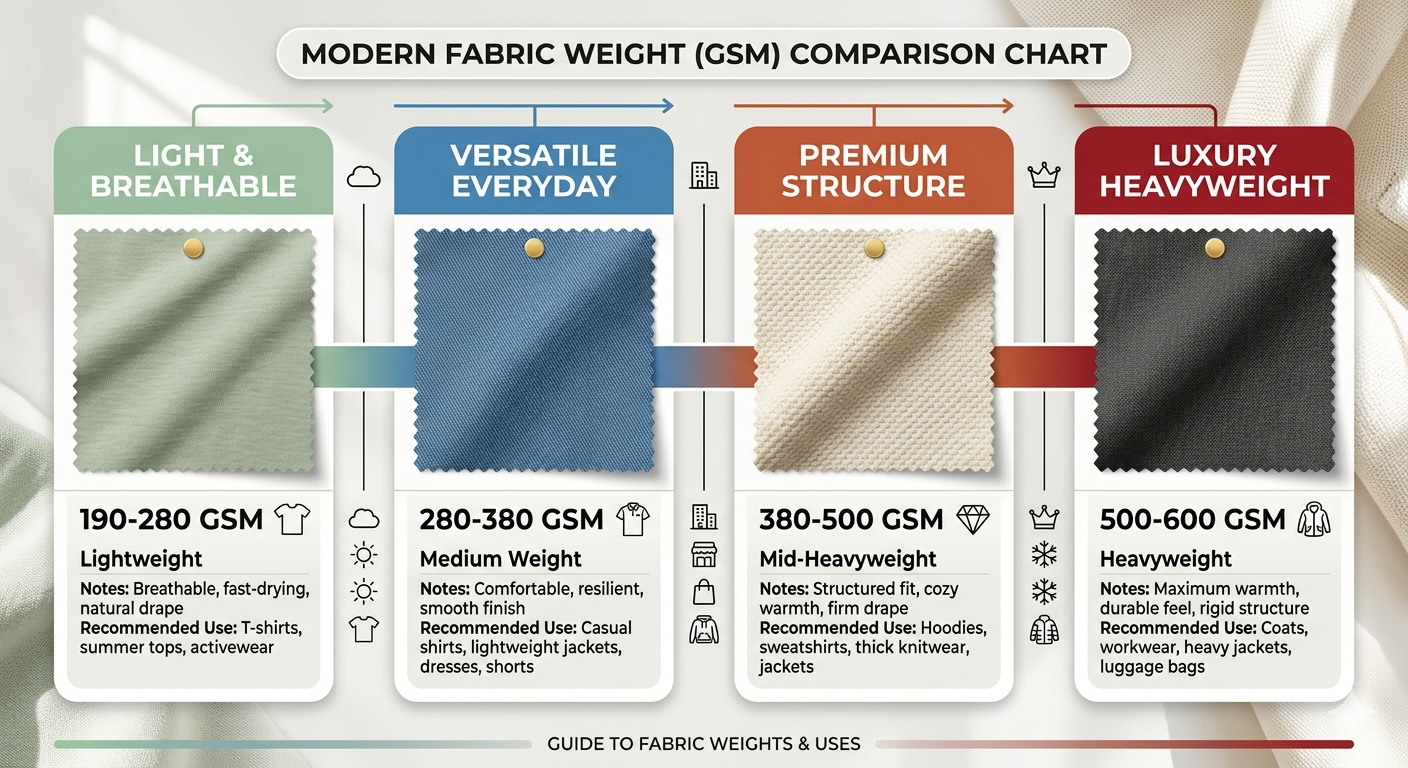
A skilled custom hoodie maker will guide you through GSM selection because it directly impacts the final product’s hand-feel, performance, and market positioning. Here’s a practical breakdown of the 190-600 GSM range commonly used for hoodies and matching t-shirts:
- 190-280 GSM (Lightweight): These fabrics feel soft and breathable, making them excellent for spring/summer layering pieces, light hoodies, or transitional wear. They drape nicely and are comfortable for active or warmer climates, but they offer less structure and warmth.
- 280-380 GSM (Mid-weight): This is the most versatile and popular range for everyday custom hoodies and coordinated t-shirts. It strikes an excellent balance between softness, durability, and cost-effectiveness, performing well across seasons.
- 380-500 GSM (Heavyweight): Preferred for premium streetwear hoodies, these fabrics provide excellent structure, shape retention, and a substantial, luxurious hand-feel. They deliver better warmth and durability, making them ideal for colder weather or brands seeking a high-end perception.
- 500-600 GSM (Ultra-heavyweight): This range represents luxury territory. Ultra-heavy fabrics create oversized hoodies with maximum warmth, durability, and a premium “weighty” drape. They feel substantial and high-quality but can be stiffer and require more careful handling during printing and sewing. They are best suited for cold-weather collections or flagship statement pieces.
Fabric Weights Explained
How GSM Affects Your Hoodies:
- Warmth & Comfort: Higher GSM retains more heat; lower GSM stays cooler.
- Durability & Shrinkage: Heavier fabrics often hold shape better but may need pre-shrinking treatment.
- Print & Embroidery Quality: Mid-weight fabrics (280-380 GSM) usually accept DTG prints most smoothly, while heavier weights (over 400 GSM) can challenge ink absorption or cause puckering in embroidery if not handled properly.
- Customer Perception: Heavier GSM signals premium quality and justifies higher pricing.
Practical Tip: Always request physical fabric swatches in your target GSM range from your custom hoodie maker before approving samples. Feeling the difference in person helps avoid mismatches between expectation and reality. Consider your target season, audience (athleisure vs. heavy streetwear), and brand image when deciding.
How a Professional Custom Hoodie Maker Works – Key Manufacturing & Customization Processes
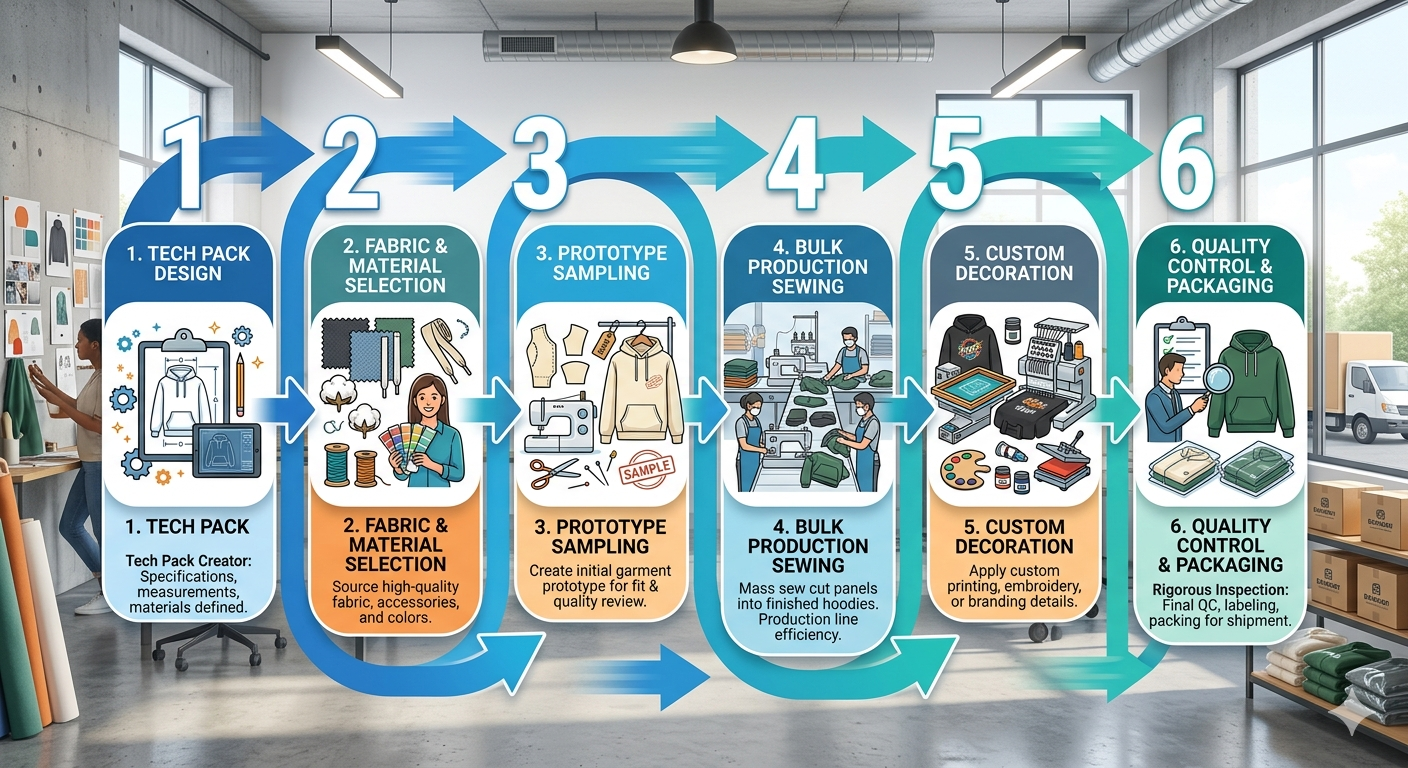
A reliable custom hoodie maker follows a structured end-to-end process to ensure consistency and quality:
- Tech Pack Creation: Detailed specifications including measurements, materials (cotton fleece or blends in chosen GSM), artwork placement, stitching details, and trims.
- Fabric Sourcing & Development: Selecting or developing fleece fabrics in the exact GSM you need.
- Pattern Making & Sampling: Creating patterns and producing initial samples for fit and design approval.
- Cutting & Sewing: Precise cutting followed by professional sewing with reinforced seams, especially on heavier GSM fabrics.
- Customization (Printing/Embroidery): Applying your designs.
- Finishing & Quality Control: Washing, pressing, multi-step inspections, and packaging.
Custom Hoodie Maker Works
Popular Customization Techniques offered by experienced makers include:
- DTG (Direct-to-Garment) Printing: Ideal for detailed, full-color, photographic, or complex artwork. It produces soft, vibrant results especially on mid-weight fabrics.
- Screen Printing: Best for bold logos and simpler designs. It offers excellent durability and cost-efficiency for larger orders.
- Embroidery: Provides a premium, textured, and long-lasting finish for logos on the chest, hood, or sleeves. It works well across GSM ranges but needs careful digitizing on heavier fabrics to avoid puckering.
- Additional Finishes: Brushed fleece for extra softness, reinforced stitching for durability, adjustable drawcords, and special washes for a subtle vintage texture.
The advantage of partnering with a professional custom hoodie maker lies in flexible MOQ (often suitable for testing new styles), strict quality control checkpoints, and one-stop service from fabric to finished garment. This ensures consistent results even when producing across different GSM weights.
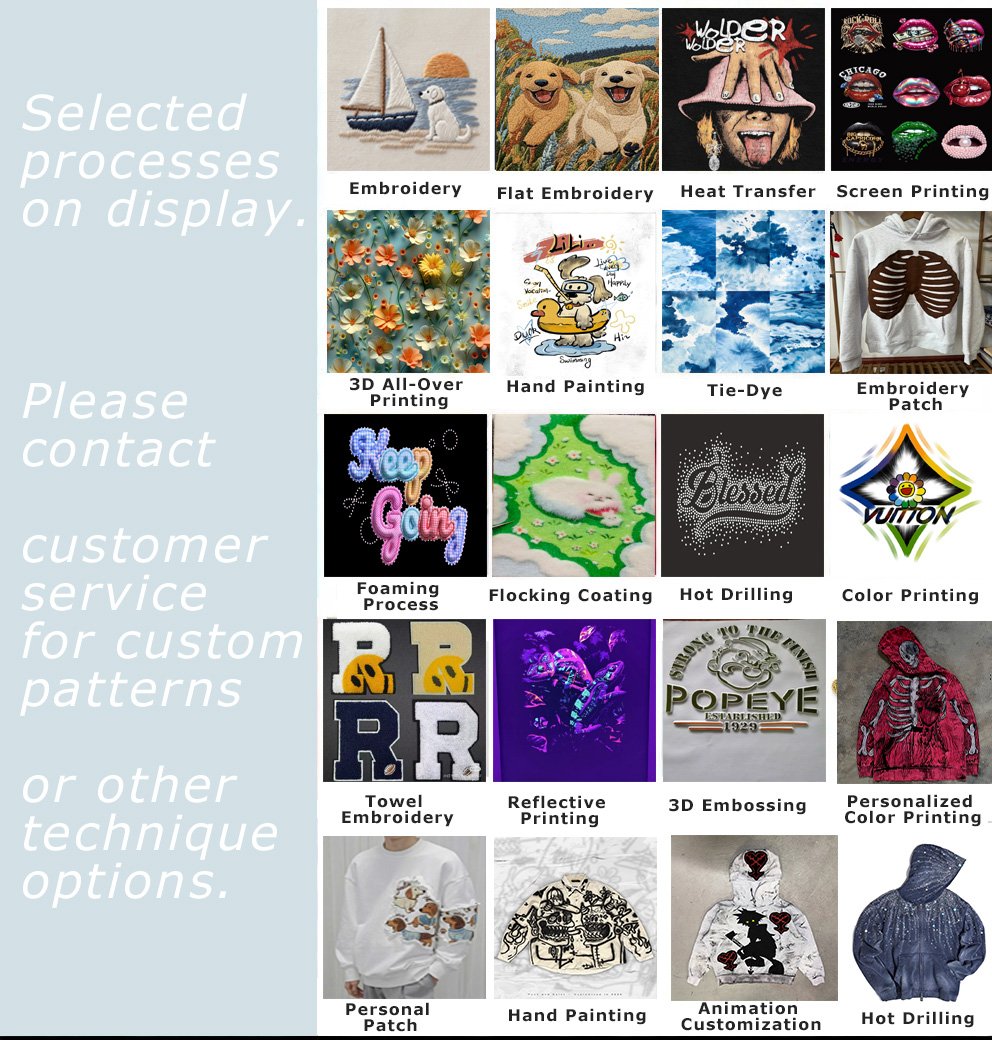
Customization Techniques
Current Design Trends in Custom Hoodies
Design trends for custom hoodies in 2026 continue to emphasize comfort, self-expression, and sustainability:
- Oversized Silhouettes: Relaxed fits with dropped shoulders remain dominant, offering comfort and a modern streetwear aesthetic.
- Functional Details: Large kangaroo pockets, adjustable drawcords, thumb holes, or hidden elements add practical value.
- Sustainable Focus: Brands increasingly choose organic cotton, recycled blends, or eco-friendly inks across various GSM levels.
- Matching Sets: Coordinating hoodies with lighter or mid-weight t-shirts in complementary designs and weights.
- Artistic Expression: Multi-location printing (front minimal, bold back panels), minimalist typography, vintage-inspired distressed looks, and layered graphics that tell a story.
When designing, ensure your artwork is optimized for the chosen GSM — detailed prints perform best on smoother mid-weight fabrics, while bolder designs suit heavier weights.
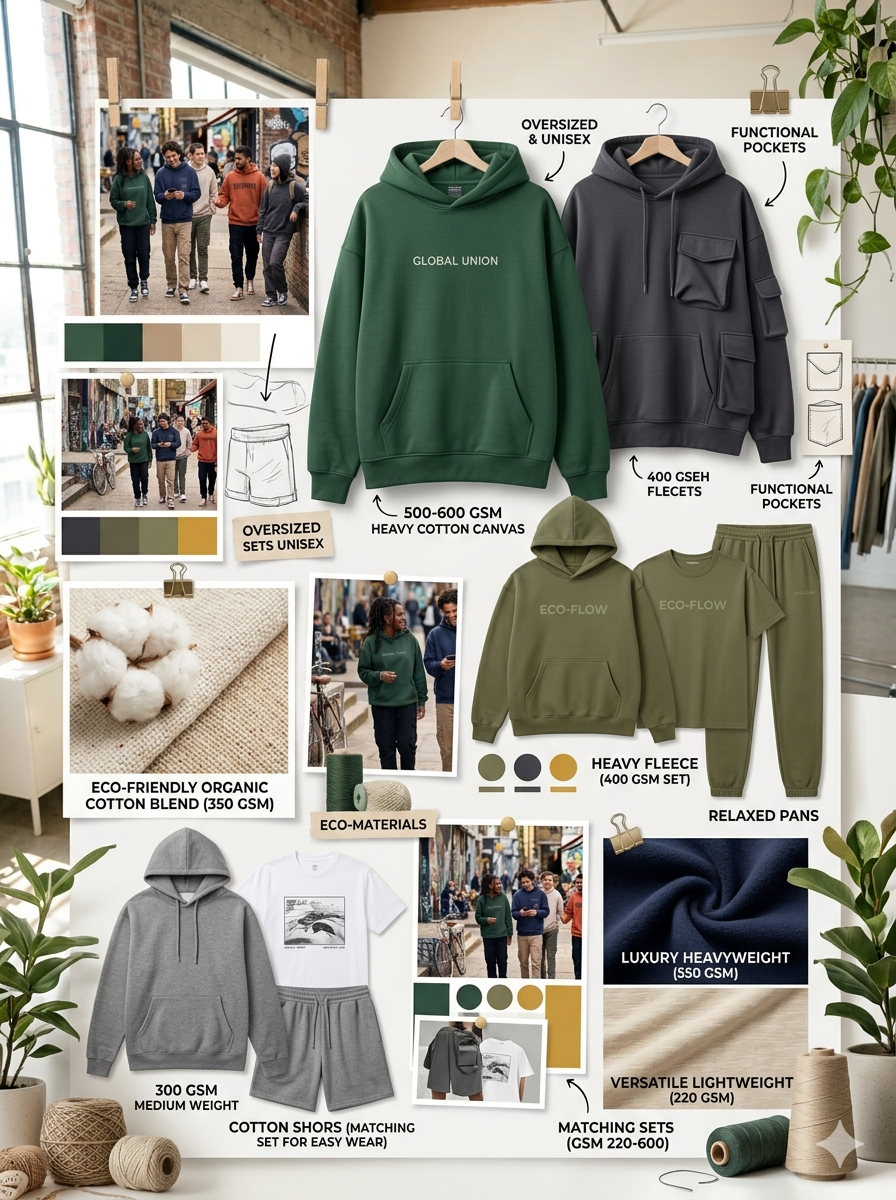
Current Design Trends
Common Problems When Working with a Custom Hoodie Maker – And How to Solve Them
Even with a good supplier, brands encounter challenges. Here are the most frequent issues and practical solutions:
- Fabric & GSM Issues: Selecting the wrong weight can cause excessive shrinkage, poor drape, discomfort, or prints that crack/fade. Color inconsistency between samples and bulk is also common.
- Print & Embroidery Problems: DTG prints may fade or crack after washing; embroidery can pucker on heavyweight (500+ GSM) fabrics; screen prints may flake with improper curing.
- Sizing & Fit Inconsistencies: Grading errors or unexpected shrinkage lead to unhappy customers.
- Startup & Scaling Pain Points: Long sampling times, communication gaps, MOQ barriers for testing, and difficulty balancing cost with premium quality.
Actionable Solutions:
- Create a detailed tech pack with clear specifications, measurements, and care instructions.
- Request multiple sample rounds in the exact target GSM and insist on pre-production approval.
- Choose a custom hoodie maker with transparent quality checkpoints and experience handling different fabric weights.
- Start with small test orders to validate processes before scaling.
- Provide proper care guidelines to customers (cold wash, air dry) to maintain print and fabric integrity.
- Maintain open, regular communication throughout production.
These steps significantly reduce risks and support smooth growth for brands transitioning from small runs to larger volumes.
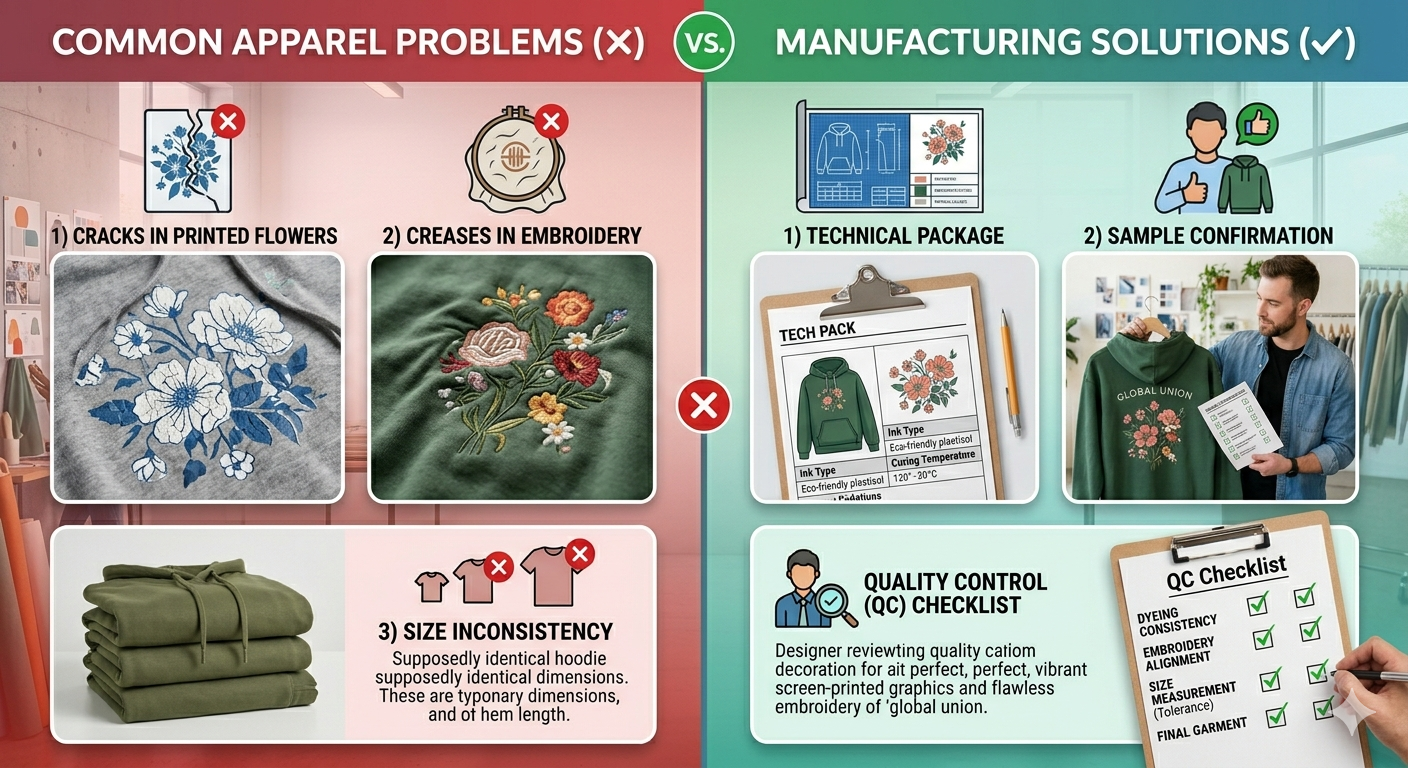
Solutions
Why Choose the Right Custom Hoodie Maker
Understanding GSM, processes, and potential pitfalls empowers you to evaluate suppliers confidently. A trustworthy custom hoodie maker acts as a long-term partner — offering reliable quality, technical expertise, and flexibility that supports your brand’s growth.
FAQ
- What is the best GSM for custom hoodies (190-600 range)? Mid-weight (280-380 GSM) is the most versatile for everyday use. Heavyweight (380-500 GSM) suits premium streetwear, while 500-600 GSM is ideal for luxury oversized pieces.
- How does GSM affect the final feel and performance of a hoodie? Higher GSM provides more warmth, structure, and durability but may feel heavier. Lower GSM is lighter and more breathable.
- What customization techniques does a professional custom hoodie maker offer? DTG for detailed designs, screen printing for bold logos, embroidery for premium texture, plus various finishes.
- What is the typical MOQ when ordering from a custom hoodie maker? Many makers offer flexible MOQ suitable for testing (often starting from small batches), with better pricing at scale.
- How long does production take for custom hoodies? Sampling usually takes 1-3 weeks; bulk production 4-8 weeks depending on order size and complexity.
- How can I prevent print fading or shrinkage issues? Use quality inks with proper curing, pre-shrunk fabrics, and advise customers to wash in cold water and air dry.
- Can I order samples in specific GSM weights before bulk? Yes — always request samples in your target GSM to evaluate hand-feel and performance.
- What should be included in a tech pack for custom hoodies? Detailed measurements, fabric specifications (including GSM), artwork placement, stitching details, and trims.
- Do custom hoodie makers support eco-friendly fabrics? Most experienced makers offer organic cotton, recycled blends, and water-based inks across GSM ranges.
- How do I start working with a reliable custom hoodie maker? Share your design ideas and target GSM, request swatches and samples, and discuss MOQ and timeline.
Conclusion
Mastering fabric GSM (190-600) and the manufacturing process is key to creating successful, high-quality custom hoodies that stand out in the market. By partnering with an experienced custom hoodie maker, you gain technical guidance, consistent production, and the support needed to bring your vision to life.
Customization Services by LYDENIM
🎨 Custom Design
Design your own fabric collection or garment with LYDENIM’s premium materials. From luxurious cotton blends to innovative eco-friendly textiles, explore colors, weaves, and finishes that perfectly match your brand or design vision. Visit LYDENIM to learn more.
🛍️ Tailored Garment Solutions
Bring your designs to life with our custom garment services. Whether it’s tailored suits, stylish dresses, or durable workwear, we ensure perfect fit, superior comfort, and lasting quality. Explore customization options on Myalibaba.
📩 Get in Touch
Have a project in mind? Contact our team at malone@lydenim.com to discuss custom fabrics, garment design, or sustainable textile solutions.
Transform your ideas into reality with LYDENIM—your trusted partner for innovative, high-quality fabrics and bespoke apparel solutions.