


अनुमानित पढ़ने का समय: ~8 मिनट
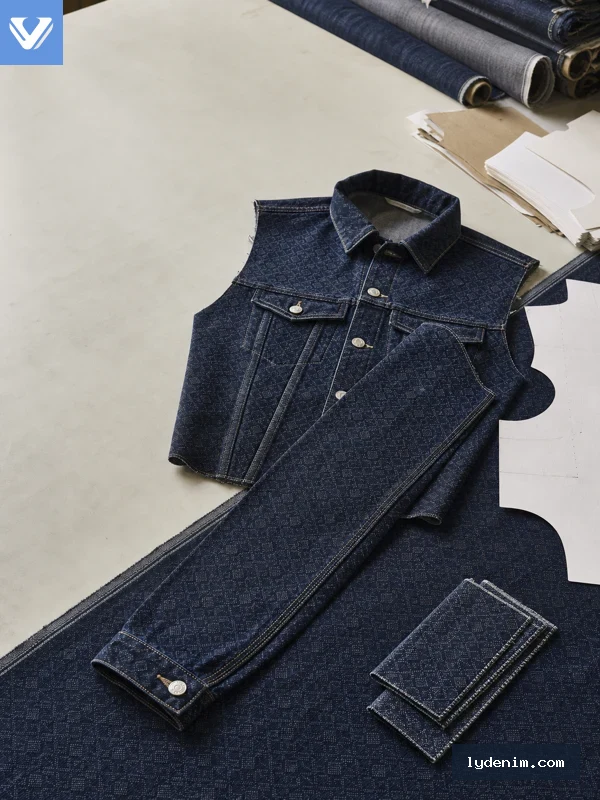
जैक्वार्ड डेनिम फैब्रिक किसी जैकेट को ग्राहक के कट पर ध्यान देने से पहले ही पहचानने योग्य बना सकता है, लेकिन फैब्रिक को गारमेंट पैटर्न के साथ तालमेल बिठाना पड़ता है। एक मोटिफ जो पूरे रोल में संतुलित दिखता है, वह पॉकेट पर बेढंगा लग सकता है, सेंटर फ्रंट पर बंट सकता है, वॉशिंग से विकृत हो सकता है, या पीछे की तरफ लंबे फ्लोट्स के त्वचा से छूने पर असहज कर सकता है। सही सोर्सिंग प्रक्रिया फैब्रिक और जैकेट को एक ही विकास परियोजना के रूप में मूल्यांकित करती है।
For the broad construction and terminology, read the LYDENIM Jacquard Denim Fabric Guide. If the project needs a new motif rather than an existing direction, use कस्टम जैक्वार्ड डेनिम फैब्रिक को आर्टवर्क से लूम सेटअप तक विकसित करने की प्रक्रिया.
खरीदार सारांश
- जैकेट सिल्हूट के लिए वज़न, ड्रेप, स्ट्रेच, बैकसाइड कंस्ट्रक्शन और वॉश रिस्पांस चुनें, न कि केवल स्वैच के लिए।
- जैक्वार्ड रिपीट को फ्रंट, बैक, स्लीव्स, पॉकेट्स, कॉलर, कफ्स और योक पर मैप करें, फिर फैब्रिक कंसम्प्शन की पुष्टि करें।
- मार्कर यील्ड रिपीट साइज़, उपयोग योग्य चौड़ाई, गारमेंट पैटर्न, साइज़ और मैचिंग टॉलरेंस पर निर्भर करती है; किसी सार्वभौमिक अपशिष्ट प्रतिशत को अनुमोदित न करें।
- प्रोटो जैकेट पर वास्तविक fusing, lining, seams, trims, और wash का परीक्षण करें।
- बल्क कटिंग से पहले भौतिक रिटेन्ड स्टैंडर्ड और प्लेसमेंट प्लान को फ्रीज़ करें।
जैक्वार्ड डेनिम जैकेट के लिए उपयुक्त क्यों है?
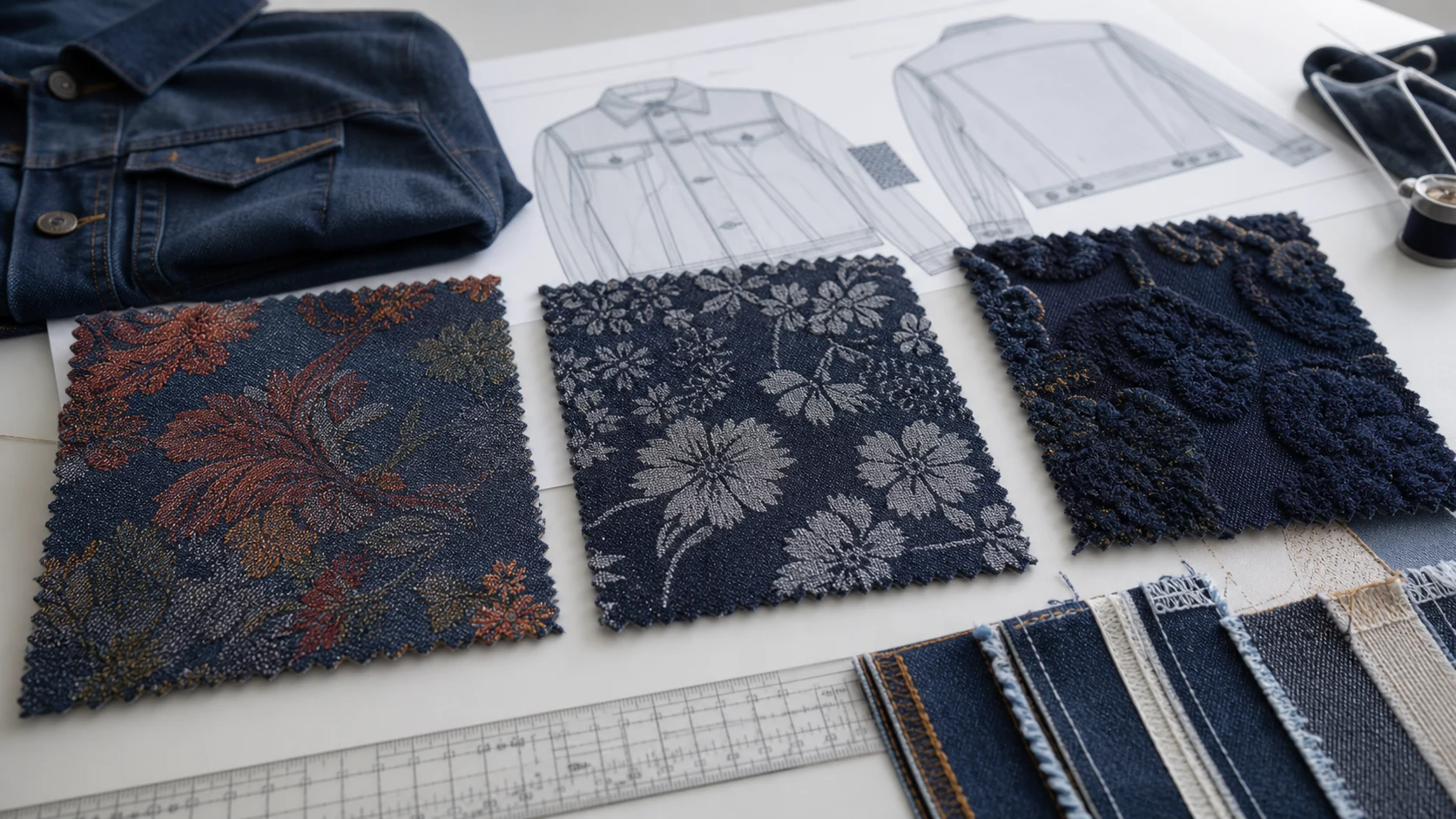
उत्तर इच्छित परिधान पर निर्भर करता है। एक बिना अस्तर वाली ओवरशर्ट, स्ट्रक्चर्ड ट्रकर जैकेट, फैशन क्रॉप्ड जैकेट और वर्कवियर-प्रेरित कोट को अलग-अलग ड्रेप, वज़न, मूवमेंट और पिछले हिस्से के आराम की आवश्यकता होती है।
इन बिंदुओं का एक साथ मूल्यांकन करें:
| कपड़ा कारक | जैकेट प्रश्न |
|---|---|
| वज़न और हैंड | क्या वॉश के बाद फैब्रिक सिल्हूट को सपोर्ट करता है, बिना बहुत अधिक कठोर या बहुत अधिक नरम हुए? |
| स्ट्रेच और रिकवरी | क्या कोहनी, कफ या फिटेड ज़ोन पर मोटिफ विकृत होगा? |
| दोहराव पैमाना | क्या मुख्य मोटिफ महत्वपूर्ण पैटर्न पीस पर बिना बेढंगे कटाव के फिट हो सकता है? |
| बैकसाइड फ्लोट्स | क्या उन्हें अस्तर, सुरक्षा, या अलग निर्माण की आवश्यकता है? |
| उपयोग योग्य चौड़ाई | चौड़ाई, सेल्वेज अलाउंस और मार्कर के अनुसार रिपीट कैसे बैठता है? |
| सिकुड़न और तिरछापन | क्या वॉशिंग से पैनल के आयाम या मोटिफ संरेखण में बदलाव आएगा? |
| Surface texture | क्या कपड़ा आस्तीन, कफ, जेब, बैग-स्ट्रैप और सीट-बेल्ट के घर्षण को सहन कर सकता है? |
जब संभव हो, हैंगर सैंपल या बड़ा पैनल मांगें। छोटे स्वैच रंग और स्पर्श जानने के लिए उपयोगी हैं, लेकिन ड्रेप, रिपीट बैलेंस और जैकेट-स्केल प्लेसमेंट के लिए कमज़ोर प्रमाण हैं।
जैकेट ज़ोन के अनुसार मोटिफ प्लेसमेंट की योजना बनाएं
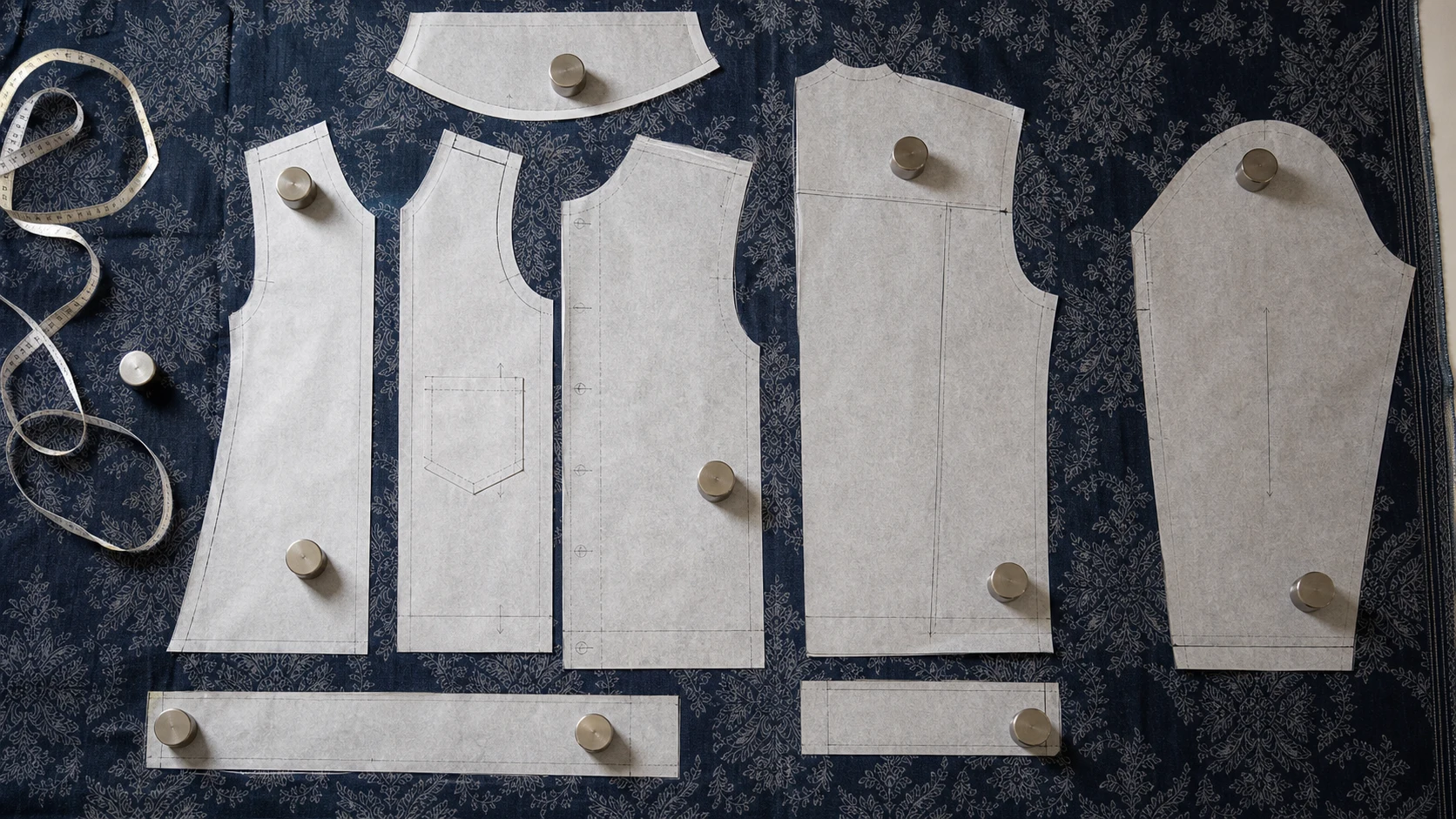
रिपीट की समीक्षा वास्तविक पैटर्न पीस के साथ की जानी चाहिए:
- Back panel: decide whether the motif is centered, mirrored, intentionally offset, or allowed to run naturally.
- Center front: define whether the left and right fronts should match, mirror, or continue across the opening.
- Sleeves: check how the motif reads around the arm and whether elbow bending changes the design.
- Pockets and flaps: decide whether they disappear into the body pattern or become deliberate contrast features.
- Collar, cuffs and waistband: small pieces can crop large motifs; a quieter companion fabric may be more controlled.
- Yoke and seams: identify whether the design must continue or whether a clear break is acceptable.
ये विकल्प टेक पैक में शामिल होने चाहिए। पैटर्न मिलाएं जैसा वाक्यांश कोटेशन या कटिंग के लिए बहुत अस्पष्ट है, क्योंकि यह मैच पॉइंट्स या स्वीकार्य विचलन की पहचान नहीं करता है।
कटिंग यील्ड और मार्कर प्लानिंग
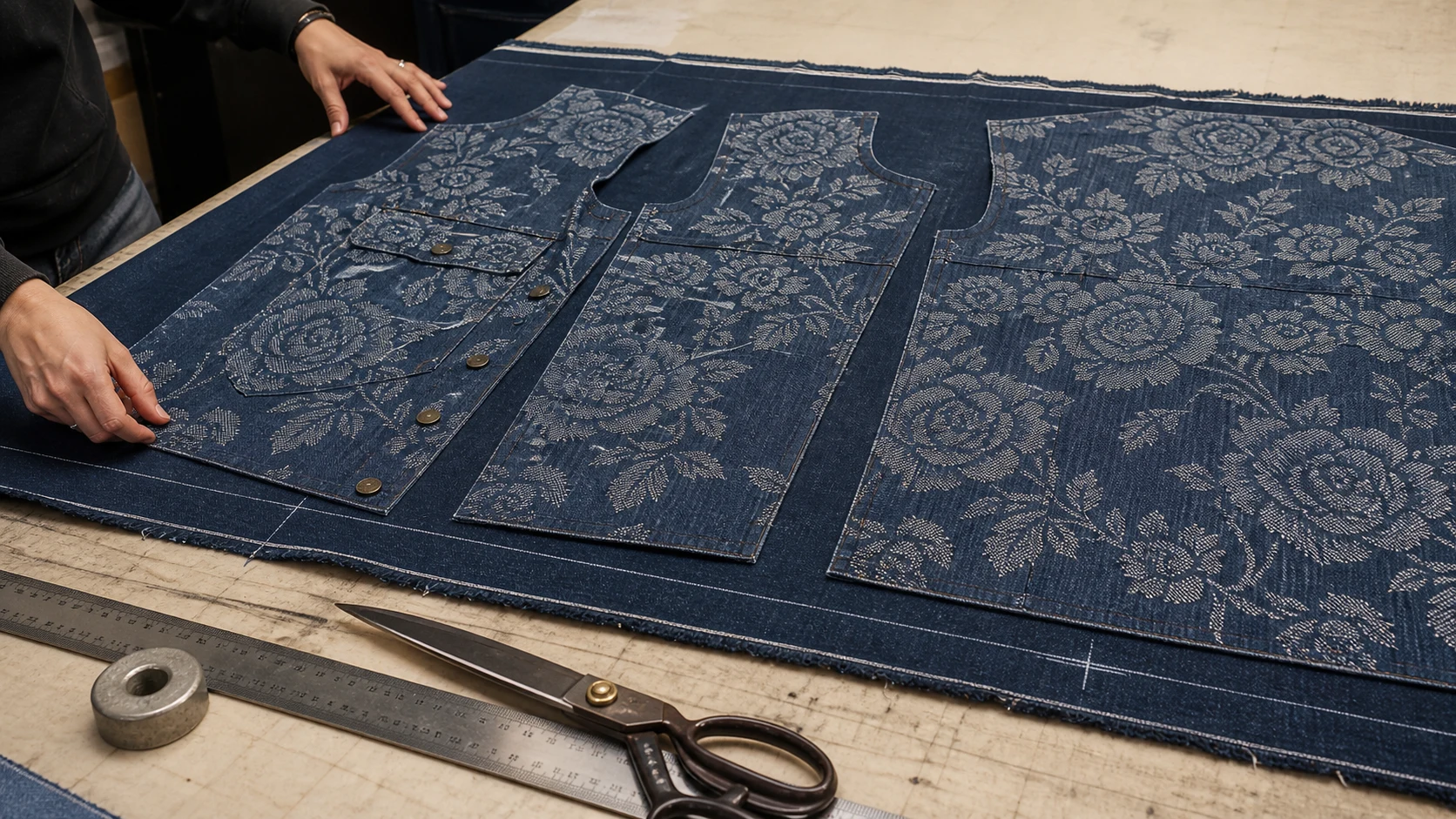
रिपीट मैचिंग से फैब्रिक की खपत बढ़ सकती है, लेकिन केवल कीवर्ड के आधार पर इसकी मात्रा निर्धारित नहीं की जा सकती। यह रिपीट डाइमेंशन, उपयोग योग्य चौड़ाई, जैकेट के साइज़ रेंज, पीस ज्योमेट्री, नैप या डायरेक्शन, और कितने सीम मैच करने आवश्यक हैं, पर निर्भर करता है।
इस वर्कफ़्लो का उपयोग करें:
- पुष्ट रिपीट और उपयोग-योग्य चौड़ाई की जानकारी प्राप्त करें।
- वास्तविक जैकेट पैटर्न के टुकड़ों को रिपीट के ऊपर रखें।
- अनिवार्य मैच पॉइंट्स और वैकल्पिक मैच पॉइंट्स की पहचान करें।
- प्रतिनिधि साइज़ों के लिए मार्कर ट्रायल चलाएँ।
- सौंदर्य लाभ की तुलना अतिरिक्त खपत और कटिंग जटिलता से करें।
- कोटेशन और थोक कटाई से पहले अंतिम नियम दर्ज करें।
यह सामान्य अपशिष्ट प्रतिशत जोड़ने की तुलना में अधिक विश्वसनीय है। एक बड़ा रिपीट चौड़े बैक पैनल पर कुशल हो सकता है, लेकिन कई छोटे टुकड़ों पर अकुशल हो सकता है, जबकि एक छोटा रिपीट अधिक लचीले मार्करों की अनुमति दे सकता है।
सिलाई, अस्तर और वॉश संबंधी विचार
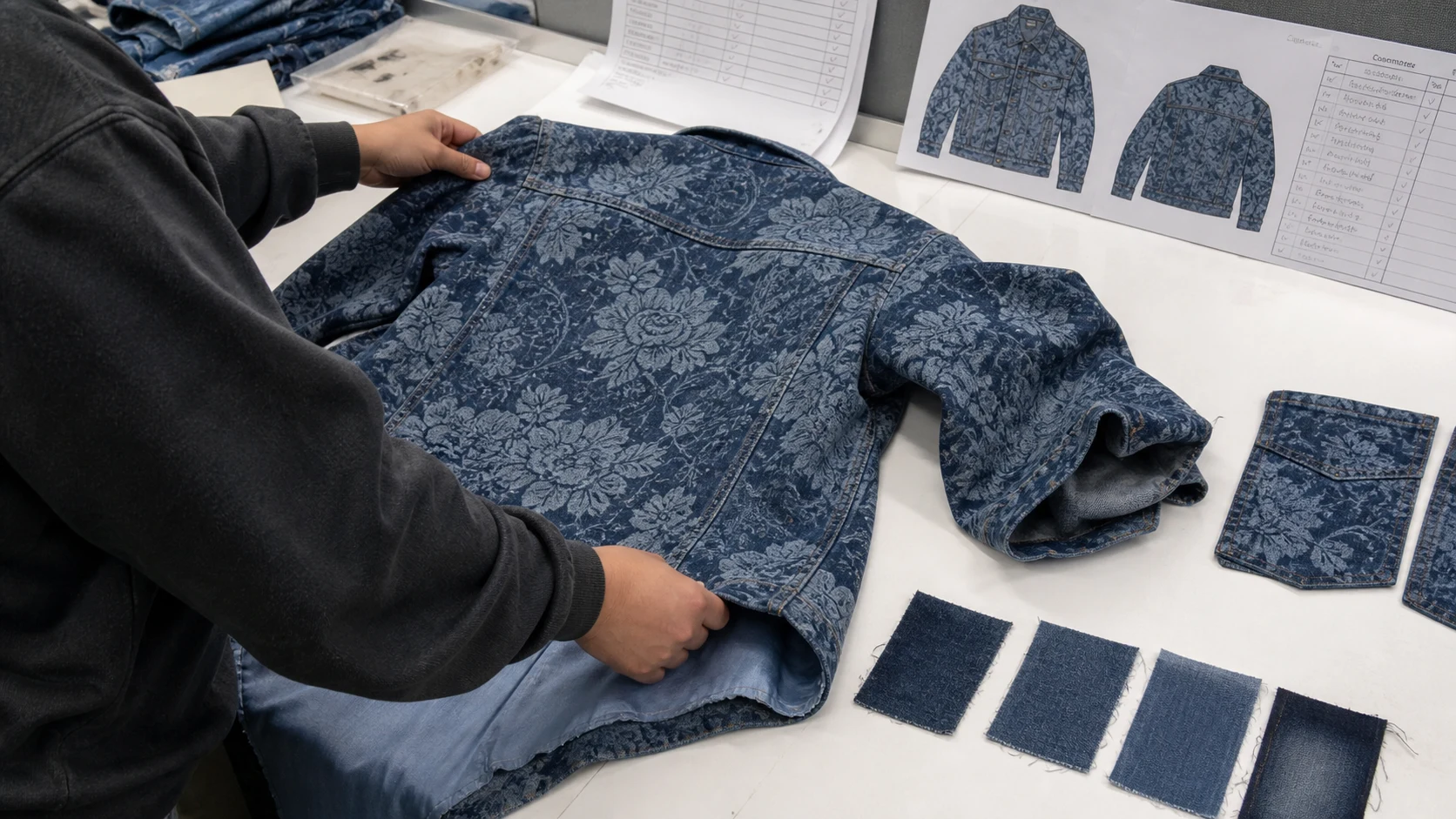
जैक्वार्ड निर्माण सादे डेनिम की तुलना में अधिक जटिल पिछला भाग बना सकता है। फ्लोट्स, ढीले यार्न, खुरदरापन, सीम बल्क, उधड़न, और उन क्षेत्रों का निरीक्षण करें जो ज़िप या लाइनिंग पर फंस सकते हैं। यदि लाइनिंग की योजना बनाई गई है, तो यह मानने के बजाय कि यह हर समस्या का समाधान कर देगी, सटीक लाइनिंग और सीम निर्माण का परीक्षण करें।
फ्यूज़िंग से हैंडफील, सतह की दिखावट और सिकुड़न बदल सकती है। प्रोटो को स्वीकृत करने से पहले पैनल पर वास्तविक फ्यूज़िंग लगाएँ। यही बात टॉपस्टिच टेंशन, पॉकेट रिइन्फोर्समेंट, बटनहोल, स्नैप्स, कढ़ाई और मोटिफ से गुज़रने वाली अन्य प्रक्रियाओं पर भी लागू होती है।
वॉश ट्रायल्स में इच्छित गारमेंट रूट का उपयोग किया जाना चाहिए। शेड, मोटिफ डेफिनिशन, सिकुड़न, स्क्यू, सीम पकरिंग, सतह घर्षण, तथा फ्यूज्ड और अनफ्यूज्ड ज़ोन के बीच किसी भी अंतर की समीक्षा करें। अनुमोदन मानक को स्वीकार्य दृश्य परिवर्तन का वर्णन करना चाहिए, न कि यह आश्वासन देना चाहिए कि कपड़ा लूम स्टेट के समान ही रहेगा।
तुलना के लिए LYDENIM की तीन फैब्रिक दिशाएँ
निम्नलिखित लाइव उत्पाद तुलना हेतु उपयोगी बिंदु हैं। ये स्वचालित जैकेट अनुमोदन नहीं हैं; क्रेता को अभी भी विनिर्देशों की पुष्टि करनी होगी और लक्षित निर्माण का परीक्षण करना होगा।
- 18 Colored No-Stretch Jacquard Denim is a colored rigid direction for buyers comparing structure, motif visibility, and non-stretch handling.
- Flower Jacquard Denim 1118 provides a floral woven direction for repeat placement and panel-balance discussions.
- Chenille Jacquard Denim 1111 adds raised texture, making abrasion, lining, sewing, and wash checks especially important.
The broader LYDENIM jacquard denim category can support additional motif and color comparisons before a custom development is opened.
Sample-to-Bulk Approval Sequence
1. Swatch and large panel
Check face, back, color, handfeel, repeat, width, direction, and obvious float or snag risks.
2. Pattern-placement panel
Lay representative front, sleeve, and pocket pieces over the repeat. Confirm mandatory match points and likely cutting trade-offs.
3. Proto jacket
Use the actual lining, fusing, seams, trims, pockets, and closure. Inspect both appearance and wearer-facing comfort.
4. Wash confirmation
Process the full proto through the intended wash. Measure the garment and examine motif change, shrinkage, skew, seam alignment, abrasion, and handfeel.
5. Size set and marker confirmation
Confirm placement logic across different sizes. A centered motif on one size may not translate automatically to the full size range.
6. Retained standard
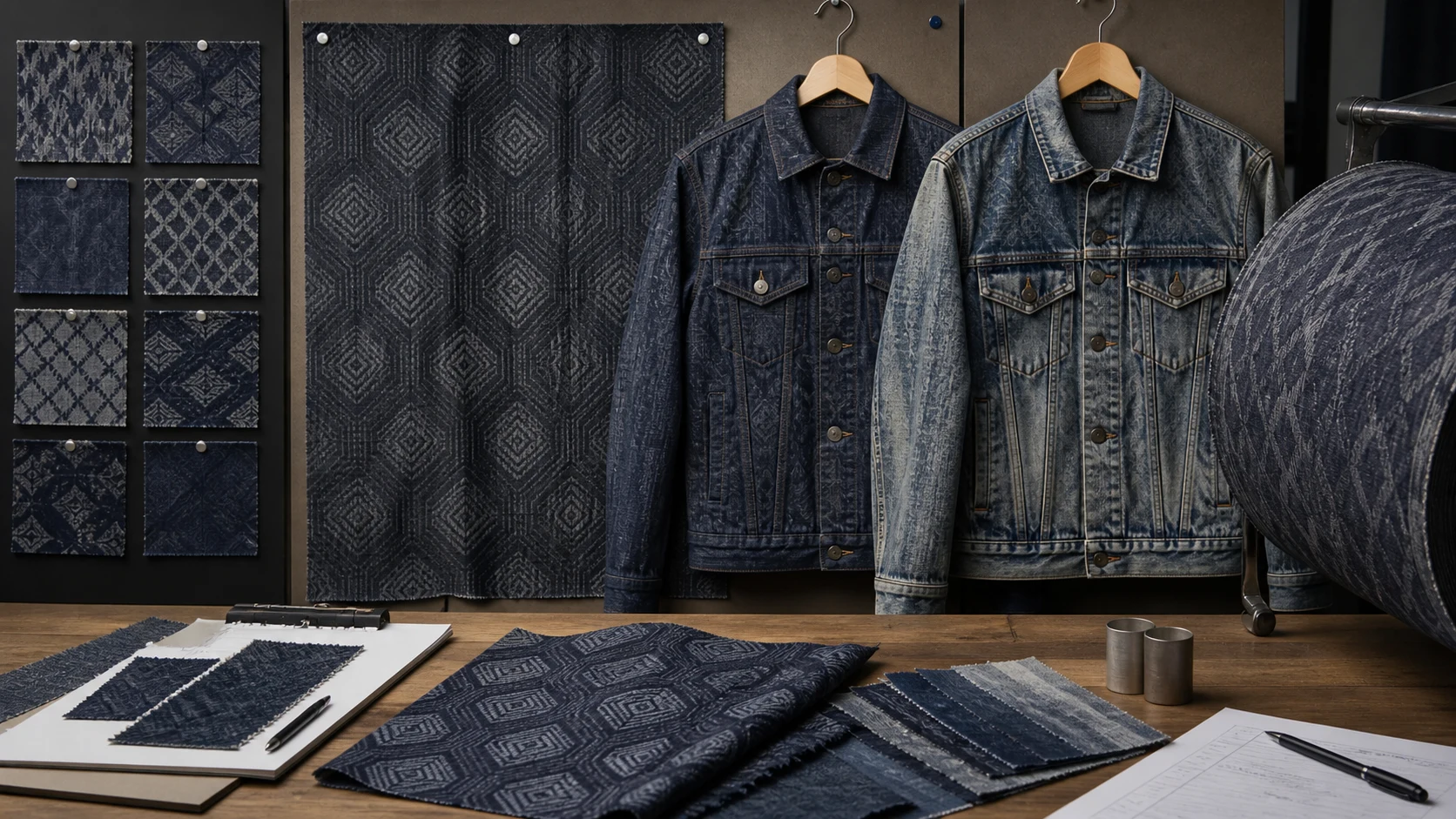
Keep the approved fabric, proto, wash result, placement plan, and inspection notes for bulk comparison.
Jacket RFQ Checklist
- jacket silhouette and construction drawing
- target market, season, and intended wearer
- fabric weight, stretch, handfeel, and color direction
- motif reference, repeat size, and orientation
- mandatory pattern-match points
- lining, fusing, trim, and topstitch plan
- intended wash or finish
- size range and quantity by color
- sample stages and required tests
- delivery destination and timing
निष्कर्ष
Jacquard denim fabric for jackets should be sourced through an application-first process. Select a fabric direction, map the repeat over the jacket, test the real construction and wash, and confirm marker consequences before bulk. The result is a design that remains intentional on the finished garment rather than a strong fabric idea weakened by cutting and production surprises.
Need help turning this into a production-ready sourcing brief?
Send your target product, fabric direction, quantity and sample needs. LY Denim can help compare options and prepare a quote.