


Estimated reading time: ~8 minutes
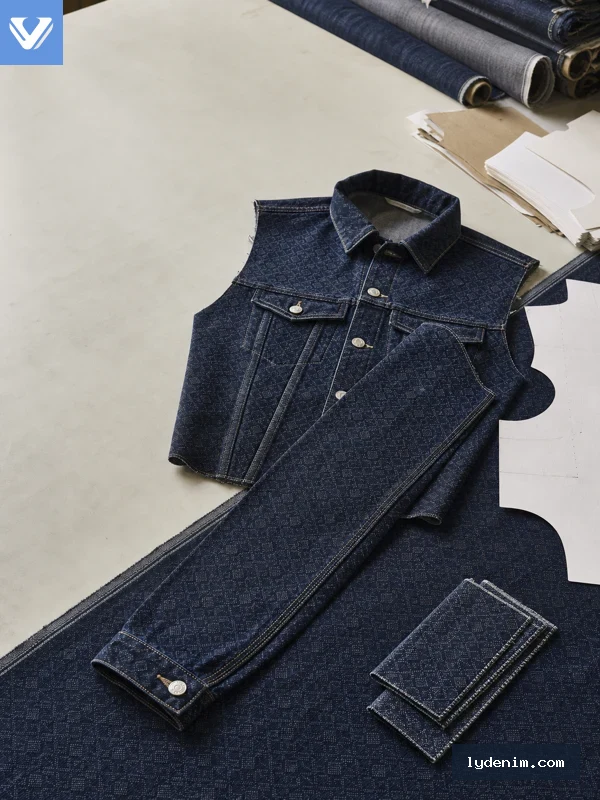
Jacquard denim fabric can make a jacket recognizable before a customer notices the cut, but the fabric must work with the garment pattern. A motif that looks balanced across a roll may be awkward on a pocket, split at the center front, distorted by washing, or uncomfortable when long backside floats sit against the wearer. The right sourcing process evaluates the fabric and the jacket as one development project.
For the broad construction and terminology, read the LYDENIM Jacquard Denim Fabric Guide. If the project needs a new motif rather than an existing direction, use How to Develop Custom Jacquard Denim Fabric From Artwork to Loom Setup.
Buyer Summary
- Choose weight, drape, stretch, backside construction, and wash response for the jacket silhouette, not only for the swatch.
- Map the jacquard repeat across front, back, sleeves, pockets, collar, cuffs, and yoke before confirming fabric consumption.
- Marker yield depends on repeat size, usable width, garment pattern, sizes, and matching tolerance; do not approve a universal waste percentage.
- Test the actual fusing, lining, seams, trims, and wash on a proto jacket.
- Freeze a physical retained standard and a placement plan before bulk cutting.
THREE DIRECTIONS TO START WITH
Choose a jacquard direction for your jacket
Compare the visual and construction direction first. Then confirm the selected fabric details and test it in your jacket sample.

18 Colored No-Stretch Jacquard Denim
A colored rigid direction for comparing structure, motif visibility, and non-stretch handling.
Confirm weight, width, repeat, wash response, and jacket construction before selection.
View fabric details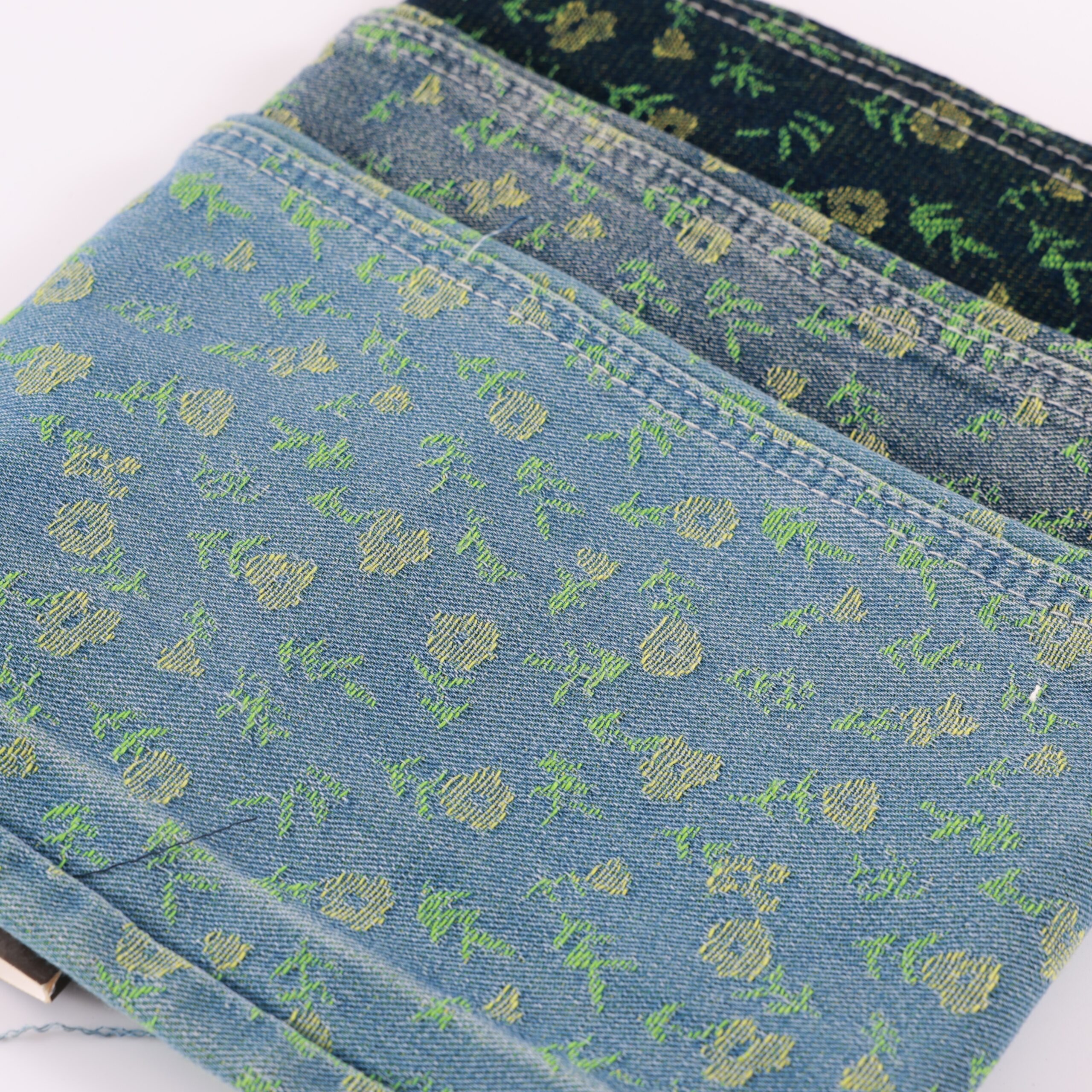
Flower Jacquard Denim 1118
A floral woven direction for discussing repeat placement and panel balance.
Confirm repeat scale, usable width, placement, wash response, and sample approval.
View fabric details
Chenille Jacquard Denim 1111
A raised-texture direction for discussing abrasion, lining, sewing, and wash checks.
Confirm the actual fabric, intended construction, and sample result before selection.
View fabric 1111No complete specification sheet yet? Start with the jacket you want to make or a reference image.
What Makes Jacquard Denim Suitable for a Jacket?
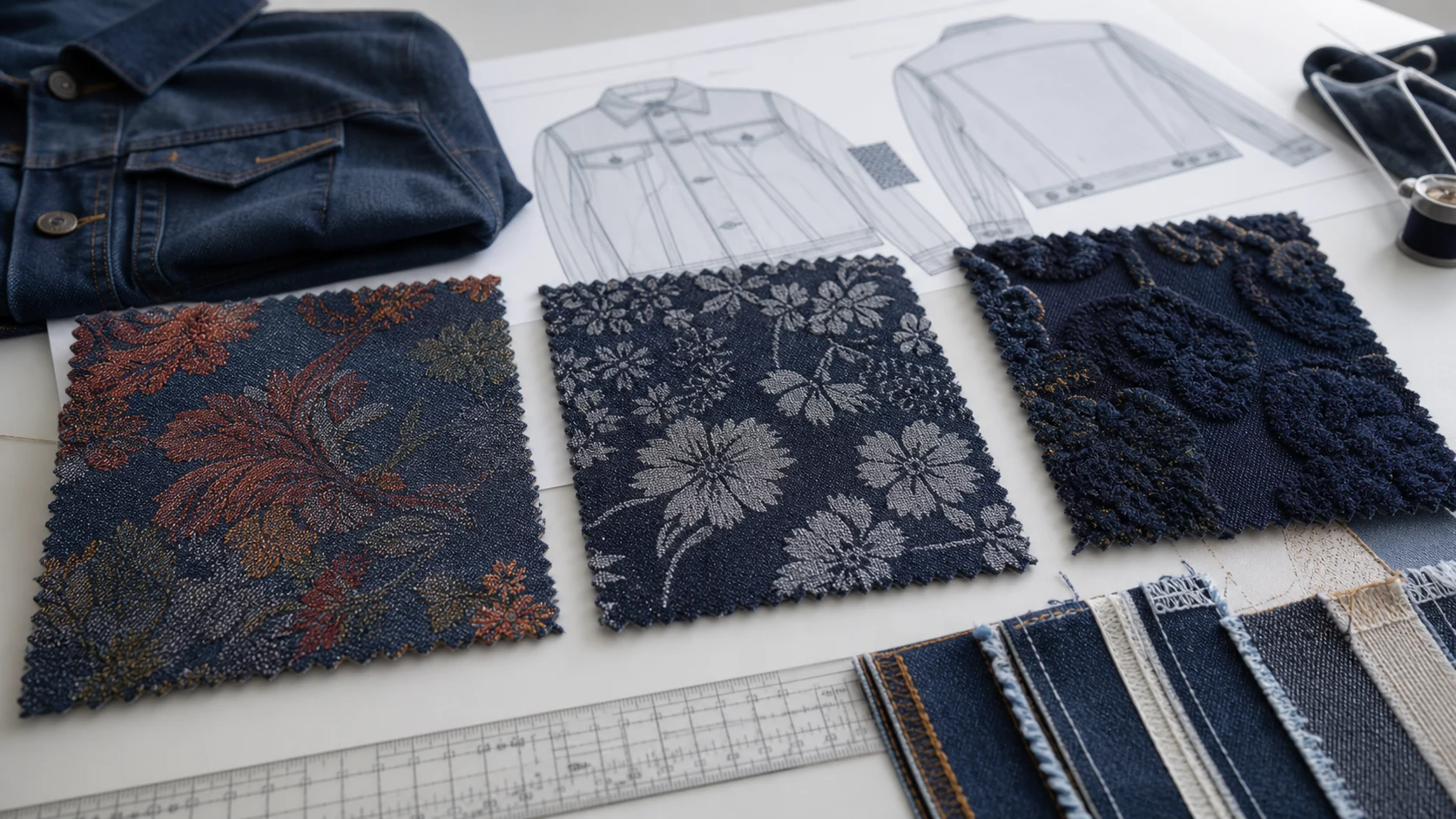
The answer depends on the intended garment. An unlined overshirt, structured trucker jacket, fashion cropped jacket, and workwear-inspired coat need different drape, weight, movement, and backside comfort.
Evaluate these points together:
| Fabric factor | Jacket question |
|---|---|
| Weight and hand | Does the fabric support the silhouette without becoming too rigid or too soft after wash? |
| Stretch and recovery | Will the motif distort at elbows, cuffs, or fitted zones? |
| Repeat scale | Can the main motif fit important pattern pieces without awkward cropping? |
| Backside floats | Do they require lining, protection, or a different construction? |
| Usable width | How does the repeat sit across the width, selvedge allowance, and marker? |
| Shrinkage and skew | Will washing shift panel dimensions or motif alignment? |
| Surface texture | Can the fabric tolerate sleeve, cuff, pocket, bag-strap, and seat-belt friction? |
Ask for a hanger sample or larger panel when possible. Small swatches are useful for color and touch but weak evidence for drape, repeat balance, and jacket-scale placement.
Plan Motif Placement by Jacket Zone
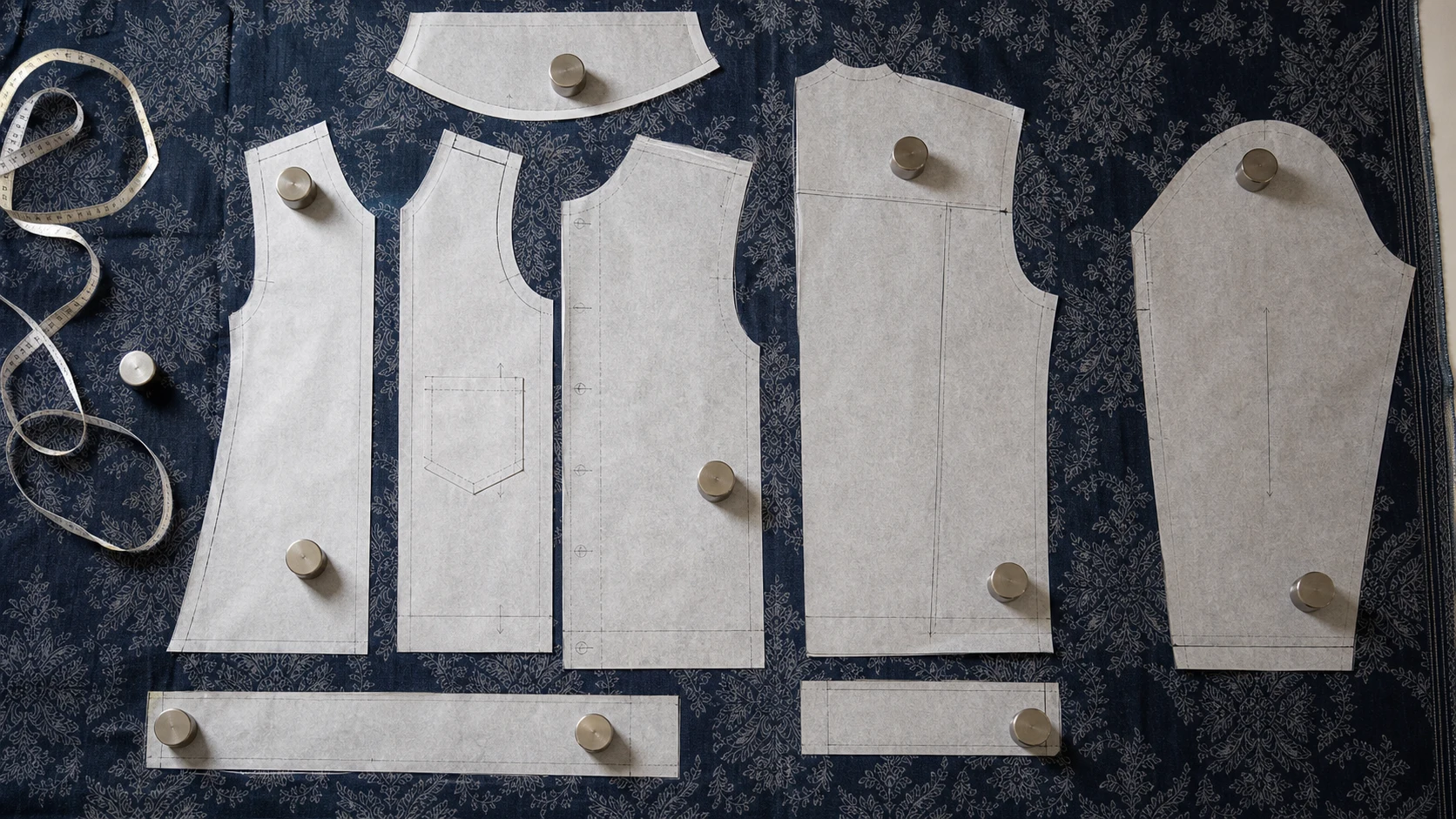
The repeat should be reviewed against actual pattern pieces:
- Back panel: decide whether the motif is centered, mirrored, intentionally offset, or allowed to run naturally.
- Center front: define whether the left and right fronts should match, mirror, or continue across the opening.
- Sleeves: check how the motif reads around the arm and whether elbow bending changes the design.
- Pockets and flaps: decide whether they disappear into the body pattern or become deliberate contrast features.
- Collar, cuffs and waistband: small pieces can crop large motifs; a quieter companion fabric may be more controlled.
- Yoke and seams: identify whether the design must continue or whether a clear break is acceptable.
These choices belong in the tech pack. A phrase such as “match the pattern” is too vague for quotation or cutting because it does not identify match points or acceptable deviation.
Cutting Yield and Marker Planning
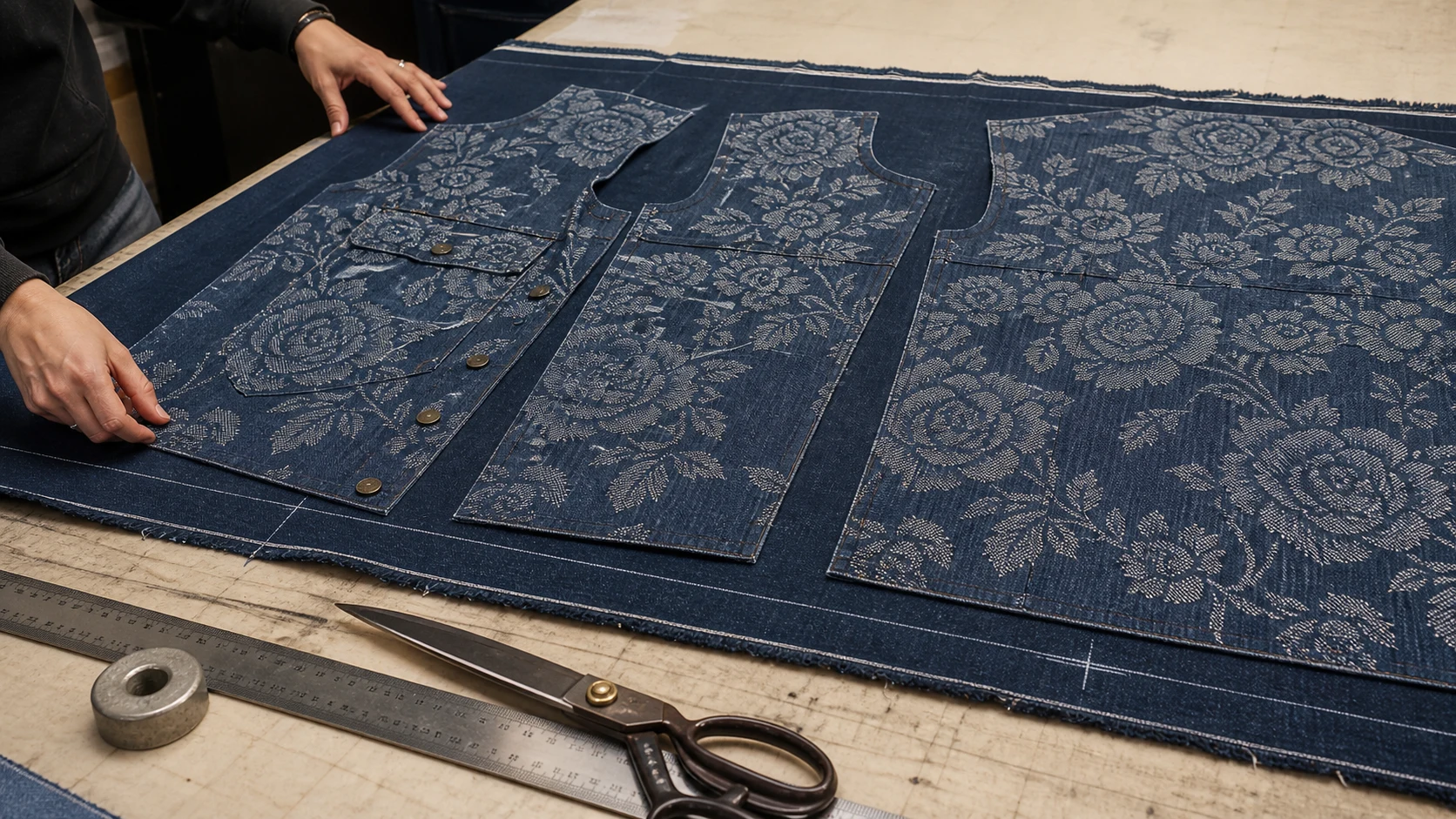
Repeat matching can increase fabric consumption, but the amount cannot be determined from the keyword alone. It depends on repeat dimensions, usable width, jacket size range, piece geometry, nap or direction, and how many seams must match.
Use this workflow:
- Obtain the confirmed repeat and usable-width information.
- Place the actual jacket pattern pieces over the repeat.
- Identify mandatory match points and optional match points.
- Run a marker trial for representative sizes.
- Compare aesthetic gain against extra consumption and cutting complexity.
- Record the final rule before quotation and bulk cutting.
This is more reliable than adding a generic waste percentage. A large repeat may be efficient on a broad back panel but inefficient on multiple small pieces, while a smaller repeat can allow more flexible markers.
Sewing, Lining and Wash Considerations
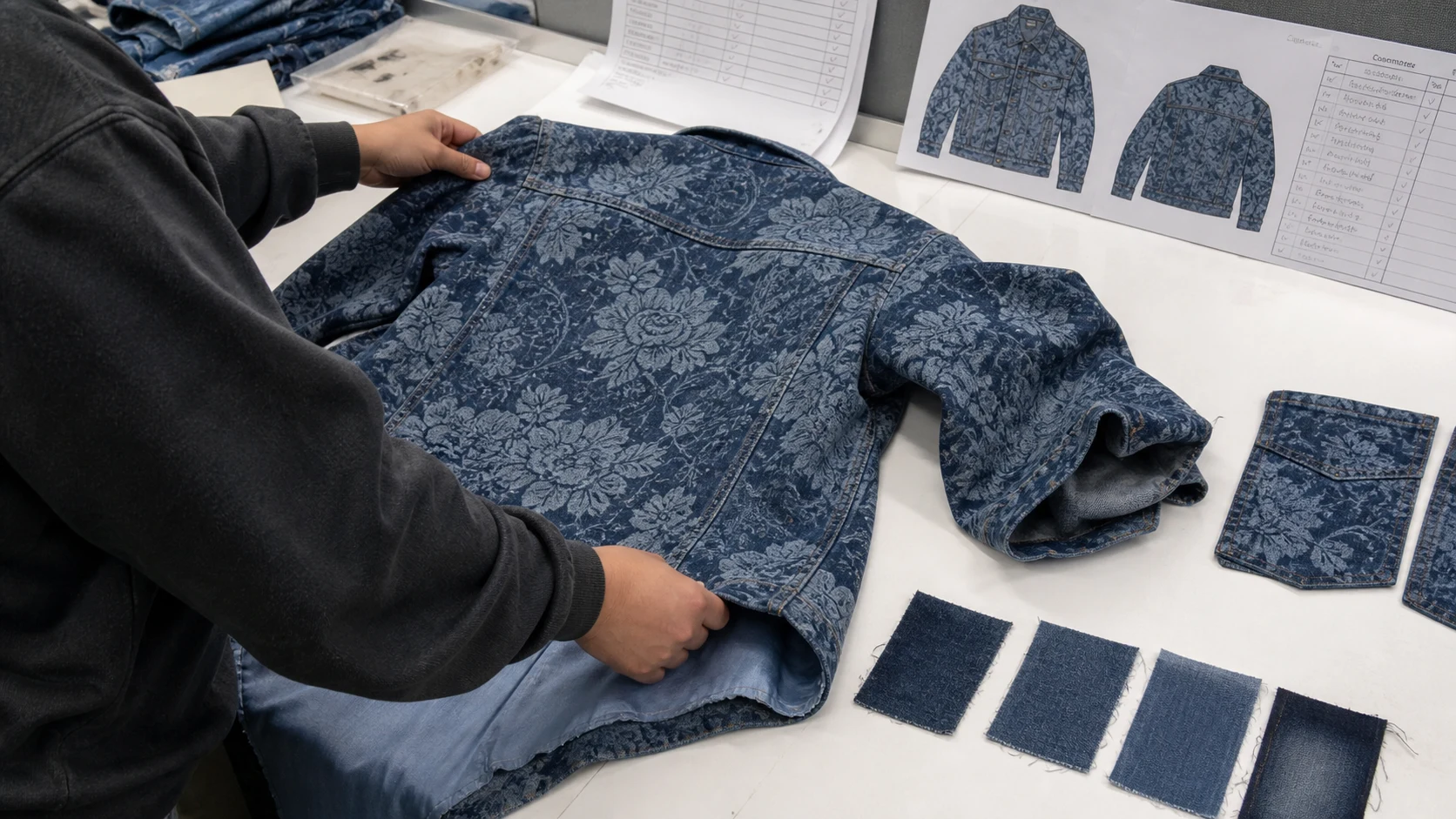
Jacquard construction can create a more complex back than plain denim. Inspect floats, loose yarns, roughness, seam bulk, fraying, and areas that may catch on zips or lining. If a lining is planned, test the exact lining and seam construction rather than assuming it will solve every issue.
Fusing can change handfeel, surface appearance, and shrinkage. Apply the real fusing to a panel before approving the proto. The same applies to topstitch tension, pocket reinforcement, buttonholes, snaps, embroidery, and other operations that pass through the motif.
Wash trials should use the intended garment route. Review shade, motif definition, shrinkage, skew, seam puckering, surface abrasion, and any difference between fused and unfused zones. The approval standard should describe acceptable visual change rather than promise that the fabric will remain identical to loom state.
Three LYDENIM Fabric Directions to Compare
The following live products are useful comparison points. They are not automatic jacket approvals; the buyer still needs to confirm specifications and test the target construction.
- 18 Colored No-Stretch Jacquard Denim is a colored rigid direction for buyers comparing structure, motif visibility, and non-stretch handling.
- Flower Jacquard Denim 1118 provides a floral woven direction for repeat placement and panel-balance discussions.
- Chenille Jacquard Denim 1111 adds raised texture, making abrasion, lining, sewing, and wash checks especially important.
The broader LYDENIM jacquard denim category can support additional motif and color comparisons before a custom development is opened.
Sample-to-Bulk Approval Sequence
1. Swatch and large panel
Check face, back, color, handfeel, repeat, width, direction, and obvious float or snag risks.
2. Pattern-placement panel
Lay representative front, sleeve, and pocket pieces over the repeat. Confirm mandatory match points and likely cutting trade-offs.
3. Proto jacket
Use the actual lining, fusing, seams, trims, pockets, and closure. Inspect both appearance and wearer-facing comfort.
4. Wash confirmation
Process the full proto through the intended wash. Measure the garment and examine motif change, shrinkage, skew, seam alignment, abrasion, and handfeel.
5. Size set and marker confirmation
Confirm placement logic across different sizes. A centered motif on one size may not translate automatically to the full size range.
6. Retained standard
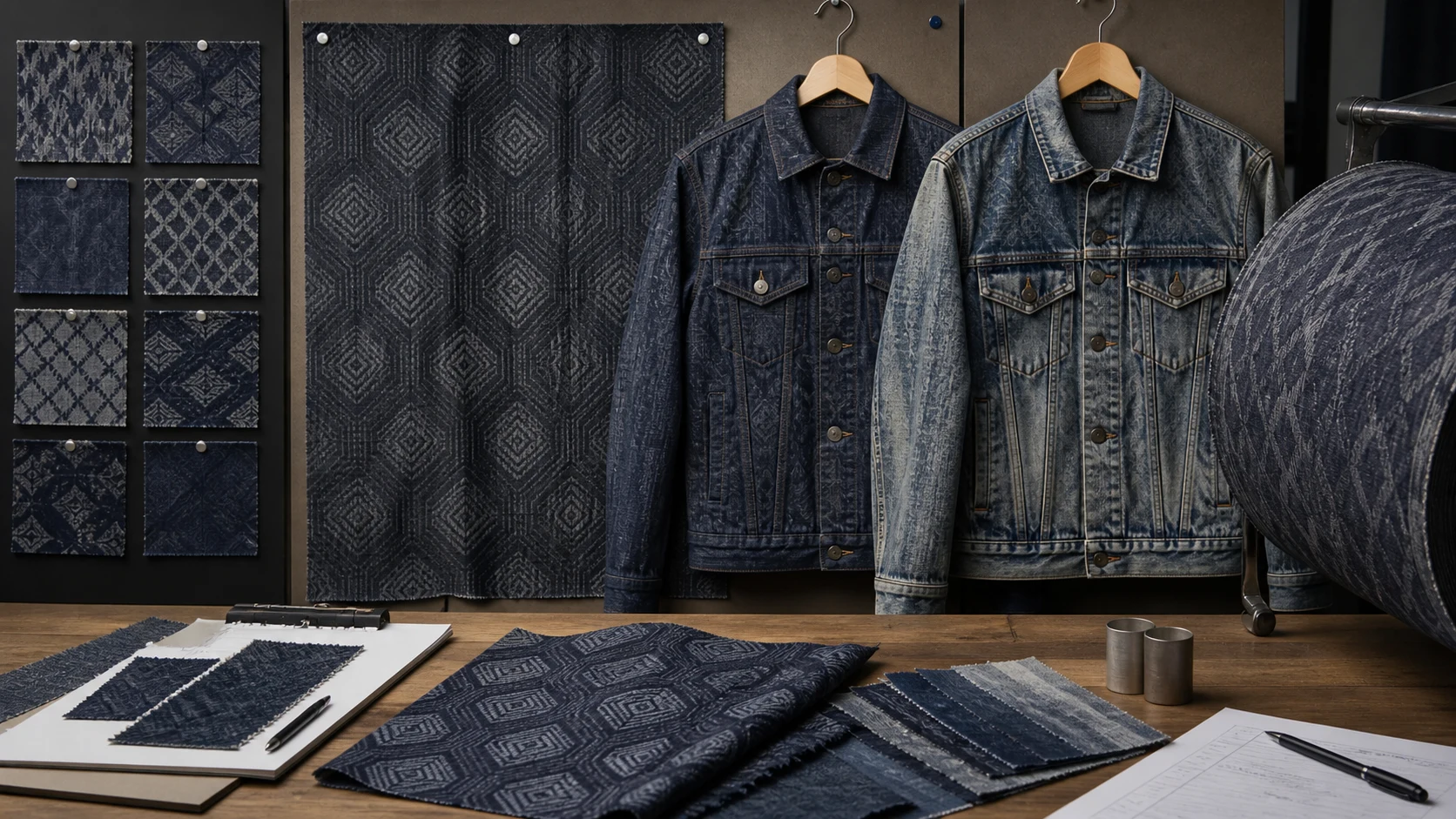
Keep the approved fabric, proto, wash result, placement plan, and inspection notes for bulk comparison.
Jacket RFQ Checklist
- jacket silhouette and construction drawing
- target market, season, and intended wearer
- fabric weight, stretch, handfeel, and color direction
- motif reference, repeat size, and orientation
- mandatory pattern-match points
- lining, fusing, trim, and topstitch plan
- intended wash or finish
- size range and quantity by color
- sample stages and required tests
- delivery destination and timing
Conclusion
Jacquard denim fabric for jackets should be sourced through an application-first process. Select a fabric direction, map the repeat over the jacket, test the real construction and wash, and confirm marker consequences before bulk. The result is a design that remains intentional on the finished garment rather than a strong fabric idea weakened by cutting and production surprises.
Still deciding between jacquard directions?
Send the jacket style, a reference image, or the question you are working through. You can add quantity and technical specifications later.