


Memahami Bahan Denim: Panduan Komprehensif
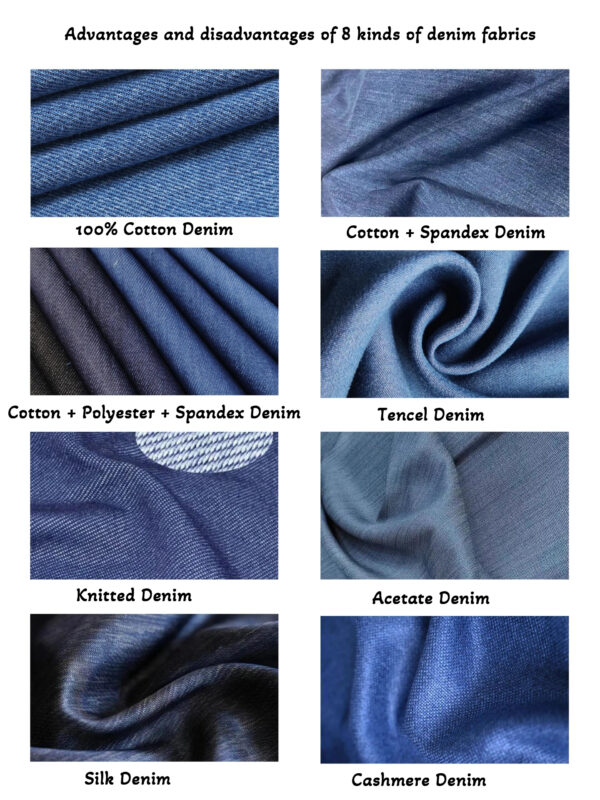
Memahami Bahan Denim: Panduan Komprehensif
Waktu pembacaan yang diperkirakan: sekitar 6 menit. Pendahuluan: Saat memilih bahan denim untuk desain atau pakaian Anda, sangat penting untuk memahami berbagai jenis yang tersedia. Panduan ini memberikan gambaran umum mengenai bahan denim yang umum digunakan...
Ringkasan Pembeli
Bagi pembeli kain untuk pasar B2B, topik ini dapat membantu membandingkan komposisi, berat, tekstur permukaan, daya regangan, finishing, MOQ, serta stabilitas produksi sebelum melakukan pengambilan sampel.
- Pembeli yang sesuaiMerek mode, tim pengadaan, pengecer grosir, pabrik pakaian, dan pengembang produk.
- Apa yang perlu dikonfirmasiProduk target, arah tekstur kain, finishing, kebutuhan sampel, jumlah, dan pasar pengiriman.
- Risiko pembeliSpesifikasi yang tidak jelas dapat menyebabkan pengambilan sampel yang salah, kualitas produk secara keseluruhan yang tidak stabil, serta proses penentuan harga yang lambat.
- CTA yang DirekomendasikanPermintaan sampel atau penawaran harga sebelum memutuskan untuk memproduksi dalam jumlah besar.
Mengapa Hal Ini Penting bagi Pembeli B2B
Konfirmasi aplikasi, karakter kain target, arah warna, dan jumlah produksi sebelum meminta penawaran harga.
Waktu pembacaan yang diperkirakan: sekitar 6 menit. Pendahuluan: Saat memilih bahan denim untuk desain atau pakaian Anda, sangat penting untuk memahami berbagai jenis yang tersedia. Panduan ini memberikan gambaran umum mengenai bahan denim yang umum digunakan...
Tabel Spesifikasi untuk Pengadaan yang Lebih Cepat
| Titik keputusan | Opsi untuk membandingkan | Mengapa Ini Penting | Pertanyaan pembeli |
|---|---|---|---|
| Bahan dasar kain | Kain katun, campuran kain, denim elastis, jacquard, denim berflocking, atau denim khusus | Mengatur tekstur sentuhan, ketahanan, dan posisi harga | Untuk kategori produk apa kain ini? |
| Berat | Konstruksi ringan, sedang, atau berat | Memengaruhi penampilan pakaian, musim penggunaan, jenis produk, serta biaya pengiriman. | Apakah Anda membutuhkan kemeja, jaket, jeans, atau pakaian bergaya formal? |
| Selesai | Warna, pencucian, pelapisan, flocking, jacquard, atau pelembutan | Menentukan tampilan akhir serta interaksi dengan pelanggan | Apa sensasi saat digenggam dan efek pencucian yang Anda harapkan? |
| Rencana pasokan | Contoh sampel, panjang sampel, lot besar | Mengurangi risiko sebelum produksi dimulai | Kuantitas dan pasar pengiriman apa yang sebaiknya dikutip? |
Aplikasi dan Opsi Khusus
Pengembangan Produk
Gunakan panduan ini untuk mengubah ide desain menjadi spesifikasi terkait kain, pakaian, finishing, dan sampel.
Perbandingan Pemasok
Bandingkan para pemasok berdasarkan dukungan sampel, kejelasan teknis, stabilitas dalam jumlah besar, dan kecepatan komunikasi.
Produksi Massal
Konfirmasi standar kualitas, sampel yang telah disetujui, dan jadwal waktu sebelum mengajukan pesanan produksi.
Kontrol Kualitas Points Before Bulk Order
- OKPersetujuan sampel: Konfirmasi bahan kain, warna, tekstur permukaan, struktur, dan finishing sebelum produksi massal dimulai.
- OKKonsistensi massa: Bandingkan sekelompok sampel secara keseluruhan dengan sampel yang telah disetujui dalam kondisi pencahayaan dan pengujian yang sama.
- OKPengujian kinerja: Periksa penyusutan, ketahanan warna, pemulihan setelah regangan, atau ketahanan dekorasi bila relevan.
- OKKlaritas kutipan: Sertakan jumlah pengiriman, destinasi, kebutuhan kemasan, dan waktu penyelesaian yang diharapkan untuk menghindari penetapan harga yang tidak jelas.
Proses Pengembangan Sampel
| Langkah | Pembeli menyediakan… | Pemasok telah mengonfirmasi. |
|---|---|---|
| 1. Ringkasan | Aplikasi, gambar referensi, kualitas dan jumlah target | Kelayakan, bahan yang direkomendasikan, dan opsi khusus |
| 2. Contoh kain | Umpan balik mengenai warna, tekstur permukaan, pola, atau finishing yang diinginkan | Stok yang tersedia, arahan khusus, dan biaya sampel |
| 3. Sampel | Rencana pengujian pakaian, besaran atau panjang yang dibutuhkan | Jadwal pengambilan sampel dan reproduktivitas produksi |
| 4. Penawaran grosir | Jumlah pesanan, tujuan pengiriman, dan kebutuhan kemasan | Harga per unit, MOQ, waktu pengiriman, dan titik pemeriksaan QC |
Panduan Rinci
Waktu baca perkiraan: ~6 menit
Pendahuluan
Saat memilih bahan denim untuk desain atau pakaian Anda, sangat penting untuk memahami berbagai jenis yang tersedia. Panduan ini memberikan gambaran umum mengenai jenis-jenis bahan denim umum, serta menyoroti fitur utama, kelebihan, dan kekurangannya guna membantu Anda membuat keputusan yang tepat.
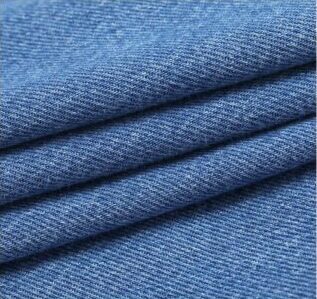
1. 100% Kotak Denim
Kelebihan:
- Nyaman: Terbuat dari katun alami, jeans ini bernapas dan lembut, sangat ideal untuk cuaca hangat.
- Eco-Friendly: Kain katun dapat terurai secara alami, sehingga menjadikannya pilihan yang berkelanjutan.
- Tahan lama: Denim katun murni dikenal karena kekuatannya serta ketahanannya terhadap aus dan kerusakan.
- Aman untuk kulit: cocok untuk kulit sensitif karena terbuat dari bahan alami.
- Tampilan Terstruktur: Denim kapas berat dan berkepadatan tinggi memberikan siluet yang kuat serta terstruktur dengan baik.
Kekurangan:
- Menyusut dengan mudah: Denim katun dapat menyusut secara signifikan setelah dicuci beberapa kali.
- Penghilangan Warna Secara Perlahan: Denim katun murni cenderung kehilangan warnanya lebih cepat dibandingkan campuran sintetis.
- Rasa kaku: Jika tidak dilengkapi pita elastis, kain denim ini dapat membatasi pergerakan saat melakukan aktivitas.
Denim dari katun 100%
2. Cotton + Spandex Denim
Kelebihan:
- Pas yang fleksibel: Spandex memberikan elastisitas yang tinggi, sehingga meningkatkan kenyamanan dan pasnya penampilan.
- Bisa dihirup: Campuran ini mempertahankan sifat serat kapas dalam menyerap kelembapan.
Kekurangan:
- Kehilangan Bentuk: Kandungan spandex yang berlebihan dapat menyebabkan distorsi kain.
- Mahal: Biaya produksi yang lebih tinggi dapat meningkatkan harga eceran.
Denim dari kombinasi katun dan spandex
3. Cotton + Poliester + Denim Spandex
Kelebihan:
- Terjangkau: Serat campuran mengurangi biaya produksi.
- Tahan lama: Polyester meningkatkan ketahanan terhadap abrasi dan kekuatan material.
- Tahan kerutan: Butuh pengeleman lebih sedikit dan tetap rapi dalam waktu yang lebih lama.
Kekurangan:
- Risiko kerusakan pada produk (pilling risk): Serat poliester dapat membentuk gumpalan seiring berjalannya waktu.
- Penyerapan Kelembapan Terbatas: Campuran ini dapat menahan kelembapan, sehingga menyebabkan ketidaknyamanan dalam kondisi lembap.

Denim terbuat dari kombinasi katun, poliester, dan spandex.
4. Tencel Denim
Kelebihan:
- Kontrol Kelembapan: Tencel sangat unggul dalam menyerap kelembapan, sehingga membuat Anda tetap kering.
- Lembut dan Halus: Dikenal karena teksturnya yang lembut seperti sutra, sangat cocok untuk kulit sensitif.
- Eco-Friendly: Tencel dihasilkan dari pulp kayu alami dan bersifat dapat terurai secara biologis.
Kekurangan:
- Mahal: Sifat unggulan Tencel memiliki harga yang lebih tinggi.
- Struktur yang halus: Sifatnya yang ringan dapat membatasi ketahanannya.
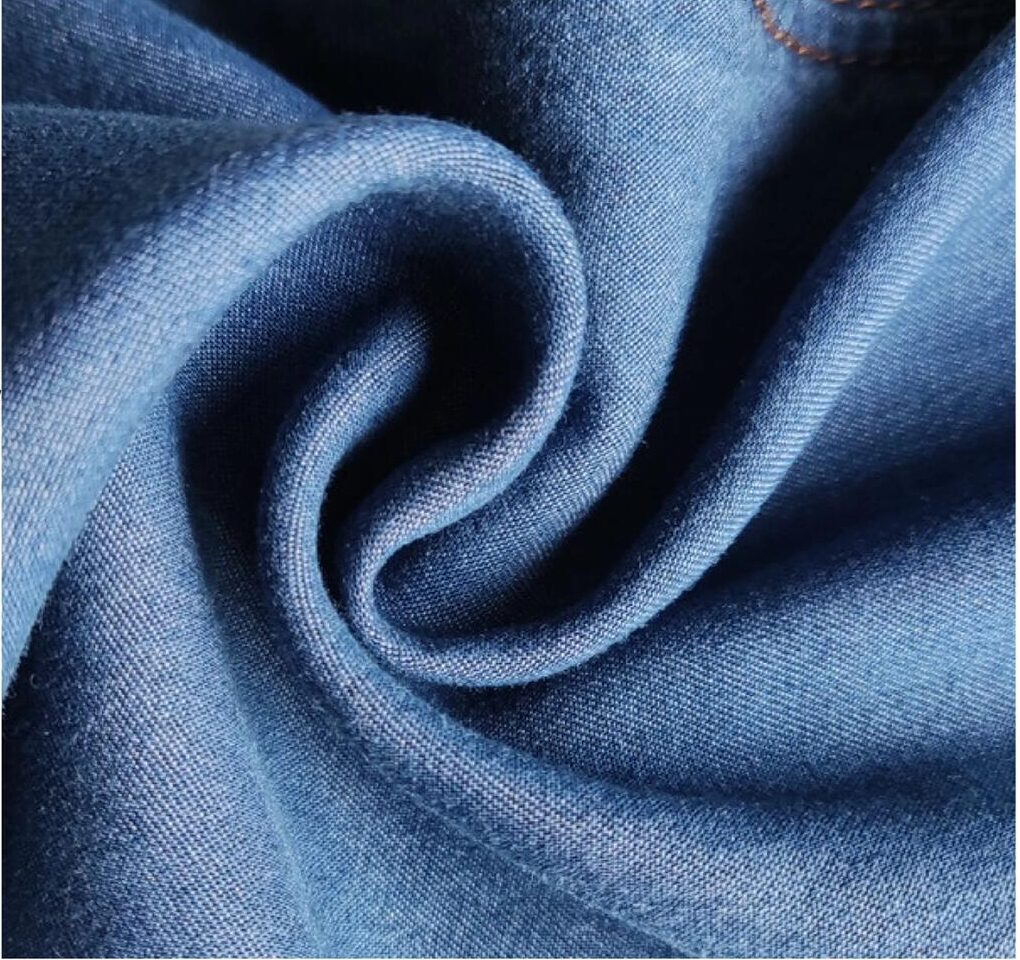
Denim Tencel
5. Denim Rajutan
Kelebihan:
- Fleksibilitas Tinggi: Menawarkan elastisitas dan kenyamanan yang luar biasa.
- Fitur Khusus: Beberapa jenis denim rajut memiliki sifat anti-bakteri, penyerap keringat, atau tahan terhadap sinar UV.
Kekurangan:
- Instabilitas Warna: Perlu dicuci dengan hati-hati agar warnanya tetap cerah dan menarik.
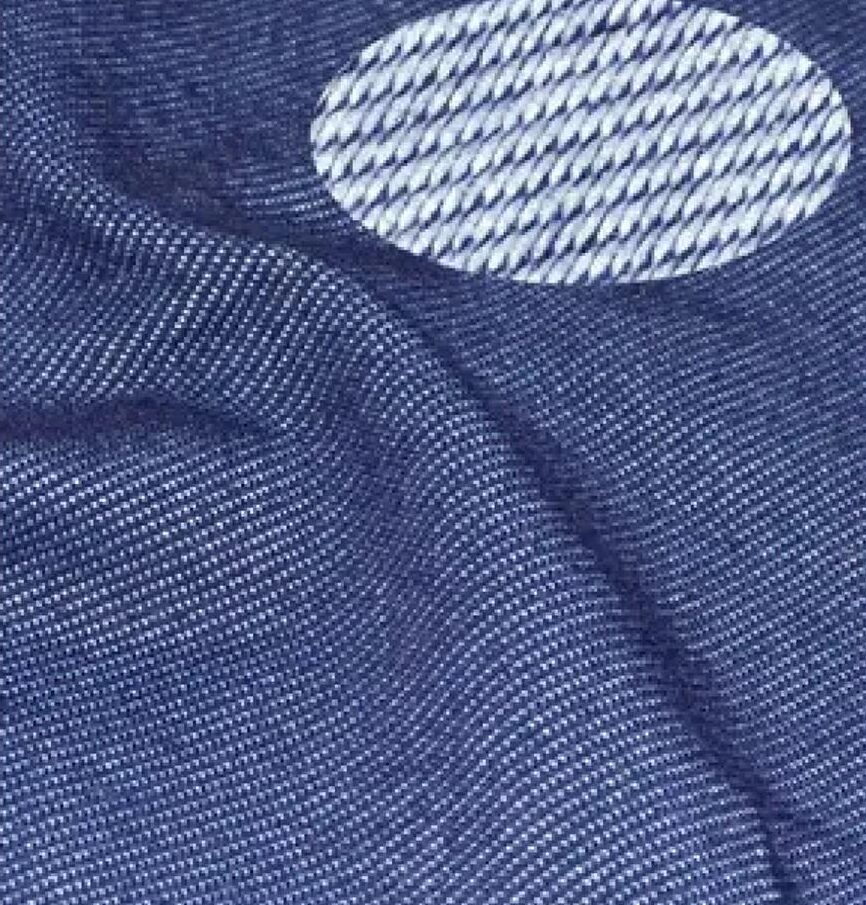
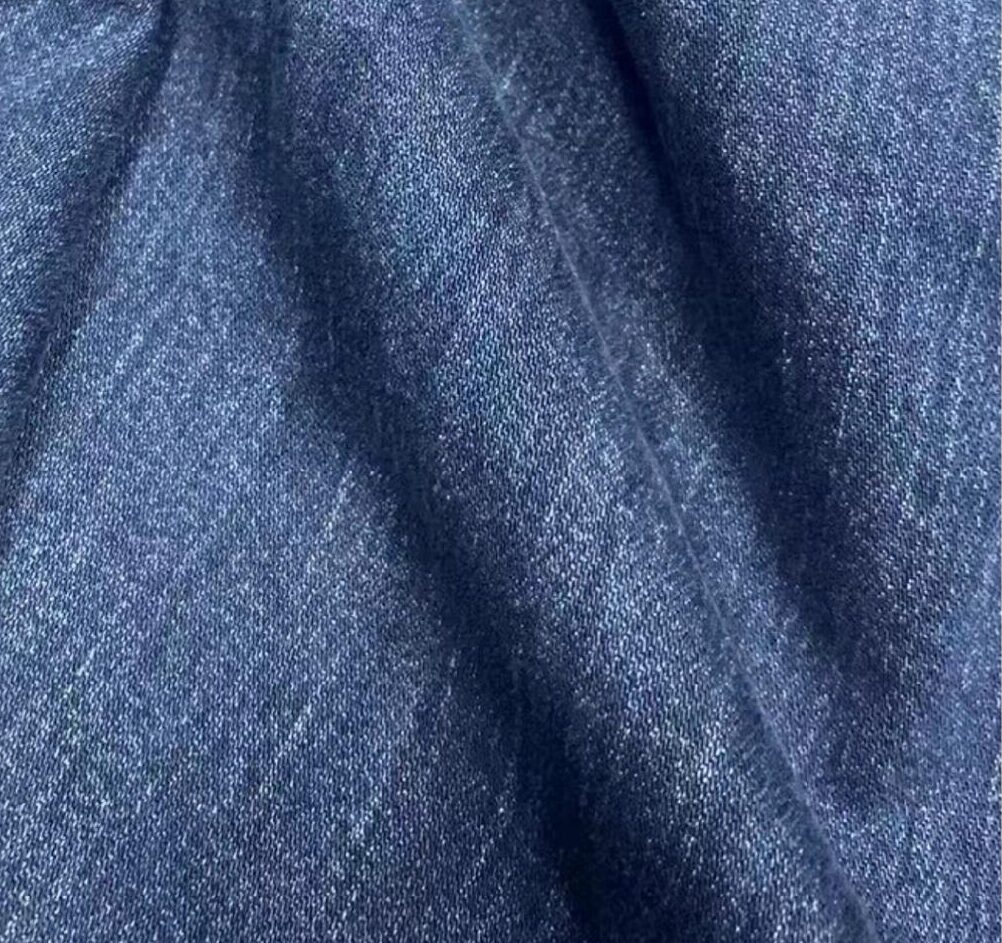
Denim yang dijahit dengan teknik tenun
6. Denim Asetat
Kelebihan:
- Penuh kesadaran lingkungan: Serat asetat bersifat dapat terurai secara biologis dan ramah lingkungan.
- Finishing yang mengilap: Menawarkan penampilan yang alami dan mengilap.
- Lembut dan Mengalir: Menyediakan tampilan yang elegan dan berlapis, sangat cocok untuk desain yang sofistikasi.
Kekurangan:
- sensitif terhadap panas: Asetat memerlukan pencucian pada suhu rendah untuk mencegah kerusakan.
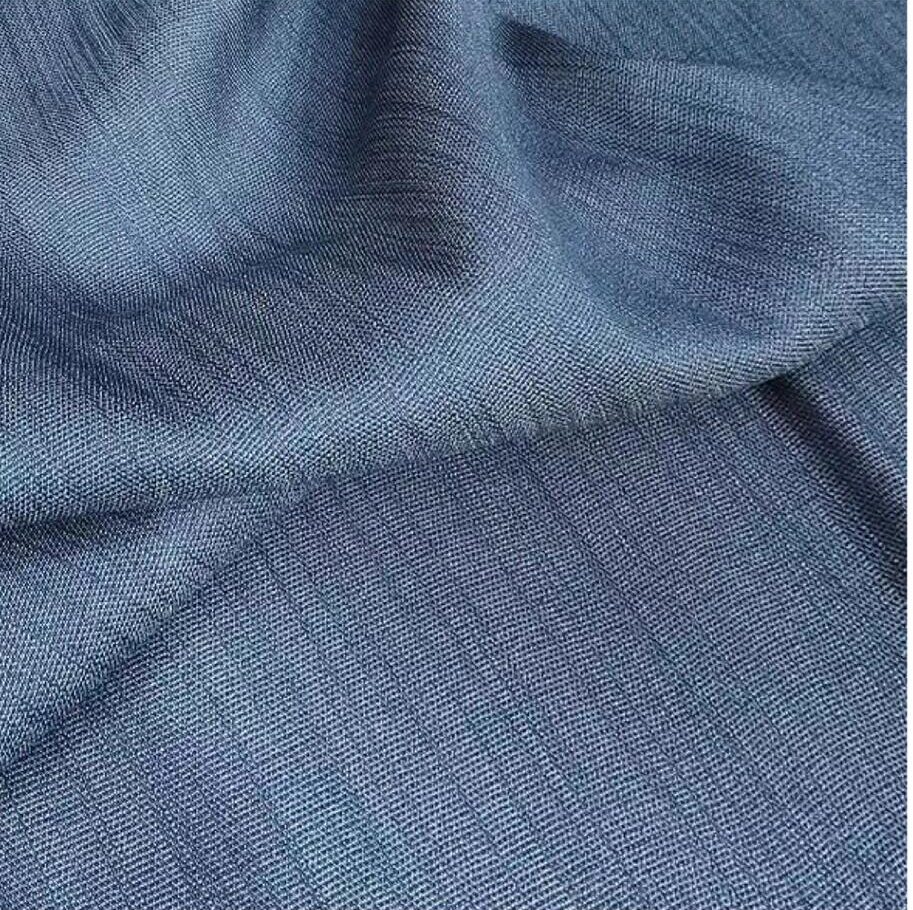
Denim Berbahan Asetat
7. Denim Sutra
Kelebihan:
- Tekstur Mewah: Denim sutra terasa sangat halus dan ringan.
- Bisa dihirup dan sejuk: Sangat ideal untuk pakaian musim panas.
Kekurangan:
- Perawatan Tinggi: Sutra memerlukan perawatan yang hati-hati agar teksturnya tetap terjaga.
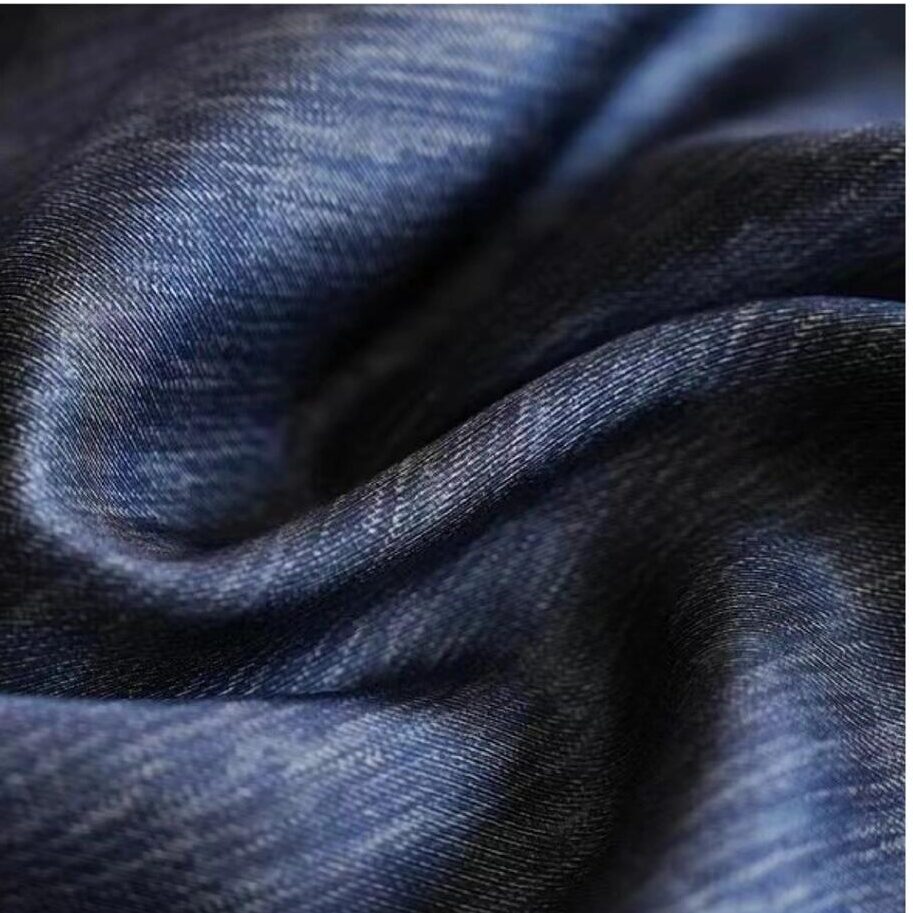
Sutra Denim
8. Denim Berbahan Cashmere
Kelebihan:
- Kenyamanan Panas yang Unggul: Serat cashmere memberikan isolasi yang luar biasa, sangat ideal untuk pakaian musim dingin.
- Sentuhan Lembut: Denim berbahan cashmere memberikan kenyamanan yang tak tertandingi.
Kekurangan:
- Mahal: Kualitas premium Kashmir menuntut harga yang lebih tinggi.
- Versatilitas Terbatas: Paling cocok untuk cuaca dingin karena sifatnya yang hangat.
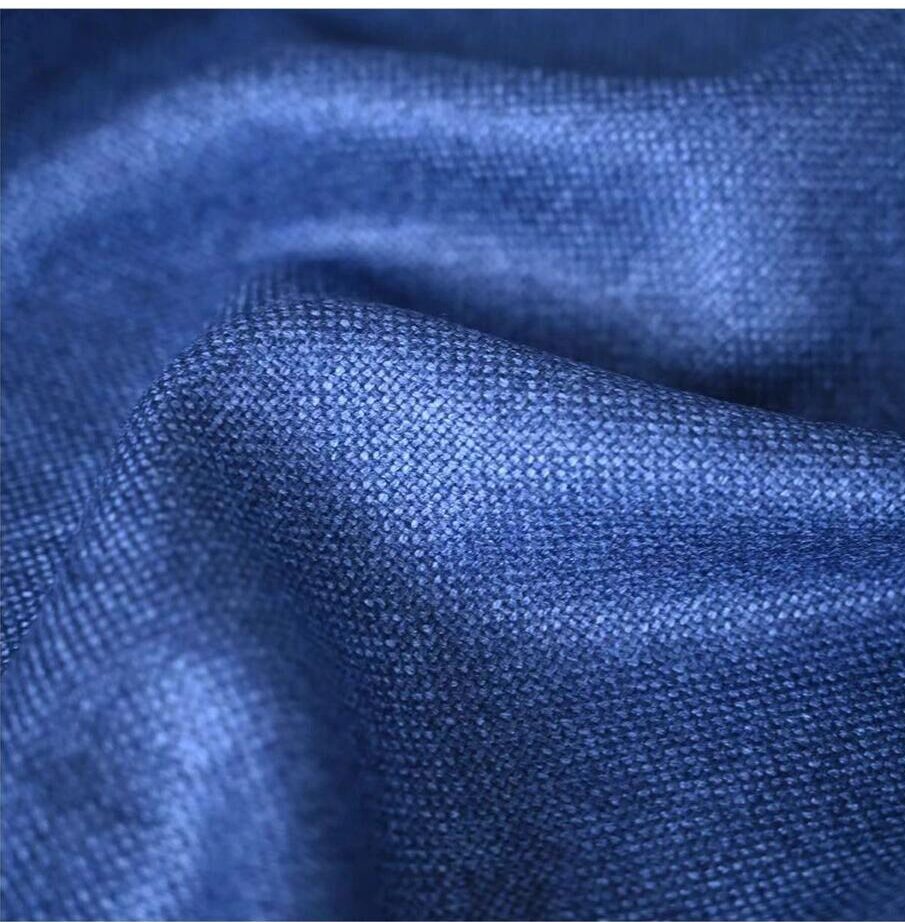
Denim Berbahan Cashmere
Memilih Bahan Denim yang Tepat Sesuai Kebutuhan Anda
Untuk memilih denim terbaik sesuai kebutuhan proyek Anda, pertimbangkan faktor-faktor seperti kenyamanan, ketahanan, dan perawatan yang diperlukan. Untuk pakaian sehari-hari kasual, campuran katun atau spandex menawarkan fleksibilitas yang tinggi. Sedangkan untuk mode mewah, denim dari sutra atau kashmir memberikan sentuhan yang elegan.
Seruan untuk Bertindak
Siap meningkatkan kualitas desain Anda dengan bahan denim premium? Simak lebih lanjut. LYDENIM. COM Koleksi eksklusif bahan berkualitas yang dirancang khusus untuk desainer mode, produsen pakaian, dan penjual tekstil. Jelajahi katalog kami sekarang Temukan kombinasi sempurna untuk karya berikutnya Anda!
layanan personalisasi dari LYDENIM
🎨 Ingin Bahan pakaian khusus dari bahan denim atau unik Pakaian dari bahan kain khusus yang dibuat sesuai desainLYDENIM berspesialisasi dalam menyediakan solusi yang disesuaikan secara khusus untuk memenuhi kebutuhan desain dan produksi Anda.
🛍️ Eksplorasi dan dapatkan inspirasi.Jelajahi koleksi kain kami dan temukan ide desain yang menarik. LYDENIM.
🌐 Pakaian ElastisLihatlah produk kami di MyAlibaba. 📩 Hubungi kamiHubungi kami di Malone@lydenim.com.
Buat karya luar biasa dari bahan denim dengan LYDENIM—mitra andal Anda untuk Bahan pita elastis dan Solusi pakaian khusus berbahan denim.
Pertanyaan umum
Apakah ini dapat disesuaikan dengan merek atau koleksi saya?
Ya. Kirimkan aplikasi Anda, gambar referensi, kualitas yang diinginkan, jumlah, serta persyaratan pasar agar pemasok dapat merekomendasikan pilihan bahan, produk pakaian, atau proses penyelesaian yang sesuai.
Informasi apa yang perlu saya kirimkan sebelum meminta penawaran harga?
Siapkan jenis produk, bahan atau teknik yang digunakan, arah warna, kebutuhan sampel, jumlah, negara tujuan, serta waktu pengiriman yang diperkirakan.
Apakah saya harus meminta sampel sebelum produksi massal?
Ya. Penggunaan sampel warna dan ukuran sampel dapat mengurangi risiko sebelum melakukan pesanan dalam jumlah besar, terutama ketika kualitas warna, tekstur permukaan, daya regangan, penampilan akhir, atau dekorasi menjadi faktor penting.
Bagaimana cara saya menghindari masalah kualitas pada pesanan dalam jumlah besar?
Setujui standar sampel yang jelas, tentukan persyaratan pengujian, konfirmasi toleransi, dan bandingkan hasil produksi massal dengan sampel yang telah disetujui sebelum pengiriman.
Butuh bantuan untuk mengubah ini menjadi dokumen pengadaan yang siap digunakan dalam produksi?
Kirimkan produk target, jenis kain, jumlah, serta kebutuhan sampel Anda. LY Denim dapat membantu membandingkan berbagai pilihan dan menyusun penawaran harga.