


Melampaui Warna Biru: Kapan Denim Mulai Menampilkan Warna-Warna Beragam? Disertai Penjelasan tentang Fenomena Penuapan Warna, Perbedaan Antar Jenis Denim, serta Bahan Pembuatnya
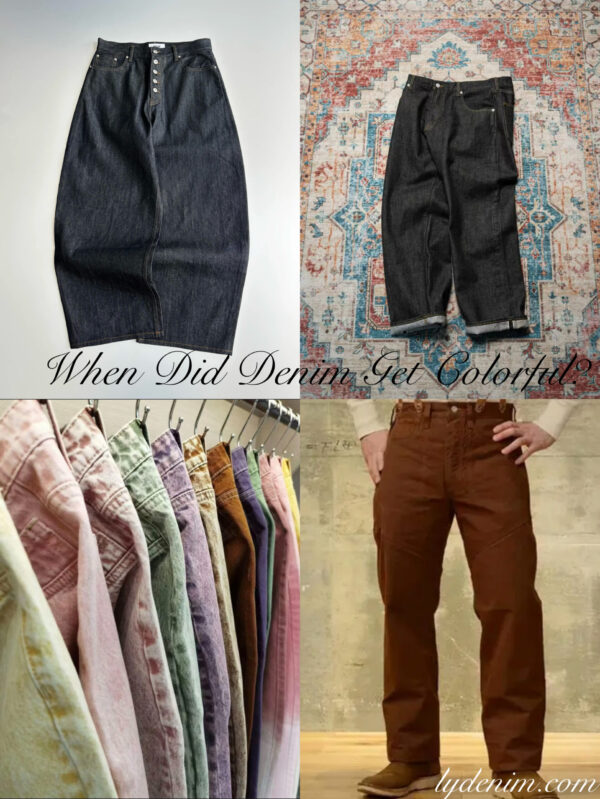
Melampaui Warna Biru: Kapan Denim Mulai Menampilkan Warna-Warna Beragam? Disertai Penjelasan tentang Fenomena Penuapan Warna, Perbedaan Antar Jenis Denim, serta Bahan Pembuatnya
Temukan bagaimana jeans melampaui warna biru, ketahanan terhadap pelaburan akibat pencucian sebelumnya, perbedaan antara jeans dan bahan non-jeans, jenis-jenis material jeans, serta fitur personalisasi.
Ringkasan Pembeli
Artikel ini disusun sebagai panduan pengadaan untuk pasar B2B, sehingga pembeli dapat bergerak dari tahap penelitian hingga pengajuan permintaan sampel dengan lebih sedikit detail yang masih kurang.
- Pembeli yang sesuaiMerek mode, tim pengadaan, pengecer grosir, pabrik pakaian, dan pengembang produk.
- Apa yang perlu dikonfirmasiProduk target, arah tekstur kain, finishing, kebutuhan sampel, jumlah, dan pasar pengiriman.
- Risiko pembeliSpesifikasi yang tidak jelas dapat menyebabkan pengambilan sampel yang salah, kualitas produk secara keseluruhan yang tidak stabil, serta proses penentuan harga yang lambat.
- CTA yang DirekomendasikanPermintaan sampel atau penawaran harga sebelum memutuskan untuk memproduksi dalam jumlah besar.
Mengapa Hal Ini Penting bagi Pembeli B2B
Gunakan ringkasan, tabel, dan daftar pemeriksaan untuk menyusun pertanyaan yang lebih jelas.
Temukan bagaimana jeans melampaui warna biru, ketahanan terhadap pelaburan akibat pencucian sebelumnya, perbedaan antara jeans dan bahan non-jeans, jenis-jenis material jeans, serta fitur personalisasi.
Tabel Spesifikasi untuk Pengadaan yang Lebih Cepat
| Titik keputusan | Opsi untuk membandingkan | Mengapa Ini Penting | Pertanyaan pembeli |
|---|---|---|---|
| Tujuan Pembeli | Penelitian, permintaan sampel, pengembangan produk, dan pengadaan massal | menjelaskan apa yang seharusnya dapat dibantu pembaca melalui artikel ini selanjutnya | Keputusan apa yang perlu diambil oleh pembeli? |
| Penerapan produk | Jeans, jaket, kaus, rok, pakaian jalanan atau pakaian kerja | Menghubungkan pengetahuan dengan kebutuhan produksi yang nyata | Di mana kain atau teknik ini akan digunakan? |
| Kustomisasi | Warna, berat, komposisi, permukaan, pola, atau dekorasi | Mengubah proses membaca menjadi ringkasan pengumpulan informasi | Apa yang perlu disesuaikan? |
| Langkah Selanjutnya | Swatch, panjang sampel, penawaran harga, konfirmasi QC | Mendorong pembaca untuk melakukan penyelidikan lebih lanjut | Informasi apa yang perlu dikirimkan kepada pemasok? |
Aplikasi dan Opsi Khusus
Pengembangan Produk
Gunakan panduan ini untuk mengubah ide desain menjadi spesifikasi terkait kain, pakaian, finishing, dan sampel.
Perbandingan Pemasok
Bandingkan para pemasok berdasarkan dukungan sampel, kejelasan teknis, stabilitas dalam jumlah besar, dan kecepatan komunikasi.
Produksi Massal
Konfirmasi standar kualitas, sampel yang telah disetujui, dan jadwal waktu sebelum mengajukan pesanan produksi.
Kontrol Kualitas Points Before Bulk Order
- OKPersetujuan sampel: Konfirmasi bahan kain, warna, tekstur permukaan, struktur, dan finishing sebelum produksi massal dimulai.
- OKKonsistensi massa: Bandingkan sekelompok sampel secara keseluruhan dengan sampel yang telah disetujui dalam kondisi pencahayaan dan pengujian yang sama.
- OKPengujian kinerja: Periksa penyusutan, ketahanan warna, pemulihan setelah regangan, atau ketahanan dekorasi bila relevan.
- OKKlaritas kutipan: Sertakan jumlah pengiriman, destinasi, kebutuhan kemasan, dan waktu penyelesaian yang diharapkan untuk menghindari penetapan harga yang tidak jelas.
Proses Pengembangan Sampel
| Langkah | Pembeli menyediakan… | Pemasok telah mengonfirmasi. |
|---|---|---|
| 1. Ringkasan | Aplikasi, gambar referensi, kualitas dan jumlah target | Kelayakan, bahan yang direkomendasikan, dan opsi khusus |
| 2. Contoh kain | Umpan balik mengenai warna, tekstur permukaan, pola, atau finishing yang diinginkan | Stok yang tersedia, arahan khusus, dan biaya sampel |
| 3. Sampel | Rencana pengujian pakaian, besaran atau panjang yang dibutuhkan | Jadwal pengambilan sampel dan reproduktivitas produksi |
| 4. Penawaran grosir | Jumlah pesanan, tujuan pengiriman, dan kebutuhan kemasan | Harga per unit, MOQ, waktu pengiriman, dan titik pemeriksaan QC |
Panduan Rinci
Waktu Membaca yang Diperkirakan: Sekitar 7 menit
Melampaui Batas Biru: Mengungkap Rahasia Warna Denim, Efek Gradasi, dan Bahan Kainnya
Denim, terutama jeans biru klasik, merupakan ikon global. Namun dunia denim sangat kaya dan beragam, mencakup berbagai warna seperti Denim Hitamberbagai jenis pencucian dan jenis kain yang berbeda-beda. Mari kita bahas beberapa pertanyaan umum tentang jeans:
Sejak kapan kain denim mulai dicat dengan warna selain biru?
Sementara itu Biru indigo merupakan sinonim dengan yang tradisional DenimBahan ini tidak selalu terbatas pada satu warna saja. Perluasan penggunaannya melampaui warna biru dimulai secara mengejutkan sejak awal.
-
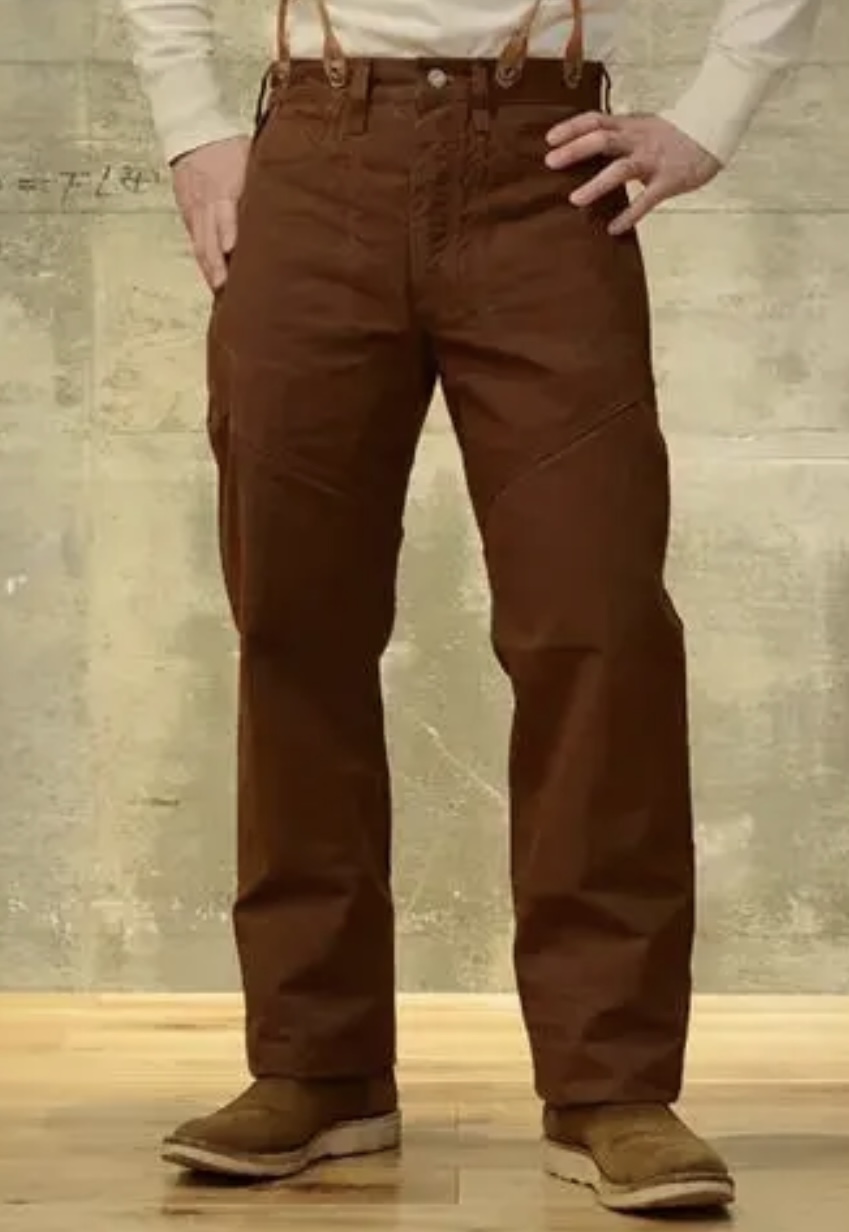
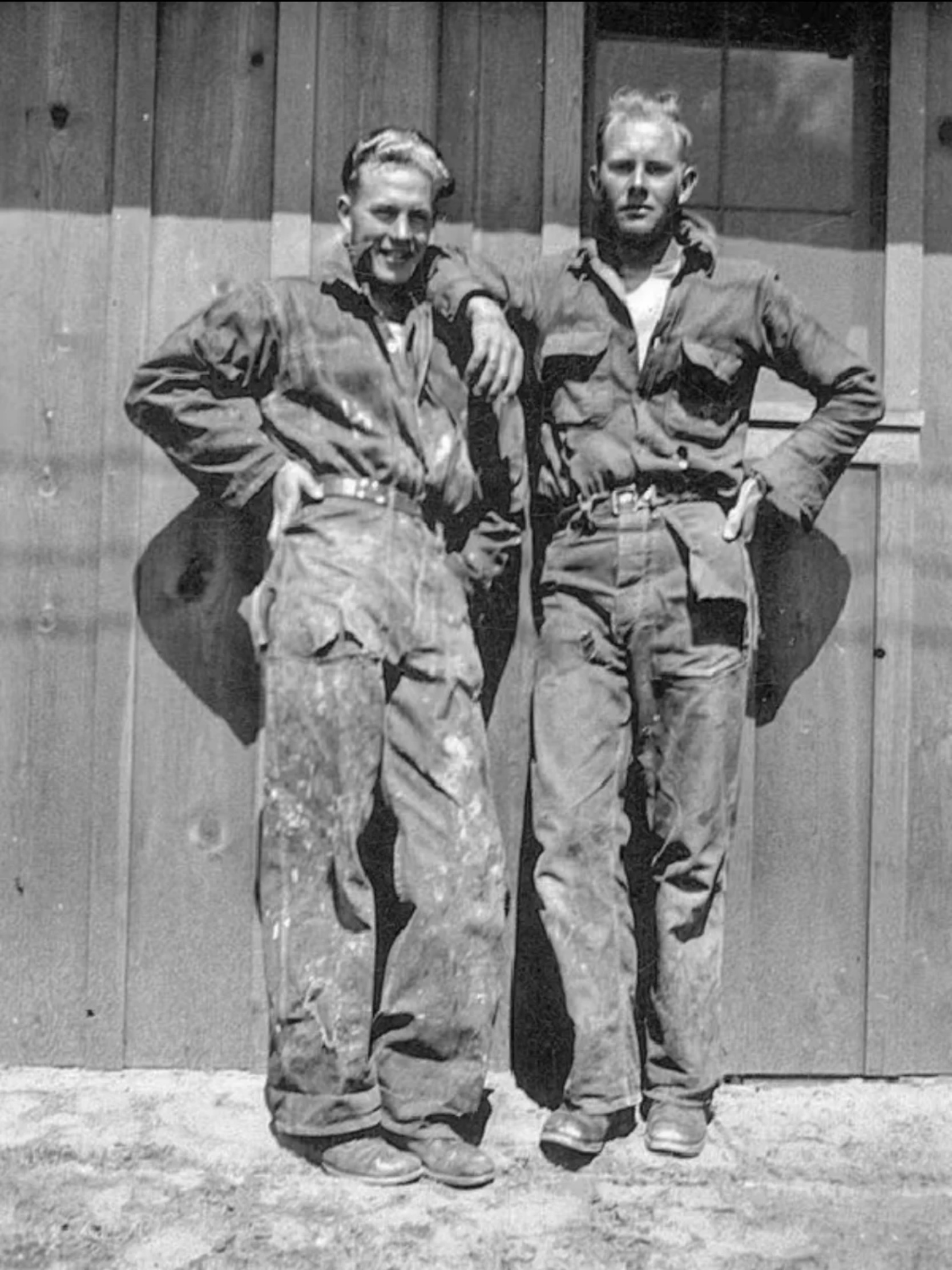
Awal Abad ke-20: Dorongan oleh kebutuhan akan pakaian kerja, para produsen mulai memproduksi Denim dalam warna seperti khaki dan cokelat (sering disebut “duck canvas” atau sejenisnya, meskipun secara struktur mirip dengan denim), untuk keperluan tertentu dalam profesi atau aplikasi militer di mana warna biru tidak ideal.

Pakaian kerja dari kain denim
-
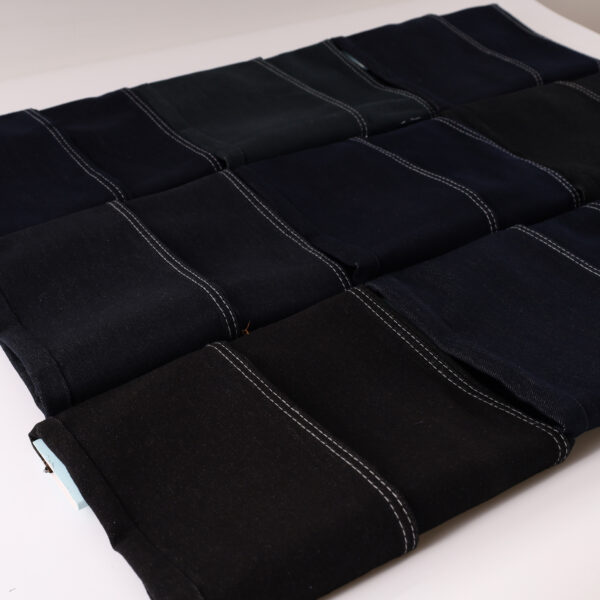
Pasca-Perang Dunia II (dekade 1950-an): Era ini menyaksikan perubahan yang signifikan: budaya pemuda mulai menerima jeans sebagai bagian dari gaya berpakaian, tidak hanya sebagai pakaian kerja. Denim Hitam Popularitasnya meningkat pesat, sangat dipengaruhi oleh gaya-gaya pemberontak dalam film dan musik (misalnya Marlon Brando, James Dean, serta kemudian musik rock and roll). Pewarnaan sulfur memungkinkan produksi warna hitam yang konsisten serta warna-warna lain seperti abu-abu secara lebih mudah.
Jeans bergaya mode
-
1970s Onwards: Itu Rock punk Pergerakan tersebut semakin memperkuat posisi tersebut. Denim Hitam sebagai bahan dasar. Para perancang mode semakin sering bereksperimen dengan warna-warna berbeda Denim, sehingga menghasilkan palet yang lebih luas yang mencakup merah, hijau, ungu, dan lainnya.
Denim berwarna
-
Era Modern: Hari ini, Denim non-biru, terutama Denim Hitam, sangat umum ditemukan. Teknik pewarnaan canggih memungkinkan berbagai spektrum warna, tekstur, dan permukaan yang hampir tak terbatas.
Denim Hitam
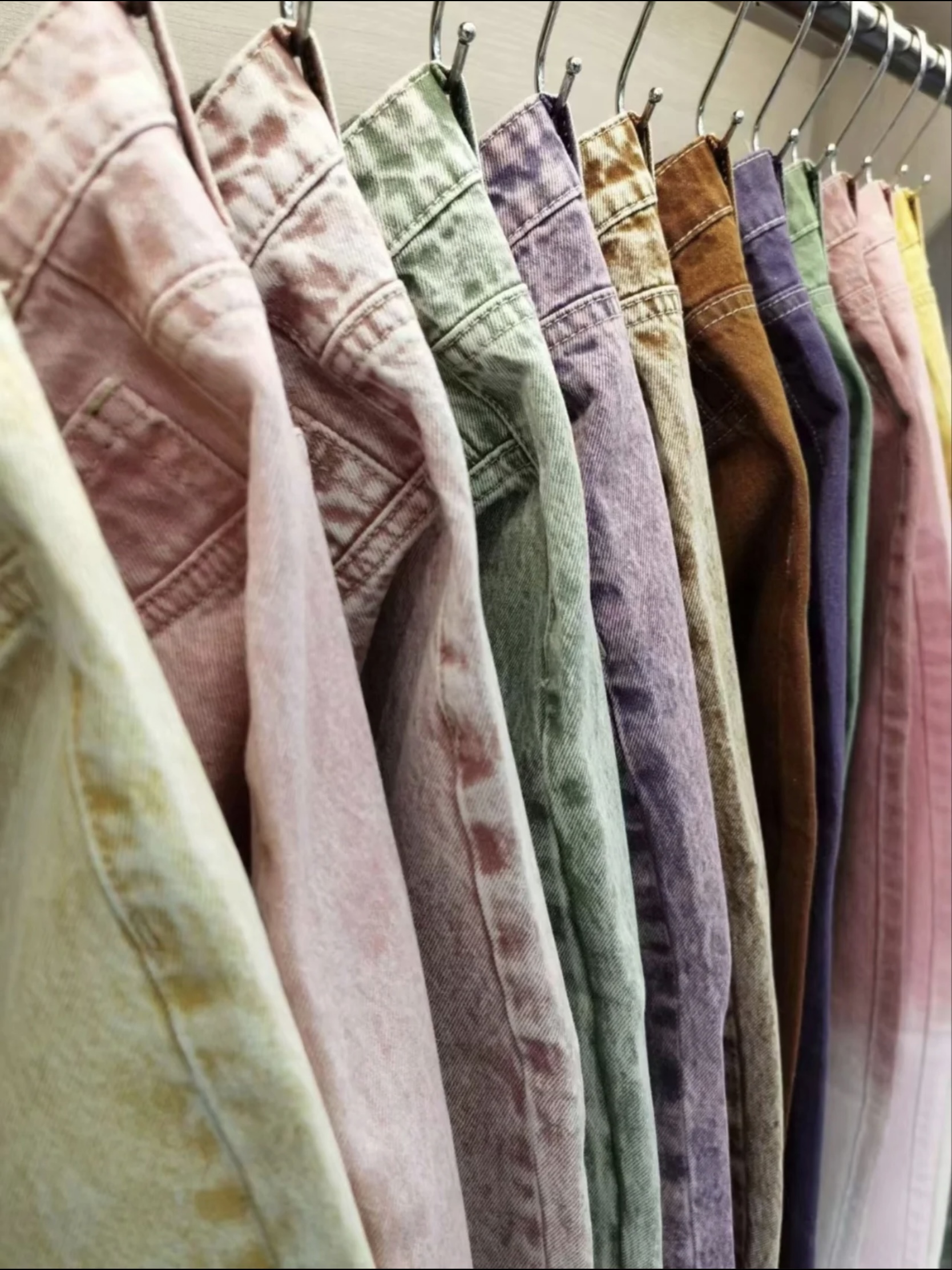
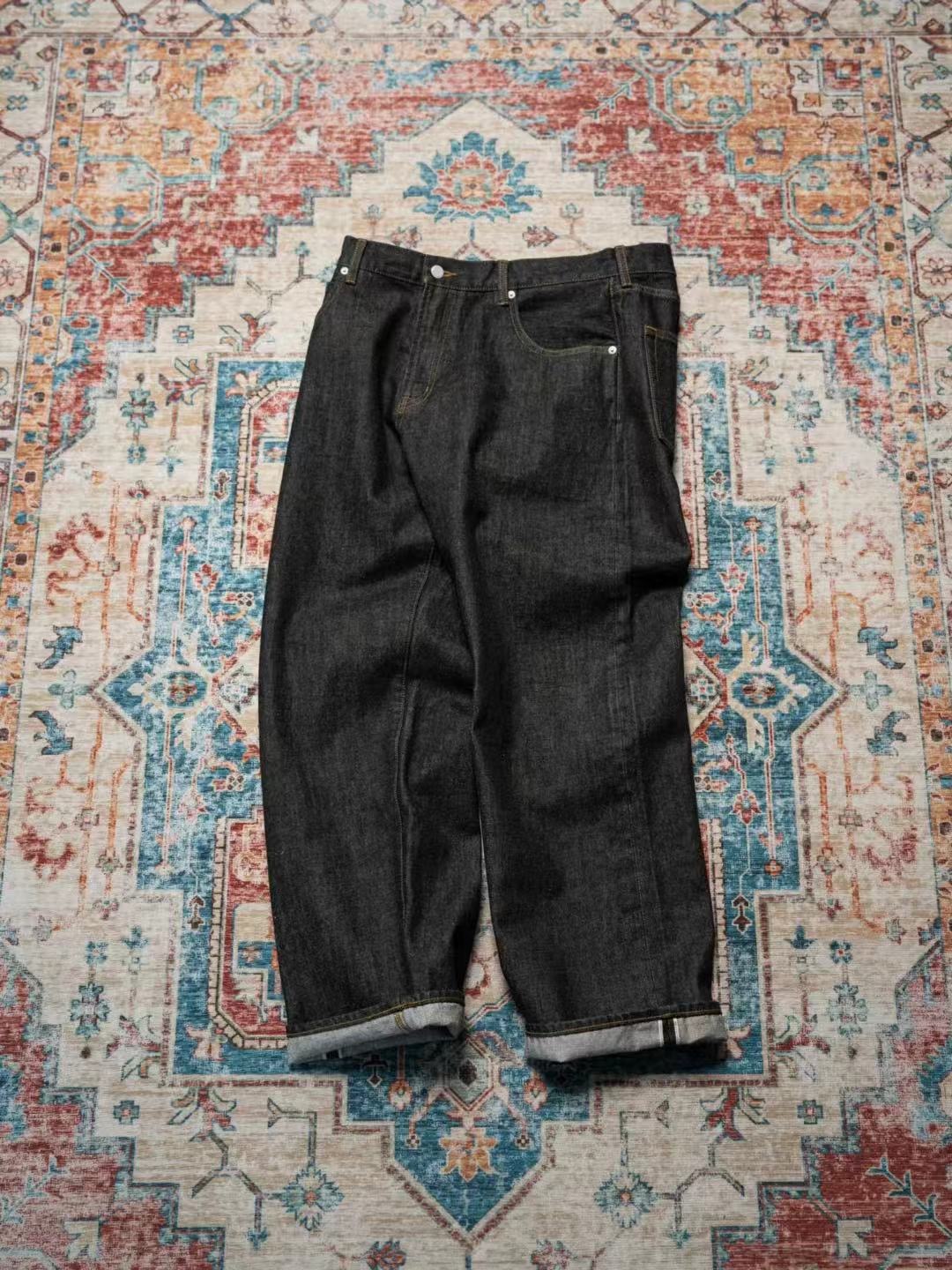
Jadi, meskipun warna biru masih menjadi yang dominan, Denim Berwarna, terutama Denim Hitamtelah menjadi bagian penting dari dunia produk denim selama lebih dari setengah abad.
Apakah denim yang telah dicuci sebelumnya akan memudar seperti denim mentah?
Jawaban singkatnya adalah Tidak, tidak dengan cara yang sama atau dalam tingkat yang sama.
-
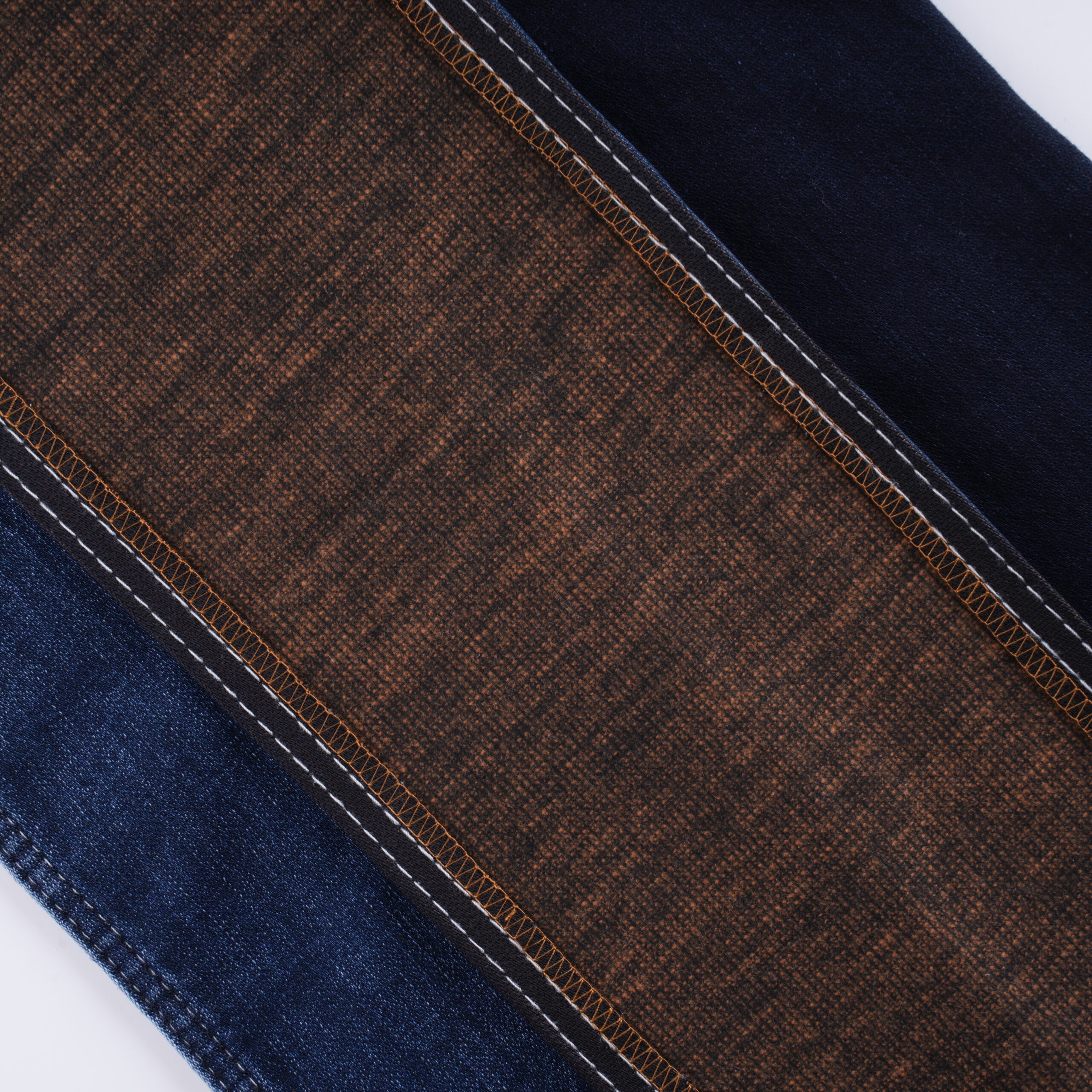
Denim mentah (kering/tidak dicuci): Ini adalah kain denim dalam bentuk paling murni dan belum melalui proses pengolahan apa pun setelah pewarnaan dan penenunan. Kain ini keras serta berwarna gelap. Ciri utamanya adalah bahwa menurun secara signifikan seiring berjalannya waktu dengan penggunaan sehari-hari. Proses pelambatan warna ini bersifat unik dan menghasilkan efek kontras tinggi berupa “jenggot”, pola seperti sarang lebah, serta perubahan warna pada bagian pinggang yang bergantung pada bentuk tubuh dan aktivitas pengguna. Prosesnya berlangsung perlahan dan sangat personal.
Denim mentah -
Denim yang telah dicuci terlebih dahulu: Denim ini telah melalui proses pencucian industri (pencucian batu, pencucian enzimatik, dll.). sebelumnya sedang dijual. Proses ini:
-
Menghilangkan pewarna berlebih.
-
Menghaluskan kain.
-
Menciptakan tampilan yang terlihat usang serta warna yang konsisten.
-
Secara signifikan mengurangi fenomena pelambatan sinyal di masa depan. Sementara itu semua Kain yang diwarnai dapat mengalami perubahan warna secara ringan akibat paparan sinar matahari jangka panjang dan pencucian berulang yang keras. Denim yang telah dicuci sebelumnya dirancang khusus untuk tahan terhadap perubahan warna dan menjaga penampilan yang relatif stabil. Anda tidak akan melihat pola pelaburan warna yang mencolok dengan kontras tinggi seperti yang terlihat pada Denim mentah.
-
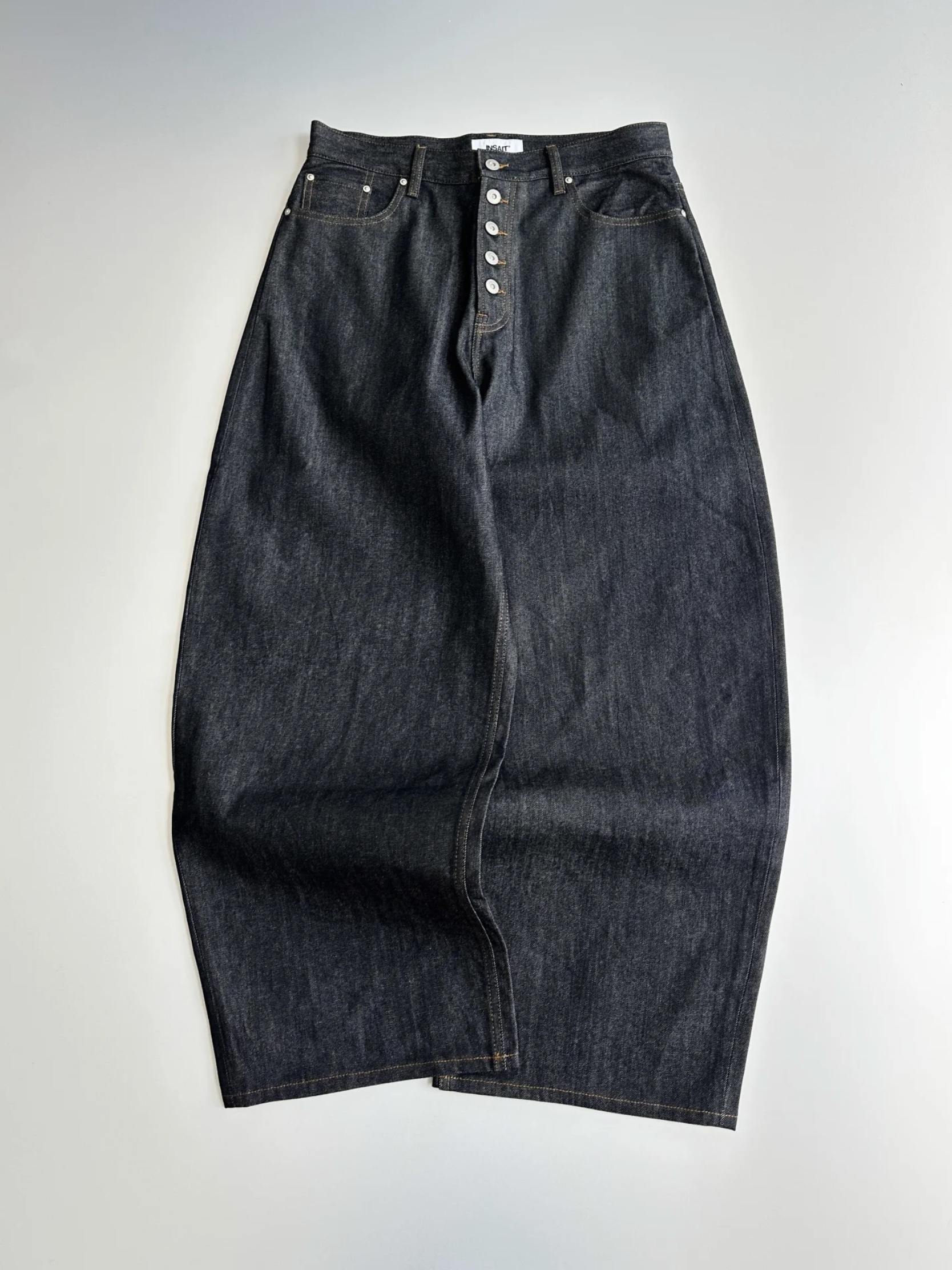

Perbedaan Utama: Denim mentah adalah Maksudnya adalah… untuk menghilang secara dramatis dan nyata secara pribadi. Denim yang telah dicuci sebelumnya Diperlakukan dengan baik. Untuk meminimalkan pelambatan warna lebih lanjut dan memberikan tampilan yang konsisten serta sempurna sejak hari pertama.
Apa perbedaan antara denim dan non-denim?
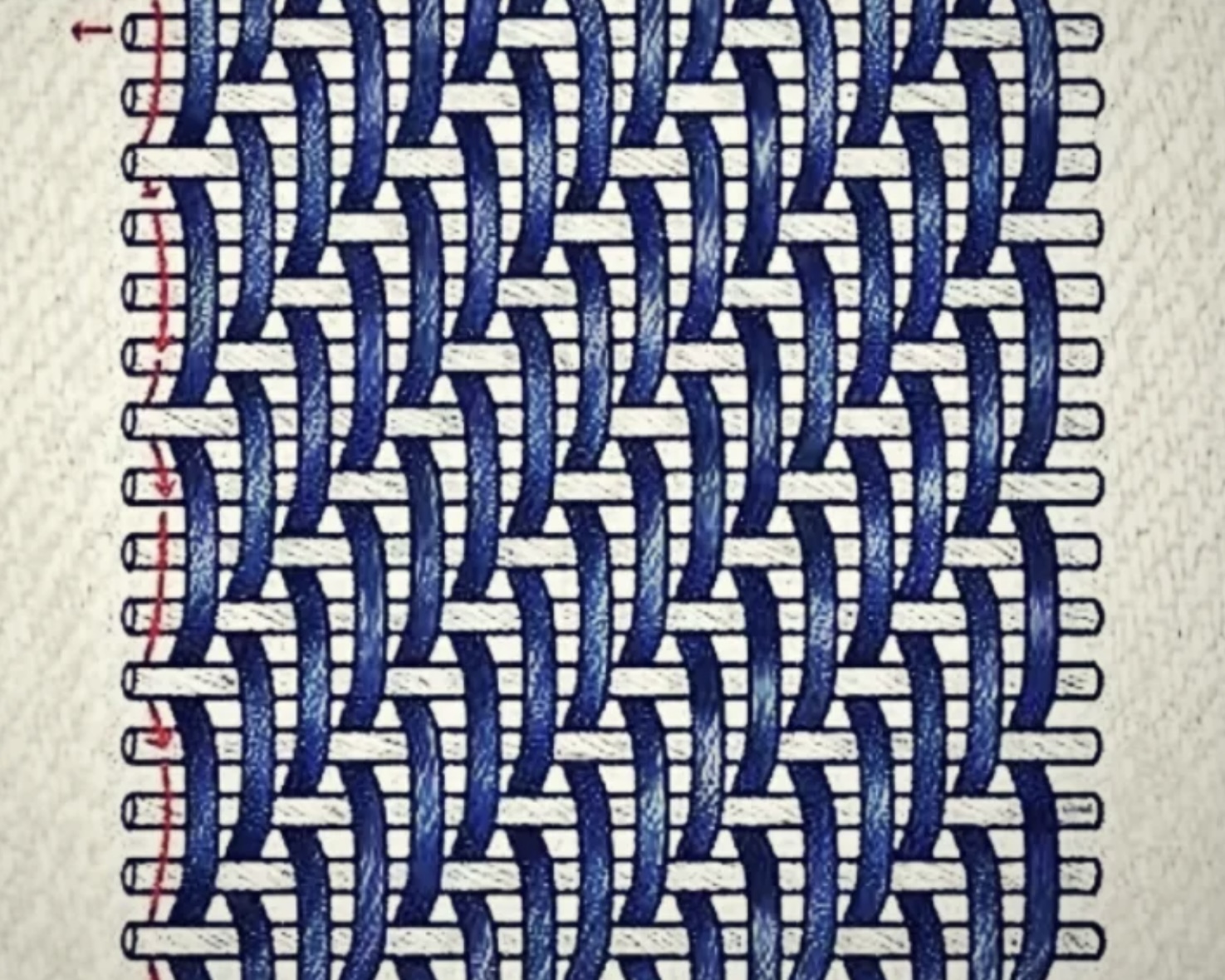
Perbedaan tersebut terletak pada Struktur tenun, pewarnaan benang, dan penggunaannya:
| Fitur | Denim | Bahan non-denim (misalnya, Chambray) |
|---|---|---|
| Menenun | 3×1 kain twill tangan kanan (dengan tulang diagonal) | Tenunan bias (garis utama dan garis samping saling silang) |
| Pewarnaan Benang | Garis warp berwarna (biru/hitam), garis weft putih | Warp dan weft berwarna sama (berdua sisi) |
| Menghilang secara perlahan | "Kehilangan warna" kontras tinggi | Penurunan warna minimal; tahan terhadap perubahan warna |
| Tekstur | Keras dan kasar |
Bahan yang tidak termasuk dalam kategori denim meliputi tekstil seperti corduroy, flannel, atau kain rajut yang tidak memiliki pola twill khas serta teknik pewarnaan indigo seperti pada denim.
Bahan baku apa saja yang diperlukan untuk membuat jeans denim?
Bahan baku utama yang diperlukan adalah:
-
Bahan Denim: Bahan utama, terbuat dari kain yang dijahit:
-
Benang Kapas: Sebagian besar kain denim terbuat dari kapas. Kapas tipe long-staple (seperti Pima atau kapas Mesir) sangat dihargai karena kekuatannya dan permukaan yang halus. Hal ini mencakup:
-
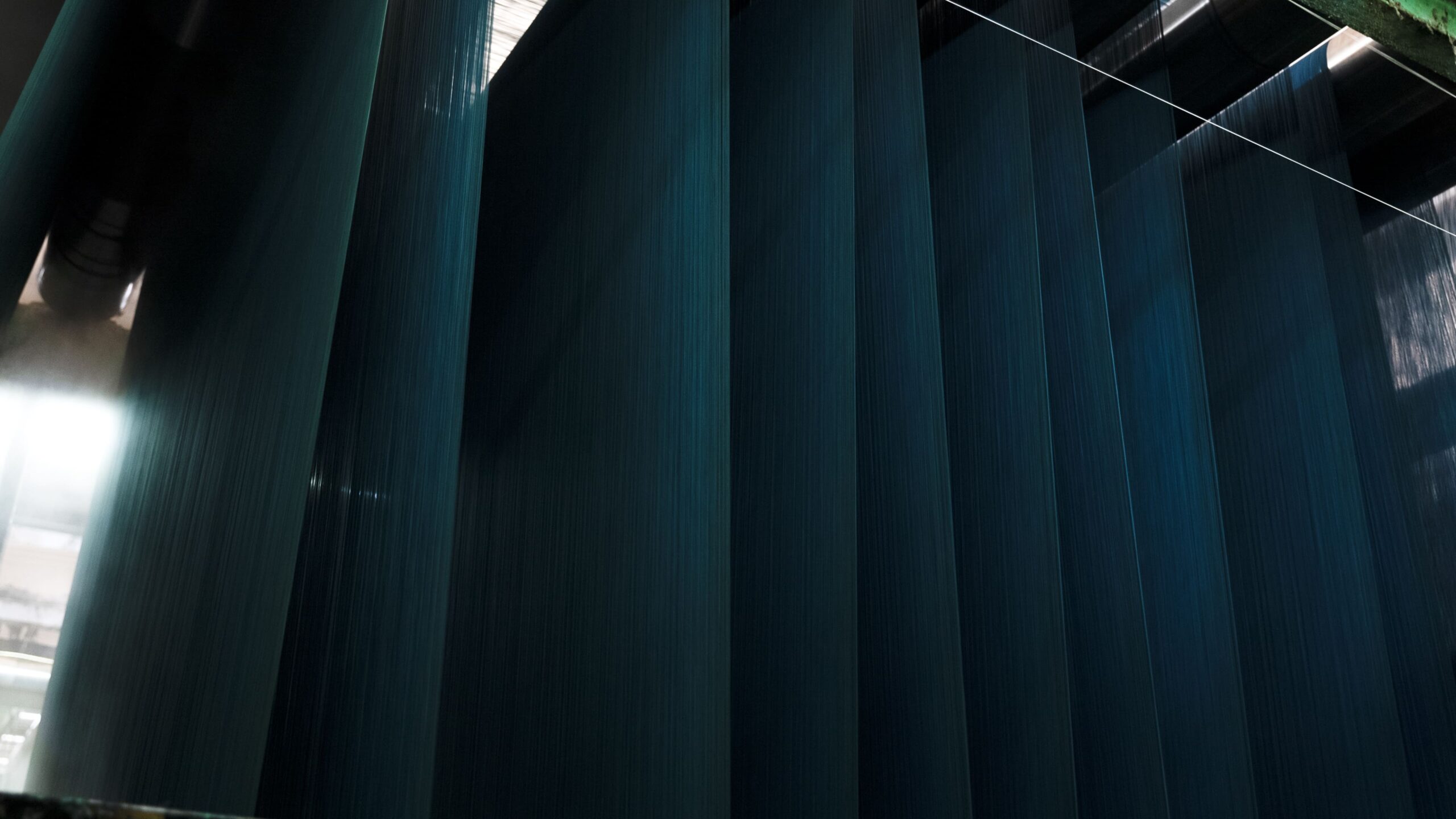
Benang untuk membuat kerah (warp yarn): Berwarna (secara tradisional berupa indigo atau hitam belerang).
-
Benang Weft: Umumnya tidak diwarnai (putih atau ecru).
-
-
(Opsi) Benang Peregangan: Elastana (Spandex/Lycra) sering dicampur dalam persentase kecil (1–3%) dengan benang kapas, terutama pada benang alur, untuk meningkatkan kenyamanan dan kelenturan ("denim elastis").
Bahan tenun
-
-
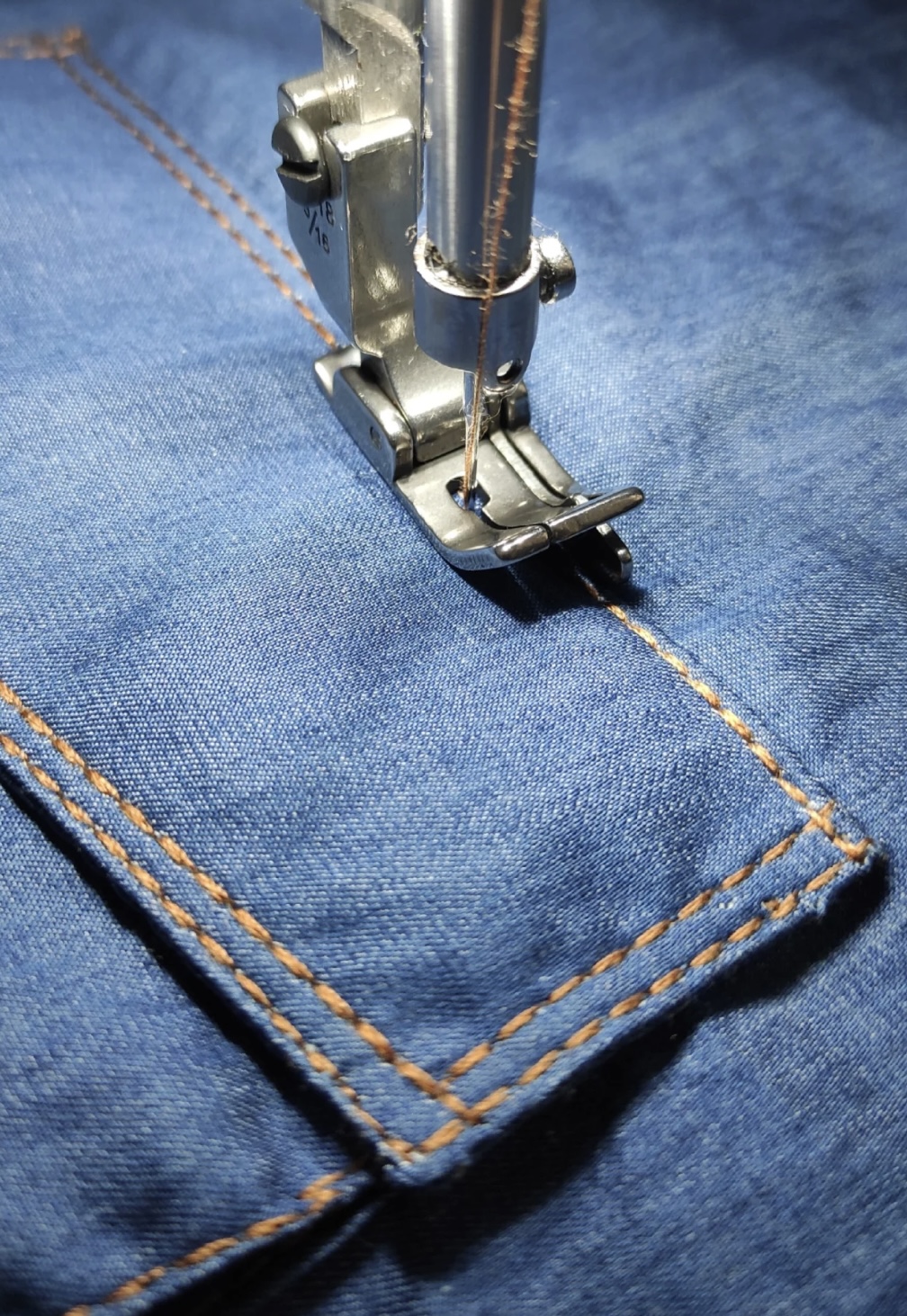
Topik: Benang spin berbahan polyester tahan lama atau benang inti kapas-poliester digunakan untuk menjahit karena kekuatan dan ketahanannya yang tinggi. Benang topstitching kontras (sering kali berwarna emas atau oranye) juga umum digunakan.
Tren
-
Bahan pewarna:
-
Bahan pewarna indigo: Untuk denim biru klasik (diterapkan melalui beberapa kali penetrasi ke benang warp).
Pewarnaan
-
Zat pewarna sulfur: Umumnya digunakan pada kain denim hitam serta warna lain seperti cokelat, abu-abu, hijau, dan sebagainya (diterapkan pada benang warp).
-
Zat Pewarna Reaktif/Pigmen: Terkadang digunakan untuk pewarnaan potongan setelah tenunan atau untuk menciptakan efek tertentu.
-
-
Perangkat keras (Temuan/Penemuan):
-
Tombol-tombol: Umumnya terbuat dari logam (perunggu, tembaga, baja) dan sering kali dilengkapi merek.
-
Rivet: Logam (tembaga, perunggu) digunakan pada titik-titik beban (sudut samping, dasar sayap).
-
拉链: Logam atau plastik untuk lalat.
-
Label (s): Label berbahan kain terlapis atau kulit, serta label ukuran dan perawatan.
-
Koper Kantong: Umumnya terbuat dari kain katun yang lebih ringan atau campuran katun dan poliester.
Perangkat keras
-
-
(Water dan Bahan Kimia yang Tidak Dinyatakan Secara Langsung): Digunakan secara luas dalam proses pewarnaan, pencucian (untuk jeans yang telah dicuci sebelumnya), dan penyelesaian permukaan.
 Perangkat keras (Temuan/Penemuan):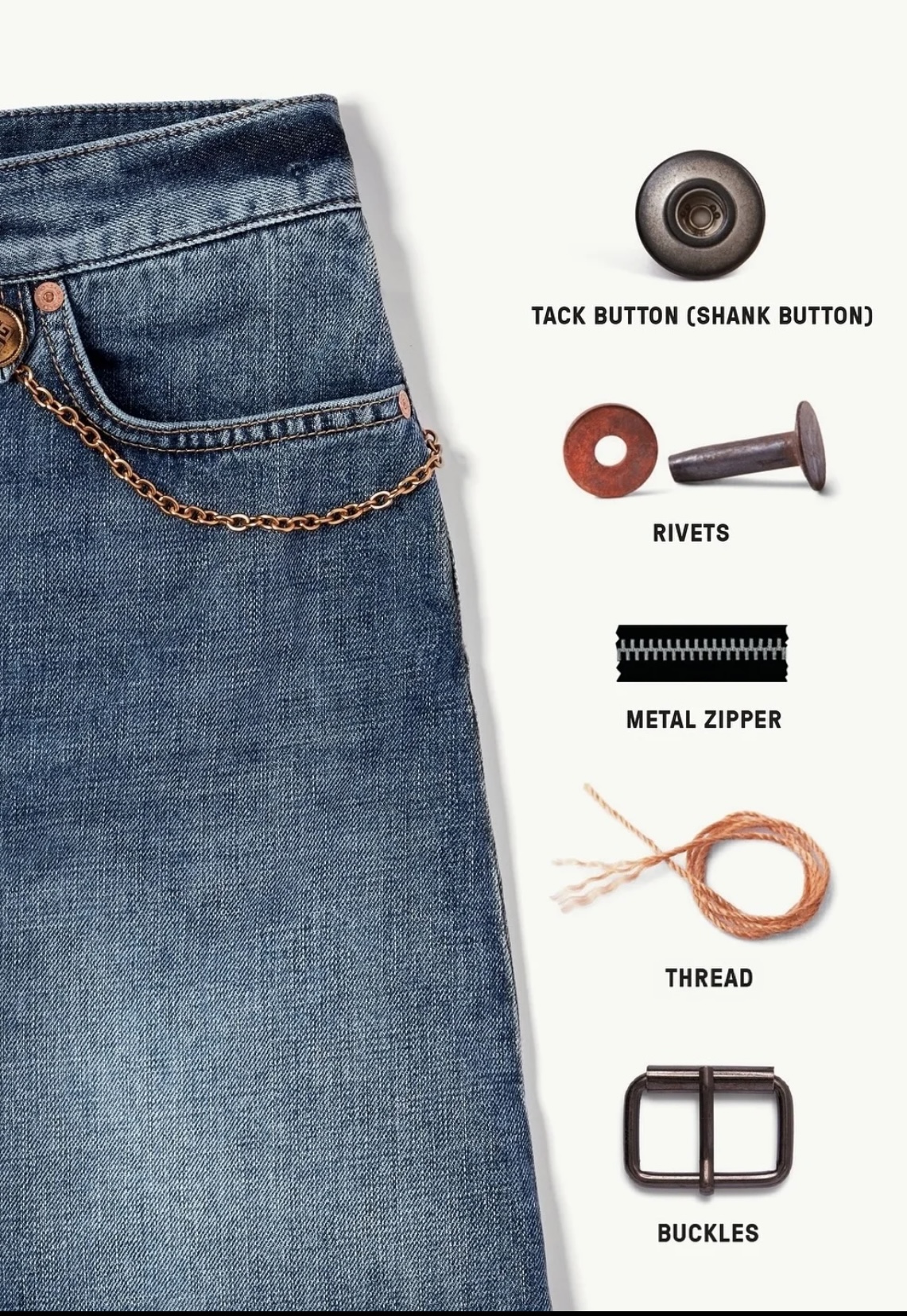
Kesimpulan: Warisan dan Masa Depan Denim
Sejak asal-usulnya dari kain layar Prancis (Serge de NimesSebagai industri global senilai 90 miliar dolar AS, denim melambangkan ketahanan dan semangat pemberontakan. Denim Hitam Peristiwa ini menandai perubahan budaya pada tahun 1950-an, mengubah pakaian kerja menjadi simbol gaya modern yang elegan. Kini, keberlanjutan menjadi penggerak inovasi—dengan pewarna bakteri dan sistem manufaktur sirkular yang menjanjikan evolusi ramah lingkungan. Namun, daya tarik utamanya tetap sama: kain denim mampu beradaptasi, memudar, dan bertahan lama seperti tidak ada kain lainnya.
layanan personalisasi dari LYDENIM
🎨 Ingin Bahan pakaian khusus dari bahan denim atau unik Pakaian dari bahan kain khusus yang dibuat sesuai desainLYDENIM berspesialisasi dalam menyediakan solusi yang disesuaikan secara khusus untuk memenuhi kebutuhan desain dan produksi Anda.
🛍️ Eksplorasi dan dapatkan inspirasi.Jelajahi koleksi kain kami dan temukan ide desain yang menarik. LYDENIM.
🌐 Pakaian ElastisLihatlah produk kami di MyAlibaba. 📩 Hubungi kamiHubungi kami di Malone@lydenim.com.
Buat karya luar biasa dari bahan denim dengan LYDENIM—mitra andal Anda untuk Bahan pita elastis dan Solusi pakaian khusus berbahan denim.
Pertanyaan umum
Apakah ini dapat disesuaikan dengan merek atau koleksi saya?
Ya. Kirimkan aplikasi Anda, gambar referensi, kualitas yang diinginkan, jumlah, serta persyaratan pasar agar pemasok dapat merekomendasikan pilihan bahan, produk pakaian, atau proses penyelesaian yang sesuai.
Informasi apa yang perlu saya kirimkan sebelum meminta penawaran harga?
Siapkan jenis produk, bahan atau teknik yang digunakan, arah warna, kebutuhan sampel, jumlah, negara tujuan, serta waktu pengiriman yang diperkirakan.
Apakah saya harus meminta sampel sebelum produksi massal?
Ya. Penggunaan sampel warna dan ukuran sampel dapat mengurangi risiko sebelum melakukan pesanan dalam jumlah besar, terutama ketika kualitas warna, tekstur permukaan, daya regangan, penampilan akhir, atau dekorasi menjadi faktor penting.
Bagaimana cara saya menghindari masalah kualitas pada pesanan dalam jumlah besar?
Setujui standar sampel yang jelas, tentukan persyaratan pengujian, konfirmasi toleransi, dan bandingkan hasil produksi massal dengan sampel yang telah disetujui sebelum pengiriman.
Butuh bantuan untuk mengubah ini menjadi dokumen pengadaan yang siap digunakan dalam produksi?
Kirimkan produk target, jenis kain, jumlah, serta kebutuhan sampel Anda. LY Denim dapat membantu membandingkan berbagai pilihan dan menyusun penawaran harga.