

Waktu baca perkiraan: ~4 menit
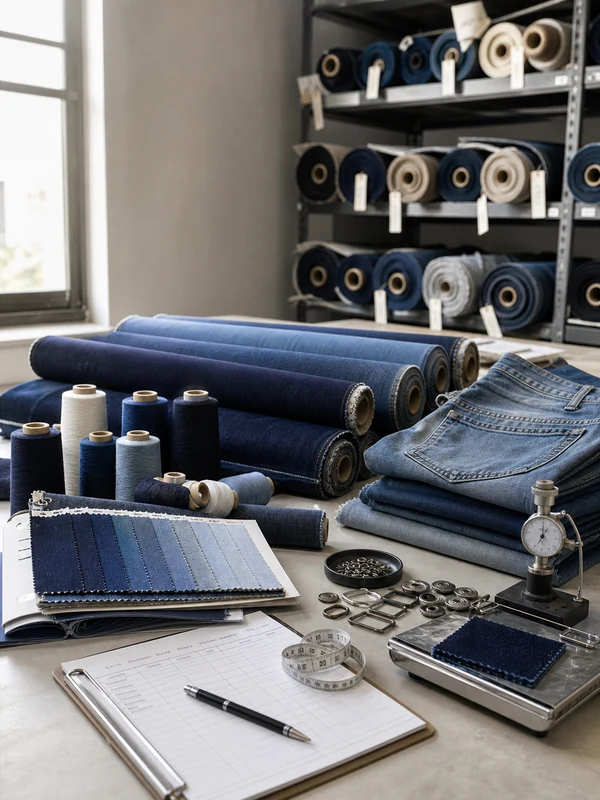
Sebelum Anda meminta penawaran, pastikan variabel teknis di bawah ini sudah ditentukan. Pabrik tidak dapat mengonfirmasi kelayakan atau MOQ tanpa variabel tersebut. Hanya proses sampel yang terstruktur yang melindungi kualitas produksi massal.
Tentukan Brief Kain Anda
- Komposisi serat (cotton, recycled, elastane %, dll.)
- Berat (oz/yd² atau gsm; sebutkan apakah washed atau loomstate)
- Anyaman – misalnya, 3/1 RHT (right-hand twill), 2/1 LHT (left-hand twill), broken twill, plain, jacquard
- Stretch % dan tingkat pemulihan, jika diperlukan regangan
- Metode pewarnaan – rope dyed atau sheet dyed, jumlah celupan indigo atau kode warna target
- Finishing – sanforized (pre-shrunk), resin, softener; ini menentukan penyusutan dan hand feel
- Lebar potong (cm atau inci dari kain yang dapat digunakan, bukan lebar alat tenun)
- Garmen yang dimaksud – jeans, jaket, pakaian kerja; yang menentukan persyaratan kekuatan dan draping.
Tabel Spesifikasi
| Bidang Spesifikasi | Hal yang perlu ditentukan | Buyer tip |
|---|---|---|
| Fiber content | Kapas %, daur ulang %, elastane %, dll. | Minta cakupan sertifikat (GRS=Global Recycled Standard, OCS=Organic Content Standard) – sertifikat tingkat pabrik saja tidak cukup |
| Berat | oz/yd² atau gsm, toleransi ±0.3 oz | Selalu sebutkan apakah itu berat washed atau loomstate |
| Menenun | 3/1 RHT, 2/1 LHT, broken twill, anyaman polos | Jacquard dapat meningkatkan MOQ – ini tergantung pada pengaturan pabrik |
| Menggeser | % stretch dan recovery rate | Uji pemulihan pada sampel yang sudah dicuci, bukan greige |
| Kedalaman indigo | Jumlah dips atau target shade code | For custom colors, request a shade-band (range of acceptable variation) |
| Selesai | Sanforized, lembut, resin, dilapisi | Secara langsung mempengaruhi penyusutan dan rasa kain. |
| Lebar | Lebar potong | Lebar yang dapat digunakan lebih sempit dari loom width |
| Target penyusutan | Maks. % setelah dicuci | Sanforized biasanya residu ≤3%; unsanforized lebih tinggi |
| Ketahanan warna | Ketahanan Luntur Gosok (basah/kering) dan Ketahanan Cuci | Penting untuk indigo gelap dan hitam – uji setelah pencucian garmen Anda sendiri |
| Penggunaan yang Dimaksud | Jeans, jaket, pakaian kerja | Kekuatan sobek dan persyaratan drape berubah sesuai dengan penggunaan akhir |
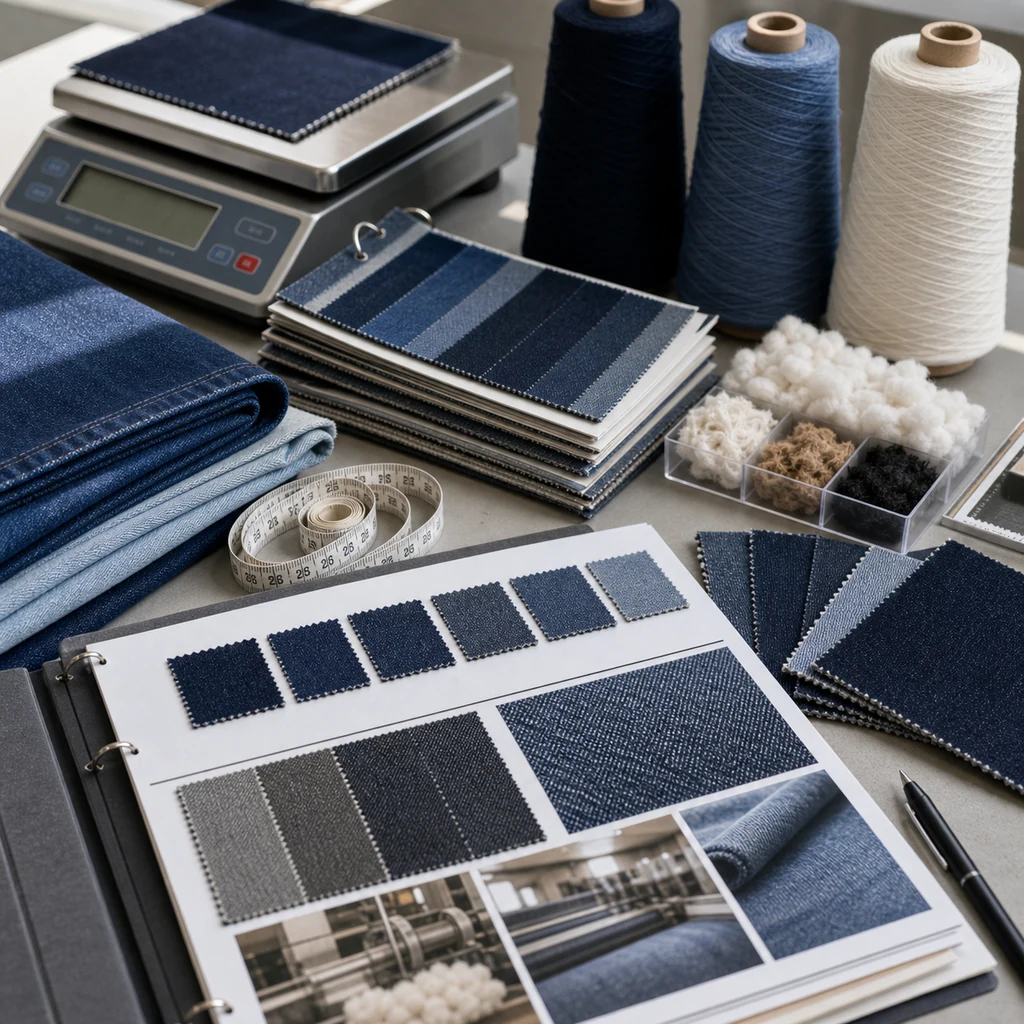
Sampling & Kontrol Kualitas Process
- Swatch kain – initial hand feel and weave check. No washing yet.
- Panjang kain sampel (5–15 m) – wash test for shrinkage, colorfastness, and stretch recovery.
- Lab-dip or shade-band – setujui master shade yang akan memandu produksi bulk.
- Sampel pra-produksi (50–100 m) – confirm shade, width, weight, and hand feel on the actual production line.
- Bulk testing – pull random roll samples; release payment only when results fall within tolerances.
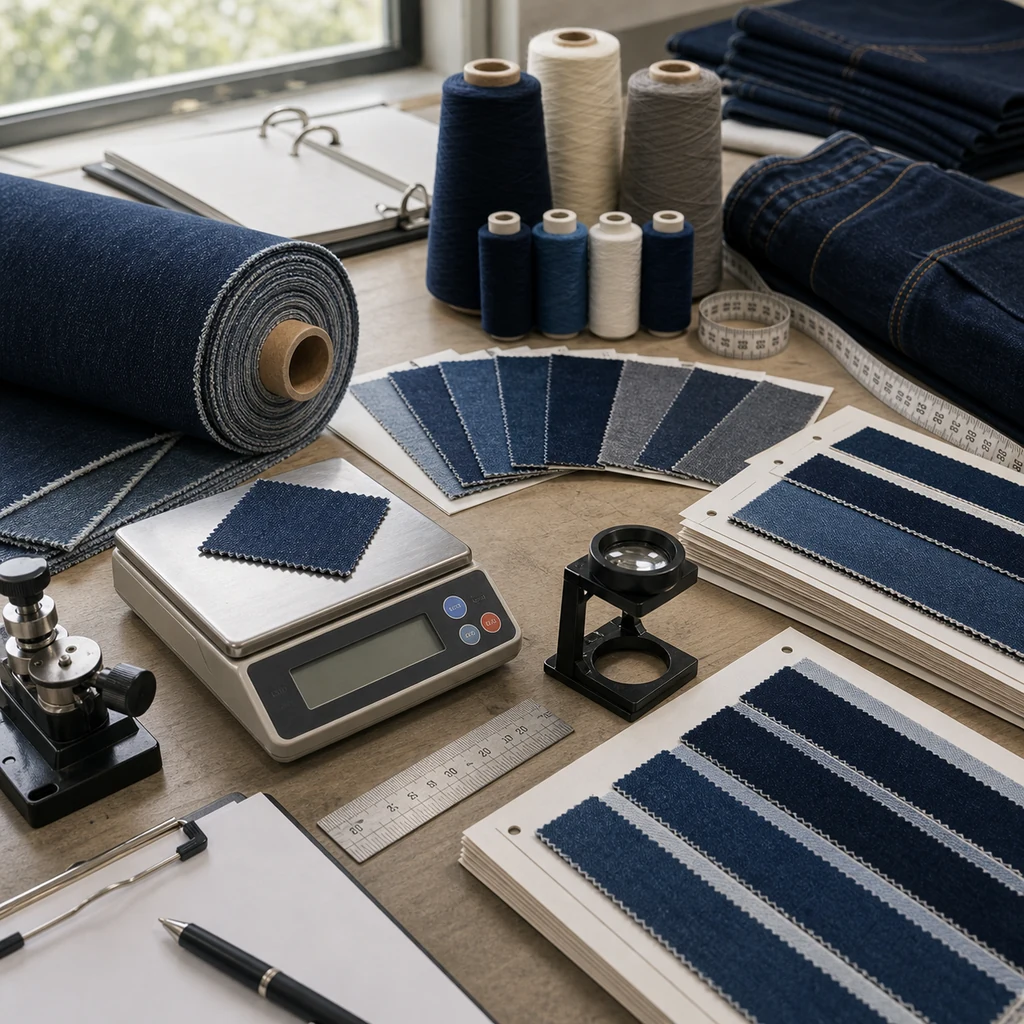
Tes kunci: tingkat penyusutan (maks % setelah pencucian standar), pemulihan regangan, crocking (basah dan kering), kekuatan tarik/sobek.
Hindari Kesalahan Sourcing Ini
- Meminta "denim" tanpa berat, anyaman, atau komposisi – itu memaksa perkiraan.
- Menyetujui swatch sentuhan kain tanpa menguji yardase sampel yang sudah dicuci.
- Melewatkan toleransi warna – indigo berubah antar lot celupan.
- Tidak memverifikasi bahwa pemasok adalah pabrik sungguhan; minta video langsung dari lantai pewarnaan/penenunan.
- Mengabaikan bagaimana proses pencucian garmen Anda memengaruhi warna dan kekuatan akhir.
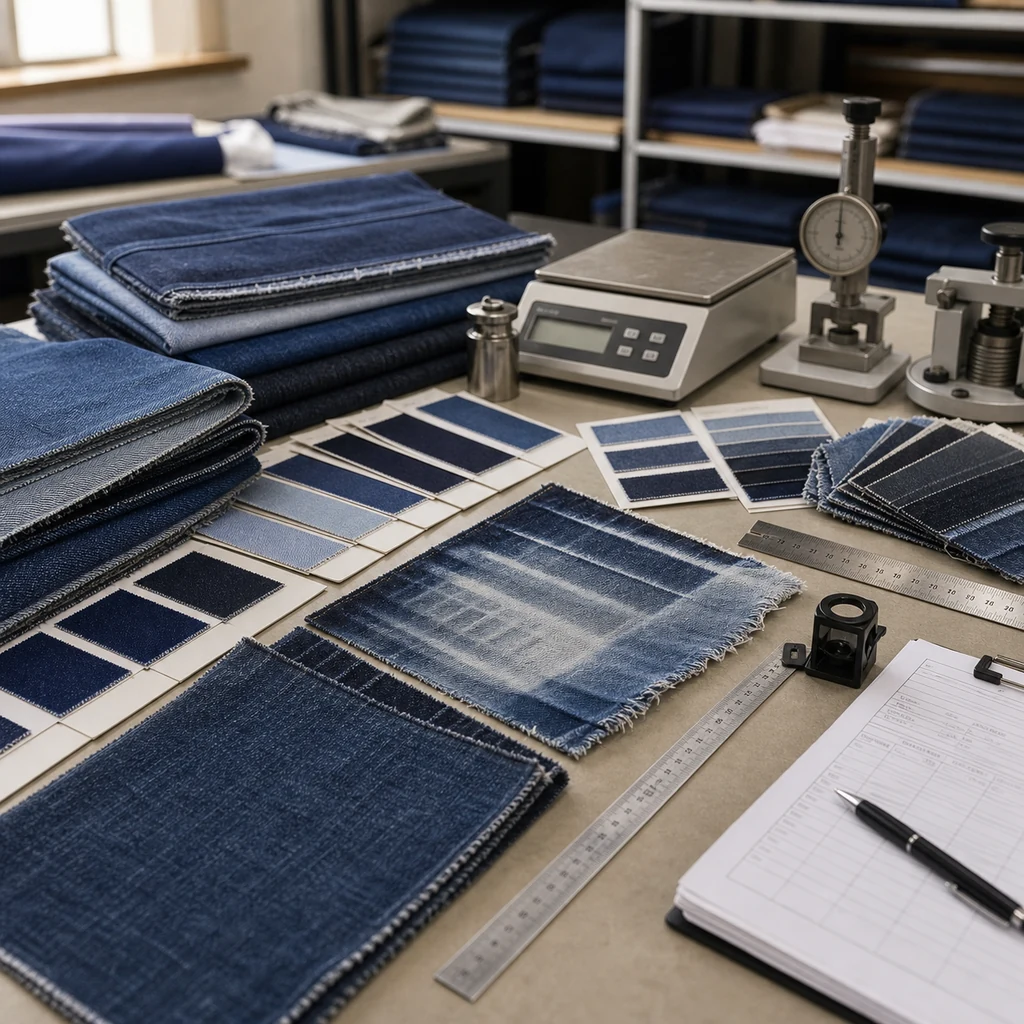
Pertanyaan Penting untuk Supplier
- Bisakah Anda membagikan konstruksi lengkap: nomor benang, anyaman, finishing, dan detail berat?
- Apakah kain ini diproduksi secara in-house atau diperoleh dari pemasok? Bagaimana Anda menjaga konsistensi warna antar lot?
- MOQ per warna dan total pesanan untuk konstruksi ini – apakah ini stok atau kustom?
- Menyediakan tahapan sampel (hanger, yardage, lab-dip, pre-production) dengan waktu tunggu dan biaya.
- Sediakan laporan uji terbaru untuk penyusutan, crocking, kekuatan tarik, dan pemulihan regangan – diuji setelah pencucian rumahan.
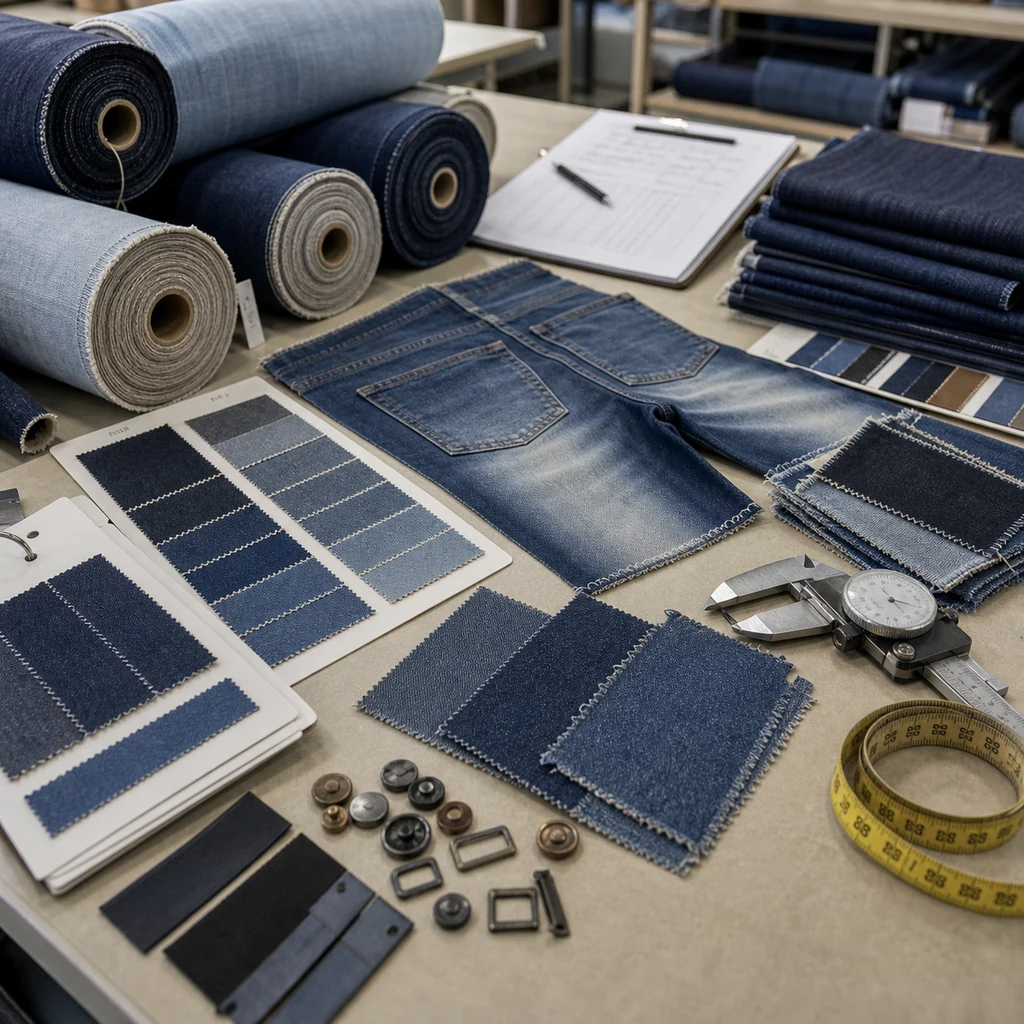
Pertanyaan umum
Bagaimana cara memverifikasi klaim denim berkelanjutan? Get certificate numbers and scope documents (GRS, OCS, OEKO-TEX) that cover that exact fabric. A generic mill certification doesn’t prove the cloth meets the standard.
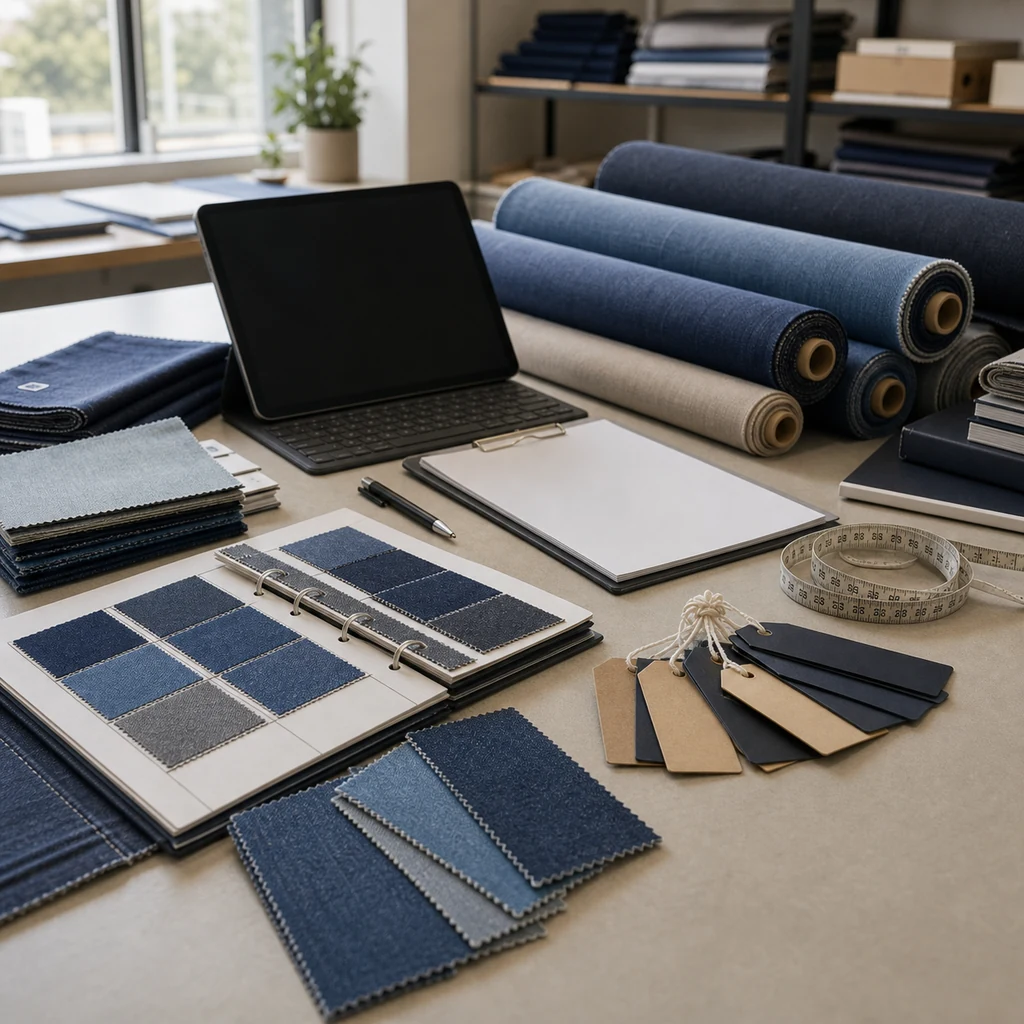
Bagaimana cara mengetahui apakah pemasok adalah pabrik yang asli? Minta video langsung area pewarnaan dan penenunan, serta sampel pra-produksi yang dapat ditelusuri ke lini produksi mereka. Meja trading biasanya hanya menunjukkan rak stok.
Mengapa biaya batch kecil lebih mahal? Setup and sampling are fixed costs. Shorter runs raise unit price. Stock fabric can lower cost but limits your choices – sometimes significantly.
Berapa penyusutan yang wajar untuk denim sanforized? Mills usually guarantee ≤3% residual shrinkage after home laundry, but your garment wash can push that higher. Always test under your own wash conditions.
Pilih pabrik denim berdasarkan kemampuan teknis, ketelitian sampling, dan komunikasi yang transparan – bukan penawaran terendah. Tentukan spesifikasi Anda, minta sampel jalur produksi, dan uji penyusutan serta tahan luntur warna sendiri sebelum berkomitmen.
For questions on these steps, you can reach the author at Malone@lydenim.com.
Kesimpulan
Gunakan daftar periksa artikel, persyaratan sampel, dan pertanyaan kepada pemasok untuk memastikan langkah pengadaan praktis selanjutnya sebelum melanjutkan ke penawaran harga atau produksi.
layanan personalisasi dari LYDENIM
🎨 Desain Khusus
Design your own fabric collection or garment with LYDENIM’s premium materials. From luxurious cotton blends to innovative eco-friendly textiles, explore colors, weaves, and finishes that match your brand’s product direction. Visit LYDENIM Untuk mengetahui lebih lanjut.
聊城: Solusi Pakaian Khusus
Bring your designs to life with custom garment services. Whether you are developing jeans, denim jackets, skirts, workwear, or small-batch fashion collections, LYDENIM can support fit, comfort, durability, and production planning. Explore customization options on My Alibaba.
📥 Hubungi Kami
Memiliki proyek yang ingin Anda wujudkan? Hubungi tim kami di Malone@lydenim.com to discuss custom fabrics, garment design, low-MOQ sampling, or sustainable textile solutions.
Transform your ideas into reality with LYDENIM–your trusted partner for innovative, high-quality fabrics and bespoke apparel solutions.
Need help turning this into a production-ready sourcing brief?
Send your target product, fabric direction, quantity and sample needs. LY Denim can help compare options and prepare a quote.