


Pemanggangan Kain dan Polishing Biologis: Penyelesaian Permukaan serta Pengujian Kualitas oleh Pembeli

Pemanggangan Kain dan Polishing Biologis: Penyelesaian Permukaan serta Pengujian Kualitas oleh Pembeli
Pengolahan dengan teknik singeing dan bio-polishing meningkatkan kebersihan permukaan kain, tekstur saat disentuh, serta kemampuan menghindari pembentukan bulu (pilling). Pembeli perlu mempertimbangkan kualitas proses pengolahan ini terhadap hasil pewarnaan, pencucian, dan dekorasi.
Ringkasan Pembeli
Artikel ini disusun sebagai panduan pengadaan untuk pasar B2B, sehingga pembeli dapat bergerak dari tahap penelitian hingga pengajuan permintaan sampel dengan lebih sedikit detail yang masih kurang.
- Pembeli yang sesuaiMerek mode, tim pengadaan, pengecer grosir, pabrik pakaian, dan pengembang produk.
- Apa yang perlu dikonfirmasiProduk target, arah tekstur kain, finishing, kebutuhan sampel, jumlah, dan pasar pengiriman.
- Risiko pembeliSpesifikasi yang tidak jelas dapat menyebabkan pengambilan sampel yang salah, kualitas produk secara keseluruhan yang tidak stabil, serta proses penentuan harga yang lambat.
- CTA yang DirekomendasikanPermintaan sampel atau penawaran harga sebelum memutuskan untuk memproduksi dalam jumlah besar.
Mengapa Hal Ini Penting bagi Pembeli B2B
Gunakan ringkasan, tabel, dan daftar pemeriksaan untuk menyusun pertanyaan yang lebih jelas.
Waktu Baca Estimasi: Sekitar 4 menit Pengobongan Kain: Tempat Api Bertemu dengan Ketelitian Masuk ke pabrik tekstil mana pun, Anda akan melihat sesuatu yang tidak lazim—para pekerja mengarahkan kain melewati api terbuka. Ini bukanlah peninggalan dari masa lalu…
Tabel Spesifikasi untuk Pengadaan yang Lebih Cepat
| Titik keputusan | Opsi untuk membandingkan | Mengapa Ini Penting | Pertanyaan pembeli |
|---|---|---|---|
| Tujuan Pembeli | Penelitian, permintaan sampel, pengembangan produk, dan pengadaan massal | menjelaskan apa yang seharusnya dapat dibantu pembaca melalui artikel ini selanjutnya | Keputusan apa yang perlu diambil oleh pembeli? |
| Penerapan produk | Jeans, jaket, kaus, rok, pakaian jalanan atau pakaian kerja | Menghubungkan pengetahuan dengan kebutuhan produksi yang nyata | Di mana kain atau teknik ini akan digunakan? |
| Kustomisasi | Warna, berat, komposisi, permukaan, pola, atau dekorasi | Mengubah proses membaca menjadi ringkasan pengumpulan informasi | Apa yang perlu disesuaikan? |
| Langkah Selanjutnya | Swatch, panjang sampel, penawaran harga, konfirmasi QC | Mendorong pembaca untuk melakukan penyelidikan lebih lanjut | Informasi apa yang perlu dikirimkan kepada pemasok? |
Aplikasi dan Opsi Khusus
Pengembangan Produk
Gunakan panduan ini untuk mengubah ide desain menjadi spesifikasi terkait kain, pakaian, finishing, dan sampel.
Perbandingan Pemasok
Bandingkan para pemasok berdasarkan dukungan sampel, kejelasan teknis, stabilitas dalam jumlah besar, dan kecepatan komunikasi.
Produksi Massal
Konfirmasi standar kualitas, sampel yang telah disetujui, dan jadwal waktu sebelum mengajukan pesanan produksi.
Kontrol Kualitas Points Before Bulk Order
- OKPersetujuan sampel: Konfirmasi bahan kain, warna, tekstur permukaan, struktur, dan finishing sebelum produksi massal dimulai.
- OKKonsistensi massa: Bandingkan sekelompok sampel secara keseluruhan dengan sampel yang telah disetujui dalam kondisi pencahayaan dan pengujian yang sama.
- OKPengujian kinerja: Periksa penyusutan, ketahanan warna, pemulihan setelah regangan, atau ketahanan dekorasi bila relevan.
- OKKlaritas kutipan: Sertakan jumlah pengiriman, destinasi, kebutuhan kemasan, dan waktu penyelesaian yang diharapkan untuk menghindari penetapan harga yang tidak jelas.
Proses Pengembangan Sampel
| Langkah | Pembeli menyediakan… | Pemasok telah mengonfirmasi. |
|---|---|---|
| 1. Ringkasan | Aplikasi, gambar referensi, kualitas dan jumlah target | Kelayakan, bahan yang direkomendasikan, dan opsi khusus |
| 2. Contoh kain | Umpan balik mengenai warna, tekstur permukaan, pola, atau finishing yang diinginkan | Stok yang tersedia, arahan khusus, dan biaya sampel |
| 3. Sampel | Rencana pengujian pakaian, besaran atau panjang yang dibutuhkan | Jadwal pengambilan sampel dan reproduktivitas produksi |
| 4. Penawaran grosir | Jumlah pesanan, tujuan pengiriman, dan kebutuhan kemasan | Harga per unit, MOQ, waktu pengiriman, dan titik pemeriksaan QC |
Panduan Rinci
Waktu baca perkiraan: ~4 menit
Pemanggangan Kain: Di Mana Api Bertemu dengan Ketepatan
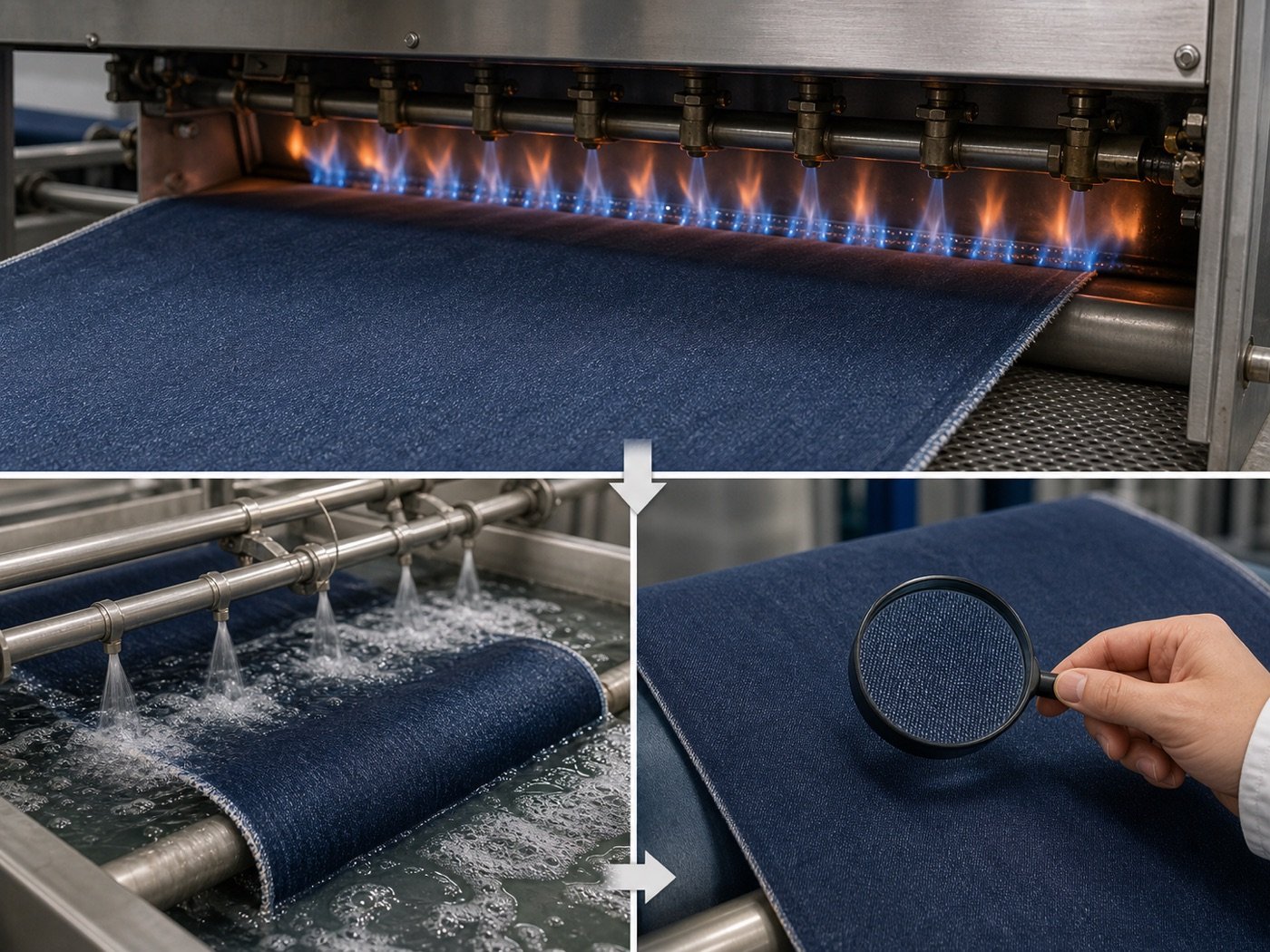
Masuk ke pabrik tekstil mana pun, Anda akan menemukan sesuatu yang tidak lazim: para pekerja menggiring kain melewati api terbuka. Ini bukan warisan masa lalu, melainkan proses terencana yang disebut singeing, yaitu metode yang mengubah bahan tekstil mentah menjadi material yang halus dan tahan pil. Mari kita bahas mengapa teknik berapi ini tetap tak tergantikan.
Baut dan Nut
Setiap kali benang bersentuhan dengan mesin selama proses pemintalan atau penenunan, benang tersebut melepaskan serat-serat kecil. Serat-serat yang longgar ini akan menggumpal membentuk lapisan berbulu halus yang membuat kain terlihat tidak rapi dan rentan mengalami pembentukan bulu halus (pilling). Proses singeing memperbaiki kondisi ini dengan mengalirkan kain pada kecepatan tinggi melintasi api (bayangkan kurang dari dua detik atau pelat logam yang sangat panas. Kuncinya adalah membakar hanya lapisan tipisnya saja tanpa merusak kain itu sendiri.
Mengapa Pabrik-Pabrik Menjadi Masalah?
Gerakan cepat bersentuhan dengan api ini tidak hanya membantu menjaga penampilan kain tetap rapi. Dengan menghilangkan serat permukaan sepanjang 0,5–3 mm, proses pemanggangan ini mampu mengurangi risiko terbentuknya bulu kain (pilling) hingga separuhnya. Metode ini juga sangat hemat air—dibandingkan metode pencucian tradisional, setiap ton kain menghemat cukup air untuk mengisi tiga bak mandi. Selain itu, permukaan yang lebih halus memungkinkan pewarna menempel secara merata, sehingga mengurangi munculnya bercak tidak merata pada kaus favorit Anda.
Seni untuk Tidak Menghancurkan Pabrik
Para operator berpengalaman mengibaratkan proses singeing dengan memasak steak—waktu dan suhu sangat menentukan hasil akhirnya. Jika terlalu dingin, tekstur makanannya akan tetap empuk dan lembek; jika terlalu panas, seratnya akan menjadi renyah seperti mie yang dimasak terlalu lama. Mereka menyetel tiga pengaturan utama:
- Tinggi api (jarak antar burner sebesar lebar ibu jari)
- Tingkat suhu (650–850°C, kurang lebih setara dengan suhu uap panas dari gunung berapi)
- Kecepatan kain (18–35 meter/menit, lebih cepat daripada tikus yang berlari kencang)
Sensor modern memang membantu, tetapi pekerja berpengalaman masih menyesuaikan api secara visual. Seorang manajer pabrik mengatakan kepada saya, “Mesin membaca angka; kami membaca bisikan kain.”
Tidak Semua Perawatan Panas Bersifat Setara
Pemula sering mengelirukan proses singeing dengan carbonizing. Berikut daftar penjelasan singkatnya:
- Singeing menyentuh permukaan secara ringan (seperti menggoreng kulit roti).
- Proses karbonisasi dilakukan lebih dalam (bayangkan crouton).
- Apakah proses karbonisasi mengganggu kualitasnya? Kain Anda kehilangan 15% kekuatan—berita buruk bagi jaket setelan.
- Bahan wol umumnya mengalami proses karbonisasi, sedangkan kain katun dan poliester biasa melalui proses penggorengan (singeing).
Laser Masuk ke Obrolan
Beberapa pabrik yang mengadopsi teknologi canggih kini menggunakan laser alih-alih api. Sinar laser yang sangat terfokus ini secara selektif membakar lapisan tipis pada pola rumit tanpa menusuk atau memusnahkan tepinya—perubahan mendasar bagi tirai jacquard maupun permukaan dudukan brokat. Pengguna awal melaporkan bahwa kain tersebut memperoleh kilau halus, seolah-olah telah digosok perlahan dengan irisan panas.
Mengapa Hal Ini Penting Sekarang
Di era kelangkaan air, sifat ramah lingkungan dari teknik singeing membuatnya tetap relevan. Namun, ada alasan lain mengapa teknik ini masih bertahan: ini merupakan kerajinan langka di mana mesin belum sepenuhnya menggantikan penilaian manusia. Seperti yang dikatakan seorang operator generasi ketiga dalam proses singeing, “Api menceritakan kisah—berkedip di satu tempat, perubahan warna di tempat lain. Anda belajar untuk mendengarkan.” Perpaduan antara teknologi dan kebijaksanaan taktil inilah yang menjadi inti utama terciptanya kain-kain yang lebih unggul.
layanan personalisasi dari LYDENIM
🎨 Di LYDENIMKami tidak hanya menyediakan solusi kain berkualitas tinggi, tetapi juga menawarkan Layanan personalisasi pakaian Didesain khusus sesuai visi kreatif Anda.
🛍️ Eksplorasi dan dapatkan inspirasi.Jelajahi koleksi kain kami dan temukan ide desain yang menarik. LYDENIM.
🌐 Pakaian ElastisLihatlah produk kami di MyAlibaba. 📩 Hubungi kamiHubungi kami di Malone@lydenim.com.
Buat karya luar biasa dari bahan denim dengan LYDENIM—mitra andal Anda untuk Bahan pita elastis dan Solusi pakaian khusus berbahan denim.
Panduan Pembeli untuk Penggunaan Singeing dan Bio-Polishing
Pemanggangan kain menghilangkan serat permukaan yang longgar menggunakan api terkendali, sedangkan bio-polishing memanfaatkan enzim untuk menciptakan permukaan yang lebih bersih dan halus saat disentuh. Proses-proses ini tidak menghasilkan transparansi akibat pembakaran, namun membantu menyiapkan permukaan yang lebih baik untuk proses pengecatan denim premium, pencucian, pencetakan, pelapisan, atau finishing dekoratif lainnya.
Bagi pembeli yang membandingkan berbagai opsi penyelesaian permukaan, proses singeing dan bio-polishing perlu dievaluasi bersamaan dengan risiko terbentuknya bintik-bintik, kebersihan permukaan, kedalaman warna, serta sensasi sentuhan akhir pada pakaian. Pengolahan yang berlebihan dapat melemahkan permukaan atau mengubah tampilan denim indigo; oleh karena itu, persetujuan terhadap sampel tetap diperlukan.

Daftar Pemeriksaan Penyempurnaan Permukaan
| Selesai | Efek utama | Pembeli harus mengonfirmasi. |
|---|---|---|
| Membakar | Menghilangkan serat permukaan yang menonjol. | Kemurnian permukaan, perubahan warna, dan keamanan kain. |
| Finishing bio-polishing | Menggunakan enzim untuk mengurangi tekstur berbulu dan meningkatkan kehalusan permukaan. | Perasaan saat digenggam, tekstur permukaan, kekuatan, serta hasil pencucian. |
| Pengapian sebelum pencetakan/penglapisan | Menciptakan permukaan yang lebih bersih untuk dekorasi. | Kompatibilitas dengan efek flocking, pelapisan, cetak, atau burnout. |
Gunakan halaman ini sebagai referensi mengenai stabilitas permukaan dalam kelompok topik tentang burnout dan finishing. Perjelas perbedaannya: singeing berfungsi untuk menghilangkan tekstur berbulu pada permukaan, sedangkan burnout bertujuan menghilangkan atau melemahkan area serat tertentu guna menciptakan efek transparan.
Halaman terkait: ulasan Kelelahan akibat penggunaan kain (denim burnout)bandingkan Tekstur permukaan kain, atau siapkan sebuah Baju pendek dari kain custom denim.
Pertanyaan umum
Apakah ini dapat disesuaikan dengan merek atau koleksi saya?
Ya. Kirimkan aplikasi Anda, gambar referensi, kualitas yang diinginkan, jumlah, serta persyaratan pasar agar pemasok dapat merekomendasikan pilihan bahan, produk pakaian, atau proses penyelesaian yang sesuai.
Informasi apa yang perlu saya kirimkan sebelum meminta penawaran harga?
Siapkan jenis produk, bahan atau teknik yang digunakan, arah warna, kebutuhan sampel, jumlah, negara tujuan, serta waktu pengiriman yang diperkirakan.
Apakah saya harus meminta sampel sebelum produksi massal?
Ya. Penggunaan sampel warna dan ukuran sampel dapat mengurangi risiko sebelum melakukan pesanan dalam jumlah besar, terutama ketika kualitas warna, tekstur permukaan, daya regangan, penampilan akhir, atau dekorasi menjadi faktor penting.
Bagaimana cara saya menghindari masalah kualitas pada pesanan dalam jumlah besar?
Setujui standar sampel yang jelas, tentukan persyaratan pengujian, konfirmasi toleransi, dan bandingkan hasil produksi massal dengan sampel yang telah disetujui sebelum pengiriman.
Butuh bantuan untuk mengubah ini menjadi dokumen pengadaan yang siap digunakan dalam produksi?
Kirimkan produk target, jenis kain, jumlah, serta kebutuhan sampel Anda. LY Denim dapat membantu membandingkan berbagai pilihan dan menyusun penawaran harga.