ความรู้เดนิม

Twill VS Denim : What You Need to Know

Twill vs Denim What You Need to Know for B2B denim fabric sourcing
B2B Denim Knowledge / Denim knowledge

Twill VS Denim : What You Need to Know

Compare denim with other twill fabrics like chinos and gabardine. Learn their advantages, disadvantages, and where they shine in fashion and utility wear.

Twill VS Denim : What You Need to Know

B2Bsourcing guide
Customsample to bulk
Quoteready checklist

Best forBrands, designers, wholesalers and garment factories
Main valueTurn research into a clearer sourcing brief
What to prepareApplication, quantity, target quality and sample needs
Next actionSend requirements for swatches or quotation

Buyer Summary

This article is organized as a B2B sourcing guide so buyers can move from research to sample requests with fewer missing details.

  • Suitable buyersFashion brands, sourcing teams, wholesalers, garment factories and product developers.
  • What to confirmTarget product, fabric direction, finish, sample needs, quantity and delivery market.
  • Buyer riskUnclear specs can lead to wrong samples, unstable bulk quality and slow quotations.
  • Recommended CTARequest swatches or a sample quote before committing to bulk production.

Why This Matters for B2B Buyers

Use the summary, table and checklist to prepare a clearer inquiry.

Compare denim with other twill fabrics like chinos and gabardine. Learn their advantages, disadvantages, and where they shine in fashion and utility wear.

Twill VS Denim : What You Need to Know sample detail
Use product visuals with sourcing notes so readers can connect ideas to real development requirements.
Twill VS Denim : What You Need to Know application reference
Pair inspiration with practical quote details such as weight, finish, handfeel and quantity.

Specification Table for Faster Sourcing

Decision point Options to compare Why it matters Buyer question
Buyer goal Research, sample request, product development, bulk sourcing Clarifies what the article should help the reader do next What decision does the buyer need to make?
Product application Jeans, jackets, shirts, skirts, streetwear or workwear Connects knowledge to actual production needs Where will this fabric or technique be used?
การปรับแต่ง Color, weight, composition, finish, pattern or decoration Turns reading into a sourcing brief What should be customized?
Next step Swatch, sample yardage, quote, QC confirmation Moves the reader toward inquiry What information should be sent to the supplier?

Applications and Custom Options

1

Product Development

Use this guide to turn design ideas into fabric, garment, finish and sample requirements.

2

Supplier Comparison

Compare suppliers by sample support, technical clarity, bulk stability and communication speed.

3

Bulk Production

Confirm quality standards, approved samples and timeline before placing production orders.

Quality Control Points Before Bulk Order

  • OKSample approval: confirm fabric, color, handfeel, construction and finish before bulk production.
  • OKBulk consistency: compare bulk lots against the approved sample under the same light and test conditions.
  • OKPerformance testing: check shrinkage, colorfastness, stretch recovery or decoration durability where relevant.
  • OKQuote clarity: send quantity, destination, packaging needs and target lead time to avoid vague pricing.

Sample Development Process

Step Buyer provides Supplier confirms
1. Brief Application, reference images, target quality and quantity Feasibility, recommended material and custom options
2. Swatch Preferred color, handfeel, pattern or finish feedback Available stock, custom direction and sample cost
3. Sample Garment test plan, size or yardage needs Sampling timeline and production repeatability
4. Bulk quote Order quantity, delivery destination and packaging needs Unit price, MOQ, lead time and QC checkpoints

Detailed Guide

Estimated reading time: ~ 5 minutes

Introduction

Denim and twill are frequently mentioned in fashion, particularly in the context of jeans. While closely related, they are distinct concepts. Denim is a specific cotton fabric woven with a twill pattern, whereas twill is a broader weaving technique applicable to various materials. This article explores the differences between denim and twill, why twill weave is used for jeans, comparisons with other twill fabrics, their advantages and disadvantages, usage scenarios, and expert insights, providing a comprehensive guide for readers.

What is Twill?

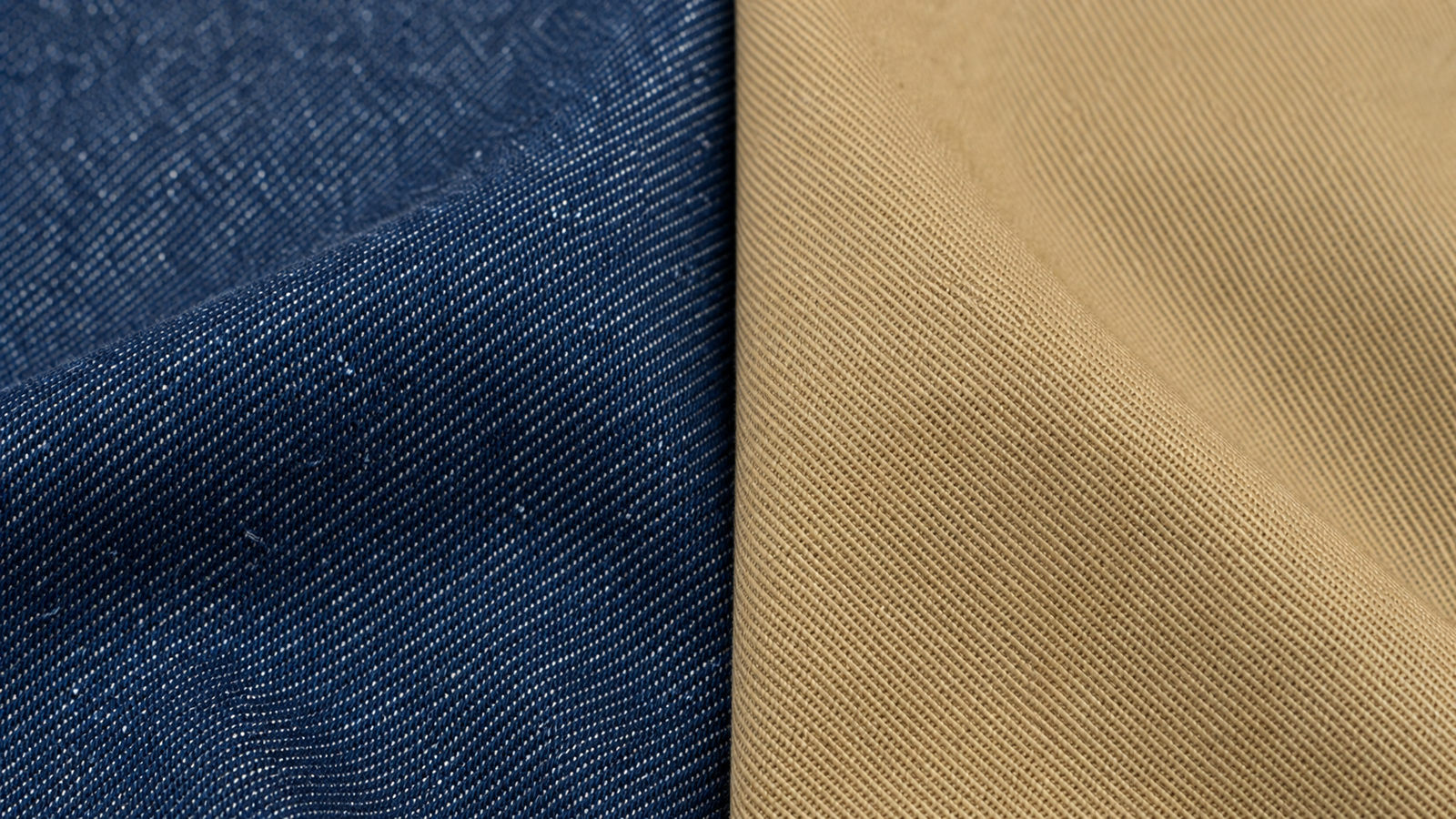
Twill is a textile weave characterized by a diagonal pattern, created by passing the weft thread over one or more warp threads and then under two or more warp threads, forming a ribbed effect. Twill fabrics are renowned for their durability, versatility, and stain-hiding ability, making them ideal for applications ranging from casual clothing to upholstery. According to MasterClass, twill is one of three major textile weaves, alongside plain and satin, with its high thread count contributing to its opacity and strength.

Twill Weave

Twill Weave

What is Denim?

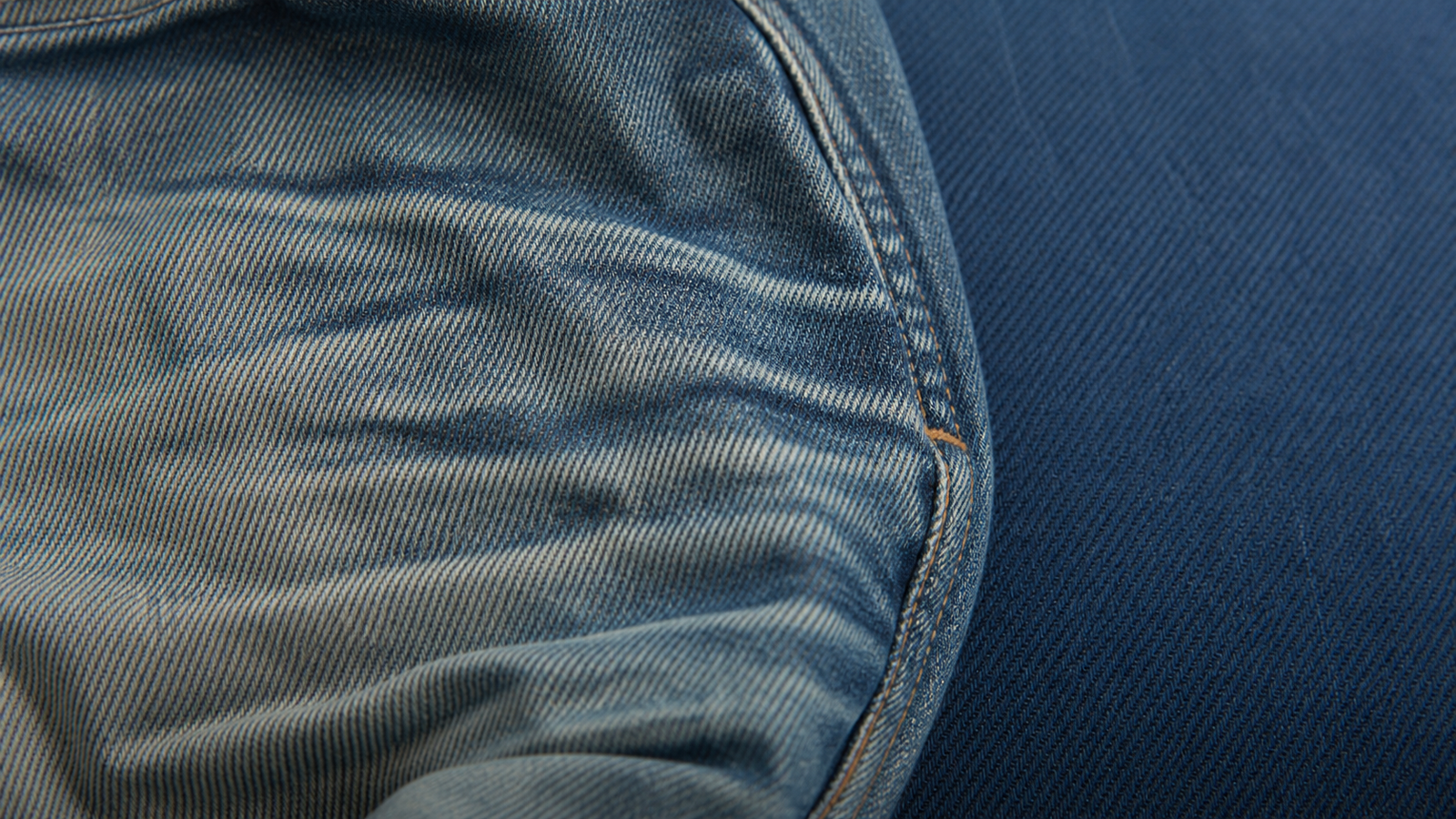
Denim is a robust cotton fabric typically woven with a twill pattern, using indigo-dyed warp threads and undyed weft threads, resulting in its iconic blue appearance. Commonly used for jeans, denim also appears in jackets, skirts, and bags. Its rugged texture and durability make it a staple for workwear and casual fashion. As noted by Denimhunters, denim’s unique fading properties allow it to develop a personalized look over time.

100% Cotton Denim

100% Cotton Denim

Why is Twill Weave Used for Jeans?

Twill weave is chosen for jeans due to several key benefits:

  1. Durability: The diagonal structure enhances resistance to wear, ideal for jeans’ heavy use.
  2. Comfort: Twill is softer and more pliable than plain weaves, ensuring wearer comfort.
  3. Aesthetic Appeal: The diagonal lines create a stylish, timeless look.
  4. Stain Resistance: Twill’s textured surface conceals stains, suitable for daily wear.

Types of Twill Weaves in Denim

Denim employs various twill weaves, each with distinct characteristics:

  1. Right-Hand Twill (RHT): The most common, with diagonals running from lower left to upper right, used by Levi’s for its durability and classic look.

    RHT

  2. Left-Hand Twill (LHT): Features diagonals from lower right to upper left, used by Lee for a unique aesthetic.

    LHT

  3. Broken Twill: Alternates diagonal directions for a complex pattern, used by Wrangler for distinctive texture.

Comparison Between Denim and Other Twill Fabrics

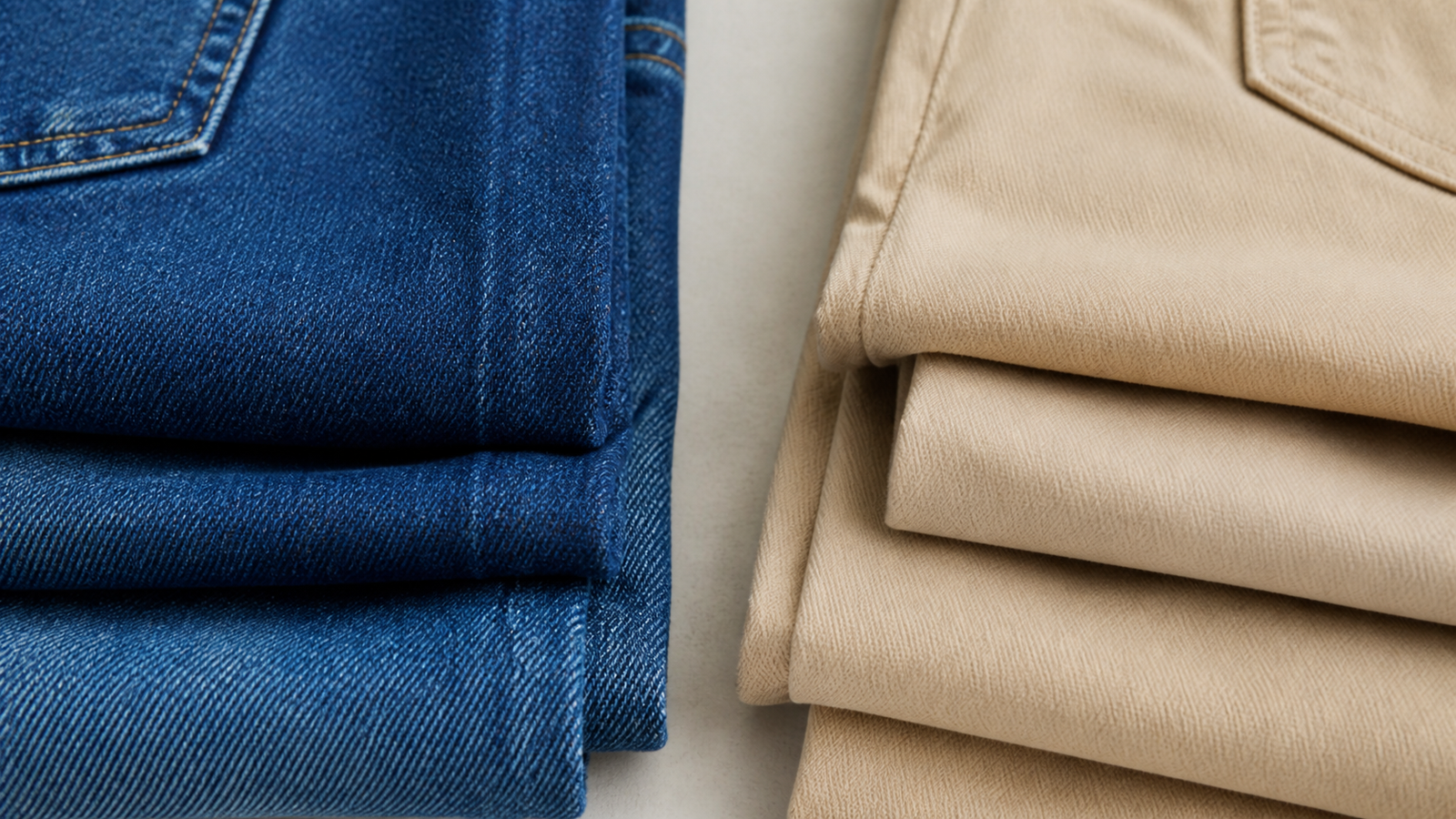
While denim is a twill fabric, other twill fabrics serve different purposes. Here’s a comparison:

Feature Denim Chinos Gabardine Drill
Material Typically 100% cotton, indigo-dyed warp Cotton or cotton blend, various colors Cotton, polyester, or blend, fine texture Cotton-polyester blend, heavy-duty
น้ำหนัก Heavier, suited for durable clothing Lighter, ideal for warm weather Medium to light, for formal wear Heavy, for workwear
Appearance Rugged, unique fading Smooth, varied colors and patterns Fine, wrinkle-resistant Tough, similar to denim
Uses Jeans, jackets, workwear Smart-casual pants, shirts Suits, uniforms, dresses Workwear, military uniforms

Advantages and Disadvantages of Denim vs. Other Twill Fabrics

Denim

  • Advantages:
    • Exceptional durability for heavy use.
    • Timeless style with unique fading.
    • Versatile for casual and work settings.
  • Disadvantages:
    • Initially stiff, requiring break-in.
    • May shrink if not pre-washed.
    • Limited color options compared to other fabrics.

Other Twill Fabrics (e.g., Chinos, Gabardine)

  • Advantages:
    • Softer and more comfortable than denim.
    • Wider range of colors and patterns.
    • Lighter weight, suitable for warm weather.
  • Disadvantages:
    • Less durable than denim.
    • Prone to wrinkling, requiring more care.
    • Lacks denim’s unique fading character.

Usage Scenarios

  • Denim: Ideal for casual wear, workwear, and outdoor activities where durability is key, such as daily outfits, hiking, or manual labor.
  • Chinos: Perfect for smart-casual settings like offices or semi-formal gatherings, paired with shirts and loafers.
  • Gabardine: Suited for formal occasions, such as suits or dresses, requiring a smooth, wrinkle-free appearance.
  • Drill: Used for workwear or military uniforms in rugged environments like construction sites.

Market Potential

According to Grand View Research, the global denim jeans market was valued at USD 86.66 billion in 2024 and is projected to reach USD 121.50 billion by 2030, with a CAGR of 5.9%. Denim’s durability and classic style drive demand in casual and workwear markets. Twill fabrics, used in chinos, gabardine suits, and drill workwear, are equally popular for their versatility. Google Trends data indicates a significant increase in searches for denim and twill in fall 2024, reflecting consumer interest in durable, high-quality fabrics. The rise of sustainable fashion further boosts eco-friendly denim and twill, appealing to environmentally conscious consumers.

Care Tips

To extend the lifespan of denim and twill fabrics, follow these care practices:

  • Wash Separately: Clean with like colors to prevent dye transfer
  • Wash Inside Out: Protects fabric and color
  • Use Mild Detergent: Avoid harsh chemicals
  • Air Dry: Avoid high-heat drying to maintain shape and color
  • Treat Stains Promptly: Use a mild stain remover

    Denim jeans Maintenance 1

    Denim jeans Maintenance 2

Conclusion

Denim is a specific twill fabric, while twill is a broader weaving technique applicable to various materials. Twill weave is ideal for jeans due to its durability, comfort, and aesthetic appeal. Denim stands out for its rugged style and unique fading, while other twill fabrics like chinos and gabardine offer softer, more versatile options. Understanding these differences helps consumers choose the right clothing for their needs and inspires fashion brands to innovate with these timeless materials.

Customization Services by LYDENIM

🎨 Want custom denim fabrics or  unique custom denim garment? LYDENIM specializes in tailor-made solutions to meet your design and production needs.

🛍️ Explore & Get Inspired: Browse our fabric selections and discover design ideas on LYDenim.

🌐 Elastic Clothing: Check out our offerings on MyAlibaba. 📩 Contact Us: Reach out at malone@lydenim.com.

Create your denim masterpiece with LYDENIM—your trusted partner for stretch fabric and custom denim solutions.

FAQ

Can this be customized for my brand or collection?

Yes. Send your application, reference images, target quality, quantity and market requirements so the supplier can recommend suitable fabric, garment or finishing options.

What information should I send before asking for a quote?

Prepare product type, target fabric or technique, color direction, sample needs, quantity, destination country and expected lead time.

Should I request swatches before bulk production?

Yes. Swatches and sample yardage reduce risk before bulk orders, especially when color, handfeel, stretch, finish or decoration quality matters.

How can I avoid quality problems in bulk orders?

Approve a clear sample standard, define test requirements, confirm tolerances and compare bulk output against the approved sample before shipment.

Need help turning this into a production-ready sourcing brief?

Send your target product, fabric direction, quantity and sample needs. LY Denim can help compare options and prepare a quote.

Get A Quote