


สไตล์เดนิม: จากประเภทผ้าไปจนถึงตัวเลือกที่พอดี

สไตล์เดนิม: จากประเภทผ้าไปจนถึงตัวเลือกที่พอดี
ค้นพบความหลากหลายของผ้าเดนิม: รู้จักเทคนิคการทอผ้าแบบทวิลล์ การตกแต่งผ้า รูปทรงการสวมใส่ สถานการณ์การใช้งาน คำแนะนำในการดูแล และเหตุผลที่ทำให้ผ้าดีนัลมีความเป็นอมตะ
สรุปผู้ซื้อ
เนื้อหาเทรนด์และการออกแบบควรทำหน้าที่เป็นสะพานเชื่อมจากแรงบันดาลใจไปสู่การจัดหา ช่วยให้ผู้ซื้อเปลี่ยนแนวคิดทางการตลาดให้เป็นผ้า ตัวอย่าง และบรีฟที่พร้อมสำหรับการผลิต
- ผู้ซื้อที่เหมาะสมแบรนด์แฟชั่น ทีมจัดหา ผู้ค้าส่ง โรงงานตัดเย็บเสื้อผ้า และผู้พัฒนาผลิตภัณฑ์
- สิ่งที่ต้องยืนยันเป้าหมายผลิตภัณฑ์ ทิศทางของผ้า ผิวสำเร็จ ความต้องการตัวอย่าง ปริมาณ และตลาดการจัดส่ง
- ความเสี่ยงของผู้ซื้อข้อมูลจำเพาะที่ไม่ชัดเจนอาจนำไปสู่ตัวอย่างที่ไม่ถูกต้อง คุณภาพปริมาณมากไม่แน่นอน และการเสนอราคาที่ช้า
- CTA ที่แนะนำขอตัวอย่างหรือใบเสนอราคาตัวอย่างก่อนที่จะดำเนินการผลิตจำนวนมาก
เหตุใดจึงสำคัญสำหรับผู้ซื้อ B2B
แปลทิศทางของสไตล์เป็นน้ำหนักผ้า พื้นผิว สี โครงสร้าง และข้อกำหนดตัวอย่าง
ค้นพบความหลากหลายของผ้าเดนิม: รู้จักเทคนิคการทอผ้าแบบทวิลล์ การตกแต่งผ้า รูปทรงการสวมใส่ สถานการณ์การใช้งาน คำแนะนำในการดูแล และเหตุผลที่ทำให้ผ้าดีนัลมีความเป็นอมตะ
ตารางข้อมูลจำเพาะสำหรับการจัดหาที่เร็วขึ้น
| จุดตัดสินใจ | ตัวเลือกในการเปรียบเทียบ | ทำไมมันถึงสำคัญ | คำถามของผู้ซื้อ |
|---|---|---|---|
| เป้าหมายของผู้ซื้อ | การวิจัย การขอตัวอย่าง การพัฒนาผลิตภัณฑ์ การจัดหาจำนวนมาก | ชี้แจงสิ่งที่บทความควรช่วยให้ผู้อ่านดำเนินการต่อไป | ผู้ซื้อต้องตัดสินใจอะไรบ้าง? |
| การประยุกต์ใช้ผลิตภัณฑ์ | กางเกงยีนส์ แจ็คเก็ต เสื้อเชิ้ต กระโปรง สตรีทแวร์ หรือชุดทำงาน | เชื่อมโยงความรู้เข้ากับความต้องการในการผลิตจริง | ผ้าหรือเทคนิคนี้จะใช้ที่ไหน? |
| การปรับแต่ง | สี น้ำหนัก องค์ประกอบ การตกแต่ง ลวดลาย หรือการตกแต่ง | เปลี่ยนการอ่านเป็นการสรุปการจัดหา | ควรปรับแต่งอะไรบ้าง? |
| ขั้นตอนต่อไป | สวอตช์, ระยะตัวอย่าง, ใบเสนอราคา, การยืนยัน QC | ย้ายผู้อ่านไปสู่การสอบถาม | ข้อมูลใดบ้างที่ควรถูกส่งไปยังซัพพลายเออร์? |
แอปพลิเคชันและตัวเลือกแบบกำหนดเอง
การพัฒนาผลิตภัณฑ์
ใช้คู่มือนี้เพื่อเปลี่ยนแนวคิดการออกแบบให้เป็นข้อกำหนดด้านเนื้อผ้า เครื่องแต่งกาย การตกแต่ง และตัวอย่าง
การเปรียบเทียบซัพพลายเออร์
เปรียบเทียบซัพพลายเออร์ตามการสนับสนุนตัวอย่าง ความชัดเจนทางเทคนิค ความเสถียรของปริมาณรวม และความเร็วในการสื่อสาร
การผลิตจำนวนมาก
ยืนยันมาตรฐานคุณภาพ ตัวอย่างที่ได้รับอนุมัติ และไทม์ไลน์ก่อนสั่งผลิต
จุดควบคุมคุณภาพก่อนสั่งซื้อจำนวนมาก
- OKการอนุมัติตัวอย่าง: ยืนยันผ้า สี ความรู้สึกมือ โครงสร้าง และการตกแต่งก่อนการผลิตจำนวนมาก
- OKความสม่ำเสมอเป็นกลุ่ม: เปรียบเทียบล็อตจำนวนมากกับตัวอย่างที่ได้รับอนุมัติภายใต้แสงและสภาวะการทดสอบเดียวกัน
- OKการทดสอบประสิทธิภาพ: ตรวจสอบการหดตัว ความคงทนของสี การยืดตัวคืนสภาพ หรือความทนทานของการตกแต่งตามที่เกี่ยวข้อง
- OKความชัดเจนของคำพูด: ส่งปริมาณ ปลายทาง ความต้องการบรรจุภัณฑ์ และเวลานำเป้าหมายเพื่อหลีกเลี่ยงการกำหนดราคาที่คลุมเครือ
กระบวนการพัฒนาตัวอย่าง
| ขั้นตอน | ผู้ซื้อจัดให้ | ซัพพลายเออร์ยืนยัน |
|---|---|---|
| 1. บรีฟ | การใช้งาน รูปภาพอ้างอิง คุณภาพและปริมาณเป้าหมาย | ความเป็นไปได้ วัสดุที่แนะนำ และตัวเลือกแบบกำหนดเอง |
| 2. สวอตช์ผ้า | สี สัมผัสมือ รูปแบบ หรือการตอบสนองขั้นสุดท้ายที่ต้องการ | สต็อกที่มีอยู่ ทิศทางที่กำหนดเอง และต้นทุนตัวอย่าง |
| 3. ตัวอย่าง | แผนการทดสอบเสื้อผ้า ขนาด หรือความต้องการระยะ | เส้นเวลาการสุ่มตัวอย่างและความสามารถในการทำซ้ำของการผลิต |
| 4. ใบเสนอราคาจำนวนมาก | ปริมาณการสั่งซื้อ ปลายทางการจัดส่ง และความต้องการบรรจุภัณฑ์ | ราคาต่อหน่วย, ขั้นต่ำ, เวลานำและจุดตรวจควบคุมคุณภาพ |
คู่มือโดยละเอียด
เวลาอ่านโดยประมาณ: ~6 นาที
บทนำ
เดนิมเป็นผ้าเหนือกาลเวลาที่ถือเป็นจุดเด่นในแฟชั่นระดับโลกเนื่องมาจากความทนทาน ความสะดวกสบาย และสไตล์อันเป็นเอกลักษณ์ ครอบคลุมประเภทผ้า การทอ และการตัดเย็บที่หลากหลาย สไตล์เดนิมนำเสนอความเป็นไปได้ที่ไม่มีที่สิ้นสุดในการแสดงออกถึงความเป็นตัวตน ตั้งแต่กางเกงยีนส์ขาตรงคลาสสิกไปจนถึงดีไซน์ทรงถุงสมัยใหม่ ผ้าเดนิมปรับให้เข้ากับความต้องการและโอกาสที่หลากหลายได้ บทความนี้จะสำรวจประเภทผ้าเดนิม เทคนิคการทอผ้า การตัดเย็บยอดนิยม ข้อดี ข้อเสีย สถานการณ์การใช้งาน ศักยภาพทางการตลาด และข้อมูลเชิงลึกจากผู้เชี่ยวชาญเพื่อเป็นแนวทางในการเลือกและจัดสไตล์ชิ้นเดนิม
ประเภทและการทอผ้าเดนิม
ความสามารถรอบด้านของเดนิมมีรากฐานมาจากการทอและลักษณะเนื้อผ้าที่เป็นเอกลักษณ์ ด้านล่างนี้เป็นประเภทและลักษณะหลัก:
สานทั่วไป
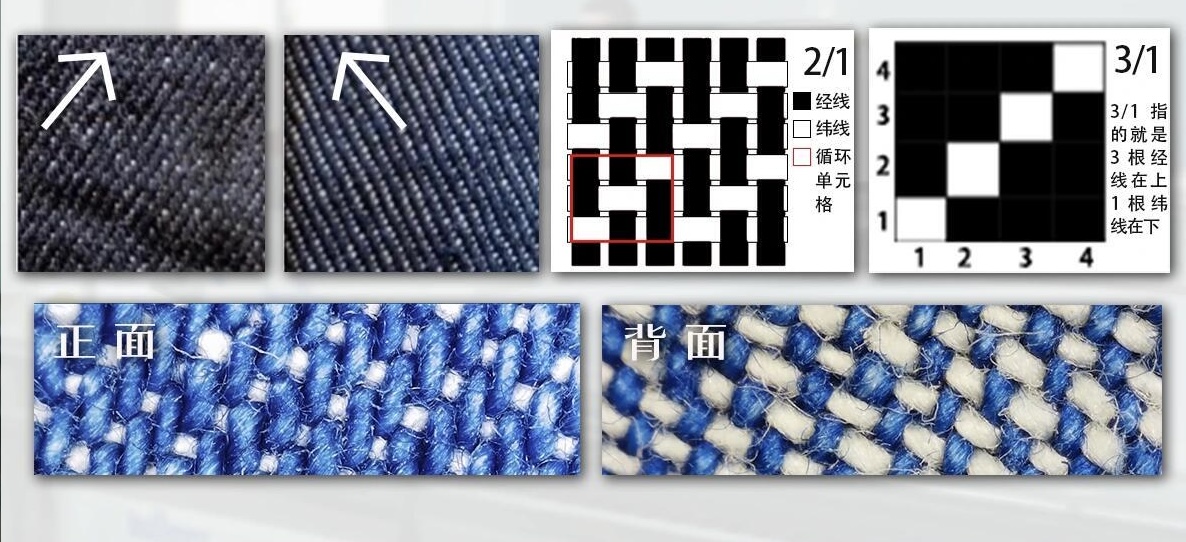
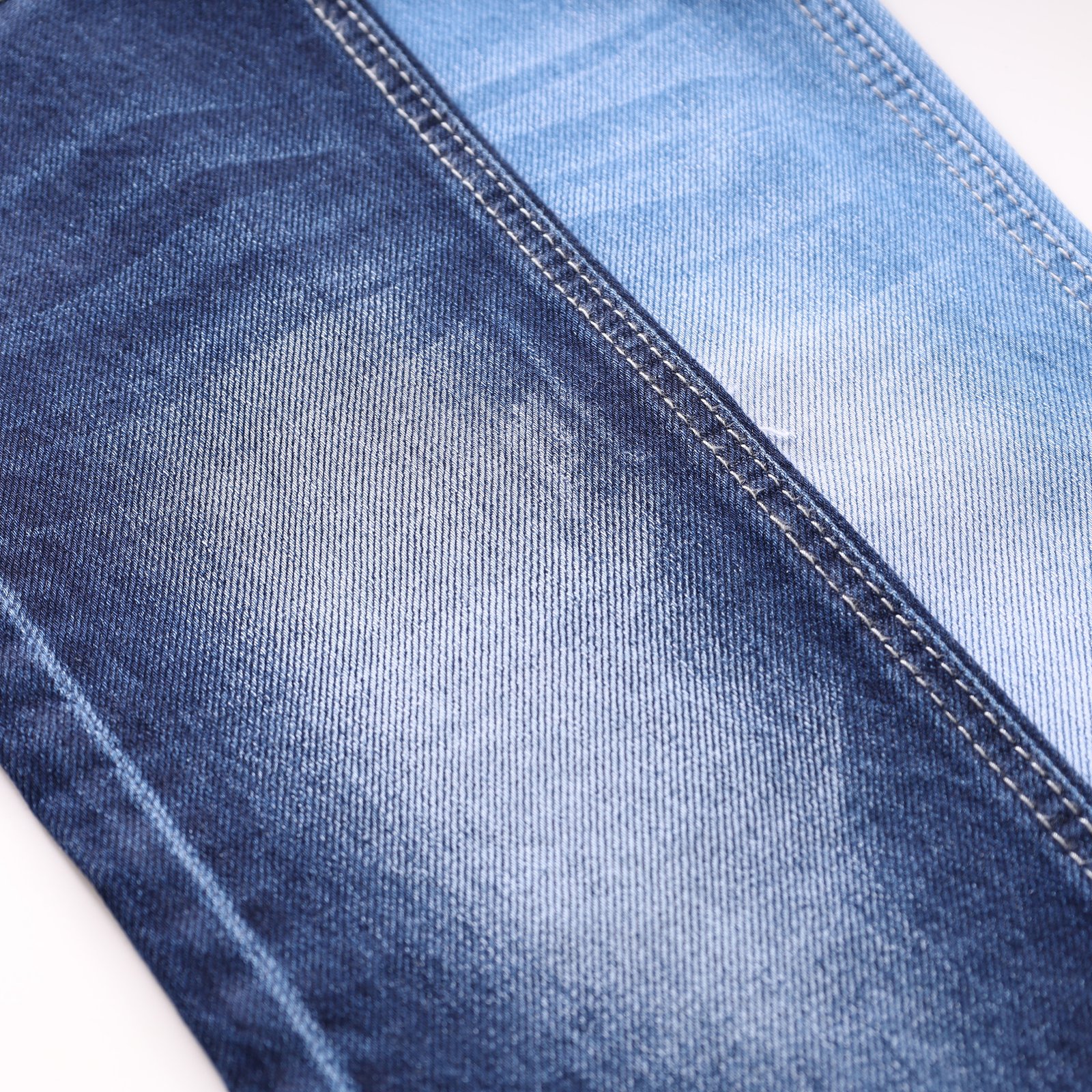
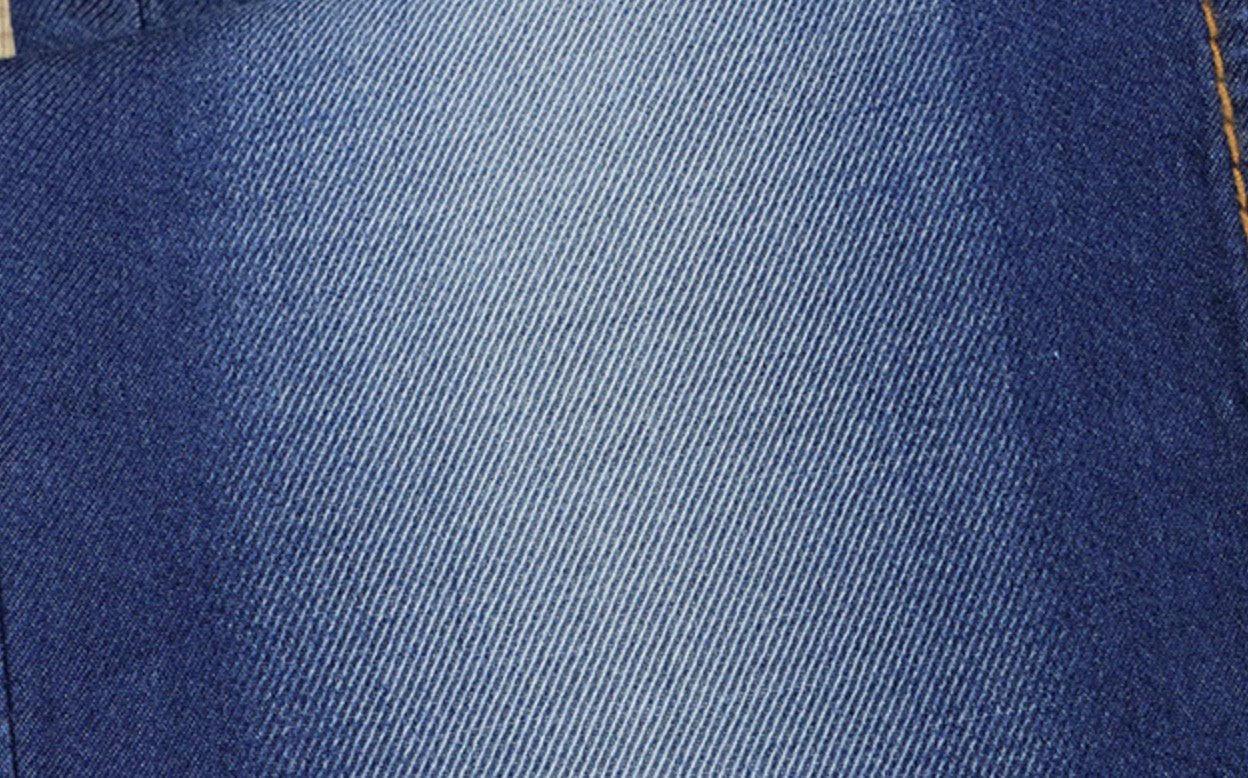
- สิ่งทอลายทแยงสาน: ผ้าเดนิมทอที่แพร่หลายที่สุด โดยสร้างลายจั๊มแนวทแยง ซึ่งขึ้นชื่อในด้านความทนทานและรูปลักษณ์อันเป็นเอกลักษณ์

สิ่งทอลายทแยงสาน
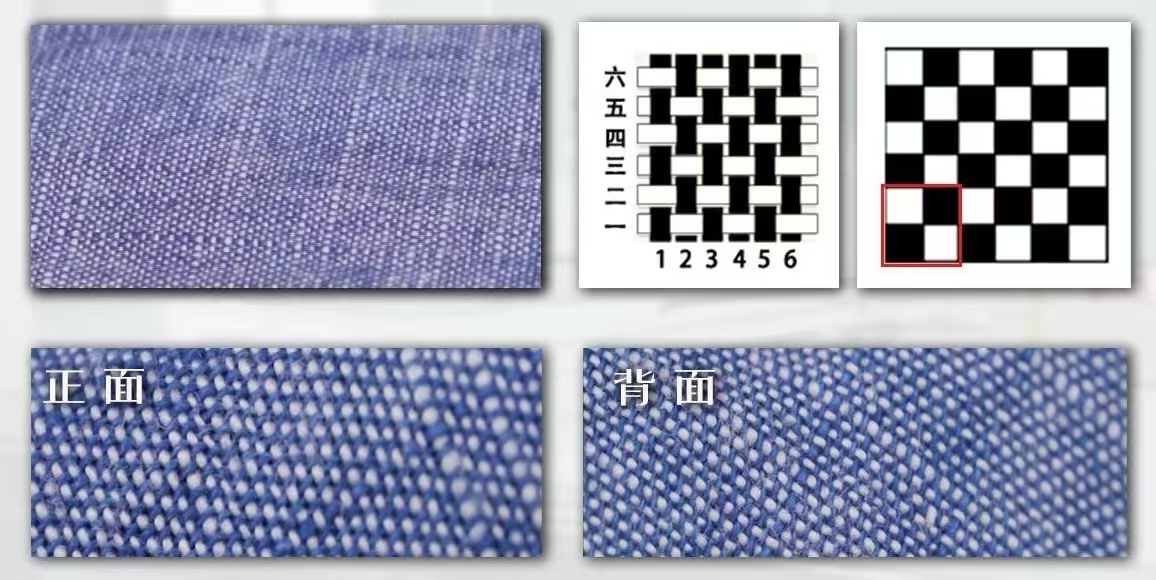
- ผ้าเรียบ: พบได้น้อยในผ้าเดนิม ซึ่งใช้กับผ้าสีอ่อนกว่า เช่น ผ้าแชมเบรย์ ซึ่งมีโครงสร้างที่เรียบง่ายและสมดุล
ผ้าเรียบ
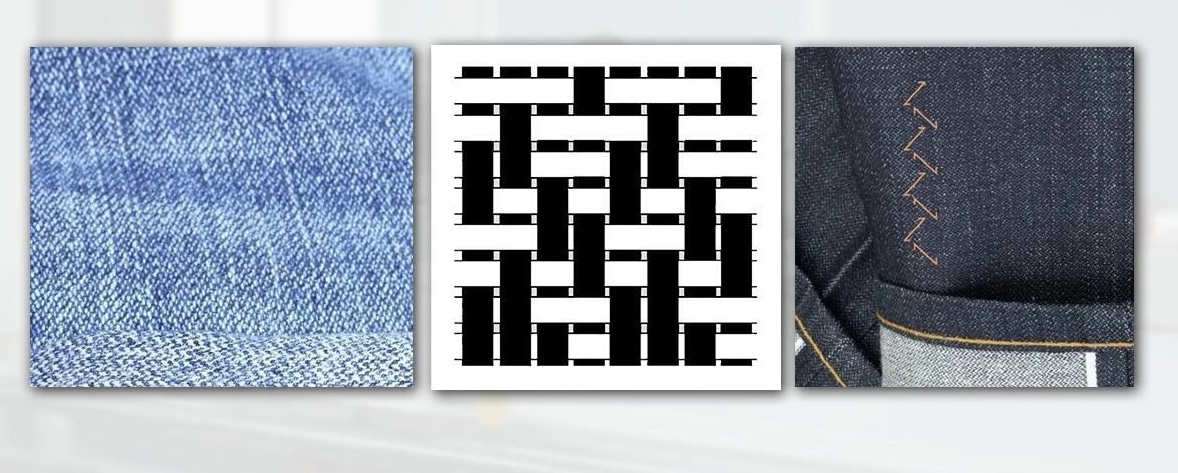
- สิ่งทอลายทแยงหัก: รูปแบบสิ่งทอลายทแยงที่มีรูปแบบแนวทแยงขัดจังหวะ ทำให้เกิดเนื้อผ้าที่โดดเด่น มักใช้ในกางเกงยีนส์ระดับพรีเมียม
สิ่งทอลายทแยงหัก
- สิ่งทอลายทแยงรูปแฉกแนวตั้ง: สร้างลวดลายเป็นรูปตัว V เพิ่มเอฟเฟ็กต์การตกแต่ง ซึ่งพบเห็นได้ทั่วไปในแจ็คเก็ตหรือดีไซน์พิเศษ
ก้างปลา (อนุพันธ์สิ่งทอลายทแยง)
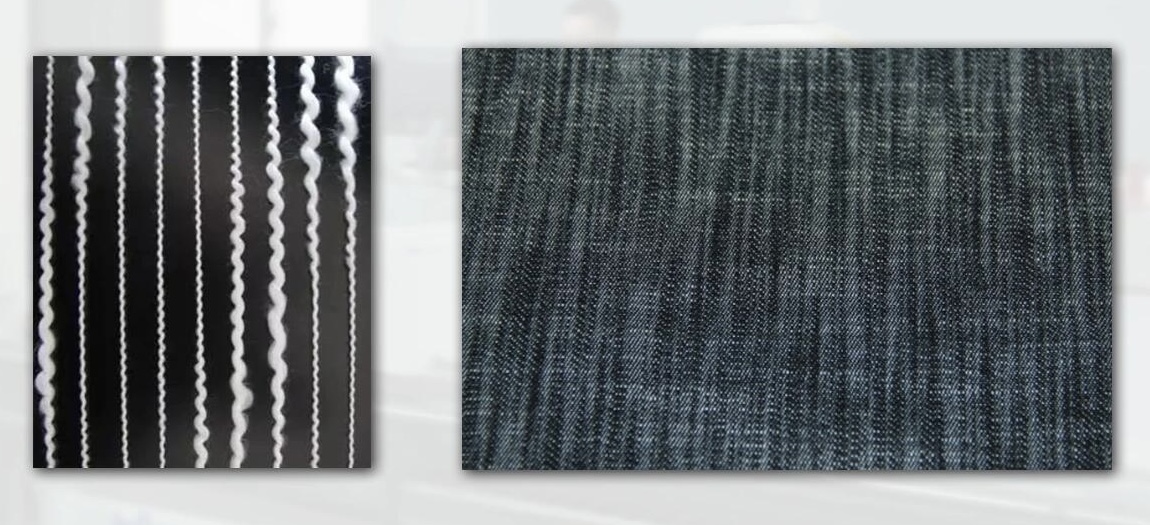
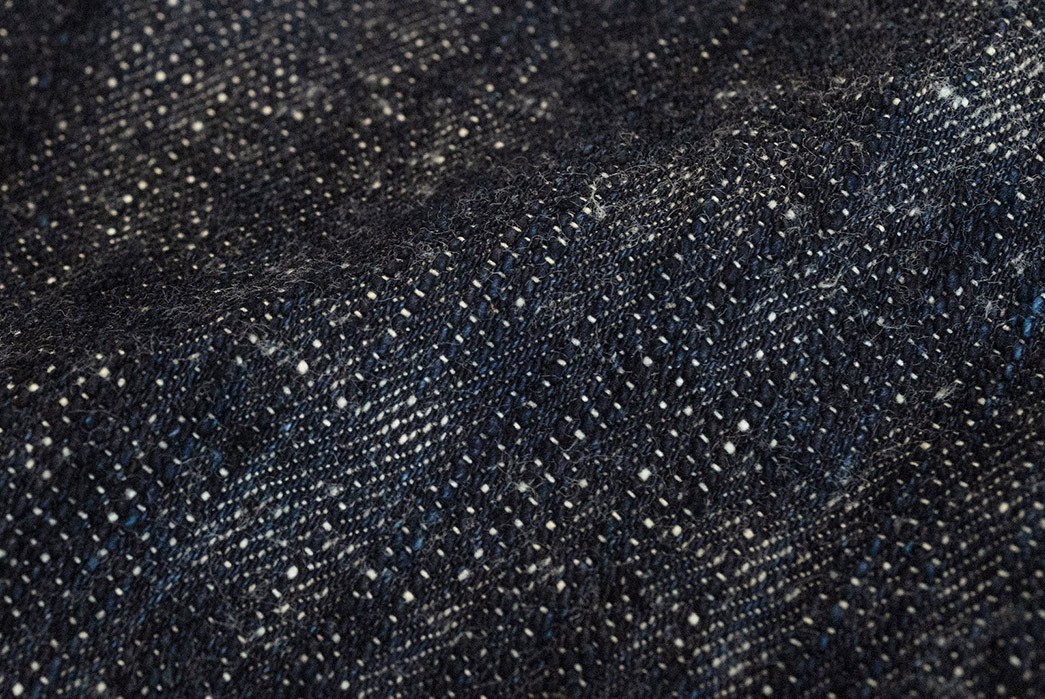
- พื้นผิวสลับด้าย: มีเส้นด้ายไม่เท่ากันคล้ายข้อต่อไม้ไผ่ เพิ่มความน่าสนใจทั้งด้านภาพและสัมผัส
พื้นผิวสลับด้าย
- ครอส สลึบ: บนพื้นฐานของการเพิ่มข้อต่อ Slub ให้กับเส้นด้ายยืน ข้อต่อ Slub จะถูกเพิ่มเข้าไปในเส้นด้ายพุ่งด้วย ซึ่งได้ผลลัพธ์แบบ Slub แนวนอนและแนวตั้ง
สลับด้ายขุง
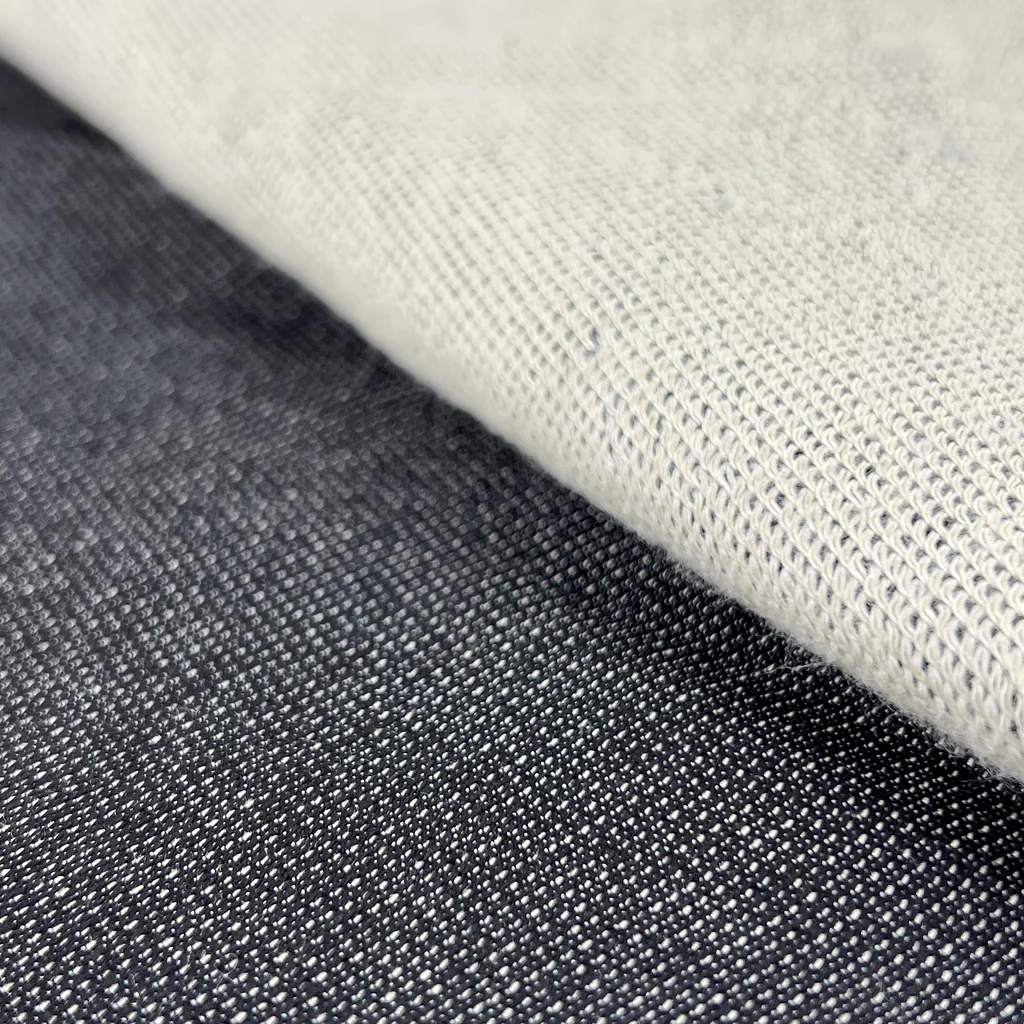
- ผ้าเดนิมเทอร์รี่แบ็ค: มีแผ่นรองหลังที่นุ่มเหมือนผ้าเช็ดตัวเพื่อความสบายยิ่งขึ้น ใช้กับผ้าเดนิมชนิดพิเศษ

รูปแบบการทอ
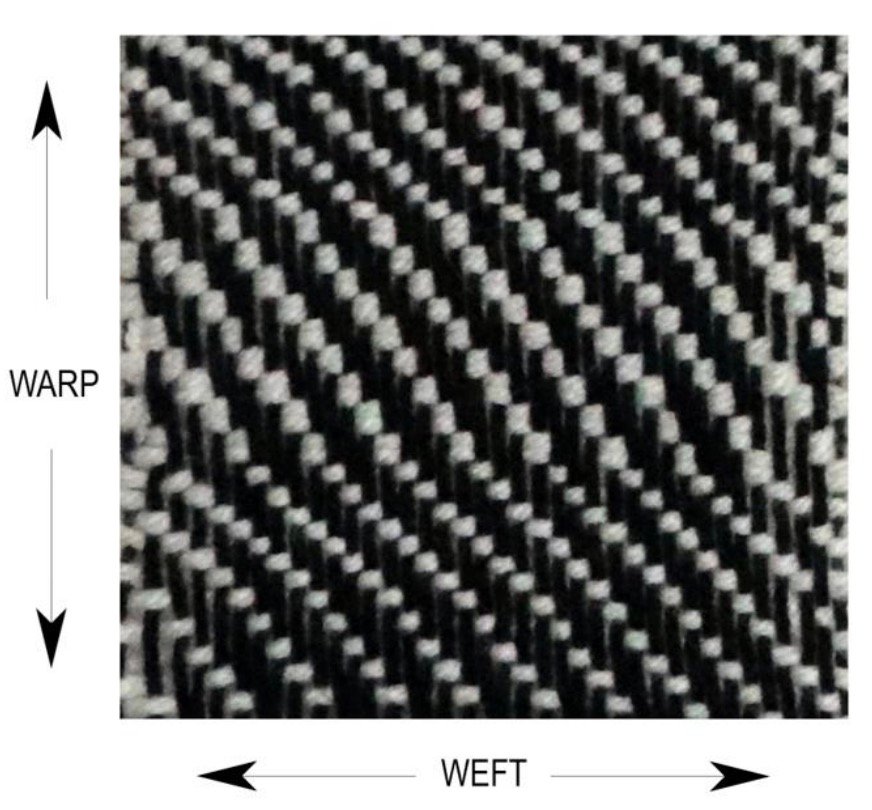
ลายทอผ้าเดนิมอธิบายด้วยจำนวนเส้นด้าย ซึ่งบ่งชี้ว่าเส้นพุ่งประสานกับเส้นยืนอย่างไร:
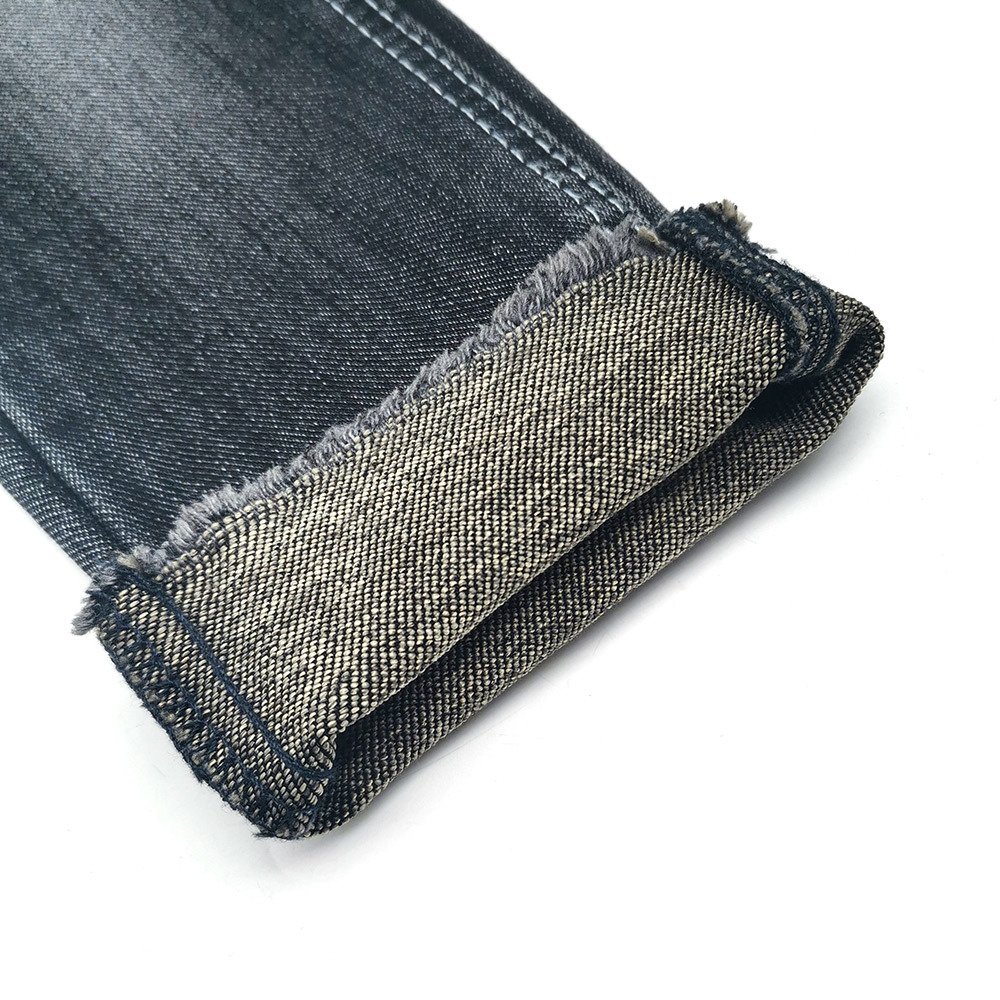
- สามชิ้น (3/1 ทวิลล์): เส้นพุ่งพาดผ่านด้ายยืนสามเส้นและอยู่ข้างใต้เส้นหนึ่ง ทำให้เกิดเป็นลายทแยงที่ทนทานและคลาสสิก ซึ่งพบได้ทั่วไปในกางเกงยีนส์แบบดั้งเดิม
- สี่ชิ้น (4/1 ทวิล): เส้นพุ่งพาดผ่านด้ายยืนสี่เส้น เพิ่มความนุ่มนวล เหมาะสำหรับรูปแบบที่สีอ่อนกว่า
- ห้าถึงสิบสองชิ้น: จำนวนเส้นด้ายที่สูงกว่านั้นหาได้ยาก ใช้สำหรับพื้นผิวพิเศษที่ซับซ้อน
6
8
ผ้าเดนิมชนิดพิเศษ
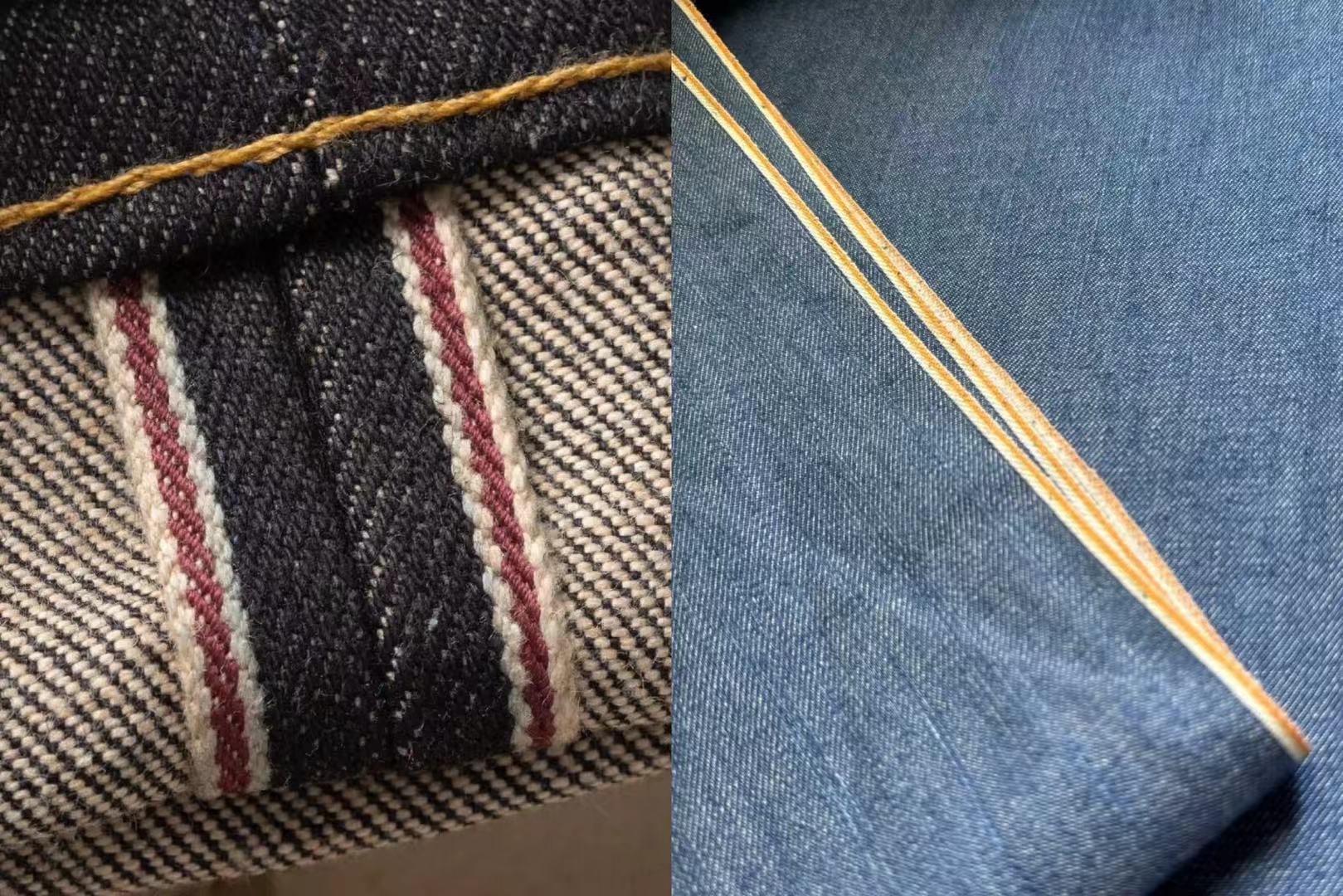
- ยีนส์ขอบพิเศษ: โดดเด่นด้วยขอบที่ตกแต่งเองเพื่อป้องกันการหลุดลุ่ย ซึ่งเกี่ยวข้องกับงานฝีมือคุณภาพสูง
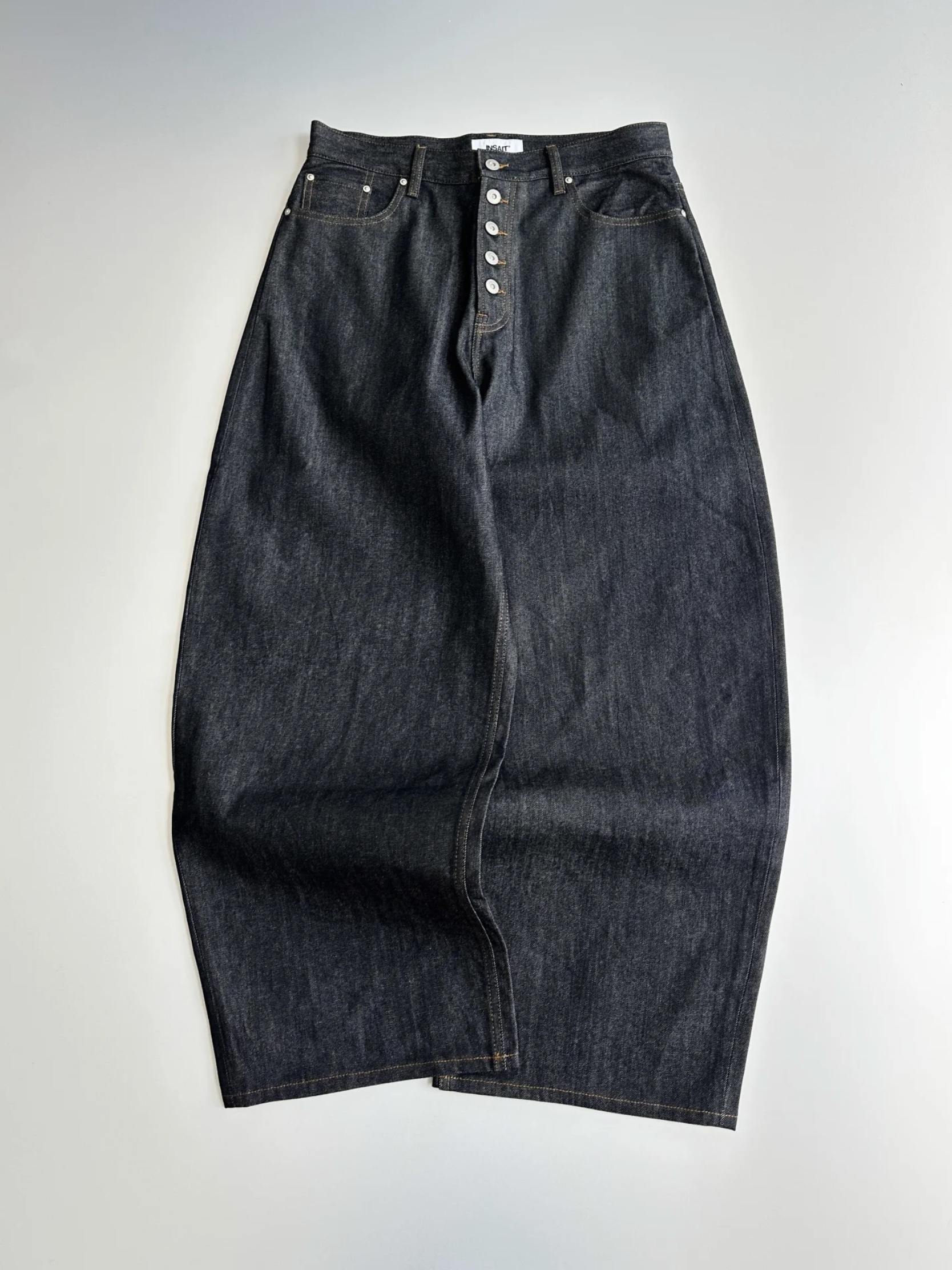
- ผ้าเดนิมดิบ: ผ้าเดนิมไม่เคยซักซึ่งจะจางลงตามธรรมชาติตามการสวมใส่ สร้างลุคเฉพาะตัว ซึ่งเป็นที่นิยมในหมู่ผู้ชื่นชอบผ้าเดนิม
ยีนส์ดิบ
- ผ้าเดนิมยืด: ผสมกับสแปนเด็กซ์หรืออีลาสเทนเพื่อความยืดหยุ่นและความสบาย เหมาะสำหรับสไตล์เข้ารูป
- เดนิมออร์แกนิก: ผลิตจากผ้าฝ้ายออร์แกนิกไร้สารกำจัดศัตรูพืชสังเคราะห์ เอาใจผู้บริโภคที่ใส่ใจสิ่งแวดล้อม
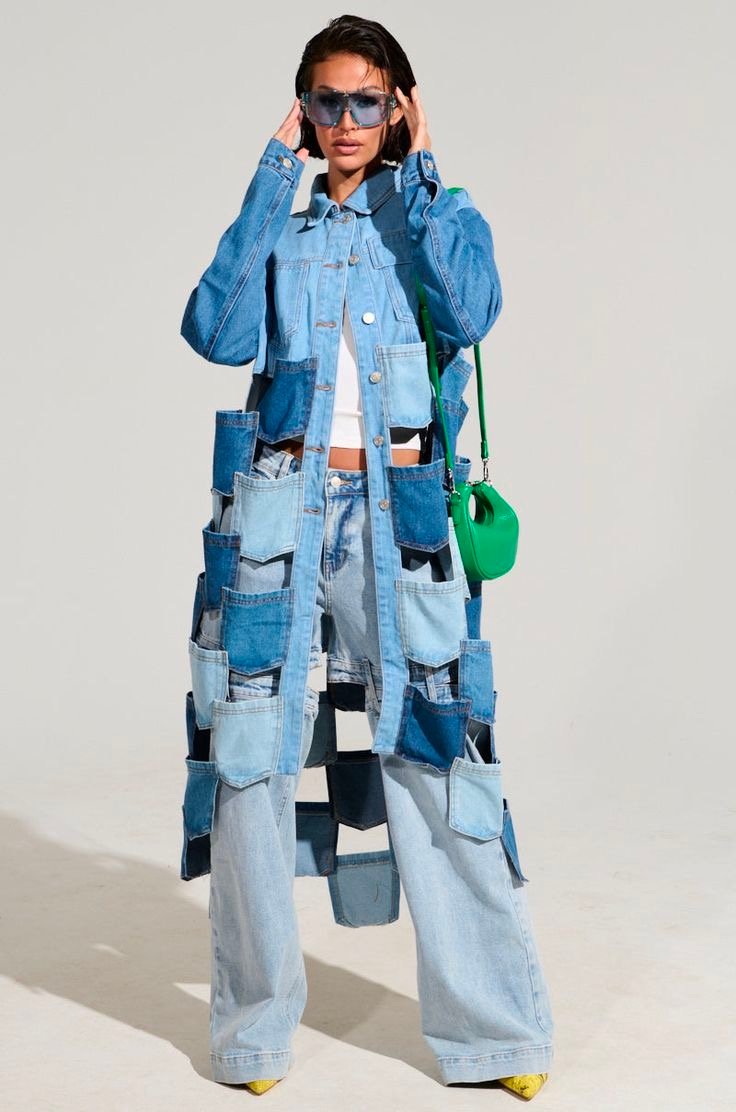
- เดนิมรีไซเคิล: ใช้วัสดุรีไซเคิลเพื่อส่งเสริมความยั่งยืนสอดคล้องกับเทรนด์แฟชั่นสีเขียว
เดนิมรีไซเคิล
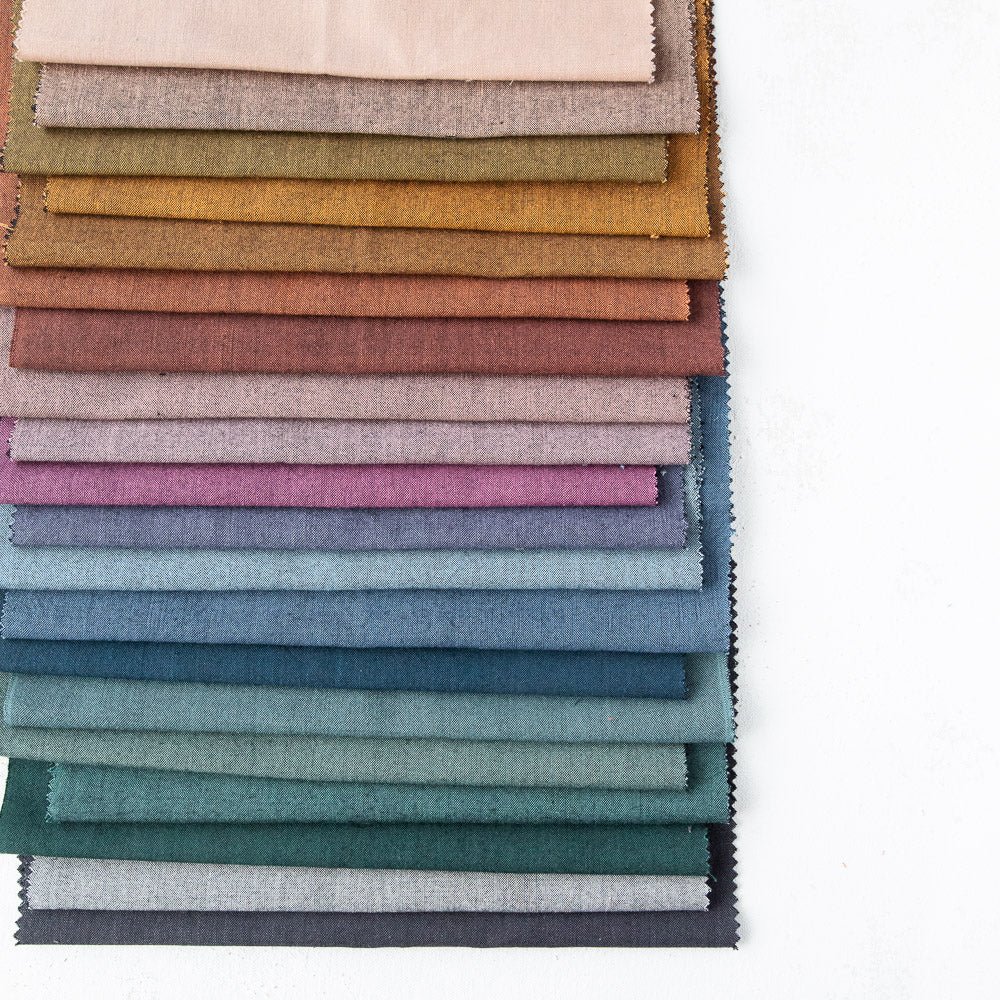
- แชมเบรย์: ผ้าทอธรรมดาน้ำหนักเบาระบายอากาศได้ดี มักใช้กับเสื้อเชิ้ตและชุดเดรส
ผ้าแชมเบรย์

ผ้าเสร็จสิ้น
- การย้อมคราม: วิธีการย้อมด้ายยืนแบบดั้งเดิมด้วยสีคราม โดยปล่อยให้เส้นพุ่งเป็นสีขาวเพื่อให้ได้ลุคสีน้ำเงินสุดคลาสสิก
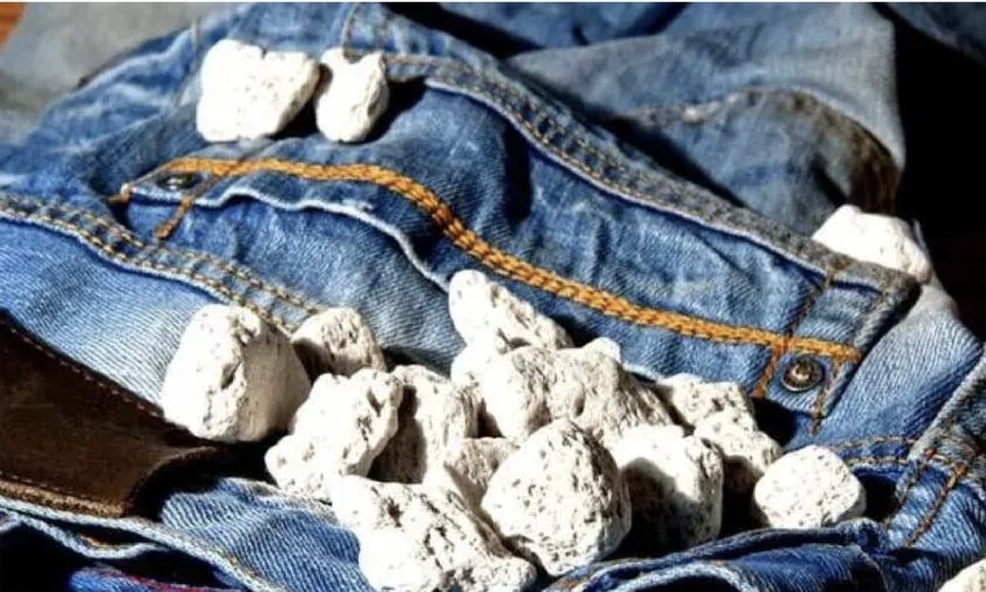
- สโตนวาวด์: แต่งด้วยหินภูเขาไฟเพื่อให้ดูเก่าและซีดจาง เพิ่มความรู้สึกวินเทจ
สโตนวอช
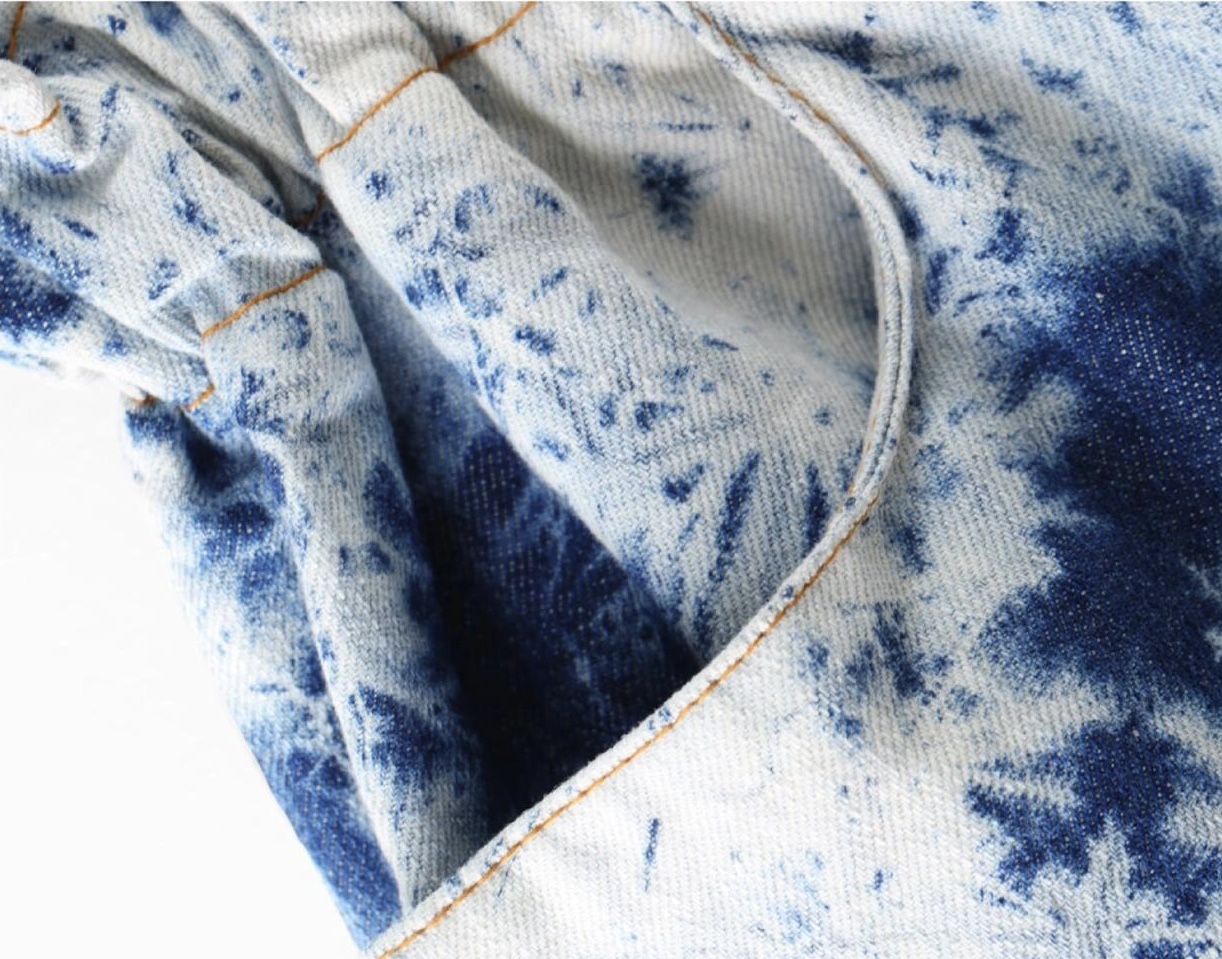
- กรดล้าง: ใช้กรดเพื่อสร้างลุคที่ดูเคร่งขรึม ไม่ซ้ำใคร เป็นที่นิยมในการออกแบบแนวแฟชั่น
- แซนโฟไรซ์: หดก่อนเพื่อลดการหดตัวหลังการซัก ให้เหลือขนาดคงที่
กางเกงยีนส์สไตล์โดย Fit
กางเกงยีนส์เดนิมมีทรงพอดีตัวหลากหลายเพื่อให้เหมาะกับความชอบและรูปร่างที่แตกต่างกัน:
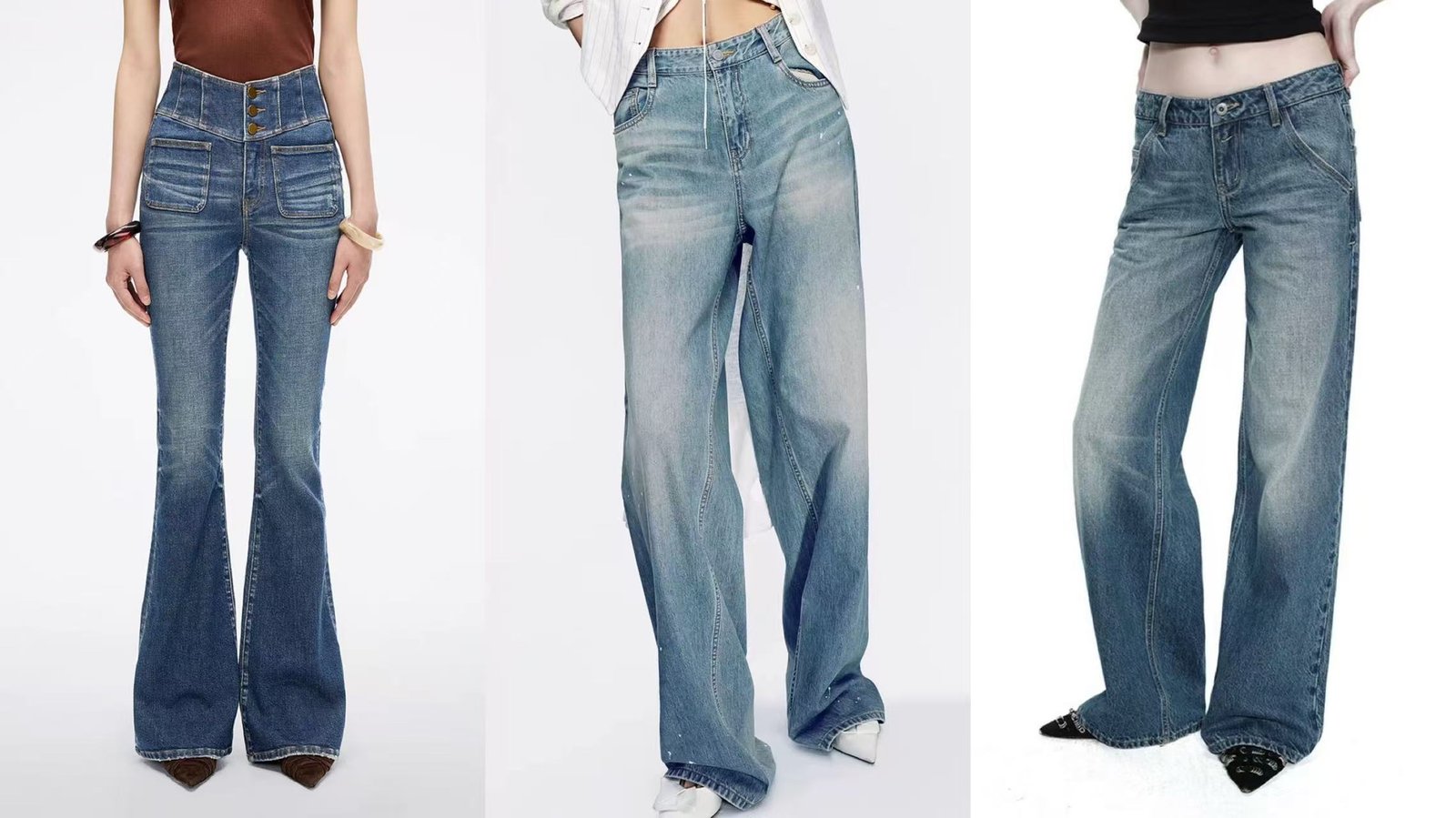
ความสูงของเอว
- แนวราบ: อยู่ใต้เอวตามธรรมชาติ ซึ่งได้แรงบันดาลใจจากแฟชั่น Y2K เหมาะสำหรับลุคลำลองที่โดดเด่น
- แนวราบ: นั่งแนบชิดกับเอวตามธรรมชาติ ให้สไตล์ที่สมดุลและหลากหลายสำหรับโอกาสส่วนใหญ่
- อาคารสูง: นั่งเหนือเอวธรรมชาติ ยืดขา เหมาะสำหรับชุดมืออาชีพหรือชุดหรูหรา
เอว
สไตล์ขา
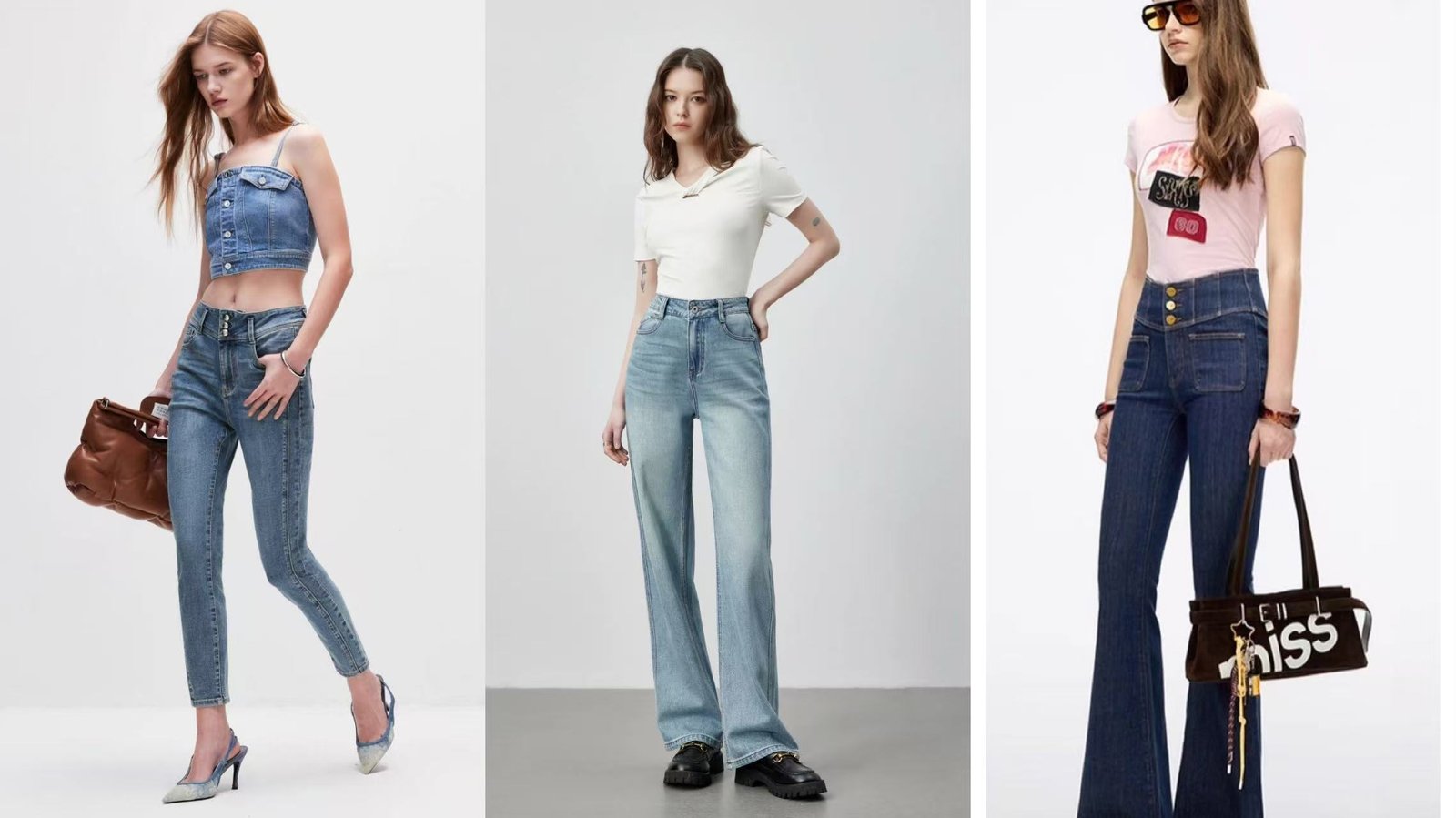
- ผอม: รัดรูปตั้งแต่เอวถึงข้อเท้า เน้นรูปร่าง เหมาะกับรองเท้าบูทหรือรองเท้าส้นสูง
- ขาตรง: พอดีตัวที่สะโพกและต้นขา ตั้งแต่เข่าจนถึงข้อเท้า เป็นทางเลือกที่เหนือกาลเวลาและอเนกประสงค์
- บาน: เข้ารูปช่วงสะโพกและต้นขา โดยขยายจากหัวเข่า เพิ่มความเก๋แบบโบฮีเมียน
- บูตคัท: คล้ายกับแฟลร์แต่มีแฟลร์เล็กน้อยตั้งแต่น่อง ออกแบบมาเพื่อสวมทับรองเท้าบูท
- ขากว้าง: หลวมตั้งแต่สะโพกถึงชายเสื้อ ทำให้เกิดทรงที่ดูโดดเด่น เหมาะสำหรับลุคอินเทรนด์หรือลุคลำลอง
- ถุง: โอเวอร์ไซส์ทั้งตัว เน้นความสบาย เหมาะกับสไตล์สบายๆ
สไตล์ขา
ข้อดีและข้อเสียของสไตล์เดนิม
ข้อดี
- ความทนทาน: ลักษณะที่แข็งแกร่งของเดนิมทำให้มั่นใจได้ถึงการสวมใส่ที่ยาวนานและคุ้มค่าอย่างยิ่ง
- ความหลากหลายในการใช้งาน: เหมาะสำหรับโอกาสลำลองถึงกึ่งทางการที่มีสไตล์ที่ใช่
- สไตล์: ผสมผสานองค์ประกอบคลาสสิกและสมัยใหม่ เพื่อตอบสนองความต้องการด้านสุนทรียศาสตร์ที่หลากหลาย
- ความสบาย: ผ้าเดนิมยืดและทรงหลวมให้ความสบายตลอดวัน
- ความหลากหลาย: ผ้า การทอ และการตัดเย็บที่หลากหลายเหมาะกับรูปร่างและสไตล์ที่หลากหลาย
ข้อเสีย
- ความซับซ้อนในการบำรุงรักษา: ผ้าเดนิมอาจซีดหรือหดตัวหากไม่ซักอย่างเหมาะสม จะต้องได้รับการดูแลอย่างระมัดระวัง
- การระบายอากาศมีจำกัด: ผ้าเดนิมหนาขึ้นระบายอากาศได้น้อยในช่วงอากาศร้อน
- พอดีกับความท้าทาย: การหาขนาดที่พอดีอาจเป็นเรื่องยากเนื่องจากสไตล์และรูปร่างที่หลากหลาย
- การเปลี่ยนแปลงต้นทุน: ผ้าเดนิมระดับไฮเอนด์หรือผ้าเดนิมของดีไซเนอร์อาจมีราคาสูง ทำให้เข้าถึงได้ยาก
สถานการณ์การจัดสไตล์และการใช้งาน
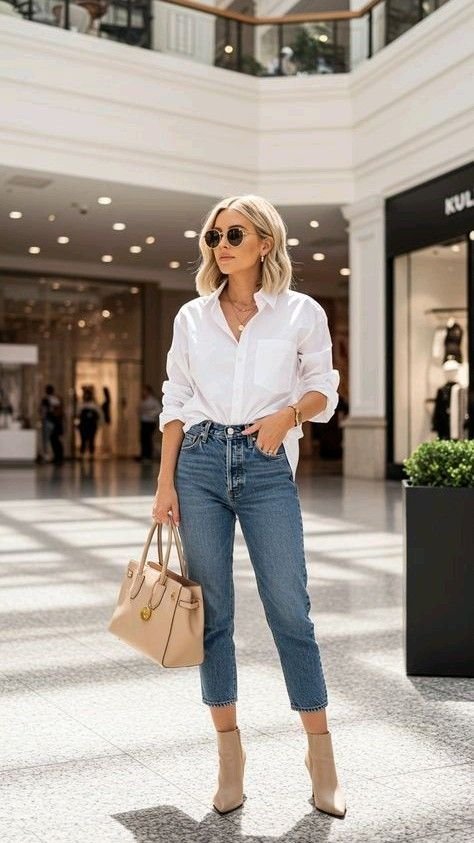
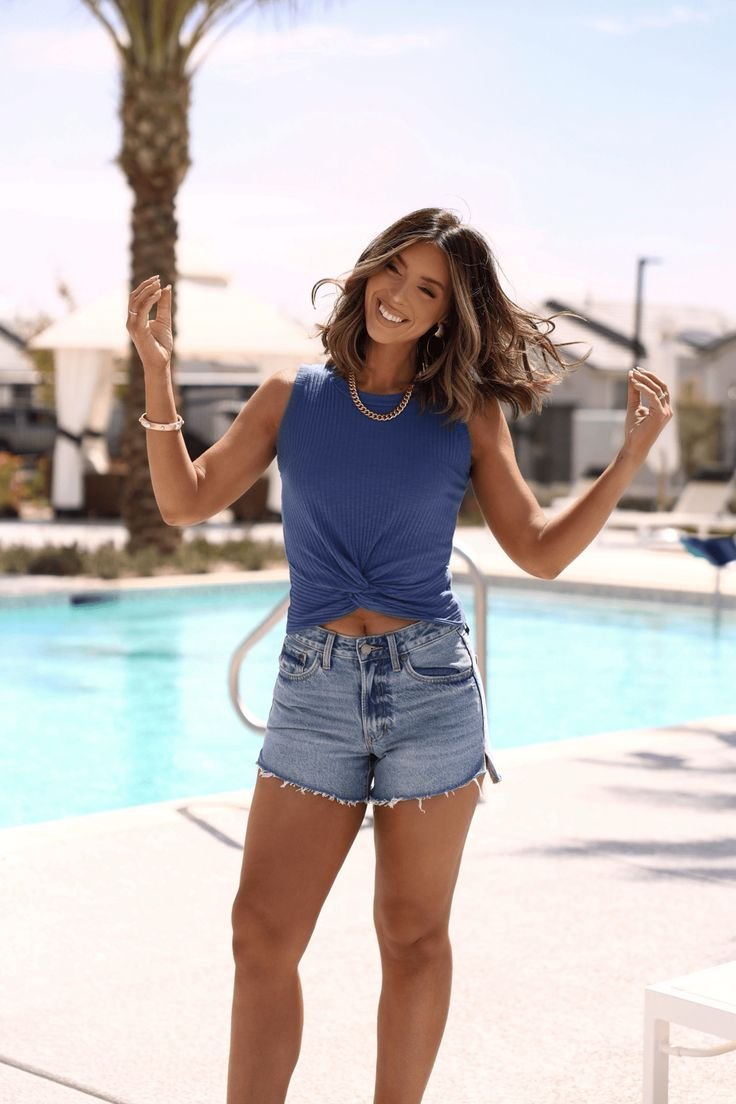
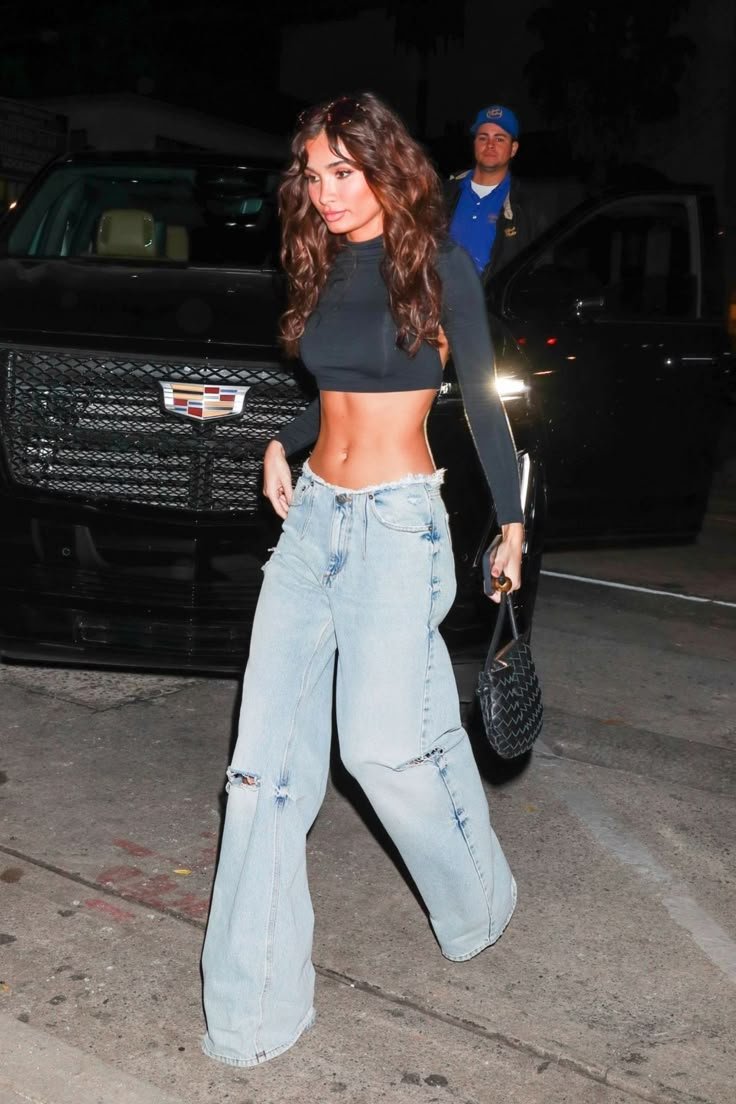
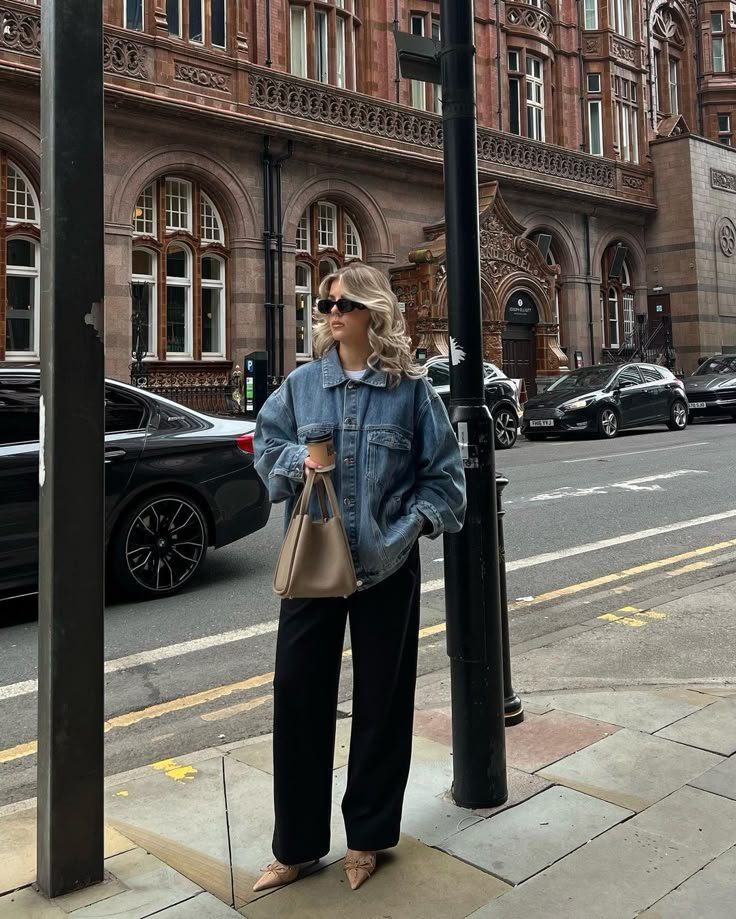
ความสามารถรอบด้านของเดนิมทำให้เหมาะสำหรับการตั้งค่าต่างๆ คำแนะนำด้านสไตล์ที่เฉพาะเจาะจงมีดังนี้:
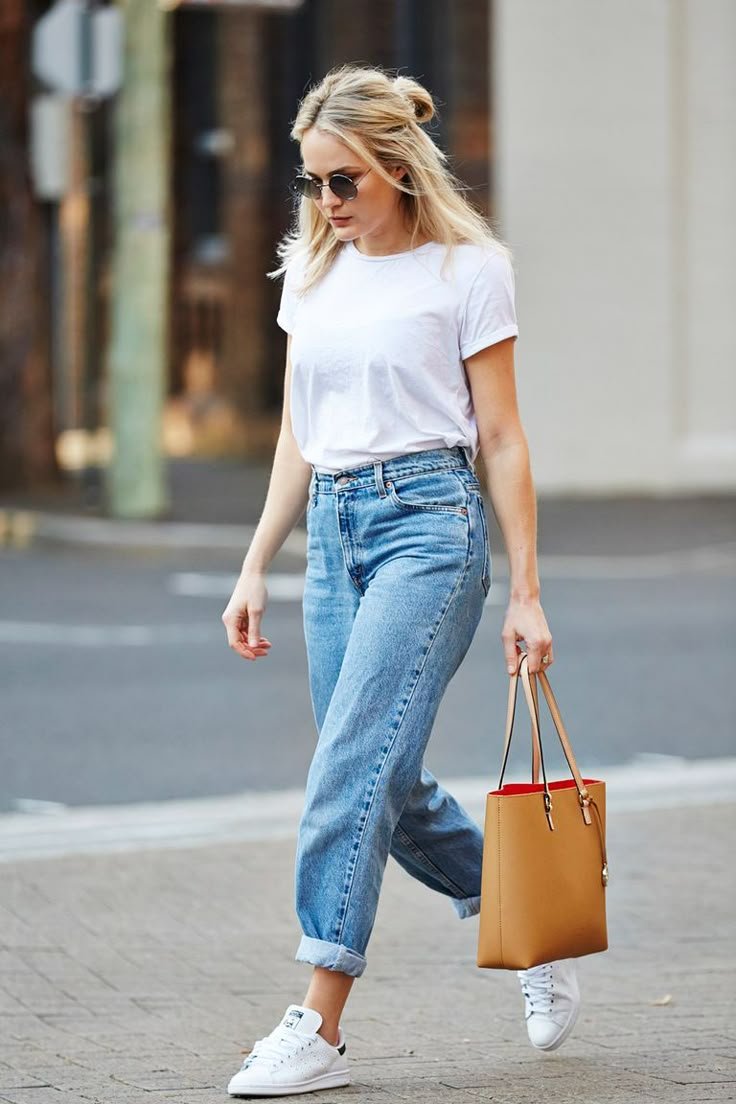
- การออกนอกบ้านแบบสบาย ๆ: กางเกงยีนส์สกินนี่หรือขาตรงกับเสื้อยืดลายกราฟิกและรองเท้าผ้าใบสีขาวสำหรับการช็อปปิ้ง พบปะดื่มกาแฟ หรือทำธุระ
- การแต่งกายสถานที่ทำงาน: กางเกงยีนส์ขาตรงเอวสูงปานกลางฟอกสีเข้มพร้อมเสื้อเบลาส์สีขาวและรองเท้าโลฟเฟอร์ เหมาะสำหรับอุตสาหกรรมสร้างสรรค์ เช่น สตูดิโอโฆษณาหรือสตูดิโอออกแบบ
- กิจกรรมทางสังคม: กางเกงยีนส์เอวสูงกับเสื้อไหมและรองเท้าส้นสูงสำหรับอาหารค่ำ นิทรรศการศิลปะ หรืองานปาร์ตี้
- สไตล์ฤดูร้อน: กางเกงยีนส์ขาสั้นหรือกางเกงขาสั้นผ้าเดนิมส่วน 7/8 ของผู้หญิงพร้อมรองเท้าแตะและเสื้อน้ำหนักเบาสำหรับการออกไปเที่ยวในสภาพอากาศอบอุ่น
- สไตล์สตรีท: กางเกงยีนส์ขากระบอกไม่หุ้มข้อกับเสื้อครอปและรองเท้าผ้าใบทรงหนาสำหรับงานปาร์ตี้แฟชั่นหรือการถ่ายภาพแนวสตรีท
- ชุดเดินทาง: กางเกงยีนส์ขากระบอกยืดกับแจ็คเก็ตหรือเสื้อสเวตเตอร์เพื่อความสบายและมีสไตล์ในการเดินทางไกล

ข้อมูลเชิงลึกจากผู้เชี่ยวชาญและชุมชน
ผู้เชี่ยวชาญด้านแฟชั่นและชุมชนให้มุมมองที่มีคุณค่าเกี่ยวกับสไตล์เดนิม:
- เกรซ นา (ผู้ก่อตั้ง Pistola Denim): “กางเกงยีนส์ทรงกระบอกทรงถุงได้รับความนิยมในเรื่องของความพอดีตัวและความสบาย ทำให้เป็นที่ชื่นชอบสำหรับสไตล์ที่หลากหลาย”
- Caroline Maguire (ผู้อำนวยการแฟชั่นอาวุโสของ Shopbop): “สไตล์เดนิมผสมผสานความคิดถึงเข้ากับนวัตกรรม ด้วยการตัดเย็บแบบคลาสสิก เช่น กางเกงยีนส์ขาตรงที่ได้รับการซักให้ทันสมัย และองค์ประกอบการตกแต่ง เช่น งานปัก”
- จิลล์ เกนซา (รองประธานฝ่ายการออกแบบสำหรับผู้หญิงระดับโลก ของบริษัท เลวี สตราอส แอนด์ โค.): “ทรงหลวมพลิ้วไหวครองเทรนด์เดนิม โดยมอบความสมดุลระหว่างความสบายและสไตล์”
- ผู้ใช้ Reddit u/stylishguru (r/Femalefashionadvice): “กางเกงยีนส์สีเข้มกับเสื้อสีขาวหรือสีดำเหมาะอย่างยิ่งสำหรับการสวมใส่แบบกึ่งทางการ เสริมด้วยรองเท้าโลฟเฟอร์หรือรองเท้าส้นเตี้ย”
- สมัยอังกฤษ: “ดีไซน์ขอบเอว เช่น ส่วนโค้งที่เป็นเอกลักษณ์หรือตัวล็อคตกแต่ง เป็นกุญแจสำคัญในการยกระดับลุคเดนิม”
ศักยภาพทางการตลาด
ตาม การวิจัยแกรนด์วิวตลาดยีนส์เดนิมทั่วโลกมีมูลค่า 86.66 พันล้านดอลลาร์สหรัฐในปี 2567 และคาดว่าจะสูงถึง 121.50 พันล้านดอลลาร์สหรัฐภายในปี 2573 โดยมี CAGR อยู่ที่ 5.9% สไตล์เดนิมขับเคลื่อนความต้องการในตลาดลำลองและเป็นมืออาชีพ เนื่องจากความอเนกประสงค์และเสน่ห์เหนือกาลเวลา ข้อมูลของ Google เทรนด์ระบุว่าการค้นหาผ้าเดนิมเพิ่มขึ้นอย่างมากในฤดูใบไม้ร่วงปี 2024 ซึ่งสะท้อนถึงความสนใจของผู้บริโภคในผ้าคุณภาพสูงและทนทาน การเพิ่มขึ้นของแฟชั่นที่ยั่งยืนช่วยเพิ่มเดนิมออร์แกนิกและรีไซเคิล โดยแบรนด์อย่าง Stella McCartney ตอบสนองความต้องการนี้ผ่านโครงการการผลิตและการรีไซเคิลที่เป็นมิตรกับสิ่งแวดล้อม
เคล็ดลับการดูแล
เพื่อยืดอายุการใช้งานของผ้าเดนิม ให้ปฏิบัติตามแนวทางการดูแลเหล่านี้:
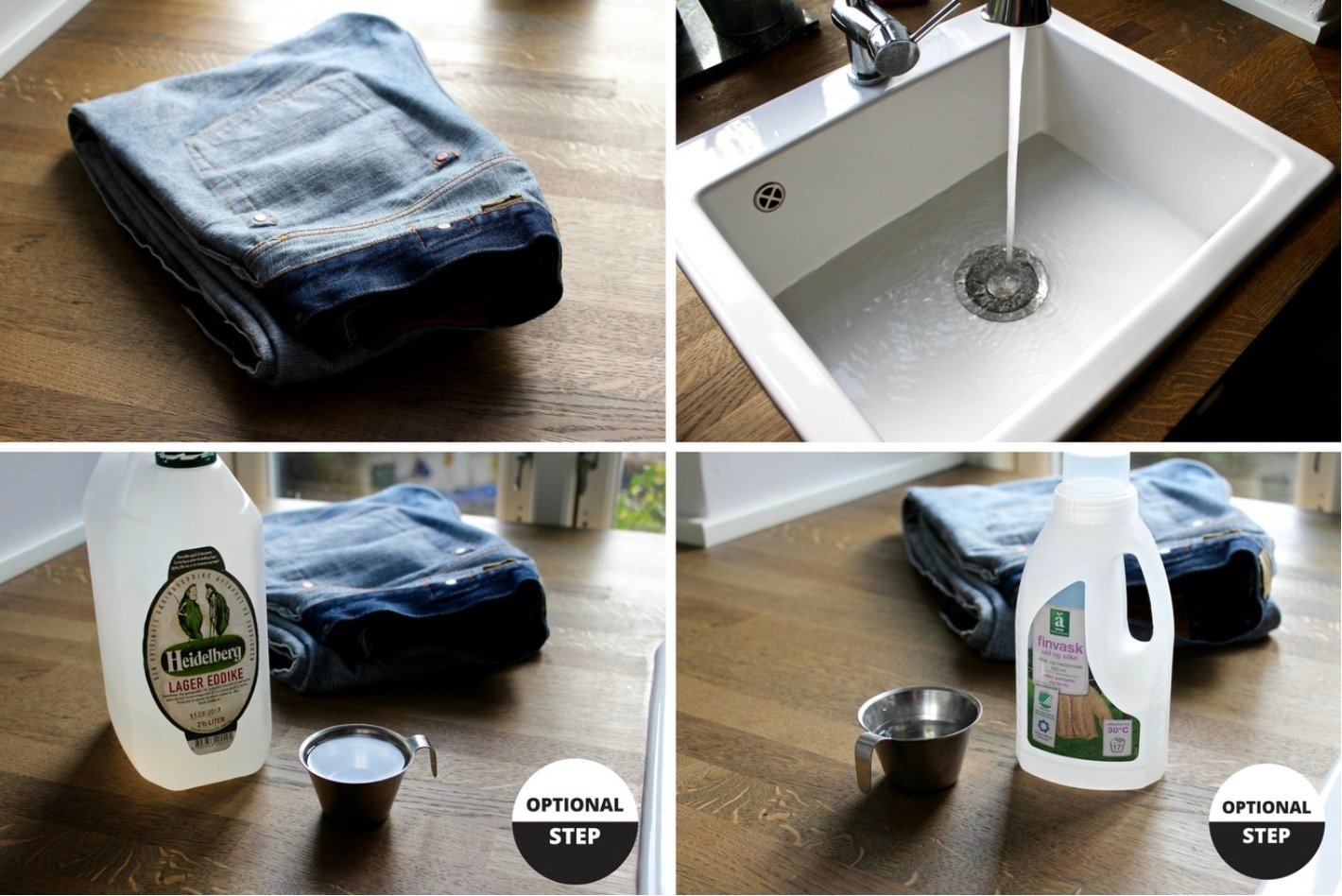
- แยกซัก: ทำความสะอาดด้วยสีที่เหมือนกันเพื่อป้องกันการตกตะกอนของสีย้อม
- ล้างด้านในออก: ปกป้องเนื้อผ้าและสี
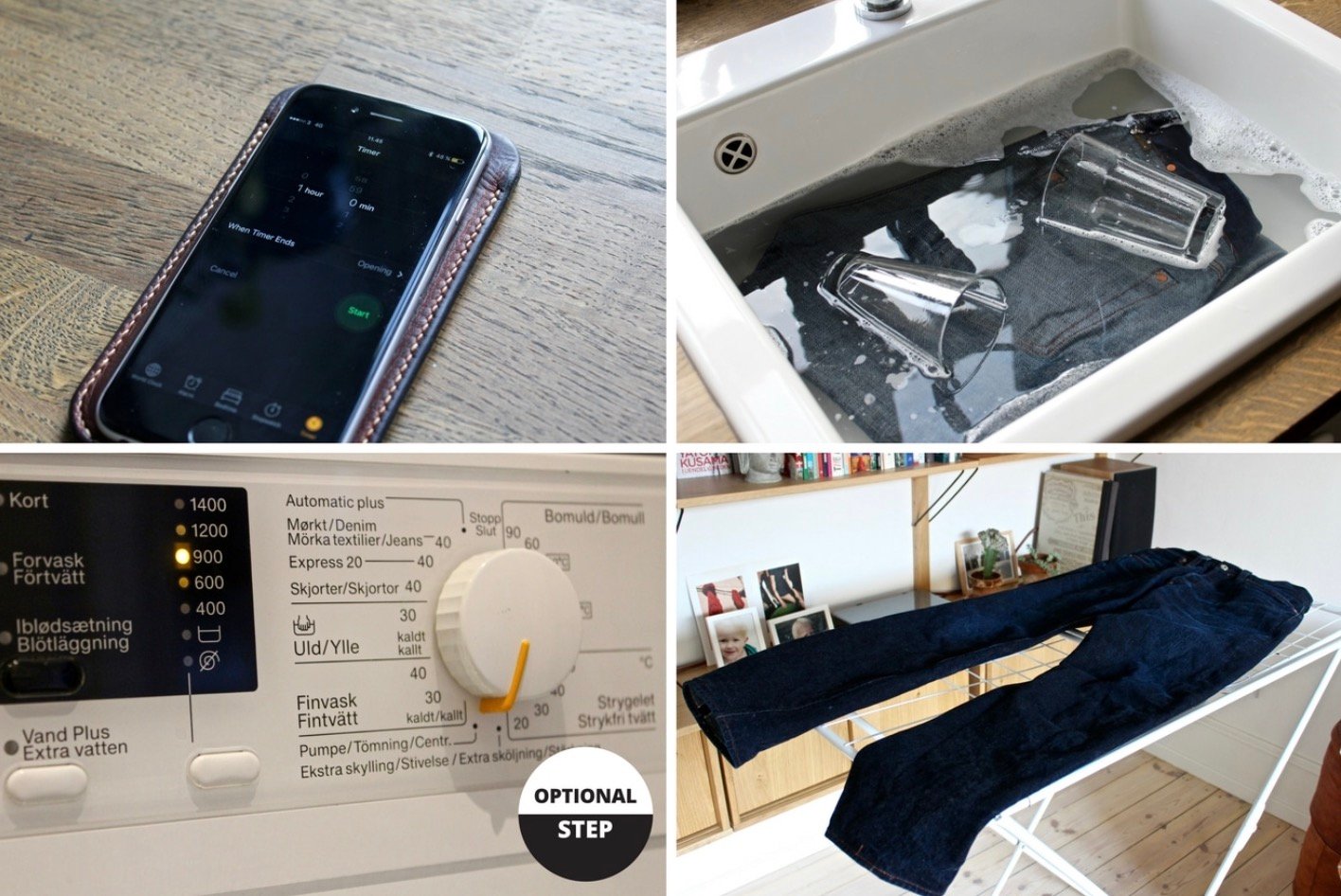
- ใช้ผงซักฟอกสูตรอ่อนโยน: หลีกเลี่ยงสารเคมีที่รุนแรง
- ผึ่งลมให้แห้ง: หลีกเลี่ยงการอบแห้งด้วยความร้อนสูงเพื่อรักษารูปทรงและสี
- รักษาคราบทันที: ใช้น้ำยาขจัดคราบสูตรอ่อนโยน
การบำรุงรักษากางเกงยีนส์เดนิม 1
การบำรุงรักษากางเกงยีนส์เดนิม 2
บทสรุป
สไตล์เดนิมมีตัวเลือกมากมาย ตั้งแต่ผ้าริมริมที่ทนทาน ไปจนถึงผ้ายืดผสมที่ใส่สบาย และกางเกงยีนส์ขาบานไม่หุ้มข้อสุดอินเทรนด์ ด้วยการทำความเข้าใจประเภทผ้า การทอ และเทคนิคการจัดแต่งทรงผม คุณสามารถเลือกผ้าเดนิมที่เติมเต็มไลฟ์สไตล์ของคุณและแสดงออกถึงสไตล์ส่วนตัวของคุณได้ เดนิมไม่ได้เป็นเพียงแฟชั่นหลักเท่านั้น แต่ยังเป็นผืนผ้าใบที่มีเอกลักษณ์เฉพาะตัว ทำให้เป็นยีนส์ที่ต้องมีติดตู้เสื้อผ้าทุกชุด
บริการปรับแต่งโดย LYDENIM
🎨 อยากได้ ผ้าเดนิมที่กำหนดเอง หรือ ไม่ซ้ำกัน เสื้อผ้าเดนิมที่กำหนดเอง? LYDENIM เชี่ยวชาญด้านโซลูชันที่ออกแบบเฉพาะเพื่อตอบสนองความต้องการด้านการออกแบบและการผลิตของคุณ
🛍️ สำรวจและหาแรงบันดาลใจกันเถอะ!: เลือกดูผ้าที่เราคัดสรรและค้นพบแนวคิดการออกแบบได้ที่ ลีเดนิม.
🌐 เสื้อผ้ายืดหยุ่น: ตรวจสอบข้อเสนอของเราได้ที่ อาลีบาบาของฉัน. 📩 ติดต่อเรา: ติดต่อได้ที่ Malone@lydenim.com.
สร้างสรรค์ผลงานเดนิมชิ้นเอกของคุณด้วย LYDENIM ซึ่งเป็นพันธมิตรที่คุณไว้วางใจ ผ้ายืด และ โซลูชั่นเดนิมแบบกำหนดเอง.
คำถามที่พบบ่อย
สามารถปรับแต่งให้เหมาะกับแบรนด์หรือคอลเลกชันของฉันได้หรือไม่?
ใช่ ส่งใบสมัคร รูปภาพอ้างอิง คุณภาพเป้าหมาย ปริมาณ และข้อกำหนดของตลาด เพื่อให้ซัพพลายเออร์สามารถแนะนำตัวเลือกผ้า เครื่องแต่งกาย หรือการตกแต่งที่เหมาะสมได้
ฉันควรส่งข้อมูลอะไรบ้างก่อนที่จะขอใบเสนอราคา?
จัดเตรียมประเภทผลิตภัณฑ์ ผ้าหรือเทคนิคเป้าหมาย ทิศทางสี ความต้องการตัวอย่าง ปริมาณ ประเทศปลายทาง และระยะเวลารอคอยสินค้าที่คาดหวัง
ฉันควรขอตัวอย่างก่อนการผลิตจำนวนมากหรือไม่
ใช่ ตัวอย่างและระยะตัวอย่างจะช่วยลดความเสี่ยงก่อนสั่งซื้อจำนวนมาก โดยเฉพาะอย่างยิ่งเมื่อคุณภาพสี ความรู้สึกทางมือ การยืด พื้นผิว หรือการตกแต่งมีความสำคัญ
ฉันจะหลีกเลี่ยงปัญหาด้านคุณภาพในคำสั่งซื้อจำนวนมากได้อย่างไร
อนุมัติมาตรฐานตัวอย่างที่ชัดเจน กำหนดข้อกำหนดในการทดสอบ ยืนยันความคลาดเคลื่อน และเปรียบเทียบผลผลิตจำนวนมากกับตัวอย่างที่ได้รับอนุมัติก่อนจัดส่ง
ต้องการความช่วยเหลือในการเปลี่ยนสิ่งนี้ให้เป็นบรีฟการจัดหาที่พร้อมสำหรับการผลิตหรือไม่
ส่งสินค้าเป้าหมายของคุณ ทิศทางผ้า ปริมาณ และความต้องการตัวอย่าง LY Denim สามารถช่วยเปรียบเทียบตัวเลือกและเตรียมใบเสนอราคาได้