


Hướng dẫn chọn nhà sản xuất hoodie tùy chỉnh - Tùy chỉnh hoodie của bạn
Hướng dẫn chọn nhà sản xuất hoodie tùy chỉnh - Tùy chỉnh hoodie của bạn
Sản xuất áo hoodie tùy chỉnh: Trọng lượng vải (190–600 GSM), quy trình sản xuất, xu hướng thiết kế, những thách thức phổ biến và các giải pháp thực tiễn dành cho các thương hiệu thời trang
Tóm tắt thông tin người mua
Đối với các thương hiệu thời trang và các nhóm sản xuất quy mô nhỏ, chủ đề này cần liên kết các quyết định thiết kế với quá trình lấy mẫu, sản xuất, số lượng đặt hàng tối thiểu (MOQ), phương pháp trang trí và mức độ sẵn sàng của báo giá.
- Những người mua phù hợpCác thương hiệu thời trang, đội ngũ tìm nguồn cung ứng, các nhà bán buôn, nhà máy may mặc và các nhà phát triển sản phẩm.
- Điều nào cần xác nhận?Sản phẩm mục tiêu, hướng vải, chất lượng bề mặt, yêu cầu mẫu sản phẩm, số lượng và thị trường giao hàng.
- Rủi ro của người muaCác thông số kỹ thuật không rõ ràng có thể dẫn đến việc lấy mẫu sai, chất lượng hàng loạt không ổn định và thời gian đưa ra báo giá kéo dài.
- Lời khuyên về hành động tiếp theo (CTA – Call to Action)Hãy yêu cầu mẫu vật hoặc báo giá trước khi quyết định sản xuất hàng loạt.
Tại sao điều này quan trọng đối với các nhà mua trong lĩnh vực B2B
Hãy xác nhận loại vải, cấu tạo sản phẩm, kỹ thuật in logo, yêu cầu mẫu và số lượng đặt hàng trước khi so sánh các nhà cung cấp.
Sản xuất áo hoodie tùy chỉnh: Trọng lượng vải (190–600 GSM), quy trình sản xuất, xu hướng thiết kế, những thách thức phổ biến và các giải pháp thực tiễn dành cho các thương hiệu thời trang
Bảng thông số kỹ thuật nhằm tăng tốc độ tìm nguồn
| Điểm quyết định | Các tùy chọn để so sánh | Tại sao điều này lại quan trọng? | Câu hỏi của người mua |
|---|---|---|---|
| Loại sản phẩm | Áo hoodie, áo phông, quần jeans, áo khoác và trang phục tùy chỉnh | Quản lý các lựa chọn về chất liệu vải, họa tiết, trang trí và cấu tạo. | Bạn đang phát triển sản phẩm nào? |
| Tùy chỉnh | Thêu, in lưới, in phồng, phủ lông, giặt | Ảnh hưởng đến chi phí mẫu, số lượng đặt hàng tối thiểu (MOQ) và thời gian chuẩn bị sản phẩm. | Bạn có các tác phẩm nghệ thuật hoặc tài liệu tham khảo về kỹ thuật nào không? |
| Vải và GSM | Các tùy chọn nhẹ, trung bình hoặc nặng | Xác định cảm giác khi cầm nắm, thời điểm bán hàng và vị trí phân phối tại các cửa hàng. | Bạn cần cảm giác cầm và mức giá như thế nào? |
| Lập kế hoạch đặt hàng | Phiên bản nguyên mẫu, sản xuất số lượng nhỏ và sản xuất hàng loạt | Thay đổi về giá cả, tiến độ và cấu hình sản xuất | Bạn có cần mẫu sản phẩm hoặc báo giá hàng loạt trước không? |
Ứng dụng và Tùy chọn Tùy chỉnh
Phát triển Sản phẩm
Hãy sử dụng hướng dẫn này để chuyển các ý tưởng thiết kế thành các yêu cầu về vải, sản phẩm may mặc, chất lượng bề mặt và mẫu thử.
So sánh nhà cung cấp
So sánh các nhà cung cấp về khả năng hỗ trợ mẫu thử nghiệm, độ rõ ràng về mặt kỹ thuật, độ ổn định khi sử dụng trong số lượng lớn và tốc độ trao đổi thông tin.
Sản xuất hàng loạt
Hãy xác nhận các tiêu chuẩn chất lượng, mẫu sản phẩm đã được phê duyệt và tiến độ trước khi đặt đơn sản xuất.
Các điểm kiểm soát chất lượng trước khi đặt hàng số lượng lớn
- OKPhê duyệt mẫu: Hãy xác nhận chất liệu vải, màu sắc, cảm giác khi chạm vào, cấu tạo và lớp hoàn thiện trước khi bắt đầu sản xuất hàng loạt.
- OKĐộ đồng nhất của khối lượng: So sánh các lô hàng với mẫu đã được phê duyệt trong cùng điều kiện ánh sáng và điều kiện thử nghiệm.
- OKXử lý thử nghiệm hiệu suất: Kiểm tra độ co rút, độ bền màu, khả năng phục hồi sau kéo giãn hoặc độ bền của lớp trang trí khi cần thiết.
- OKĐộ rõ ràng của chú thích: Hãy cung cấp số lượng giao hàng, địa điểm nhận hàng, yêu cầu đóng gói và thời gian giao hàng mục tiêu để tránh việc định giá mơ hồ.
Quy trình phát triển mẫu
| Bước | Người mua cung cấp | Nhà cung cấp xác nhận |
|---|---|---|
| 1. Tóm tắt yêu cầu | Ứng dụng, hình ảnh tham chiếu, chất lượng và số lượng mục tiêu | Khả thi, vật liệu được khuyến nghị và các tùy chọn cá nhân hóa |
| 2. Mẫu vải | Thông tin phản hồi về màu sắc ưa thích, cảm giác khi cầm, họa tiết hoặc bề mặt hoàn thiện | Số lượng hàng sẵn có, hướng sản xuất theo yêu cầu và chi phí mẫu |
| 3. Mẫu | Kế hoạch thử nghiệm quần áo, yêu cầu về kích cỡ hoặc số yard | Dãy thời gian lấy mẫu và độ lặp lại trong sản xuất |
| 4. Báo giá số lượng lớn | Số lượng đơn hàng, địa điểm giao hàng và yêu cầu bao bì | Giá đơn vị, số lượng đặt hàng tối thiểu (MOQ), thời gian giao hàng và các điểm kiểm soát chất lượng |
Hướng dẫn chi tiết
Thời gian đọc ước tính: khoảng 4 phút
Trong thị trường thời trang đường phố và quần áo thường ngày đầy cạnh tranh hiện nay, việc tìm ra sản phẩm phù hợp là điều rất quan trọng. Nhà sản xuất áo khoác tùy chỉnh Đây là một trong những quyết định quan trọng nhất để xây dựng một thương hiệu thành công. Nhiều thương hiệu mới nổi và đang phát triển gặp nhiều thách thức khi phát triển các koleksi áo hoodie mới – từ việc lựa chọn trọng lượng vải lý tưởng, đến việc điều phối quy trình sản xuất và tránh những sai sót tốn kém có thể dẫn đến chất lượng kém hoặc chậm trễ trong sản xuất.
Hướng dẫn toàn diện này là một nguồn tài liệu thực tiễn và mang tính giáo dục hữu ích cho người làm việc cùng các chuyên gia. Nhà sản xuất áo khoác tùy chỉnh. Nó đi sâu vào trọng lượng vải từ trọng lượng nhẹ 190 GSM đến trọng lượng siêu nặng 600 GSM, khám phá các quy trình sản xuất và tùy chỉnh chính, nêu bật các xu hướng thiết kế hiện tại, giải quyết các thách thức sản xuất chung và đưa ra các giải pháp khả thi.
Dù bạn đã có một dòng sản phẩm ổn định và đang tìm kiếm nhà cung cấp linh hoạt hoặc đáng tin cậy hơn, hay đang triển khai lần ra mắt đầu tiên của dòng áo hoodie quy mô lớn, việc nắm vững những kiến thức cơ bản này sẽ giúp bạn giao tiếp hiệu quả với các nhà sản xuất, giảm thiểu rủi ro và tạo ra những chiếc áo hoodie tùy chỉnh chất lượng cao, thực sự thu hút khách hàng.
Nhà sản xuất áo khoác tùy chỉnh
Giải thích trọng lượng vải – Lựa chọn loại vải có trọng lượng từ 190 đến 600 GSM cho nhu cầu sử dụng của bạn Áo hoodie tùy chỉnh
GSM (g/m²) (Gram trên mét vuông) là đơn vị tiêu chuẩn dùng để đo mật độ và trọng lượng của vải. Nó cho bạn biết một mét vuông vải nặng bao nhiêu gam. Giá trị GSM cao hơn cho thấy vải dày hơn, dày hơn, thường ấm hơn và bền hơn, trong khi vải GSM thấp hơn thì nhẹ hơn và thoáng khí hơn.
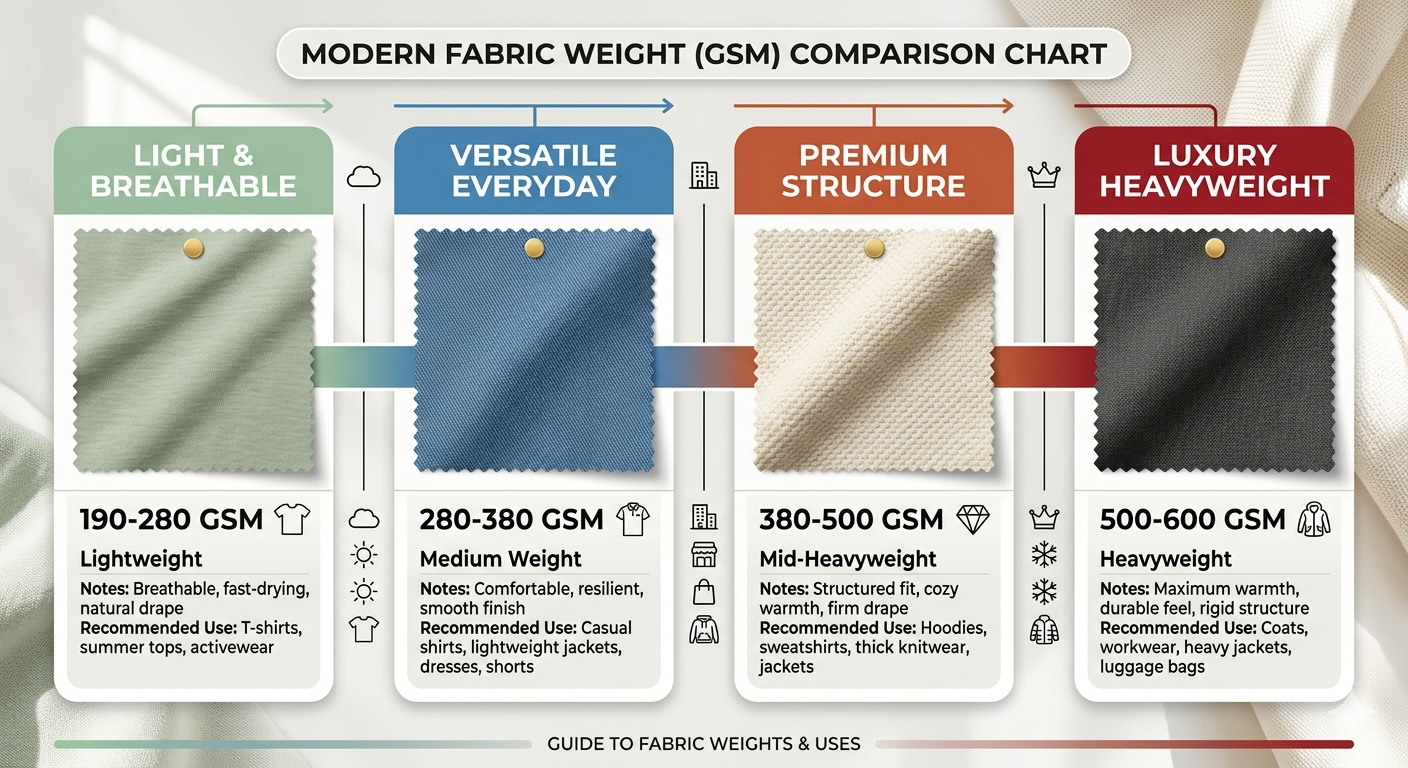
Một người có tay nghề cao Nhà sản xuất áo khoác tùy chỉnh Thông tin này sẽ hướng dẫn bạn lựa chọn băng thông GSM vì yếu tố này ảnh hưởng trực tiếp đến cảm giác cầm nắm, hiệu năng và vị trí trên thị trường của sản phẩm cuối cùng. Dưới đây là phân tích thực tế về dải băng thông 190–600 GSM thường được sử dụng cho áo hoodie và áo phông phối hợp:
- 190-280 GSM (Nhẹ)Những loại vải này có cảm giác mềm mại và thoáng khí, rất phù hợp để mặc nhiều lớp vào mùa xuân/hè, làm áo hoodie nhẹ hoặc dùng trong các thời điểm chuyển tiếp. Vải trải rộng đều và thoải mái khi mặc ở những khu vực có khí hậu nóng bức hoặc yêu cầu tính năng vận động cao; tuy nhiên, chúng ít mang lại độ chắc chắn và khả năng giữ ấm hơn.
- 280-380 GSM (Trọng lượng trung bình)Đây là dòng sản phẩm đa dụng và được ưa chuộng nhất dành cho các chiếc áo hoodie cá nhân hóa hàng ngày cũng như áo phông phối đồ hoàn hảo. Dòng sản phẩm này đạt được sự cân bằng xuất sắc giữa độ mềm mại, độ bền và tính tiết kiệm chi phí, hoạt động hiệu quả qua mọi mùa.
- 380-500 GSM (Hạng nặng)Được ưu tiên sử dụng cho các mẫu áo hoodie streetwear cao cấp, những loại vải này mang lại cấu trúc vững chắc, khả năng giữ hình tốt và cảm giác cầm nắm sang trọng, bền bỉ. Chúng cung cấp độ ấm áp và độ bền vượt trội, rất phù hợp với thời tiết lạnh hoặc dành cho các thương hiệu hướng đến hình ảnh cao cấp.
- 500-600 GSM (Trọng lượng siêu nặng)Dải sản phẩm này thuộc phân khúc cao cấp. Các loại vải siêu nặng tạo nên những chiếc áo hoodie cỡ lớn với độ ấm tối đa, độ bền cao và chất liệu mềm mại, chắc chắn mang phong cách sang trọng. Những sản phẩm này mang cảm giác chắc chắn và chất lượng vượt trội, tuy nhiên có thể cứng hơn và đòi hỏi sự cẩn thận hơn trong quá trình in ấn và may mặc. Chúng rất phù hợp cho các koleksi thời tiết lạnh hoặc các mẫu thiết kế nổi bật, đại diện thương hiệu.

Giải thích về trọng lượng vải
GSM ảnh hưởng như thế nào đến áo hoodie của bạn?:
- Sự ấm áp và thoải máiGiá trị GSM càng cao thì giữ nhiệt tốt hơn; giá trị GSM càng thấp thì mát hơn.
- Độ bền và hiện tượng co rútCác loại vải nặng hơn thường giữ được hình dạng tốt hơn, nhưng có thể cần được xử lý co rút trước khi sử dụng.
- Chất lượng in và thêuVải trọng lượng trung bình (280–380 GSM) thường hấp thụ họa tiết in DTG một cách rất tốt; ngược lại, các loại vải nặng hơn (trên 400 GSM) có thể gặp khó khăn trong việc hấp thụ mực hoặc gây nếp nhăn khi thêu nếu không được xử lý đúng cách.
- Quan điểm của khách hàngTín hiệu GSM mạnh hơn mang lại chất lượng cao hơn và chính là lý do cho mức giá cao hơn.
Lời khuyên thực tiễn: Luôn yêu cầu mẫu vải vật lý trong phạm vi GSM mục tiêu từ Nhà sản xuất áo khoác tùy chỉnh Trước khi phê duyệt các mẫu sản phẩm, việc trực tiếp cảm nhận sự khác biệt sẽ giúp tránh tình trạng không phù hợp giữa kỳ vọng và thực tế. Khi đưa ra quyết định, hãy xem xét mùa màng mục tiêu, đối tượng khách hàng (thể loại athleisure so với streetwear đậm chất thời trang) và hình ảnh thương hiệu của bạn.
Cách một nhà sản xuất áo hoodie chuyên nghiệp thực hiện công việc – Các quy trình sản xuất và tùy chỉnh chính
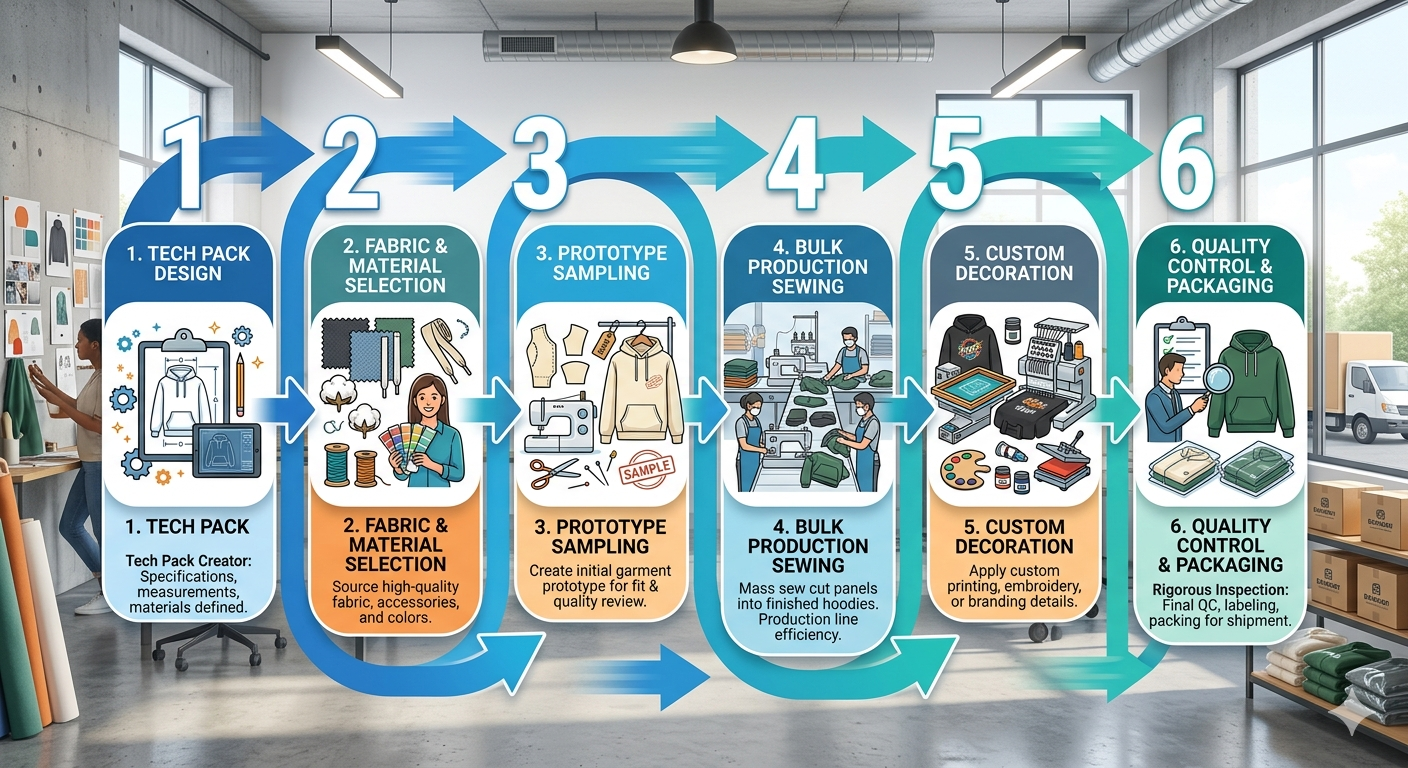
Đáng tin cậy Nhà sản xuất áo khoác tùy chỉnh Theo một quy trình từ đầu đến cuối được thiết kế bài bản nhằm đảm bảo tính nhất quán và chất lượng:
- Tạo bộ công cụ kỹ thuậtCác thông số chi tiết bao gồm kích thước, vật liệu (vải cotton fleece hoặc hỗn hợp với trọng lượng GSM theo lựa chọn), vị trí đặt họa tiết, chi tiết khâu và các phần viền trang trí.
- Nhận nguồn và phát triển vảiChọn hoặc phát triển các loại vải len với mật độ GSM chính xác như bạn cần.
- Xây dựng mẫu và lấy mẫuTạo các mẫu thiết kế và sản xuất các mẫu đầu tiên nhằm phục vụ việc kiểm tra độ phù hợp và xin phê duyệt thiết kế.
- Cắt và khâuCắt chính xác kết hợp với khâu may chuyên nghiệp với các đường may được gia cố, đặc biệt là trên các loại vải có mật độ GSM cao.
- Tùy chỉnh (In ấn / Thêu thùa): Thực hiện các thiết kế của bạn.
- Hoàn thiện và Kiểm soát Chất lượng– Giặt, ủi, kiểm tra theo nhiều bước và đóng gói.
Thiết bị làm áo hoodie tùy chỉnh hoạt động hiệu quả
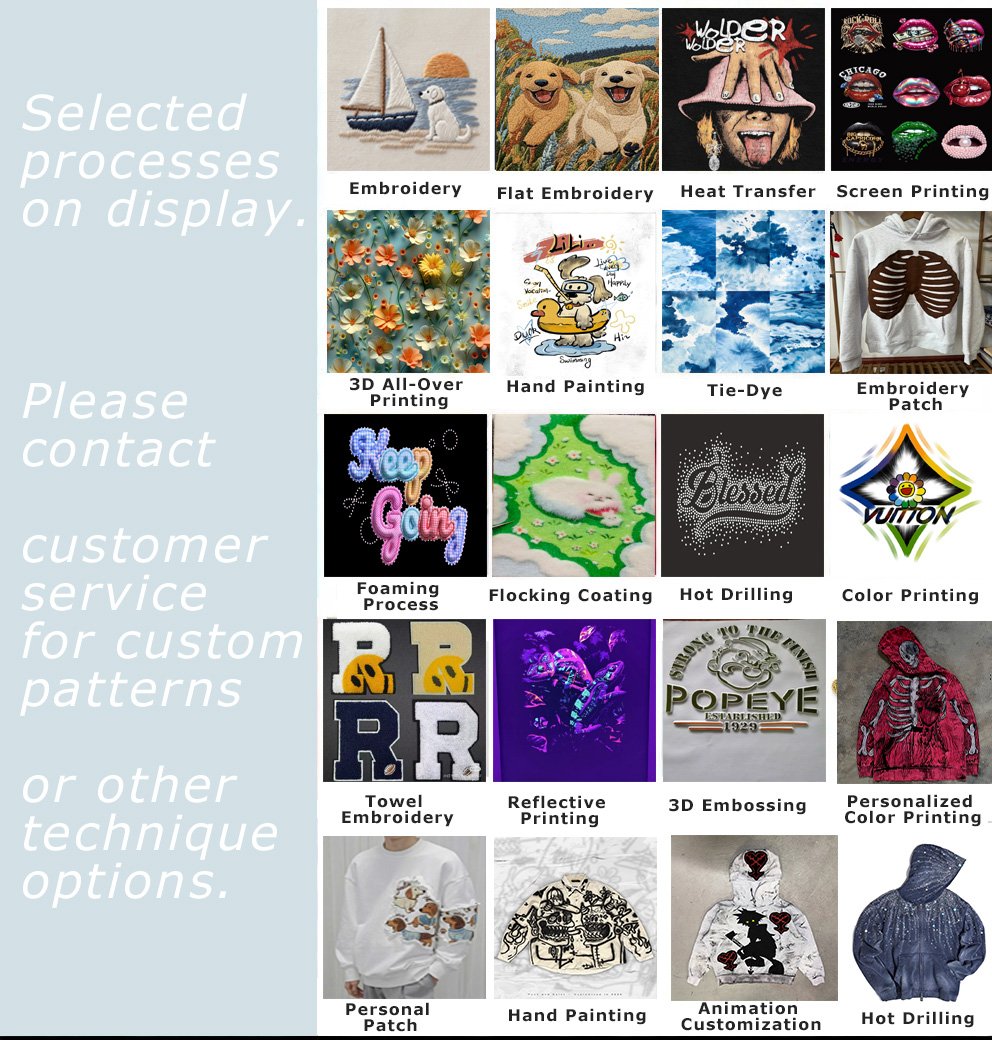
Các kỹ thuật tùy chỉnh phổ biến Các sản phẩm do những nhà sản xuất giàu kinh nghiệm cung cấp bao gồm:
- In DTG (In trực tiếp lên quần áo)Tương thích lý tưởng với các tác phẩm nghệ thuật chi tiết, màu sắc đầy đủ, mang tính nhiếp ảnh hoặc có cấu trúc phức tạp. Sản phẩm mang lại kết quả mềm mại và rực rỡ, đặc biệt khi in trên các loại vải trọng lượng trung bình.
- In bằng kỹ thuật in sơn (Screen Printing): Tốt nhất cho logo nổi bật và thiết kế đơn giản. Nó cung cấp độ bền tuyệt vời và tiết kiệm chi phí cho các đơn đặt hàng lớn.
- ThêuCung cấp lớp hoàn thiện cao cấp, có kết cấu đặc biệt và bền lâu cho các logo trên ngực, mũ hoặc tay áo. Sản phẩm phù hợp với mọi loại vải GSM, nhưng cần xử lý kỹ khi chuyển đổi sang dạng kỹ thuật số trên những loại vải dày để tránh hiện tượng nhăn nheo.
- Các lớp hoàn thiện bổ sung: Vải nỉ chải để tạo độ mềm thêm, đường may gia cố để tăng độ bền, dây kéo điều chỉnh, và xử lý giặt đặc biệt để có kết cấu cổ điển tinh tế.
Lợi ích của việc hợp tác với một chuyên gia Nhà sản xuất áo khoác tùy chỉnh Điểm mạnh nằm ở quy mô sản xuất tối thiểu linh hoạt (thường phù hợp để thử nghiệm các kiểu dáng mới), hệ thống kiểm soát chất lượng nghiêm ngặt và dịch vụ trọn gói từ vải đến sản phẩm hoàn chỉnh, giúp đảm bảo kết quả ổn định ngay cả khi sản xuất với các trọng lượng GSM khác nhau.
Các kỹ thuật tùy chỉnh
Các xu hướng thiết kế hiện nay trong áo hoodie tùy chỉnh
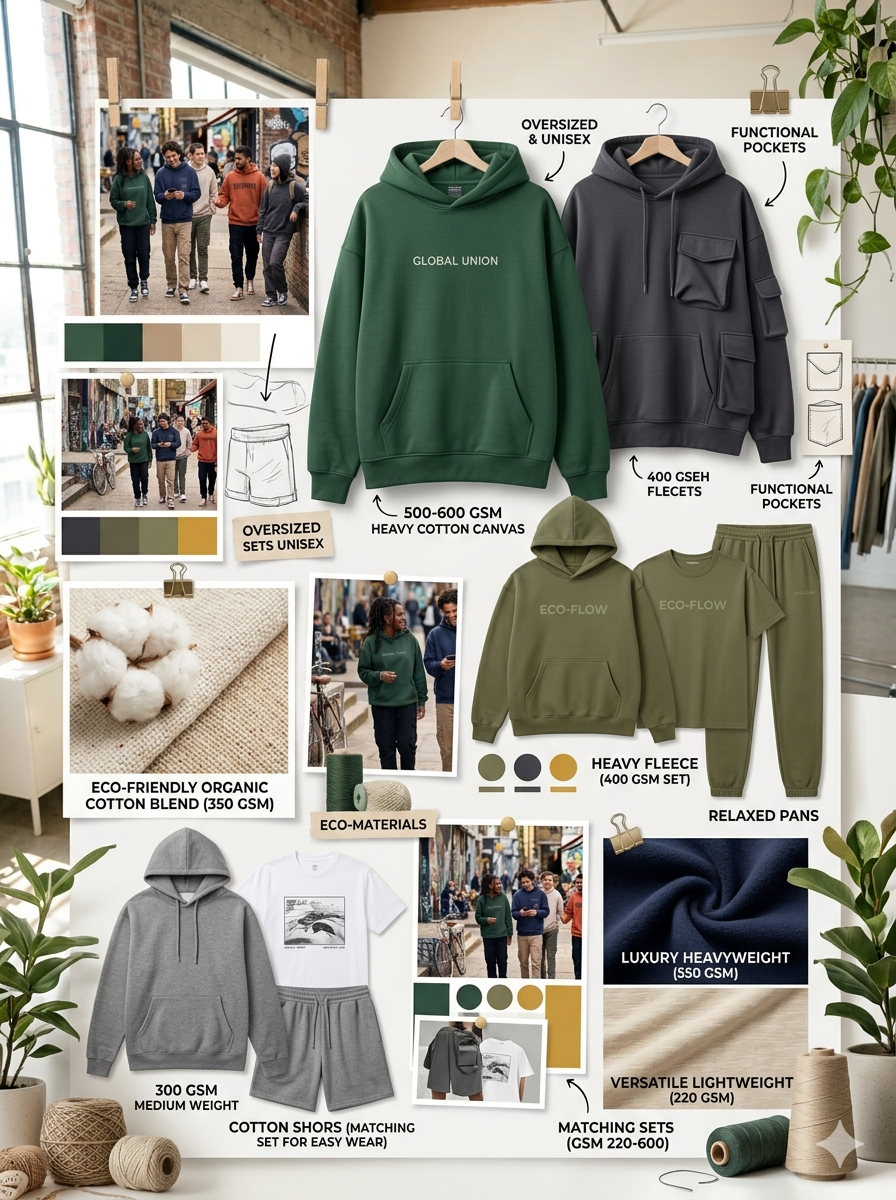
Các xu hướng thiết kế áo hoodie tùy chỉnh trong năm 2026 tiếp tục nhấn mạnh vào sự thoải mái, khả năng thể hiện cá tính và tính bền vững:
- Các hình dáng silhouette cỡ lớnCác kiểu dáng thoải mái với vai hạ thấp vẫn chiếm ưu thế, mang lại sự tiện nghi và phong cách thời trang đường phố hiện đại.
- Thông tin chức năng chi tiếtCác túi lớn kiểu kangaroo, dây kéo có thể điều chỉnh độ căng, lỗ dùng ngón cái hoặc các chi tiết ẩn giúp tăng tính tiện dụng.
- Tập trung vào phát triển bền vững: Các thương hiệu ngày càng chọn bông hữu cơ, hỗn hợp tái chế hoặc mực thân thiện với môi trường trên nhiều cấp độ GSM khác nhau.
- Tập hợp Tương thíchHợp nhất áo hoodie với áo phông màu nhạt hoặc màu trung tính có thiết kế và độ đậm nhạt tương thích.
- Biểu đạt nghệ thuậtIn tại nhiều vị trí khác nhau (phía trước tối giản, mặt sau in đậm); thiết kế chữ viết theo phong cách tối giản; vẻ ngoài mang cảm giác cũ kỹ, bị hao mòn theo phong cách cổ điển; cùng các họa tiết chồng lớp kể lại câu chuyện.
Khi thiết kế, hãy đảm bảo tác phẩm của bạn được tối ưu hóa cho loại GSM đã chọn: các họa tiết in chi tiết phù hợp nhất với những chất liệu trung bình có bề mặt mượt, trong khi các thiết kế mạnh mẽ hơn lại phù hợp với các chất liệu nặng hơn.
Các xu hướng thiết kế hiện nay
Các vấn đề thường gặp khi sử dụng máy may áo hoodie tùy chỉnh – và cách khắc phục chúng
Ngay cả khi có nhà cung cấp tốt, các thương hiệu vẫn gặp phải nhiều thách thức. Dưới đây là những vấn đề phổ biến nhất cùng các giải pháp thực tiễn:
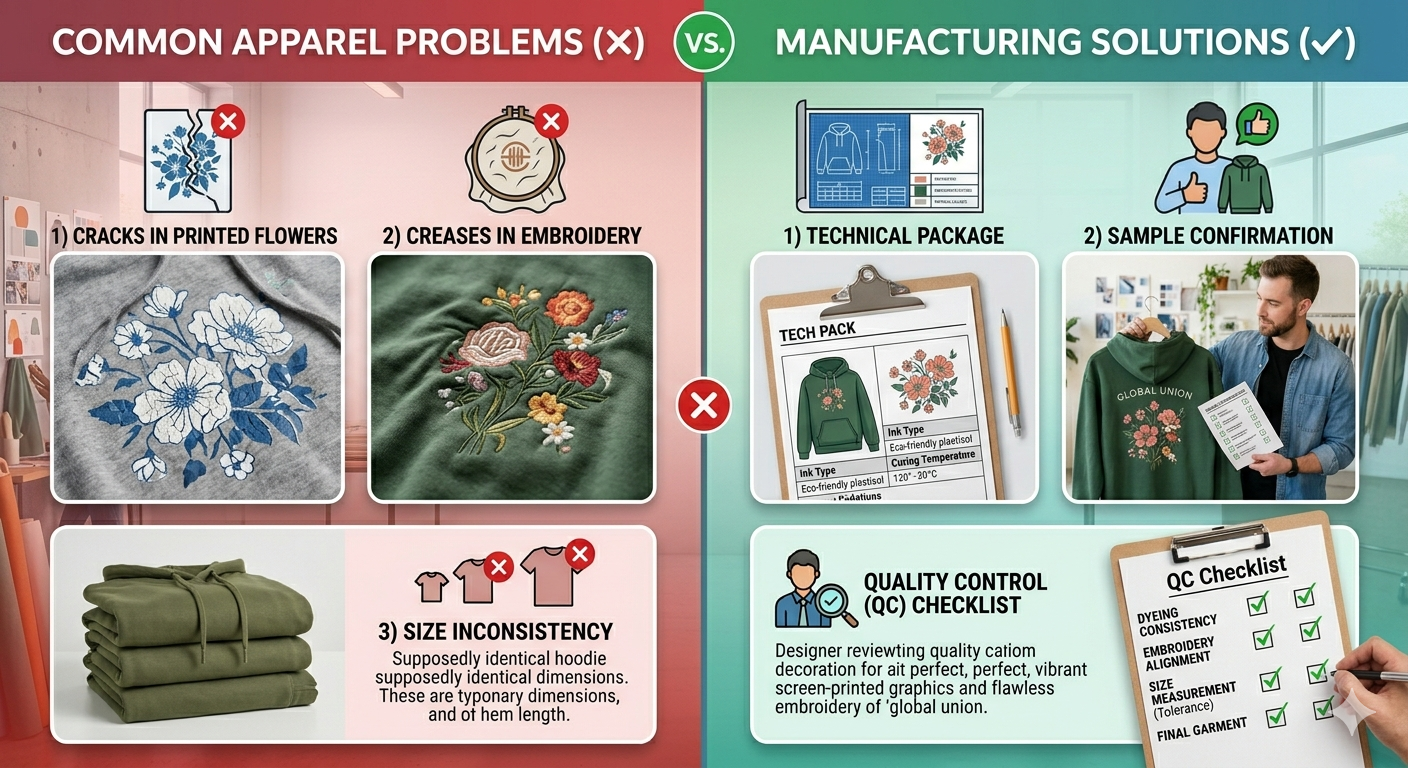
- Vấn đề liên quan đến chất liệu vải và công nghệ GSMChọn trọng lượng không phù hợp có thể dẫn đến hiện tượng co rút quá mức, chất liệu không trải đều, gây khó chịu khi mặc hoặc khiến họa tiết bị nứt hoặc phai màu. Sự khác biệt về màu sắc giữa các mẫu sản phẩm và sản phẩm hàng loạt cũng rất phổ biến.
- Vấn đề in và thêuCác bản in DTG có thể phai màu hoặc nứt sau khi giặt; họa tiết thêu có thể bị co rút trên các loại vải nặng (trọng lượng từ 500 GSM trở lên); các bản in lưới có thể bong tróc nếu quá trình đông cứng không đúng cách.
- Sự không nhất quán về kích thước và độ vừaCác lỗi trong quá trình đánh giá hoặc hiện tượng co rút bất ngờ sẽ khiến khách hàng không hài lòng.
- Những điểm khó khăn khi khởi nghiệp và mở rộng quy môThời gian lấy mẫu kéo dài, sự thiếu thông tin liên lạc, rào cản về số lượng đơn hàng tối thiểu (MOQ) trong quá trình thử nghiệm, cùng với khó khăn trong việc cân bằng giữa chi phí và chất lượng cao.
Các giải pháp có thể áp dụng được:
- Tạo một bản chi tiết Bộ công cụ kỹ thuật với các thông số kỹ thuật rõ ràng, kích thước và hướng dẫn bảo quản chi tiết.
- Yêu cầu thực hiện nhiều vòng lấy mẫu tại đúng địa điểm GSM mục tiêu và yêu cầu phải được phê duyệt trước khi sản xuất.
- Chọn một Nhà sản xuất áo khoác tùy chỉnh với các điểm kiểm soát chất lượng minh bạch và kinh nghiệm trong việc xử lý các loại trọng lượng vải khác nhau.
- Bắt đầu bằng các đơn hàng thử nghiệm nhỏ để kiểm chứng quy trình trước khi mở rộng quy mô.
- Hãy cung cấp hướng dẫn chăm sóc đúng cách cho khách hàng (rửa lạnh, sấy khô bằng không khí) nhằm bảo vệ độ bền của hình in và chất liệu vải.
- Hãy duy trì việc giao tiếp thường xuyên và minh bạch trong suốt quá trình sản xuất.
Những bước này giúp giảm đáng kể các rủi ro và hỗ trợ quá trình phát triển ổn định cho các thương hiệu khi chuyển từ sản lượng nhỏ sang sản lượng lớn.
Các giải pháp
Tại sao nên chọn máy may áo hoodie tùy chỉnh phù hợp nhất?
Việc hiểu rõ về GSM, các quy trình liên quan và những rủi ro tiềm ẩn sẽ giúp bạn đánh giá các nhà cung cấp một cách tự tin. Một nguồn tin đáng tin cậy Nhà sản xuất áo khoác tùy chỉnh là đối tác lâu dài – cung cấp chất lượng đáng tin cậy, chuyên môn kỹ thuật và tính linh hoạt nhằm hỗ trợ sự phát triển của thương hiệu bạn.
Câu hỏi thường gặp
- Loại GSM nào tốt nhất cho các áo hoodie tùy chỉnh trong phạm vi giá từ 190 đến 600? Loại trọng lượng trung bình (280–380 GSM) là lựa chọn đa dụng nhất cho sử dụng hàng ngày; loại nặng (380–500 GSM) phù hợp với các sản phẩm streetwear cao cấp, trong khi loại 500–600 GSM rất lý tưởng cho những món đồ lớn sang trọng.
- GSM ảnh hưởng như thế nào đến cảm giác khi mặc và hiệu năng của chiếc áo hoodie? Giá trị GSM cao mang lại độ ấm tốt hơn, cấu trúc chắc chắn hơn và độ bền cao hơn, nhưng có thể cảm giác nặng hơn; trong khi giá trị GSM thấp thì nhẹ hơn và thoáng khí hơn.
- Nhà sản xuất áo hoodie chuyên nghiệp cung cấp những kỹ thuật tùy chỉnh nào? DTG cho thiết kế chi tiết; in khắc để tạo logo nổi bật; thêu để tăng độ đặc trưng về chất liệu cao cấp; cùng nhiều loại hoàn thiện khác nhau.
- Độ lớn đơn hàng tối thiểu (MOQ) điển hình khi đặt hàng từ nhà sản xuất áo hoodie tùy chỉnh là bao nhiêu? Nhiều nhà sản xuất cung cấp mức đơn hàng tối thiểu linh hoạt phù hợp cho việc thử nghiệm (thường bắt đầu từ các lô sản xuất nhỏ), đồng thời có mức giá ưu đãi hơn khi sản xuất với quy mô lớn.
- Thời gian sản xuất áo hoodie tùy chỉnh là bao lâu? Quá trình lấy mẫu thường mất từ 1 đến 3 tuần; sản xuất hàng loạt cần từ 4 đến 8 tuần, tùy thuộc vào quy mô và mức độ phức tạp của đơn hàng.
- Làm thế nào để ngăn ngừa hiện tượng in phai màu hoặc co rút? Hãy sử dụng mực chất lượng cao với quá trình đông cứng đúng cách, dùng vải đã được co rút trước; đồng thời khuyên khách hàng giặt bằng nước lạnh và sấy khô ngoài không khí.
- Tôi có thể đặt mẫu với các trọng lượng GSM cụ thể trước khi sản xuất hàng loạt không? Vâng – hãy luôn yêu cầu mẫu sản phẩm tại mạng GSM mục tiêu để đánh giá cảm giác cầm và hiệu năng sử dụng.
- Cần bao gồm những gì trong bộ công cụ kỹ thuật dành cho áo hoodie tùy chỉnh? Các thông số đo lường chi tiết, thông số vải (bao gồm GSM), vị trí đặt họa tiết, chi tiết khâu và các phần viền trang trí.
- Các nhà sản xuất áo hoodie tự chế có hỗ trợ sử dụng vải thân thiện với môi trường hay không? Hầu hết các nhà sản xuất có nhiều kinh nghiệm đều cung cấp bông hữu cơ, hỗn hợp từ chất liệu tái chế và mực dạng nước trong toàn bộ các dòng sản phẩm GSM.
- Làm thế nào để bắt đầu hợp tác với một nhà sản xuất áo hoodie tùy chỉnh đáng tin cậy? Chia sẻ các ý tưởng thiết kế và đối tượng mục tiêu sử dụng mạng GSM, yêu cầu mẫu vật và mẫu sản phẩm, đồng thời thảo luận về số lượng đặt hàng tối thiểu (MOQ) và tiến độ thực hiện.
Kết luận
Kiểm soát kỹ thuật GSM của vải (190–600) và quy trình sản xuất là yếu tố then chốt để tạo ra những chiếc áo hoodie tùy chỉnh chất lượng cao, thành công và nổi bật trên thị trường. Bằng cách hợp tác với một đối tác có nhiều kinh nghiệm Nhà sản xuất áo khoác tùy chỉnh, bạn sẽ nhận được hướng dẫn kỹ thuật, sản xuất ổn định và sự hỗ trợ cần thiết để biến tầm nhìn của bạn thành hiện thực.
Dịch vụ tùy chỉnh của LYDENIM
🎨 Thiết kế tùy chỉnh
Tạo ra bộ sưu tập vải hoặc sản phẩm may mặc riêng của bạn bằng các vật liệu cao cấp từ LY Denim – từ những hỗn hợp bông sang trọng đến các loại vải thân thiện với môi trường và mang tính đổi mới. Hãy khám phá các màu sắc, kiểu dệt và lớp phủ hoàn hảo để phù hợp với thương hiệu hay tầm nhìn thiết kế của bạn. Truy cập website để tìm hiểu thêm. LYDENIM Để tìm hiểu thêm.
宪章:Giải pháp may mặc được thiết kế riêng
Hãy biến những thiết kế của bạn thành hiện thực nhờ các dịch vụ may mặc theo yêu cầu của chúng tôi. Dù là suit được may đo riêng, váy thời trang hay trang phục làm việc bền chắc, chúng tôi đều đảm bảo độ vừa vặn hoàn hảo, sự thoải mái vượt trội và chất lượng lâu dài. Hãy khám phá các tùy chọn cá nhân hóa tại đây. Myalibaba.
⚡ Liên hệ với chúng tôi
Bạn đã có ý tưởng cho một dự án chưa? Vui lòng liên hệ với đội ngũ của chúng tôi tại Malone@lydenim.com Để thảo luận về các loại vải tùy chỉnh, thiết kế trang phục hoặc các giải pháp dệt may bền vững.
Biến ý tưởng của bạn thành hiện thực với LY Denim – đối tác đáng tin cậy trong việc cung cấp các loại vải sáng tạo, chất lượng cao cùng các giải pháp thiết kế trang phục theo yêu cầu riêng.
Câu hỏi thường gặp
Liệu tôi có thể tùy chỉnh sản phẩm này cho thương hiệu hoặc bộ sưu tập của mình không?
Vâng. Vui lòng gửi hồ sơ đăng ký, các hình ảnh tham chiếu, yêu cầu về chất lượng, số lượng và đặc điểm thị trường để nhà cung cấp có thể đề xuất các lựa chọn vải, sản phẩm may hoặc phương pháp hoàn thiện phù hợp.
Tôi nên cung cấp những thông tin nào trước khi yêu cầu báo giá?
Xác định loại sản phẩm, chất liệu hoặc kỹ thuật sử dụng, hướng màu sắc, yêu cầu mẫu, số lượng, quốc gia đích và thời gian chuẩn bị dự kiến.
Tôi có nên yêu cầu lấy mẫu trước khi sản xuất hàng loạt hay không?
Đúng vậy. Việc sử dụng các mẫu màu và đo lượng vải thử giúp giảm rủi ro trước khi đặt hàng số lượng lớn, đặc biệt khi màu sắc, cảm giác khi cầm, độ co giãn, chất lượng bề mặt hoặc thiết kế trang trí là yếu tố quan trọng.
Làm thế nào để tôi tránh được các vấn đề về chất lượng trong các đơn hàng số lượng lớn?
Xác định một tiêu chuẩn mẫu rõ ràng, xác định các yêu cầu kiểm thử, kiểm tra độ chấp nhận được và so sánh sản phẩm hàng loạt với mẫu đã được phê duyệt trước khi giao hàng.
Cần sự hỗ trợ để chuyển tài liệu này thành bản tóm tắt nguồn cung ứng sẵn sàng cho sản xuất?
Hãy cung cấp thông tin về sản phẩm mục tiêu, hướng dẫn may vải, số lượng và yêu cầu mẫu sản phẩm. LY Denim sẽ hỗ trợ bạn so sánh các lựa chọn và lập báo giá phù hợp.