Kiến thức denim

Denim Shrinkage: A Comprehensive Guide

Denim Shrinkage A Comprehensive Guide for denim fabric quality control
Quality Control and Buying Risk / Denim knowledge

Denim Shrinkage: A Comprehensive Guide

Estimated Reading Time:~4 minutes What is Denim Shrinkage? Denim shrinkage refers to the phenomenon where denim fabric reduces in size after being washed or exposed to moisture and heat. This is primarily due to denim’s…

Denim Shrinkage: A Comprehensive Guide

B2Bsourcing guide
Customsample to bulk
Quoteready checklist

Best forBrands, designers, wholesalers and garment factories
Main valueTurn research into a clearer sourcing brief
What to prepareApplication, quantity, target quality and sample needs
Next actionSend requirements for swatches or quotation

Buyer Summary

Quality control content is closest to purchase decisions because it helps buyers avoid returns, bulk inconsistency and preventable production mistakes.

  • Suitable buyersFashion brands, sourcing teams, wholesalers, garment factories and product developers.
  • What to confirmTarget product, fabric direction, finish, sample needs, quantity and delivery market.
  • Buyer riskUnclear specs can lead to wrong samples, unstable bulk quality and slow quotations.
  • Recommended CTARequest swatches or a sample quote before committing to bulk production.

Why This Matters for B2B Buyers

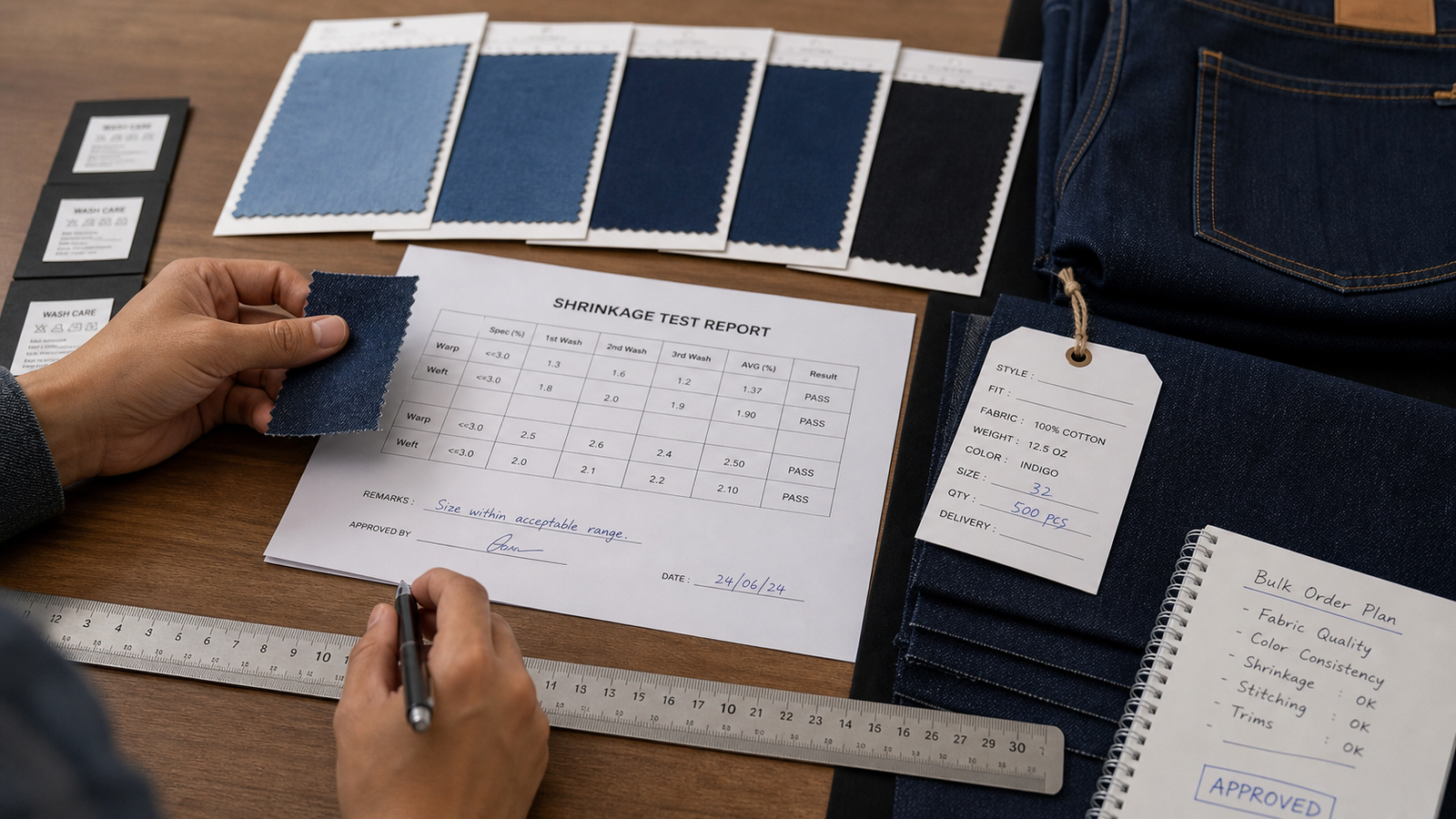
Confirm inspection points, shrinkage, colorfastness, defect tolerance and sample approval standards before bulk order.

Estimated Reading Time:~4 minutes What is Denim Shrinkage? Denim shrinkage refers to the phenomenon where denim fabric reduces in size after being washed or exposed to moisture and heat. This is primarily due to denim’s…

Denim Shrinkage: A Comprehensive Guide sample detail
Use product visuals with sourcing notes so readers can connect ideas to real development requirements.
Denim Shrinkage: A Comprehensive Guide application reference
Pair inspiration with practical quote details such as weight, finish, handfeel and quantity.

Specification Table for Faster Sourcing

Decision point Options to compare Why it matters Buyer question
Test item Shrinkage, colorfastness, defects, handfeel, stretch recovery Prevents returns and quality disputes Which tests are required by your buyer?
Sample approval Lab dip, handloom, sample yardage, pre-production sample Creates a clear standard for bulk comparison What must be approved before bulk?
Inspection point Before cutting, during production, final inspection Catches issues earlier Who confirms the inspection criteria?
Tolerance Color shade, shrinkage rate, width, GSM, defect rate Defines acceptable variance What tolerance does your market accept?

Applications and Custom Options

1

Product Development

Use this guide to turn design ideas into fabric, garment, finish and sample requirements.

2

Supplier Comparison

Compare suppliers by sample support, technical clarity, bulk stability and communication speed.

3

Bulk Production

Confirm quality standards, approved samples and timeline before placing production orders.

Quality Control Points Before Bulk Order

  • OKSample approval: confirm fabric, color, handfeel, construction and finish before bulk production.
  • OKBulk consistency: compare bulk lots against the approved sample under the same light and test conditions.
  • OKPerformance testing: check shrinkage, colorfastness, stretch recovery or decoration durability where relevant.
  • OKQuote clarity: send quantity, destination, packaging needs and target lead time to avoid vague pricing.

Sample Development Process

Step Buyer provides Supplier confirms
1. Brief Application, reference images, target quality and quantity Feasibility, recommended material and custom options
2. Swatch Preferred color, handfeel, pattern or finish feedback Available stock, custom direction and sample cost
3. Sample Garment test plan, size or yardage needs Sampling timeline and production repeatability
4. Bulk quote Order quantity, delivery destination and packaging needs Unit price, MOQ, lead time and QC checkpoints

Detailed Guide

Estimated Reading Time:~4 minutes

What is Denim Shrinkage?

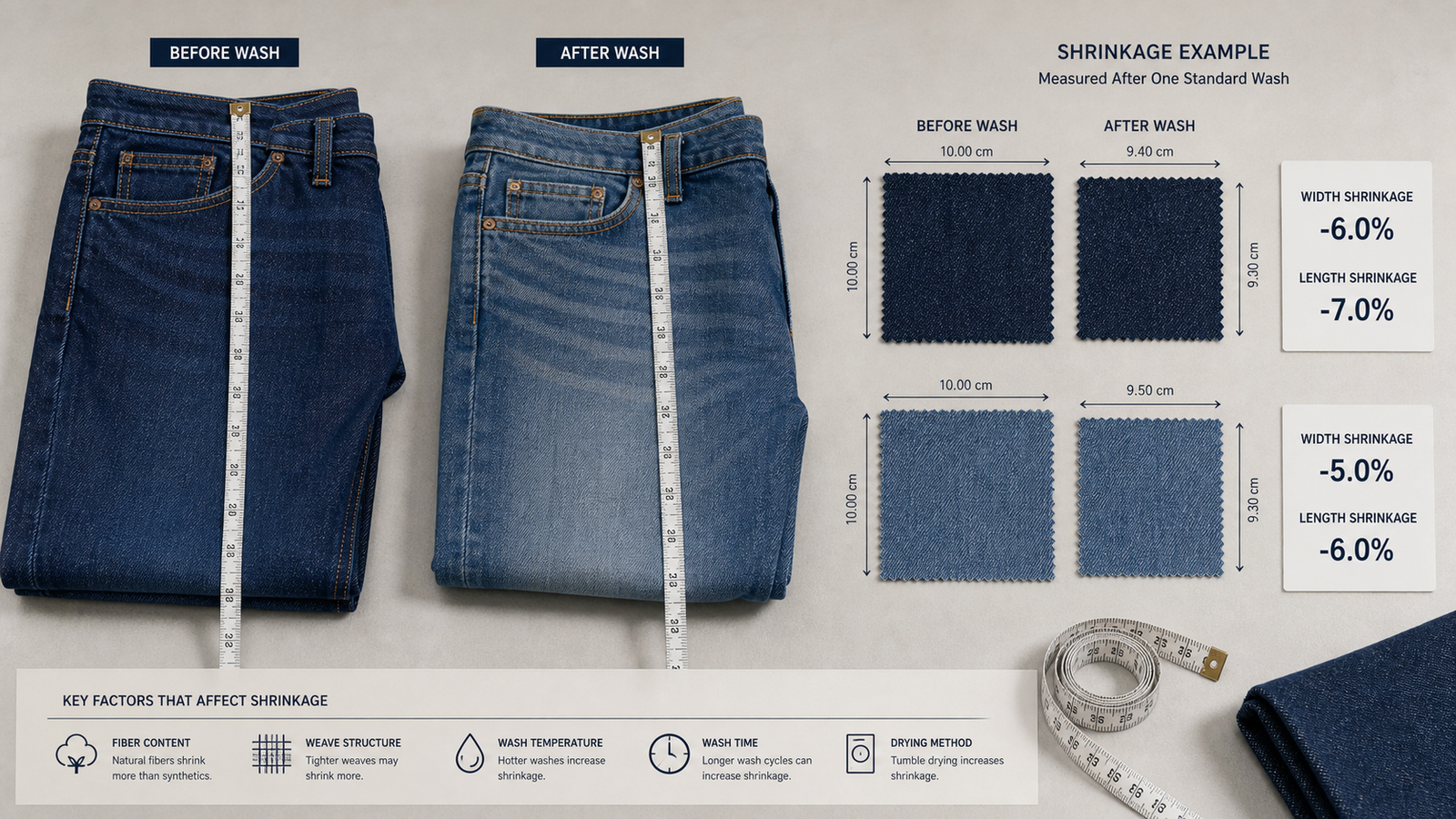
Denim shrinkage refers to the phenomenon where denim fabric reduces in size after being washed or exposed to moisture and heat. This is primarily due to denim’s main component, cotton, a natural fiber that swells when it absorbs water and contracts as it dries. The degree of shrinkage depends on factors like fabric composition, weave type, and manufacturing processes. For instance, non-pre-shrunk raw denim, often used in non-order-based market fabrics, may shrink 5-7% lengthwise and 5-10% widthwise after its first wash. In contrast, sanforized denim, treated to minimize shrinkage, typically contracts by less than 3%. Understanding this behavior is essential for consumers to select the right size and for manufacturers to optimize production.

Denim Shrinkage

Factors Influencing Shrinkage: Warp and Weft Properties

Denim is woven from warp (lengthwise) and weft (crosswise) threads, with warp threads typically dyed indigo and weft threads left undyed, creating denim’s iconic blue appearance. The properties of these threads significantly affect shrinkage:

  • Weave Type: Denim commonly uses a twill weave, which can be right-hand (diagonals from lower left to upper right, used by Levi’s) or left-hand (diagonals from lower right to upper left, used by Lee). According to Real Men Real Style, the weave’s tightness and direction influence shrinkage, with tighter weaves shrinking less due to reduced space for fiber contraction.

  • Thread Density: High-density weaves, such as 14-ounce denim, shrink less than lighter 10-ounce fabrics because tightly packed threads limit contraction.

  • Fiber Content: Pure cotton denim shrinks significantly due to cotton’s hygroscopic nature, with non-pre-shrunk raw denim potentially shrinking 5-7% lengthwise and 5-10% widthwise. Blends with polyester or elastane are more stable, typically shrinking by 3-5% (gzhenrytextile).

  • Weaving Tension: The tension applied to warp and weft threads during weaving affects fabric stability. Higher tension can lead to more shrinkage as fibers relax during washing.

    Warp and Weft

Controlling Shrinkage Through Fabric Processes

Manufacturers employ several techniques to reduce denim shrinkage during production:

  • Sanforization: This process, pioneered by Sanford Cluett in 1930, involves stretching and relaxing the fabric under controlled conditions to stabilize its dimensions. Textile World states that sanforized denim shrinks less than 1% after washing.

    Controlling Shrinkage

  • Chemical Treatments: Resins or other chemicals can enhance shrinkage resistance, though they may alter the fabric’s texture or breathability.

  • Fabric Blends: Incorporating synthetic fibers like polyester or elastane reduces shrinkage, as these fibers are less prone to contracting. shopduer highlights that stretch denim with elastane shrinks less but requires careful handling to avoid fiber damage.

    Spandex Yarn

These methods significantly reduce shrinkage risks, though some residual shrinkage may still occur under improper washing conditions.

Shrinkage in Finished Garments

Even with pre-shrinking treatments, finished denim garments can shrink due to various factors:

  • Washing Temperature: Hot water causes cotton fibers to contract more than cold water. Nudie Jeans recommends cold-water washing to keep shrinkage below 3%.

  • Drying Method: High-heat drying exacerbates shrinkage by tightening fibers. Air-drying, especially inside out, helps preserve size and color.

  • Mechanical Action: Agitation in washing machines can shift fibers, increasing shrinkage. A gentle cycle or hand-washing minimizes this effect.

  • Wear and Stretching: Stretching during wear may alter a garment’s size, though this is more about stretching than shrinking. Some enthusiasts intentionally shrink jeans using hot water or dryers for a custom fit.

    use heat to stretch jeans

    use heat to stretch jeans

Summary and Practical Tips

Denim shrinkage is an inherent result of its cotton composition and woven structure, but it can be effectively managed through production techniques and proper care. Key takeaways include:

  • Know Your Denim: Check the care label to understand whether your jeans are 100% cotton (potentially shrinking 5-7% lengthwise and 5-10% widthwise) or a blend (about 3-5% shrinkage).

  • Follow Care Guidelines: Wash in cold water and air-dry to minimize shrinkage and maintain color and fit.

  • Pre-wash New Jeans: Consider washing and drying new jeans before wearing to account for initial shrinkage, especially for raw denim.

    Washing machine to wash jeans

    Washing machine to wash jeans

  • Embrace Shrinkage for Style: Some denim enthusiasts, as noted on Styleforum, buy slightly larger raw denim and shrink it to achieve a tailored fit or vintage look.

Conclusion

Denim shrinkage is a direct result of its natural cotton properties and woven structure, but it can be effectively managed through advanced manufacturing techniques and careful maintenance practices. Consumers should consider the fabric’s composition and pre-shrinking treatments when selecting jeans, while adhering to cold-water washing and air-drying to ensure longevity and fit. Whether aiming for a classic look or a customized vintage effect, understanding shrinkage empowers you to make informed choices and maintain the enduring appeal of denim garments.

Customization Services by LYDENIM

🎨 Want custom denim fabrics or  unique custom denim garment? LYDENIM specializes in tailor-made solutions to meet your design and production needs.

🛍️ Explore & Get Inspired: Browse our fabric selections and discover design ideas on LYDenim.

🌐 Elastic Clothing: Check out our offerings on MyAlibaba. 📩 Contact Us: Reach out at malone@lydenim.com.

Create your denim masterpiece with LYDENIM—your trusted partner for stretch fabric and custom denim solutions.

FAQ

Can this be customized for my brand or collection?

Yes. Send your application, reference images, target quality, quantity and market requirements so the supplier can recommend suitable fabric, garment or finishing options.

What information should I send before asking for a quote?

Prepare product type, target fabric or technique, color direction, sample needs, quantity, destination country and expected lead time.

Should I request swatches before bulk production?

Yes. Swatches and sample yardage reduce risk before bulk orders, especially when color, handfeel, stretch, finish or decoration quality matters.

How can I avoid quality problems in bulk orders?

Approve a clear sample standard, define test requirements, confirm tolerances and compare bulk output against the approved sample before shipment.

Need help turning this into a production-ready sourcing brief?

Send your target product, fabric direction, quantity and sample needs. LY Denim can help compare options and prepare a quote.

Get A Quote