


Tiempo estimado de lectura: ~4 minutos
Elegir un fabricante de jeans implica verificar la capacidad técnica, el control de calidad y la transparencia antes de un depósito. El peso de la tela, la ambición del lavado y el volumen determinan el tipo de fábrica adecuado. Siempre solicite muestras físicas, una referencia sellada de preproducción (PP) y un cronograma de muestreo claro.
Tabla de especificaciones
| Especificación | What to Confirm | Por qué es importante |
|---|---|---|
| Tipo de fabricante | ¿Fábrica (corte-costura-acabado), molino con línea de prendas, o agente? | Determina el MOQ, el margen de precio y si usted tiene control de calidad directo. |
| Capacidad de peso del denim | 7–16 oz+; más de 16 oz necesita agujas específicas y resistencia de costura | Una fábrica de blusas ligeras no puede coser denim de 14 oz de manera confiable. |
| Recuperación por estiramiento | Pruebas de estiramiento y recuperación en línea; protocolo de encogimiento antes de coser | Previene problemas de calce y devolución en jeans stretch |
| Lavandería interna | ¿Lavandería bajo el mismo techo o subcontratada? | La subcontratación añade tiempo de entrega, riesgo de tono y cargos por lote mínimo |
| Cantidad mínima de pedido | Por estilo, por color, por tejido; ¿el tejido en stock lo reduce? | Asegure un número realista desde el principio; los mínimos de las fábricas textiles pueden obligar a MOQs de prenda más altos |
| Política de muestras | Plazos de entrega de muestras proto, fit y PP; tarifas de revisión; disponibilidad de bandas de tono | A cheap sample that can’t be repeated in bulk is worthless |
Muestras y verificaciones previas al envío
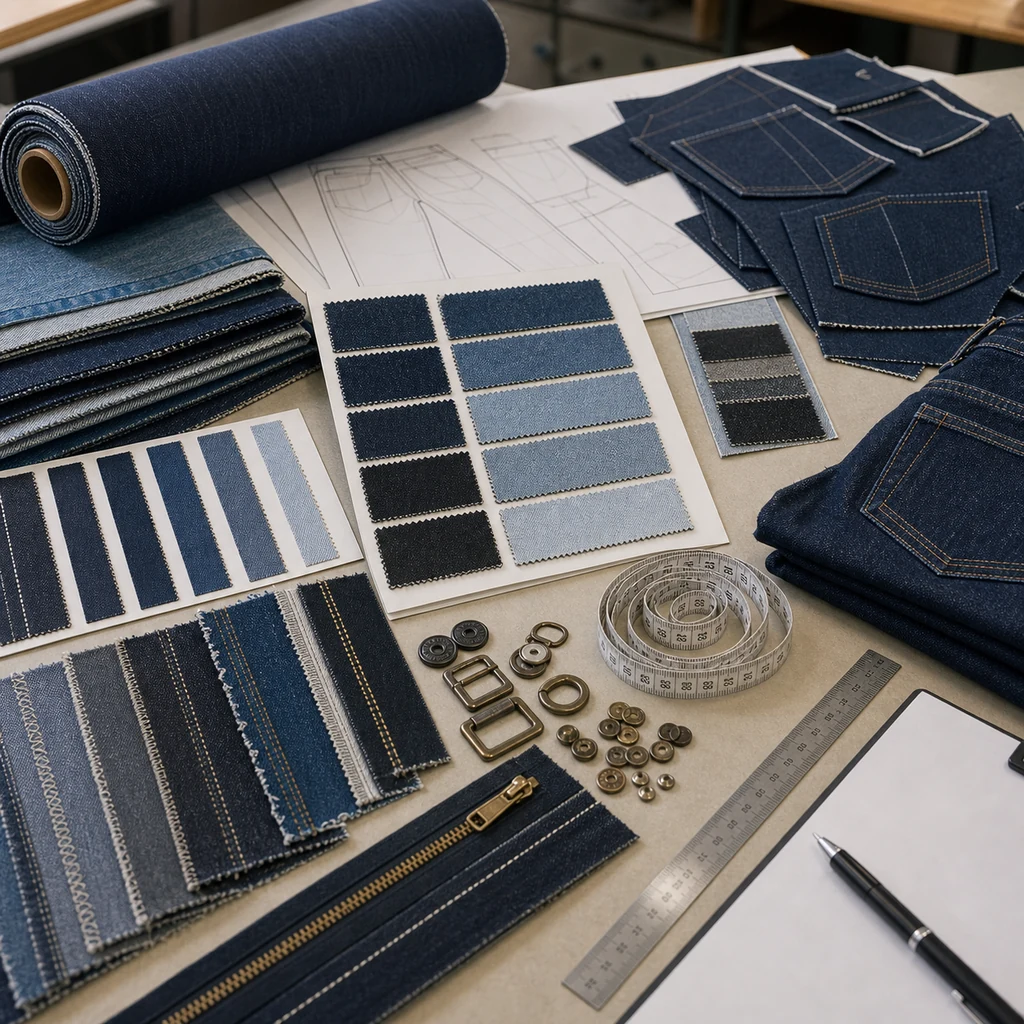
- Muestra de tela y lab-dip – Obtenga muestras de tacto. Para colores personalizados, solicite tres propuestas de tono con una referencia física de banda de tonos.
- Fit sample – Made in a base size using similar fabric. Mark up and photograph.
- PP sample – On bulk fabric with approved wash, trims, and labels. This is the sealed bulk reference; measure every POM.
- Bulk inspection – Agree AQL (2.5–4.0 typical). Check shrinkage, colourfastness (crocking), seam strength, and hardware. Pull a few pieces from the first wash lot to cross-check against the PP sample.
Two most common bulk failures: shade drift across wash lots and excessive post-launder shrinkage. Ambos son prevenibles con un informe de encogimiento pre-lavado y una medición post-lavado de una pieza aleatoria del lote antes del embarque.
Errores comunes
- Asumir que una empresa comercial es una fábrica – solicitar nombre de la fábrica, fotos del piso de producción y referencias.
- Enviar una prenda de referencia usada sin una ficha técnica graduada.
- Approving samples based solely on photos – indigo undertone and hand feel can’t be judged accurately on a screen.
- Cambiar la tela después del sellado de la muestra PP – reinicia todo el ciclo de muestras.
- Ignorar el crocking – solicite los resultados de la prueba de crocking en húmedo/seco, especialmente en índigo oscuro/negro.
Lista de verificación para obtener una cotización rápida
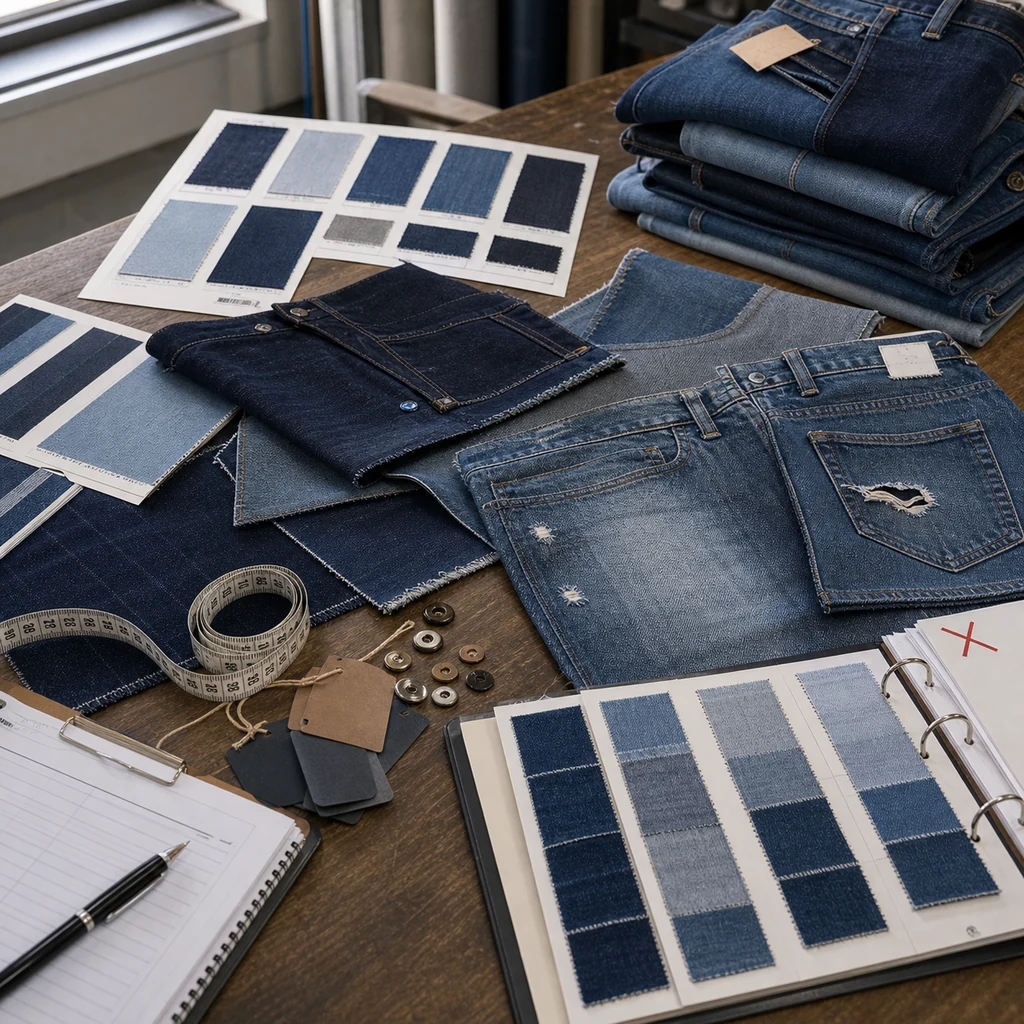
- Peso de la tela, composición, tejido (adjuntar foto de muestra si está disponible)
- Tipo de prenda y dibujo plano de frente y espalda
- Rango de tallas y desglose por unidad
- Imagen de referencia del lavado y descripción breve
- Lista de herrajes: botón, remache, cremallera (YKK/genérico), parche/etiqueta
- Precio objetivo ex-fábrica o FOB y volumen anual
- Plazos de entrega e incoterms
- Requisitos de certificación (OEKO-TEX, GOTS, etc.)
Preguntas de Evaluación de Proveedores
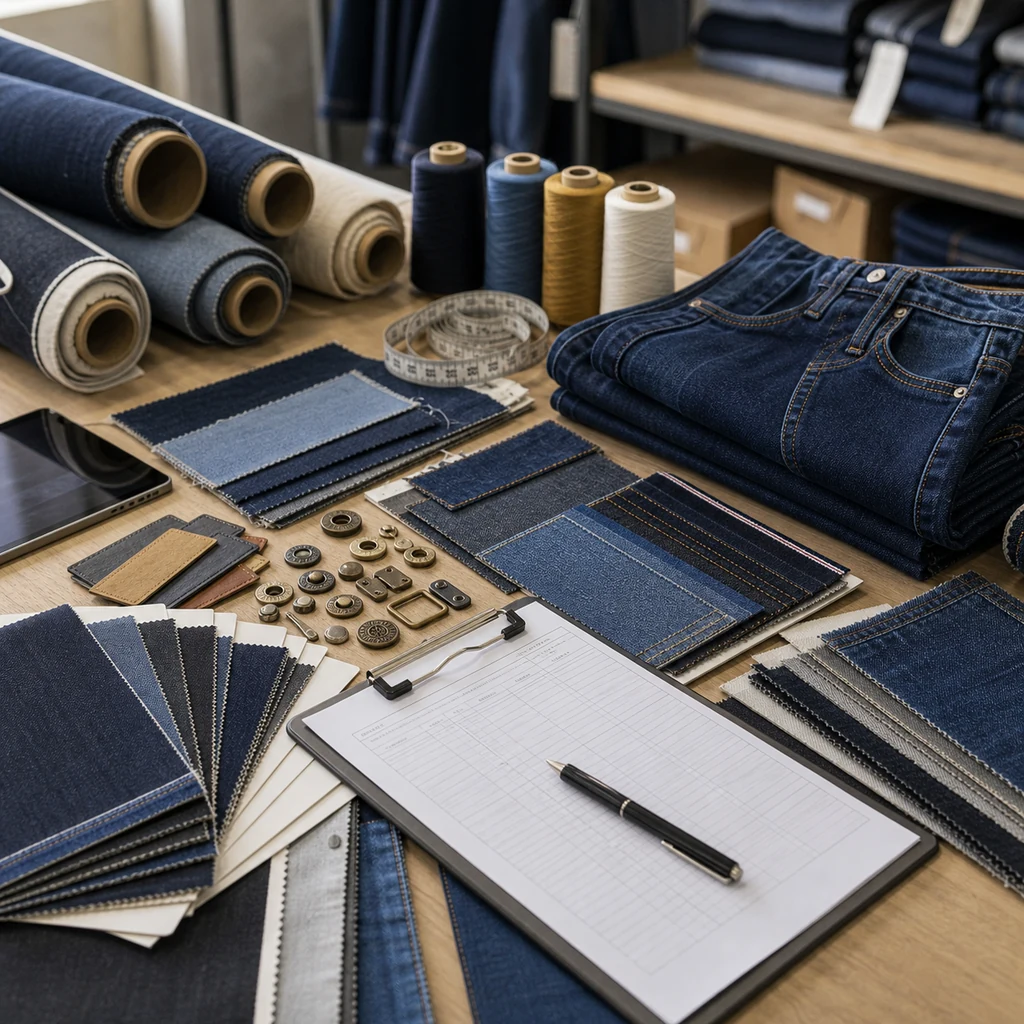
- ¿Es usted una fábrica con sus propias líneas de corte, confección y acabado? Comparta fotos recientes del piso de producción.
- ¿Qué pesos de denim y tipos de elasticidad ha producido su equipo con mayor frecuencia en el último año?
- ¿Tienen una lavandería interna? Si no, ¿cómo manejan la consistencia de tonos entre lotes?
- ¿Cuál es su MOQ por estilo, y cambia con tela en stock versus tela personalizada?
- Proporcione un cronograma de muestra para proto, fit y PP sample, incluidos los ciclos de revisión.
- ¿Qué pruebas previas al envío realizan (encogimiento, solidez del color, resistencia de las costuras, fatiga de la cremallera)? ¿Compartirán los informes?
- How do you manage shade variation – shade band, and what’s your AQL limit for colour difference?
Preguntas frecuentes
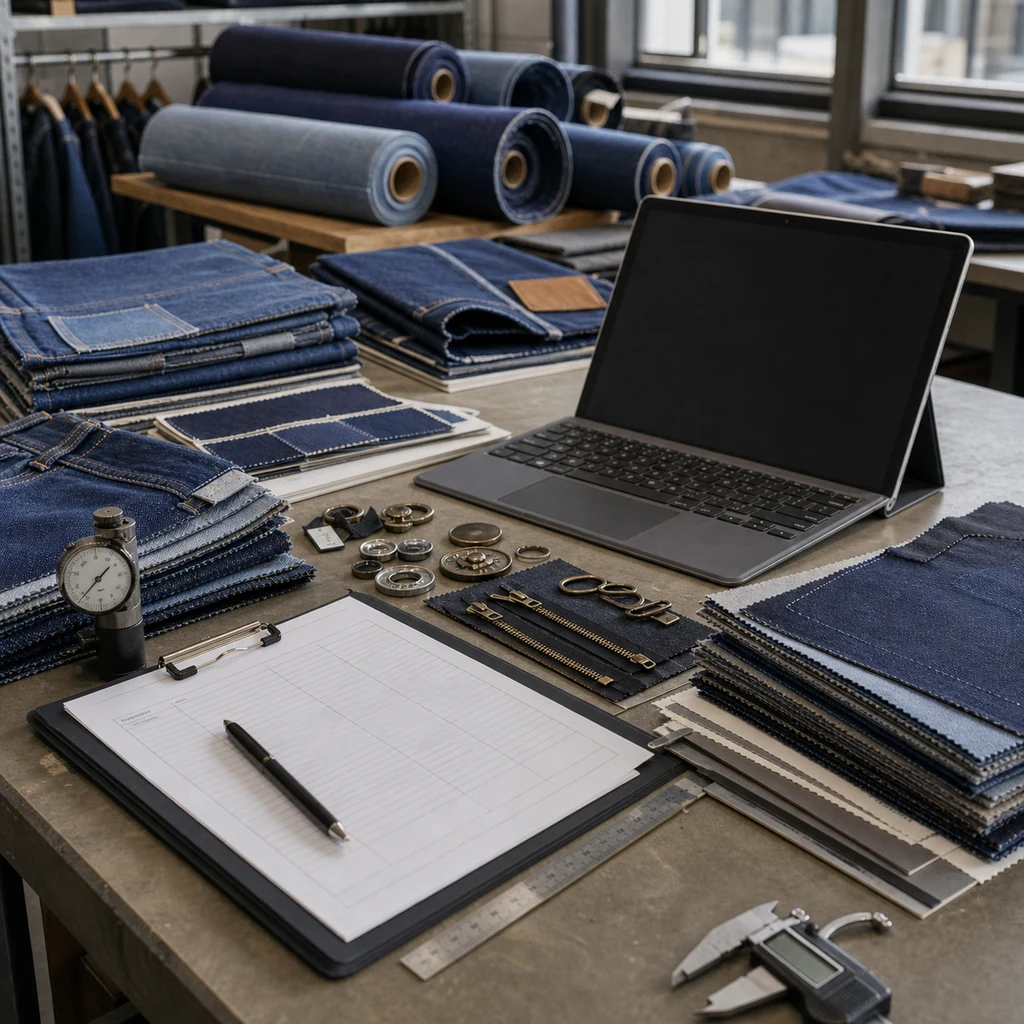
¿Cómo puede una marca pequeña encontrar un fabricante confiable?
Comience con muestras de tela y verifique referencias. Realice un pedido de muestra pequeño primero. Solo pase a producción en volumen una vez que la muestra PP coincida exactamente con su estándar.
¿Qué denim es mejor para una primera colección?
12–14 oz es práctico – lo suficientemente pesado para mantener la forma sin dificultar la costura y el lavado. Adecúe la elección al ajuste deseado (rígido, comfort stretch, high stretch) y al precio de venta.
¿Cómo verifico una fábrica versus un intermediario?
Solicite el nombre de la fábrica, un recorrido en video en vivo y múltiples referencias de producción.
¿Cuál es un MOQ realista?
Con tela en stock, puedes pedir unos cientos de piezas por estilo en algunos talles. La tela personalizada, como un color o tejido especial, puede obligar a la fábrica a producir 3000–4000 metros, lo que infla el MOQ de la prenda. Siempre pregunta por los mínimos de tela y prenda por separado.
¿Cómo prevenir problemas de tonalidad en pedidos a granel?
Use un proceso de banda de tono, y haga que la fábrica tome las primeras piezas a granel del lavado para compararlas con su muestra PP sellada antes de procesar todo el lote.
结论
Una preparación disciplinada—especificaciones claras de tela, una muestra PP sellada y una aprobación transparente del lavado—protege su marca de las fallas más comunes en producción en masa. Use esta lista de verificación para calificar fabricantes y nunca omita la revisión física de la muestra PP. Un socio que se comunica abierta y consistentemente reproduce su tono y ajuste aprobados merece que se construya una cadena de suministro a largo plazo a su alrededor.
For custom denim development, contact LYDENIM at malone@lydenim.com.
Servicios de personalización de LYDENIM
🎨 Diseño personalizado
Design your own fabric collection or garment with LYDENIM’s premium materials. From luxurious cotton blends to innovative eco-friendly textiles, explore colors, weaves, and finishes that match your brand’s product direction. Visit LYDENIM Para saber más.
🛍️ Soluciones de prendas a medida
Bring your designs to life with custom garment services. Whether you are developing jeans, denim jackets, skirts, workwear, or small-batch fashion collections, LYDENIM can support fit, comfort, durability, and production planning. Explore customization options on My Alibaba.
📩 Contáctanos
¿Tienes un proyecto en mente? Contacta con nuestro equipo en malone@lydenim.com to discuss custom fabrics, garment design, low-MOQ sampling, or sustainable textile solutions.
Transform your ideas into reality with LYDENIM–your trusted partner for innovative, high-quality fabrics and bespoke apparel solutions.
Need help turning this into a production-ready sourcing brief?
Send your target product, fabric direction, quantity and sample needs. LY Denim can help compare options and prepare a quote.