


T-shirts personnalisés sans minimum de commande : comment lancer et développer votre ligne de vêtements grâce à une personnalisation flexible
Temps de lecture estimé : ~3 minutes
In today’s fast-paced fashion landscape, custom T-shirts with no minimum order have become a game-changer for brands. They allow entrepreneurs and established startups to test creative designs, launch seasonal drops, and respond quickly to market trends without the burden of large inventory or high upfront costs.
For growing brands that already have a solid foundation but are seeking more reliable or flexible suppliers, “no minimum” or ultra-low MOQ production removes traditional barriers. You can prototype new ideas, iterate based on customer feedback, and scale efficiently while maintaining consistent quality across your line.
Suppliers offering true low-MOQ services — often as low as 1-2 pieces for custom knit items and denim extensions — provide the agility startups need. With versatile fabric weights from lightweight 190gsm breathable tees to mid-heavy 300-600gsm structured options, you can create everything from soft everyday basics to premium statement pieces. Platforms like Liangyuan Textile support custom knitwear (Tee, Polo Shirt, Long-sleeve Top) and pair seamlessly with low-MOQ denim items such as Custom Men’s Raw Selvedge Japanese Denim Jacket or 14-16oz Heavyweight Selvedge Jeans (MOQ as low as 1-2 pieces).
This guide explores popular customization techniques for custom T-shirts with no minimum, common design and production challenges, frequent doubts from brand owners, and practical solutions to help you partner with the right manufacturer.
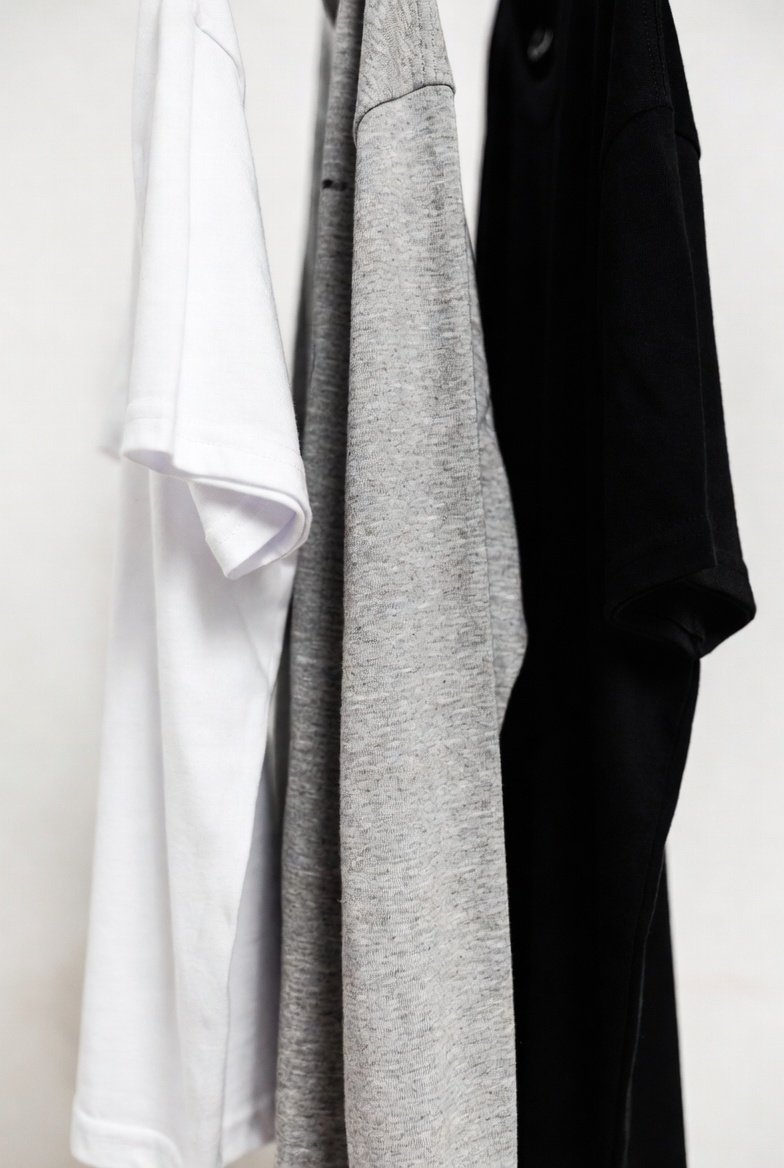
no minimum Customized
Why Custom T-Shirts with No Minimum Order Matter for Growing Brands
Traditional manufacturing often requires high minimum orders that stifle creativity and increase financial risk. In contrast, custom T-shirts with no (or very low) minimum enable rapid prototyping, low-risk market testing, and faster iteration — essential for startups looking to upgrade from limiting suppliers.
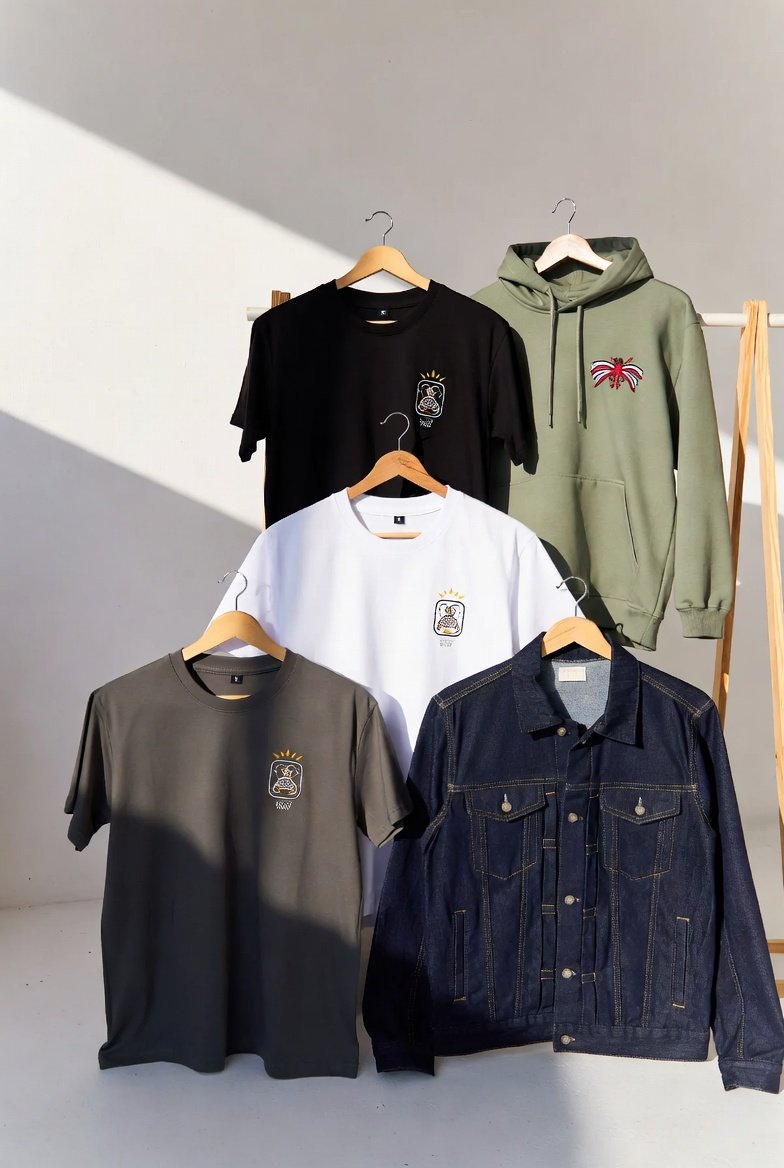
Use custom T-shirts as your core product, then expand into complementary pieces like mid-weight hoodies or structured denim jackets/shirts. This creates cohesive collections that strengthen brand identity across casual, streetwear, and premium segments.
Fabric weight plays a critical role in performance and feel:
- 190-280gsm: Ultra-soft, breathable options perfect for lightweight everyday tees.
- 300-450gsm: Mid-heavy fabrics offering better structure and durability for premium or long-sleeve styles.
- Up to 600gsm: Heavyweight choices for substantial, high-end statement T-shirts that hold shape wash after wash.
Low-MOQ suppliers like Liangyuan Textile make scaling easier by supporting custom knitwear alongside denim extensions (e.g., Custom Stonewashed Denim Workwear Shirt or Raw Selvedge Denim Jacket, often starting at 1-2 pieces). This one-stop approach helps established brands switch suppliers smoothly while keeping costs manageable and quality high.
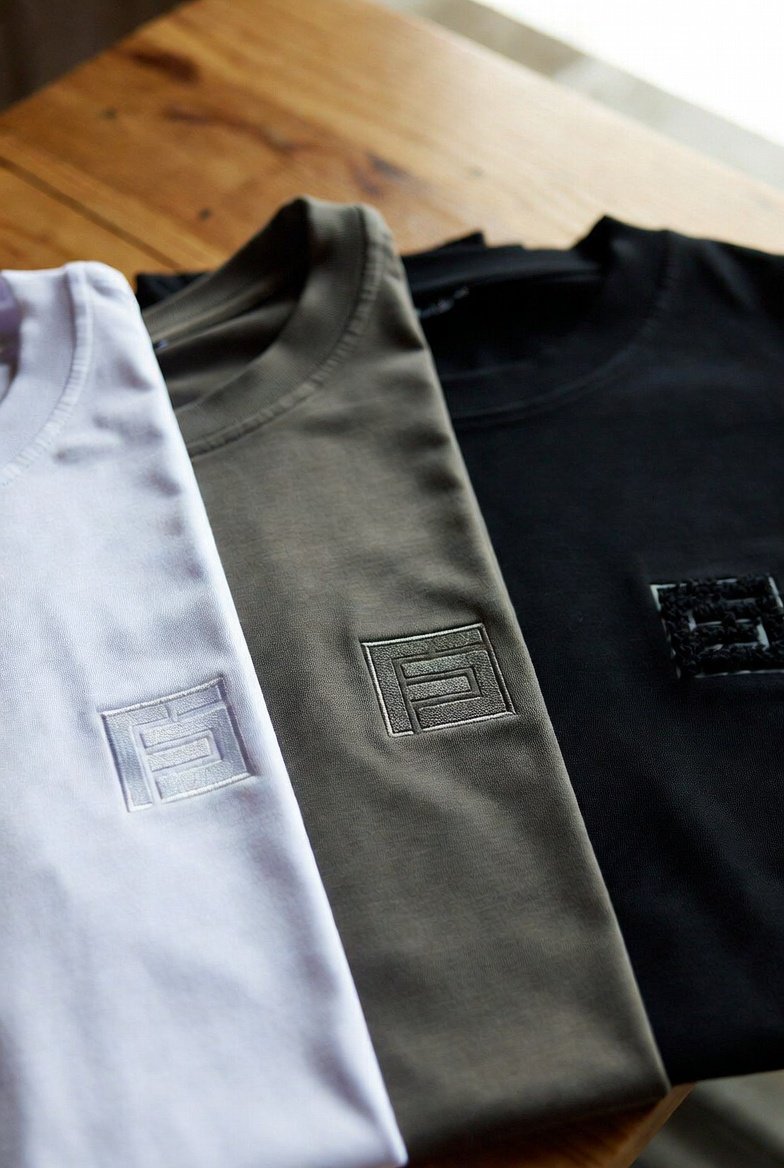
Different weights of fabric
Popular Customization Techniques for Custom T-Shirts (No Minimum)
The right customization technique depends on your design complexity, chosen fabric GSM, desired durability, and budget. Here are proven methods suitable for no-minimum or small-batch production:
- DTG (impression directe sur textile): Ideal for photo-realistic, multi-color designs with a soft hand-feel on lightweight 190-300gsm tees.
- Sérigraphie: Cost-effective for bold, opaque graphics that last through many washes — works well across all weights.
- Heat Transfer / DTF: Vibrant results on blends or mid-weight fabrics, great for gradients and small runs.
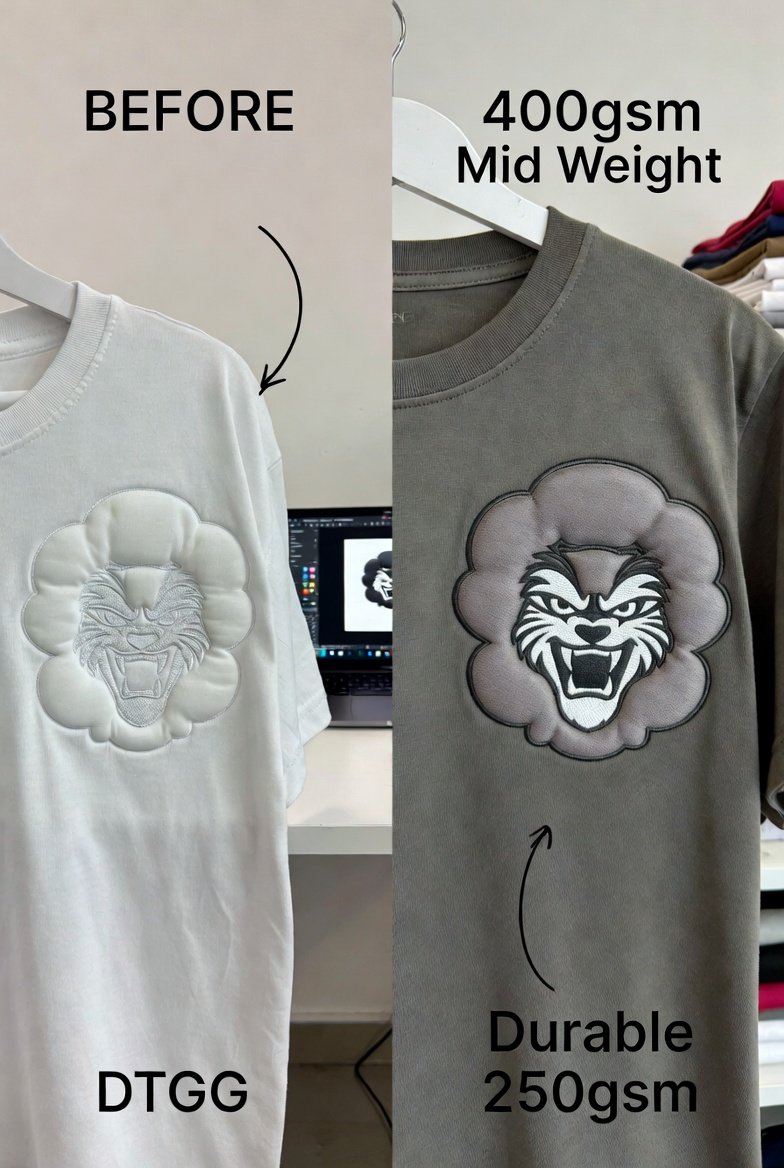
- Embroidery (Flat, Puff, or Chenille): Adds premium textured logos, especially effective on 300-600gsm heavier tees for a luxurious touch.
- Specialty Finishes: Tie-dye for organic patterns, hand-painted effects for unique pieces, reflective/fluorescent inks for street appeal, silicone or flock accents for texture, and all-over printing for immersive designs.
Lighter 190-280gsm fabrics suit delicate DTG or artistic techniques, while heavier 400-600gsm options excel with embroidery or structured prints without losing comfort. Many brands extend similar techniques to hoodies or apply vintage washes to complementary low-MOQ denim jackets from suppliers like Liangyuan Textile.
Benefits for startups include genuine small-batch flexibility, professional design support, and consistent quality control — allowing you to test ideas confidently before scaling.
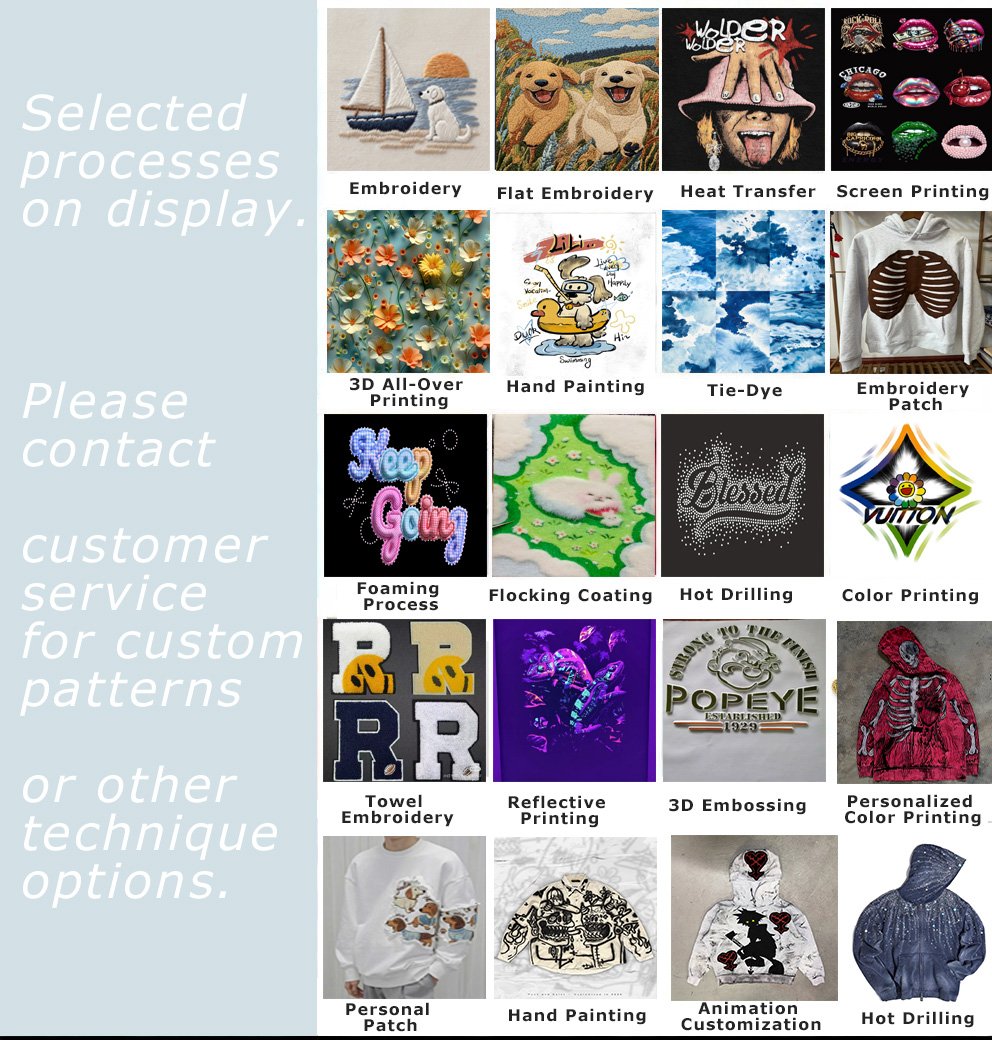
Techniques de personnalisation
Common Challenges in New Custom T-Shirt Design and Production
Even experienced brands face hurdles when developing no-minimum custom T-shirt collections:
- Problèmes de traduction de conception: Colors may shift in DTG or fluorescent prints; fine details can get lost on textured fabrics; embroidery may pucker on lighter 190gsm tees.
- Incompatibilités de tissus et de techniques: Choosing the wrong GSM (too light for durable prints or too heavy for breathable daily wear) leads to poor results or comfort issues.
- Obstacles à la production: Inconsistent quality from previous suppliers, longer lead times, hidden setup fees despite “no minimum” claims, shrinkage in certain blends, and challenges scaling mixed lines (T-shirts + hoodies + denim).
- Real-World Examples: Fading prints after washes, misaligned all-over designs, or stiffness in heavyweight tees.
Capable manufacturers address these through pre-production sampling, fabric-technique compatibility testing across the 190-600gsm range, rigorous quality control, and full end-to-end support — making the switch to a better supplier much smoother for growing brands.
Challenges in New Custom
Répondre aux doutes courants des propriétaires de marques
Established startups frequently ask these questions when exploring new suppliers for custom T-shirts with no minimum:
- “Is ‘no minimum’ production really feasible while maintaining good quality?”
- “How do costs work when starting from 1 piece and scaling to hundreds?”
- “Can one supplier handle T-shirts alongside hoodies or denim extensions?”
- “Will the final product match the quality of traditional high-MOQ manufacturing?”
The answer is yes — with flexible partners offering genuine low MOQ (1-2 pieces on many knit and denim items), wide fabric options (190-600gsm), and one-stop OEM services, these concerns become manageable. Technique mixing stays seamless, unit costs remain competitive even at small volumes, and strict quality processes ensure wash-durable, professional results.
If your current supplier feels restrictive, these doubts are completely normal. The right partner unlocks creativity, reduces risk, and supports sustainable growth.
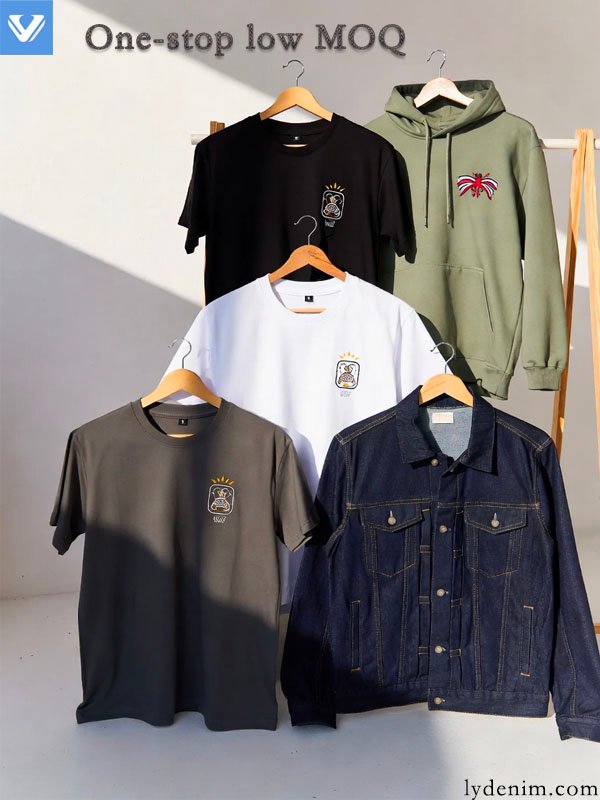
One-stop low MOQ
FAQ
1. What does “custom T-shirts no minimum” really mean in practice? It typically means ultra-low or flexible MOQs (often 1-2 pieces for sampling or small runs), allowing brands to test designs with minimal risk instead of committing to hundreds of units.
2. Which fabric weights (190-600gsm) are best for different T-shirt styles and printing techniques? 190-280gsm for soft, breathable everyday tees and delicate prints; 300-450gsm for structured premium styles; up to 600gsm for durable, heavyweight statement pieces that support embroidery well.
3. What customization options are available for no-minimum orders? DTG, screen printing, DTF/heat transfer, embroidery (flat/puff/chenille), tie-dye, reflective inks, silicone accents, and more — many work efficiently even at very small quantities.
4. Can I combine T-shirts with hoodies or denim items under one low-MOQ supplier? Yes. One-stop services like those from Liangyuan Textile allow consistent branding across custom knitwear (Tee, Polo, Long-sleeve) and low-MOQ denim jackets/shirts.
5. What are the most common design or quality issues with custom T-shirts? Color shifts, detail loss, puckering in embroidery on light fabrics, and wash durability problems — all solvable with proper sampling and testing.
6. How do you ensure consistent quality and wash durability with small orders? Through pre-production sampling, fabric-specific technique testing, quality thread/ink selection, and multi-cycle wash trials before any production run.
7. Is custom T-shirt production with no minimum cost-effective for growing brands? Absolutely. It reduces inventory risk and setup costs while allowing fast iteration; unit prices become even more competitive as volumes grow.
8. What should I prepare when inquiring for a new supplier for custom T-shirts? Prepare vector design files, preferred fabric weights or swatches, quantity estimates (even small), reference samples if any, and specific requirements like wash standards or sustainability needs.
Services de personnalisation par LYDENIM
🎨 Design personnalisé
Créez votre propre collection de tissus ou vêtement avec les matières haut de gamme de LYDENIM. Des mélanges de coton luxueux aux textiles écologiques innovants, découvrez des couleurs, des tissages et des finitions qui correspondent parfaitement à votre marque ou à votre vision créative. Visitez LYDENIM pour en savoir plus.
🛍️ Solutions de vêtements sur mesure
Donnez vie à vos créations grâce à nos services de confection sur mesure. Costumes sur mesure, robes élégantes ou vêtements de travail résistants, nous garantissons une coupe parfaite, un confort optimal et une qualité durable. Découvrez nos options de personnalisation sur Myalibaba.
📩 Contactez-nous
Vous avez un projet en tête ? Contactez notre équipe au malone@lydenim.com pour discuter de tissus personnalisés, de conception de vêtements ou de solutions textiles durables.
Transformez vos idées en réalité avec LYDENIM, votre partenaire de confiance pour des tissus innovants et de haute qualité et des solutions de vêtements sur mesure.