

Tempo estimado de leitura: ~5 minutos
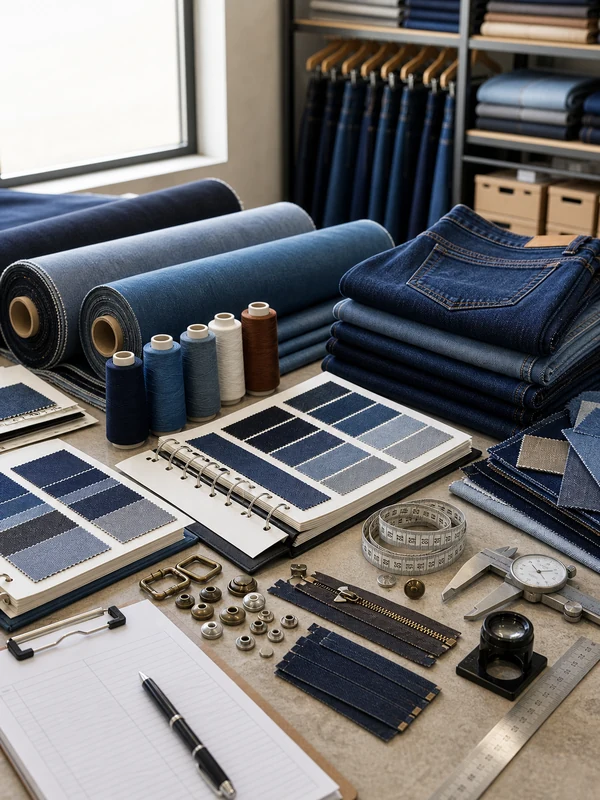
Para encontrar um fabricante confiável de tecidos para jeans, confirme três aspectos: capacidade de produção, consistência de matéria-prima e estabilidade para pedidos de longo prazo. A maioria dos problemas de compra começa quando o comprador não consegue distinguir uma fábrica real de um intermediário. Este guia oferece um processo de verificação repetível: primeiro, fixe as especificações técnicas; depois, siga uma sequência estruturada de amostras e controle de qualidade; e, por fim, exija uma declaração de capacidade antes de se comprometer.
Antes de Solicitar um Orçamento: Quatro Essenciais
- Fabric construction & weight – Composition (e.g., 98% cotton 2% elastane), weave (e.g., 3/1 right-hand twill), and weight in oz or GSM. A 10.5 oz denim behaves very differently from a 14 oz rigid one.
- Elasticidade e Recuperação – Especifique o teor de elastano, a taxa de estiramento esperada e a meta de recuperação (ex.: >95% após 30 minutos).
- Shade & dyeing method – Tingimento por corda em índigo, tingimento com enxofre, etc. Solicite uma amostra de laboratório ou fita de tonalidade com base em um padrão, não em uma foto de rolo de estoque.
- Intended wash & finish – Compartilhe sua receita de lavagem ou uma peça de referência para que a fábrica possa confirmar se o tecido entregará o visual que você precisa.
Tipos de Fornecedores e Risco de Aquisição
| Tipo de Fornecedor | Atividade Principal | Prós | Contras | Melhor para |
|---|---|---|---|---|
| Fábrica especializada em denim | Possui tingimento em corda, tecelagem, acabamento; opera produção contínua. | Controle profundo sobre tonalidade, toque e encolhimento; capacidade de projetar lavagens. | MOQ para cor personalizada geralmente de 3.000 a 4.000 m; sem confecção de peças | Marcas que necessitam de tecido personalizado |
| OEM/ODM Integrado | Fornecimento de tecido/tecelagem interna + corte-costura-lavagem; entrega jeans acabados | Responsabilidade única do tecido à peça de vestuário; reduz lacunas de lavanderia | Trabalha com MOQ de peças (300–500 peças/estilo); pode terceirizar fios especiais | Serviço completo para marcas/startups |
| Trading company | Adquire rolos crus/acabados de várias fábricas e revende. | Flexível em pequenas quantidades; resposta rápida; lotes de estoque | Sem controle de produção; tonalidade, encolhimento e disponibilidade podem variar entre lotes sem aviso prévio. | Projetos de entrega rápida, reposição de estoque |
| Conversor de tecido denim | Compra tecido cru e providencia tingimento, revestimento ou acabamento externo | Lavagens, revestimentos e efeitos de superfície únicos | A qualidade depende do finalizador terceirizado; prazo de entrega e consistência são mais difíceis de garantir. | Marcas orientadas por design explorando acabamentos especiais |
Sequência de Amostragem e QC que Identifica Riscos
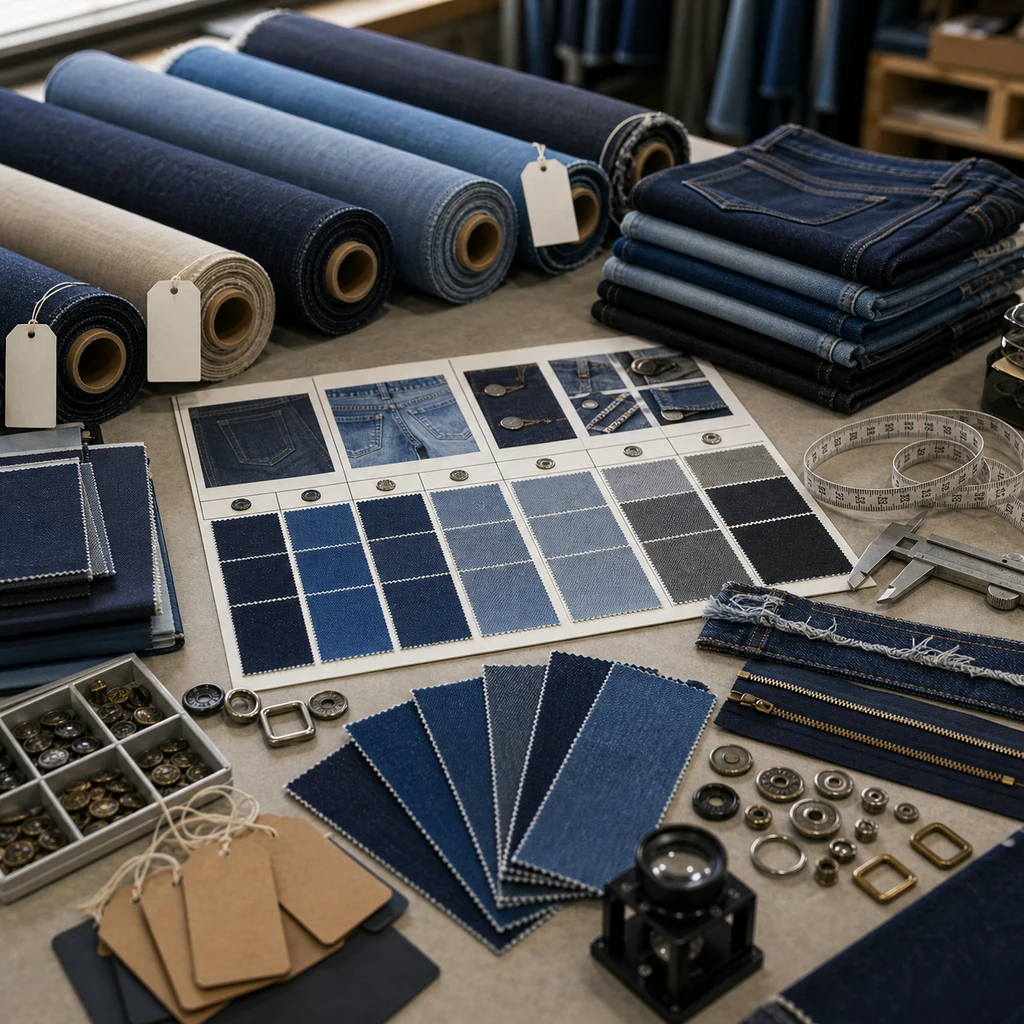
- Fabric swatch + lab-dip/shade band – Evaluate under natural and indoor light.
- Metragem de amostra (2–5 m) – Test shrinkage (formula: (before − after) ÷ before × 100%), twist, and hand feel independently. Insist on shrinkage data after a full garment wash cycle, not a relaxed fabric test.
- Amostra de pré-produção (PPS) – Must use bulk fabric, trims and the actual wash recipe. Measure all point-of-measure points against agreed tolerances.
- Bulk lab-dip & shade-band approval – Include the accepted light‑medium‑dark range; critical for dark indigo.
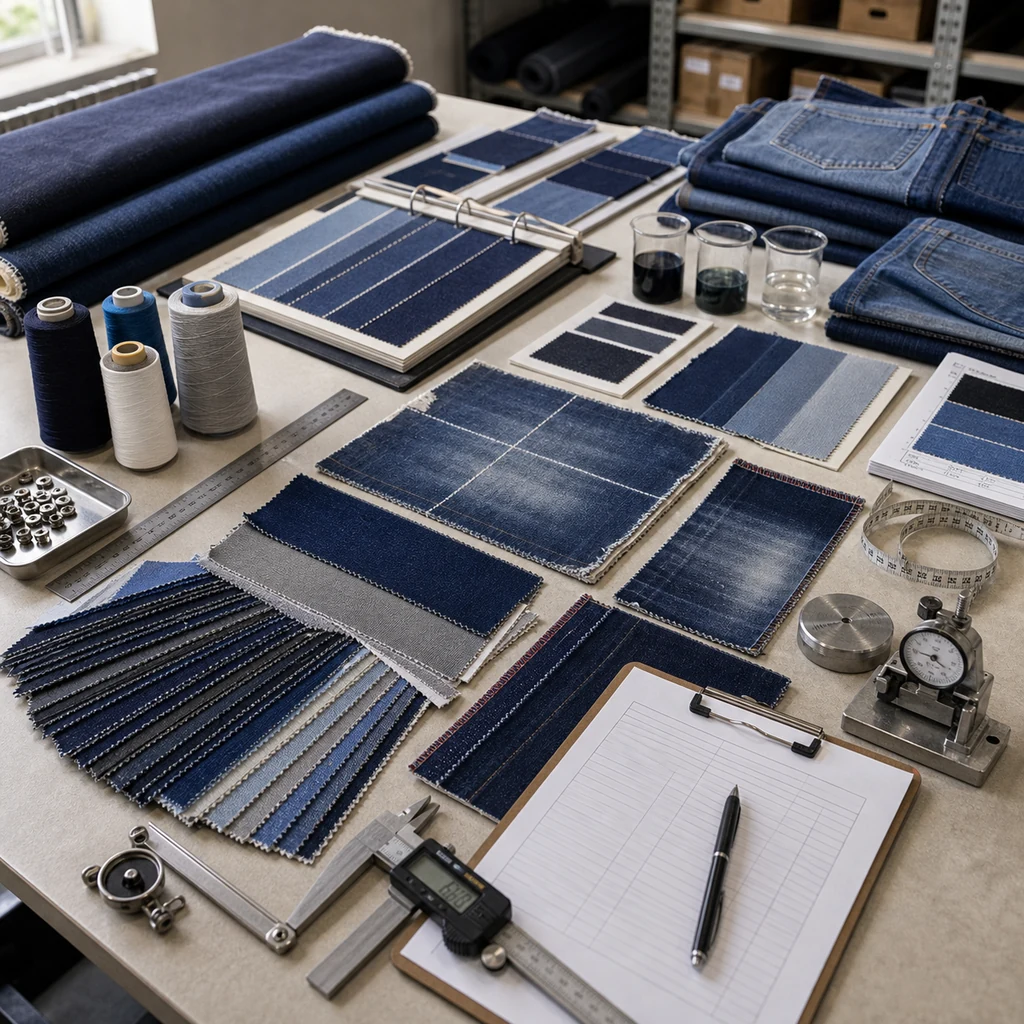
- Crocking test – Wet and dry according to AATCC 8. Dark indigo/black that crocks too much leads to return risks.
- Stretch recovery test – Set a fixed elongation (e.g., 80% of maximum stretch) and a rest period; recovery should stay above 90–95%.
Erros comuns
- Avaliar uma fábrica por uma pequena amostra – isso não diz nada sobre a consistência rolo a rolo.
- Aprovar uma amostra que utiliza um tecido ou lavagem diferente do lote.
- Excesso de especificações sem verificar o MOQ real para seus parâmetros personalizados.
- Deixar encolhimento e torção indefinidos – você não pode rejeitar o lote que encolhe 4% em vez de 1,5%.
- Ignorar a declaração de capacidade do fornecedor; um fabricante real mostra linhas de tingimento/tecelagem, enquanto respostas vagas frequentemente indicam uma trading company.
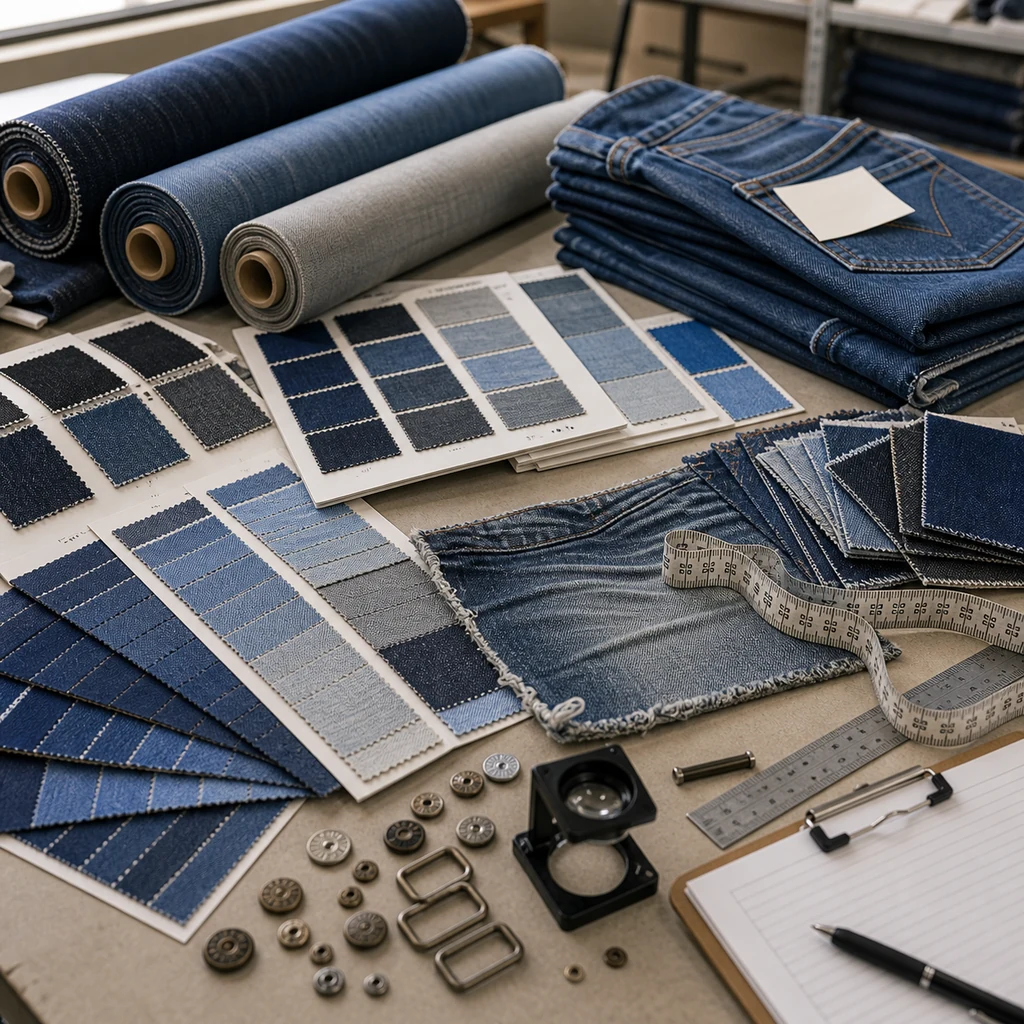
Checklist Pré‑Orçamento
- Composição do tecido, construção, gramatura alvo (oz ou GSM)
- Referência de largura e tonalidade necessária (lab-dip, Pantone, amostra física)
- Especificações de elasticidade (elastane %, taxa de elasticidade, meta de recuperação)
- Método de tingimento e requisitos de solidez (solidez à fricção, solidez à luz, solidez à lavagem)
- Processo de lavagem pretendido ou acabamento final da peça
- Quantidade estimada por cor e prazo de entrega
- Requisitos de embalagem (comprimento do rolo, tubete, etiquetagem)
- Requisitos de teste e laboratório terceirizado acordado
- Certificações exigidas (GOTS, OCS, OEKO-TEX, BCI) cobrindo este lote específico
Perguntas para Entrevista com Fornecedores
- Este tecido é produzido em suas próprias linhas de tingimento e tecelagem, ou você adquire tecido cru?
- Você pode mostrar uma visão ao vivo ou um vídeo recente da linha de tingimento e dos teares operando com o nosso tipo de tecido?
- Qual é o MOQ exato para a minha cor e construção especificadas, e quais taxas de configuração estão incluídas?
- Quantos ciclos de lavagem e a que temperatura você testa o encolhimento, e qual é o seu limite de aprovação/reprovação?
- O PPS será feito com o mesmo lote de tingimento e de tecido do bulk? Caso contrário, como a continuidade de tonalidade será garantida?
- Qual ação corretiva você toma se a tonalidade do lote estiver fora da faixa de tonalidade selada?
- For stretch fabrics, can you provide a recovery test report at the elongation I specify?
- Com qual laboratório terceirizado vocês trabalham, e os relatórios podem ser atribuídos ao nome da nossa empresa?
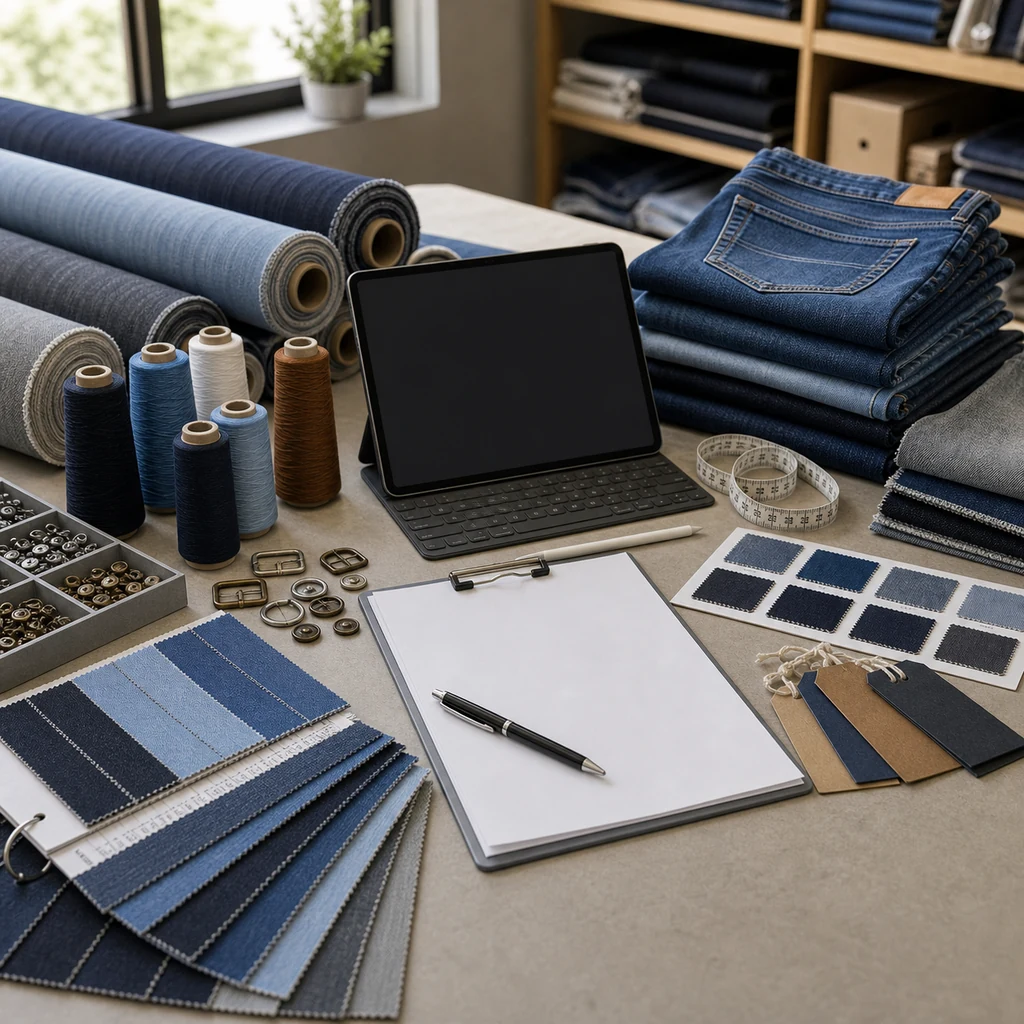
Perguntas frequentes
Qual denim uma startup deve escolher para jeans personalizados?
A maioria dos jeans personalizados funciona bem em denim de 12–14 oz. Escolha o teor de algodão, elasticidade e efeito de lavagem com base no caimento, encolhimento e posicionamento no varejo.
Como uma pequena marca pode encontrar um fabricante confiável?
Verifique através de amostras de tecido, experiência anterior de produção, termos claros de MOQ, qualidade das amostras e transparência. Um fornecedor que explica as limitações é frequentemente mais confiável do que aquele que concorda com tudo.
Como posso verificar alegações de denim sustentável?
Solicite números de certificado, datas de validade e documentos de escopo (GRS, OCS, OEKO-TEX, BCI). O certificado deve cobrir o material específico que está sendo adquirido.
Por que as amostras ficam boas, mas a produção em massa decepciona?
Isso acontece frequentemente quando a amostra é cortada de um rolo de estoque selecionado manualmente, enquanto a produção em massa é realizada sob condições diferentes de tingimento ou acabamento. Uma PPS do mesmo lote e um shade-band selado são referências essenciais.
Posso começar com um MOQ baixo para jeans personalizados?
Tecido em estoque suporta quantidades menores, mas você aceita a cor e o toque disponíveis. Denim com cor personalizada normalmente requer de 3.000 a 4.000 m por cor; jacquard ou padrões especiais podem às vezes começar a partir de algumas centenas de metros.
Conclusion: Verify Before You Order
Selecionar um fabricante de tecido jeans é um processo de verificação, não uma decisão de uma única etapa. Defina especificações, tipo de fornecedor, etapas de amostragem e verificações de qualidade de forma repetível. A próxima etapa prática: solicite uma amostra física com um lab-dip ou shade band de um fabricante pré-selecionado e teste-a contra seus requisitos antes de qualquer negociação de preço.
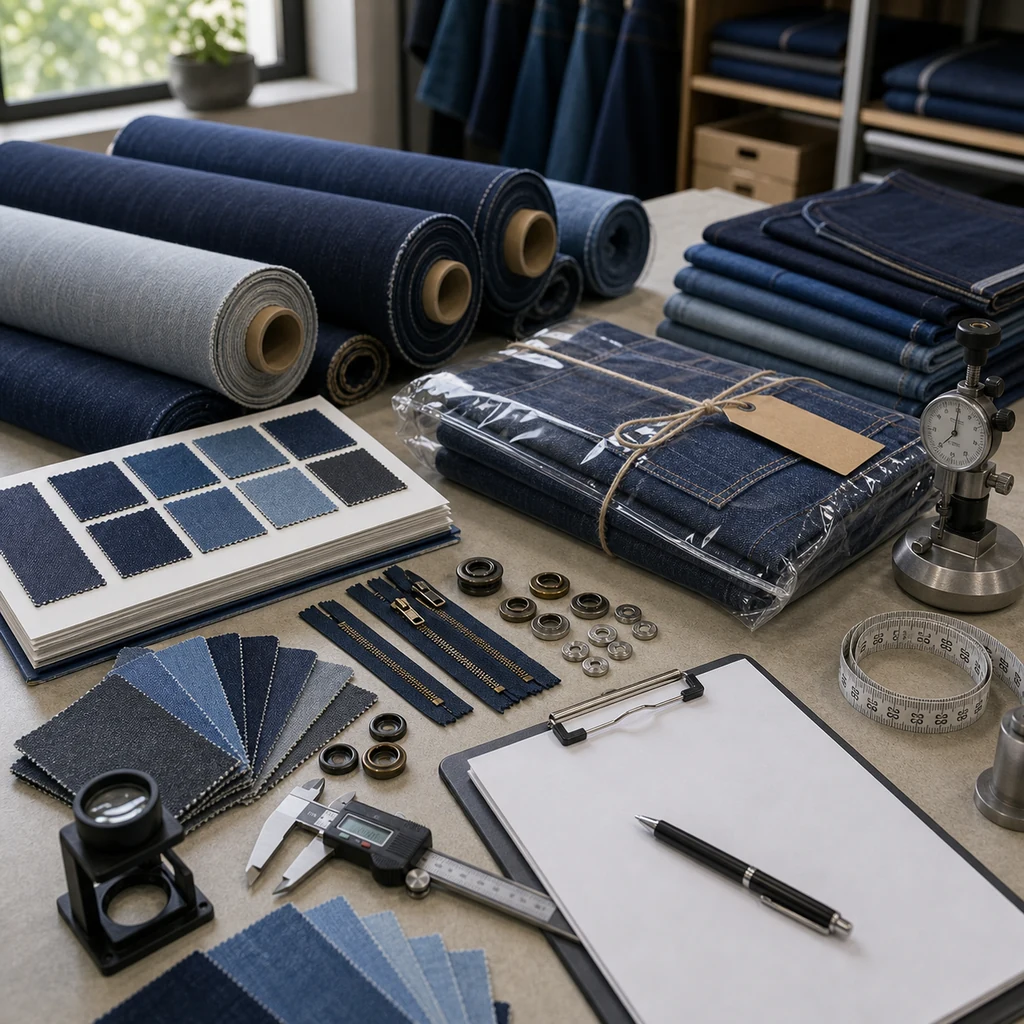
Conclusão
Use a checklist de artigos, os requisitos de amostras e as perguntas ao fornecedor para confirmar a próxima etapa prática de compras antes de avançar para orçamento ou produção.
Serviços de personalização da LYDENIM
🎨 Design personalizado
Design your own fabric collection or garment with LYDENIM’s premium materials. From luxurious cotton blends to innovative eco-friendly textiles, explore colors, weaves, and finishes that match your brand’s product direction. Visit LYDENIM para saber mais.
🛍️ Soluções de vestuário sob medida
Bring your designs to life with custom garment services. Whether you are developing jeans, denim jackets, skirts, workwear, or small-batch fashion collections, LYDENIM can support fit, comfort, durability, and production planning. Explore customization options on My Alibaba.
📩 Entre em contato
Tem um projeto em mente? Entre em contato com nossa equipe pelo e-mail malone@lydenim.com to discuss custom fabrics, garment design, low-MOQ sampling, or sustainable textile solutions.
Transform your ideas into reality with LYDENIM–your trusted partner for innovative, high-quality fabrics and bespoke apparel solutions.
Need help turning this into a production-ready sourcing brief?
Send your target product, fabric direction, quantity and sample needs. LY Denim can help compare options and prepare a quote.