


ผู้ผลิตเสื้อผ้าสำหรับสตาร์ทอัพ: คู่มือครบถ้วนสำหรับการผลิตเสื้อผ้าสั่งทำ
ผู้ผลิตเสื้อผ้าสำหรับสตาร์ทอัพ: คู่มือครบถ้วนสำหรับการผลิตเสื้อผ้าสั่งทำ
ผู้ผลิตเสื้อผ้าสำหรับสตาร์ทอัพที่นำเสนอการผลิตตามสั่งขั้นต่ำขั้นต่ำสำหรับกางเกงยีนส์เดนิม เสื้อยืด เสื้อมีฮู้ด แจ็คเก็ต และอื่นๆ เรียนรู้กระบวนการปรับแต่งแบบ end-to-end ซึ่งเป็นข้อผิดพลาดทั่วไปในการออกแบบใหม่
สรุปผู้ซื้อ
สำหรับแบรนด์เครื่องแต่งกายและทีมขนาดเล็ก หัวข้อนี้ควรเชื่อมโยงการตัดสินใจด้านการออกแบบกับการสุ่มตัวอย่าง การผลิต ปริมาณขั้นต่ำ วิธีการตกแต่ง และความพร้อมในการเสนอราคา
- ผู้ซื้อที่เหมาะสมแบรนด์แฟชั่น ทีมจัดหา ผู้ค้าส่ง โรงงานตัดเย็บเสื้อผ้า และผู้พัฒนาผลิตภัณฑ์
- สิ่งที่ต้องยืนยันเป้าหมายผลิตภัณฑ์ ทิศทางของผ้า ผิวสำเร็จ ความต้องการตัวอย่าง ปริมาณ และตลาดการจัดส่ง
- ความเสี่ยงของผู้ซื้อข้อมูลจำเพาะที่ไม่ชัดเจนอาจนำไปสู่ตัวอย่างที่ไม่ถูกต้อง คุณภาพปริมาณมากไม่แน่นอน และการเสนอราคาที่ช้า
- CTA ที่แนะนำขอตัวอย่างหรือใบเสนอราคาตัวอย่างก่อนที่จะดำเนินการผลิตจำนวนมาก
เหตุใดจึงสำคัญสำหรับผู้ซื้อ B2B
ยืนยันเนื้อผ้า โครงสร้าง เทคนิคโลโก้ ความต้องการตัวอย่าง และปริมาณการสั่งซื้อก่อนเปรียบเทียบซัพพลายเออร์
ผู้ผลิตเสื้อผ้าสำหรับสตาร์ทอัพที่นำเสนอการผลิตตามสั่งขั้นต่ำขั้นต่ำสำหรับกางเกงยีนส์เดนิม เสื้อยืด เสื้อมีฮู้ด แจ็คเก็ต และอื่นๆ เรียนรู้กระบวนการปรับแต่งแบบ end-to-end ซึ่งเป็นข้อผิดพลาดทั่วไปในการออกแบบใหม่
ตารางข้อมูลจำเพาะสำหรับการจัดหาที่เร็วขึ้น
| จุดตัดสินใจ | ตัวเลือกในการเปรียบเทียบ | ทำไมมันถึงสำคัญ | คำถามของผู้ซื้อ |
|---|---|---|---|
| ประเภทสินค้า | เสื้อฮู้ด เสื้อยืด กางเกงยีนส์ แจ็คเก็ต เครื่องแต่งกายตามสั่ง | ควบคุมการเลือกผ้า ลวดลาย การตกแต่ง และการก่อสร้าง | คุณกำลังพัฒนาผลิตภัณฑ์ใด? |
| การปรับแต่ง | งานปัก งานสกรีน งานพิมพ์พัฟ งานปัก งานซัก | ส่งผลต่อต้นทุนตัวอย่าง ขั้นต่ำ และเวลานำ | คุณมีอาร์ตเวิร์คหรือเทคนิคอ้างอิงหรือไม่? |
| ผ้าและ GSM | ตัวเลือกเบา ปานกลาง หรือเฮฟวี่เวท | กำหนดความรู้สึกมือ ฤดูกาล และตำแหน่งการขายปลีก | คุณต้องการความรู้สึกมือและระดับราคาแบบใด |
| แผนการสั่งซื้อ | ต้นแบบ ชุดเล็ก การผลิตจำนวนมาก | เปลี่ยนแปลงราคา ไทม์ไลน์ และการตั้งค่าการผลิต | คุณต้องการตัวอย่างหรือใบเสนอราคาจำนวนมากก่อนหรือไม่? |
แอปพลิเคชันและตัวเลือกแบบกำหนดเอง
การพัฒนาผลิตภัณฑ์
ใช้คู่มือนี้เพื่อเปลี่ยนแนวคิดการออกแบบให้เป็นข้อกำหนดด้านเนื้อผ้า เครื่องแต่งกาย การตกแต่ง และตัวอย่าง
การเปรียบเทียบซัพพลายเออร์
เปรียบเทียบซัพพลายเออร์ตามการสนับสนุนตัวอย่าง ความชัดเจนทางเทคนิค ความเสถียรของปริมาณรวม และความเร็วในการสื่อสาร
การผลิตจำนวนมาก
ยืนยันมาตรฐานคุณภาพ ตัวอย่างที่ได้รับอนุมัติ และไทม์ไลน์ก่อนสั่งผลิต
จุดควบคุมคุณภาพก่อนสั่งซื้อจำนวนมาก
- OKการอนุมัติตัวอย่าง: ยืนยันผ้า สี ความรู้สึกมือ โครงสร้าง และการตกแต่งก่อนการผลิตจำนวนมาก
- OKความสม่ำเสมอเป็นกลุ่ม: เปรียบเทียบล็อตจำนวนมากกับตัวอย่างที่ได้รับอนุมัติภายใต้แสงและสภาวะการทดสอบเดียวกัน
- OKการทดสอบประสิทธิภาพ: ตรวจสอบการหดตัว ความคงทนของสี การยืดตัวคืนสภาพ หรือความทนทานของการตกแต่งตามที่เกี่ยวข้อง
- OKความชัดเจนของคำพูด: ส่งปริมาณ ปลายทาง ความต้องการบรรจุภัณฑ์ และเวลานำเป้าหมายเพื่อหลีกเลี่ยงการกำหนดราคาที่คลุมเครือ
กระบวนการพัฒนาตัวอย่าง
| ขั้นตอน | ผู้ซื้อจัดให้ | ซัพพลายเออร์ยืนยัน |
|---|---|---|
| 1. บรีฟ | การใช้งาน รูปภาพอ้างอิง คุณภาพและปริมาณเป้าหมาย | ความเป็นไปได้ วัสดุที่แนะนำ และตัวเลือกแบบกำหนดเอง |
| 2. สวอตช์ผ้า | สี สัมผัสมือ รูปแบบ หรือการตอบสนองขั้นสุดท้ายที่ต้องการ | สต็อกที่มีอยู่ ทิศทางที่กำหนดเอง และต้นทุนตัวอย่าง |
| 3. ตัวอย่าง | แผนการทดสอบเสื้อผ้า ขนาด หรือความต้องการระยะ | เส้นเวลาการสุ่มตัวอย่างและความสามารถในการทำซ้ำของการผลิต |
| 4. ใบเสนอราคาจำนวนมาก | ปริมาณการสั่งซื้อ ปลายทางการจัดส่ง และความต้องการบรรจุภัณฑ์ | ราคาต่อหน่วย, ขั้นต่ำ, เวลานำและจุดตรวจควบคุมคุณภาพ |
คู่มือโดยละเอียด
เวลาอ่านโดยประมาณ: ~5 นาที
ในตลาดเสื้อผ้าสั่งทำพิเศษที่เติบโตอย่างรวดเร็ว ผู้ผลิตเสื้อผ้าสำหรับสตาร์ทอัพคือกุญแจสำคัญในการเปลี่ยนแนวคิดให้เป็นคอลเลกชันที่ปรับขนาดได้โดยไม่มีความเสี่ยงด้านสินค้าคงคลังจำนวนมาก ไม่ว่าคุณจะเปิดตัวกางเกงยีนส์เดนิมระดับพรีเมียม เสื้อยืดใส่สบาย เสื้อฮู้ดอินเทรนด์ หรือแนวคละ คุณต้องการพันธมิตรที่มีความยืดหยุ่นและมีขั้นต่ำขั้นต่ำที่รองรับการทดสอบชุดเล็กและการทำซ้ำอย่างรวดเร็ว
คู่มือนี้ดึงมาจากบล็อกผู้เชี่ยวชาญของ LY Denim โดยตรง โดยเฉพาะบทความ “Top 5 ตัวชี้วัดในการเลือกโรงงานผลิตเสื้อผ้าแบบสั่งทำ” — และจับคู่กับความสามารถ OEM/ODM ที่แท้จริงจาก Liangyuan Textile ในอาลีบาบา. LY Denim ยังแนะนำ Liangyuan Textile สำหรับการตัดเย็บ การตัดแต่ง และการซักตามสั่งในจำนวนขั้นต่ำขั้นต่ำในคู่มือการควบคุมคุณภาพ เราจะครอบคลุมกระบวนการปรับแต่งอย่างแท้จริงสำหรับเดนิมและเสื้อถัก ปัญหาทั่วไปในการออกแบบเสื้อผ้าใหม่ (พร้อมการอ้างอิงโดยตรงไปยังคำแนะนำเกี่ยวกับข้อบกพร่องของ LY Denim) ความสงสัยในการเริ่มต้นใช้งาน และคำแนะนำที่สามารถนำไปปฏิบัติได้
แบรนด์สตาร์ทอัพใหม่
ทำความเข้าใจการผลิตเสื้อผ้าสำหรับสตาร์ทอัพ
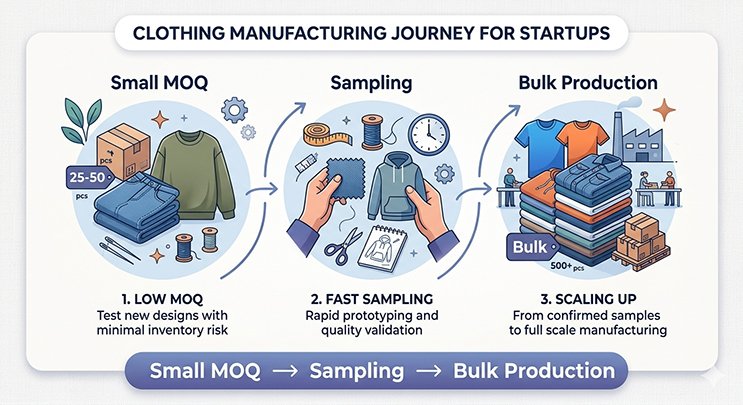
โดยทั่วไปแล้วสตาร์ทอัพต้องการความยืดหยุ่น: ปริมาณการสั่งซื้อขั้นต่ำ (MOQ) ที่ต่ำ การสุ่มตัวอย่างที่รวดเร็ว และการผลิตที่ปรับขนาดได้โดยไม่ต้องลงทุนล่วงหน้าจำนวนมาก แบรนด์ที่กำลังเติบโตมักจะมองหาซัพพลายเออร์รายใหม่เพื่อปรับปรุงความคุ้มค่า นวัตกรรม และความสม่ำเสมอด้านคุณภาพ
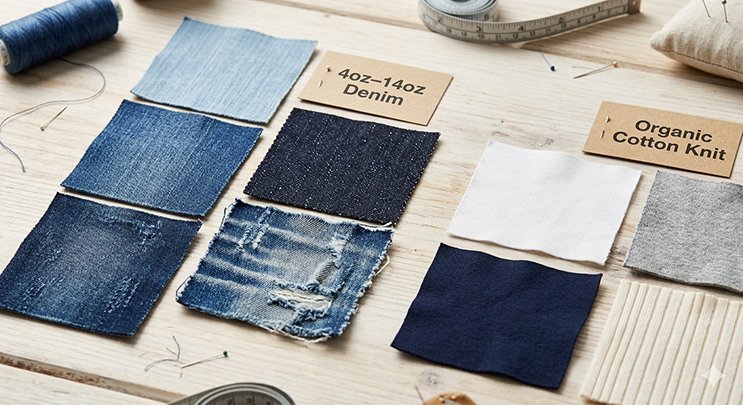
ผู้ผลิตที่เชื่อถือได้สนับสนุนสายผลิตภัณฑ์ที่หลากหลาย ตัวอย่างเช่น ผ้าเดนิมพรีเมียม (ตั้งแต่ 4oz ถึง 14oz รวมถึงผ้าเดนิมยืด ผ้าผสมลายสลับ และตัวเลือกที่เป็นมิตรต่อสิ่งแวดล้อม) สามารถจับคู่ได้อย่างลงตัวกับผ้าคอตตอนถักที่นุ่มสำหรับเสื้อยืด เสื้อฮู้ดดี้ และสเวตเชิ้ตโอเวอร์ไซส์ ซึ่งช่วยให้สามารถสร้างคอลเลคชั่นที่สอดคล้องกัน เช่น เสื้อแจ็กเก็ตยีนส์วินเทจที่ซักแล้วคู่กับเสื้อฮู้ดดี้ปักลวดลายตามสั่ง หรือเสื้อยืดสกรีนลาย
LY Denim ย้ำว่าทีมวิจัยและพัฒนาที่มีศักยภาพในการเปิดตัวผ้าใหม่ๆ อย่างต่อเนื่องตามฤดูกาล ร่วมกับการสนับสนุนด้านการออกแบบเสื้อผ้าอย่างมืออาชีพ ช่วยให้แบรนด์ใหม่สามารถรักษาความสำเร็จของผลิตภัณฑ์ได้อย่างมั่นคง ในทำนองเดียวกัน ผู้ผลิตที่มีประสบการณ์ยาวนานกว่า 30 ปีในด้านการพัฒนาผ้าและการออกแบบเสื้อผ้า เช่น ผู้ที่ผลิตเสื้อถักและเสื้อแจ็กเก็ตจากผ้าเดนิมในปริมาณน้อย มักสามารถให้โซลูชันที่ตอบสนองความต้องการได้อย่างรวดเร็วสำหรับการทดสอบผลิตภัณฑ์ในปริมาณเล็ก
การสร้างต้นแบบอย่างรวดเร็ว
กระบวนการปรับแต่งที่สำคัญในการผลิตเสื้อผ้าสมัยใหม่
การผลิตเสื้อผ้าสมัยใหม่นำเสนอการปรับแต่งอย่างกว้างขวางทั้งเสื้อผ้าทอและเสื้อผ้าถัก
การพัฒนาและคัดเลือกผ้า
เลือกจากวัสดุในสต็อกหรือวัสดุที่พัฒนาขึ้นเอง ตัวเลือกเดนิม ได้แก่ ผ้าฝ้ายออร์แกนิกที่มีความยืดหยุ่นสูง ไม่ยืด ลวดลายผ้าแจ็คการ์ด และน้ำหนักต่างๆ สำหรับการถัก ผ้าฝ้ายผสมเนื้อนุ่มรองรับเสื้อยืด เสื้อโปโล เสื้อมีฮู้ด และทรงหลวม ด้วยผ้าในสต็อกสูงสุดถึง 80% ระยะเวลารอคอยสินค้าจึงสั้นลงได้อย่างมาก
การพัฒนาและคัดเลือกผ้า
เทคนิคการปรับแต่งเสื้อผ้า
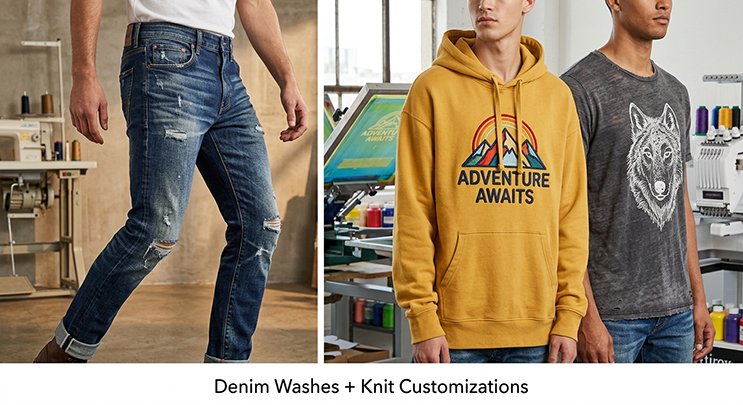
- กางเกงยีนส์ แจ็กเก็ต และเสื้อผ้าที่ทำจากผ้าทอ: การล้างหิน, เอฟเฟกต์หนวดเครา, พื้นผิวแบบมีรอยตำหนิ, ริมผ้าดิบ, การซักแบบเบาบาง และการบำบัดแบบไม่ซีดจาง — กระบวนการที่มีรายละเอียดในคู่มือการผลิตเดนิม ซึ่งครอบคลุมตั้งแต่การทอจนถึงการตกแต่งขั้นสุดท้าย
- เสื้อยืด ฮูดี้ และเสื้อผ้าที่ถัก: การสกรีน, งานปัก, การวางโลโก้, การมัดย้อม, เอฟเฟกต์ burnout/devoré (กัดกร่อน), และรายละเอียดผสมผสานระหว่างผ้าทอและผ้าถัก การปรับแต่งตาม MOQ ต่ำ (ต่ำเพียง 1-2 ชิ้นสำหรับหลายรายการ) ทำให้การทดสอบดีไซน์ที่ไม่ซ้ำใส่ง่ายขึ้น

เทคโนโลยีที่กำหนดเอง
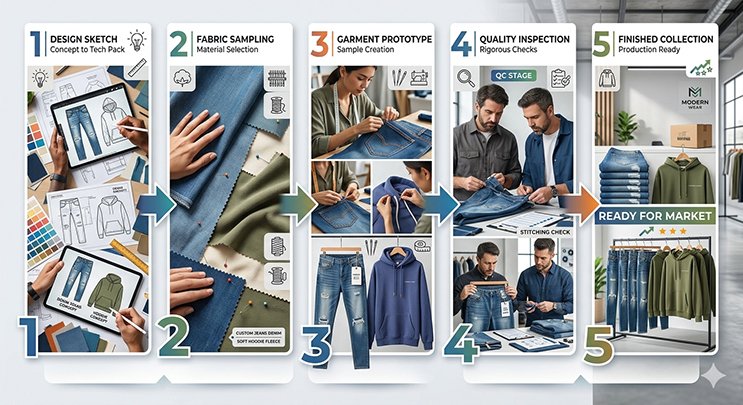
ขั้นตอนการทำงานแบบครบวงจร
กระบวนการนี้เริ่มต้นจากการออกแบบเบื้องต้นและการจัดทำเอกสารทางเทคนิค การสร้างแบบผ้า การสุ่มตัวอย่าง การตัดและเย็บ ไปจนถึงขั้นตอนการตกแต่งปลายทาง การบรรจุภัณฑ์ และการควบคุมคุณภาพหลายขั้นตอน ซึ่งรวมถึงการทดสอบเส้นด้าย การตรวจสอบคุณภาพผ้า การควบคุมความสม่ำเสมอของการย้อมสี การควบคุมการหดตัวของผ้า และการตรวจสอบเสื้อผ้าในขั้นตอนสุดท้าย LY Denim ได้กำหนดกระบวนการควบคุมคุณภาพแบบครบวงจร 5 ขั้นตอน เพื่อให้มั่นใจในคุณภาพระดับพรีเมียมที่คงที่ตั้งแต่ต้นจนจบกระบวนการผลิต
ความสามารถเหล่านี้ช่วยให้แบรนด์ต่างๆ สามารถสร้างคอลเลกชั่นที่โดดเด่นได้ เช่น ไลน์เสื้อผ้าแนวสตรีทที่ผสมผสานผ้าเดนิมแบบดิสเดรตกับเสื้อฮู้ดโอเวอร์ไซส์เอฟเฟกต์เหนื่อยหน่าย
ครบวงจร
ความท้าทายและปัญหาทั่วไปในการออกแบบและการผลิตเสื้อผ้ารูปแบบใหม่
การออกแบบใหม่มักพบกับอุปสรรค:
- ปัญหาการออกแบบ: แปลงความคิดสร้างสรรค์เป็นไฟล์ทางเทคนิคที่แม่นยำ บรรลุความพอดีที่สม่ำเสมอในขนาดต่างๆ และรักษาสมดุลระหว่างความสวยงามกับความสามารถในการผลิต (เช่น การจับคู่ผ้าเดนิมเนื้อแข็งกับผ้าถักเนื้อนุ่ม)
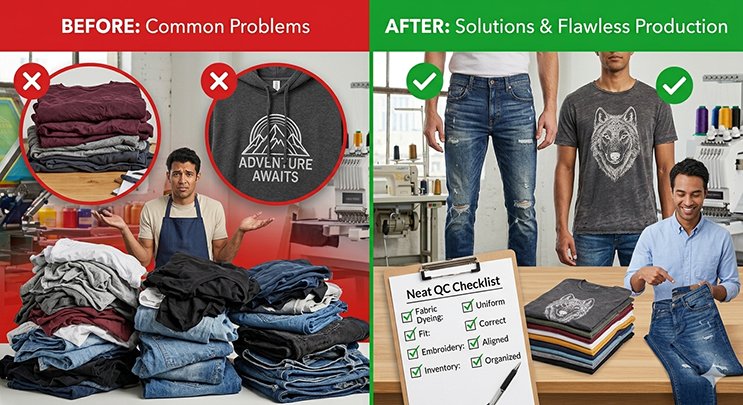
- ความท้าทายด้านการผลิต: รักษาความสม่ำเสมอของสีในการย้อม การควบคุมการหดตัว หลีกเลี่ยงการเปลี่ยนแปลงคุณภาพจำนวนมาก จัดการเวลาในการผลิต และบรรลุความคาดหวังด้านความยั่งยืน
- จุดปวดเฉพาะการเริ่มต้น: ต้นทุนเริ่มต้นที่สูง ความเสี่ยงด้านสินค้าคงคลังจากปริมาณขั้นต่ำขนาดใหญ่ อุปสรรคในการสื่อสารกับซัพพลายเออร์ในต่างประเทศ และคุณภาพลดลงเมื่อปรับขนาดจากตัวอย่างไปจนถึงการผลิต
ตามที่กล่าวไว้ในคำแนะนำสำหรับกลุ่มผลิตภัณฑ์เสื้อผ้าใหม่ ซัพพลายเออร์ที่เชื่อถือได้ช่วยเอาชนะสิ่งเหล่านี้โดยเสนอขั้นต่ำที่ยืดหยุ่นและกระบวนการที่โปร่งใส ช่วยลดอุปสรรคทั่วไปในการเริ่มต้นธุรกิจ
ติดตั้งเองได้
ไขข้อสงสัยทั่วไปจากเจ้าของแบรนด์
ผู้ก่อตั้งแบรนด์มักแบ่งปันข้อกังวลที่คล้ายกัน:
- “ฉันสามารถเริ่มต้นด้วยปริมาณที่น้อยมากได้หรือไม่” — ใช่ MOQ ที่ยืดหยุ่น บางครั้งต่ำเพียง 1–50 ชิ้นต่อการออกแบบ (หรือแม้แต่ 1-2 ชิ้นสำหรับสินค้าสั่งทำพิเศษบางรายการ) รองรับการทดสอบตลาดโดยมีความเสี่ยงน้อยที่สุด
- “ฉันจะปกป้องการออกแบบที่เป็นเอกลักษณ์ของตัวเองและรับประกันการผลิตที่แม่นยำได้อย่างไร” — ผ่านการสุ่มตัวอย่างหลายรอบ สัญญาที่ชัดเจน และระเบียบการด้านคุณภาพที่เข้มงวด
- “ผู้ผลิตรายหนึ่งสามารถจัดการทั้งกางเกงเดนิมและเสื้อถักได้หรือไม่” — อย่างแน่นอน พันธมิตรที่มีความพร้อมทั้งในการผลิตผ้าเดนิมทอและผ้าถักจะส่งมอบคอลเลกชันที่เข้ากันอย่างมีประสิทธิภาพ
- “จะควบคุมต้นทุนในขณะที่รักษาคุณภาพระดับพรีเมี่ยมได้อย่างไร” — ใช้ประโยชน์จากความพร้อมของแฟบริคที่มีในสต็อกสูง ขั้นตอนการทำงานแบบครบวงจรที่มีประสิทธิภาพ และการปรับแต่งมูลค่าเพิ่ม
Resources like “Top 5 ตัวชี้วัดในการเลือกโรงงานผลิตเสื้อผ้าแบบสั่งทำ” stress the importance of clear communication and proven QC systems in building successful partnerships.
วิธีเลือกและร่วมงานกับผู้ผลิตเสื้อผ้าที่เหมาะสม
เมื่อประเมินผู้ผลิต ควรให้ความสำคัญกับผู้ที่มีประสบการณ์มากกว่า 20–30 ปี ให้บริการแบบครบวงจรตั้งแต่วัสดุจนถึงเสื้อผ้าสำเร็จรูป มีศักยภาพด้านการวิจัยและพัฒนาที่แข็งแกร่ง สามารถปรับขนาดคำสั่งซื้อได้อย่างยืดหยุ่น และดำเนินการตรวจสอบคุณภาพในหลายขั้นตอน
การทำงานร่วมกันโดยทั่วไปประกอบด้วย:
- แบ่งปันแนวคิดการออกแบบและมูดบอร์ด
- การรับตัวอย่างผ้าและตัวอย่างเสื้อผ้าเพื่อตรวจสอบ
- การให้ข้อเสนอแนะและขอปรับเปลี่ยน
- อนุมัติการผลิตจำนวนมากโดยมีการควบคุมคุณภาพอย่างต่อเนื่อง
- การรับสินค้าสำเร็จรูปพร้อมการจัดส่งที่เชื่อถือได้
แนวทางที่มีโครงสร้างนี้ได้รับการสนับสนุนจากการประเมินซัพพลายเออร์ที่แข็งแกร่ง ช่วยให้แบรนด์ต่างๆ ขยายขนาดได้อย่างมั่นใจ
บทสรุป
การเลือกผู้ผลิตเสื้อผ้าที่เหมาะสมจะเปลี่ยนความท้าทายด้านการออกแบบให้กลายเป็นความสำเร็จในตลาด ไม่ว่าคุณจะมุ่งเน้นไปที่ผ้าเดนิมระดับพรีเมียม เสื้อยืดลำลอง เสื้อมีฮู้ดแสนสบาย หรือคอลเลกชันทั้งหมด พันธมิตรที่มีความสามารถจะมอบความเชี่ยวชาญ ความยืดหยุ่น และคุณภาพที่จำเป็นสำหรับการเติบโต
คำถามที่พบบ่อย
คำถามที่ 1: MOQ ทั่วไปสำหรับคำสั่งซื้อเริ่มต้นของกางเกงยีนส์เดนิม เสื้อยืด หรือเสื้อมีฮู้ดคืออะไร ตอบ: MOQ มีความยืดหยุ่น โดยมักจะอยู่ที่ 1-50 ชิ้นต่อการออกแบบสำหรับการสุ่มตัวอย่างและชุดย่อย โดยสินค้าที่กำหนดเองบางรายการเริ่มต้นที่ 1-2 ชิ้น คำสั่งซื้อจำนวนมากสามารถขยายขนาดขึ้นไปได้
คำถามที่ 2: กระบวนการปรับแต่งและการสุ่มตัวอย่างใช้เวลานานเท่าใด ตอบ: โดยทั่วไปการสุ่มตัวอย่างจะใช้เวลา 1-3 สัปดาห์ขึ้นอยู่กับความซับซ้อน ในขณะที่ระยะเวลารอคอยในการผลิตจำนวนมากจะอยู่ระหว่าง 4-8 สัปดาห์ขึ้นไป
คำถามที่ 3: ผู้ผลิตสามารถจัดการทั้งผ้าเดนิมและเสื้อถัก (เสื้อยืด/เสื้อมีฮู้ด) ในคอลเลกชันเดียวได้หรือไม่ ตอบ: ใช่ ซัพพลายเออร์ที่มีความสามารถในการผลิตทั้งแบบทอและแบบถักสามารถสร้างคอลเลกชันที่สอดคล้องกันได้อย่างมีประสิทธิภาพ
คำถามที่ 4: มีตัวเลือกการปรับแต่งใดบ้างสำหรับการออกแบบและการตกแต่งที่เป็นเอกลักษณ์ A: ตัวเลือกรวมถึงการซักด้วยหิน, เอฟเฟกต์ชำรุด/ริ้วรอย, การพิมพ์สกรีน, ปัก, เบิร์นเอาต์/เดอโวเร, มัดย้อม และอื่น ๆ สำหรับผ้าเดนิมรวมถึงสิ่งทอถัก
คำถามที่ 5: คุณจะมั่นใจในคุณภาพที่สม่ำเสมอในการผลิตจำนวนมากได้อย่างไร ตอบ: ผ่านการตรวจสอบหลายขั้นตอน ซึ่งครอบคลุมถึงเส้นด้าย ผ้า การย้อม การหดตัว และเสื้อผ้าขั้นสุดท้าย ซึ่งมักจะเป็นไปตามรายการตรวจสอบการควบคุมคุณภาพที่ครอบคลุม
คำถามที่ 6: คุณสนับสนุนวัสดุที่เป็นมิตรต่อสิ่งแวดล้อมหรือยั่งยืนหรือไม่? ตอบ: ใช่ หลายแห่งจำหน่ายผ้าฝ้ายออร์แกนิก ผ้าเดนิมที่ยั่งยืน ผ้ารีไซเคิล และวัสดุที่ตรวจสอบย้อนกลับได้
คำถามที่ 7: ฉันควรเตรียมข้อมูลอะไรบ้างเมื่อสอบถามกับผู้ผลิต? ตอบ: เตรียมแบบร่างการออกแบบหรือแพ็คทางเทคนิค ปริมาณเป้าหมาย ผ้าที่ต้องการ ข้อกำหนดในการปรับแต่ง และไทม์ไลน์ที่คาดหวัง
บริการปรับแต่งโดย LYDENIM
🎨 การออกแบบเฉพาะตามความต้องการ
ออกแบบคอลเลกชันผ้าหรือเสื้อผ้าของคุณเองด้วยวัสดุระดับพรีเมียมจาก LY Denim ไม่ว่าจะเป็นส่วนผสมฝ้ายหรูหรา หรือผ้าที่เป็นมิตรต่อสิ่งแวดล้อมและมีความสร้างสรรค์ ลองสำรวจสี สไตล์การพันผ้า และเทคนิคการตกแต่งที่เข้ากันได้อย่างลงตัวกับแบรนด์หรือแนวคิดการออกแบบของคุณ รับชมเพิ่มเติมได้ที่ ลีเดนิม เพื่อเรียนรู้เพิ่มเติม
🛍️ โซลูชั่นเสื้อผ้าตัดเย็บตามสั่ง
มอบความเป็นจริงให้กับการออกแบบของคุณผ่านบริการผลิตเสื้อผ้าตามคำสั่งเฉพาะของเรา ไม่ว่าจะเป็นชุดสูทที่ตัดพอดี ชุดเดรสสไตล์หรู หรือเสื้อผ้าทำงานที่ทนทาน เราให้ความมั่นใจในความพอดีอย่างสมบูรณ์ ความสบายระดับพรีเมียม และคุณภาพที่ยั่งยืน สำรวจตัวเลือกการปรับแต่งได้ที่ มายอาลีบาบา
📩 ติดต่อเราได้เลย
คุณมีโครงการใดๆ ที่สนใจไหม? กรุณาติดต่อทีมของเราที่ Malone@lydenim.com เพื่อหารือเกี่ยวกับผ้าที่ออกแบบเฉพาะ การออกแบบเสื้อผ้า หรือแนวทางการผลิตสิ่งทออย่างยั่งยืน
เปลี่ยนไอเดียของคุณให้กลายเป็นความจริงด้วย LY Denim — ผู้ร่วมทางที่เชื่อถือได้ในด้านผ้าคุณภาพสูงที่มีนวัตกรรม และโซลูชันเสื้อผ้าที่ออกแบบเฉพาะตามความต้องการ
คำถามที่พบบ่อย
สามารถปรับแต่งให้เหมาะกับแบรนด์หรือคอลเลกชันของฉันได้หรือไม่?
ใช่ ส่งใบสมัคร รูปภาพอ้างอิง คุณภาพเป้าหมาย ปริมาณ และข้อกำหนดของตลาด เพื่อให้ซัพพลายเออร์สามารถแนะนำตัวเลือกผ้า เครื่องแต่งกาย หรือการตกแต่งที่เหมาะสมได้
ฉันควรส่งข้อมูลอะไรบ้างก่อนที่จะขอใบเสนอราคา?
จัดเตรียมประเภทผลิตภัณฑ์ ผ้าหรือเทคนิคเป้าหมาย ทิศทางสี ความต้องการตัวอย่าง ปริมาณ ประเทศปลายทาง และระยะเวลารอคอยสินค้าที่คาดหวัง
ฉันควรขอตัวอย่างก่อนการผลิตจำนวนมากหรือไม่
ใช่ ตัวอย่างและระยะตัวอย่างจะช่วยลดความเสี่ยงก่อนสั่งซื้อจำนวนมาก โดยเฉพาะอย่างยิ่งเมื่อคุณภาพสี ความรู้สึกทางมือ การยืด พื้นผิว หรือการตกแต่งมีความสำคัญ
ฉันจะหลีกเลี่ยงปัญหาด้านคุณภาพในคำสั่งซื้อจำนวนมากได้อย่างไร
อนุมัติมาตรฐานตัวอย่างที่ชัดเจน กำหนดข้อกำหนดในการทดสอบ ยืนยันความคลาดเคลื่อน และเปรียบเทียบผลผลิตจำนวนมากกับตัวอย่างที่ได้รับอนุมัติก่อนจัดส่ง
ต้องการความช่วยเหลือในการเปลี่ยนสิ่งนี้ให้เป็นบรีฟการจัดหาที่พร้อมสำหรับการผลิตหรือไม่
ส่งสินค้าเป้าหมายของคุณ ทิศทางผ้า ปริมาณ และความต้องการตัวอย่าง LY Denim สามารถช่วยเปรียบเทียบตัวเลือกและเตรียมใบเสนอราคาได้