


อภิธานศัพท์การผลิตเสื้อผ้าสำเร็จรูปขั้นสูงสุด

อภิธานศัพท์การผลิตเสื้อผ้าสำเร็จรูปขั้นสูงสุด
เรียนรู้เงื่อนไขการผลิตเสื้อผ้าสำเร็จรูปที่สำคัญ ตั้งแต่การตัดและการตัดเย็บไปจนถึงโครงสร้างและการปรับแต่ง เพื่อเพิ่มคุณภาพ การสื่อสาร และประสิทธิภาพการผลิต
สรุปผู้ซื้อ
สำหรับแบรนด์เครื่องแต่งกายและทีมขนาดเล็ก หัวข้อนี้ควรเชื่อมโยงการตัดสินใจด้านการออกแบบกับการสุ่มตัวอย่าง การผลิต ปริมาณขั้นต่ำ วิธีการตกแต่ง และความพร้อมในการเสนอราคา
- ผู้ซื้อที่เหมาะสมแบรนด์แฟชั่น ทีมจัดหา ผู้ค้าส่ง โรงงานตัดเย็บเสื้อผ้า และผู้พัฒนาผลิตภัณฑ์
- สิ่งที่ต้องยืนยันเป้าหมายผลิตภัณฑ์ ทิศทางของผ้า ผิวสำเร็จ ความต้องการตัวอย่าง ปริมาณ และตลาดการจัดส่ง
- ความเสี่ยงของผู้ซื้อข้อมูลจำเพาะที่ไม่ชัดเจนอาจนำไปสู่ตัวอย่างที่ไม่ถูกต้อง คุณภาพปริมาณมากไม่แน่นอน และการเสนอราคาที่ช้า
- CTA ที่แนะนำขอตัวอย่างหรือใบเสนอราคาตัวอย่างก่อนที่จะดำเนินการผลิตจำนวนมาก
เหตุใดจึงสำคัญสำหรับผู้ซื้อ B2B
ยืนยันเนื้อผ้า โครงสร้าง เทคนิคโลโก้ ความต้องการตัวอย่าง และปริมาณการสั่งซื้อก่อนเปรียบเทียบซัพพลายเออร์
เรียนรู้เงื่อนไขการผลิตเสื้อผ้าสำเร็จรูปที่สำคัญ ตั้งแต่การตัดและการตัดเย็บไปจนถึงโครงสร้างและการปรับแต่ง เพื่อเพิ่มคุณภาพ การสื่อสาร และประสิทธิภาพการผลิต
ตารางข้อมูลจำเพาะสำหรับการจัดหาที่เร็วขึ้น
| จุดตัดสินใจ | ตัวเลือกในการเปรียบเทียบ | ทำไมมันถึงสำคัญ | คำถามของผู้ซื้อ |
|---|---|---|---|
| ประเภทสินค้า | เสื้อฮู้ด เสื้อยืด กางเกงยีนส์ แจ็คเก็ต เครื่องแต่งกายตามสั่ง | ควบคุมการเลือกผ้า ลวดลาย การตกแต่ง และการก่อสร้าง | คุณกำลังพัฒนาผลิตภัณฑ์ใด? |
| การปรับแต่ง | งานปัก งานสกรีน งานพิมพ์พัฟ งานปัก งานซัก | ส่งผลต่อต้นทุนตัวอย่าง ขั้นต่ำ และเวลานำ | คุณมีอาร์ตเวิร์คหรือเทคนิคอ้างอิงหรือไม่? |
| ผ้าและ GSM | ตัวเลือกเบา ปานกลาง หรือเฮฟวี่เวท | กำหนดความรู้สึกมือ ฤดูกาล และตำแหน่งการขายปลีก | คุณต้องการความรู้สึกมือและระดับราคาแบบใด |
| แผนการสั่งซื้อ | ต้นแบบ ชุดเล็ก การผลิตจำนวนมาก | เปลี่ยนแปลงราคา ไทม์ไลน์ และการตั้งค่าการผลิต | คุณต้องการตัวอย่างหรือใบเสนอราคาจำนวนมากก่อนหรือไม่? |
แอปพลิเคชันและตัวเลือกแบบกำหนดเอง
การพัฒนาผลิตภัณฑ์
ใช้คู่มือนี้เพื่อเปลี่ยนแนวคิดการออกแบบให้เป็นข้อกำหนดด้านเนื้อผ้า เครื่องแต่งกาย การตกแต่ง และตัวอย่าง
การเปรียบเทียบซัพพลายเออร์
เปรียบเทียบซัพพลายเออร์ตามการสนับสนุนตัวอย่าง ความชัดเจนทางเทคนิค ความเสถียรของปริมาณรวม และความเร็วในการสื่อสาร
การผลิตจำนวนมาก
ยืนยันมาตรฐานคุณภาพ ตัวอย่างที่ได้รับอนุมัติ และไทม์ไลน์ก่อนสั่งผลิต
จุดควบคุมคุณภาพก่อนสั่งซื้อจำนวนมาก
- OKการอนุมัติตัวอย่าง: ยืนยันผ้า สี ความรู้สึกมือ โครงสร้าง และการตกแต่งก่อนการผลิตจำนวนมาก
- OKความสม่ำเสมอเป็นกลุ่ม: เปรียบเทียบล็อตจำนวนมากกับตัวอย่างที่ได้รับอนุมัติภายใต้แสงและสภาวะการทดสอบเดียวกัน
- OKการทดสอบประสิทธิภาพ: ตรวจสอบการหดตัว ความคงทนของสี การยืดตัวคืนสภาพ หรือความทนทานของการตกแต่งตามที่เกี่ยวข้อง
- OKความชัดเจนของคำพูด: ส่งปริมาณ ปลายทาง ความต้องการบรรจุภัณฑ์ และเวลานำเป้าหมายเพื่อหลีกเลี่ยงการกำหนดราคาที่คลุมเครือ
กระบวนการพัฒนาตัวอย่าง
| ขั้นตอน | ผู้ซื้อจัดให้ | ซัพพลายเออร์ยืนยัน |
|---|---|---|
| 1. บรีฟ | การใช้งาน รูปภาพอ้างอิง คุณภาพและปริมาณเป้าหมาย | ความเป็นไปได้ วัสดุที่แนะนำ และตัวเลือกแบบกำหนดเอง |
| 2. สวอตช์ผ้า | สี สัมผัสมือ รูปแบบ หรือการตอบสนองขั้นสุดท้ายที่ต้องการ | สต็อกที่มีอยู่ ทิศทางที่กำหนดเอง และต้นทุนตัวอย่าง |
| 3. ตัวอย่าง | แผนการทดสอบเสื้อผ้า ขนาด หรือความต้องการระยะ | เส้นเวลาการสุ่มตัวอย่างและความสามารถในการทำซ้ำของการผลิต |
| 4. ใบเสนอราคาจำนวนมาก | ปริมาณการสั่งซื้อ ปลายทางการจัดส่ง และความต้องการบรรจุภัณฑ์ | ราคาต่อหน่วย, ขั้นต่ำ, เวลานำและจุดตรวจควบคุมคุณภาพ |
คู่มือโดยละเอียด
เวลาอ่านโดยประมาณ: ~3 นาที
บทนำ
กระบวนการผลิตเสื้อผ้าสำเร็จรูปโดยสมบูรณ์ขึ้นอยู่กับคำศัพท์ทางเทคนิคเฉพาะและทักษะช่างฝีมือแบบดั้งเดิม ผู้จัดการโรงงานของนักออกแบบแฟชั่นและผู้ซื้อผ้าที่เรียนรู้คำศัพท์สำคัญเหล่านี้จะปรับปรุงการสื่อสารและปรับปรุงการควบคุมคุณภาพและประสิทธิภาพการผลิต
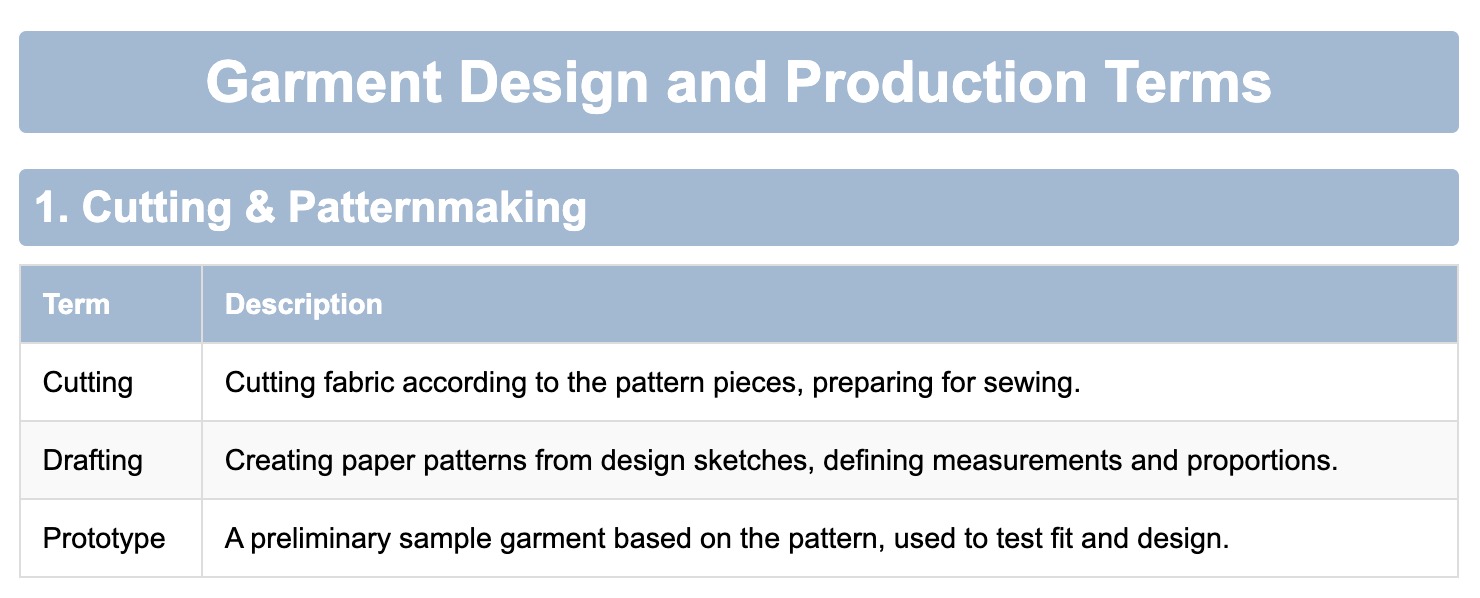
1. การตัดและการออกแบบลวดลาย
- การตัด: ขั้นตอนแรกของการเปลี่ยนชิ้นงานลวดลายให้เป็นชิ้นผ้าเพื่อเตรียมตัดเย็บ
- การร่าง: ขั้นตอนการทำลวดลายกระดาษจากแบบร่างการออกแบบเพื่อกำหนดขนาดและสัดส่วน
- ต้นแบบ: ชุดตัวอย่างเบื้องต้นตามรูปแบบ ใช้เพื่อทดสอบความพอดีและการออกแบบ

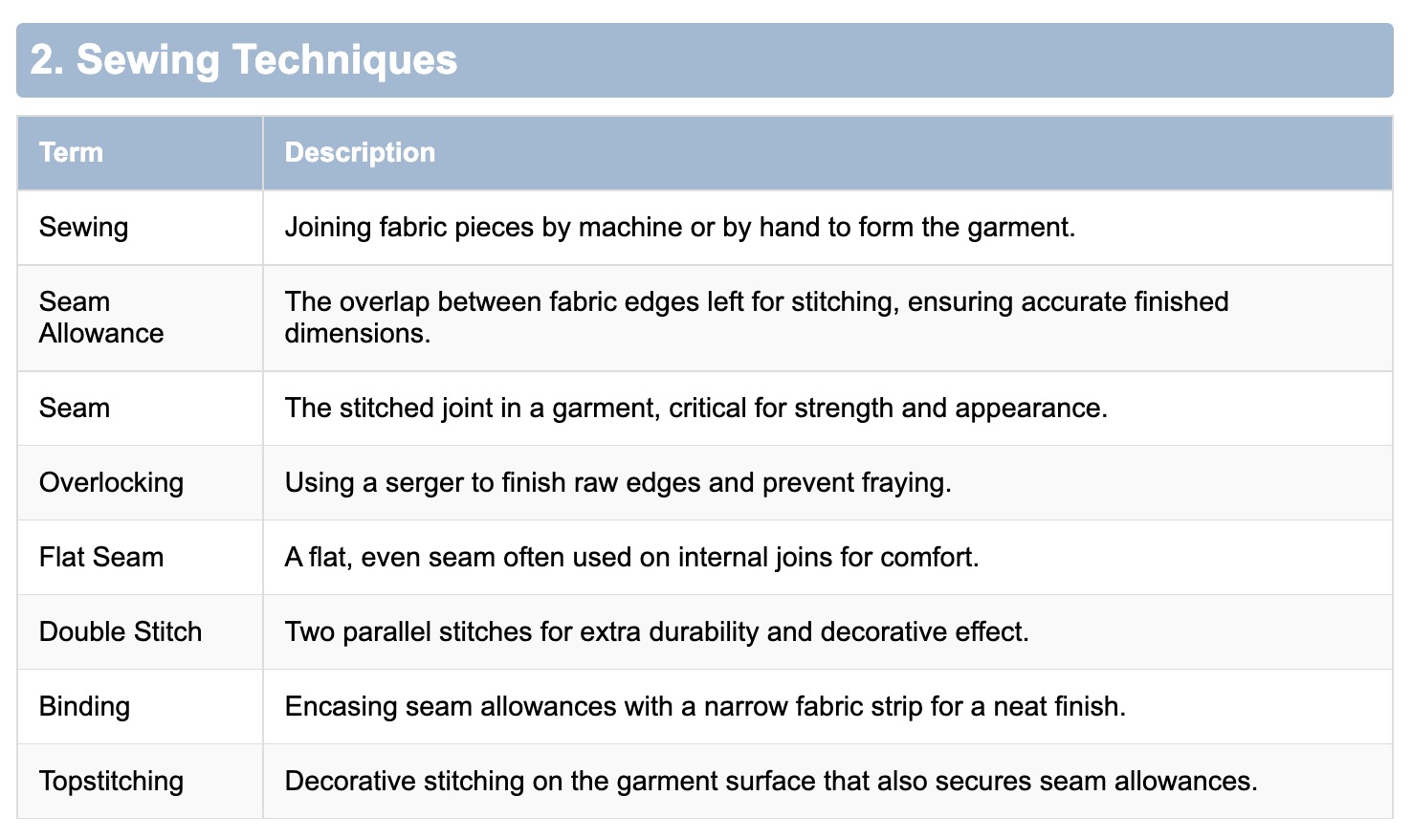
2. เทคนิคการตัดเย็บ
- เย็บผ้า: การเชื่อมผ้าเกิดขึ้นโดยใช้เครื่องจักรหรือมือเพื่อสร้างเสื้อผ้า
- ค่าเผื่อตะเข็บ: บริเวณที่ขอบผ้ามาบรรจบกันก่อนการเย็บจะรักษาขนาดที่แน่นอนของเสื้อผ้าสำเร็จรูป
- ตะเข็บ: รอยต่อเย็บในเสื้อผ้า มีความสำคัญต่อความแข็งแกร่งและรูปลักษณ์
- การโอเวอร์ล็อค: ใช้เลื่อยเพื่อตกแต่งขอบดิบและป้องกันการหลุดลุ่ย
- ตะเข็บแบน: ตะเข็บเรียบและสม่ำเสมอมักใช้กับข้อต่อภายในเพื่อความสบาย
- ตะเข็บคู่: เย็บแบบขนาน 2 เข็มเพื่อความทนทานและสวยงามเป็นพิเศษ
- การผูกมัด: หุ้มค่าเผื่อตะเข็บด้วยแถบผ้าแคบเพื่อความสวยงาม
- การเย็บตะเข็บด้านบน: การเย็บตกแต่งบนพื้นผิวเสื้อผ้าที่ยังเผื่อตะเข็บไว้ด้วย
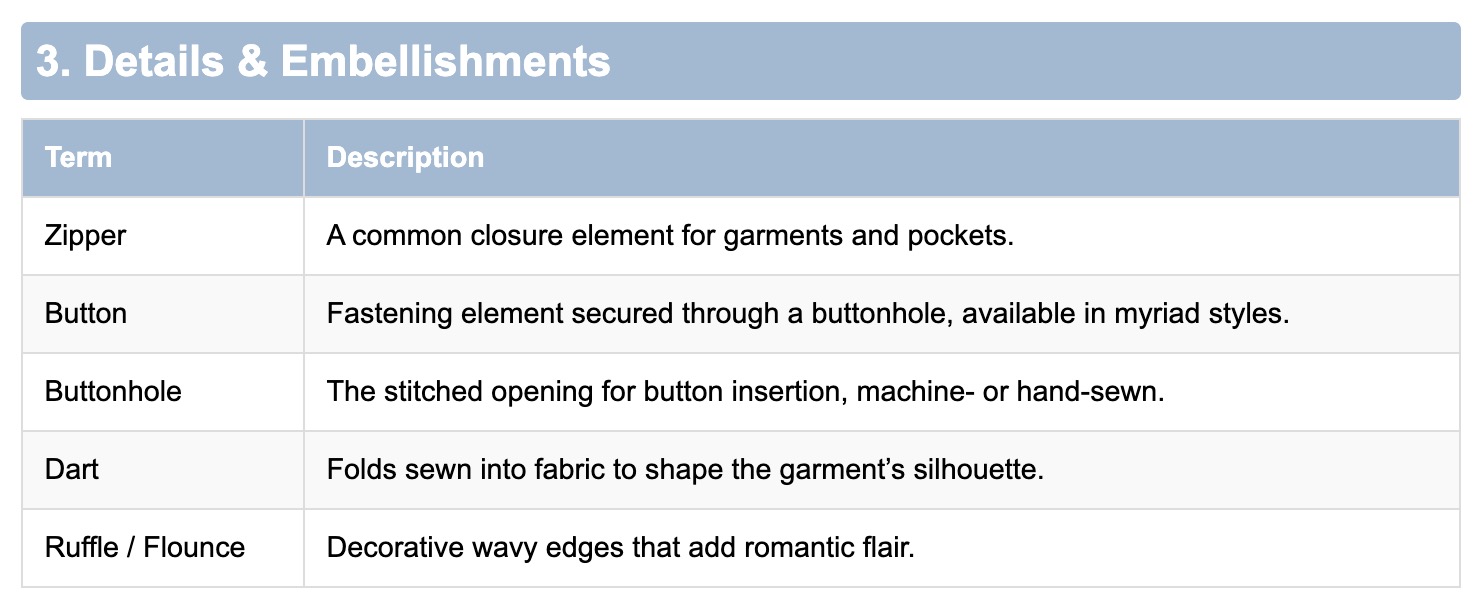
3. รายละเอียดและองค์ประกอบตกแต่ง
- ซิป: ส่วนปิดทั่วไปสำหรับเสื้อผ้าและกระเป๋า
- ปุ่ม: ส่วนยึดยึดด้วยรังดุม มีให้เลือกหลายสไตล์
- รังดุม: ช่องเย็บสำหรับติดกระดุม เย็บด้วยเครื่องจักรหรือเย็บด้วยมือ
- โผ: พับเย็บเข้ากับผ้าเพื่อสร้างรูปทรงของเสื้อผ้า
- นัวเนีย/สะบัด: ตกแต่งขอบหยักเพิ่มความโรแมนติก
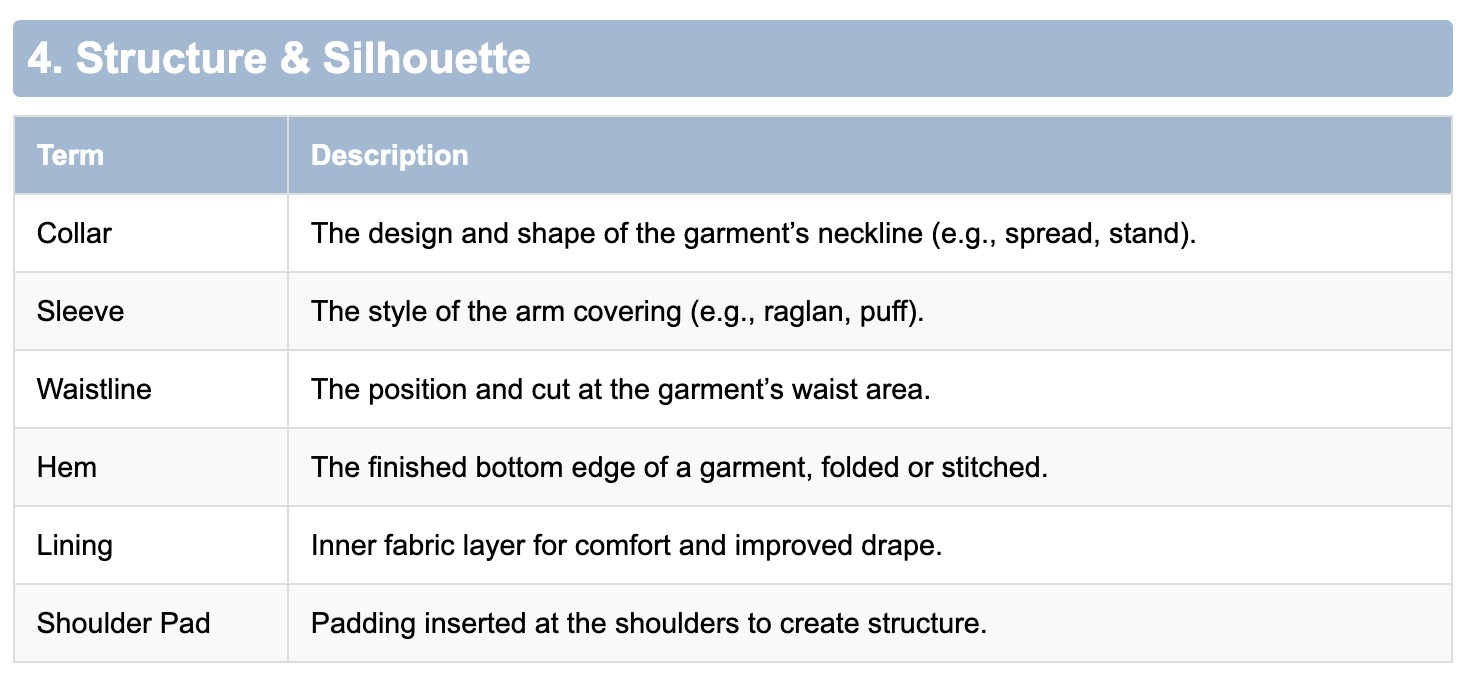
4. โครงสร้างและรูปร่างโดยรวม
- ปกเสื้อ: การออกแบบและรูปทรงของคอเสื้อ (เช่น กางออก ยืน)
- แขนเสื้อ: ลักษณะการคลุมแขน (เช่น แร็กแลน พัฟ)
- รอบเอว: ตำแหน่งและการตัดบริเวณเอวของเสื้อผ้า
- เฮ็ม: ขอบด้านล่างของเสื้อผ้าที่เสร็จแล้ว พับหรือเย็บ
- ซับใน: ชั้นผ้าด้านในเพื่อความสบายและการเดรปที่ดีขึ้น
- แผ่นรองไหล่: เสริมนวมบริเวณไหล่เพื่อสร้างโครงสร้าง
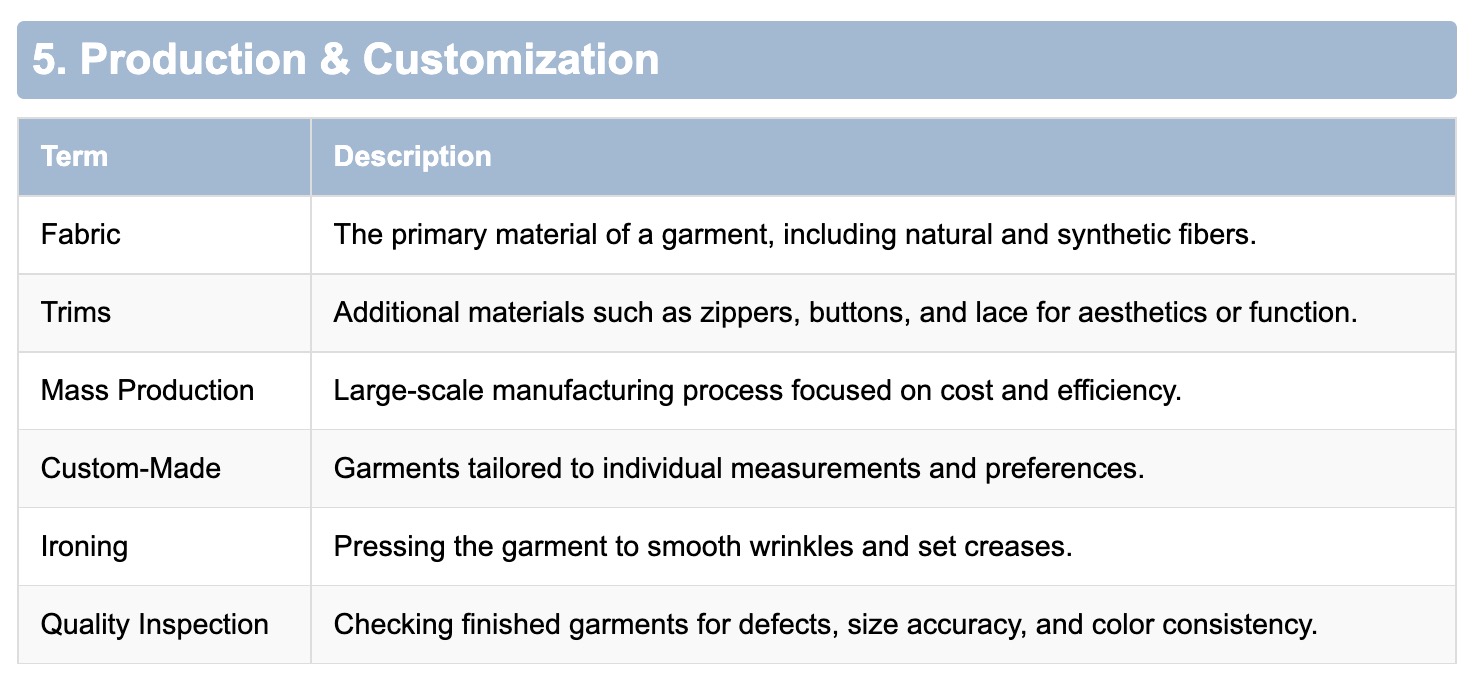
5. การผลิตและการปรับแต่งตามความต้องการ
- ผ้า: วัสดุหลักของเสื้อผ้า รวมถึงเส้นใยธรรมชาติและเส้นใยสังเคราะห์
- อุปกรณ์ตกแต่งรถ: วัสดุเพิ่มเติม เช่น ซิป กระดุม และลูกไม้เพื่อความสวยงามหรือการใช้งาน
- การผลิตจำนวนมาก: กระบวนการผลิตขนาดใหญ่เน้นต้นทุนและประสิทธิภาพ
- สั่งทำพิเศษ: เสื้อผ้าที่ออกแบบให้เหมาะกับขนาดและความชอบส่วนบุคคล
- การรีดผ้า: การรีดเสื้อผ้าเพื่อทำให้รอยยับเรียบเนียนและทำให้รอยยับจางลง
- การตรวจสอบคุณภาพ: การตรวจสอบเสื้อผ้าสำเร็จรูปเพื่อหาข้อบกพร่อง ความถูกต้องของขนาด และความสม่ำเสมอของสี
บริการปรับแต่งโดย LYDENIM
🎨 อยากได้ ผ้าเดนิมที่กำหนดเอง หรือ ไม่ซ้ำกัน เสื้อผ้าเดนิมที่กำหนดเอง? LYDENIM เชี่ยวชาญด้านโซลูชันที่ออกแบบเฉพาะเพื่อตอบสนองความต้องการด้านการออกแบบและการผลิตของคุณ
🛍️ สำรวจและหาแรงบันดาลใจกันเถอะ!: เลือกดูผ้าที่เราคัดสรรและค้นพบแนวคิดการออกแบบได้ที่ ลีเดนิม.
🌐 เสื้อผ้ายืดหยุ่น: ตรวจสอบข้อเสนอของเราได้ที่ อาลีบาบาของฉัน. 📩 ติดต่อเรา: ติดต่อได้ที่ Malone@lydenim.com.
สร้างสรรค์ผลงานเดนิมชิ้นเอกของคุณด้วย LYDENIM ซึ่งเป็นพันธมิตรที่คุณไว้วางใจ ผ้ายืด และ โซลูชั่นเดนิมแบบกำหนดเอง.
คำถามที่พบบ่อย
สามารถปรับแต่งให้เหมาะกับแบรนด์หรือคอลเลกชันของฉันได้หรือไม่?
ใช่ ส่งใบสมัคร รูปภาพอ้างอิง คุณภาพเป้าหมาย ปริมาณ และข้อกำหนดของตลาด เพื่อให้ซัพพลายเออร์สามารถแนะนำตัวเลือกผ้า เครื่องแต่งกาย หรือการตกแต่งที่เหมาะสมได้
ฉันควรส่งข้อมูลอะไรบ้างก่อนที่จะขอใบเสนอราคา?
จัดเตรียมประเภทผลิตภัณฑ์ ผ้าหรือเทคนิคเป้าหมาย ทิศทางสี ความต้องการตัวอย่าง ปริมาณ ประเทศปลายทาง และระยะเวลารอคอยสินค้าที่คาดหวัง
ฉันควรขอตัวอย่างก่อนการผลิตจำนวนมากหรือไม่
ใช่ ตัวอย่างและระยะตัวอย่างจะช่วยลดความเสี่ยงก่อนสั่งซื้อจำนวนมาก โดยเฉพาะอย่างยิ่งเมื่อคุณภาพสี ความรู้สึกทางมือ การยืด พื้นผิว หรือการตกแต่งมีความสำคัญ
ฉันจะหลีกเลี่ยงปัญหาด้านคุณภาพในคำสั่งซื้อจำนวนมากได้อย่างไร
อนุมัติมาตรฐานตัวอย่างที่ชัดเจน กำหนดข้อกำหนดในการทดสอบ ยืนยันความคลาดเคลื่อน และเปรียบเทียบผลผลิตจำนวนมากกับตัวอย่างที่ได้รับอนุมัติก่อนจัดส่ง
ต้องการความช่วยเหลือในการเปลี่ยนสิ่งนี้ให้เป็นบรีฟการจัดหาที่พร้อมสำหรับการผลิตหรือไม่
ส่งสินค้าเป้าหมายของคุณ ทิศทางผ้า ปริมาณ และความต้องการตัวอย่าง LY Denim สามารถช่วยเปรียบเทียบตัวเลือกและเตรียมใบเสนอราคาได้