


A quick read: ~5 minutes
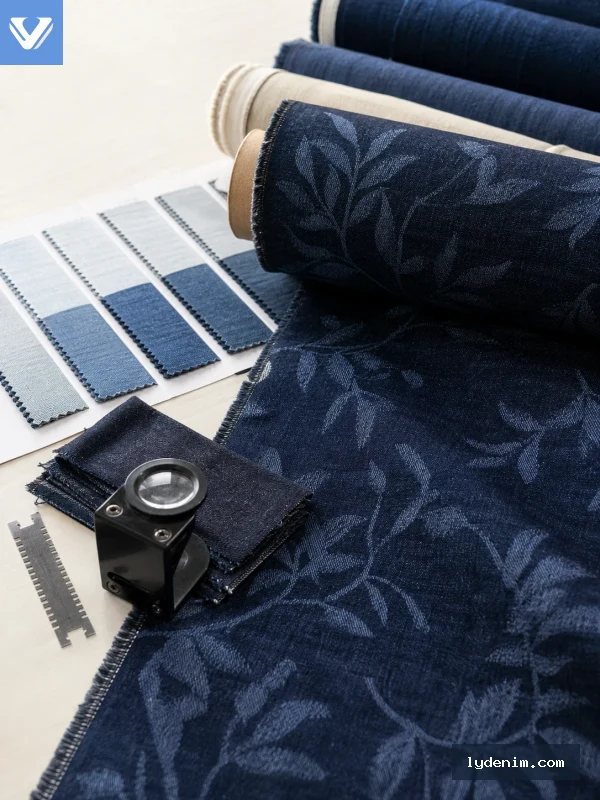
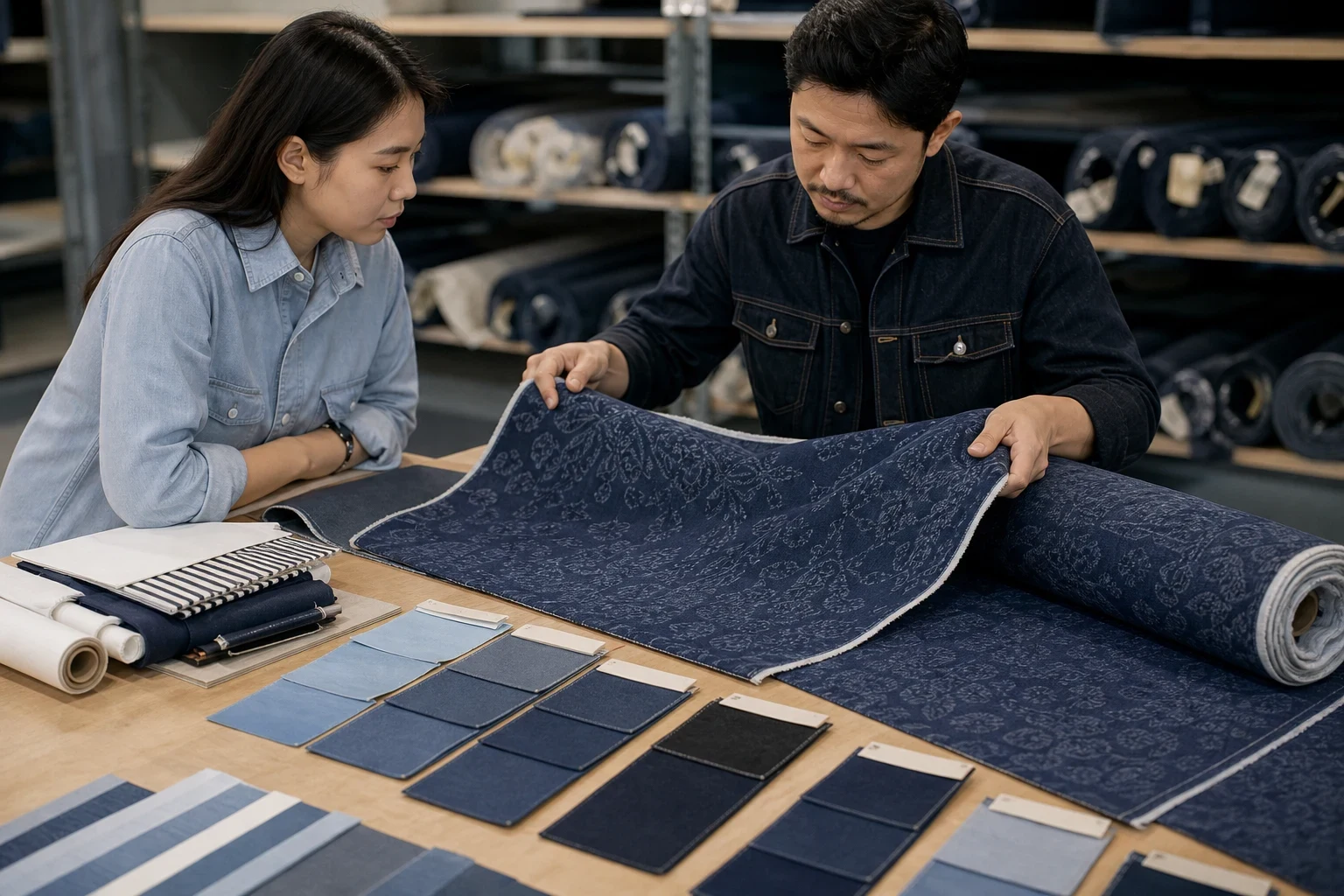
Jacquard denim samples should be approved with more discipline than ordinary novelty swatches. Because the pattern is structural, small mistakes in repeat, direction, stretch, or finishing can turn into expensive bulk problems. The approval goal is not simply to sign off on a beautiful sample. The goal is to confirm that the approved sample can survive cutting, sewing, washing, and bulk repetition.
What to know before you choose
- Approve jacquard denim in garment context, not from a flat swatch alone
- Repeat control and shrinkage are often harder to recover than color issues
- Stretch denim jacquard needs extra review because elongation can blur motif clarity
- One approved swatch is not enough; keep a wash standard and a panel or garment-context reference too
Approval Goal and Signoff Package
A complete signoff package should include:
- one approved swatch or strike-off
- one approved wash standard if the fabric will be finished after weaving
- one panel, half-garment layout, or proto sample showing product context
- written notes on repeat tolerance, shade tolerance, and any seam-matching expectation
Without this package, the factory may reproduce the idea of the sample while still missing the actual approval standard.
Checklist 1: Repeat Accuracy
Confirm:
- repeat size matches the development brief
- pattern direction is clearly marked as one-way or non-directional
- motif edges remain readable and do not collapse in fine details
- garment placement will not create awkward interruptions on side seams, yokes, pockets, or center fronts
What to record:
- approved repeat width and height
- whether matching is required on any garment panel
- whether marker direction is restricted in cutting
Checklist 2: Shade and Contrast
Check:
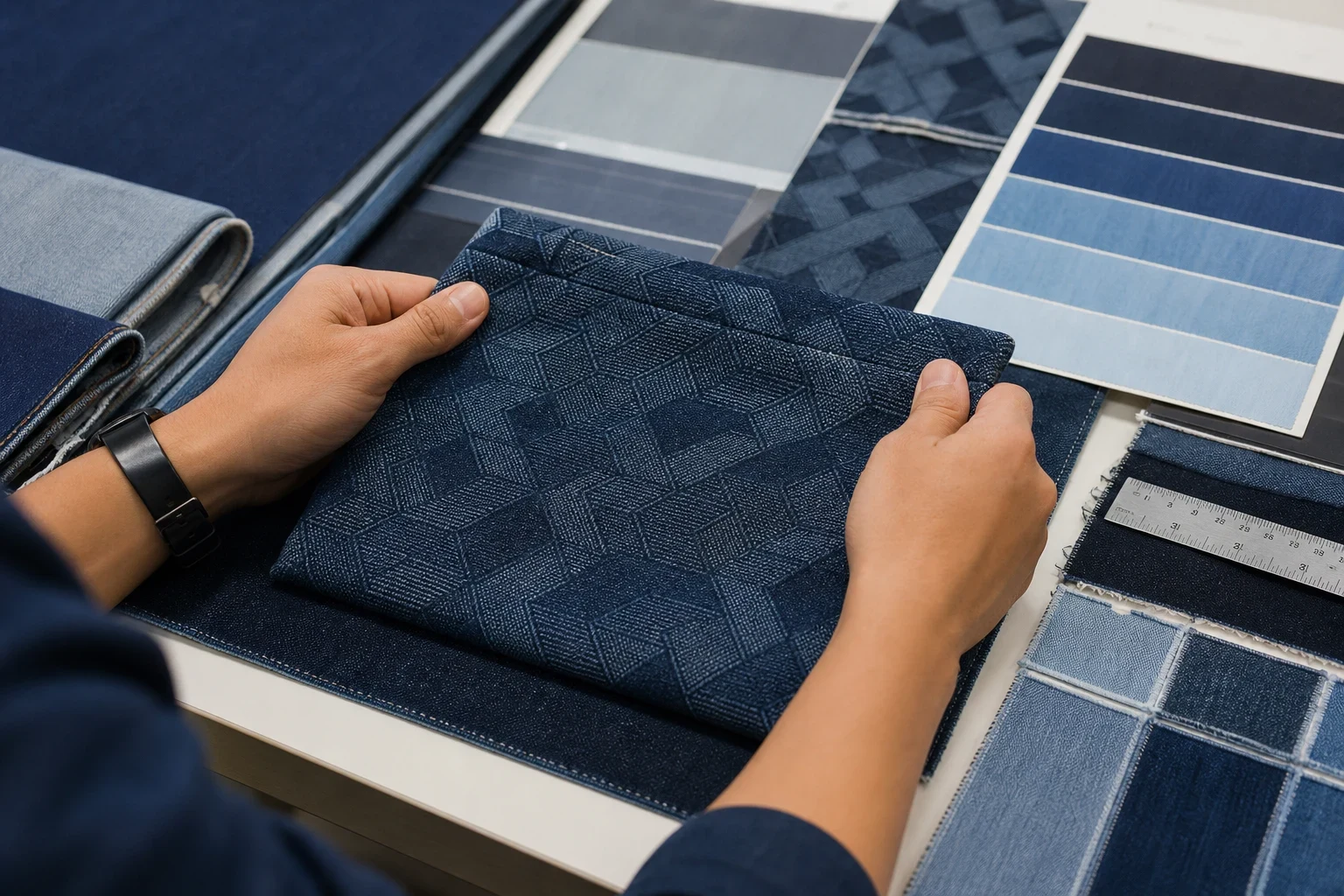
- indigo depth and base tone
- contrast between ground and motif yarns
- consistency under natural light, indoor light, and light-box review
- whether the intended washing softens the design too much
Shade is not just a color issue here. If the contrast drops too far after finishing, the pattern can lose its commercial value even if the weaving quality is acceptable.
Checklist 3: Stretch and Recovery
If the construction uses stretch, check:
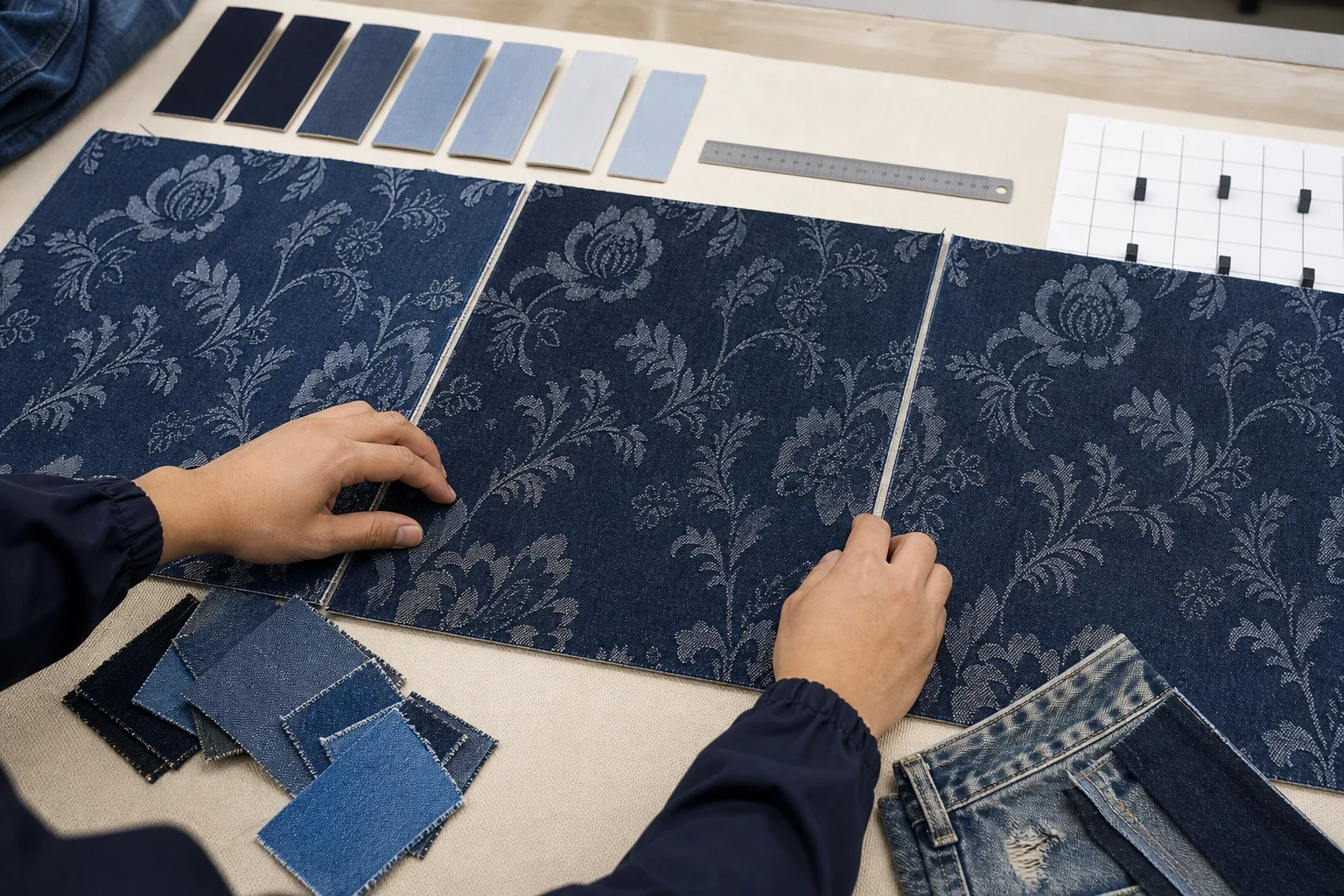
- whether elongation distorts the motif geometry
- whether recovery brings the pattern back cleanly
- whether the final use category still makes sense once the fabric is under tension
- whether seam areas show extra motif distortion after sewing
This matters especially for fitted skirts, fashion denim bottoms, and lighter jacquard programs where the pattern needs to remain sharp on body movement.
Checklist 4: Shrinkage and Wash Behavior
This is the point buyers most often under-check. Test:
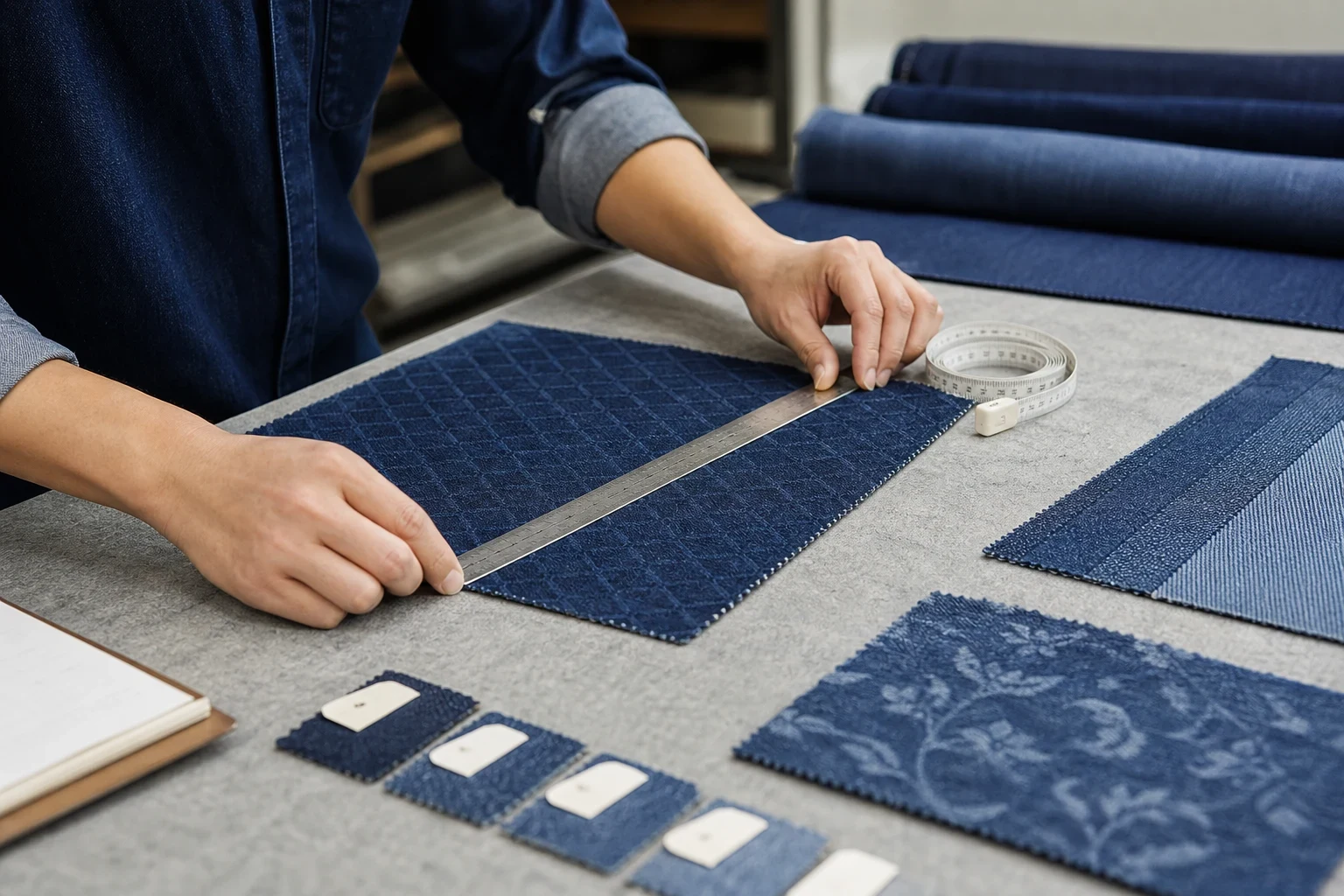
- warp shrinkage
- weft shrinkage
- torque or skew
- motif clarity after washing
- handfeel change after finishing
- any edge blurring or scale shift that affects garment balance
Many jacquard issues become visible only after washing. If the approved swatch was reviewed only in unwashed condition, the approval is incomplete.
Checklist 5: Seam Matching and Garment Context Review
Do not stop at flat fabric. Approve one of these before bulk:
- sewn panel mockup
- half-garment layout
- real proto sample
This is the easiest way to catch:
- seam mismatch
- directional placement problems
- yoke or pocket interruption
- disproportionate repeat scale once the fabric is placed on the actual silhouette
If the product story depends on visual continuity, a swatch-only approval is too weak.
Checklist 6: Handfeel and End-Use Suitability
A jacquard can be technically correct and still be wrong for the product. Review:
- whether the handfeel is too stiff or too soft for the target category
- whether back-side floats create snagging risk on unlined garments
- whether the fabric weight still supports the intended fit and silhouette
- whether the finished sample still feels commercially aligned with the collection position
This step protects the buyer from approving an effect that looks premium but wears poorly in the final product.
Checklist 7: Bulk Reference Lock
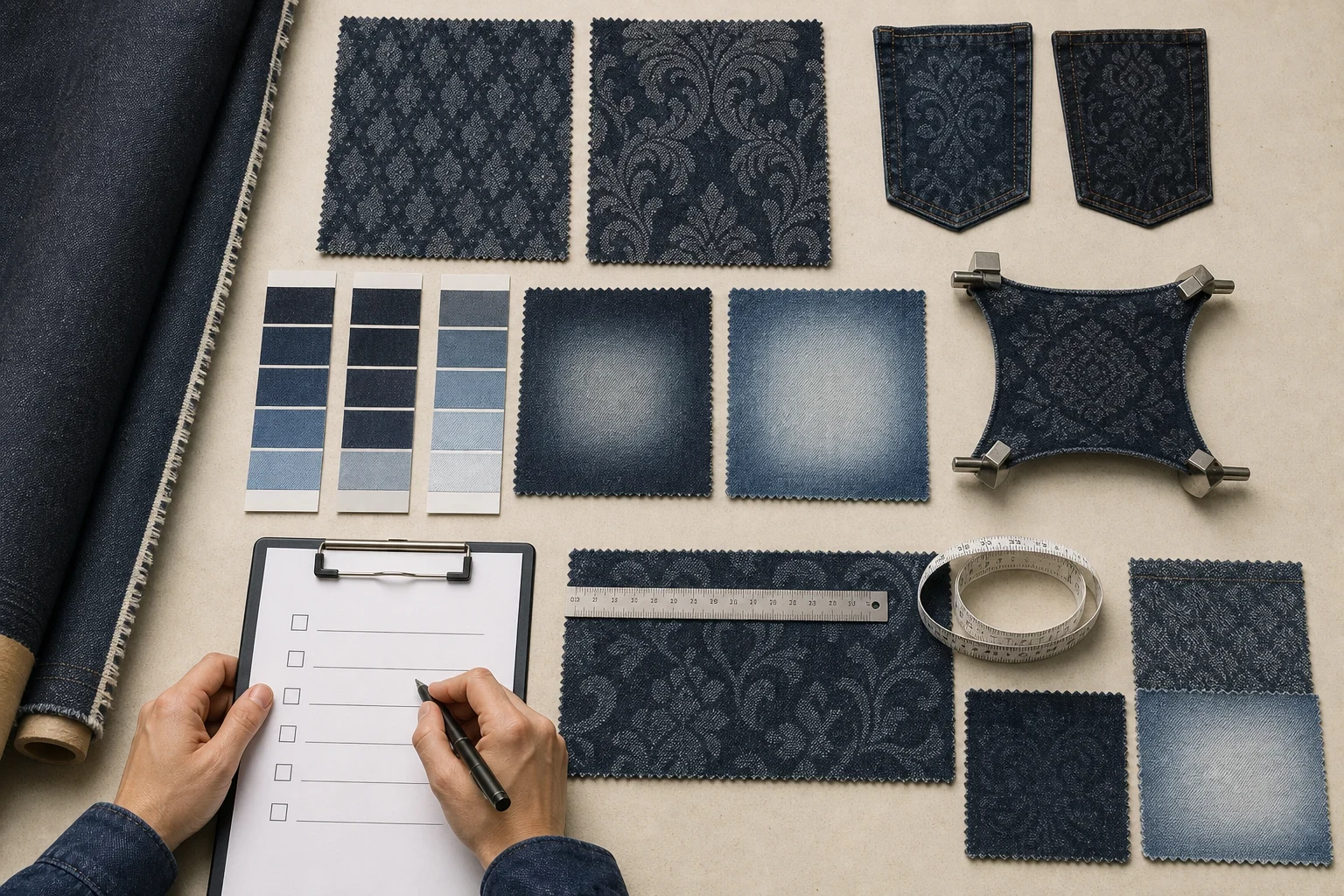
Keep these references before bulk starts:
- one approved swatch
- one approved wash standard
- one approved garment-context reference
- one written tolerance note for repeat, shade, and shrinkage
If possible, label these references by date and program name so production, merchandisers, and QC are all working from the same target.
Supplier Questions Before PP Approval
Ask the supplier:
- What repeat tolerance should we expect in bulk for this design?
- Will the pattern shift after the intended wash, and by how much?
- Which garment panels require controlled matching and which do not?
- How do you manage shade consistency across bulk lots for this jacquard?
- Are there any back-side float or snagging concerns for this construction?
- If we adjust the base denim slightly, which approval points need to be reopened?
Common Signoff Mistakes
The weakest jacquard approvals usually fail for one of these reasons:
- approving from digital artwork or CAD only
- checking color but not repeat and placement logic
- washing the fabric but not reviewing it in garment context
- changing the base denim after approval without re-testing the pattern
- assuming seam matching will be solved later by the factory
A stricter approval process costs less than a bulk remake.
FAQ
Why is swatch-only approval risky?
Because jacquard may look good flat but fail once cut, sewn, or washed. Real garment context reveals placement, direction, and seam issues much earlier.
Should every jacquard sample be garment-tested?
For serious production orders, yes. Even a panel mockup is better than approving from fabric alone.
What matters most: color or repeat?
Both matter, but repeat control is often harder to recover later. A perfect shade cannot fix a motif that fails once placed on the garment.
When should a buyer reopen approval?
Reopen approval when the base construction changes, the wash route changes, or the product category changes enough to affect stretch, repeat, or placement logic.
Conclusion
The strongest jacquard approval process combines technical checks with product-context review. Confirm repeat, shade, stretch, shrinkage, and garment placement before the program moves to bulk. That is what protects the buyer when the fabric looks strong in development but still needs to survive real production.
Thinking about a custom version?
🎨 Custom Design
Design your own fabric collection or garment with LYDENIM’s premium materials. From luxurious cotton blends to innovative eco-friendly textiles, explore colors, weaves, and finishes that match your brand’s product direction. Visit LYDENIM to learn more.
🛍️ Tailored Garment Solutions
Bring your designs to life with custom garment services. Whether you are developing jeans, denim jackets, skirts, workwear, or small-batch fashion collections, LYDENIM can support fit, comfort, durability, and production planning. Explore customization options on My Alibaba.
📩 Get in Touch
Have a project in mind? Contact our team at malone@lydenim.com to discuss custom fabrics, garment design, low-MOQ sampling, or sustainable textile solutions.
Need help turning this into a production-ready sourcing brief?
Send your target product, fabric direction, quantity and sample needs. LY Denim can help compare options and prepare a quote.