


Estimated reading time: ~6 minutes
Textured jacquard denim sounds straightforward, but “textured denim” is not one construction. Texture can come from yarn character, jacquard weave, finishing, or a combination of all three. Buyers who do not identify the true source of the texture often compare fabrics that are not actually comparable on durability, wash behavior, price, or handfeel.
That is why a textured jacquard denim program should begin with diagnosis. Is the surface depth created by the weave itself, by slub or nep yarn character, by an applied finish, or by a hybrid structure? The answer determines what kind of garment the fabric suits and what kind of quality control it will need in bulk.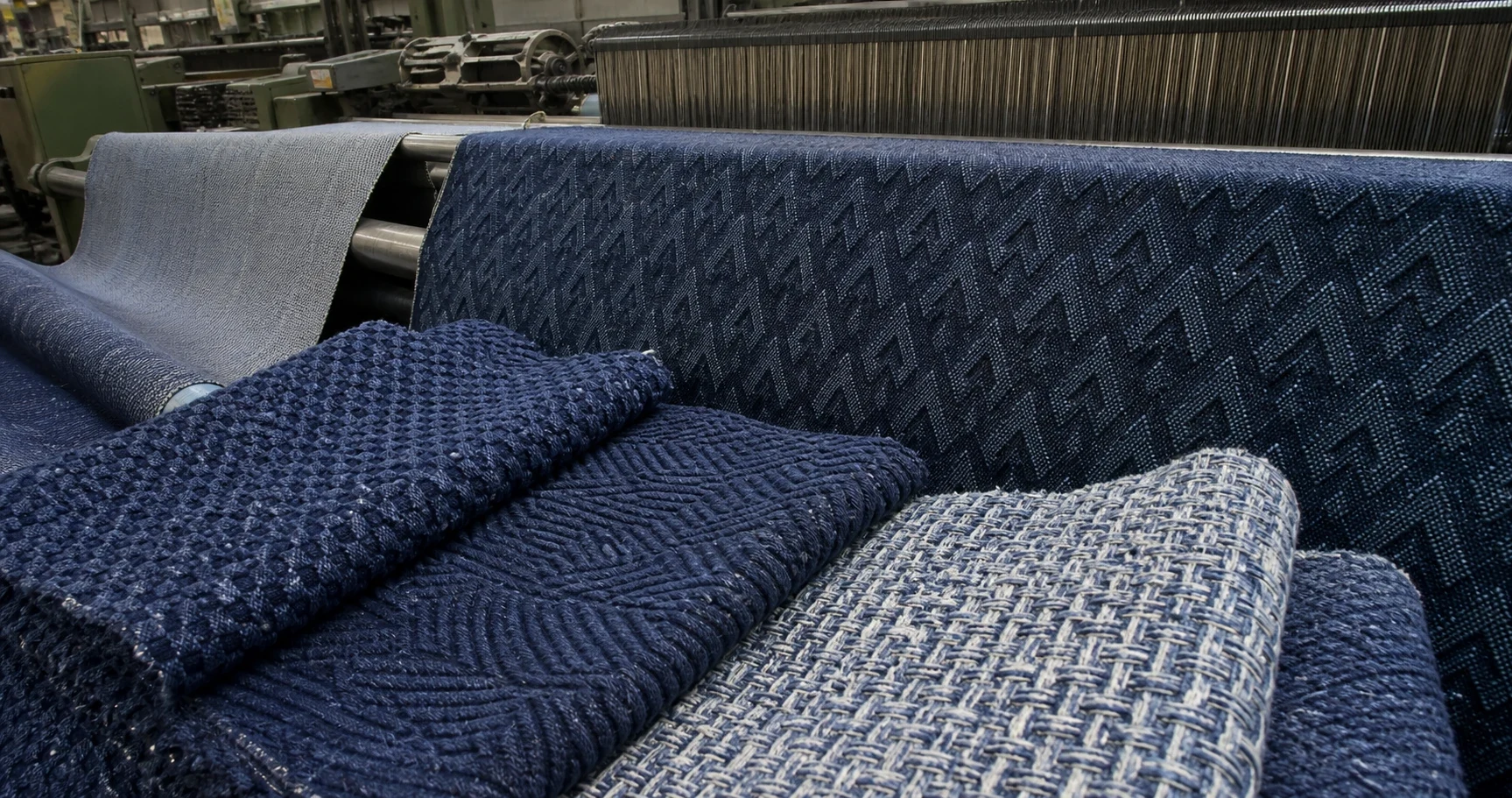
Buyer Summary
- Textured jacquard denim creates surface depth through woven structure, but buyers should distinguish it from yarn-texture and finish-texture stories.
- Relief depth, handfeel, weight, stretch, and drape should be selected together rather than one by one.
- Textured jacquard is not the same as slub, neps, flocking, embossing, or coating.
- Wash, abrasion, pilling, snagging, and shrinkage matter because surface character can change quickly after finishing.
- Sample approval should define a repeatable physical standard, not only a visual reference.
What Textured Jacquard Denim Is
Textured jacquard denim uses weave structure to create visible or tactile relief in the denim surface. The texture may be subtle and tonal or more pronounced and sculptural, but it is built into the cloth rather than added only as a top finish. That makes it attractive for buyers who want a richer denim story without relying solely on print or coating.
From a sourcing viewpoint, textured jacquard should be evaluated by what causes the texture, how stable it is after wash, and whether the end garment really benefits from that relief. The texture may look premium on a swatch but become too rough, too flat, or too fragile if the application is not matched correctly.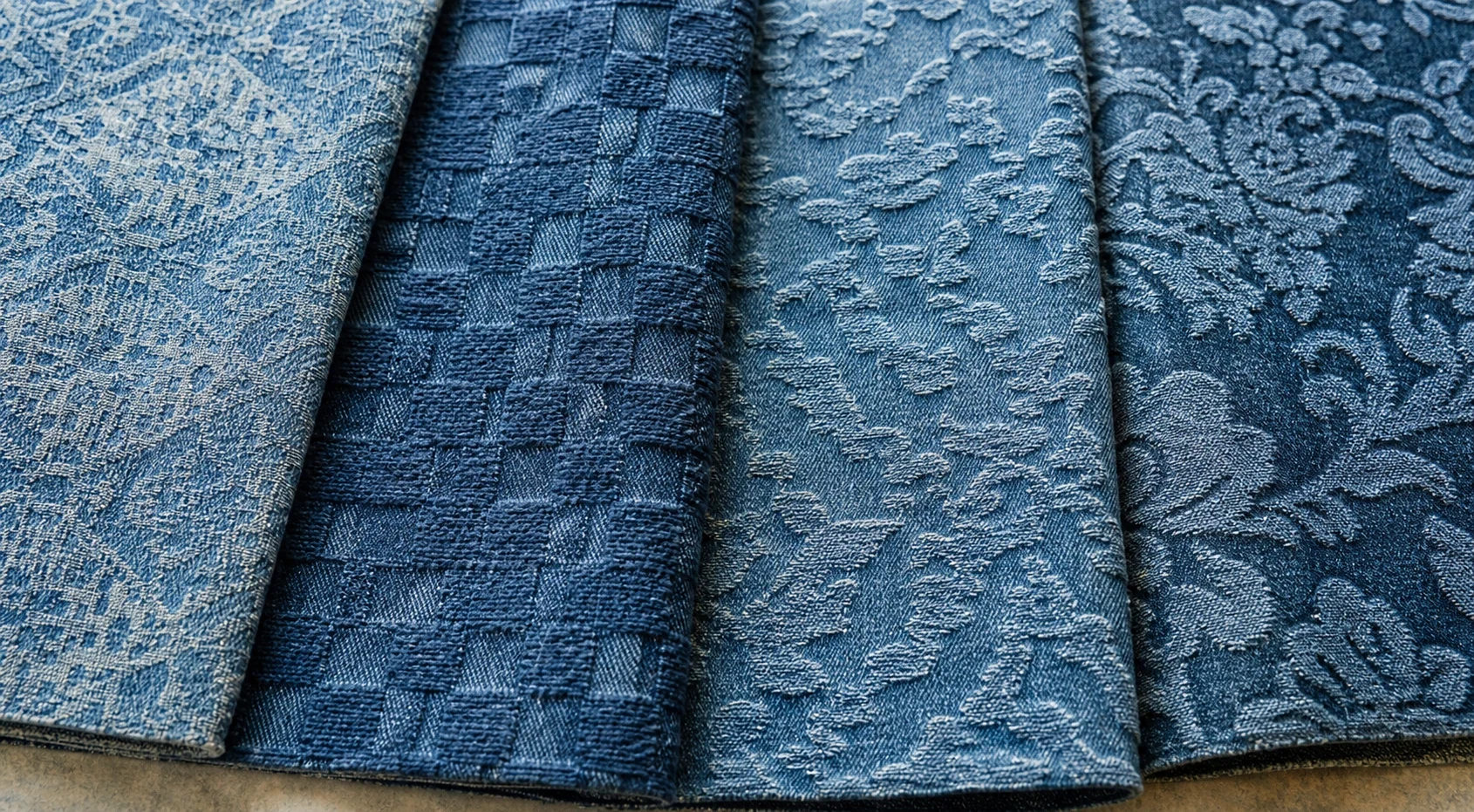
Yarn Texture vs Weave Texture vs Finish Texture
The easiest way to avoid confusion is to separate the texture source.
| Texture source | What creates it | Typical buyer question |
|---|---|---|
| Yarn texture | Slub, nep, irregular yarn character | Is the texture coming from the yarn itself? |
| Weave texture | Jacquard structure, relief, raised zones | Is the surface depth built into the construction? |
| Finish texture | Coating, embossing, surface treatment | Will the texture survive wash and abrasion? |
Textured jacquard sits primarily in the weave-texture category. It may still interact with yarn character or finishing, but the buyer should know which layer is doing the real work. That is the only way to compare supplier offers honestly.
Textured Jacquard vs Slub, Neps, Flocking, Embossing, and Coating
| Construction | Main advantage | Main caution |
|---|---|---|
| Textured jacquard denim | Structural relief and woven depth | Relief stability must be tested |
| Slub denim | Natural irregular character | Less controlled pattern logic |
| Nep denim | Speckled or broken texture | Can read more rustic than engineered |
| Flocking | Strong surface contrast | Adhesion and wear questions |
| Embossing | Immediate visual relief | Surface effect may flatten over time |
| Coating | Strong fashion effect | Handfeel and durability can shift quickly |
Buyers should avoid saying “textured denim” when they really mean one of these specific routes. A sourcing brief becomes stronger when it names the construction clearly.
Choosing Relief Depth, Weight, Stretch, and Drape
Relief depth changes how the fabric behaves in the garment. A lighter surface texture may support shirts, skirts, and cleaner fashion garments. Deeper relief can create a stronger statement, but it can also change seam bulk, abrasion exposure, and drape.
Use a selection table like this:
| Goal | Better direction | Why |
|---|---|---|
| Subtle premium texture | Moderate jacquard relief | Easier to commercialize across categories |
| Strong surface identity | More pronounced relief | Better for statement pieces and hero fabrics |
| Softer garment drape | Controlled weight and lower relief | Prevents texture from feeling stiff |
| More stable structure | Medium-heavy denim base | Helps the surface stay visually defined |
Stretch should also be approved carefully. Added elasticity may improve comfort, but it can soften the look of a textured surface if recovery is not stable.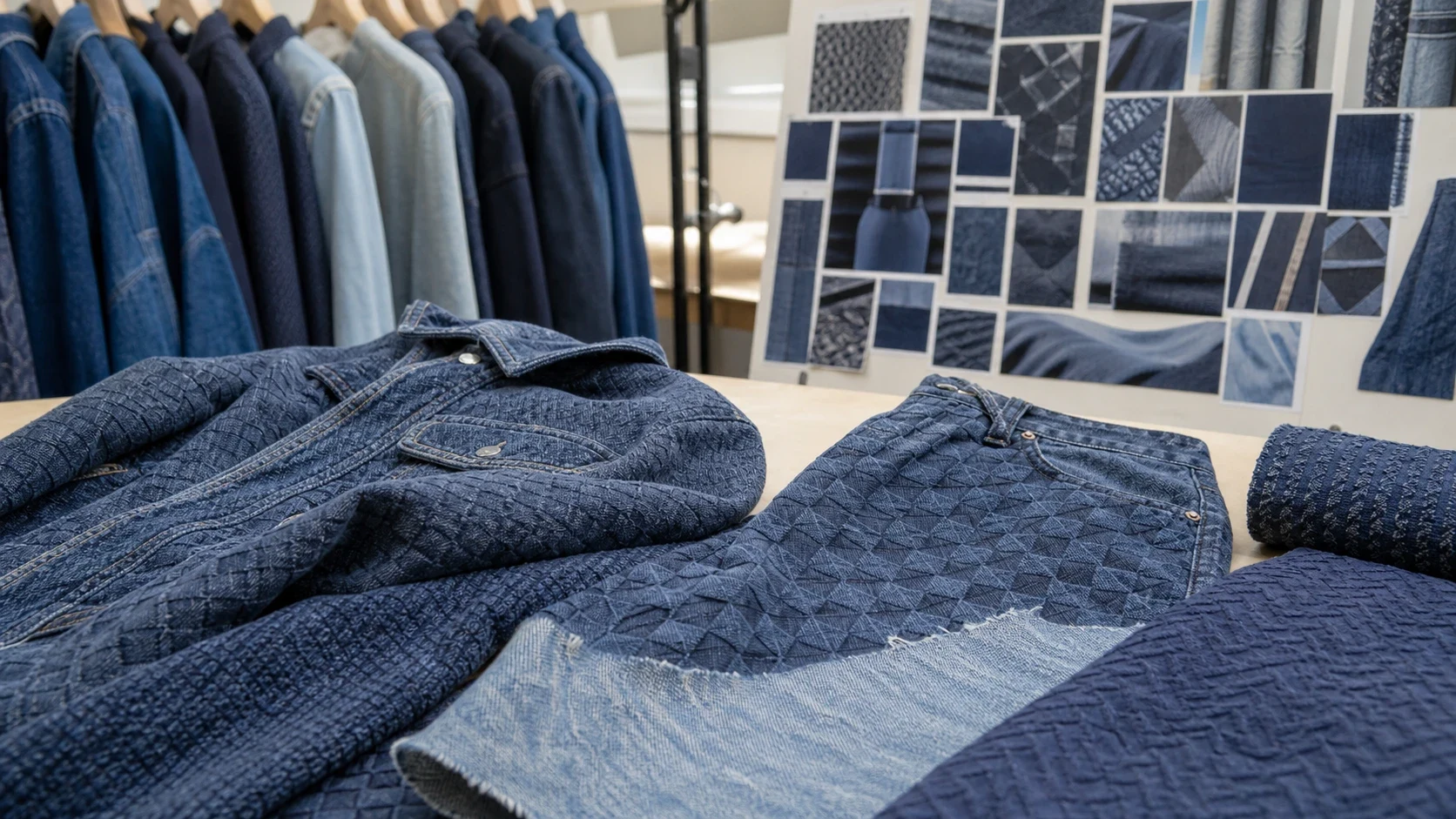
Wash Behavior, Snagging, Abrasion, and Pilling
Textured jacquard must be checked after the intended wash route, not before only. Buyers should review:
- whether relief depth stays visible
- whether the face becomes fuzzy or pills
- whether abrasion flattens key areas too quickly
- whether snagging is likely on raised structures
- whether shrinkage changes the texture balance
The correct test plan depends on the garment use. An overshirt, skirt, and pair of denim bottoms will not place the same stress on the surface.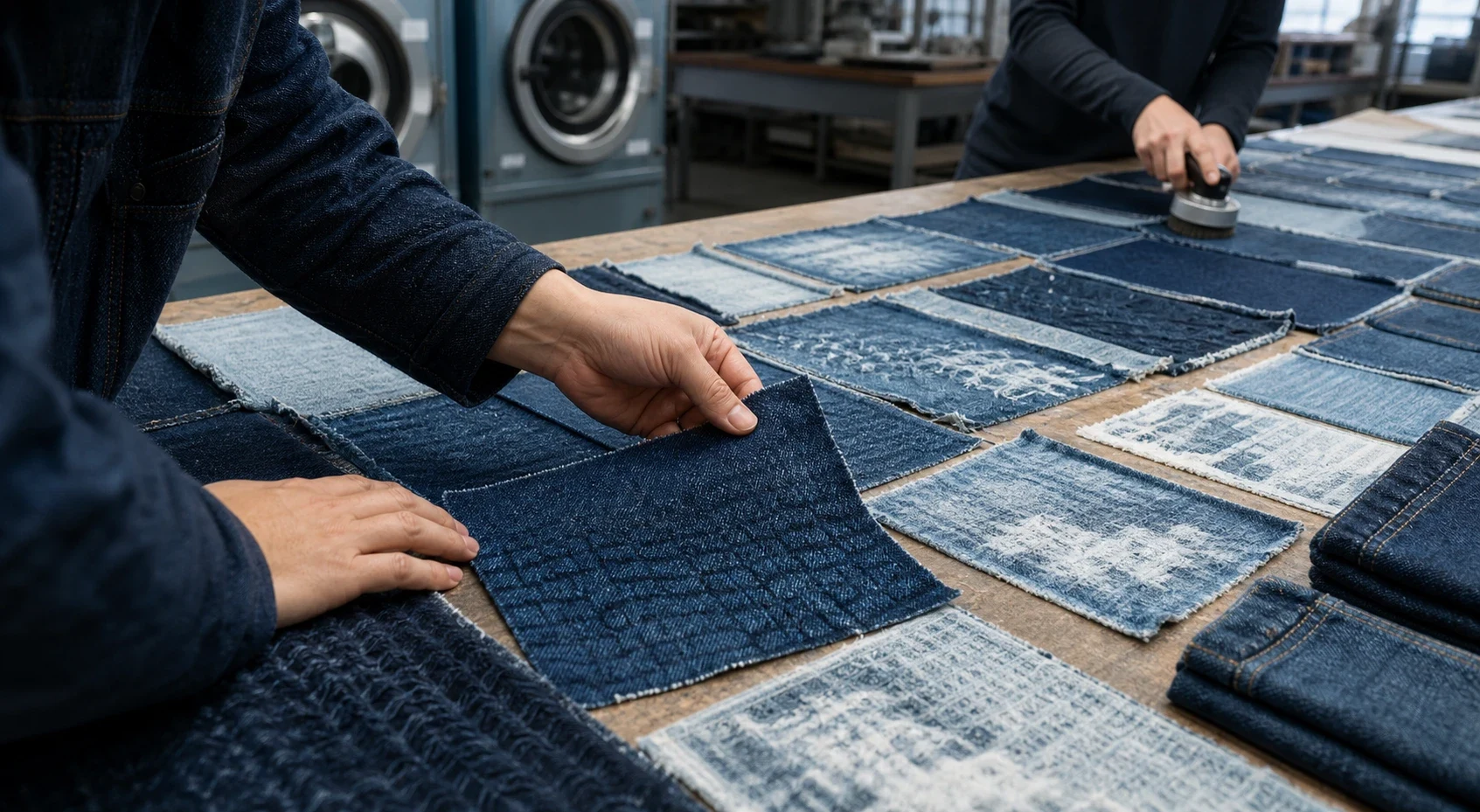
Physical Sample and Bulk QC Checklist
Before approving bulk, confirm:
- the buyer and supplier agree on what creates the texture
- the target handfeel is described in words, not only images
- the relief remains commercially acceptable after wash
- abrasion and pilling tests match the intended end use
- bulk variation tolerance is clear for relief, shade, and texture visibility
It is also useful to record the approval standard using both physical sample and controlled-light photos. Texture is easier to misunderstand than flat color.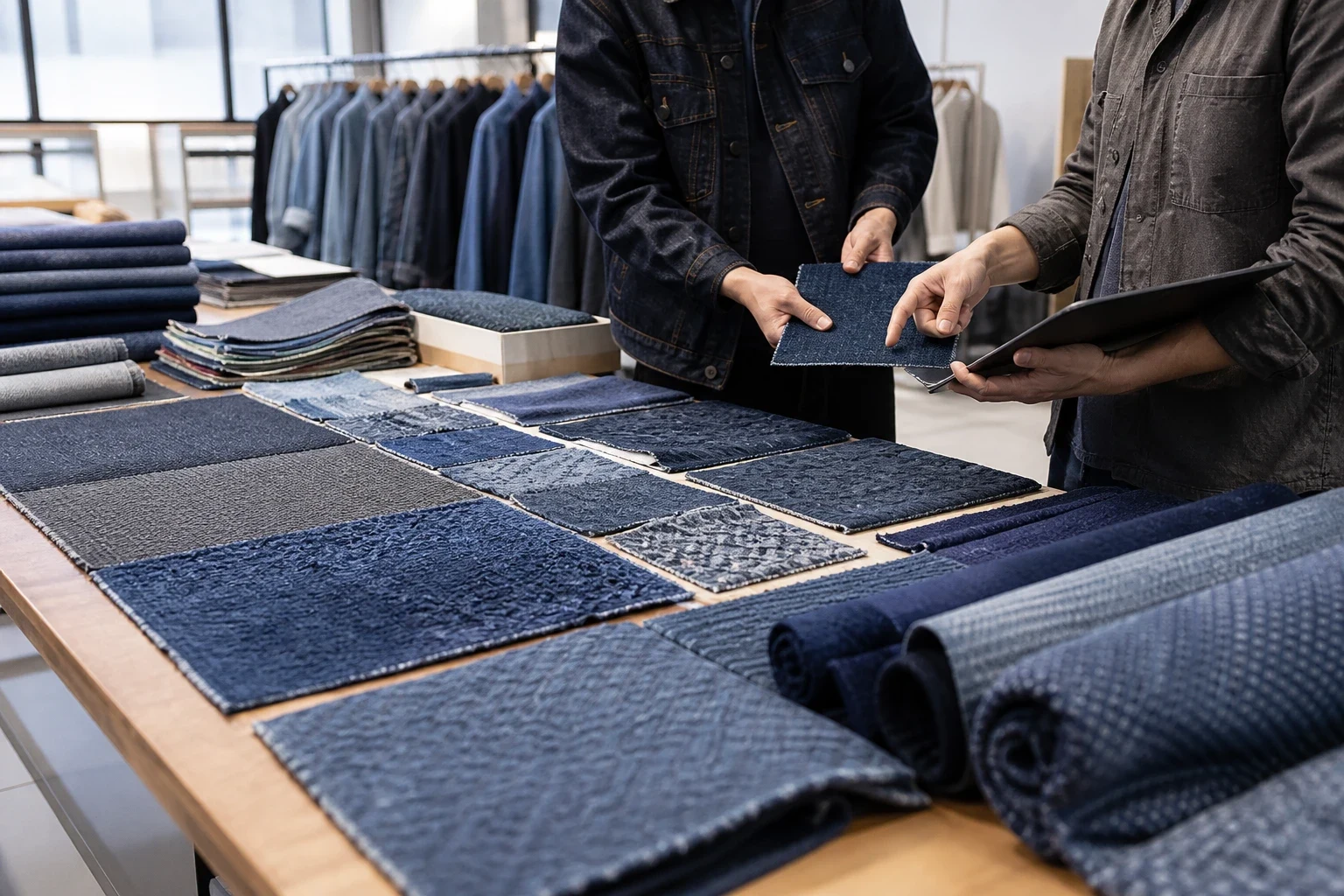
FAQ
Is textured jacquard denim the same as slub denim?
No. Slub texture comes mainly from yarn irregularity, while textured jacquard relies primarily on woven structure to build relief and pattern depth.
Does more texture always mean better premium value?
Not necessarily. Stronger relief can improve visual impact, but it may also increase snagging, abrasion, or stiffness. The right level depends on the garment and customer expectation.
Why should buyers avoid approving from photos alone?
Because photos cannot fully describe handfeel, relief depth, pilling tendency, or abrasion behavior. Physical sample approval is still important.
What should an RFQ include?
Application, desired relief, handfeel target, weight, stretch need, wash route, quantity, and market. Those are the details that help suppliers choose the correct construction.
LYDENIM Jacquard Product Reference
Use these textured first-party references to compare relief depth, handfeel, and the QC tradeoffs that matter before the buyer approves the final bulk route.
Premium 1001
- Why it is relevant: This is an exact textured reference for raised handfeel and a clean surface structure inside the textured jacquard family.
- Buyer should compare or confirm: Confirm relief depth, snagging risk, and whether the texture level fits jacket, jeans, skirt, or lighter fashion programs.
Premium 1002
- Why it is relevant: This is an exact textured reference for a second texture route when buyers are comparing face definition and drape response.
- Buyer should compare or confirm: Confirm handfeel consistency, stretch response, and whether the surface still reads premium after wash and finishing.
Embossed Texture 53326
- Why it is relevant: This is an exact textured reference for stronger embossed-style surface interest within the textured jacquard denim family.
- Buyer should compare or confirm: Confirm abrasion or pilling tolerance, texture retention after finishing, and whether the fabric becomes too stiff or visually noisy for the brief.
Conclusion
Textured jacquard denim becomes much easier to source once the buyer identifies what is creating the texture and what the garment really needs from it. Relief, handfeel, wash behavior, and durability should be approved as one package. When that standard is clear, the fabric can move from attractive swatch to repeatable bulk article with fewer surprises.
Customization Services by LYDENIM
🎨 Custom Design
Design your own fabric collection or garment with LYDENIM’s premium materials. From luxurious cotton blends to innovative eco-friendly textiles, explore colors, weaves, and finishes that match your brand’s product direction. Visit LYDENIM to learn more.
🛍️ Tailored Garment Solutions
Bring your designs to life with custom garment services. Whether you are developing jeans, denim jackets, skirts, workwear, or small-batch fashion collections, LYDENIM can support fit, comfort, durability, and production planning. Explore customization options on My Alibaba.
📩 Get in Touch
Have a project in mind? Contact our team at malone@lydenim.com to discuss custom fabrics, garment design, sampling and production planning, or sustainable textile solutions.
Transform your ideas into reality with LYDENIM–your trusted partner for innovative, high-quality fabrics and bespoke apparel solutions.
Need help turning this into a production-ready sourcing brief?
Send your target product, fabric direction, quantity and sample needs. LY Denim can help compare options and prepare a quote.