


Estimated reading time: ~9 minutes
When two teams see different shades in the same sample, another photo rarely settles it. Start with the same physical reference, sample condition and viewing setup—then write down what each submission is meant to decide.
A color name starts the conversation. A retained sample and clear comments keep denim lab dip approval, shade bands and bulk lot control moving without guesswork.
What lab dip approval proves—and what it does not
Approval should identify the reference, base fabric, submission, viewing conditions, comments, disposition and owner. It does not by itself prove wash colorfastness, rubbing performance, bulk-lot consistency or final garment appearance.
Indigo, sulfur, reactive, pigment, coating, print, flocking and garment wash can follow different routes. A visually approved sample can still shift after wash, abrasion, construction or a new production lot.
Lock the physical standard and process context first
- Project, article and revision
- Target color name / internal code + physical standard ID
- Base fabric construction, composition and surface character
- Dye or coloration route when known
- Planned wash, coating, print, flocking or finish
- Intended garment / end use and approval owner
If the base fabric changes, the old lab dip may no longer answer the same question.
Identify every submission (no “option two” without an ID)
| Before review | Write this | Why buyers care |
|---|---|---|
| Project / fabric article + revision | Exact article and revision on the card | Stops mixing old and new standards |
| Submission ID + date | Unique ID for each option | Photos get rearranged; IDs do not |
| Supplier / mill | Who submitted | Traces process changes later |
| Base fabric and condition | As-supplied, washed, coated, etc. | Keeps different conditions separate |
| Color route / finish context | What the sample represents | Lab dip ≠ washed garment by default |
| Physical reference used + reviewer / date | Standard ID and who judged | Makes “approved” actionable |
Agree viewing setup before asking for a revision
| Agree together | Record | If something changes |
|---|---|---|
| Physical references | Standard ID, submission ID, article + revision | Say which reference still governs |
| Viewing setup | Light source, orientation, face or reverse | Recheck under the agreed setup first |
| Sample condition | As supplied / washed / finished | Keep results separate by condition |
| Revision request | Specific direction + next sample + owner | Give the resubmission its own ID |
Do not invent a numerical tolerance just because a template has a box. If you use an instrumental limit, record method, settings and reviewer. For a shade band, retain each labelled physical member—not an unlabeled photo range.
Lab Dip, Handloom, Strike-Off, Shade Band And Bulk Lot
These references answer different questions.
| Reference | Main question | Typical limitation |
|---|---|---|
| Lab dip | Is this color direction acceptable on the defined trial route? | It may not reproduce the complete production construction or finish |
| Handloom / development weaving | How do yarn colors and construction appear together? | Small-scale weaving may not represent every bulk variable |
| Strike-off | Is a print or surface-color execution direction acceptable? | It may not prove bulk repeatability or final garment behavior |
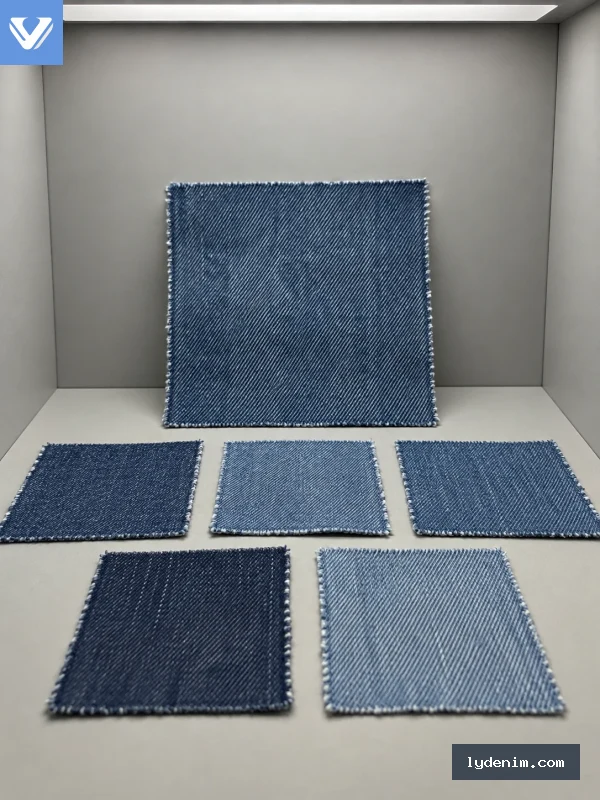
| Shade band | What light-to-dark or cast range is acceptable? | It requires a clearly approved standard and labelled samples |
| Bulk lot | Does the production material follow the approved identity and acceptable range? | One sample may not represent every roll or position in the lot |
For indigo denim, a buyer may need a woven or washed reference rather than relying only on a conventional solid-color lab dip. Use terminology that matches the actual production route and ask the supplier what the submitted sample represents.
Write comments a mill can act on
Skip “too blue” or “make it closer.” Name the submission, the standard, the direction of change, and the next action. Choose one disposition: Approved · Approved with condition · Revise and resubmit · Rejected · Hold. Conditional approval must name who verifies the condition and whether another physical sample is required.
Connect shade bands to bulk lots
When production needs a controlled range, label the band and carry it into lot/roll review: PO, article, lot/roll IDs, approved standard, viewing route, deviation, disposition (accept / segregate / reprocess / replace / hold). Do not silently mix out-of-range rolls into cutting. Related pre-order checks: bulk denim sourcing guide.
Coating, flocking, print, jacquard and garment wash may need strike-offs, coated/flocked panels, handlooms or washed leg panels in sequence. Approve each component for what it represents.
Keep Visual Approval Separate From Fastness Testing
Color approval asks whether the appearance is acceptable. Fastness testing asks how color behaves under a stated condition. These are separate decisions.
For example, ISO 105-C10 addresses color fastness to washing under specified test conditions, while ISO 105-X12 addresses resistance of textile color to rubbing. The applicable standard, method, specimen, and pass requirement must be selected for the real project. A visually approved lab dip is not a test result, and a passing test result does not automatically make the shade visually acceptable.
Keep the records linked but distinct:
| Record | What it should show |
|---|---|
| Color approval | physical standard, submission, conditions, comments, disposition |
| Test request | property, method, sample identity, required stage |
| Test report | actual specimen, method, result, date, laboratory |
| Buyer disposition | accepted, revised, held, or rejected for the stated use |
Change-Control Triggers
Request a new review when a change can affect color appearance or behavior, including:
- new base fabric, yarn, construction, or fiber composition;
- new dye or colorant route;
- changed pretreatment, wash, coating, print, flocking, or finish;
- new production lot with a meaningful difference;
- changed supplier or processing facility;
- revised physical standard or target market requirement;
- substitution made after the original approval.
The change record should identify what changed, why, which earlier approval is affected, and what new evidence is required.
Buyer Brief Before Color Development
Before asking for a lab dip or equivalent color sample, send:
- controlled project and fabric identity;
- physical color reference rather than only a screen image where possible;
- end use and intended processing route;
- required sample type and number of options;
- viewing or measurement requirements actually used by the buyer;
- approval date and responsible reviewer;
- later shade-band, lot, and test expectations.
For custom construction or finish development, use the custom denim fabric route. The colored denim category can help orient the product discussion, but current product availability and color capability must be confirmed for the project.
Next step — create a traceable color decision. Send project/article, physical color reference (not only a screen), end use, process route, sample type/options, viewing needs, and later shade-band / lot / test expectations. Use the LYDENIM fabric RFQ for project-specific development—color route, tolerance, MOQ, price and timing must be confirmed, not inferred from this guide.
Related: denim fabric specification sheet · custom denim fabric · colored denim · brown denim supplier · deep indigo wash & crocking — reuse this approval record.
FAQ
Does an approved lab dip guarantee the bulk denim color?
No. It creates a controlled color reference for a defined stage. Bulk still needs lot identity, comparison against the approved physical standard or range, deviation handling, and an approval record.
Is a lab dip approval the same as a colorfastness approval?
No. Lab-dip approval is primarily a color-appearance decision. Wash and rubbing fastness require testing under stated methods and conditions, followed by a separate buyer disposition.
When should a denim buyer approve a shade band?
Approve a shade band when the program needs an agreed physical range for production comparison. Label every reference, connect it to the approved standard, and state how out-of-range lots or rolls will be handled.
What should I send when a submission needs another revision?
Identify the submission, reference, viewing conditions and specific difference. State the requested next sample and reviewer, then keep the earlier submission linked to the new revision rather than silently replacing it.
Customization Services by LYDENIM
Custom Design
Discuss your fabric design, color and finish requirements with LYDENIM. Explore LYDENIM products as a starting point for your project.
Tailored Garment Solutions
Share your garment design and sample requirements so the next steps can be confirmed for your project. Explore My Alibaba.
Get in Touch
Contact malone@lydenim.com with your intended application and project requirements to discuss the details.
Need help turning this into a production-ready sourcing brief?
Send your target product, fabric direction, quantity and sample needs. LY Denim can help compare options and prepare a quote.