

Estimated reading time: ~5 minutes
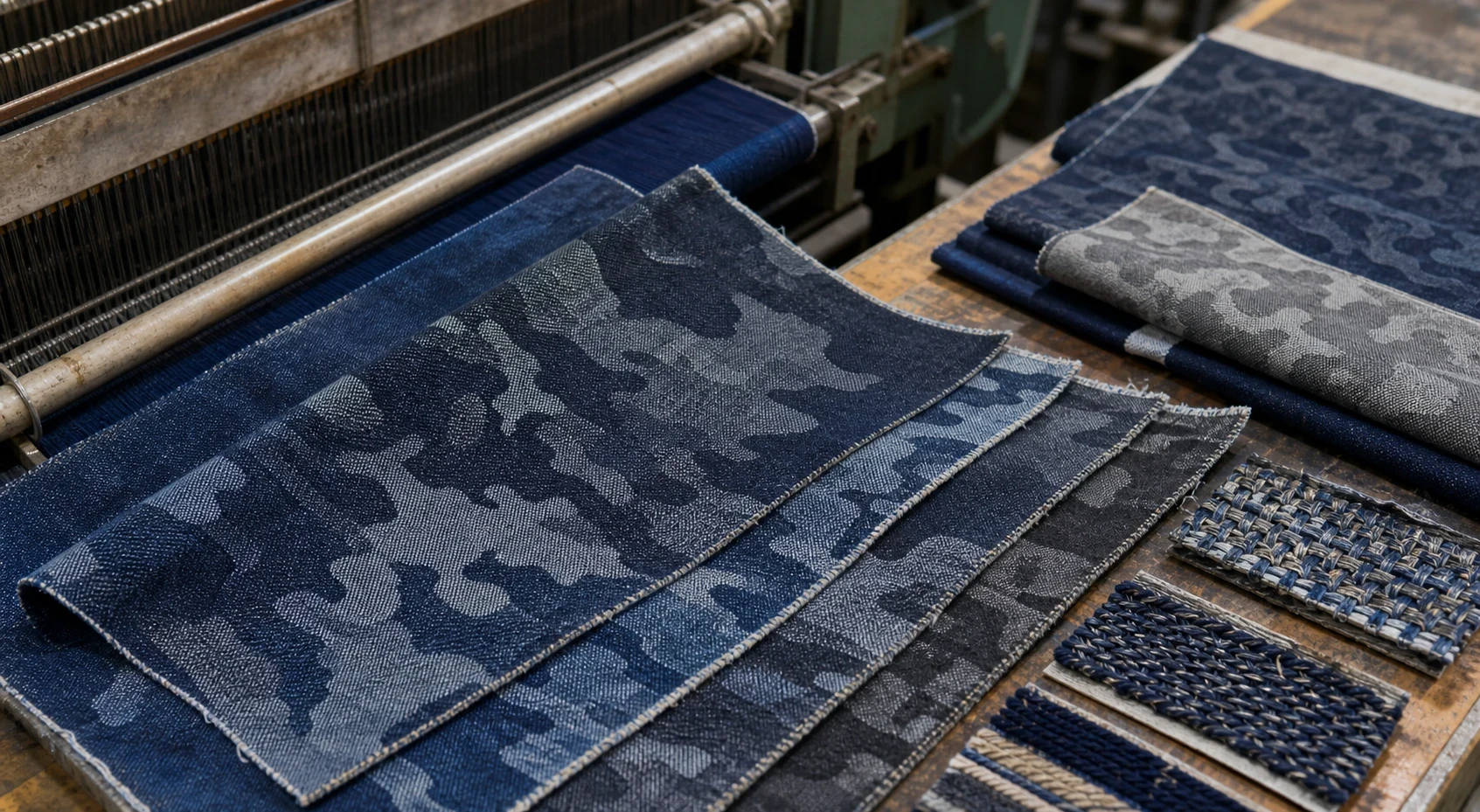
Camo jacquard denim gives buyers a way to build camouflage into the denim itself rather than applying it only as a surface print. That can create more depth and a stronger fabric story, especially for workwear and streetwear programs. But the commercial decision is not simply woven versus printed. Buyers also need to decide what kind of camouflage direction they want, what weight the garment needs, and what performance questions matter for the end use.
This is important because camouflage can quickly become confusing at development stage. A fabric can look interesting on a swatch but lose its identity after wash, or it can look too flat if the weave contrast is not strong enough. The best sourcing path is to define the visual goal and the garment function together.
Buyer Summary
- Camo jacquard denim creates camouflage through woven structure or yarn contrast rather than print alone.
- Buyers should compare tonal, woodland, digital, and abstract directions before sampling.
- Streetwear and workwear programs may need different weights, handfeel, and stiffness.
- Wash, rubbing fastness, tear strength, and structure stability should be reviewed early.
- Motif scale must match panel size if the camo is meant to stay readable in the garment.
What Camo Jacquard Denim Is
Camo jacquard denim uses repeat, weave, and yarn contrast to create a camouflage-like surface inside the fabric construction. This gives the cloth a more integrated look than a simple print and can make the article feel more premium or more engineered, depending on the concept. It can be suitable for fashion-led outerwear, streetwear capsules, or certain workwear-inspired developments.
From a sourcing perspective, the buyer should still treat it as a fabric decision, not only a pattern trend. The camouflage direction, relief depth, and denim weight all influence how the final garment reads in bulk.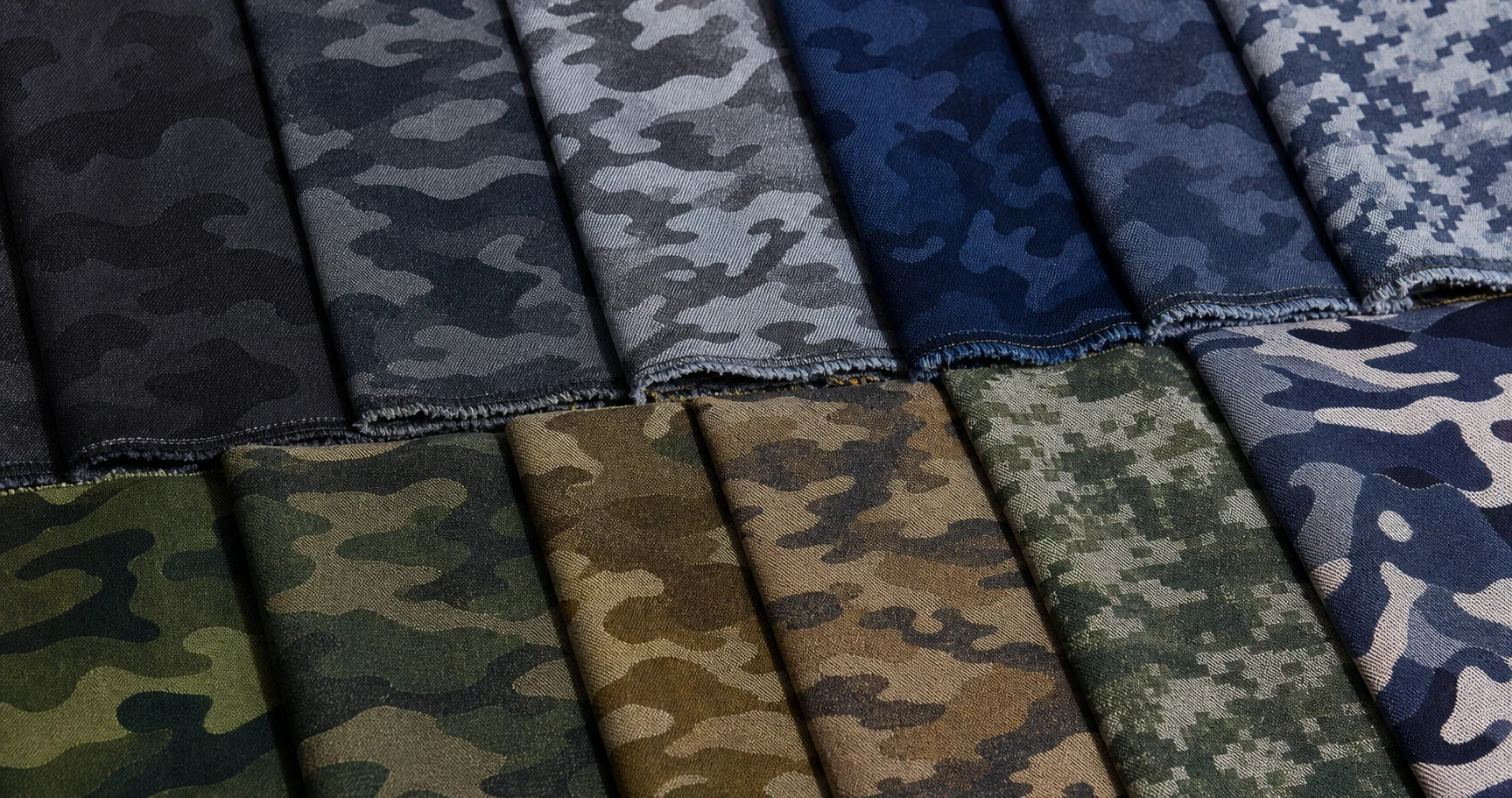
Woven Camo Versus Printed Camo Denim
| Route | Main advantage | Main limitation |
|---|---|---|
| Woven camo jacquard | Greater structural depth and stronger fabric identity | Requires tighter construction and QC control |
| Printed camo denim | Faster visual development and broad graphic freedom | Can feel flatter and more surface-driven |
Woven camo is usually the better route when the brand wants the camouflage to feel like part of the fabric. Printed camo may still be useful when the program depends on specific graphic placement or quicker concept turnover.
Tonal, Woodland, Digital, and Abstract Directions
Not every camo concept fits every denim program.
| Direction | Best fit | Main caution |
|---|---|---|
| Tonal camo | Premium streetwear and subtle fashion programs | May lose visibility if wash softens contrast too much |
| Woodland-inspired camo | Rugged casual and workwear-inspired lines | Can feel heavy if the repeat is too literal |
| Digital camo rhythm | Modern category differentiation | Small shapes can lose clarity after wash |
| Abstract camo | Safer originality and broader use | May stop reading as camo if the rhythm is too weak |
Buyers should avoid copying recognizable military or branded camouflage patterns. Original direction is safer commercially and usually easier to adapt into a woven denim program.
Choosing Weight and Structure for Streetwear or Workwear
Streetwear and workwear often use the term “camo denim” differently. Streetwear may accept a softer handfeel or a more fashion-led surface. Workwear-inspired lines often need more body, abrasion confidence, and visual stability.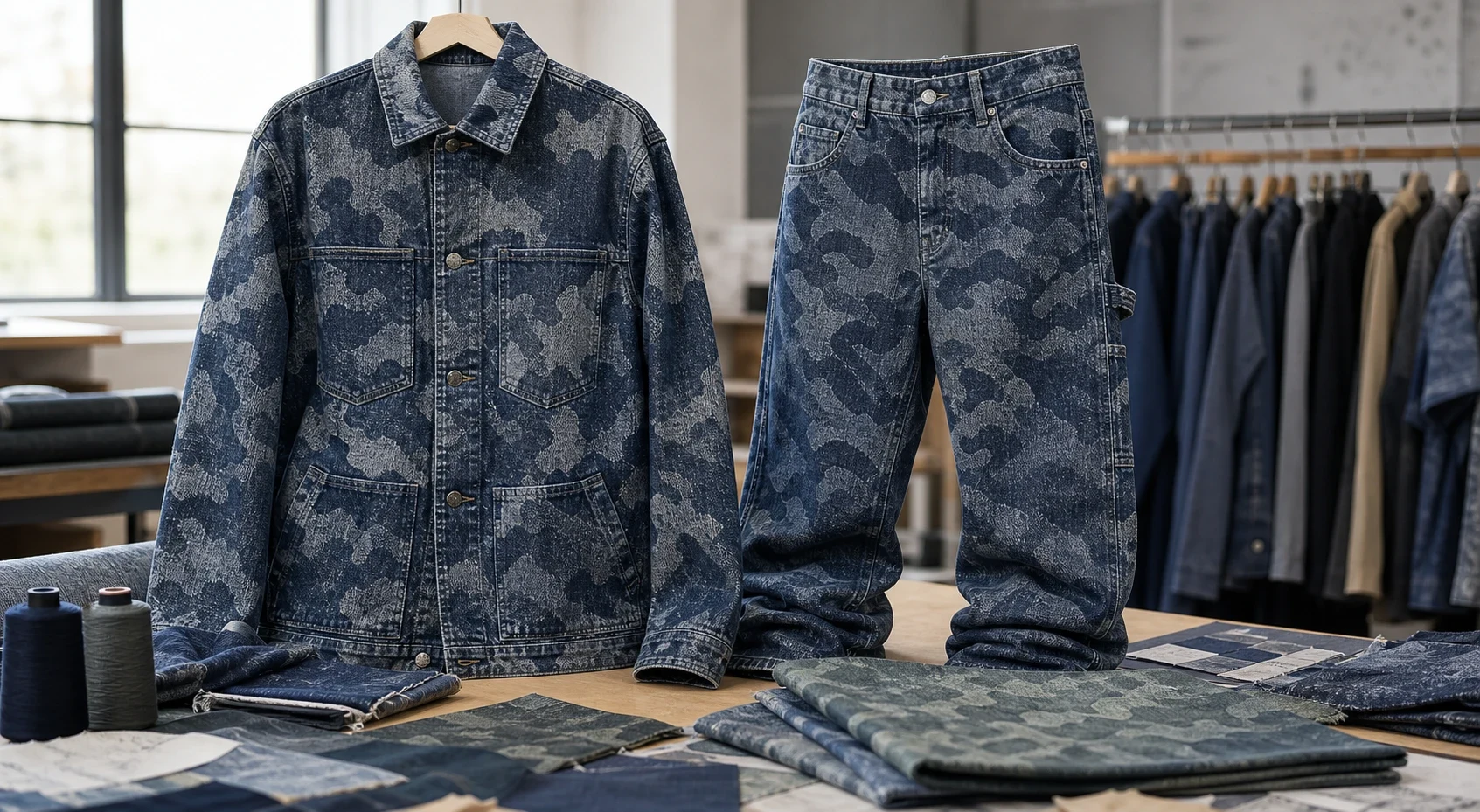
| End use | Better fabric direction | Why |
|---|---|---|
| Streetwear jacket or overshirt | Medium weight with controlled drape | Keeps the pattern visible without becoming too stiff |
| Workwear-style outerwear | Medium-heavy structure | Supports durability perception and stronger panel shape |
| Fashion denim bottom | Controlled medium scale | Avoids overloading pocket and thigh zones |
The buyer should define whether the priority is look, durability, or balance. One fabric can rarely optimize all three without trade-offs.
Wash, Rubbing Fastness, Tear Strength, and Stiffness
Camo jacquard approval should go beyond visual inspection. Buyers should test:
- how the contrast behaves after wash
- whether the fabric becomes too soft or too flat
- rubbing fastness on darker or higher-contrast grounds
- tear and seam confidence if the article is used for heavier garments
These tests do not need to be overcomplicated, but they should reflect the intended product category. A streetwear shirt-jacket and a workwear overshirt do not need the same performance balance.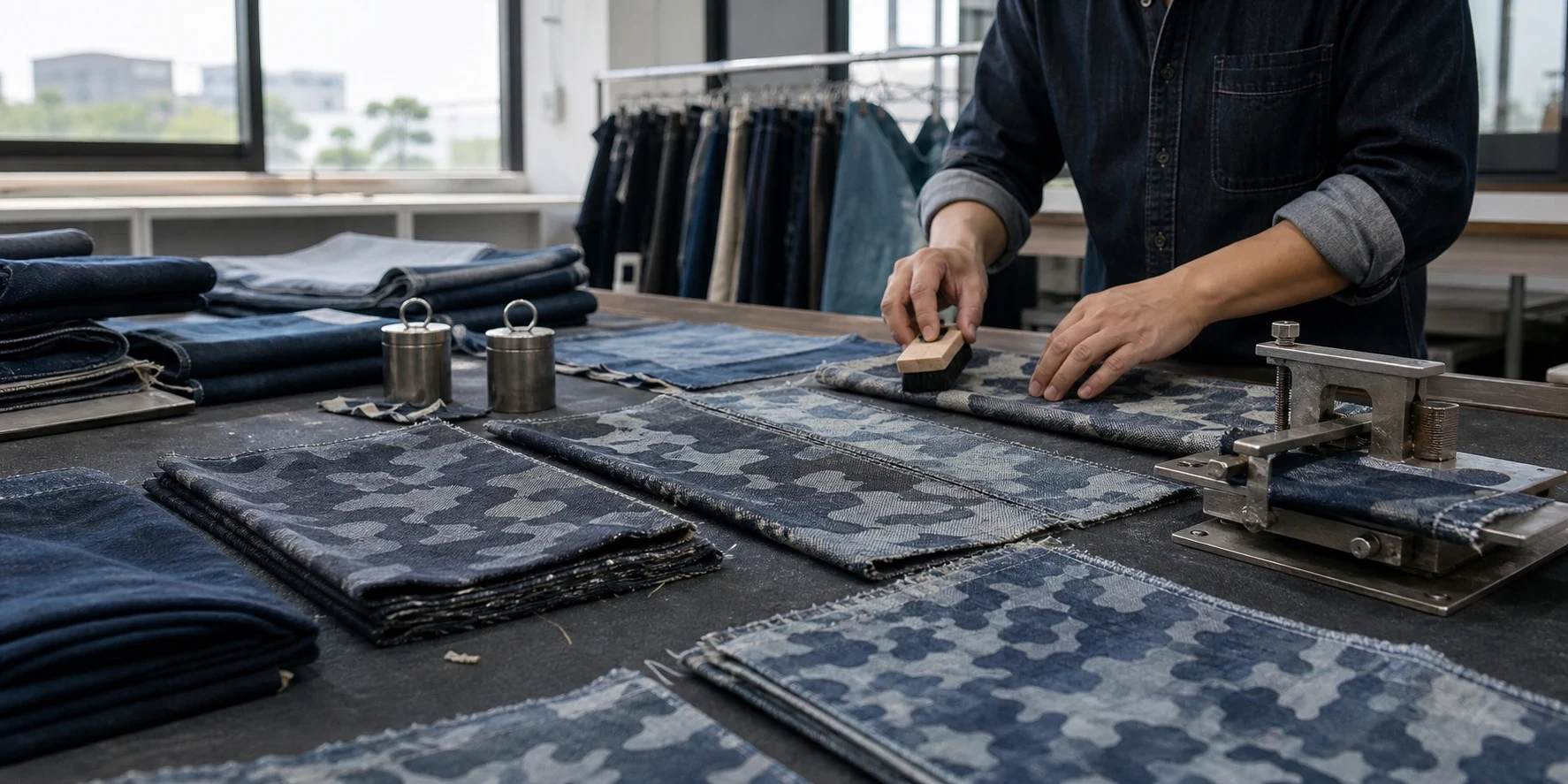
Sample and Bulk QC Checklist
Before bulk, confirm:
- the buyer and supplier are aligned on woven rather than printed construction
- motif scale works on the actual garment panels
- pre-wash and post-wash contrast are both acceptable
- weight and stiffness match the end use
- shade, repeat clarity, and rubbing risk are controlled roll to roll
An RFQ should also list target weight, motif direction, color direction, wash route, quantity, and end market. Without those details, suppliers are likely to quote too generically.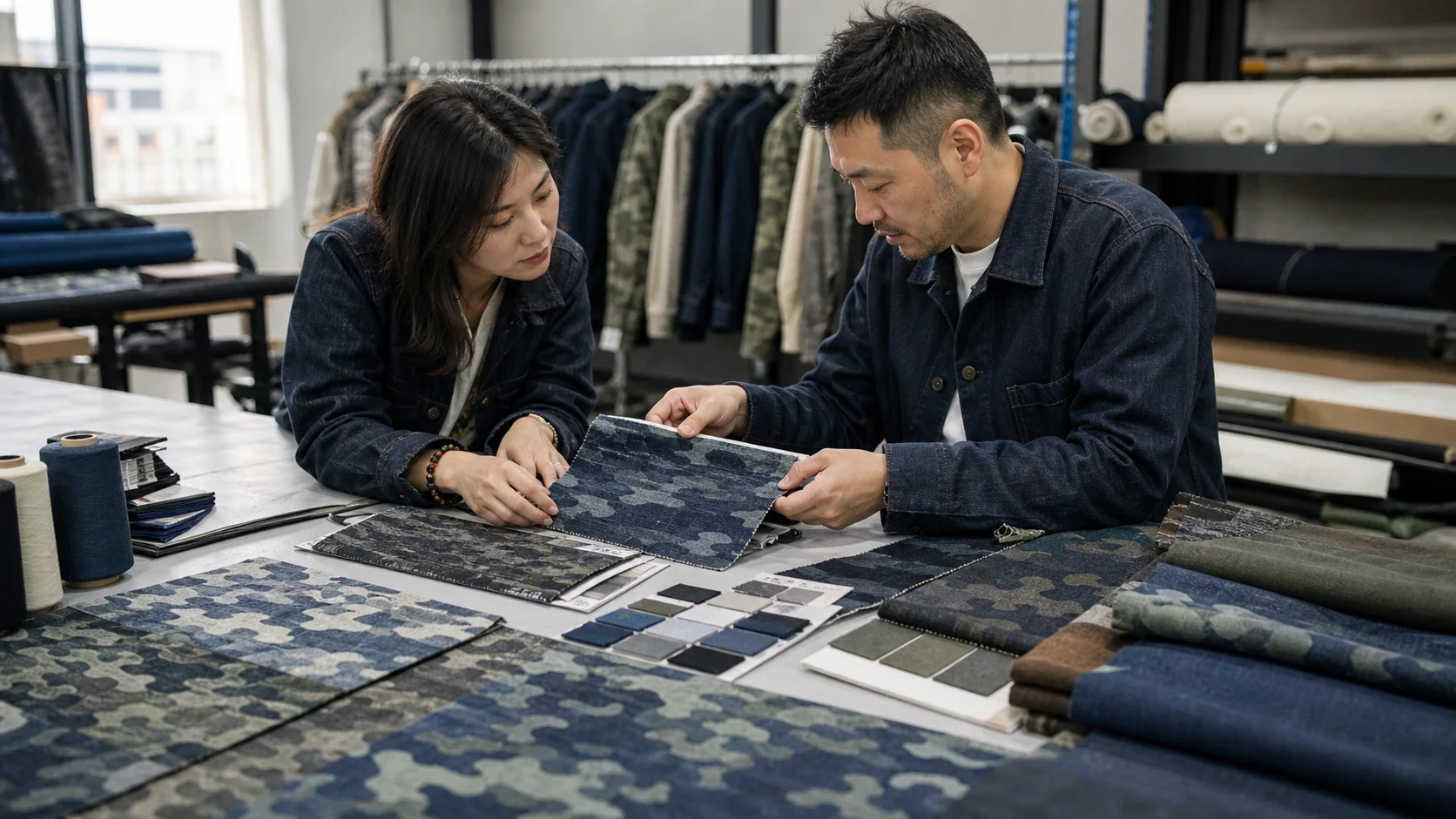
FAQ
Is camo jacquard denim better for workwear or streetwear?
It can work for either, but the fabric brief should change. Workwear-inspired programs often need stronger structure and performance control, while streetwear may prioritize look and handfeel balance.
Does woven camo automatically mean better durability?
No. Woven construction can improve material depth, but durability still depends on weight, weave, finishing, and the garment use case.
Should buyers use literal camouflage?
Not always. Tonal or abstract directions often offer safer originality and easier commercial adaptation, especially for fashion programs.
What should be approved first: motif or wash?
Both should be reviewed together. A motif that works before wash may not look the same after finishing.
LYDENIM Jacquard Product Reference
Use these tonal and organic texture references when the camo brief is more about layered material depth than a literal printed military pattern.
Landscape Ink Painting Jacquard Denim 1096 Fabric
- Why it is relevant: This is a related tonal or organic texture reference, not an exact camo SKU. It helps study layered tonal movement instead of literal camouflage shapes.
- Buyer should compare or confirm: Confirm tonal breakup, distance readability, and whether the buyer wants organic blending or sharper military-style separation.
Blue Jacquard Fabric 53350
- Why it is relevant: This is a related tonal or organic texture reference, not an exact camo SKU. It helps compare textured surface and blue tonal variation for workwear or streetwear mood.
- Buyer should compare or confirm: Confirm surface depth, stiffness, and whether the structure supports the intended jacket, overshirt, or bottom weight.
Embossed Texture 53326
- Why it is relevant: This is a related tonal or organic texture reference, not an exact camo SKU. It helps review embossed-style relief when the fabric should feel more material-driven than graphic.
- Buyer should compare or confirm: Confirm rubbing fastness, relief visibility after wash, and whether high-friction areas keep the intended texture effect.
Conclusion
Camo jacquard denim is most commercially useful when buyers choose the right camouflage language for the garment and test it against weight, wash, and panel behavior. The woven route can create better material depth than print, but only if the motif, structure, and QC standard are defined before bulk production begins.
Customization Services by LYDENIM
🎨 Custom Design
Design your own fabric collection or garment with LYDENIM’s premium materials. From luxurious cotton blends to innovative eco-friendly textiles, explore colors, weaves, and finishes that match your brand’s product direction. Visit LYDENIM to learn more.
🛍️ Tailored Garment Solutions
Bring your designs to life with custom garment services. Whether you are developing jeans, denim jackets, skirts, workwear, or small-batch fashion collections, LYDENIM can support fit, comfort, durability, and production planning. Explore customization options on My Alibaba.
📩 Get in Touch
Have a project in mind? Contact our team at malone@lydenim.com to discuss custom fabrics, garment design, sampling and production planning, or sustainable textile solutions.
Transform your ideas into reality with LYDENIM–your trusted partner for innovative, high-quality fabrics and bespoke apparel solutions.
Need help turning this into a production-ready sourcing brief?
Send your target product, fabric direction, quantity and sample needs. LY Denim can help compare options and prepare a quote.