


Buyer Summary
- Paisley jacquard denim creates a woven heritage motif rather than a flat printed effect.
- Buyers should decide early between all-over, placed, tonal, and high-contrast directions.
- Curved lines and small internal details make repeat scale and line density especially important.
- Wash route matters because indigo processing can either enrich or blur the motif.
- Artwork ownership and approval criteria should be clarified before bulk development.
What Paisley Jacquard Denim Is
Paisley jacquard denim uses woven structure to build paisley forms into the fabric. Depending on yarn contrast, motif density, and wash treatment, the result can feel ornate, subtle, vintage, or highly directional. Unlike print, jacquard gives the motif material depth, but that also means the buyer must control how the motif interacts with weight, drape, and denim finishing.
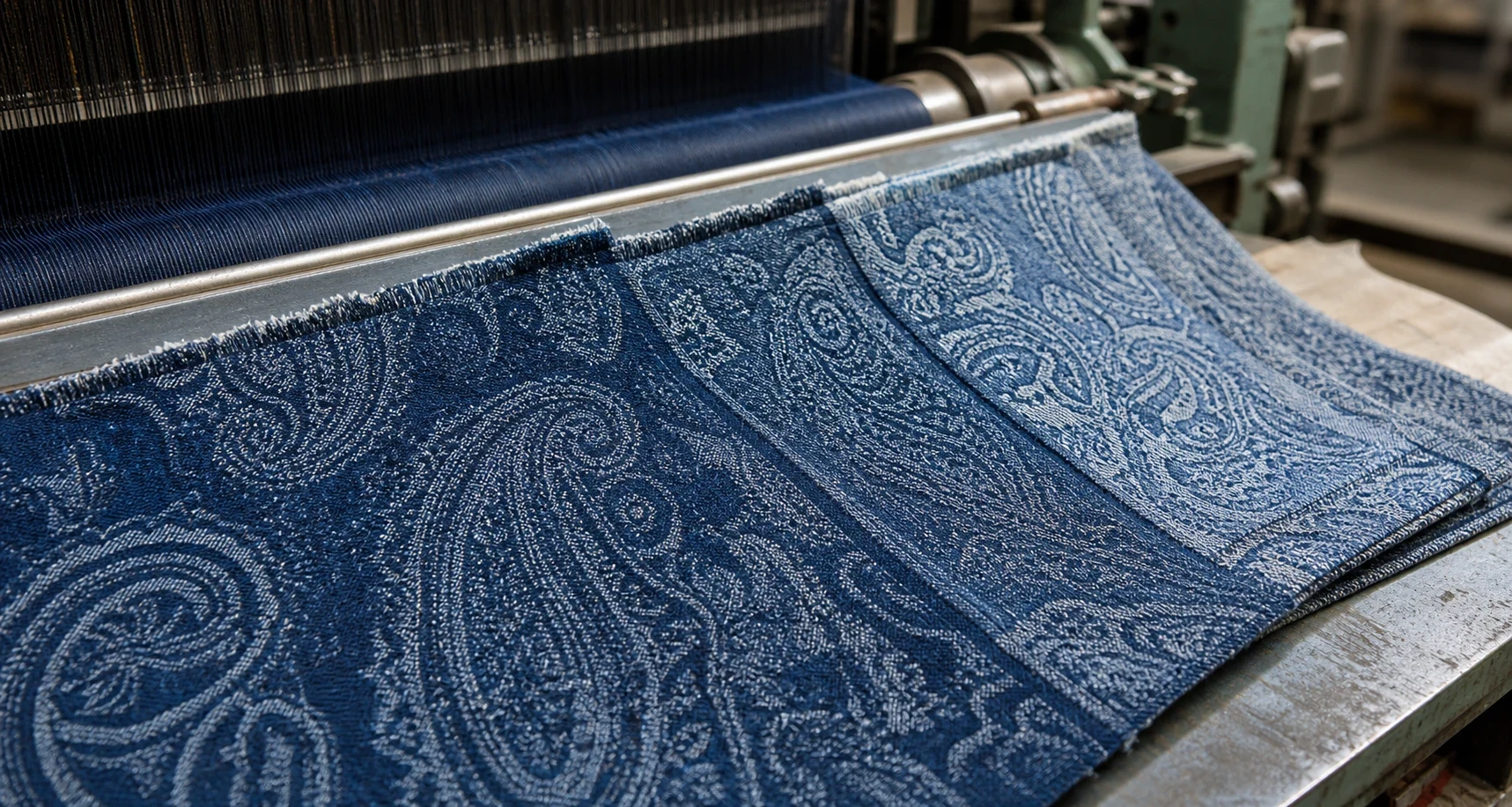
For B2B sourcing teams, paisley jacquard is easiest to manage when the motif intent is clearly described. A buyer who says only “paisley denim” leaves too much room for interpretation. A buyer who defines whether the motif should feel heritage, tonal, luxurious, washed, or statement-driven makes sampling much more efficient.
All-Over, Placed, Tonal, and High-Contrast Directions
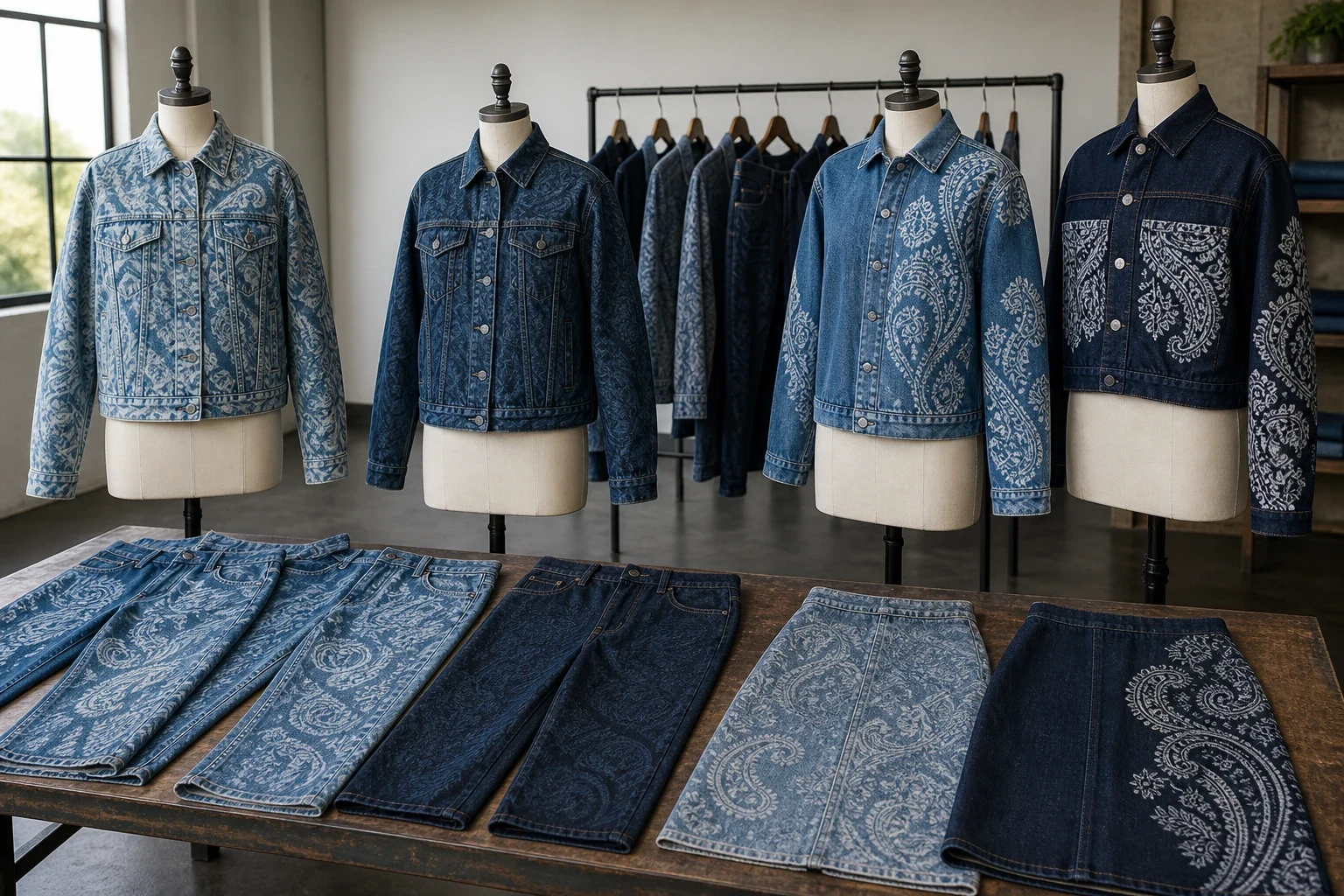
These four directions usually cover most commercial paisley programs.
| Direction | Best use | Main buyer advantage | Main caution |
|---|---|---|---|
| All-over paisley | Dresses, shirts, coordinated sets | Strong pattern identity across the whole garment | Can look crowded if the repeat is too dense |
| Placed paisley | Borders, panels, hero zones | More controlled storytelling on garment parts | Placement planning becomes critical |
| Tonal paisley | Premium jackets, elevated denim | Subtle depth and luxury feel | Motif may disappear if contrast is too soft |
| High-contrast paisley | Fashion capsules and statement pieces | Strong visual recognition | Wash can weaken line clarity quickly |
The buyer should decide which outcome matters most before asking for strike-offs. Otherwise, the supplier may optimize the wrong balance between visibility and restraint.
Choosing Motif Scale and Line Density by Garment
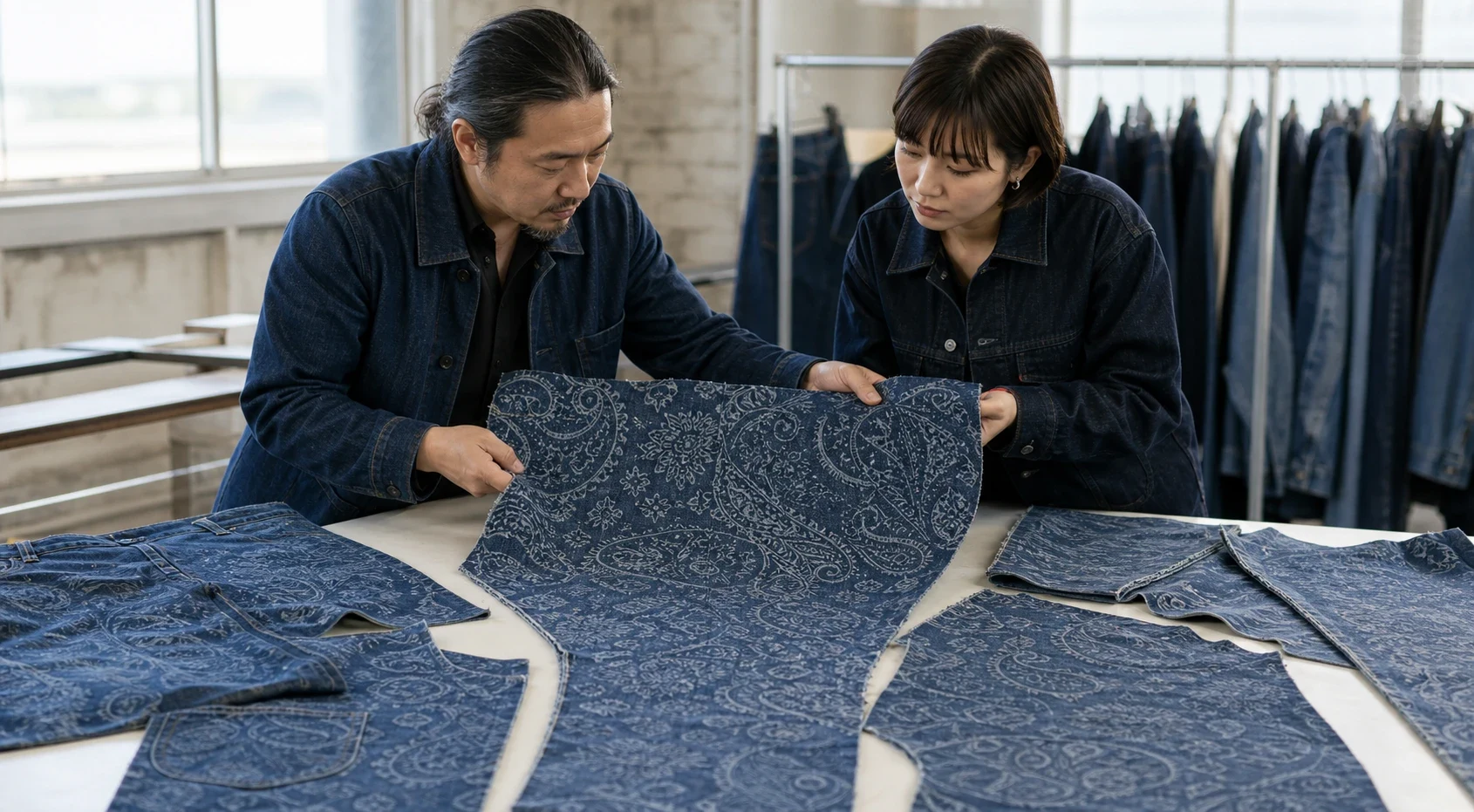
Paisley is more sensitive than many geometric repeats because the curved lines and internal details can become muddy at the wrong scale.
| Garment type | Safer direction | Why |
|---|---|---|
| Shirts and tops | Small to medium all-over | Keeps the motif visible without overcrowding |
| Jackets and overshirts | Medium or placed motifs | Gives the design room to show detail |
| Skirts and dresses | All-over or border placement | Works well when drape is planned carefully |
| Jeans and bottoms | Tonal or controlled medium scale | Large complex paisley can break around pockets and seams |
Line density should also be discussed. Very fine internal lines may look refined at loom stage but lose definition after wash. A slightly cleaner paisley drawing often performs better in bulk.
Weight, Fiber Mix, Stretch, and Drape
Paisley jacquard denim can be developed across different weights, but the garment end use should drive the choice. Lighter constructions may support flowing shirts or dresses. Mid-weight structures can work for overshirts and fashion bottoms. Stretch may improve comfort in some garments, but it can also soften motif precision if the recovery is not stable.
This is why buyers should not approve the motif without also approving the construction logic. A beautiful paisley repeat on the wrong base cloth may never produce a good commercial garment.
Indigo Wash Behavior and Post-Wash Clarity
Wash behavior is central to paisley approval. Indigo processing can give the motif more depth and character, but it can also blur the pattern if the internal line work is too delicate. Buyers should check:
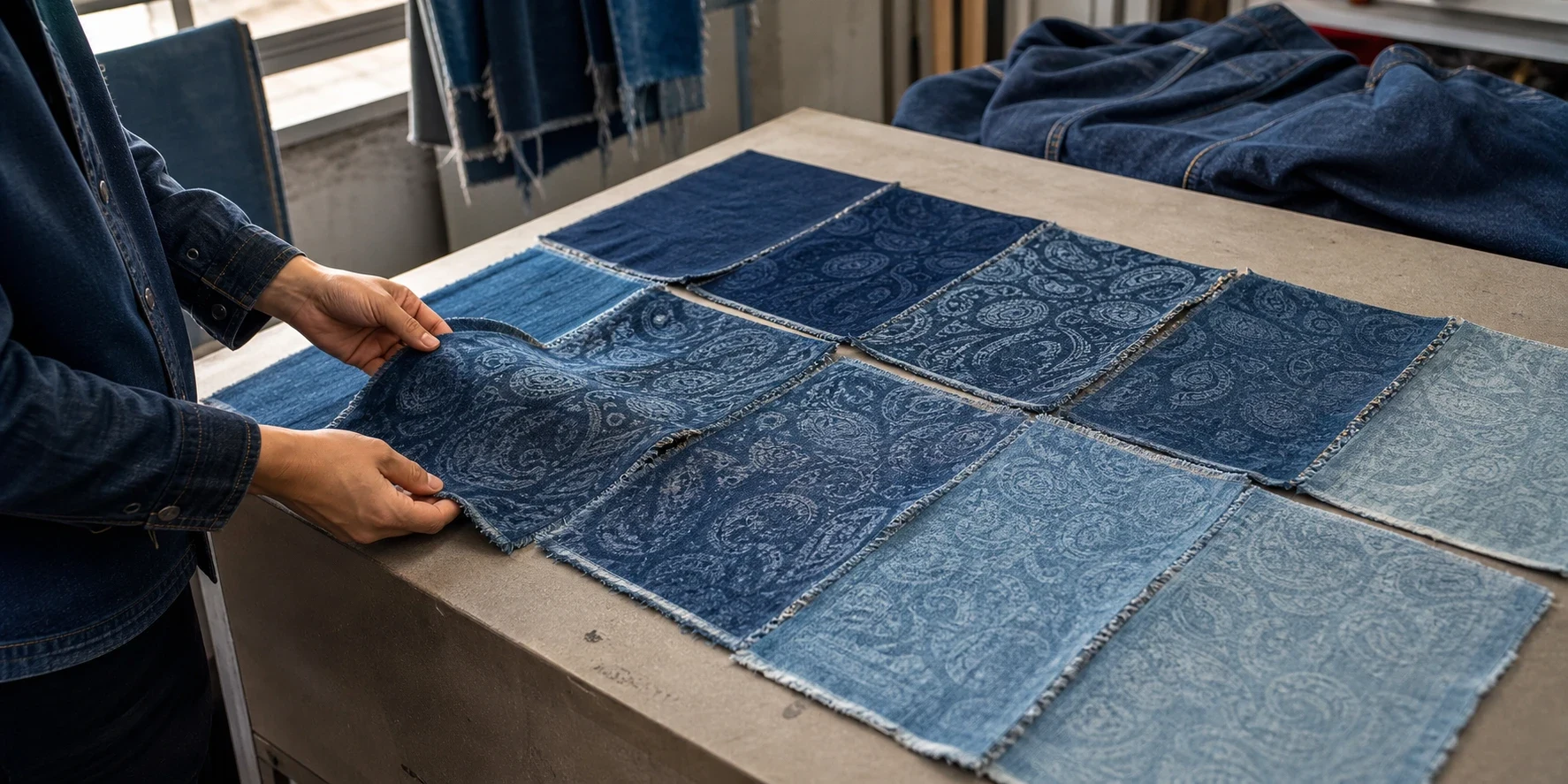
- pre-wash and post-wash line clarity
- whether tonal contrast improves or disappears
- whether the motif stays balanced after shrinkage
- whether the wash route supports the intended heritage or fashion mood
For programs built around visual detail, post-wash approval should be treated as part of the design approval, not only a finishing check.
Artwork Ownership, Sampling, and Bulk QC
Paisley references often carry brand or heritage associations. Buyers should avoid assuming that a reference image can be reproduced directly. Development should clarify:
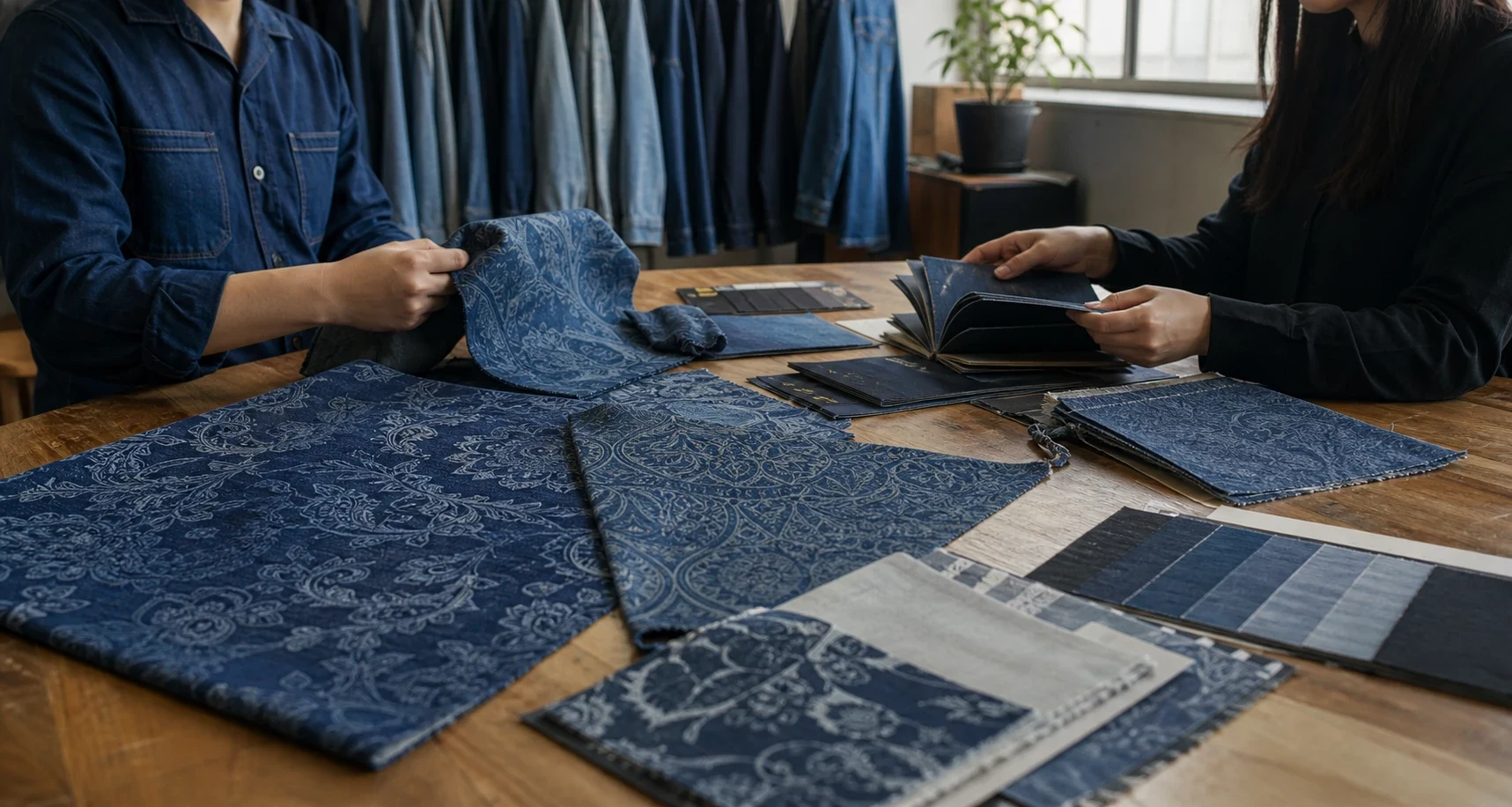
- who owns the final motif artwork
- whether the design is inspired by a reference or directly licensed
- whether exclusivity is required
- how much variation is acceptable between sample and bulk
Bulk QC should include repeat clarity, shade balance, wash consistency, and motif legibility. Those are the issues that will determine whether the final garment still feels premium.
FAQ
Is paisley jacquard denim better than paisley print?
It depends on the collection goal. Jacquard usually offers more material depth and a stronger woven identity, while print may allow faster visual experimentation. The best route depends on quality expectation and production logic.
What is the safest paisley direction for modern collections?
Tonal or medium-scale all-over directions are often easier to commercialize broadly, but the right choice depends on garment type and wash route.
Why does wash approval matter so much?
Because paisley relies on line clarity. If washing changes contrast or blurs the internal structure, the final look can drift far from the approved sample.
What should a buyer send in the RFQ?
Motif artwork or reference, intended garment application, repeat scale, weight, color direction, wash route, quantity, and destination market.
Related Jacquard Options to Review
These jacquard options are not exact paisley SKUs, but they help buyers judge ornament density, color contrast, and woven surface depth before artwork is locked.
PurpleFlower Colorful Jacquard Denim 1089 Fabric
Use this option when the brief needs a richer decorative surface with visible woven color. In the sample round, look at whether the linework still feels clear after the intended wash.
PurpleFlower Colorful Jacquard Denim 1092 Fabric
This fabric gives the team another ornate direction to compare before finalizing the paisley artwork. Pay attention to repeat scale and the amount of open space between motifs.
Red Flower Colorful Jacquard Denim 1093 Fabric
Review this direction if the collection can carry a stronger color story. The main sample check is whether the contrast still matches the garment mood after washing.
Conclusion
Paisley jacquard denim can bring heritage character into a modern denim program, but only if the motif is translated into the right scale, base cloth, and wash standard. Clear artwork ownership, realistic line density, and disciplined sample approval are what turn a beautiful reference into a production-ready fabric.
Customization Services by LYDENIM
🎨 Custom Design
Design your own fabric collection or garment with LYDENIM’s premium materials. From luxurious cotton blends to innovative eco-friendly textiles, explore colors, weaves, and finishes that match your brand’s product direction. Visit LYDENIM to learn more.
🛍️ Tailored Garment Solutions
Bring your designs to life with custom garment services. Whether you are developing jeans, denim jackets, skirts, workwear, or small-batch fashion collections, LYDENIM can support fit, comfort, durability, and production planning. Explore customization options on My Alibaba.
📩 Get in Touch
Have a project in mind? Contact our team at malone@lydenim.com to discuss custom fabrics, garment design, sampling and production planning, or sustainable textile solutions.
Transform your ideas into reality with LYDENIM–your trusted partner for innovative, high-quality fabrics and bespoke apparel solutions.
Need help turning this into a production-ready sourcing brief?
Send your target product, fabric direction, quantity and sample needs. LY Denim can help compare options and prepare a quote.