

Estimated reading time: ~6 minutes
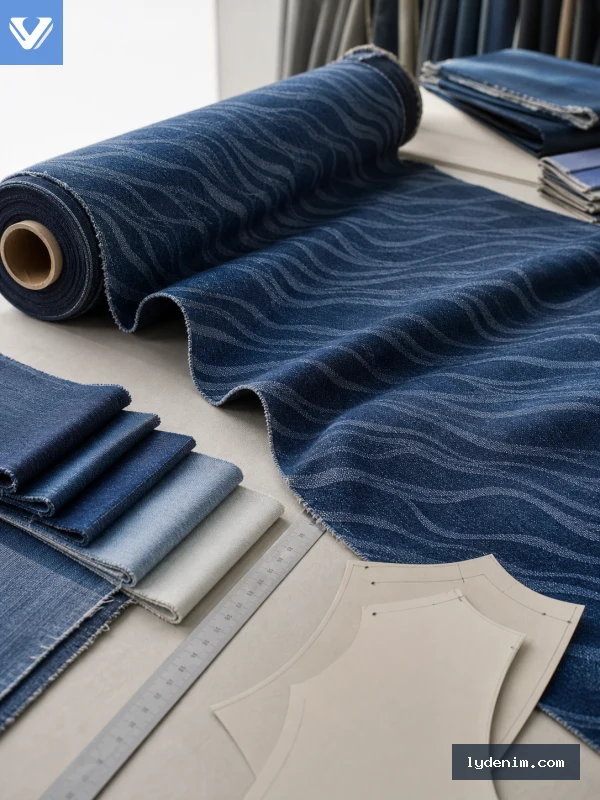
Wave jacquard denim turns movement into woven structure. Instead of adding a surface print that only imitates flow, the fabric builds the wave through repeat, yarn contrast, or relief inside the denim itself. That gives the material a more premium feel, but it also creates an important sourcing question: how will the wave direction behave once the fabric is cut into actual garment panels?
For buyers, wave jacquard is not just a pattern decision. It is a direction, drape, and panel-planning decision. A wave can look elegant on a jacket back, but it may lose its visual rhythm if the repeat is broken across a narrow placket, a bias cut, or a heavily washed seam. The safest development path is to translate the inspiration image into a clear fabric brief before the first sample is approved.
Buyer Summary
- Wave jacquard denim creates movement through woven structure rather than print alone.
- Buyers should define wave amplitude, repeat, density, and direction before requesting sample yardage.
- Weight, drape, stretch, and wash route can all change how soft or sharp the wave appears.
- Panel direction matters because the same wave can look calm, energetic, or distorted depending on garment layout.
- Sample approval should confirm both visual flow and production repeatability.
What Wave Jacquard Denim Is
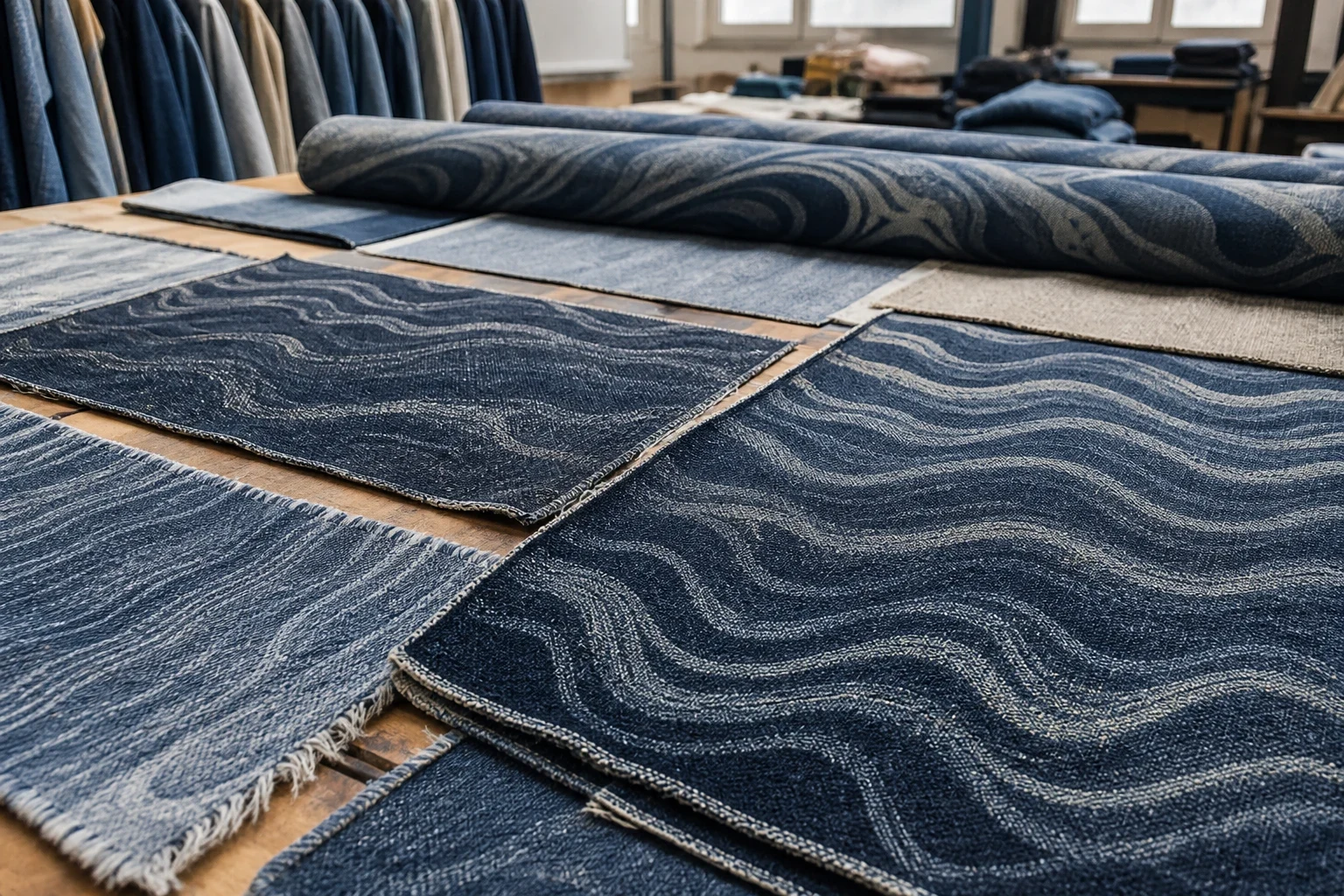
Wave jacquard denim uses a flowing repeat to create a sense of motion across the fabric. The effect may come from tonal yarn contrast, a larger undulating structure, or a more subtle raised weave, but the design is still built into the cloth rather than printed on top. That gives the material a more integrated visual story and usually makes it more relevant for premium fashion or concept collections.
What matters in sourcing is not only the existence of the wave motif, but the behavior of the motif at scale. A wave that looks balanced in a folded swatch can look too busy on a small shirt panel or too weak on a heavy wide garment. This is why buyers should approve wave jacquard with panel references and wash references, not mood images only.
 Wave Scale, Amplitude, Direction, and Density
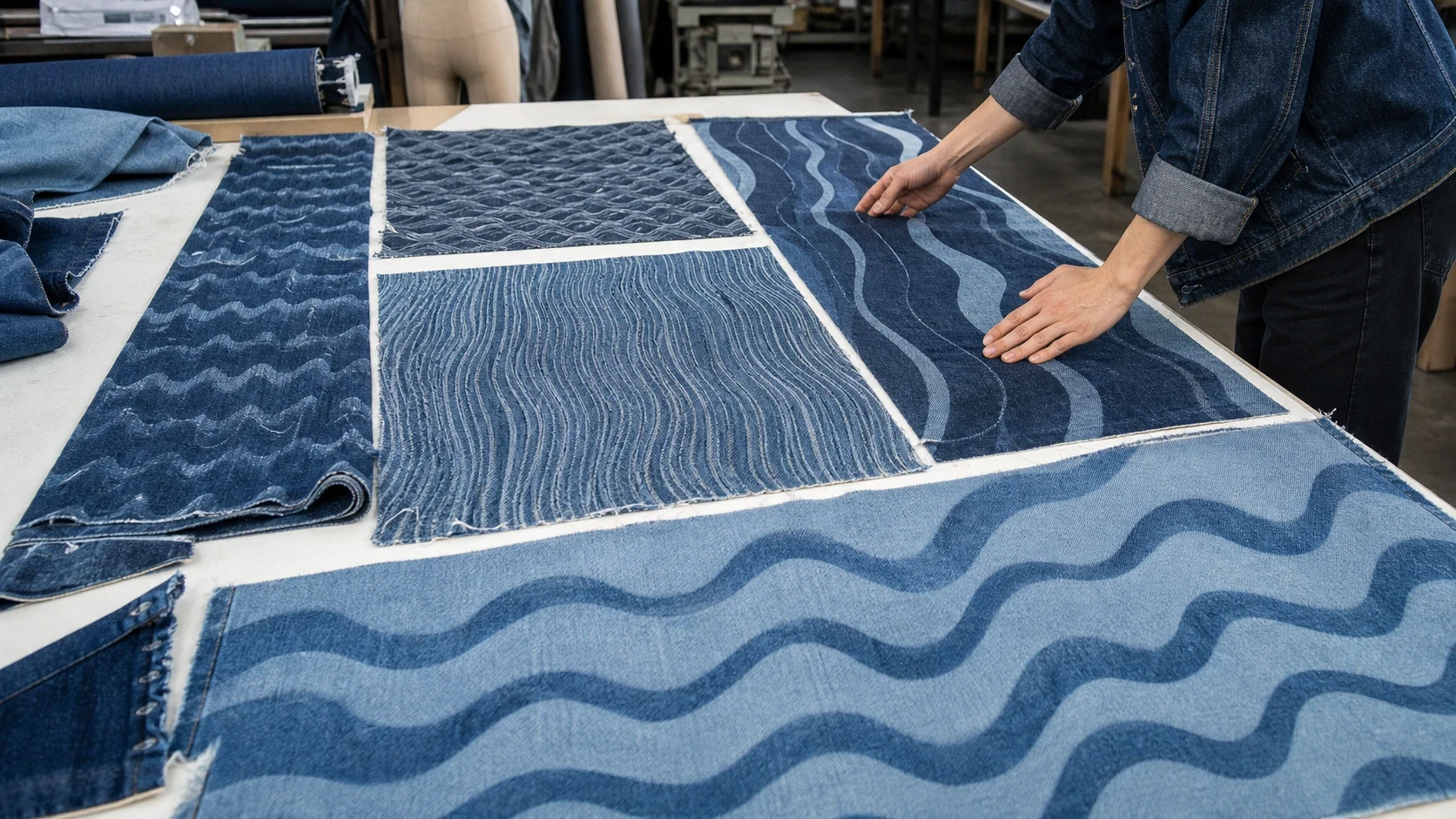
Four variables define most wave developments:
| Variable | What it changes | Why buyers should care |
|---|---|---|
| Scale | How large the repeat feels | Controls whether the wave reads from distance or only up close |
| Amplitude | How strong the curve appears | Affects visual drama and pattern visibility after wash |
| Direction | Horizontal, vertical, diagonal, or mixed flow | Influences garment layout and seam planning |
| Density | Tight or open rhythm | Changes both handfeel perception and visual complexity |
Small, dense waves can work well for shirts or coordinated pieces where the brand wants texture without overpowering the garment. Medium waves are often the most flexible for jackets and skirts. Large or dramatic waves usually need broader panels and cleaner garment architecture to stay readable.
Best Garment Applications
Wave jacquard denim often performs best on garments that give the repeat room to move.
| Application | Why it works | Main caution |
|---|---|---|
| Jackets and overshirts | Broad panels show movement clearly | Direction must be planned across fronts and sleeves |
| Skirts and dresses | Flowing motif can support silhouette | Drape and wash route must be tested together |
| Shirts | Subtle or medium waves can feel modern | Dense repeats may look crowded on small panels |
| Relaxed jeans | Useful for fashion-led bottoms | Pocket and thigh breaks can interrupt the pattern |
| Accessories | Can create category differentiation | Small item scale may reduce wave readability |
If the garment has many narrow cuts or heavy topstitch breaks, wave jacquard can still work, but the design should be simplified or the repeat should be scaled accordingly.
How Weight, Drape, Stretch, and Wash Change the Effect
Wave jacquard is highly sensitive to material behavior. A lighter denim may let the pattern feel more fluid. A heavier structure can make the wave read more architectural. Stretch may soften or distort the repeat depending on yarn choice and garment stress points.
Wash route is equally important. Some wave developments gain character after wash because the indigo contrast becomes softer and more natural. Others lose too much clarity if the garment process is too aggressive. Buyers should confirm:
- whether the wave needs sharp or softened contrast
- whether the fabric should remain crisp or become more fluid
- whether stretch recovery changes the pattern appearance
- whether washed shrinkage changes the repeat balance
Approving only the loom-state swatch is rarely enough for a wave program that will be sold as a design-led denim article.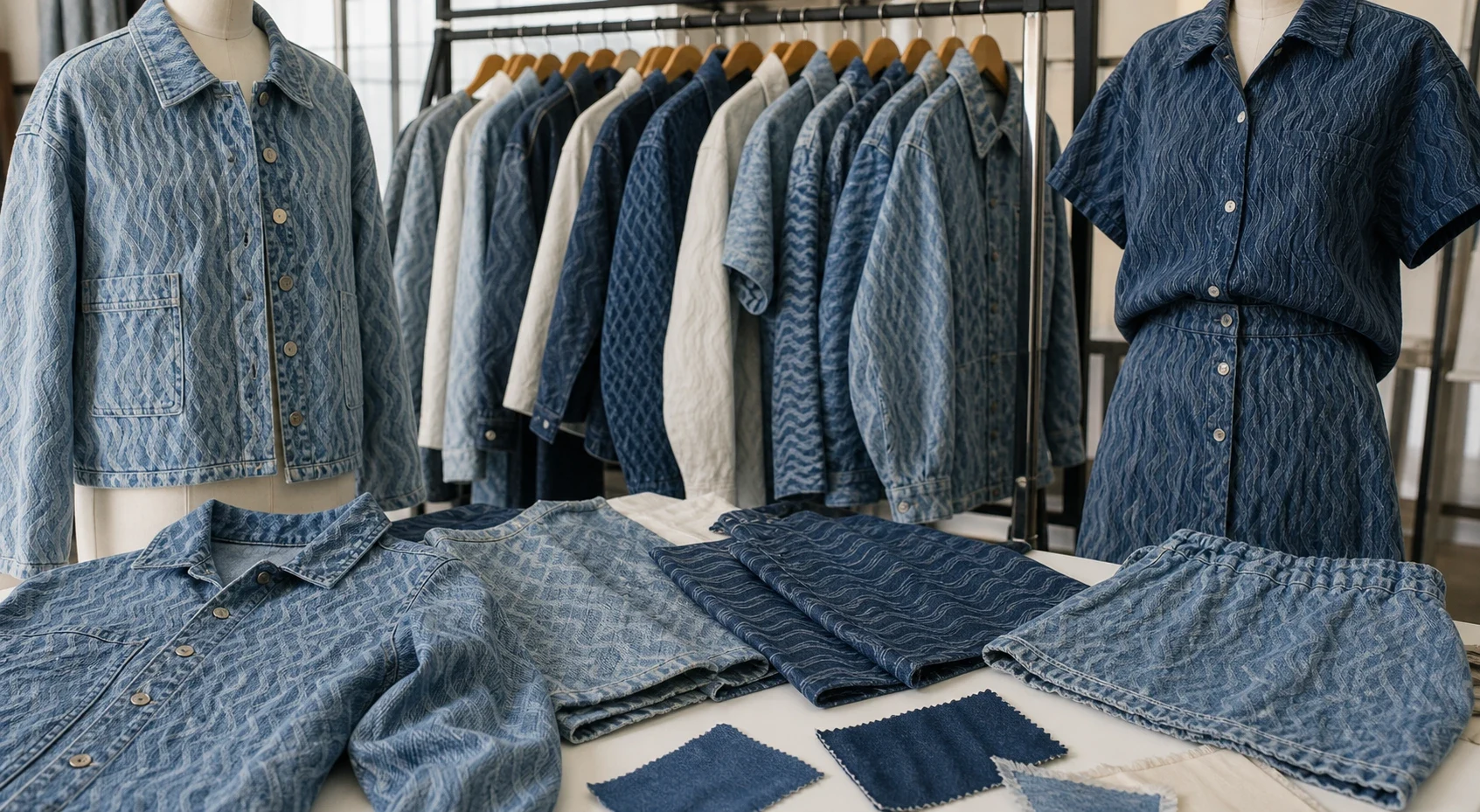
Cutting Direction and Panel Placement Planning
Direction planning is the biggest operational issue with wave jacquard. Buyers should identify whether the wave must run in one consistent direction or whether directional variation is acceptable.
Use a simple planning checklist:
- Mark which garment panels must keep the same wave direction.
- Decide whether fronts, backs, pockets, and sleeves need aligned flow.
- Confirm whether the pattern can be mirrored or rotated.
- Review whether marker efficiency drops if direction is locked.
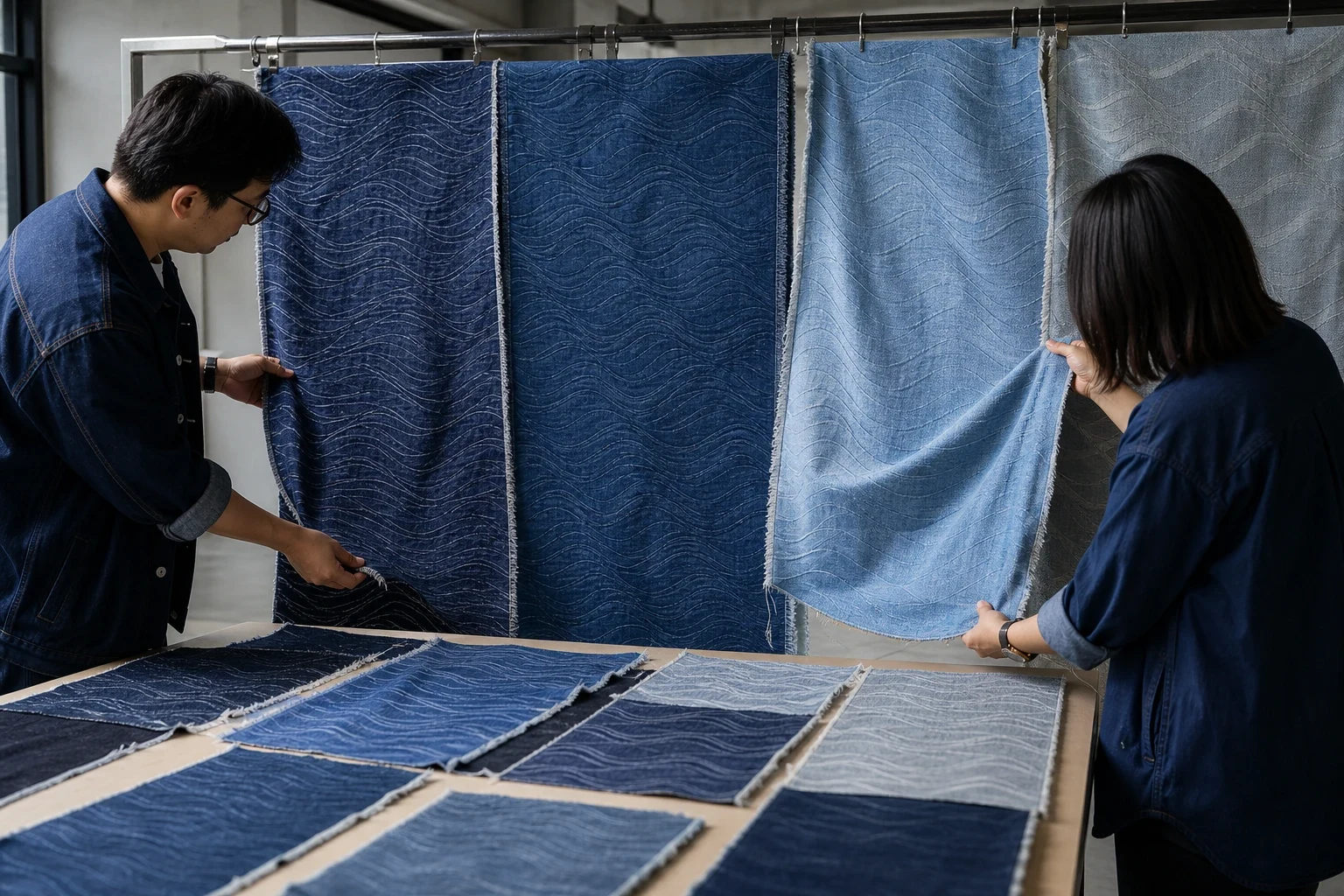
This discussion protects both design intent and material yield. Without it, cutting teams may optimize efficiency in a way that weakens the visual story.
Sample and Bulk QC Checklist
Wave jacquard approval should include:
- panel-level repeat review
- pre-wash and post-wash comparison
- skew check after wash
- drape review on the intended garment type
- direction consistency in cutting
- bulk inspection for shade, clarity, and repeat stability
The buyer should also confirm the minimum sample yardage needed to judge the repeat correctly. Very short swatches can hide direction problems that only appear once the fabric is cut into actual shapes.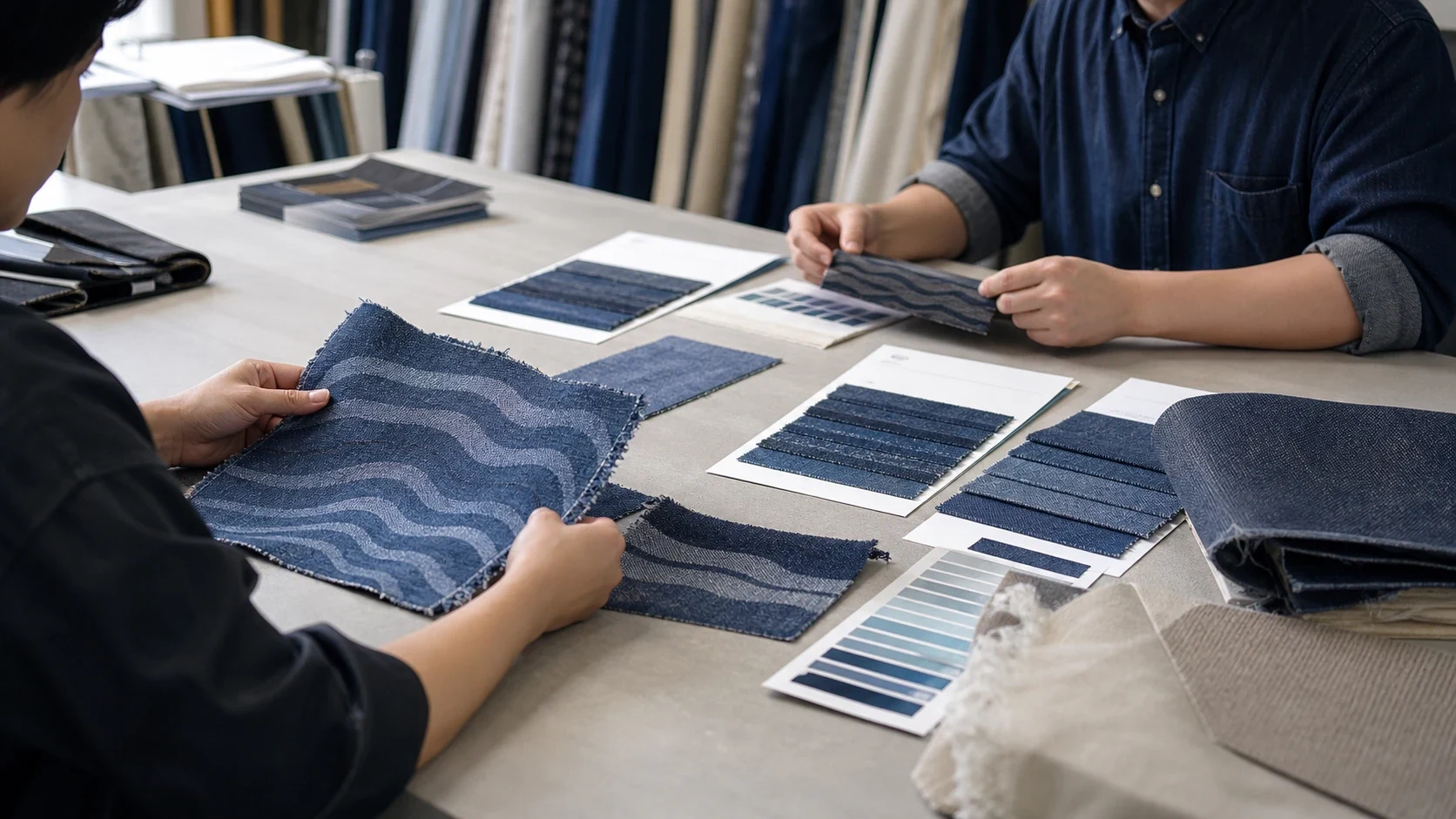
FAQ
Is wave jacquard denim the same as a printed wave denim?
No. Wave jacquard uses woven structure to create the effect, while printed denim adds the pattern at the surface level. The sourcing questions, durability behavior, and design depth are different.
What is the safest garment for a wave repeat?
Jackets, overshirts, and other garments with broader panels are often easier starting points. Shirts can also work if the wave is scaled carefully.
Why is direction planning so important?
Because wave motifs communicate movement. If the direction changes randomly from panel to panel, the garment can lose the intended flow and look unbalanced.
Should buyers approve after wash or before wash?
Usually both. Before-wash approval confirms the woven design, while after-wash approval confirms whether the repeat still works under the actual production route.
Wave Jacquard Fabric To See In Hand
A wave pattern needs movement that feels clear on the fabric, not only in a close crop.
Blue Wave Jacquard Denim Fabric 53364
Looking for a blue wave jacquard with a softer, flowing surface? Blue Wave Jacquard Denim Fabric 53364 gives your team a real swatch view for judging wave scale and blue contrast.

Use this swatch view to judge the wave scale, movement, and blue contrast before requesting a sample.
Conclusion
Wave jacquard denim succeeds when buyers treat the repeat as part of garment engineering, not only surface design. Direction, amplitude, drape, wash, and panel planning all influence whether the fabric still looks fluid and intentional in bulk. A clear brief and a disciplined sample review reduce that risk and make the wave story commercially usable.
Customization Services by LYDENIM
🎨 Custom Design
Design your own fabric collection or garment with LYDENIM’s premium materials. From luxurious cotton blends to innovative eco-friendly textiles, explore colors, weaves, and finishes that match your brand’s product direction. Visit LYDENIM to learn more.
🛍️ Tailored Garment Solutions
Bring your designs to life with custom garment services. Whether you are developing jeans, denim jackets, skirts, workwear, or small-batch fashion collections, LYDENIM can support fit, comfort, durability, and production planning. Explore customization options on My Alibaba.
📩 Get in Touch
Have a project in mind? Contact our team at malone@lydenim.com to discuss custom fabrics, garment design, sampling and production planning, or sustainable textile solutions.
Transform your ideas into reality with LYDENIM–your trusted partner for innovative, high-quality fabrics and bespoke apparel solutions.
Need help turning this into a production-ready sourcing brief?
Send your target product, fabric direction, quantity and sample needs. LY Denim can help compare options and prepare a quote.