


Estimated reading time: ~5 minutes
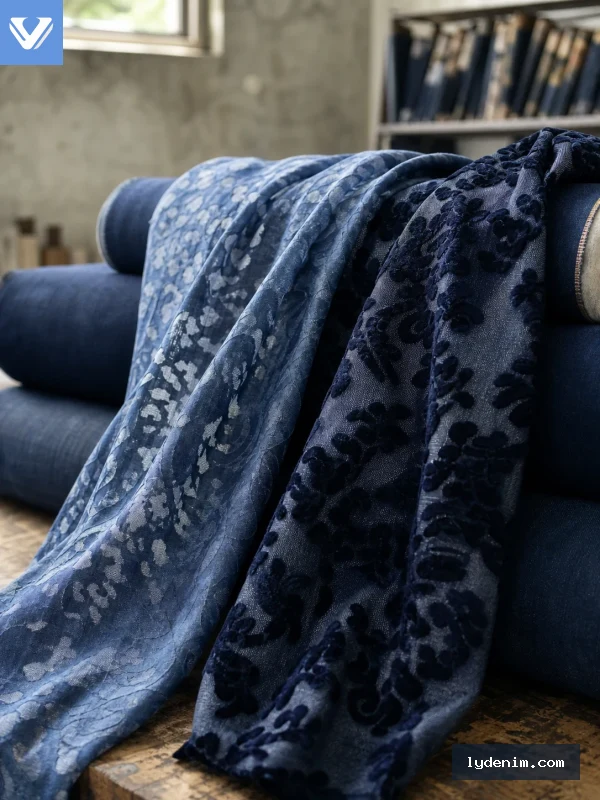
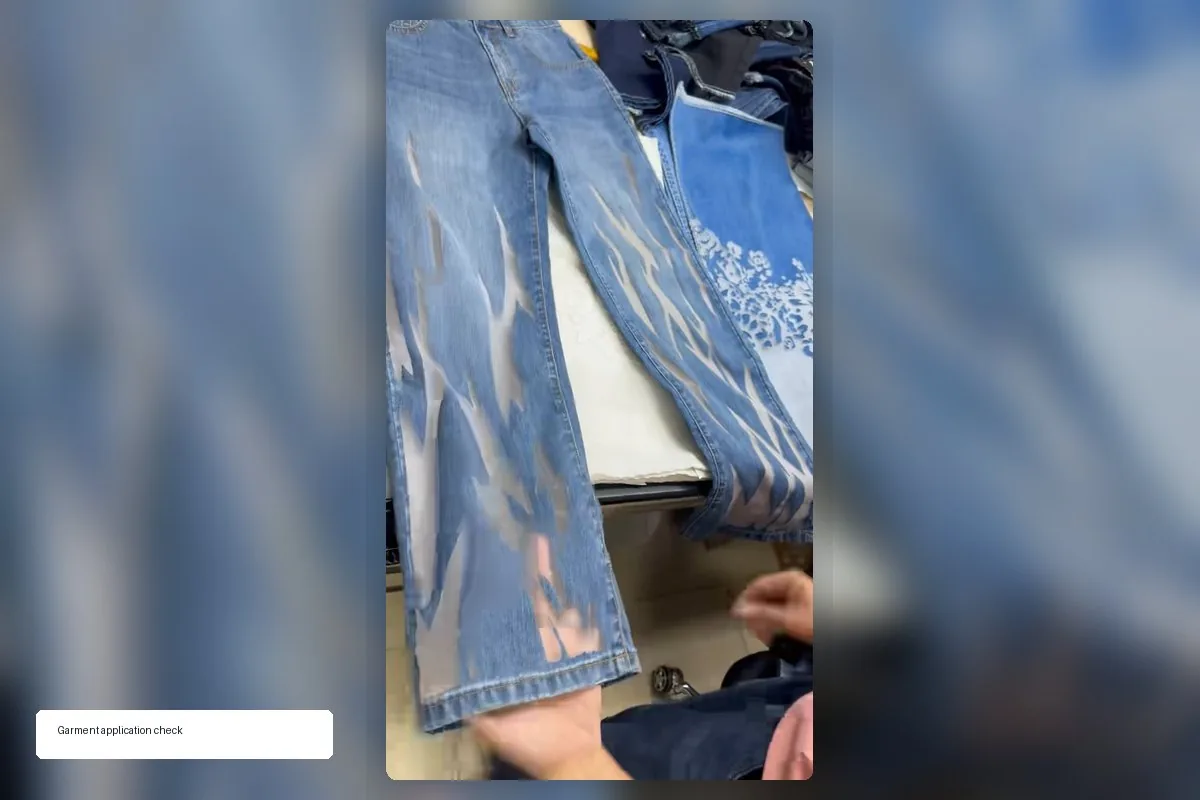
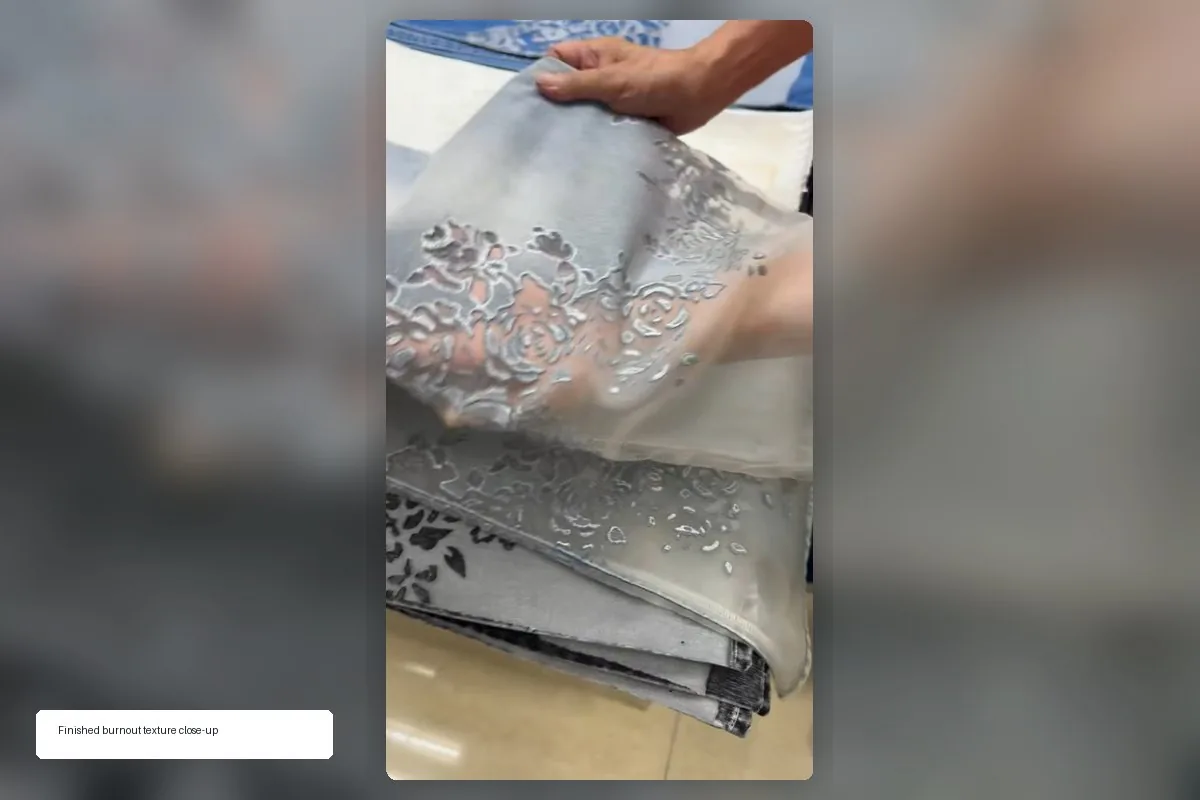
Burnout fabric and flocked fabric both create visual contrast, but they do so in opposite ways. Burnout creates depth by removing or reducing part of the fabric structure. Flocking creates depth by adding a soft raised fiber layer onto the surface. For buyers, that means the decision is not aesthetic only. It is also about strength, transparency, touch, and end use.
Buyer Decision: Burnout vs Flocking
These two surface effects can look similar on a moodboard, but they move through production very differently. Burnout changes the fabric structure; flocking adds a surface layer. That difference should shape the sampling brief, quote discussion and QC checklist.
What Buyers Should Check Before Sampling
- Need openness? Burnout is stronger for transparent or etched effects.
- Need soft touch? Flocking is stronger for raised texture and tactile depth.
- High friction area? Compare weakness risk against pile-loss risk.
- Denim product use? Test seam zones, rubbing, washing and final garment placement.
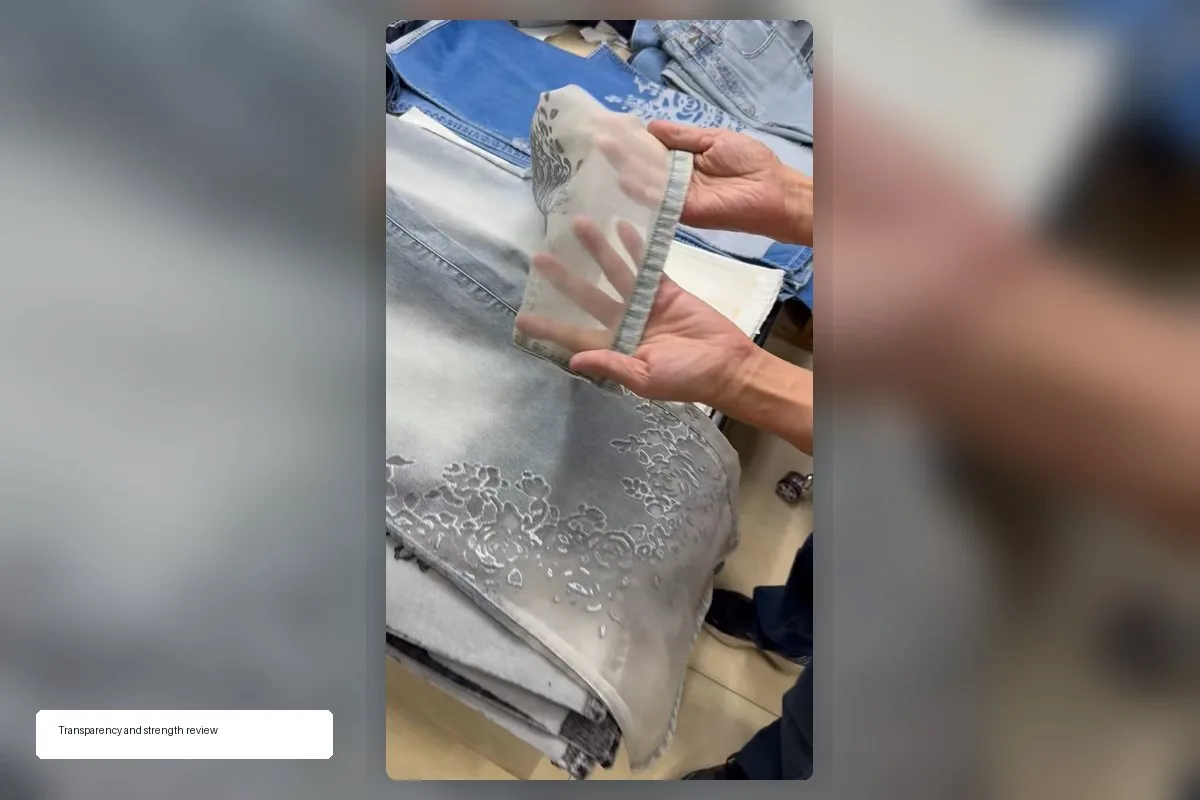
This is especially important in denim-adjacent collections. A moodboard may treat both effects as “special surface texture,” but the sampling path, garment suitability, and bulk risks are very different.
Buyer Summary
- Choose burnout when the design needs openness, negative-space contrast, or a lighter etched effect
- Choose flocking when the design needs tactile depth, soft raised texture, and clearer denim compatibility
- The main buyer mistake is choosing by visual language only instead of by performance needs and garment stress level
- In denim programs, burnout should usually be positioned more carefully than flocking
Quick Comparison Matrix
| Topic | Burnout fabric | Flocked fabric |
|---|---|---|
| Effect logic | removes or reduces part of the structure | adds short fibers to the surface |
| Main visual result | contrast, openness, partial transparency | soft raised texture and tactile light-shadow depth |
| Main technical risk | weakness, fraying, transparency control | pile loss, adhesion failure, seam-edge abrasion |
| Strongest use case | overlays, panels, trims, fashion-led capsule pieces | tactile denim accents, jackets, skirts, fashion capsules |
| Denim fit | careful and limited | broader, but still QC-sensitive |
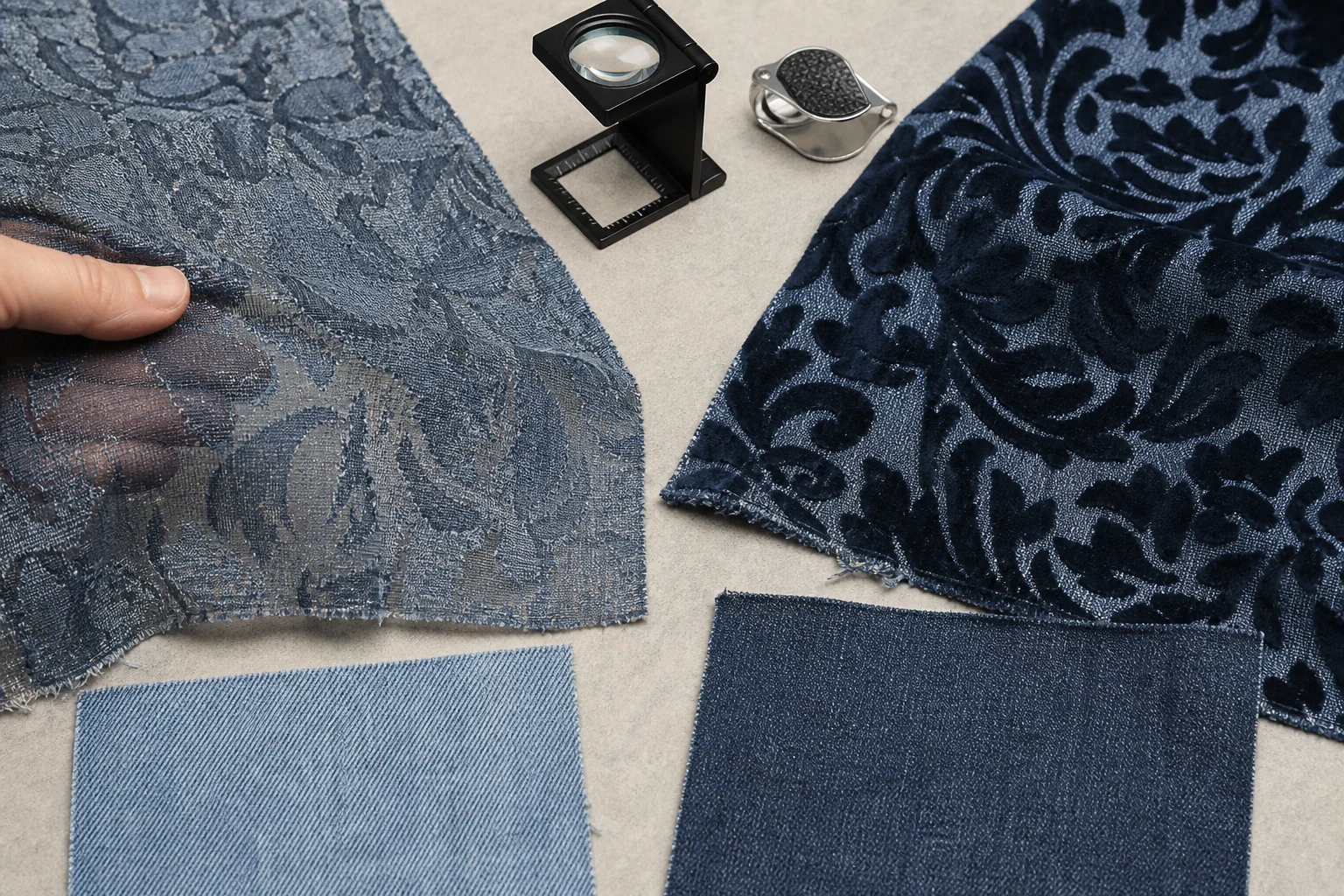
Which Effect Creates Better Depth?
The answer depends on what kind of depth the collection needs.
- Burnout creates visual depth through openness, contrast, and partial transparency.
- Flocking creates tactile depth through pile, touch, and raised surface texture.
If the collection story depends on a delicate, airy, or etched look, burnout usually creates the stronger result. If the collection needs something the customer can immediately see and feel on a denim base, flocking is usually the safer and more direct option.
When Burnout Is the Better Choice
Use burnout when:
- the design needs transparency or negative-space contrast
- the product is fashion-led and not highly abrasion-heavy
- the placement is controlled and supported by garment construction
- the effect is more important than touch softness
Burnout works best when the buyer accepts that the effect may require lining, reinforcement, or tighter placement limits. It should usually be developed with more caution on true denim programs than on lighter blended fashion fabrics.
When Flocking Is the Better Choice
Use flocking when:
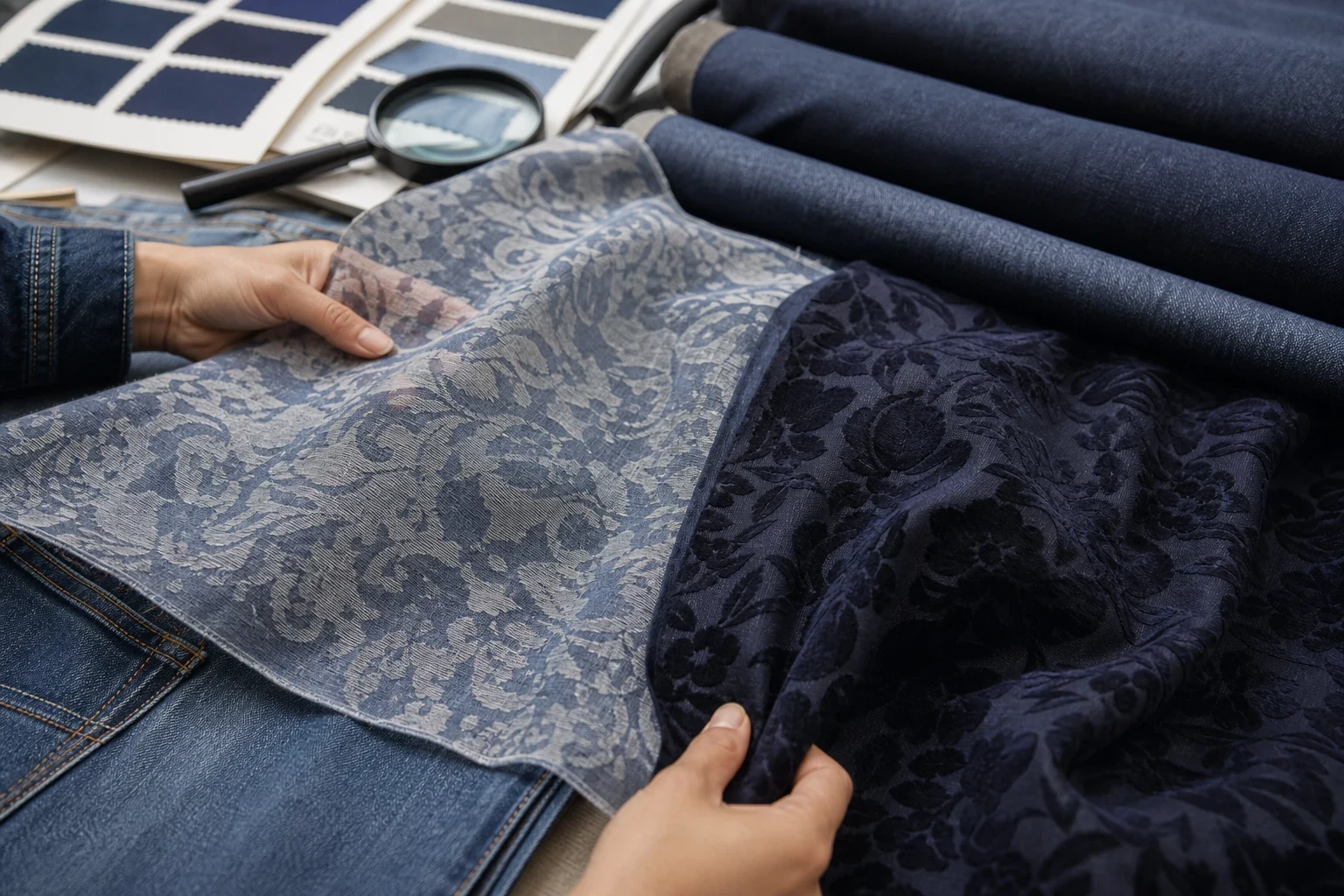
- the brand wants a soft, touchable surface
- the effect must read clearly without transparency
- denim or outerwear needs texture rather than sheer contrast
- the product can support rubbing and wash testing before bulk
Flocking often translates more naturally into tactile premium denim stories because it keeps the substrate structurally whole, even though the surface finish still needs strong QC control.
Where Each Effect Can Fail on Denim
This is where buyers usually need the clearest guidance.
Burnout can fail when:
- the base fabric is not suitable for the process
- the effect is placed in high-stress zones
- transparency becomes too extreme for the market
- the garment is washed aggressively after the effect is created
- the team expects heavy-bottom durability from a more delicate effect story
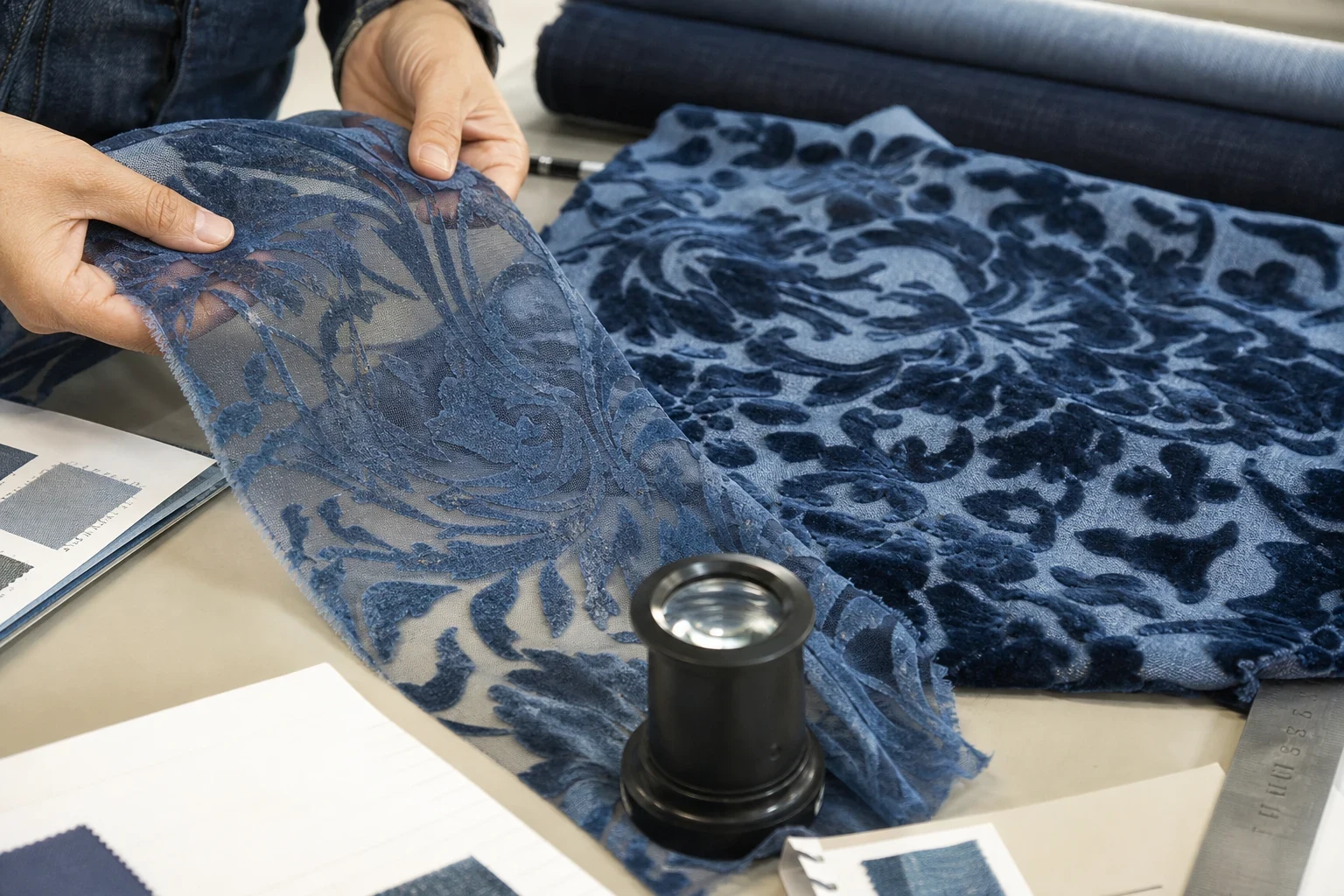
Flocking can fail when:
- the adhesive system is weak for the chosen denim base
- the effect sits too close to seams or fold lines
- the wash route was never tested on the actual sample
- the product takes heavy abrasion at seat, knee, cuff, or pocket edges
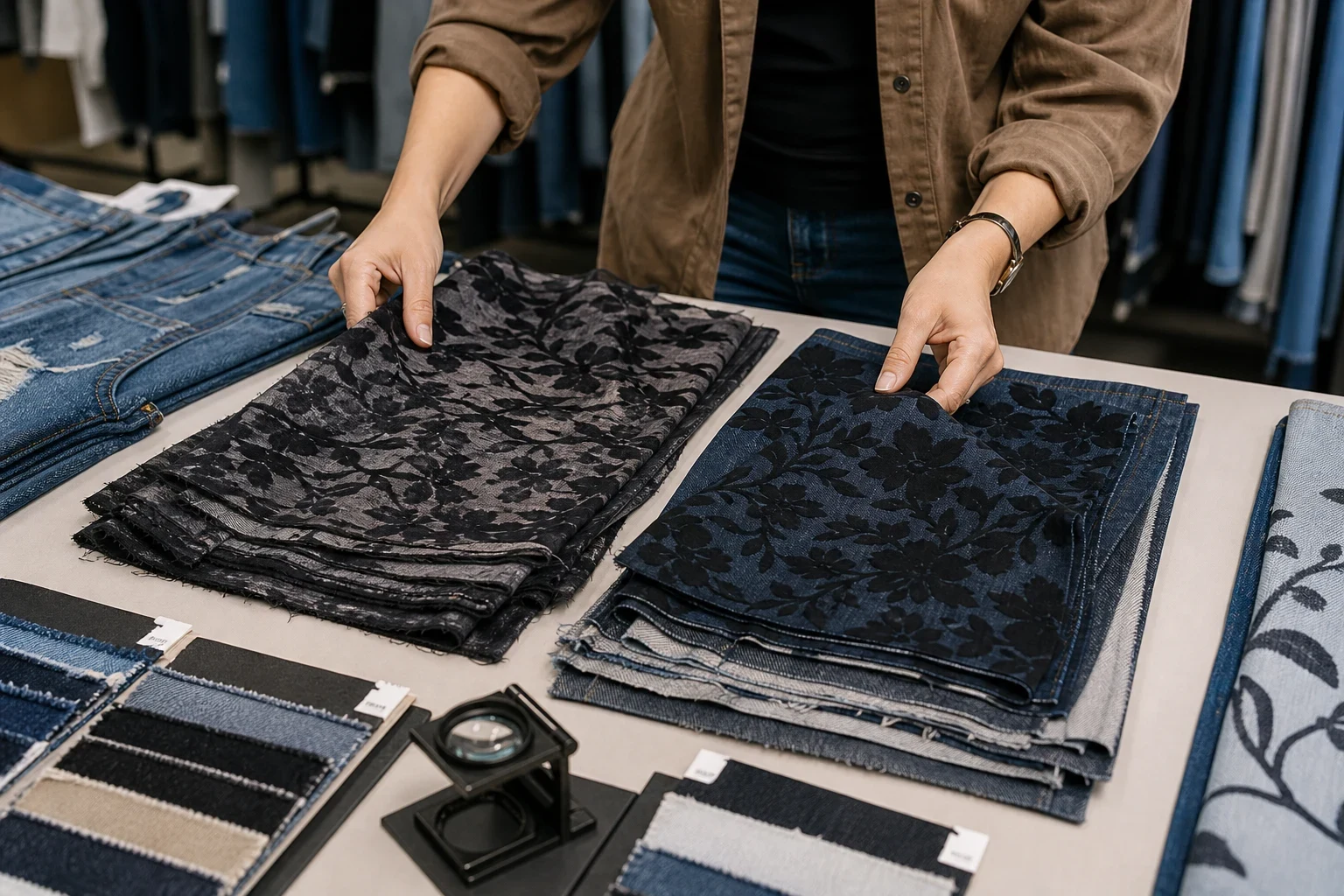
In other words: burnout is more structurally sensitive, while flocking is more finish-sensitive.
Decision Guide for Denim and Fashion Capsules
Use this sequence before you choose:
- Does the collection need transparency or touch?
- Will the garment sit in high-friction use or lighter fashion use?
- Can the product accept lining, reinforcement, or placement restrictions?
- Is the design story stronger through visual cutout depth or tactile raised texture?
- Which risk is easier for your team to manage: weakness or adhesion?
If the team cannot answer these questions clearly, the effect choice is still too early.
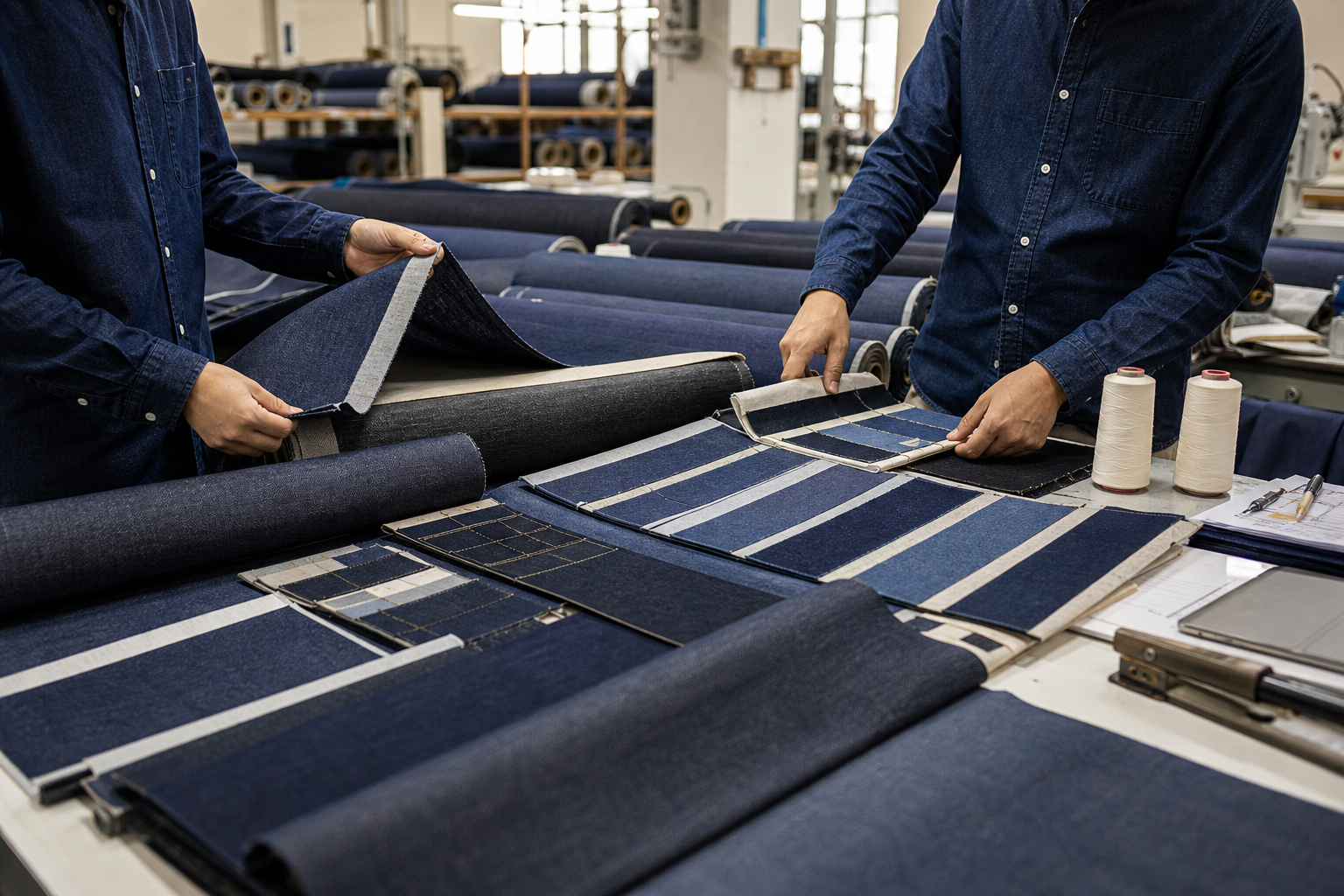
Sample Approval Priorities for Each Route
| Approval point | Burnout | Flocking |
|---|---|---|
| First sample focus | transparency level, edge cleanliness, remaining fabric strength | pile density, handfeel, edge cleanliness |
| Garment-context concern | lining, reinforcement, stress-point placement | seam clearance, fold zones, abrasion points |
| Finish concern | wash damage, fraying, openness drift | rubbing loss, wash stability, adhesive failure |
| Bulk control need | consistency of effect depth and strength | consistency of pile density and adhesion |
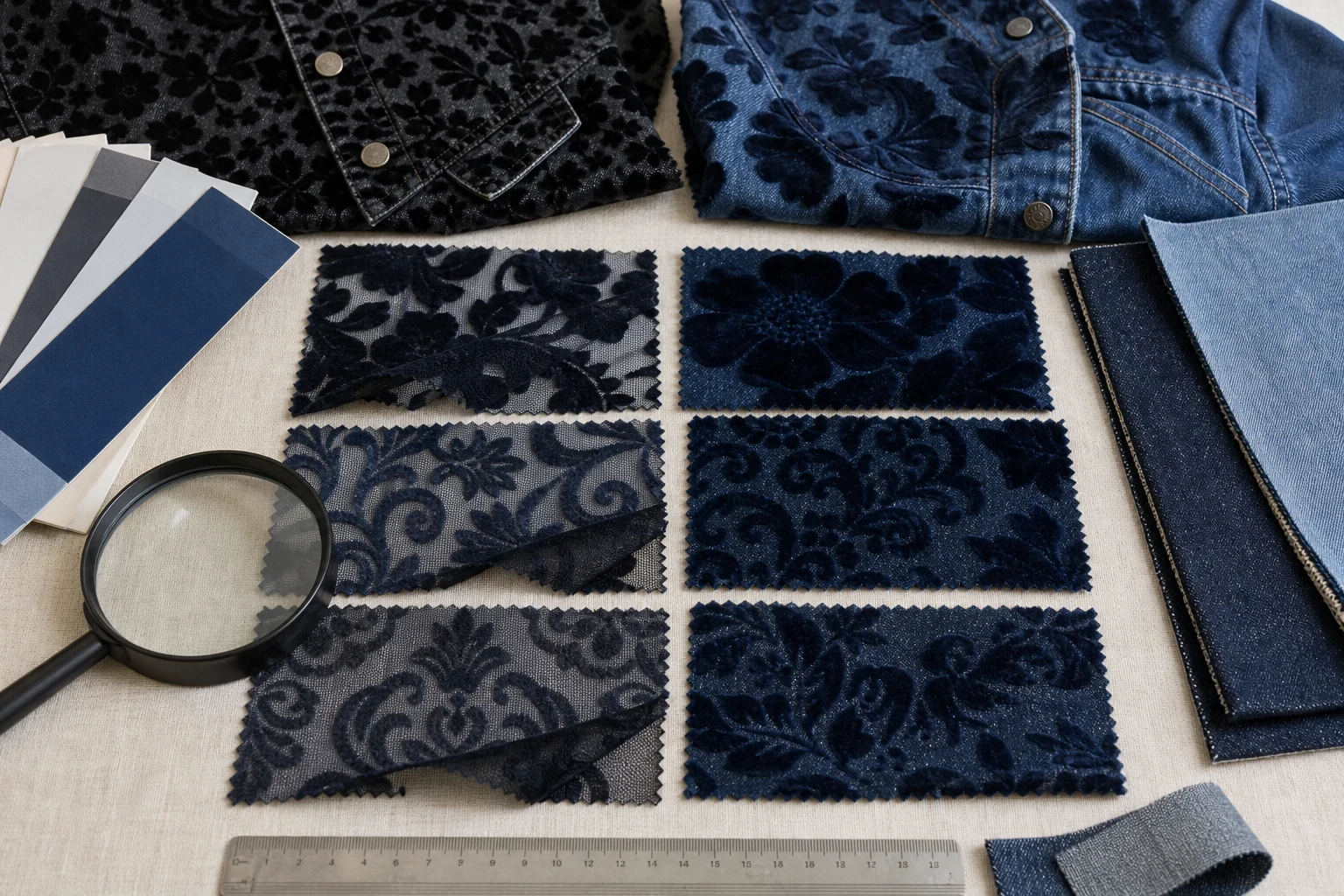
The key is not to compare the effects only by appearance. Compare them by what must be controlled before bulk.
Supplier Questions Before You Choose
Ask the supplier:
- Which effect is safer for our exact garment and base fabric?
- What is the biggest production risk if we choose burnout? What is the biggest one if we choose flocking?
- Which zones should avoid the effect entirely?
- What sample and wash tests do you require before bulk signoff?
- If we want a denim-led product, which route has the lower complaint risk after wear?
A serious supplier should be able to answer this without drifting into vague design talk.
FAQ
Which effect is safer for denim?
Usually flocking, because burnout can introduce more structural sensitivity. But flocking still needs rubbing and wash checks before bulk.
Which effect looks more premium?
Both can, but in different ways. Burnout feels more artistic and contrast-led. Flocking feels more tactile and luxury-surface driven.
Can both be used in one capsule?
Yes, if the collection is carefully edited and the use cases are clear. Burnout can support lighter fashion moments while flocking supports more tactile denim statements.
What is the biggest buyer mistake here?
Treating the two effects as interchangeable just because both look special on a moodboard. Their technical risks and garment logic are different.
Conclusion
Choose burnout for openness, contrast, and an etched visual effect. Choose flocking for tactile depth and a more denim-friendly surface story. The better route is the one whose risk profile fits your garment, wash plan, and market expectation – not simply the one that looks most dramatic in the first sample.
Customization Services by LYDENIM
🎨 Custom Design
Design your own fabric collection or garment with LYDENIM’s premium materials. From luxurious cotton blends to innovative eco-friendly textiles, explore colors, weaves, and finishes that match your brand’s product direction. Visit LYDENIM to learn more.
🛍️ Tailored Garment Solutions
Bring your designs to life with custom garment services. Whether you are developing jeans, denim jackets, skirts, workwear, or small-batch fashion collections, LYDENIM can support fit, comfort, durability, and production planning. Explore customization options on My Alibaba.
📩 Get in Touch
Have a project in mind? Contact our team at malone@lydenim.com to discuss custom fabrics, garment design, low-MOQ sampling, or sustainable textile solutions.
Need help turning this into a production-ready sourcing brief?
Send your target product, fabric direction, quantity and sample needs. LY Denim can help compare options and prepare a quote.