

Bacaan singkat: ~6 menit
Effective custom flocked denim procurement demands more than a reference image. The final product quality hinges on precise decisions about the denim base, flock color and pile, motif coverage, application stage, and the chosen garment wash. A structured development process transforms these choices into an approved strike-off, a sewn or finished sample, an agreed wash standard, and a repeatable bulk inspection plan. This guide focuses on that commercial workflow. For the process definition and basic terminology, read What Is Flocking Fabric?. For a dedicated testing checklist, use Cara Menguji Denim Flocked Sebelum Produksi Massal.
Hal yang Perlu Diketahui Sebelum Memilih
- Tentukan pakaian target dan zona gesekan tinggi sebelum memilih efek flock all-over atau placed. Langkah ini mencegah pengerjaan ulang yang mahal di kemudian hari.
- Tentukan denim dasar, arah stretch, warna flock, motif, cakupan, sentuhan pile, dan efek cuci yang diinginkan sebelum meminta penawaran harga yang sebanding. Spesifikasi yang ambigu menghasilkan penawaran yang tidak sebanding.
- Tentukan apakah proses flocking harus dilakukan pada tahap kain atau tahap garmen; kedua jalur tersebut memiliki risiko yang berbeda terkait limbah, penempatan, jahitan, dan pencucian yang secara langsung memengaruhi biaya dan kualitas.
- Setujui efek pada bahan dasar denim yang sesungguhnya dan melalui proses pakaian jadi. Jangan pernah hanya mengandalkan swatch tampilan kering, karena proses pencucian dapat mengubah daya rekat dan tampilan secara drastis.
- Penawaran harga pertama bersifat bersyarat hingga artwork, format sampel, pengujian yang diperlukan, kuantitas, kemasan, dan pasar target semuanya dikonfirmasi. Hal ini memastikan semua variabel selaras sebelum pengembangan dimulai.
Apa yang Bisa Disesuaikan?
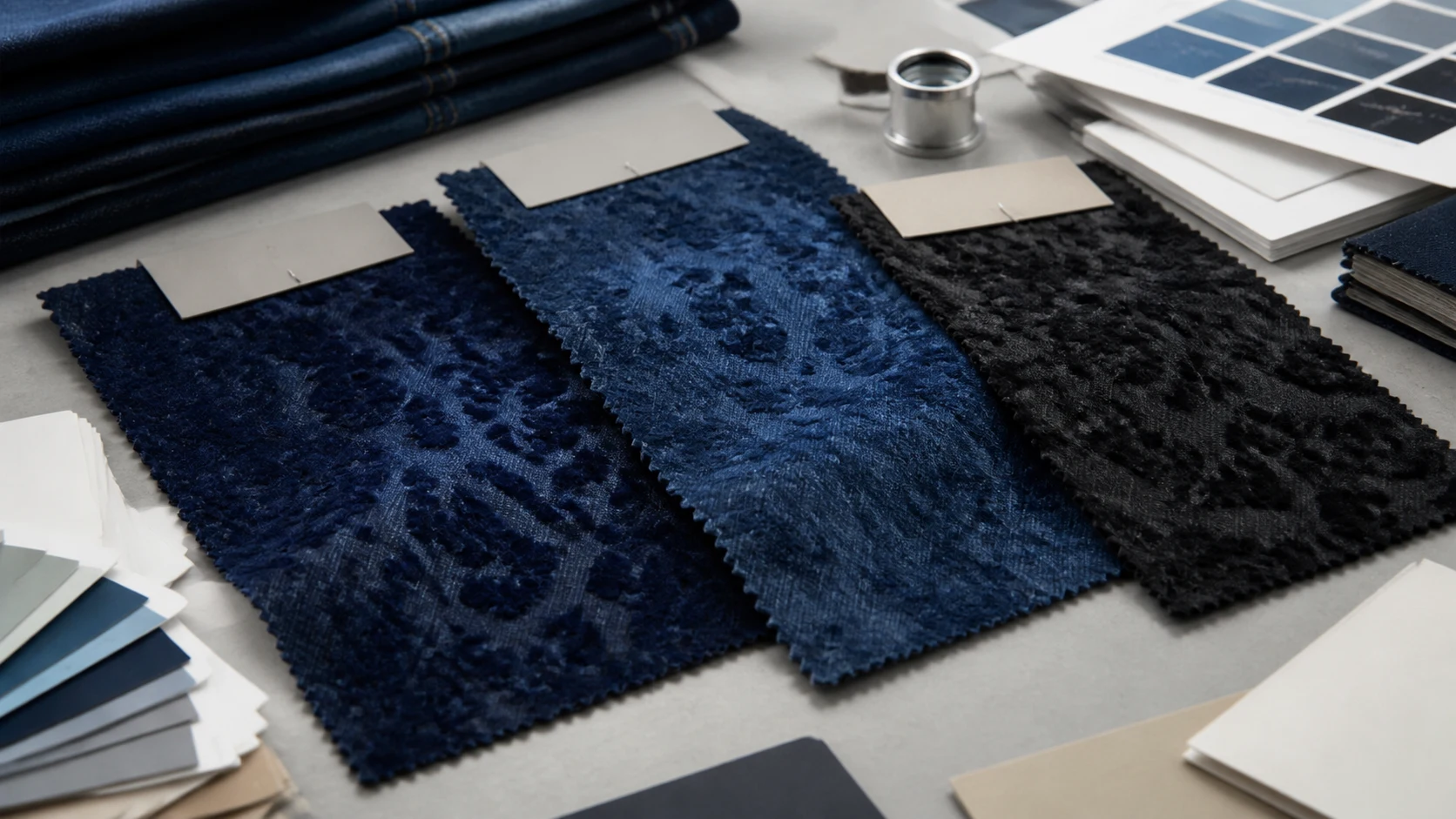
Dalam pengadaan denim flocked khusus, istilah "custom" mencakup berbagai variabel. Pembeli harus menyatakan dengan jelas elemen mana yang esensial dan mana yang dapat disesuaikan untuk meningkatkan daya tahan atau mengurangi biaya. Tabel di bawah ini menguraikan variabel pengembangan utama dan mengapa masing-masing penting.
| Variabel pengembangan | Masukan Pembeli | Mengapa Ini Mengubah Proyek |
|---|---|---|
| Dasar Denim | komposisi, arah berat, stretch, warna, konstruksi | Mempengaruhi pegangan kain, penyusutan, penjahitan, respons pencucian, dan kompatibilitas perekat. Pemilihan bahan dasar yang salah dapat melemahkan daya rekat flock. |
| Arah bulu | warna, rasa serat, tinggi tumpukan, kepadatan | Perubahan sentuhan, kedalaman visual, risiko rontok, dan perilaku abrasi. Bulu yang lebih tinggi mungkin terasa lebih lembut tetapi meningkatkan kerontokan. |
| Motif | desain, pengulangan, penempatan, ketajaman tepi | Kontrol screen/peralatan, registrasi, rencana pemotongan, dan pemeriksaan konsistensi. Motif kompleks mungkin memerlukan screen khusus dan waktu penyetelan yang lebih lama. |
| Cakupan | all-over, panel, logo, trim, gradasi | Mempengaruhi penggunaan material, penanganan, limbah garmen, dan titik inspeksi. Flocking menyeluruh mengonsumsi lebih banyak flock dan menuntut presisi yang lebih tinggi dalam pemotongan. |
| Tahap aplikasi | Tahap kain atau tahap garmen | Mengubah kontrol penempatan, eksposur jahitan, dan urutan operasi pencucian. Pilihan yang salah dapat menyebabkan jahitan yang lemah atau desain yang tidak sejajar. |
| Rute Finishing | rinse, enzyme, abrasion, tint, softening, atau proses lain yang disetujui pembeli | Dapat mengubah daya rekat, tampilan pile, corak warna, dan handfeel garmen. Finishing agresif seperti enzim berat atau sandblasting dapat merusak flock. |
Hindari meminta pemasok untuk mengoptimalkan semua variabel sekaligus. Brief yang lebih berguna mengidentifikasi prioritas komersial: misalnya, soft hand, kontras yang tajam, penempatan yang dapat diulang, atau ketahanan superior terhadap gesekan pada pemakaian normal. Kejelasan ini membantu pabrik menyarankan proses dan material yang paling sesuai.
Flocking Tahap Kain vs Flocking Tahap Garmen
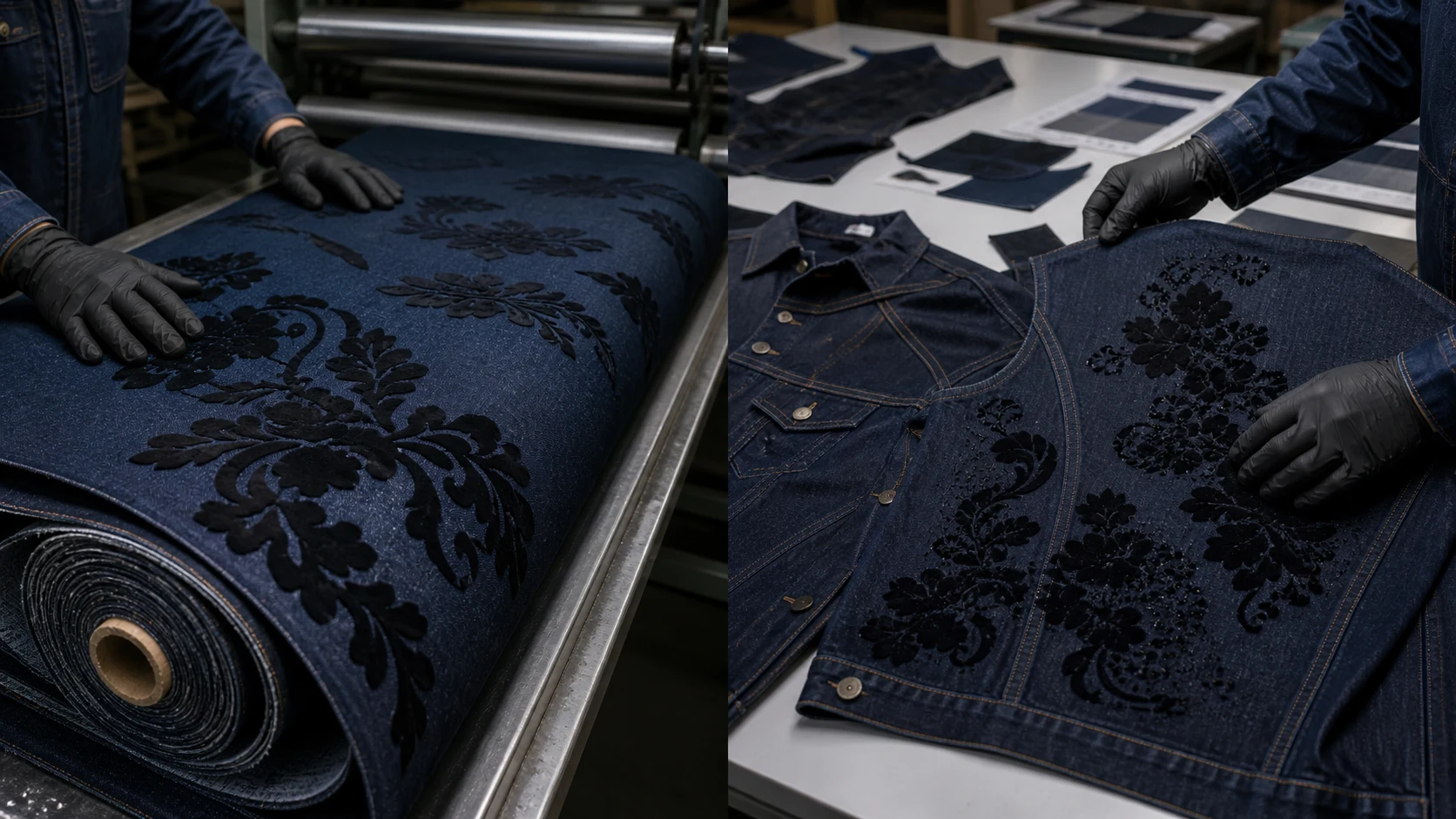
Salah satu keputusan paling kritis dalam pengadaan denim flocked khusus adalah tahap aplikasi. Dua jalur utama adalah flocking pada tahap kain dan flocking pada tahap garmen, masing-masing dengan keunggulan dan risiko yang berbeda.
Flocking pada tahap kain diaplikasikan sebelum material dipotong. Metode ini praktis untuk yardage seluruh permukaan dan panel berulang, tetapi pembeli harus memperhitungkan limbah potong, area jahitan, serta perilaku permukaan berflocking selama penjahitan dan penyelesaian garmen. Misalnya, flock yang tebal dapat menyumbat jarum atau menyebabkan jahitan tidak rata, sehingga uji jahit pra-produksi sangat penting.
Flocking tahap garment menerapkan efek tersebut pada pakaian jadi atau komponen terpilih. Ini dapat meningkatkan kontrol penempatan untuk logo, area saku, atau panel lokal, namun meningkatkan penanganan potongan dan memerlukan toleransi posisi yang jelas. Rute ini sering cocok untuk produksi skala kecil atau penempatan rumit di mana presisi lebih diutamakan daripada pemanfaatan kain.
| Titik keputusan | Rute Tahap Kain | Rute tahap garment |
|---|---|---|
| Penggunaan umum | all-over atau yardage berulang | artwork yang ditempatkan, logo, dan panel terpilih |
| Keunggulan utama | efek yang konsisten di seluruh lebar efektif kain | kontrol yang lebih kuat pada posisi di garmen |
| Risiko utama | kerugian pemotongan dan kerusakan pada jahitan atau area dengan gesekan tinggi | pergeseran penempatan dan penanganan potongan ekstra |
| Sampel Persetujuan | yardage flocked serta panel jahit/cuci | prototipe garment yang telah diselesaikan hingga finishing yang dituju |
Tidak ada satu metode pun yang secara otomatis lebih baik. Pemasok sebaiknya merekomendasikan salah satu setelah meninjau jenis garmen, kompleksitas artwork, jumlah pesanan, jalur pencucian, dan ekspektasi toleransi Anda. Selama proses sampling, selalu verifikasi performa flock setelah siklus pencucian yang direncanakan untuk mendeteksi tanda-tanda awal pengelupasan atau perubahan warna.
Buat Brief yang Siap untuk Penawaran
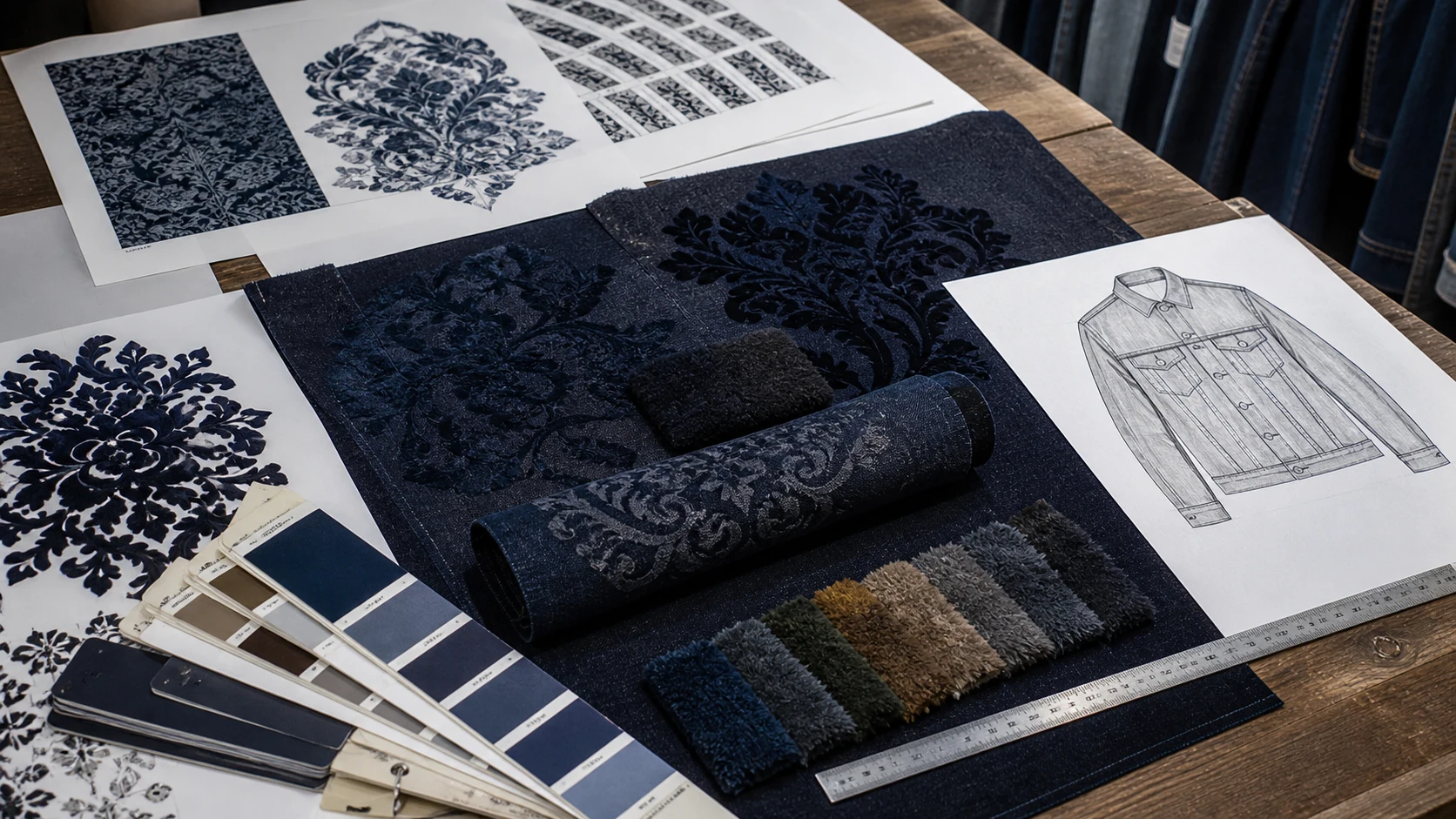
Kutipan yang kuat dimulai dengan brief yang jelas. Untuk pengadaan denim flocked custom yang sukses, kirimkan informasi yang cukup agar pemasok dapat mengutip proyek yang sama dengan yang ingin Anda setujui.
- Penggunaan akhir: jaket, jeans, rok, tas, trim, atau produk lainnya. Ini menentukan kebutuhan konstruksi dan daya tahan.
- Gambar referensi beserta artwork yang dapat diedit jika tersedia. File vektor membantu dalam penskalaan dan pembuatan screen.
- Dimensi motif, arah repeat, peta penempatan, dan area cakupan. Buat sketsa garment untuk menunjukkan lokasi aplikasi flock.
- Persyaratan denim dasar atau permintaan untuk pilihan swatch yang sesuai dari pabrik. Tentukan berat, komposisi, dan warna.
- Peregangan, warna, sentuhan, dan arah bobot. Hal-hal ini memengaruhi baik kenyamanan maupun daya rekat serat.
- Peruntukan cuci garmen dan area yang terpapar gesekan berulang. Mohon diperjelas: apakah akan ada abrasi berat pada lutut atau bagian bokong?
- Jumlah sampel, perkiraan jumlah pesanan massal, rentang ukuran, dan target pasar. Faktor-faktor ini memengaruhi waktu produksi dan kepatuhan terhadap standar regional.
Menyediakan semua ini di awal mengurangi bolak-balik dan mempercepat persiapan lab dip dan sampel. Tanpa itu, penawaran harga mungkin tidak dapat dibandingkan.
FAQ Umum dalam Pengadaan Denim Flocked Custom
T: Berapa lama waktu yang dibutuhkan untuk pengembangan denim flocked custom?
A: Biasanya, 2-4 minggu untuk strike-off pertama, ditambah 1-2 minggu untuk sampel garment jika tidak ada penyesuaian besar yang diperlukan. Motif yang rumit atau bahan dasar baru dapat memperpanjang jangka waktu tersebut.
T: Apa saja cacat paling umum yang harus saya perhatikan?
J: Adhesi yang buruk, tumpukan yang tidak rata, ketidakkonsistenan warna, kerontokan, dan slip jahitan adalah yang paling umum. Selalu uji sampel cuci menggunakan resep pencucian produksi Anda sebelum persetujuan produksi massal.
T: Bisakah saya menggunakan bahan dasar denim sendiri atau apakah saya perlu mendapatkannya dari pabrik?
A: Anda dapat memasok kain dasar sendiri, tetapi pabrik harus memverifikasinya untuk kompatibilitas perekat dan kontrol penyusutan. Memasok melalui pabrik sering kali memastikan konsistensi.
Kesimpulan
Menguasai pengadaan denim berbulu (flocked) kustom berarti melampaui sekadar estetika menuju proses yang sistematis. Dengan mendefinisikan variabel sejak awal, memilih tahap aplikasi yang tepat, dan menguji pada pakaian jadi, pembeli dapat mengamankan produk yang memenuhi ekspektasi performa dan desain. RFQ yang jelas dan persetujuan sampel yang cermat tidak hanya mengurangi risiko tetapi juga membangun kemitraan yang lebih kuat dengan pemasok denim Anda.
Mempertimbangkan versi khusus?
🎨 Desain Khusus
Design your own fabric collection or garment with LYDENIM’s premium materials. From luxurious cotton blends to innovative eco-friendly textiles, explore colors, weaves, and finishes that match your brand’s product direction. Visit LYDENIM Untuk mengetahui lebih lanjut.
聊城: Solusi Pakaian Khusus
Bring your designs to life with custom garment services. Whether you are developing jeans, denim jackets, skirts, workwear, or small-batch fashion collections, LYDENIM can support fit, comfort, durability, and production planning. Explore customization options on My Alibaba.
📥 Hubungi Kami
Memiliki proyek yang ingin Anda wujudkan? Hubungi tim kami di Malone@lydenim.com to discuss custom fabrics, garment design, low-MOQ sampling, or sustainable textile solutions.
Transform your ideas into reality with LYDENIM–your trusted partner for innovative, high-quality fabrics and bespoke apparel solutions.
Need help turning this into a production-ready sourcing brief?
Send your target product, fabric direction, quantity and sample needs. LY Denim can help compare options and prepare a quote.