


Temps de lecture estimé : ~6 minutes
Effective custom flocked denim procurement demands more than a reference image. The final product quality hinges on precise decisions about the denim base, flock color and pile, motif coverage, application stage, and the chosen garment wash. A structured development process transforms these choices into an approved strike-off, a sewn or finished sample, an agreed wash standard, and a repeatable bulk inspection plan. This guide focuses on that commercial workflow. For the process definition and basic terminology, read What Is Flocking Fabric?. For a dedicated testing checklist, use Comment tester le denim floqué avant la production en série.
Résumé pour l'acheteur
- Définissez le vêtement cible et les zones à forte friction avant de choisir un effet flock intégral ou localisé. Cette étape évite des reprises coûteuses par la suite.
- Verrouillez le denim de base, le sens du stretch, la couleur du flock, le motif, la couverture, le toucher du poil et le lavage souhaité avant de demander un devis comparable. Des spécifications ambiguës entraînent des offres non comparables.
- Décidez si le flockage doit avoir lieu au stade du tissu ou au stade du vêtement ; les deux voies comportent des risques différents de déchets, de placement, de couture et de lavage qui affectent directement le coût et la qualité.
- Validez l'effet sur la véritable base en denim et via le circuit réel du vêtement. Ne vous fiez jamais uniquement à un échantillon sec de présentation, car les traitements de lavage peuvent modifier radicalement l'adhérence et l'apparence.
- Le premier devis est considéré comme conditionnel jusqu'à ce que l'artwork, le format d'échantillon, les tests requis, la quantité, l'emballage et le marché cible soient tous confirmés. Cela garantit que toutes les variables sont alignées avant le début du développement.
Qu'est-ce qui peut être personnalisé ?
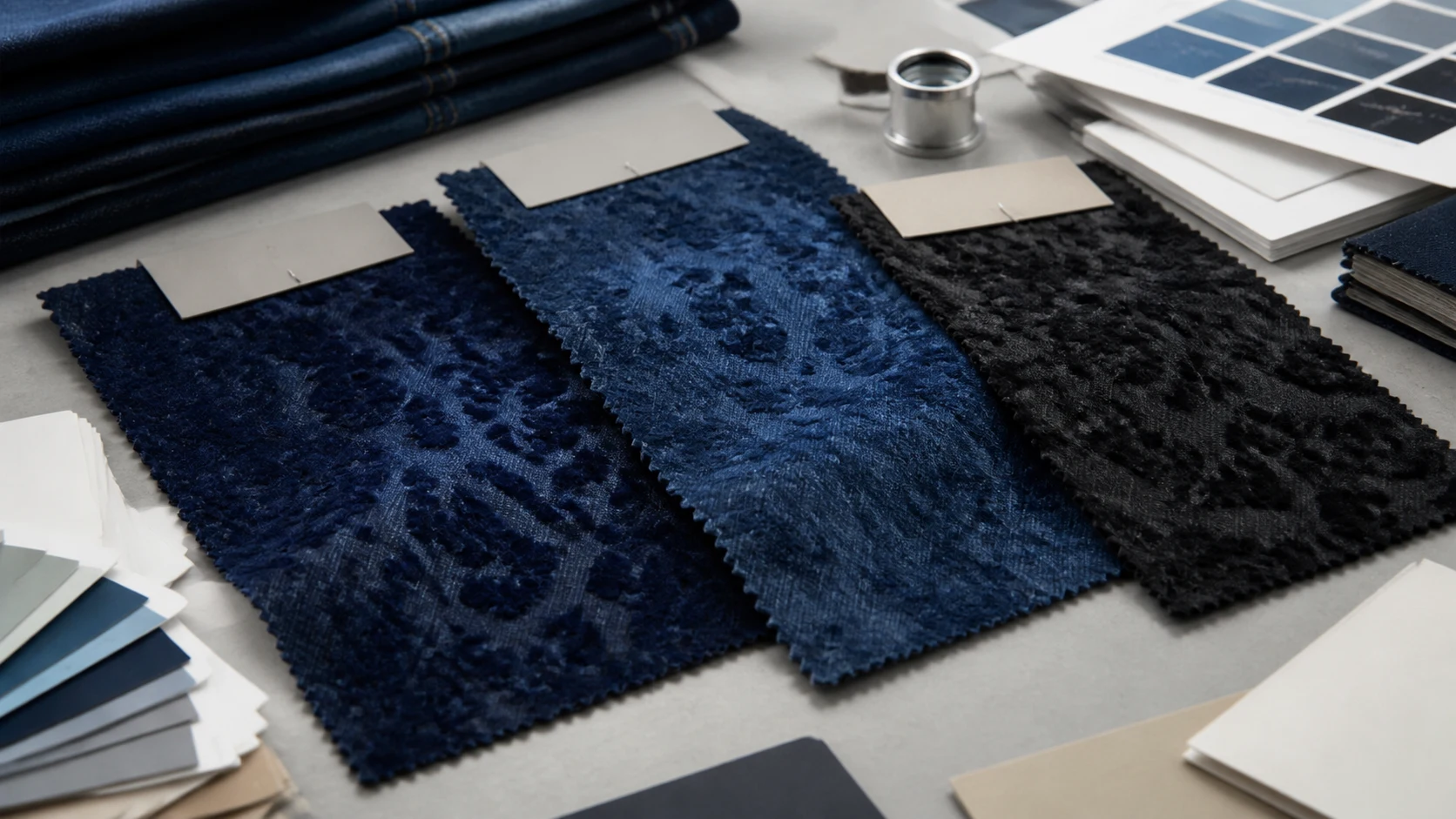
In custom flocked denim procurement, the term “custom” covers a wide range of variables. Buyers should clearly state which elements are essential and which can be adjusted to improve durability or reduce cost. The table below outlines the main development variables and why each matters.
| Variable de développement | Saisie de l'acheteur | Pourquoi cela change le projet |
|---|---|---|
| Base denim | composition, grammage, sens, élasticité, couleur, construction | Affecte le toucher, le rétrécissement, la couture, le comportement au lavage et la compatibilité adhésive. Choisir la mauvaise base peut compromettre l'adhérence du flock. |
| Flock direction | color, fiber feel, pile height, density | Changes touch, visual depth, shedding risk, and abrasion behavior. Higher pile may feel softer but increases shedding. |
| Motif | artwork, repeat, placement, edge definition | Controls screens/tools, registration, cutting plan, and consistency checks. Complex motifs may require specialized screens and longer setup times. |
| Coverage | all-over, panel, logo, trim, gradient | Impacts material use, handling, garment waste, and inspection points. All-over flocking consumes more flock and demands higher precision in cutting. |
| Application stage | fabric-stage or garment-stage | Changes placement control, seam exposure, and the order of washing operations. A wrong choice can lead to weak seams or misaligned designs. |
| Itinéraire de finition | rinse, enzyme, abrasion, tint, softening, or other buyer-approved route | Can alter adhesion, pile appearance, shade, and garment handfeel. Aggressive finishes like heavy enzyme or sandblasting may damage flock. |
Avoid asking a supplier to optimize every variable at once. A more useful brief identifies the commercial priority: for example, soft hand, sharp contrast, repeatable placement, or superior resistance to rubbing in normal wear. This clarity helps the mill suggest the most suitable process and materials.
Flocage au stade du tissu vs au stade du vêtement
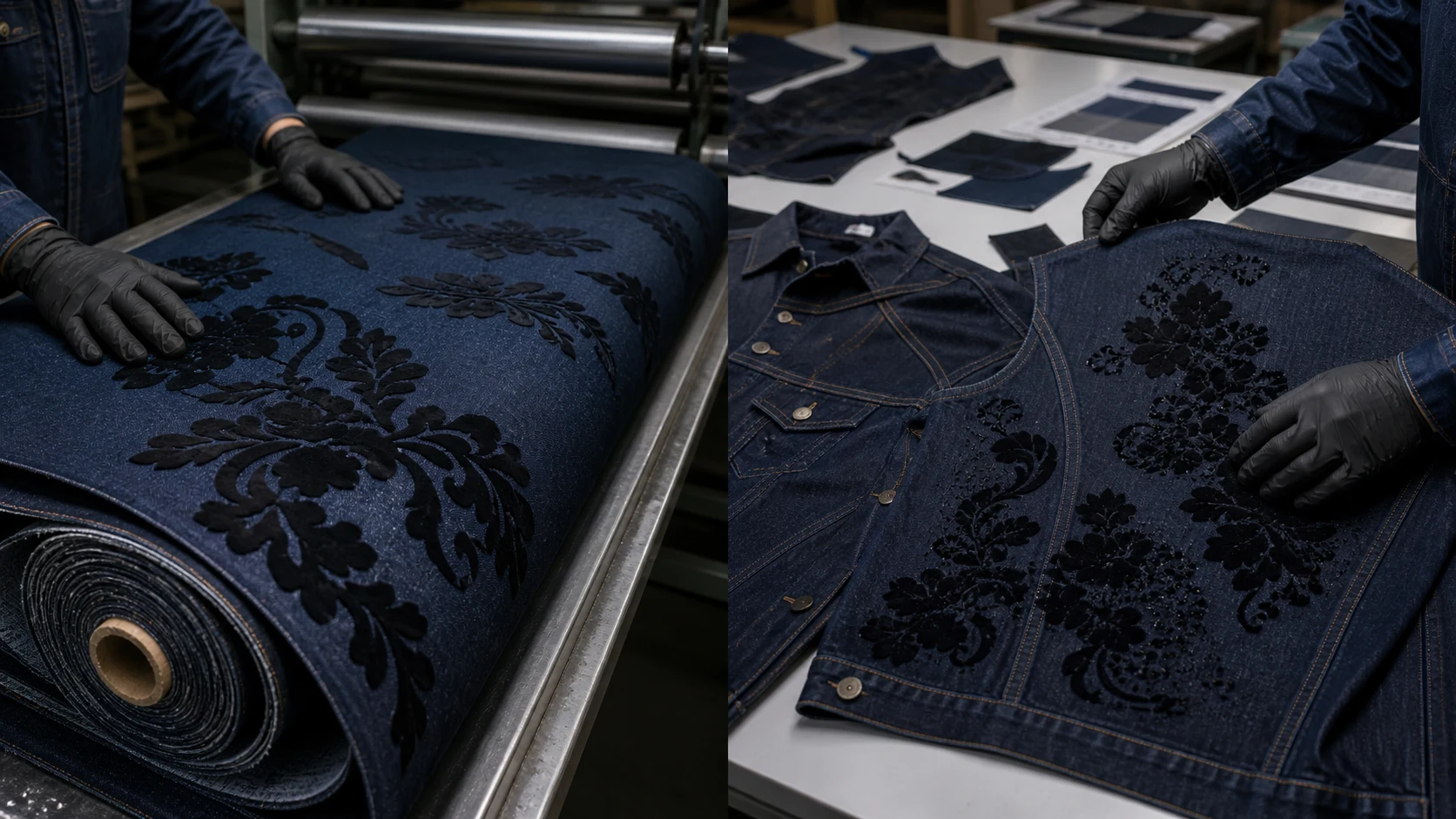
One of the most critical decisions in custom flocked denim procurement is the application stage. The two main routes are fabric-stage flocking and garment-stage flocking, each with distinct advantages and risks.
Fabric-stage flocking applies the effect before the material is cut. It is practical for all-over yardage and repeated panels, but the buyer must plan for cutting waste, seam zones, and the way the flocked surface behaves during sewing and garment finishing. For example, thick flock may clog needles or cause uneven seams, so pre-production sewing trials are essential.
Garment-stage flocking applies the effect to a sewn garment or selected components. It can improve placement control for logos, pocket areas, or local panels, but it increases piece handling and requires clear positioning tolerances. This route often suits smaller runs or intricate placements where precision outweighs fabric utilization.
| Point de décision | Fabric-stage route | Garment-stage route |
|---|---|---|
| Utilisation typique | all-over or repeated yardage | placed artwork, logos, selected panels |
| Principal avantage | consistent effect across usable fabric width | stronger control of location on the garment |
| Risque principal | cutting loss and damage at seams or high-friction zones | placement drift and extra piece handling |
| Approval sample | flocked yardage plus sewn/washed panel | completed proto garment through the intended finish |
Neither route is automatically better. The supplier should recommend one after reviewing your garment type, artwork complexity, order quantity, wash route, and tolerance expectations. During sampling, always verify the flock’s performance after the planned wash cycle to catch early signs of peeling or color change.
Build a Quote-Ready Brief
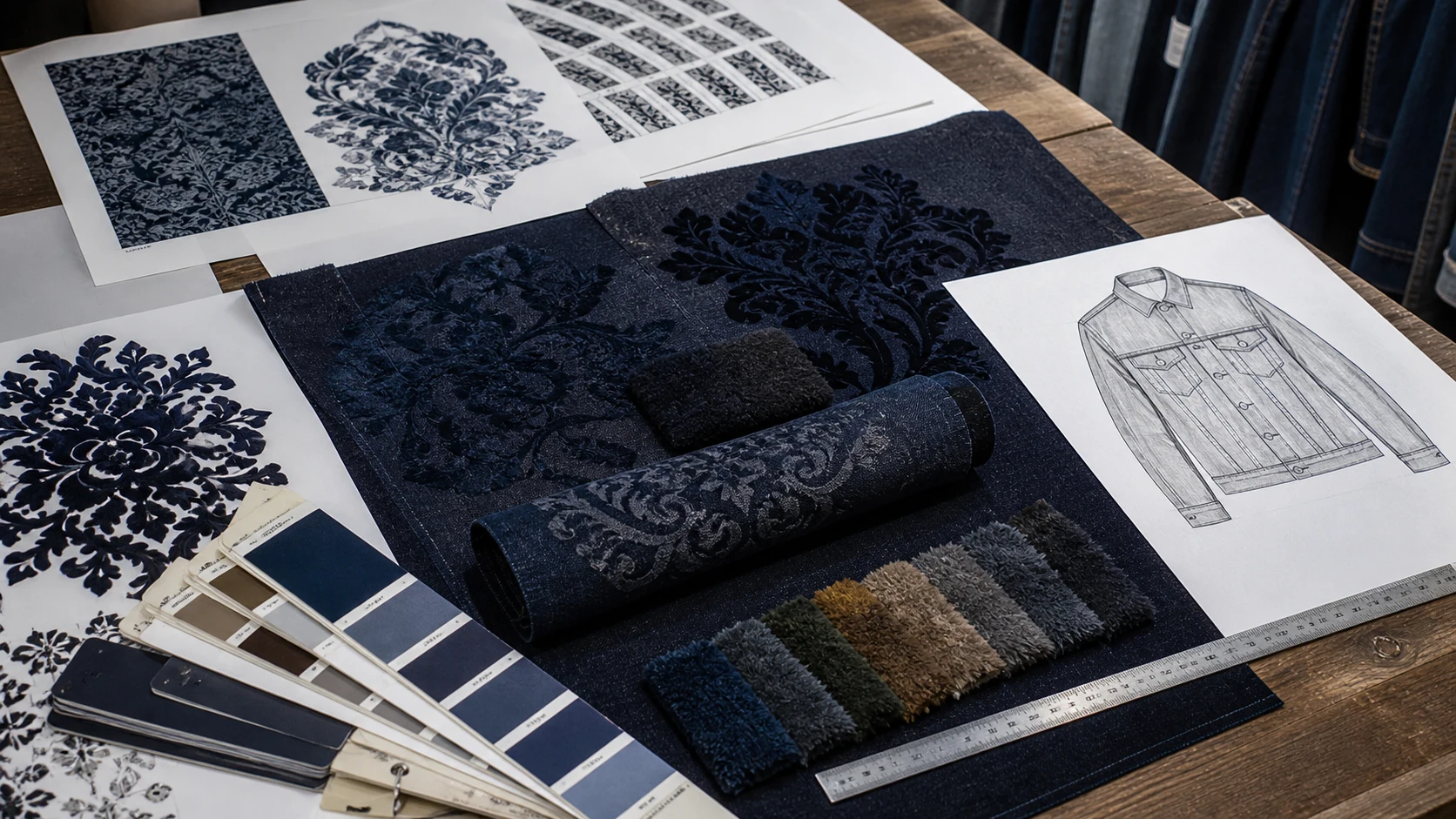
A strong quote starts with a clear brief. For successful custom flocked denim procurement, send enough information for the supplier to quote the same project you intend to approve:
- End use: jacket, jeans, skirt, bag, trim, or another product. This informs construction and durability needs.
- Reference image plus editable artwork when available. Vector files help with scaling and screen making.
- Motif dimensions, repeat direction, placement map, and coverage area. Sketch the garment to show where flock appears.
- Base denim requirement or a request for suitable swatch options from the mill. Specify weight, composition, and color.
- Stretch, color, handfeel, and weight direction. These affect both comfort and flock adhesion.
- Intended garment wash and areas exposed to repeated rubbing. Be specific: will there be heavy abrasion on knees or seat?
- Sample quantity, estimated bulk quantity, size range, and target market. These impact lead times and compliance with regional standards.
Providing all this upfront reduces back-and-forth and speeds up lab dip and sample preparation. Without it, quotes may not be comparable.
Common FAQ in Custom Flocked Denim Procurement
Q: How long does custom flocked denim development take?
A: Typically, 2-4 weeks for the first strike-off, plus 1-2 weeks for a garment sample if no major adjustments are needed. Complex motifs or new base fabrics may extend the timeline.
Q: What are the most common defects I should watch for?
A: Poor adhesion, uneven pile, color inconsistency, shedding, and seam slip are most common. Always test a washed sample using your production wash recipe before bulk approval.
Q: Can I use my own denim base or do I need to source from the mill?
A: You can supply your own base fabric, but the mill must verify it for adhesive compatibility and shrinkage control. Supplying through the mill often ensures consistency.
Synthèse
Mastering custom flocked denim procurement means moving beyond aesthetics to a systematic process. By defining variables early, choosing the right application stage, and testing on real garments, buyers can secure a product that meets performance and design expectations. A clear RFQ and diligent sample approval not only reduce risk but also build a stronger partnership with your denim supplier.
Services de personnalisation par LYDENIM
🎨 Design personnalisé
Design your own fabric collection or garment with LYDENIM’s premium materials. From luxurious cotton blends to innovative eco-friendly textiles, explore colors, weaves, and finishes that match your brand’s product direction. Visit LYDENIM pour en savoir plus.
🛍️ Solutions de vêtements sur mesure
Bring your designs to life with custom garment services. Whether you are developing jeans, denim jackets, skirts, workwear, or small-batch fashion collections, LYDENIM can support fit, comfort, durability, and production planning. Explore customization options on My Alibaba.
📩 Contactez-nous
Vous avez un projet en tête ? Contactez notre équipe au malone@lydenim.com to discuss custom fabrics, garment design, low-MOQ sampling, or sustainable textile solutions.
Transform your ideas into reality with LYDENIM–your trusted partner for innovative, high-quality fabrics and bespoke apparel solutions.
Need help turning this into a production-ready sourcing brief?
Send your target product, fabric direction, quantity and sample needs. LY Denim can help compare options and prepare a quote.