


อ่านเร็ว: ประมาณ 6 นาที
Effective custom flocked denim procurement demands more than a reference image. The final product quality hinges on precise decisions about the denim base, flock color and pile, motif coverage, application stage, and the chosen garment wash. A structured development process transforms these choices into an approved strike-off, a sewn or finished sample, an agreed wash standard, and a repeatable bulk inspection plan. This guide focuses on that commercial workflow. For the process definition and basic terminology, read What Is Flocking Fabric?. For a dedicated testing checklist, use วิธีการทดสอบผ้าเดนิมฟล็อคก่อนการผลิตจำนวนมาก.
สิ่งที่ควรรู้ก่อนตัดสินใจเลือก
- กำหนดเสื้อผ้าเป้าหมายและบริเวณที่เสียดสีสูงก่อนเลือกใช้เอฟเฟกต์ฟล็อก (flock effect) แบบ all-over หรือแบบ placed ขั้นตอนนี้ช่วยป้องกันการทำงานซ้ำที่มีต้นทุนสูงในภายหลัง
- กำหนดเดนิมพื้นฐาน ทิศทางการยืดหยุ่น สีฟล็อก ลวดลาย ความครอบคลุม ความรู้สึกของขน และผลการซักที่ต้องการก่อนขอใบเสนอราคาเพื่อการเปรียบเทียบ ข้อมูลจำเพาะที่ไม่ชัดเจนนำไปสู่ข้อเสนอที่ไม่สามารถเปรียบเทียบกันได้
- ตัดสินใจว่าการทำฟล็อกกิ้งควรเกิดขึ้นในขั้นตอนการผลิตผ้าหรือขั้นตอนการผลิตเสื้อผ้าสำเร็จรูป โดยทั้งสองวิธีมีความเสี่ยงที่แตกต่างกันในเรื่องของของเสีย ตำแหน่งการวาง ตะเข็บ และการซัก ซึ่งส่งผลโดยตรงต่อต้นทุนและคุณภาพ
- อนุมัติเอฟเฟกต์บนตัวเดนิมจริงและผ่านเส้นทางการผลิตเสื้อผ้าจริง อย่าพึ่งพาเพียงตัวอย่างผ้าแบบแห้งเพียงอย่างเดียว เนื่องจากกระบวนการซักสามารถเปลี่ยนแปลงการยึดเกาะและรูปลักษณ์ได้อย่างมาก
- ให้ถือว่าใบเสนอราคาแรกเป็นแบบมีเงื่อนไข จนกว่าจะมีการยืนยันงานอาร์ตเวิร์ก รูปแบบตัวอย่างสินค้า การทดสอบที่จำเป็น ปริมาณ บรรจุภัณฑ์ และตลาดเป้าหมายทั้งหมด ทั้งนี้เพื่อให้แน่ใจว่าตัวแปรทุกอย่างมีความสอดคล้องกันก่อนเริ่มการพัฒนา
สามารถปรับแต่งอะไรได้บ้าง?
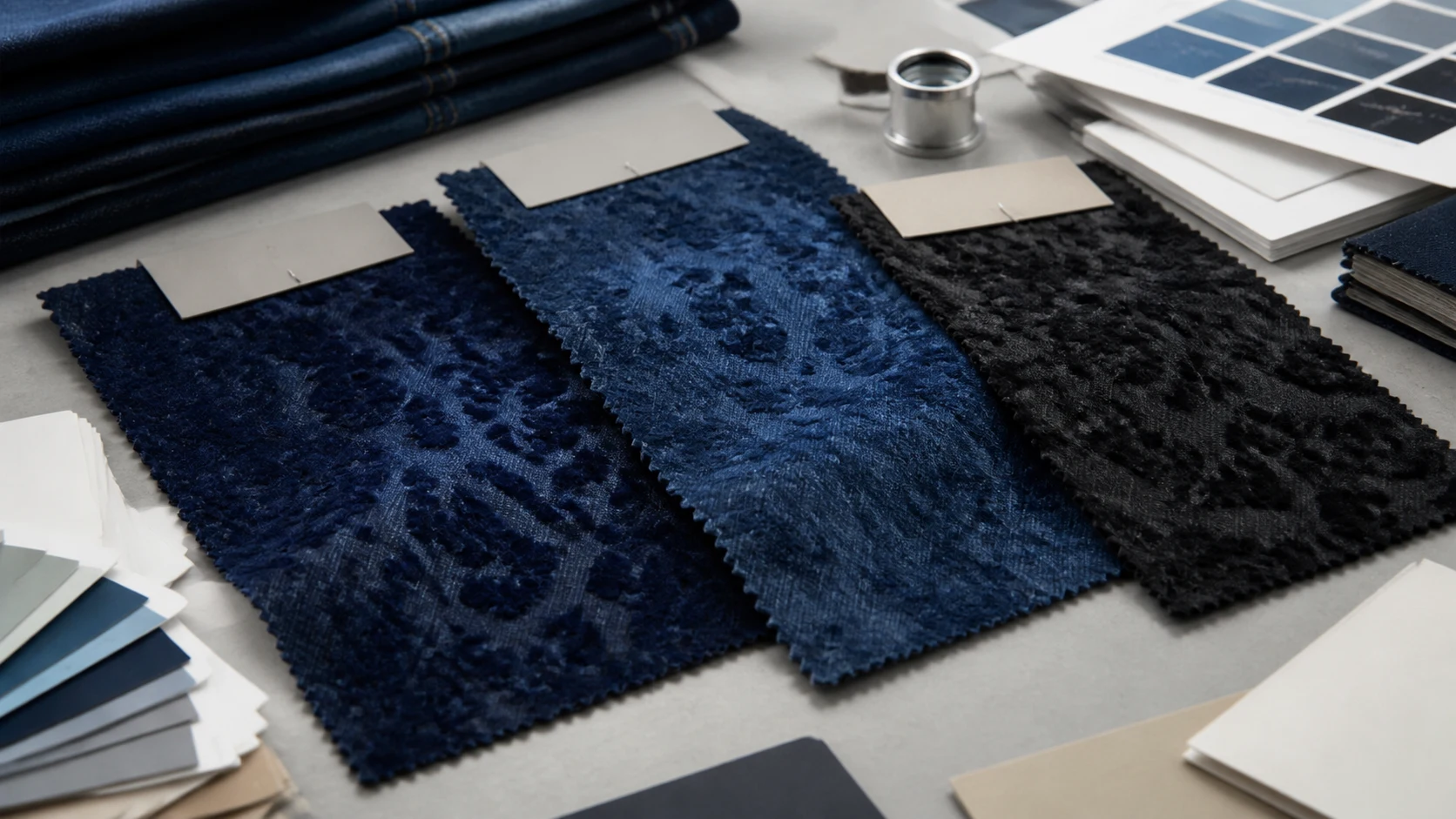
ในการจัดซื้อเดนิมฟล็อคแบบ custom คำว่า “custom” ครอบคลุมตัวแปรที่หลากหลาย ผู้ซื้อควรระบุอย่างชัดเจนว่าองค์ประกอบใดจำเป็นและองค์ประกอบใดที่ปรับเปลี่ยนได้เพื่อเพิ่มความทนทานหรือลดต้นทุน ตารางด้านล่างสรุปตัวแปรหลักในการพัฒนาและเหตุผลที่แต่ละตัวแปรมีความสำคัญ
| ตัวแปรการพัฒนาสินค้า | ข้อมูลจากผู้ซื้อ | เหตุใดจึงเปลี่ยนโฉมโปรเจกต์ |
|---|---|---|
| ผ้าเดนิมพื้นฐาน | ส่วนประกอบ, น้ำหนัก, ทิศทาง, ความยืดหยุ่น, สี, โครงสร้าง | ส่งผลต่อความรู้สึกสัมผัส (handfeel) การหดตัว การเย็บ การตอบสนองต่อการซัก และความเข้ากันได้กับกาว การเลือกฐานผ้าที่ไม่เหมาะสมอาจบั่นทอนการยึดเกาะของฟล็อก |
| ทิศทางฟล็อก | สี, สัมผัสของเส้นใย, ความสูงของขน, ความหนาแน่น | เปลี่ยนการสัมผัส ความลึกของภาพ ความเสี่ยงในการหลุดร่วง และพฤติกรรมต่อการเสียดสี ขนที่สูงขึ้นอาจให้สัมผัสที่นุ่มขึ้น แต่เพิ่มการหลุดร่วง |
| ลวดลาย | ลายพิมพ์, การเรียงซ้ำ, การวางตำแหน่ง, ความคมของขอบลาย | สกรีนควบคุม/เครื่องมือ การจัดตำแหน่งพิมพ์ แผนการตัด และการตรวจสอบความสม่ำเสมอ ลวดลายที่ซับซ้อนอาจต้องใช้สกรีนเฉพาะทางและใช้เวลาในการตั้งค่านานขึ้น |
| ความครอบคลุม | ลายเต็มชิ้น, แผง, โลโก้, ไตรม์, ไล่เฉดสี | ส่งผลต่อการใช้วัสดุ การจัดการ ของเสียจากเสื้อผ้า และจุดตรวจสอบ การฟล็อกกิ้งแบบเต็มพื้นที่ใช้ฟล็อกมากกว่าและต้องการความแม่นยำสูงขึ้นในการตัด |
| ขั้นตอนการใช้งาน | ขั้นตอนการผลิตผ้าหรือขั้นตอนการผลิตเสื้อผ้า | การเปลี่ยนแปลงการควบคุมตำแหน่ง การเผยของตะเข็บ และลำดับขั้นตอนการซัก หากเลือกไม่เหมาะสมอาจส่งผลให้ตะเข็บอ่อนแอหรือลวดลายคลาดเคลื่อนได้ |
| เส้นทางการตกแต่ง | การซักล้าง การฟอกด้วยเอนไซม์ การขัดสี การปรับเฉดสี การทำให้นุ่ม หรือกระบวนการอื่นที่ได้รับการอนุมัติจากลูกค้า | การปรับเปลี่ยนกระบวนการสามารถส่งผลต่อการยึดเกาะ ลักษณะของขนผิวผ้า เฉดสี และความนุ่มมือของเสื้อผ้าได้ การตกแต่งแบบเข้มข้น เช่น การใช้เอนไซม์หนักหรือการพ่นทราย อาจทำให้ขนฟล็อคเสียหายได้ |
หลีกเลี่ยงการขอให้ซัพพลายเออร์ปรับปรุงทุกตัวแปรพร้อมกัน ข้อมูลสรุปที่มีประโยชน์ควรระบุลำดับความสำคัญทางการค้าให้ชัดเจน เช่น ความนุ่มของเนื้อผ้า ความตัดกันของสีที่ชัดเจน ความสม่ำเสมอของตำแหน่งพิมพ์หรือตำแหน่งฟอก หรือความทนทานต่อการเสียดสีในการสวมใส่ปกติ ความชัดเจนนี้จะช่วยให้โรงงานสามารถแนะนำกระบวนการและวัสดุที่เหมาะสมที่สุดได้
การฟล็อกกิ้งระดับผ้าเทียบกับการฟล็อกกิ้งระดับเสื้อผ้าสำเร็จรูป
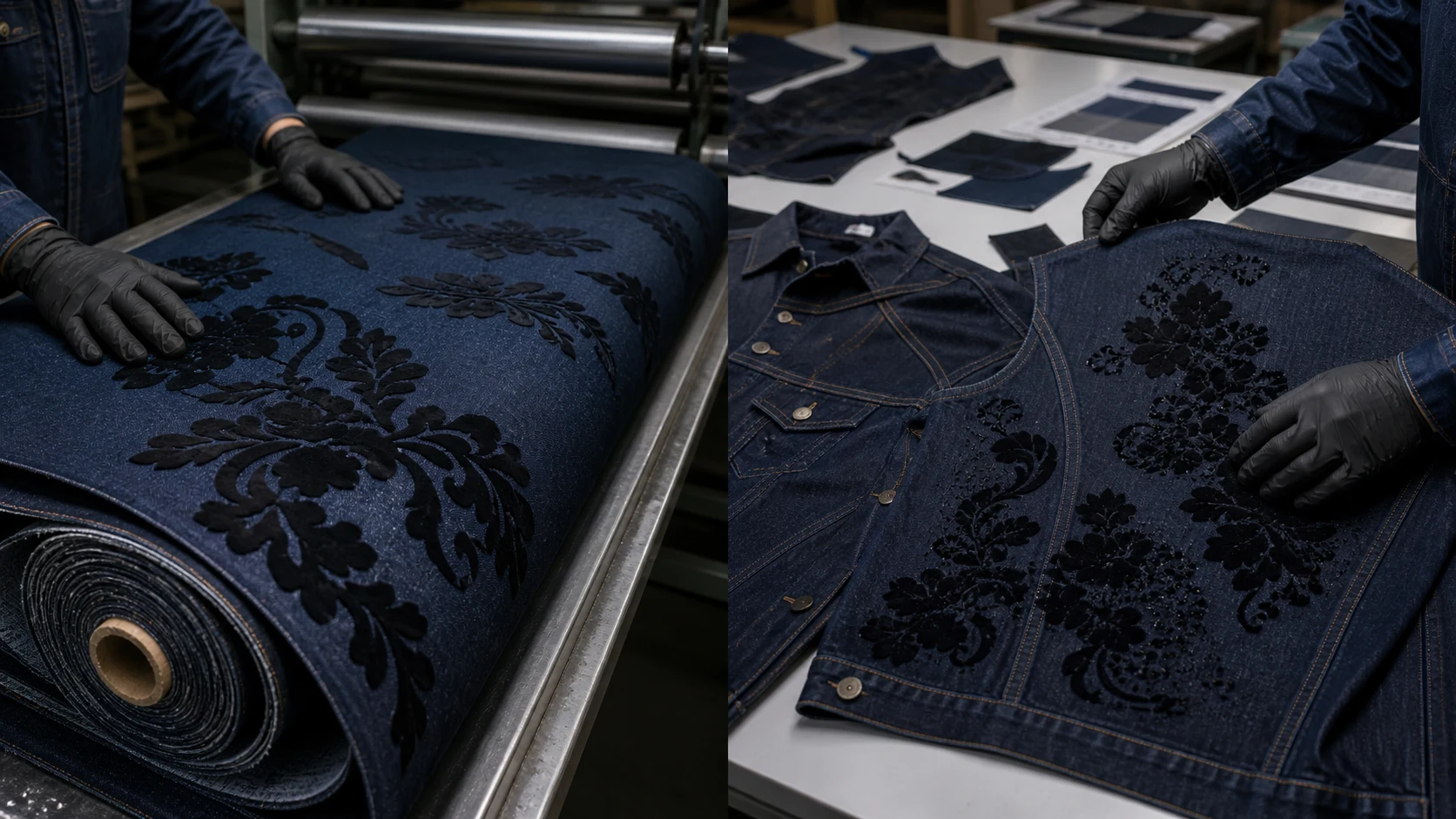
หนึ่งในการตัดสินใจที่สำคัญที่สุดในการจัดซื้อผ้าเดนิมฟล็อคตามสั่งคือขั้นตอนการลงฟล็อค วิธีการหลักสองวิธีคือการฟล็อคในขั้นตอนผ้าและการฟล็อคในขั้นตอนเสื้อผ้าสำเร็จรูป โดยแต่ละวิธีมีข้อดีและความเสี่ยงที่แตกต่างกัน
การทำฟล็อกกิ้งในขั้นตอนผ้าคือการสร้างเอฟเฟกต์บนผ้าก่อนการตัด วิธีนี้เหมาะสำหรับการใช้กับผ้าทั้งผืนและการตัดชิ้นส่วนซ้ำๆ แต่ผู้ซื้อต้องวางแผนสำหรับเศษผ้าจากการตัด บริเวณตะเข็บ และพฤติกรรมของพื้นผิวฟล็อกกิ้งระหว่างการเย็บและการตกแต่งเสื้อผ้า ตัวอย่างเช่น ฟล็อกที่มีความหนาอาจอุดตันเข็มหรือทำให้ตะเข็บไม่สม่ำเสมอ ดังนั้นการทดลองเย็บก่อนการผลิตจริงจึงเป็นสิ่งจำเป็น
การฟล็อคกิ้งในขั้นตอนเสื้อสำเร็จรูปเป็นการใช้เอฟเฟกต์กับเสื้อที่เย็บเสร็จแล้วหรือส่วนประกอบที่เลือกสรร สามารถปรับปรุงการควบคุมตำแหน่งสำหรับโลโก้ บริเวณกระเป๋า หรือแผงเฉพาะจุด แต่เพิ่มการจัดการชิ้นงานและต้องมีค่าความคลาดเคลื่อนของตำแหน่งที่ชัดเจน วิธีนี้มักเหมาะสำหรับการผลิตจำนวนน้อยหรือการวางตำแหน่งที่ซับซ้อน ซึ่งความแม่นยำมีความสำคัญมากกว่าการใช้ประโยชน์จากผ้า
| จุดตัดสินใจ | เส้นทางการผลิตขั้นผ้า | กระบวนการผลิตขั้นเสื้อสำเร็จรูป |
|---|---|---|
| การใช้งานทั่วไป | ลายเต็มผ้าหรือลายซ้ำต่อเนื่องเป็นหลา | วางอาร์ตเวิร์ก โลโก้ และแพเนลที่เลือก |
| ข้อได้เปรียบหลัก | เอฟเฟกต์ที่สม่ำเสมอตลอดความกว้างผ้าที่ใช้งานได้ | การควบคุมตำแหน่งบนเสื้อผ้าที่แม่นยำยิ่งขึ้น |
| ความเสี่ยงหลัก | การสูญเสียและความเสียหายจากการตัดบริเวณตะเข็บหรือจุดที่เกิดแรงเสียดทานสูง | ความคลาดเคลื่อนของการวางตำแหน่งและการจัดการชิ้นงานส่วนเกิน |
| ตัวอย่างเพื่อขออนุมัติ | ผ้าฟล็อคแบบหลา พร้อมแพเนลที่เย็บและซักแล้ว | เสื้อผ้าต้นแบบที่เสร็จสมบูรณ์ด้วยกระบวนการตกแต่งขั้นสุดท้ายตามที่กำหนด |
ไม่มีวิธีใดที่ดีกว่าโดยอัตโนมัติ ซัพพลายเออร์ควรแนะนำวิธีใดวิธีหนึ่งหลังจากพิจารณาประเภทเสื้อผ้า ความซับซ้อนของลาย artwork ปริมาณการสั่งซื้อ ขั้นตอนการซัก และความคาดหวังด้านค่าเผื่อความคลาดเคลื่อน ในระหว่างการทำตัวอย่าง ควรตรวจสอบประสิทธิภาพของฟล็อกหลังรอบการซักที่วางแผนไว้เสมอ เพื่อตรวจจับสัญญาณเริ่มต้นของการลอกหรือการเปลี่ยนสี
สร้าง Brief ที่พร้อมยื่นขอใบเสนอราคา
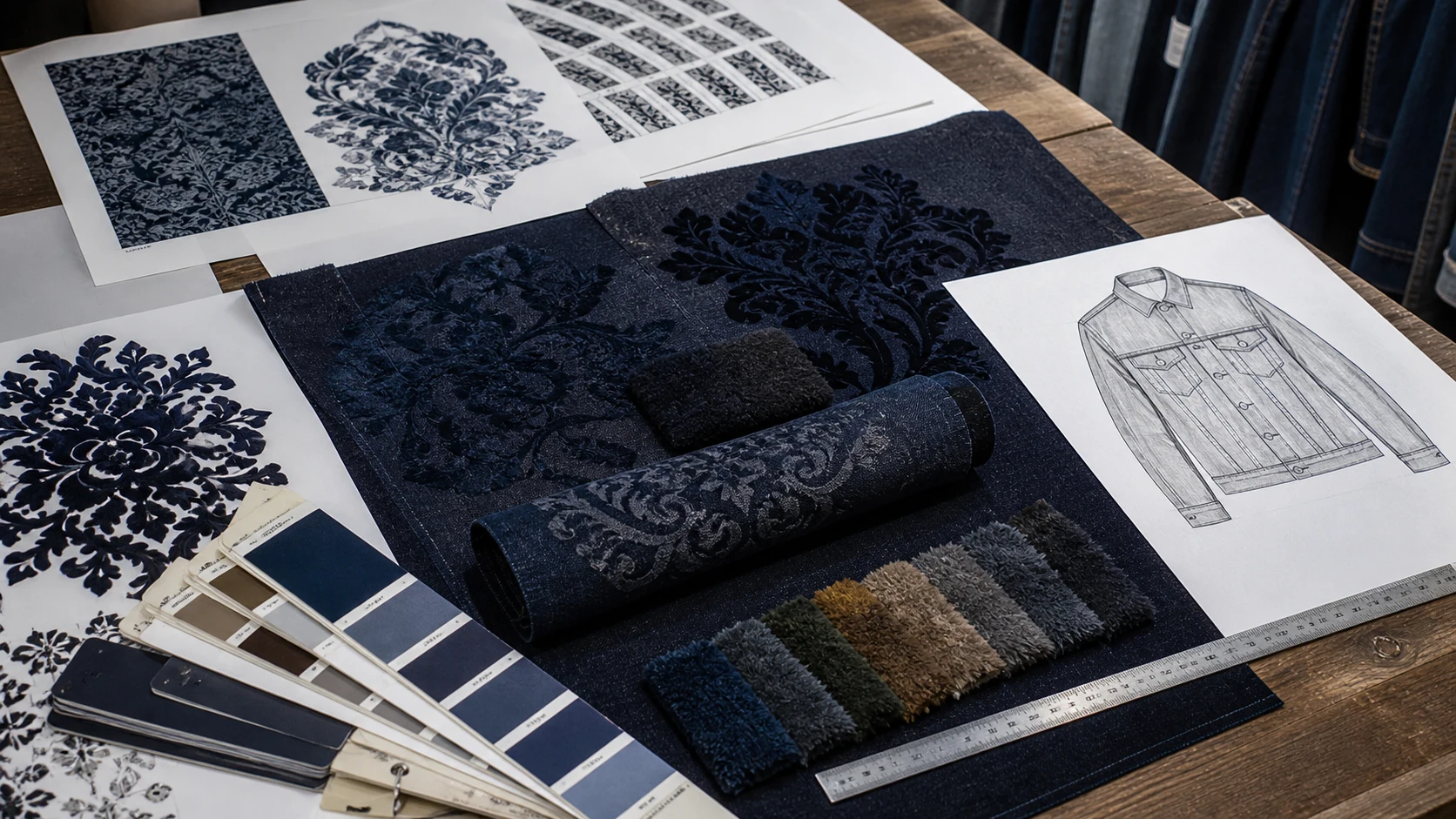
การเสนอราคาที่แม่นยำเริ่มต้นจากข้อมูลสรุปที่ชัดเจน เพื่อให้การจัดซื้อเดนิมฟล็อกเก็ตสั่งทำพิเศษประสบความสำเร็จ โปรดส่งข้อมูลที่เพียงพอให้ซัพพลายเออร์สามารถเสนอราคาสำหรับโครงการเดียวกันกับที่คุณตั้งใจจะอนุมัติ
- การใช้งานปลายทาง: แจ็คเก็ต กางเกงยีนส์ กระโปรง กระเป๋า ชิ้นส่วนตกแต่ง หรือผลิตภัณฑ์ประเภทอื่นๆ ซึ่งเป็นตัวกำหนดความต้องการด้านโครงสร้างและความทนทาน
- ภาพอ้างอิงพร้อมงานอาร์ตเวิร์กที่แก้ไขได้ หากมีให้ ไฟล์เวกเตอร์ช่วยในการปรับขนาดและการทำสกรีน
- ขนาดของลวดลาย ทิศทางการวางซ้ำ แผนผังตำแหน่งการวาง และพื้นที่ครอบคลุม วาดแบบเสื้อผ้าเพื่อแสดงตำแหน่งที่ใช้ฟล็อก
- ข้อกำหนดเดนิมพื้นฐานหรือคำขอตัวอย่างผ้าที่เหมาะสมจากโรงงานผลิต ระบุความหนาของผ้า ส่วนประกอบ และสี
- การยืดหยุ่น สี ความรู้สึกสัมผัส และทิศทางของน้ำหนักผ้า ปัจจัยเหล่านี้ส่งผลต่อทั้งความสบายและการยึดเกาะของฟล็อค
- การซักตกแต่งที่ต้องการและบริเวณที่ถูกเสียดสีซ้ำๆ โปรดระบุให้ชัดเจน: จะมีการขัดถูหนักบริเวณหัวเข่าหรือก้นหรือไม่
- ปริมาณตัวอย่าง ปริมาณการสั่งซื้อจำนวนมากโดยประมาณ ช่วงไซส์ และตลาดเป้าหมาย สิ่งเหล่านี้ส่งผลต่อระยะเวลาการผลิตและการปฏิบัติตามมาตรฐานของแต่ละภูมิภาค
การให้ข้อมูลทั้งหมดนี้ล่วงหน้าช่วยลดการติดต่อกลับไปกลับมา และทำให้การเตรียม lab dip และตัวอย่างรวดเร็วขึ้น หากไม่มีข้อมูลดังกล่าว ใบเสนอราคาอาจไม่สามารถเปรียบเทียบกันได้
คำถามที่พบบ่อยในการจัดซื้อเดนิมฟล็อคแบบสั่งทำ
ถาม: การพัฒนาผ้าเดนิมฟล็อกตามสั่งพิเศษใช้เวลานานเท่าใด
โดยทั่วไปจะใช้เวลาประมาณ 2-4 สัปดาห์สำหรับสไตรก์ออฟครั้งแรก (strike-off) และเพิ่มอีก 1-2 สัปดาห์สำหรับตัวอย่างตัวเสื้อจริง หากไม่มีการปรับแก้ที่สำคัญ ลวดลายที่ซับซ้อนหรือผ้าพื้นฐานชนิดใหม่อาจทำให้ระยะเวลายาวนานขึ้น
Q: ข้อบกพร่องที่พบบ่อยที่สุดที่ควรสังเกตคืออะไร
ตอบ: ปัญหาที่พบบ่อยที่สุดคือการยึดเกาะไม่ดี หน้าขนไม่สม่ำเสมอ สีไม่สม่ำเสมอ การหลุดร่วงของเส้นใย และการเลื่อนหลุดของตะเข็บ ควรทดสอบตัวอย่างที่ผ่านการซักโดยใช้สูตรซักจริงของการผลิตก่อนอนุมัติการผลิตจำนวนมากเสมอ
ถาม: ฉันสามารถใช้ผ้าเดนิมพื้นฐานของตัวเองได้หรือไม่ หรือต้องจัดหาจากโรงงานผลิต?
A: คุณสามารถจัดหาผ้าฐานได้เอง แต่โรงงานต้องตรวจสอบความเข้ากันได้กับกาวและการควบคุมการหดตัว การจัดหาผ่านโรงงานมักช่วยให้ได้ความสม่ำเสมอ
บทสรุป
ความเชี่ยวชาญในการจัดหาผ้ายีนส์ฟล็อกตามสั่งคือการก้าวข้ามเรื่องความสวยงามไปสู่กระบวนการที่เป็นระบบ โดยการกำหนดตัวแปรตั้งแต่เนิ่นๆ เลือกขั้นตอนการใช้งานที่เหมาะสม และทดสอบกับเสื้อผ้าจริง ผู้ซื้อจะมั่นใจได้ว่าสินค้าที่ได้ตรงตามความคาดหวังด้านประสิทธิภาพและการออกแบบ RFQ ที่ชัดเจนและการอนุมัติตัวอย่างอย่างพิถีพิถันไม่เพียงช่วยลดความเสี่ยง แต่ยังเสริมสร้างความร่วมมือที่แข็งแกร่งกับซัพพลายเออร์ผ้ายีนส์ของคุณ
กำลังพิจารณาเวอร์ชันสั่งผลิตเฉพาะอยู่หรือไม่
🎨 การออกแบบเฉพาะตามความต้องการ
ออกแบบคอลเลกชันผ้าหรือเสื้อผ้าของคุณเองด้วยวัสดุพรีเมียมจาก LYDENIM ตั้งแต่ผ้าผสมคอตตอนหรูหราไปจนถึงสิ่งทอที่เป็นมิตรกับสิ่งแวดล้อมที่สร้างสรรค์ สำรวจสีสัน การทอ และการตกแต่งที่เข้ากับทิศทางผลิตภัณฑ์ของแบรนด์คุณ เยี่ยมชม ลีเดนิม เพื่อเรียนรู้เพิ่มเติม
🛍️ โซลูชั่นเสื้อผ้าตัดเย็บตามสั่ง
นำดีไซน์ของคุณมาสู่ชีวิตจริงด้วยบริการตัดเย็บตามสั่ง ไม่ว่าคุณจะกำลังพัฒนา jeans, denim jackets, skirts, workwear หรือคอลเลกชันแฟชั่นจำนวนน้อย LYDENIM สามารถสนับสนุนเรื่อง fit, comfort, durability และการวางแผนการผลิต สำรวจตัวเลือกการปรับแต่งได้ที่ My Alibaba.
📩 ติดต่อเราได้เลย
คุณมีโครงการใดๆ ที่สนใจไหม? กรุณาติดต่อทีมของเราที่ Malone@lydenim.com เพื่อหารือเกี่ยวกับผ้าสั่งผลิต การออกแบบเสื้อผ้า การทำตัวอย่างแบบ MOQ ต่ำ หรือโซลูชันสิ่งทอที่ยั่งยืน
เปลี่ยนความคิดของคุณให้เป็นจริงกับ LYDENIM – พาร์ทเนอร์ที่คุณไว้วางใจสำหรับผ้าที่เป็นนวัตกรรมและมีคุณภาพสูง พร้อมโซลูชันเสื้อผ้าที่ออกแบบตามความต้องการ
Need help turning this into a production-ready sourcing brief?
Send your target product, fabric direction, quantity and sample needs. LY Denim can help compare options and prepare a quote.