


Leitura rápida: ~6 minutos
Effective custom flocked denim procurement demands more than a reference image. The final product quality hinges on precise decisions about the denim base, flock color and pile, motif coverage, application stage, and the chosen garment wash. A structured development process transforms these choices into an approved strike-off, a sewn or finished sample, an agreed wash standard, and a repeatable bulk inspection plan. This guide focuses on that commercial workflow. For the process definition and basic terminology, read What Is Flocking Fabric?. For a dedicated testing checklist, use Como Testar Denim Flocado Antes da Produção em Massa.
O que saber antes de escolher
- Defina a peça-alvo e as zonas de alto atrito antes de escolher um efeito flock total ou localizado. Essa etapa evita retrabalho dispendioso posteriormente.
- Defina o denim base, a direção do stretch, a cor do flock, o motivo, a cobertura, o toque do pelo e a lavagem pretendida antes de solicitar uma cotação comparável. Especificações ambíguas levam a ofertas não comparáveis.
- Decida se a flocagem deve ocorrer na fase de tecido ou na fase de vestuário; as duas rotas apresentam riscos diferentes de desperdício, posicionamento, costura e lavagem que afetam diretamente o custo e a qualidade.
- Aprove o efeito na base real de denim e por meio do percurso real da peça. Nunca confie apenas em uma amostra seca de exibição, pois o processo de lavagem pode alterar drasticamente a adesão e a aparência.
- Considere a primeira cotação como condicional até que a arte, o formato da amostra, os testes exigidos, a quantidade, a embalagem e o mercado-alvo estejam todos confirmados. Isso garante que todas as variáveis estejam alinhadas antes do início do desenvolvimento.
O que pode ser personalizado?
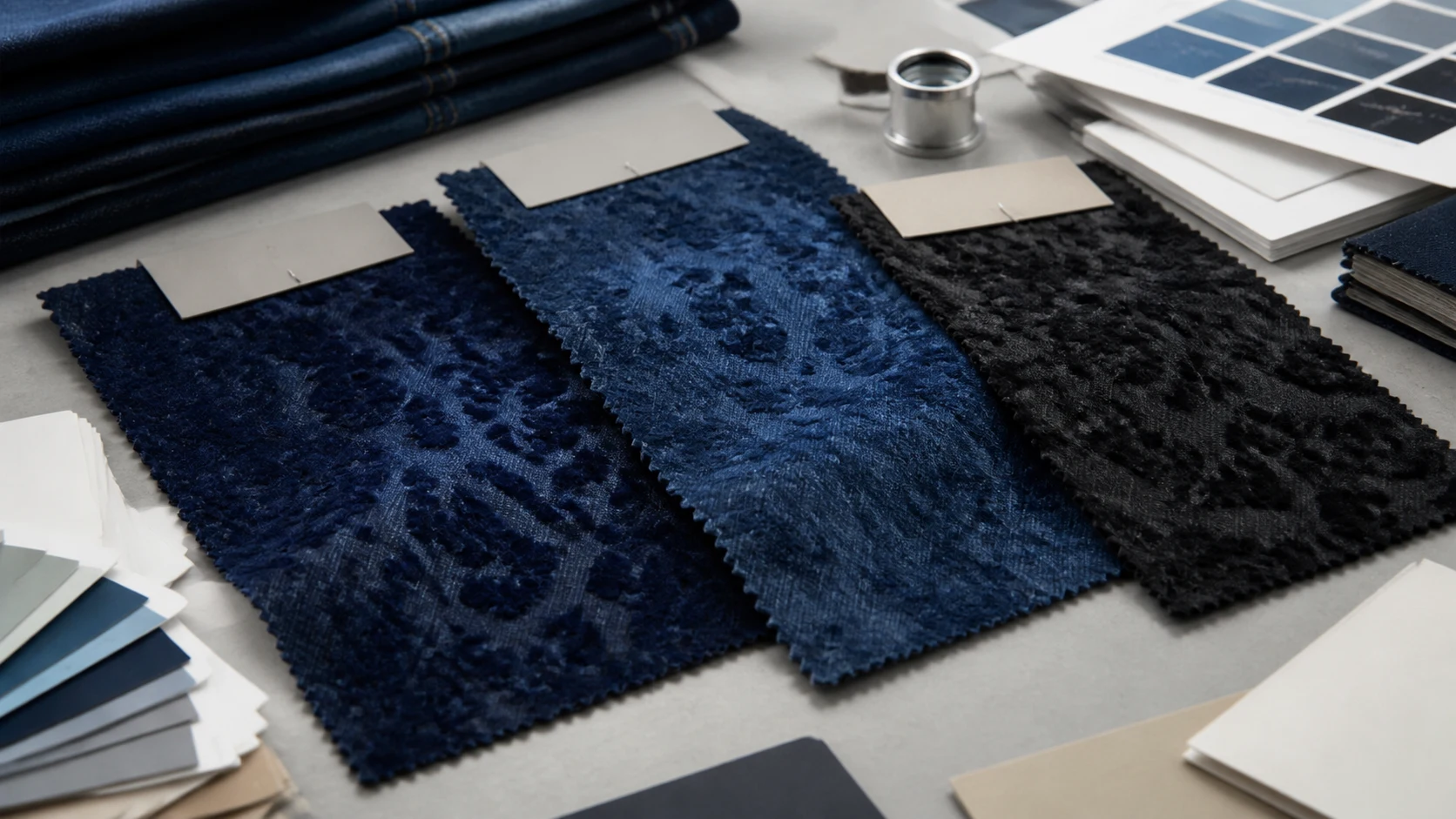
Na aquisição de denim flockado personalizado, o termo personalizado abrange uma ampla gama de variáveis. Os compradores devem indicar claramente quais elementos são essenciais e quais podem ser ajustados para melhorar a durabilidade ou reduzir custos. A tabela abaixo descreve as principais variáveis de desenvolvimento e por que cada uma é importante.
| Variável de desenvolvimento | Dados do comprador | Por que isso altera o projeto |
|---|---|---|
| Base de denim | composição, peso, direção, elasticidade, cor, construção | Afeta o toque, o encolhimento, a costura, a resposta à lavagem e a compatibilidade com adesivos. Escolher a base errada pode comprometer a adesão do flock. |
| Direção do flock | cor, toque da fibra, altura do pelo, densidade | Altera o toque, a profundidade visual, o risco de soltura de fiapos e o comportamento à abrasão. Uma felpa mais alta pode parecer mais macia, mas aumenta a soltura de fiapos. |
| Motivo | arte-final, repetição, posicionamento, definição de borda | Telas/ferramentas de controle, registro, plano de corte e verificações de consistência. Motivos complexos podem exigir telas especializadas e tempos de preparação mais longos. |
| Cobertura | all-over, painel, logo, acabamento, gradiente | Impacta o uso de materiais, o manuseio, o desperdício de peças e os pontos de inspeção. O flocking de superfície total consome mais flock e exige maior precisão no corte. |
| Fase de aplicação | na fase de tecido ou na fase de peça | Altera o controle de posicionamento, a exposição das costuras e a ordem das operações de lavagem. Uma escolha errada pode levar a costuras fracas ou designs desalinhados. |
| Rota de acabamento | lavagem, enzima, atrito, tingimento, amaciamento ou outro processo aprovado pelo comprador | Pode alterar a adesão, a aparência do pelo, a tonalidade e o toque da peça. Acabamentos agressivos, como enzima pesada ou jateamento de areia, podem danificar o flock. |
Evite pedir ao fornecedor que otimize todas as variáveis ao mesmo tempo. Um briefing mais útil identifica a prioridade comercial: por exemplo, toque macio, contraste nítido, posicionamento repetível ou resistência superior à fricção no uso normal. Essa clareza ajuda a fábrica a sugerir o processo e os materiais mais adequados.
Flocagem na Fase de Tecido vs Flocagem na Fase de Vestuário
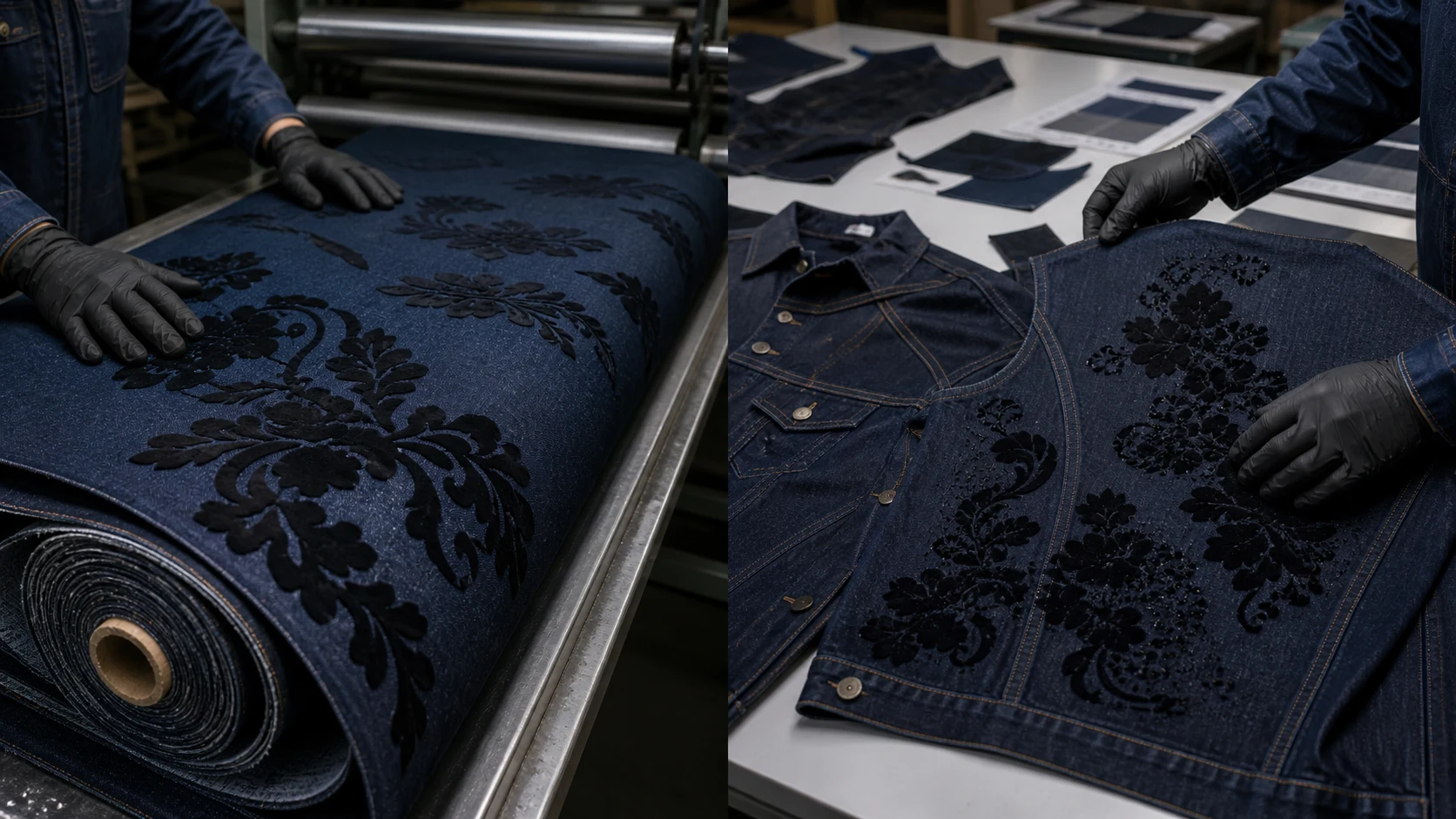
Uma das decisões mais críticas na aquisição de denim flockado personalizado é a etapa de aplicação. As duas principais opções são a flocagem na etapa do tecido e a flocagem na etapa da peça, cada uma com vantagens e riscos distintos.
A flocagem na etapa do tecido aplica o efeito antes do corte do material. É prática para metragem total e painéis repetidos, mas o comprador deve planejar o desperdício de corte, as zonas de costura e o comportamento da superfície flocada durante a costura e o acabamento da peça. Por exemplo, flocagem espessa pode entupir agulhas ou causar costuras irregulares, portanto, testes de costura pré-produção são essenciais.
A flocagem em etapa de peça costurada aplica o efeito a uma peça costurada ou a componentes selecionados. Ela pode melhorar o controle de posicionamento para logotipos, áreas de bolsos ou painéis locais, mas aumenta o manuseio das peças e exige tolerâncias claras de posicionamento. Essa via geralmente atende a tiragens menores ou posicionamentos intrincados em que a precisão supera o aproveitamento de tecido.
| Ponto de decisão | Processo na etapa de tecido | Rota de estágio de confecção |
|---|---|---|
| Uso típico | estampa corrida ou contínua em tecido | arte posicionada, logotipos, painéis selecionados |
| Principal vantagem | efeito consistente em toda a largura útil do tecido | controle mais rigoroso da localização na peça |
| Risco principal | redução de perdas e danos nas costuras ou zonas de alto atrito | Desvio de posicionamento e manuseio de peças extras. |
| Amostra de aprovação | Tecido flockado mais painel costurado/lavado | peça protótipo concluída com o acabamento pretendido |
Nenhuma das rotas é automaticamente melhor. O fornecedor deve recomendar uma após analisar o tipo de peça, a complexidade da arte, a quantidade do pedido, a rota de lavagem e as expectativas de tolerância. Durante a amostragem, verifique sempre o desempenho do flock após o ciclo de lavagem planejado para identificar sinais precoces de descascamento ou alteração de cor.
Monte um Briefing Pronto para Cotação
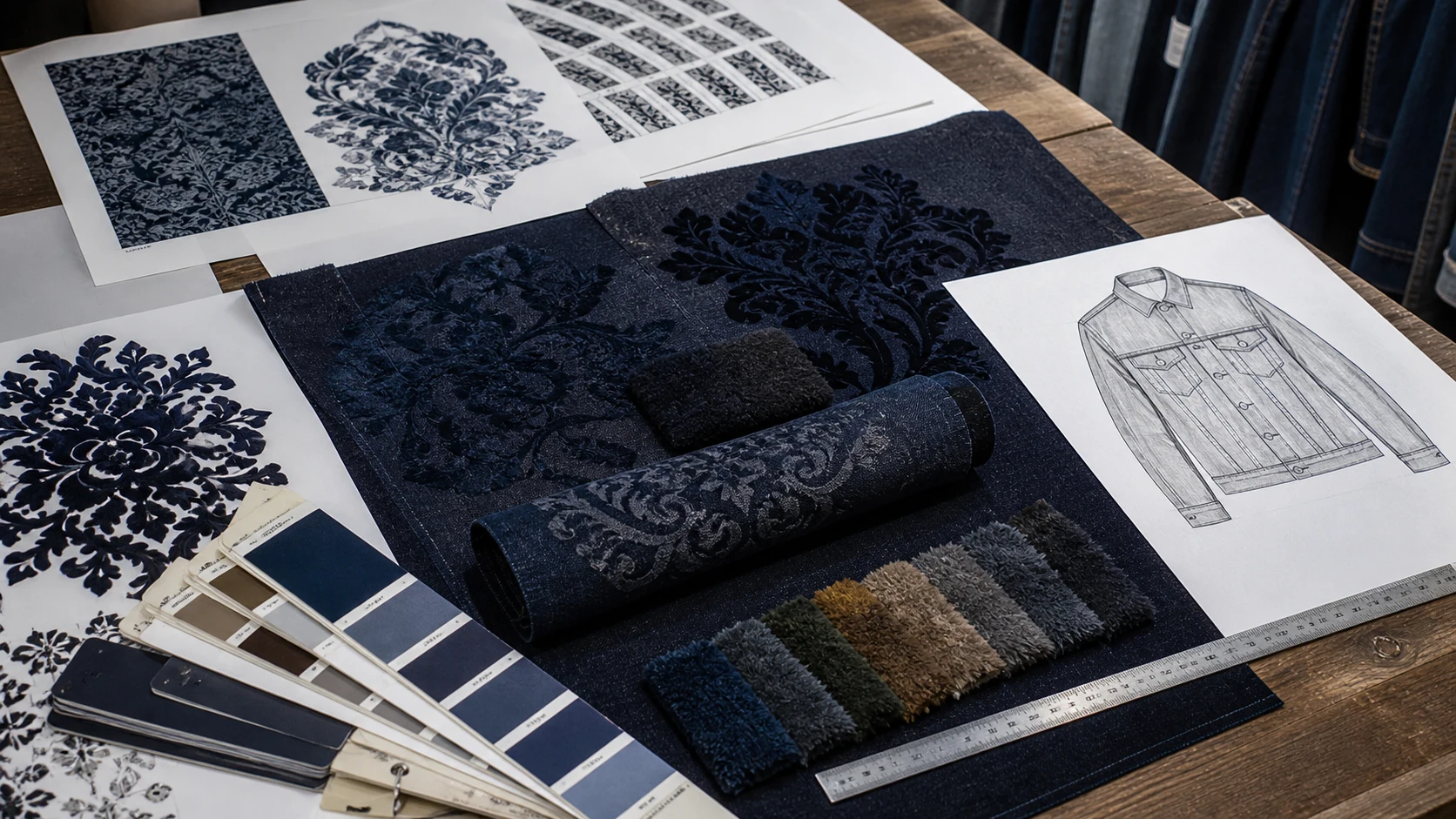
Uma boa cotação começa com um briefing claro. Para uma aquisição bem-sucedida de denim flockado personalizado, envie informações suficientes para que o fornecedor cote o mesmo projeto que você pretende aprovar:
- Uso final: jaqueta, jeans, saia, bolsa, aviamentos ou outro produto. Isso determina as necessidades de construção e durabilidade.
- Imagem de referência mais arte editável, quando disponível. Arquivos vetoriais facilitam o dimensionamento e a confecção de telas.
- Dimensões do motivo, direção da repetição, mapa de posicionamento e área de cobertura. Esboce a peça para mostrar onde o flock será aplicado.
- Requisito básico de denim ou solicitação de opções adequadas de amostras da fábrica. Especifique gramatura, composição e cor.
- Alongamento, cor, toque e direção do peso. Estes afetam tanto o conforto quanto a aderência do flock.
- Lavagem pretendida da peça e áreas expostas a atrito repetido. Seja específico: haverá abrasão intensa nos joelhos ou no traseiro?
- Quantidade de amostras, quantidade estimada de produção, grade de tamanhos e mercado-alvo. Esses fatores impactam os lead times e a conformidade com normas regionais.
Fornecer todas essas informações antecipadamente reduz a comunicação de ida e volta e acelera a preparação de lab dips e amostras. Sem isso, os orçamentos podem não ser comparáveis.
Perguntas frequentes na aquisição de denim flockado personalizado
P: Quanto tempo leva o desenvolvimento de denim flocado personalizado?
R: Normalmente, de 2 a 4 semanas para a primeira amostra de banho (strike-off), mais 1 a 2 semanas para a amostra de peça, caso não sejam necessários grandes ajustes. Motivos complexos ou tecidos-base novos podem estender esse prazo.
P: Quais são os defeitos mais comuns que devo observar?
A: Má aderência, pelo irregular, inconsistência de cor, desfiamento e deslizamento de costura são os problemas mais comuns. Sempre teste uma amostra lavada usando sua receita de lavagem de produção antes da aprovação em massa.
Posso usar minha própria base de denim ou preciso adquiri-la da fábrica?
R: Você pode fornecer seu próprio tecido-base, mas a tecelagem deve verificá-lo quanto à compatibilidade adesiva e controle de encolhimento. O fornecimento por meio da tecelagem geralmente garante consistência.
Conclusão
Dominar a aquisição de denim flockado personalizado significa ir além da estética para alcançar um processo sistemático. Ao definir as variáveis logo no início, escolher a etapa de aplicação certa e testar em peças reais, os compradores podem garantir um produto que atenda às expectativas de desempenho e design. Um RFQ claro e uma aprovação de amostra diligente não apenas reduzem riscos, mas também constroem uma parceria mais forte com seu fornecedor de denim.
Pensando em uma versão personalizada?
🎨 Design personalizado
Design your own fabric collection or garment with LYDENIM’s premium materials. From luxurious cotton blends to innovative eco-friendly textiles, explore colors, weaves, and finishes that match your brand’s product direction. Visit LYDENIM para saber mais.
🛍️ Soluções de vestuário sob medida
Bring your designs to life with custom garment services. Whether you are developing jeans, denim jackets, skirts, workwear, or small-batch fashion collections, LYDENIM can support fit, comfort, durability, and production planning. Explore customization options on My Alibaba.
📩 Entre em contato
Tem um projeto em mente? Entre em contato com nossa equipe pelo e-mail malone@lydenim.com to discuss custom fabrics, garment design, low-MOQ sampling, or sustainable textile solutions.
Transform your ideas into reality with LYDENIM–your trusted partner for innovative, high-quality fabrics and bespoke apparel solutions.
Need help turning this into a production-ready sourcing brief?
Send your target product, fabric direction, quantity and sample needs. LY Denim can help compare options and prepare a quote.