


Custom T-Shirts No Minimum: How to Launch and Scale Your Apparel Line with Flexible Customization
Custom T-Shirts No Minimum: How to Launch and Scale Your Apparel Line with Flexible Customization
Custom T-shirts no minimum: perfect for startups seeking new suppliers. Explore 190-600gsm options, advanced printing & embroidery. Low MOQ, high quality, fast quotes.
Buyer Summary
For apparel brands and small teams, this topic should connect design decisions with sampling, production, MOQ, decoration methods, and quote readiness.
- Suitable buyersFashion brands, sourcing teams, wholesalers, garment factories and product developers.
- What to confirmTarget product, fabric direction, finish, sample needs, quantity and delivery market.
- Buyer riskUnclear specs can lead to wrong samples, unstable bulk quality and slow quotations.
- Recommended CTARequest swatches or a sample quote before committing to bulk production.
Why This Matters for B2B Buyers
Confirm fabric, construction, logo technique, sample needs and order quantity before comparing suppliers.
Custom T-shirts no minimum: perfect for startups seeking new suppliers. Explore 190-600gsm options, advanced printing & embroidery. Low MOQ, high quality, fast quotes.
Specification Table for Faster Sourcing
| Decision point | Options to compare | Why it matters | Buyer question |
|---|---|---|---|
| Product type | Hoodies, T-shirts, jeans, jackets, custom apparel | Controls fabric, pattern, decoration and construction choices | Which product are you developing? |
| Customization | Embroidery, screen print, puff print, flocking, washing | Affects sample cost, MOQ and lead time | Do you have artwork or technique references? |
| Fabric and GSM | Light, medium or heavyweight options | Determines handfeel, season and retail positioning | What target handfeel and price level do you need? |
| Order plan | Prototype, small batch, bulk production | Changes pricing, timeline and production setup | Do you need samples or a bulk quote first? |
Applications and Custom Options
Product Development
Use this guide to turn design ideas into fabric, garment, finish and sample requirements.
Supplier Comparison
Compare suppliers by sample support, technical clarity, bulk stability and communication speed.
Bulk Production
Confirm quality standards, approved samples and timeline before placing production orders.
Quality Control Points Before Bulk Order
- OKSample approval: confirm fabric, color, handfeel, construction and finish before bulk production.
- OKBulk consistency: compare bulk lots against the approved sample under the same light and test conditions.
- OKPerformance testing: check shrinkage, colorfastness, stretch recovery or decoration durability where relevant.
- OKQuote clarity: send quantity, destination, packaging needs and target lead time to avoid vague pricing.
Sample Development Process
| Step | Buyer provides | Supplier confirms |
|---|---|---|
| 1. Brief | Application, reference images, target quality and quantity | Feasibility, recommended material and custom options |
| 2. Swatch | Preferred color, handfeel, pattern or finish feedback | Available stock, custom direction and sample cost |
| 3. Sample | Garment test plan, size or yardage needs | Sampling timeline and production repeatability |
| 4. Bulk quote | Order quantity, delivery destination and packaging needs | Unit price, MOQ, lead time and QC checkpoints |
Detailed Guide
Estimated reading time: ~3 minutes
In today’s fast-paced fashion landscape, custom T-shirts with no minimum order have become a game-changer for brands. They allow entrepreneurs and established startups to test creative designs, launch seasonal drops, and respond quickly to market trends without the burden of large inventory or high upfront costs.
For growing brands that already have a solid foundation but are seeking more reliable or flexible suppliers, “no minimum” or ultra-low MOQ production removes traditional barriers. You can prototype new ideas, iterate based on customer feedback, and scale efficiently while maintaining consistent quality across your line.
Suppliers offering true low-MOQ services — often as low as 1-2 pieces for custom knit items and denim extensions — provide the agility startups need. With versatile fabric weights from lightweight 190gsm breathable tees to mid-heavy 300-600gsm structured options, you can create everything from soft everyday basics to premium statement pieces. Platforms like Liangyuan Textile support custom knitwear (Tee, Polo Shirt, Long-sleeve Top) and pair seamlessly with low-MOQ denim items such as Custom Men’s Raw Selvedge Japanese Denim Jacket or 14-16oz Heavyweight Selvedge Jeans (MOQ as low as 1-2 pieces).
This guide explores popular customization techniques for custom T-shirts with no minimum, common design and production challenges, frequent doubts from brand owners, and practical solutions to help you partner with the right manufacturer.
no minimum Customized
Why Custom T-Shirts with No Minimum Order Matter for Growing Brands
Traditional manufacturing often requires high minimum orders that stifle creativity and increase financial risk. In contrast, custom T-shirts with no (or very low) minimum enable rapid prototyping, low-risk market testing, and faster iteration — essential for startups looking to upgrade from limiting suppliers.
Use custom T-shirts as your core product, then expand into complementary pieces like mid-weight hoodies or structured denim jackets/shirts. This creates cohesive collections that strengthen brand identity across casual, streetwear, and premium segments.
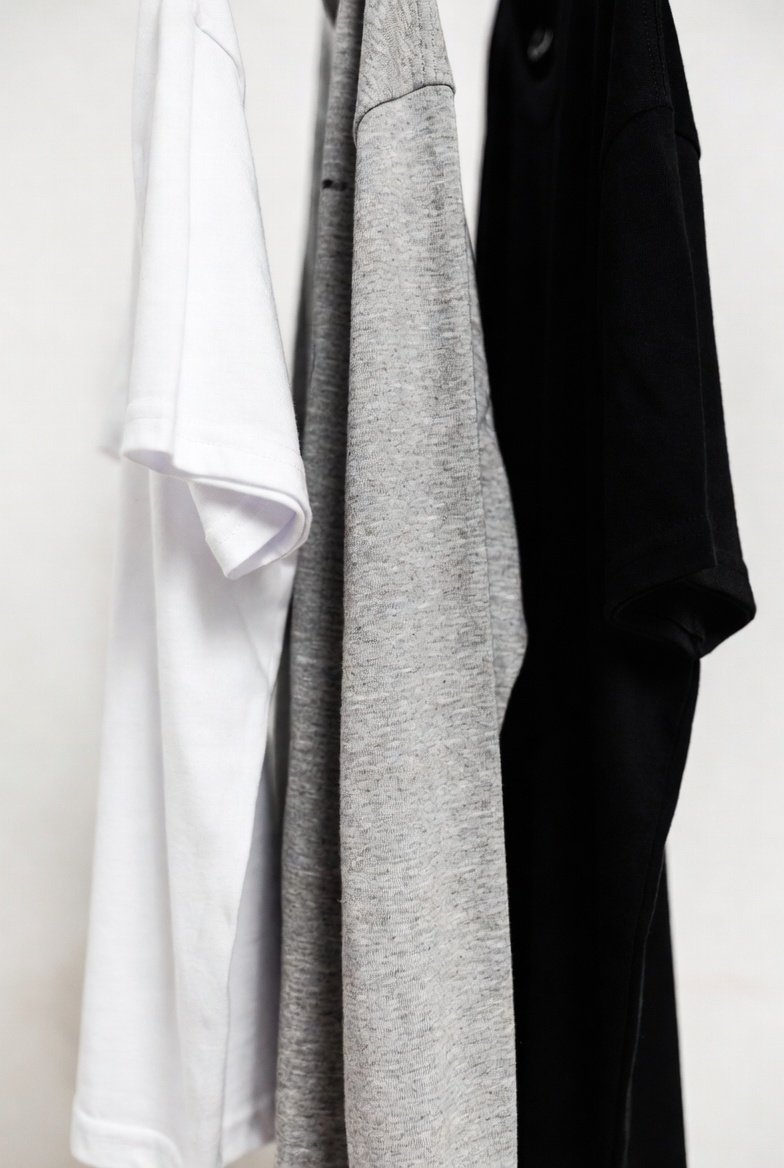
Fabric weight plays a critical role in performance and feel:
- 190-280gsm: Ultra-soft, breathable options perfect for lightweight everyday tees.
- 300-450gsm: Mid-heavy fabrics offering better structure and durability for premium or long-sleeve styles.
- Up to 600gsm: Heavyweight choices for substantial, high-end statement T-shirts that hold shape wash after wash.
Low-MOQ suppliers like Liangyuan Textile make scaling easier by supporting custom knitwear alongside denim extensions (e.g., Custom Stonewashed Denim Workwear Shirt or Raw Selvedge Denim Jacket, often starting at 1-2 pieces). This one-stop approach helps established brands switch suppliers smoothly while keeping costs manageable and quality high.
Different weights of fabric
Popular Customization Techniques for Custom T-Shirts (No Minimum)
The right customization technique depends on your design complexity, chosen fabric GSM, desired durability, and budget. Here are proven methods suitable for no-minimum or small-batch production:
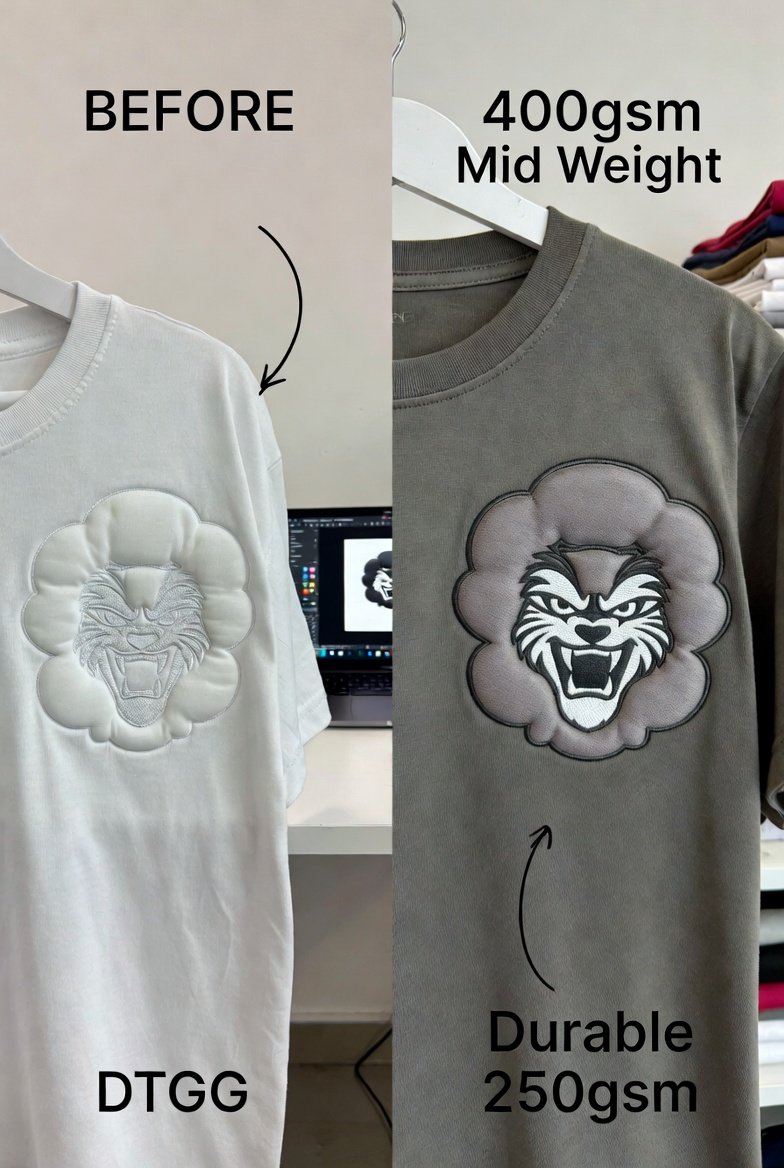
- DTG (Direct-to-Garment): Ideal for photo-realistic, multi-color designs with a soft hand-feel on lightweight 190-300gsm tees.
- Screen Printing: Cost-effective for bold, opaque graphics that last through many washes — works well across all weights.
- Heat Transfer / DTF: Vibrant results on blends or mid-weight fabrics, great for gradients and small runs.
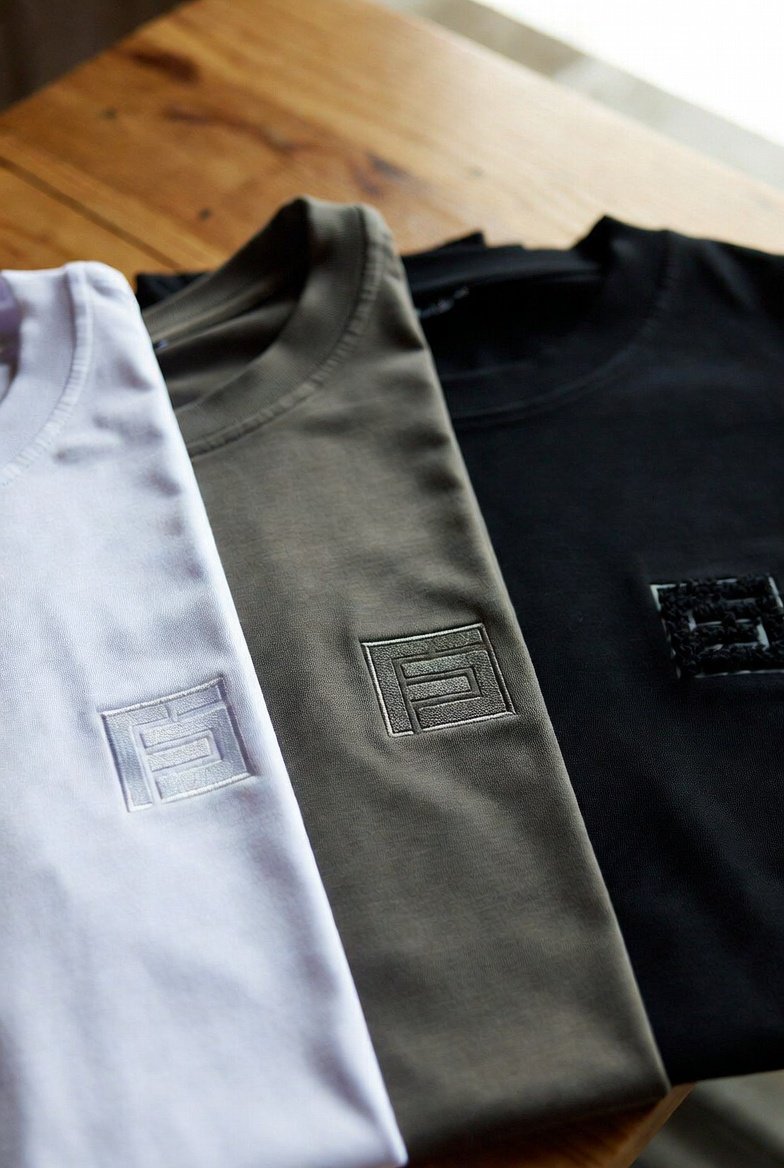
- Embroidery (Flat, Puff, or Chenille): Adds premium textured logos, especially effective on 300-600gsm heavier tees for a luxurious touch.
- Specialty Finishes: Tie-dye for organic patterns, hand-painted effects for unique pieces, reflective/fluorescent inks for street appeal, silicone or flock accents for texture, and all-over printing for immersive designs.
Lighter 190-280gsm fabrics suit delicate DTG or artistic techniques, while heavier 400-600gsm options excel with embroidery or structured prints without losing comfort. Many brands extend similar techniques to hoodies or apply vintage washes to complementary low-MOQ denim jackets from suppliers like Liangyuan Textile.
Benefits for startups include genuine small-batch flexibility, professional design support, and consistent quality control — allowing you to test ideas confidently before scaling.
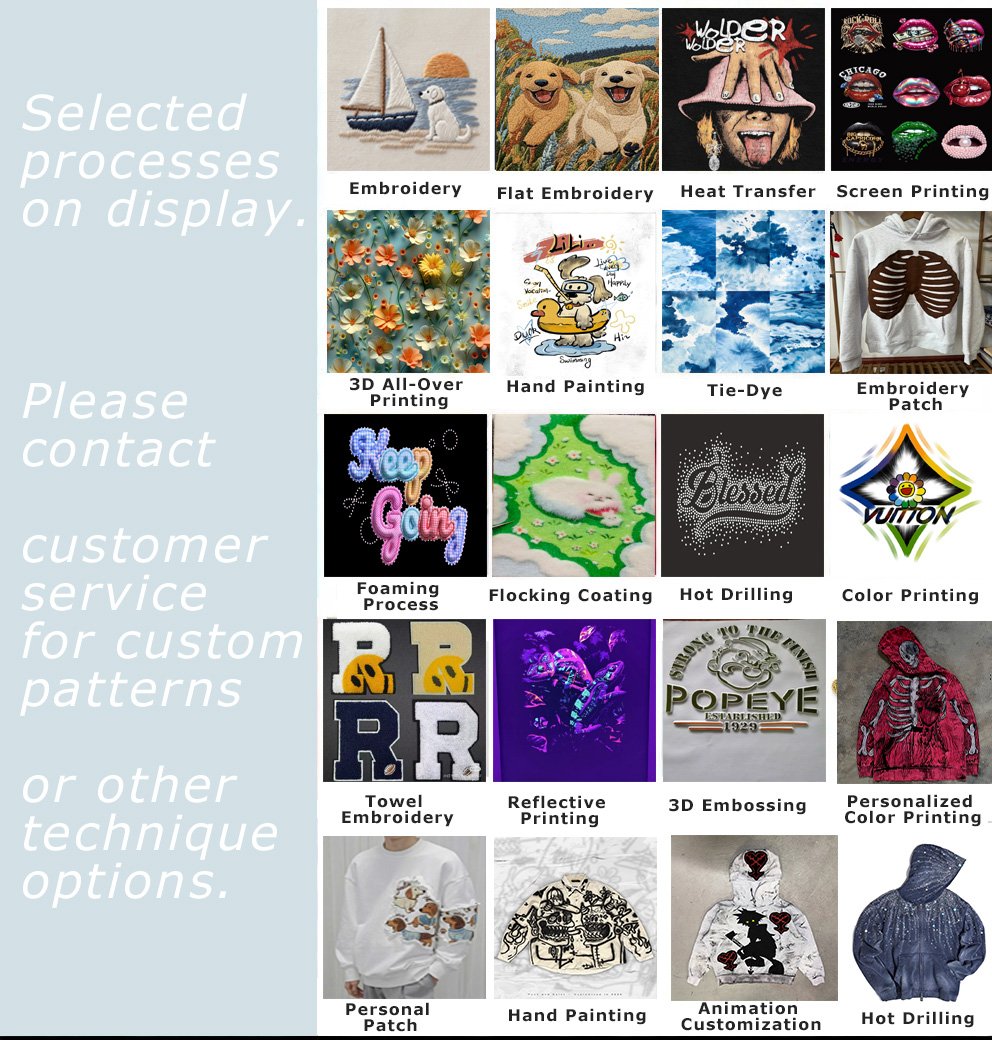
Customization Techniques
Common Challenges in New Custom T-Shirt Design and Production
Even experienced brands face hurdles when developing no-minimum custom T-shirt collections:
- Design Translation Issues: Colors may shift in DTG or fluorescent prints; fine details can get lost on textured fabrics; embroidery may pucker on lighter 190gsm tees.
- Fabric and Technique Mismatches: Choosing the wrong GSM (too light for durable prints or too heavy for breathable daily wear) leads to poor results or comfort issues.
- Production Hurdles: Inconsistent quality from previous suppliers, longer lead times, hidden setup fees despite “no minimum” claims, shrinkage in certain blends, and challenges scaling mixed lines (T-shirts + hoodies + denim).
- Real-World Examples: Fading prints after washes, misaligned all-over designs, or stiffness in heavyweight tees.
Capable manufacturers address these through pre-production sampling, fabric-technique compatibility testing across the 190-600gsm range, rigorous quality control, and full end-to-end support — making the switch to a better supplier much smoother for growing brands.
Challenges in New Custom
Addressing Common Doubts from Brand Owners
Established startups frequently ask these questions when exploring new suppliers for custom T-shirts with no minimum:
- “Is ‘no minimum’ production really feasible while maintaining good quality?”
- “How do costs work when starting from 1 piece and scaling to hundreds?”
- “Can one supplier handle T-shirts alongside hoodies or denim extensions?”
- “Will the final product match the quality of traditional high-MOQ manufacturing?”
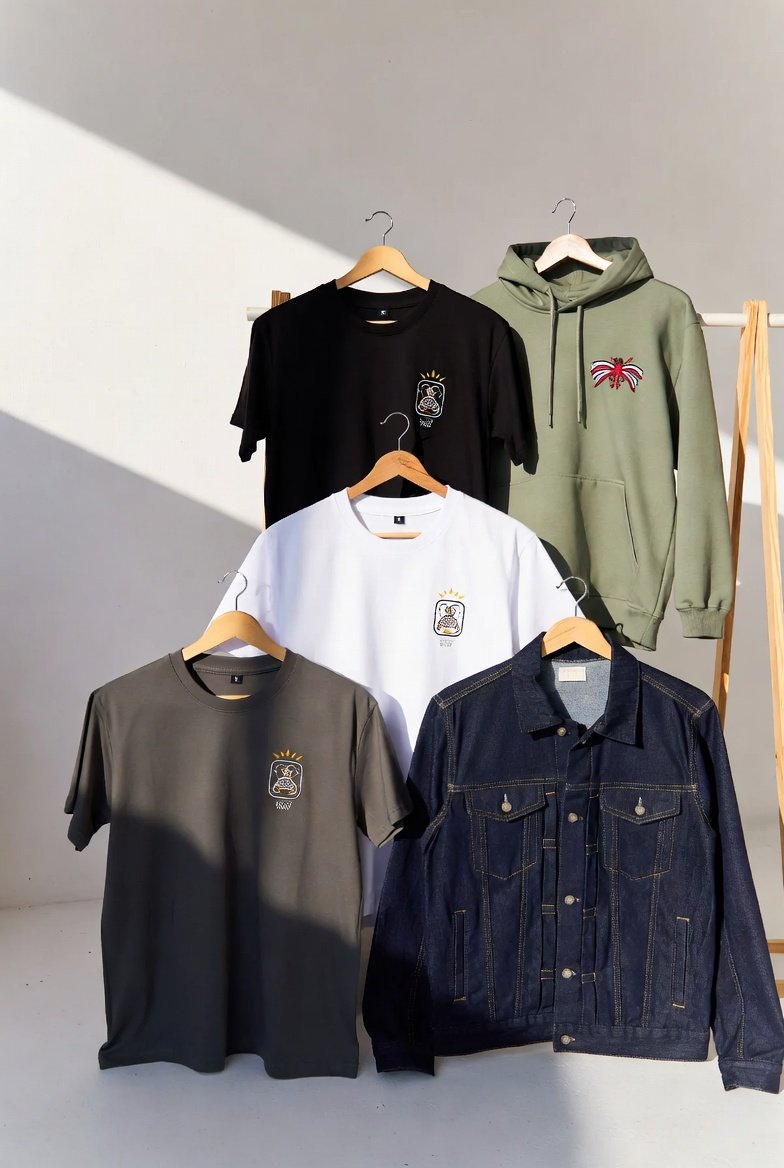
The answer is yes — with flexible partners offering genuine low MOQ (1-2 pieces on many knit and denim items), wide fabric options (190-600gsm), and one-stop OEM services, these concerns become manageable. Technique mixing stays seamless, unit costs remain competitive even at small volumes, and strict quality processes ensure wash-durable, professional results.
If your current supplier feels restrictive, these doubts are completely normal. The right partner unlocks creativity, reduces risk, and supports sustainable growth.
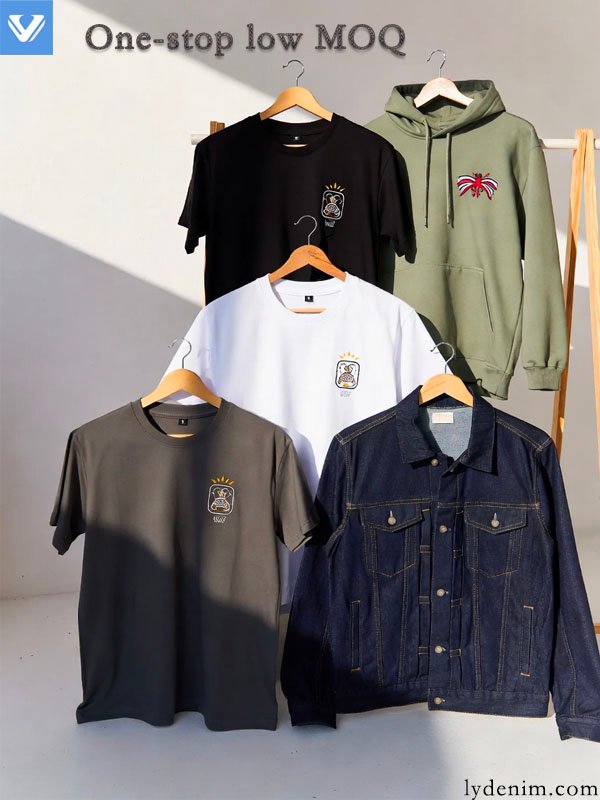
One-stop low MOQ
FAQ
1. What does “custom T-shirts no minimum” really mean in practice? It typically means ultra-low or flexible MOQs (often 1-2 pieces for sampling or small runs), allowing brands to test designs with minimal risk instead of committing to hundreds of units.
2. Which fabric weights (190-600gsm) are best for different T-shirt styles and printing techniques? 190-280gsm for soft, breathable everyday tees and delicate prints; 300-450gsm for structured premium styles; up to 600gsm for durable, heavyweight statement pieces that support embroidery well.
3. What customization options are available for no-minimum orders? DTG, screen printing, DTF/heat transfer, embroidery (flat/puff/chenille), tie-dye, reflective inks, silicone accents, and more — many work efficiently even at very small quantities.
4. Can I combine T-shirts with hoodies or denim items under one low-MOQ supplier? Yes. One-stop services like those from Liangyuan Textile allow consistent branding across custom knitwear (Tee, Polo, Long-sleeve) and low-MOQ denim jackets/shirts.
5. What are the most common design or quality issues with custom T-shirts? Color shifts, detail loss, puckering in embroidery on light fabrics, and wash durability problems — all solvable with proper sampling and testing.
6. How do you ensure consistent quality and wash durability with small orders? Through pre-production sampling, fabric-specific technique testing, quality thread/ink selection, and multi-cycle wash trials before any production run.
7. Is custom T-shirt production with no minimum cost-effective for growing brands? Absolutely. It reduces inventory risk and setup costs while allowing fast iteration; unit prices become even more competitive as volumes grow.
8. What should I prepare when inquiring for a new supplier for custom T-shirts? Prepare vector design files, preferred fabric weights or swatches, quantity estimates (even small), reference samples if any, and specific requirements like wash standards or sustainability needs.
Customization Services by LYDENIM
🎨 Custom Design
Design your own fabric collection or garment with LYDENIM’s premium materials. From luxurious cotton blends to innovative eco-friendly textiles, explore colors, weaves, and finishes that perfectly match your brand or design vision. Visit LYDENIM to learn more.
🛍️ Tailored Garment Solutions
Bring your designs to life with our custom garment services. Whether it’s tailored suits, stylish dresses, or durable workwear, we ensure perfect fit, superior comfort, and lasting quality. Explore customization options on Myalibaba.
📩 Get in Touch
Have a project in mind? Contact our team at malone@lydenim.com to discuss custom fabrics, garment design, or sustainable textile solutions.
Transform your ideas into reality with LYDENIM—your trusted partner for innovative, high-quality fabrics and bespoke apparel solutions.
FAQ
Can this be customized for my brand or collection?
Yes. Send your application, reference images, target quality, quantity and market requirements so the supplier can recommend suitable fabric, garment or finishing options.
What information should I send before asking for a quote?
Prepare product type, target fabric or technique, color direction, sample needs, quantity, destination country and expected lead time.
Should I request swatches before bulk production?
Yes. Swatches and sample yardage reduce risk before bulk orders, especially when color, handfeel, stretch, finish or decoration quality matters.
How can I avoid quality problems in bulk orders?
Approve a clear sample standard, define test requirements, confirm tolerances and compare bulk output against the approved sample before shipment.
Need help turning this into a production-ready sourcing brief?
Send your target product, fabric direction, quantity and sample needs. LY Denim can help compare options and prepare a quote.