


Common Fabrics – Pros and Cons Guide
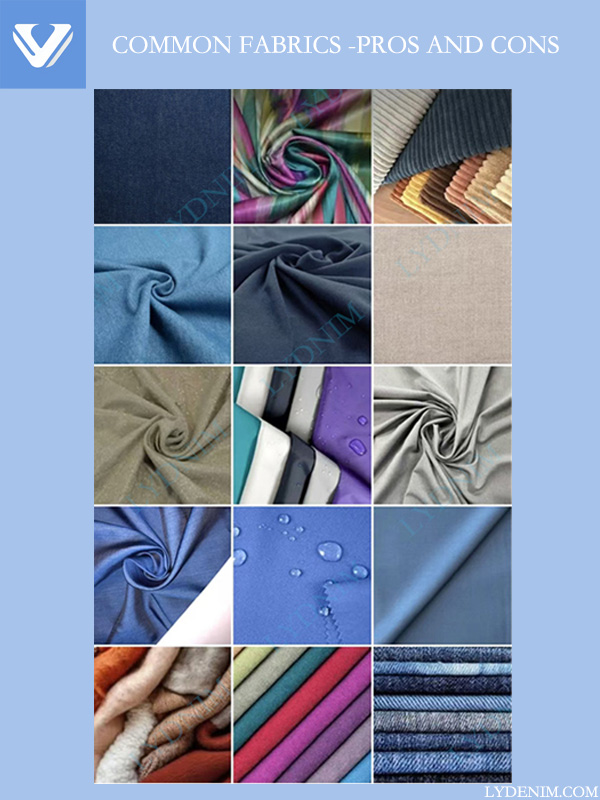
Common Fabrics – Pros and Cons Guide
Not sure which fabric to pick for your pants? Check out this guide comparing 15 materials so you can find the perfect mix of comfort, stretch, and style.
Buyer Summary
Trend and design content should work as a bridge from inspiration to sourcing, helping buyers turn market ideas into fabrics, samples and production-ready briefs.
- Suitable buyersFashion brands, sourcing teams, wholesalers, garment factories and product developers.
- What to confirmTarget product, fabric direction, finish, sample needs, quantity and delivery market.
- Buyer riskUnclear specs can lead to wrong samples, unstable bulk quality and slow quotations.
- Recommended CTARequest swatches or a sample quote before committing to bulk production.
Why This Matters for B2B Buyers
Translate the style direction into fabric weight, finish, color, construction and sample requirements.
Not sure which fabric to pick for your pants? Check out this guide comparing 15 materials so you can find the perfect mix of comfort, stretch, and style.

Specification Table for Faster Sourcing
| Decision point | Options to compare | Why it matters | Buyer question |
|---|---|---|---|
| Buyer goal | Research, sample request, product development, bulk sourcing | Clarifies what the article should help the reader do next | What decision does the buyer need to make? |
| Product application | Jeans, jackets, shirts, skirts, streetwear or workwear | Connects knowledge to actual production needs | Where will this fabric or technique be used? |
| Customization | Color, weight, composition, finish, pattern or decoration | Turns reading into a sourcing brief | What should be customized? |
| Next step | Swatch, sample yardage, quote, QC confirmation | Moves the reader toward inquiry | What information should be sent to the supplier? |
Applications and Custom Options
Product Development
Use this guide to turn design ideas into fabric, garment, finish and sample requirements.
Supplier Comparison
Compare suppliers by sample support, technical clarity, bulk stability and communication speed.
Bulk Production
Confirm quality standards, approved samples and timeline before placing production orders.
Quality Control Points Before Bulk Order
- OKSample approval: confirm fabric, color, handfeel, construction and finish before bulk production.
- OKBulk consistency: compare bulk lots against the approved sample under the same light and test conditions.
- OKPerformance testing: check shrinkage, colorfastness, stretch recovery or decoration durability where relevant.
- OKQuote clarity: send quantity, destination, packaging needs and target lead time to avoid vague pricing.
Sample Development Process
| Step | Buyer provides | Supplier confirms |
|---|---|---|
| 1. Brief | Application, reference images, target quality and quantity | Feasibility, recommended material and custom options |
| 2. Swatch | Preferred color, handfeel, pattern or finish feedback | Available stock, custom direction and sample cost |
| 3. Sample | Garment test plan, size or yardage needs | Sampling timeline and production repeatability |
| 4. Bulk quote | Order quantity, delivery destination and packaging needs | Unit price, MOQ, lead time and QC checkpoints |
Detailed Guide
Estimated reading time: ~5 minutes
Introduction
The selection of appropriate fabric materials determines how comfortable your clothing will be together with its durability and aesthetic appeal. The following analysis evaluates fifteen different pant fabrics by presenting their benefits together with their weaknesses to support better decision-making.
1. 100% Cotton Denim
Pros: This fabric provides excellent ventilation together with sweat management while maintaining its shape during wear and suits loose-fitting clothing.
Cons: The material develops unsightly wrinkles because it lacks stretching properties.
2. Viscose Denim
Pros: Viscose denim provides users with softness and breathability and it resists color fading while being best suited for straight or tapered pant styles.
Cons: The fabric shows limited stretch while it easily gets wrinkled and suffers from both pilling issues and significant shrinkage.
3. Metallic Thread + Cotton + Spandex
Pros: The combination of metallic thread with cotton and spandex results in stylish appearance alongside breathability and stretchiness and static resistance.
Cons: The manufacturing process for this material proves to be expensive while it becomes difficult to produce.
4. Triple-Protection Fabric (Water/Oil/Stain Resistant)
Pros: The fabric provides optimal protection in extreme situations because it blocks water entry and oil contact and fights stains effectively.
Cons: The fabric provides reduced breathability yet demands special washing protocols.
5. Acetate
Pros: The fabric offers softness along with its shiny appearance and moisture-absorbing properties and fast drying characteristics. Best in relaxed-fit styles.
Cons: The fabric costs more and needs specific washing methods.
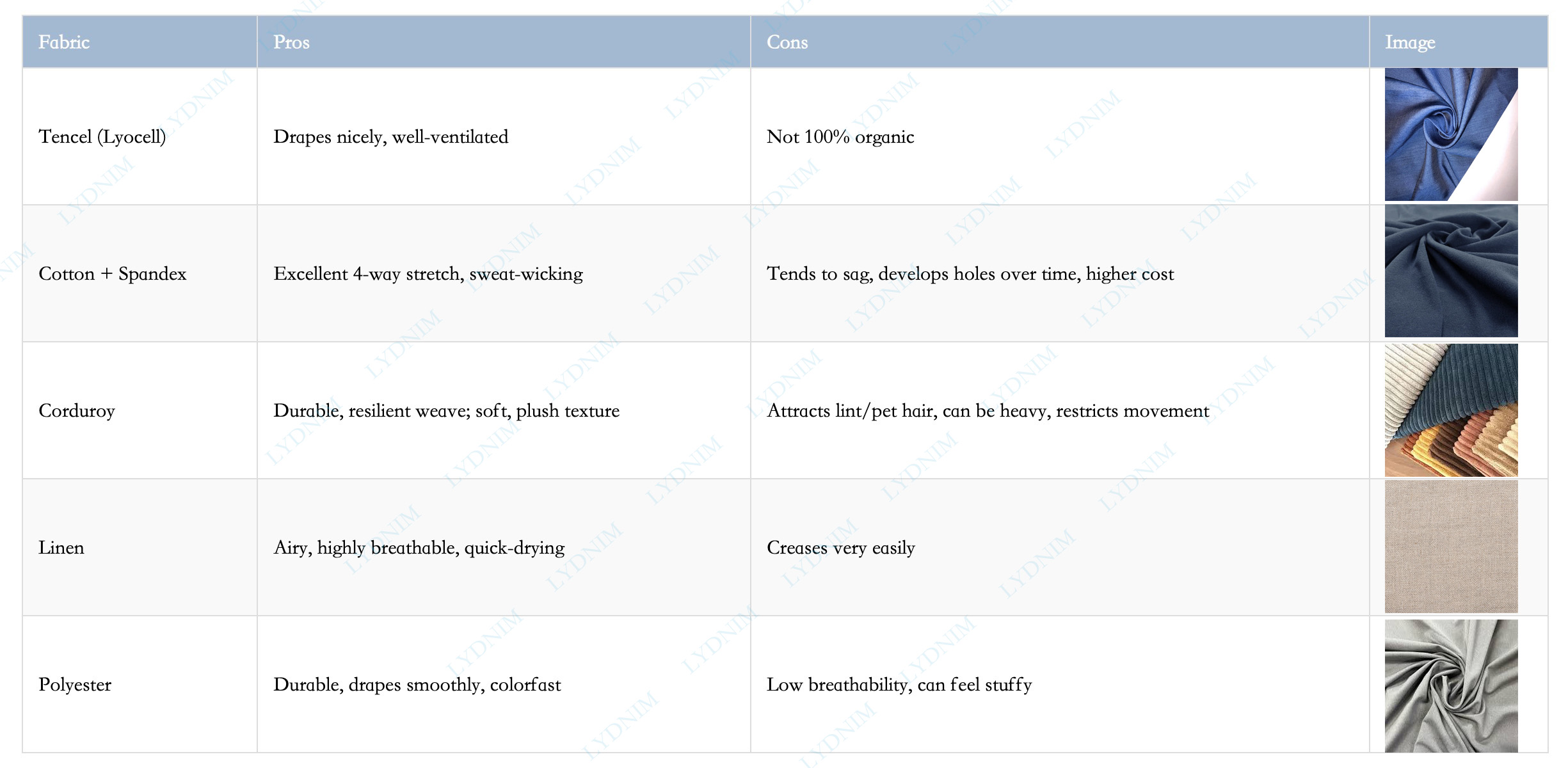
6. Tencel
Pros: The fabric offers a silk-like drape with natural feel while providing moisture-wicking properties and a cooling touch.
Cons: The material displays poor durability because it lacks firmness in its structure.
7. Cotton + Spandex
Pros: The combination of these two materials delivers a lightweight fabric with great stretch and elasticity while maintaining a fashionable look suitable for everyday wear.
Cons: The fabric shows vulnerability to fading and pilling and tends to lose its original shape.
8. Corduroy
Pros: The fabric provides both warmth and softness through its thick texture which suits the fall and winter seasons.
Cons: The material attracts lint and dust and needs special care while its fabric deteriorates quickly.
9. Linen
Pros: The fabric delivers outstanding breathability while wicking moisture while also possessing antibacterial properties that make it perfect for summer wear.
Cons: The material shows high wrinkle susceptibility while maintaining a rough texture that causes skin irritation.
10. Polyester
Pros: The fabric provides excellent resistance to wrinkles and durability while also being quick-drying and ideal for athletic wear.
Cons: The fabric fails to provide sufficient breathability and becomes less comfortable to wear for extended periods.
11. Cotton Fabric
Pros: Natural, breathable, sweat-absorbent, retains heat well.
Cons: The fabric tends to shrink while its wrinkles increase with time and it needs regular ironing to maintain appearance.
12. Nylon
Pros: Durable, elastic, corrosion-resistant, good for activewear.
Cons: Poor breathability, static-prone, less comfortable to wear.
13. Wool
Pros: Soft, elastic, warm, moisture-wicking, great for fall/winter.
Cons: The woolen fabric remains expensive and difficult to take care of while also having a tendency to shrink quickly.
14. Blended Fabrics
Pros: Combine strengths of multiple fibers – breathable, easy to care for, less shrinkage or wrinkling.
Cons: Performance depends on fiber ratio; may not match pure fibers in certain qualities.
15. Denim
Pros: Durable, thick, stylish, versatile, suitable for various age groups.
Cons: Poor breathability and moisture absorption, may fade over time.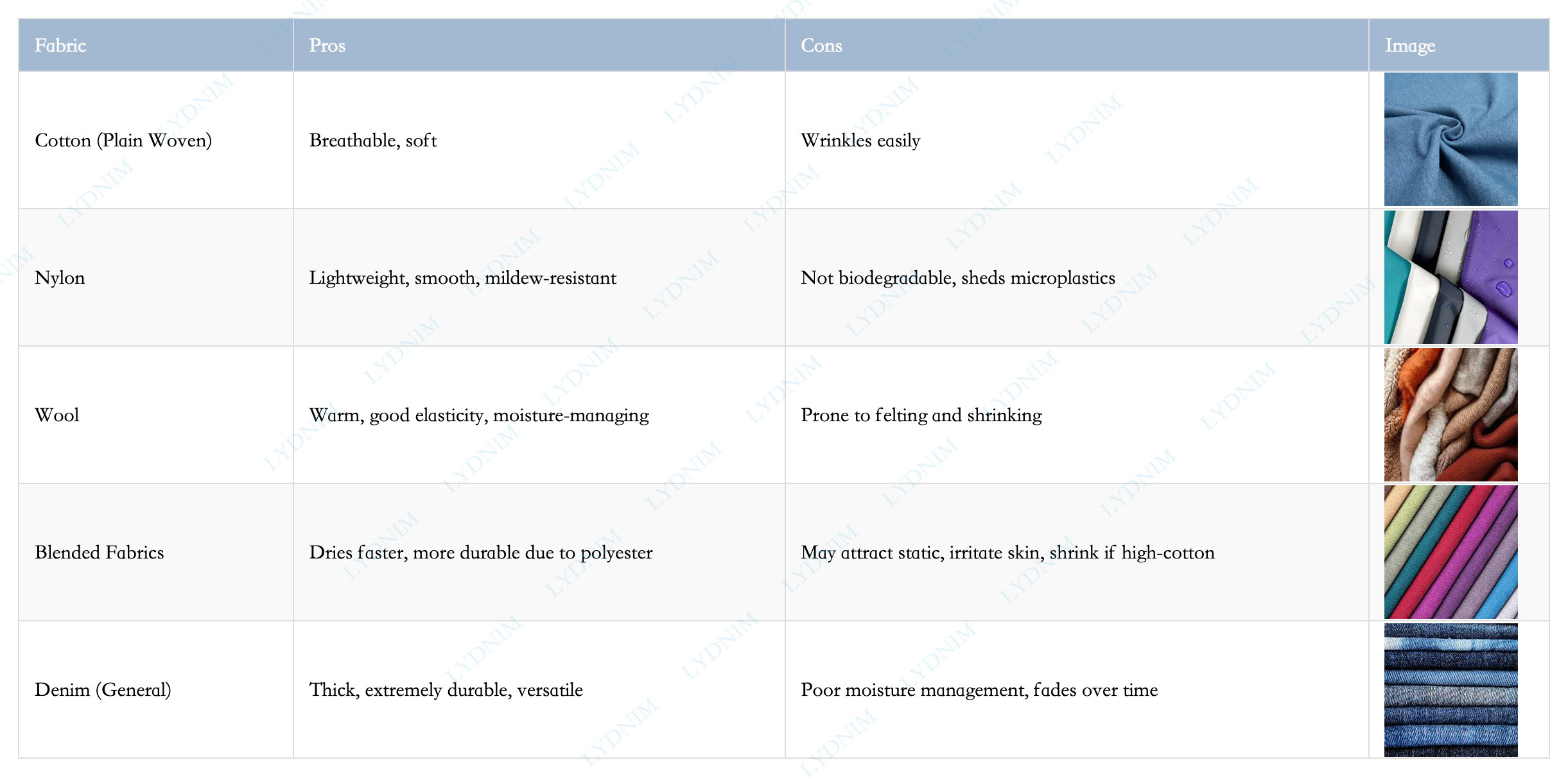
🧵 Explore Fabric Customization at LyDenim
At LyDenim, we not only provide high-quality fabric solutions but also offer garment customization services tailored to your creative vision.
📍 Visit us at lydenim.com
Whether you’re designing ready-to-wear clothing, creating custom fashion collections, or testing new textiles, our expert team can help you develop the right product for your needs.
📧 Contact us at malone@lydenim.com to get started today.
FAQ
Can this be customized for my brand or collection?
Yes. Send your application, reference images, target quality, quantity and market requirements so the supplier can recommend suitable fabric, garment or finishing options.
What information should I send before asking for a quote?
Prepare product type, target fabric or technique, color direction, sample needs, quantity, destination country and expected lead time.
Should I request swatches before bulk production?
Yes. Swatches and sample yardage reduce risk before bulk orders, especially when color, handfeel, stretch, finish or decoration quality matters.
How can I avoid quality problems in bulk orders?
Approve a clear sample standard, define test requirements, confirm tolerances and compare bulk output against the approved sample before shipment.
Need help turning this into a production-ready sourcing brief?
Send your target product, fabric direction, quantity and sample needs. LY Denim can help compare options and prepare a quote.