

Buyer Summary
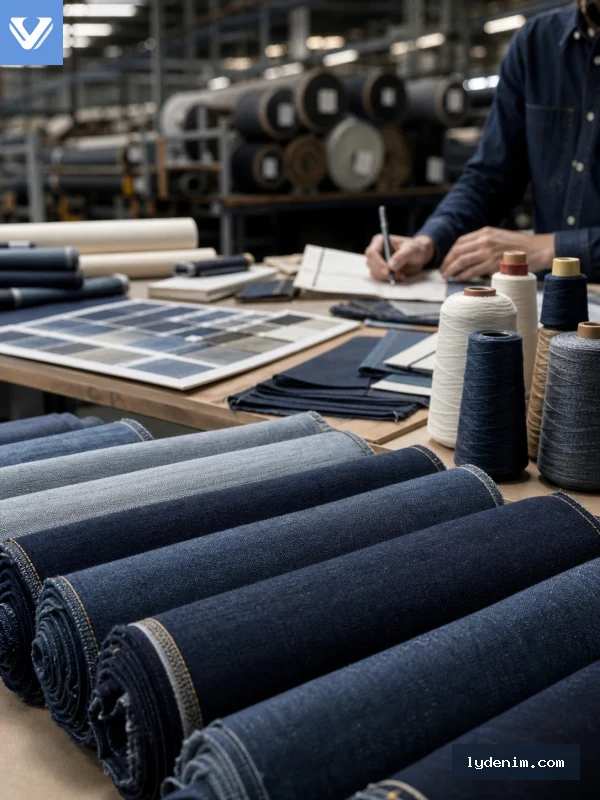
MOQ for denim fabric is not a single promise that works across every project. The practical minimum depends on whether the buyer needs in-stock fabric, custom fabric development, a standard color, a custom color, a special finish, a complex construction, or a garment-linked development route. Buyers usually run into trouble when they ask only for “low MOQ” without defining which of those situations they are actually in.
The most defensible public LYDENIM position is narrow and clear:
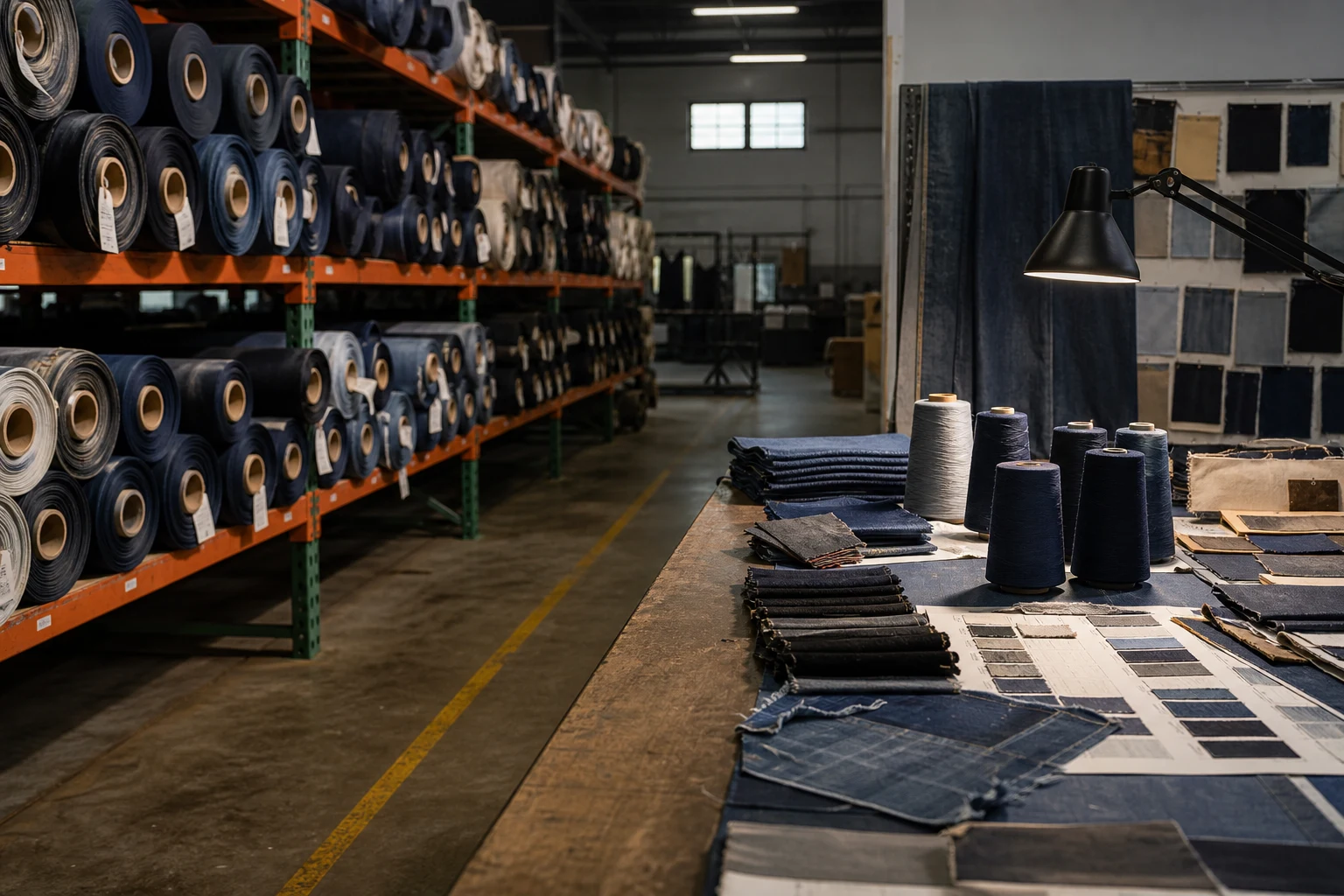
- for in-stock denim fabrics, the reference MOQ publicly stated on the wholesaler service page is 5,000 yards per color
- for custom fabrics, special finishes, custom colors, jacquard, flocked denim, selvedge denim, or apparel customization projects, MOQ and lead time must be confirmed case by case
That means a buyer should treat MOQ as a sourcing mechanism tied to setup cost and production complexity, not as a universal marketing slogan.
Stock Fabric MOQ vs Custom Development MOQ
Buyers should separate two commercial routes at the start.
| Route | How buyers usually approach it | MOQ logic | Main risk if the request is vague |
|---|---|---|---|
| In-stock fabric sourcing | Buyer wants an available quality, available color family, and faster decision path | Reference MOQ can be simpler and publicly anchored | The buyer assumes that all changes still count as stock |
| Custom fabric development | Buyer wants a new weight, composition, construction, color, finish, wash effect, or brand-specific brief | MOQ depends on development scope and production setup | The buyer expects stock MOQ on a custom project |
When a buyer says “I only need a small first order,” the correct follow-up is not immediately a number. The correct follow-up is: does the project stay inside an available stock route, or does it require new development?
Why Color and Finish Change the MOQ Conversation
MOQ is often driven by the cost of changing the production route. Buyers should expect the discussion to become more case-specific when the request includes:
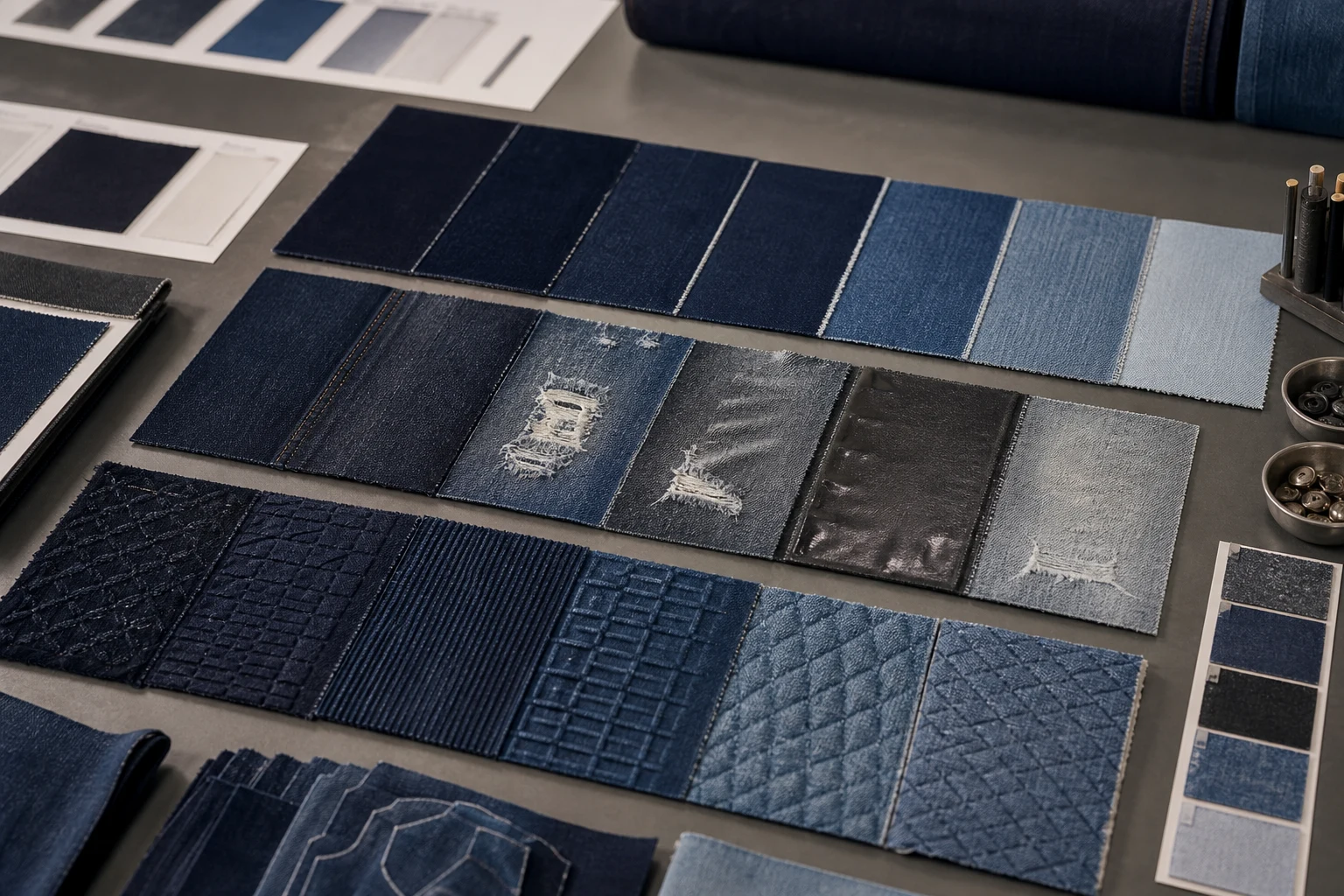
- custom colors or shade targets
- unusual dyeing routes
- coating, embossing, flocking, or other special surface effects
- jacquard or other construction-specific developments
- selvedge or specialty loom requirements
- garment-linked wash programs
The more the request moves away from an existing available fabric, the more the minimum is influenced by setup cost, scheduling, and technical waste rather than by a simple stock quantity rule.
Sample Yardage Is Not the Same As Bulk MOQ
One of the most common sourcing mistakes is to confuse sampling with production quantity.
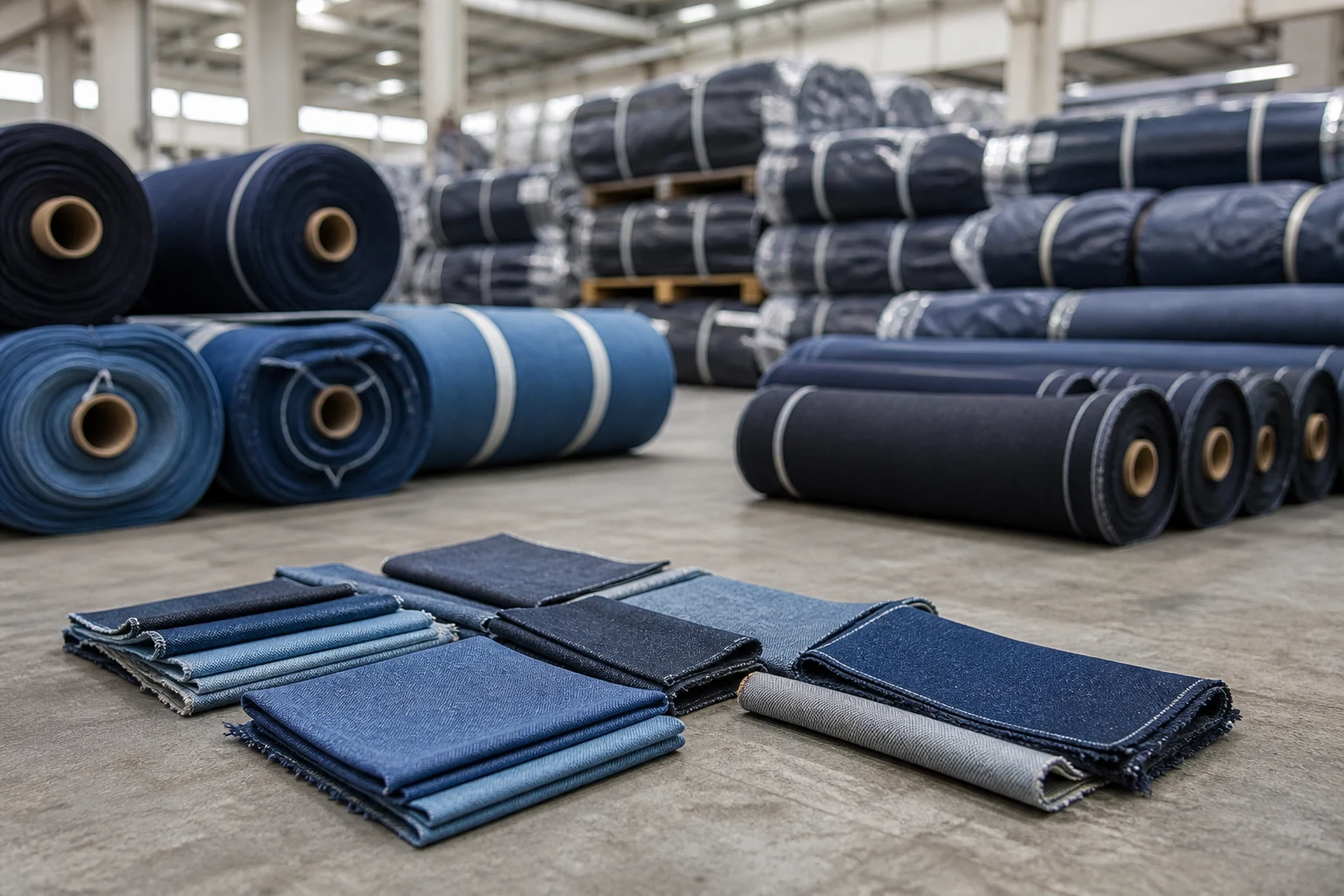
Sample yardage is for:
- testing handfeel and width
- wash trials
- sewing and shrinkage checks
- shade comparison
- buyer approval and internal sign-off
Bulk MOQ is for:
- economically viable production setup
- dyeing and finishing runs
- repeatable commercial packing and shipment
- stable costing rather than one-off experimentation
So a buyer can absolutely ask for small sample yardage before bulk, but should not assume that sample yardage equals the production MOQ.
What Actually Creates MOQ Breakpoints?
MOQ usually rises when more setup work is required. Typical breakpoint drivers include:
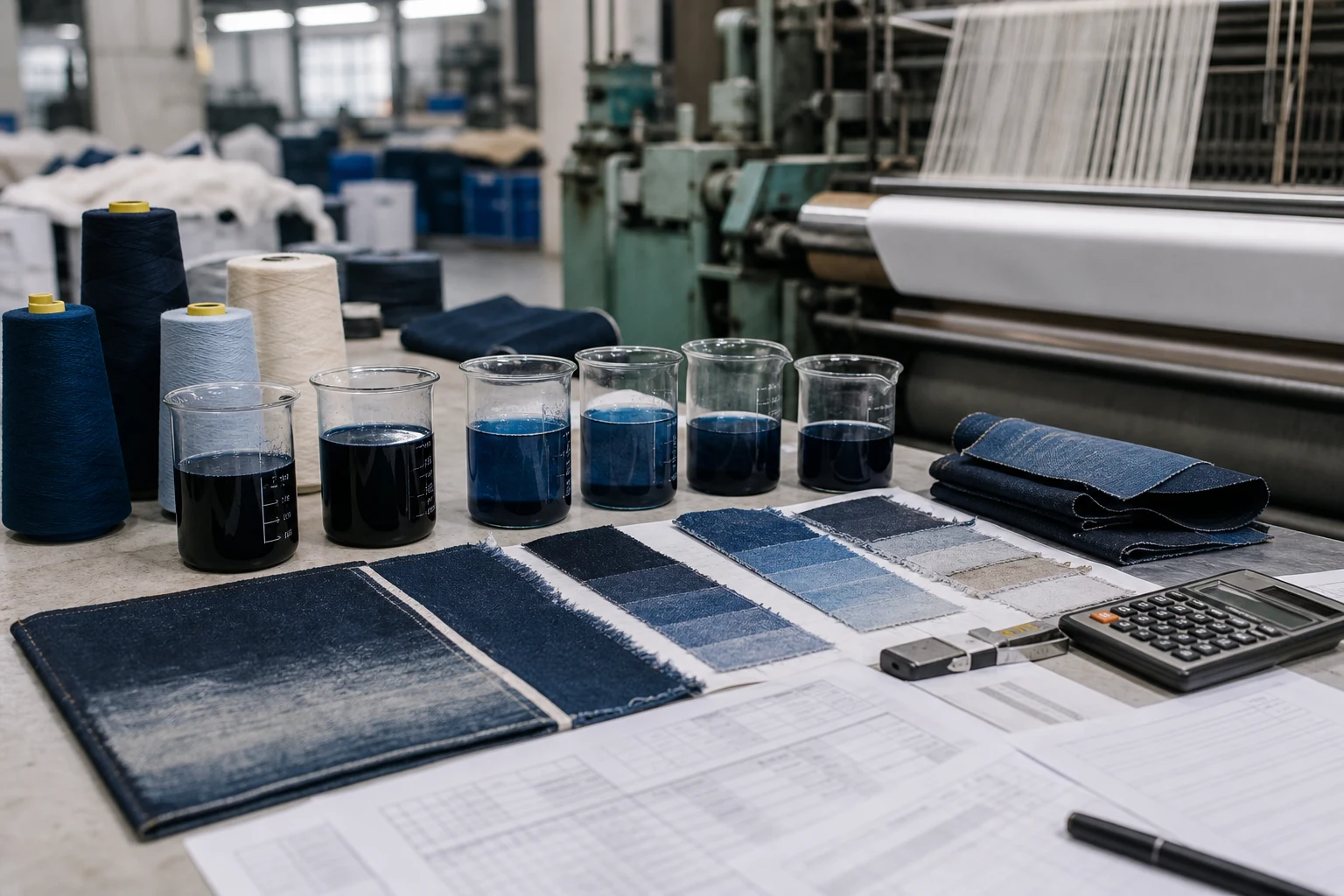
- yarn preparation or special yarn sourcing
- loom setup or construction-specific complexity
- dyeing or finishing setup
- lab dip or color approval cycles
- extra inspection and packaging needs
- fabric width, weight, or stretch requirements that reduce flexibility
From a buyer perspective, the most helpful question is not “What is your lowest MOQ?” The better question is “Which part of my brief is pushing the minimum higher, and what change would make the request more practical?”
How Buyers Can Lower Risk Without Guessing the MOQ
If the buyer wants to reduce commitment risk, these are safer strategies than simply pushing for a lower number:

- Start with a fabric quality that is closer to available stock.
- Narrow the brief to one workable color or finish before asking for multiple variants.
- Confirm width, weight, and end use early so the quote is not built on an unstable target.
- Approve samples before asking the supplier to model bulk economics around an unfinished brief.
- Use the RFQ step to separate must-have customization from nice-to-have customization.
In other words, the buyer often lowers risk faster by improving the brief than by negotiating the minimum too early.
What To Send When You Ask For MOQ Guidance
The supplier can only give useful MOQ feedback when the request includes commercial and technical basics:
- fabric type or closest existing reference
- target oz or GSM if known
- composition and stretch expectation
- color or finish direction
- intended application
- quantity target or quantity band
- destination market
- whether the request is stock sourcing or custom development
MOQ is easier to confirm after the fabric direction is clear. Stock fabrics, custom colors, jacquard, specialty finishes, and garment programs all have different setup work, so LY Denim checks the actual fabric path before giving a practical order range.
LYDENIM Paths Buyers Should Use
Use different internal paths for different MOQ questions:
- Service for Fabric Wholesalers is the clearest public reference for the in-stock MOQ baseline.
- Custom Denim Fabric is the better path when the request already involves development, custom color, construction change, or another non-stock requirement.
- LYDENIM denim fabric range helps the buyer point to the closest fabric family before asking for MOQ guidance.
- The LYDENIM fabric RFQ form is the safest final step when the buyer wants MOQ guidance tied to a real brief instead of a generic answer.
FAQ
What is LYDENIM’s public MOQ reference for stock denim fabric?
The public reference stated on the wholesaler service page is 5,000 yards per color for in-stock denim fabrics.
Can I apply that same MOQ to custom denim development?
No. Custom fabrics, special finishes, custom colors, jacquard, flocked denim, selvedge, and apparel customization projects need case-by-case confirmation.
Does sample yardage mean the same thing as MOQ?
No. Sample yardage is for testing and approval. MOQ is the practical production minimum for the commercial manufacturing route.
How should I ask for a lower-risk MOQ option?
Give the supplier a tighter brief, start from available qualities where possible, and separate sample needs from production needs. That usually gets a more useful answer than asking for a low number with no technical context.
Customization Services by LYDENIM
🎨 Custom Design
Design your own fabric collection or garment with LYDENIM’s premium materials. From luxurious cotton blends to innovative eco-friendly textiles, explore colors, weaves, and finishes that match your brand’s product direction. Visit LYDENIM to learn more.
🛍️ Tailored Garment Solutions
Bring your designs to life with custom garment services. Whether you are developing jeans, denim jackets, skirts, workwear, or small-batch fashion collections, LYDENIM can support fit, comfort, durability, and production planning. Explore customization options on My Alibaba.
📩 Get in Touch
Have a project in mind? Contact our team at malone@lydenim.com to discuss custom fabrics, garment design, sampling and production planning, or sustainable textile solutions.
Transform your ideas into reality with LYDENIM–your trusted partner for innovative, high-quality fabrics and bespoke apparel solutions.
Need help turning this into a production-ready sourcing brief?
Send your target product, fabric direction, quantity and sample needs. LY Denim can help compare options and prepare a quote.