


Sudaderas personalizadas de alta calidad: 7 consejos prácticos para quienes compran por primera vez
Sudaderas personalizadas de alta calidad: 7 consejos prácticos para quienes compran por primera vez
Sudaderas personalizadas de alta calidad para principiantes. Aprende sobre el gramaje (GSM), los métodos de impresión, los costos y cómo elegir al fabricante adecuado paso a paso.
Resumen del comprador
Para las marcas de ropa y los equipos pequeños, este tema debería vincular las decisiones de diseño con el muestreo, la producción, la cantidad mínima de pedido (MOQ), los métodos de decoración y la preparación de presupuestos.
- Compradores adecuadosMarcas de moda, equipos de abastecimiento, mayoristas, fábricas de prendas de vestir y desarrolladores de productos.
- Qué confirmarProducto objetivo, tipo de tejido, acabado, necesidades de muestras, cantidad y mercado de entrega.
- Riesgo del compradorLas especificaciones poco claras pueden dar lugar a muestras incorrectas, una calidad a granel inestable y presupuestos lentos.
- CTA recomendadaSolicite muestras o un presupuesto de muestra antes de comprometerse con la producción en masa.
Por qué esto es importante para los compradores B2B
Antes de comparar proveedores, confirme el tipo de tejido, la confección, la técnica del logotipo, las necesidades de muestras y la cantidad del pedido.
Sudaderas personalizadas de alta calidad para principiantes. Aprende sobre el gramaje (GSM), los métodos de impresión, los costos y cómo elegir al fabricante adecuado paso a paso.
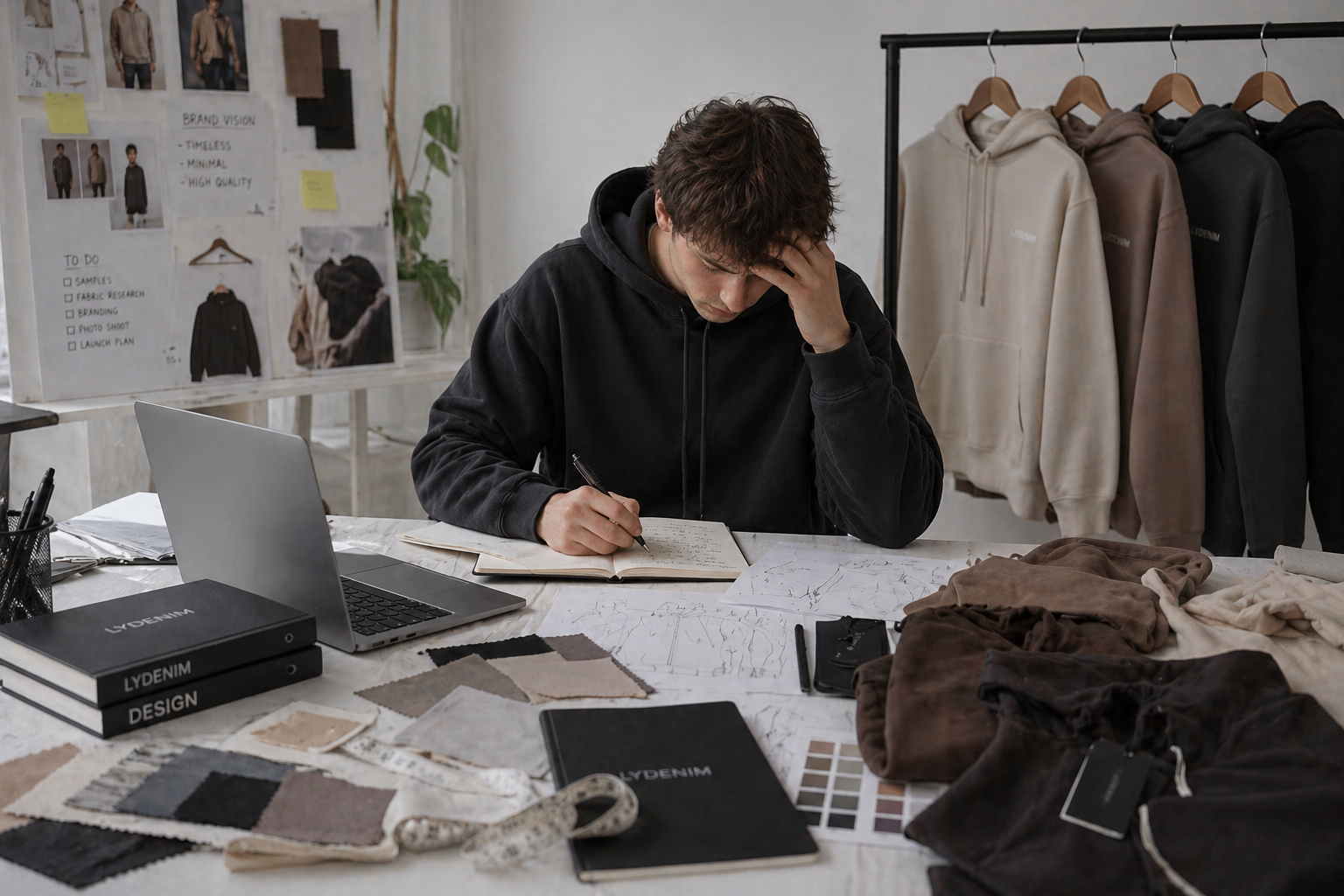
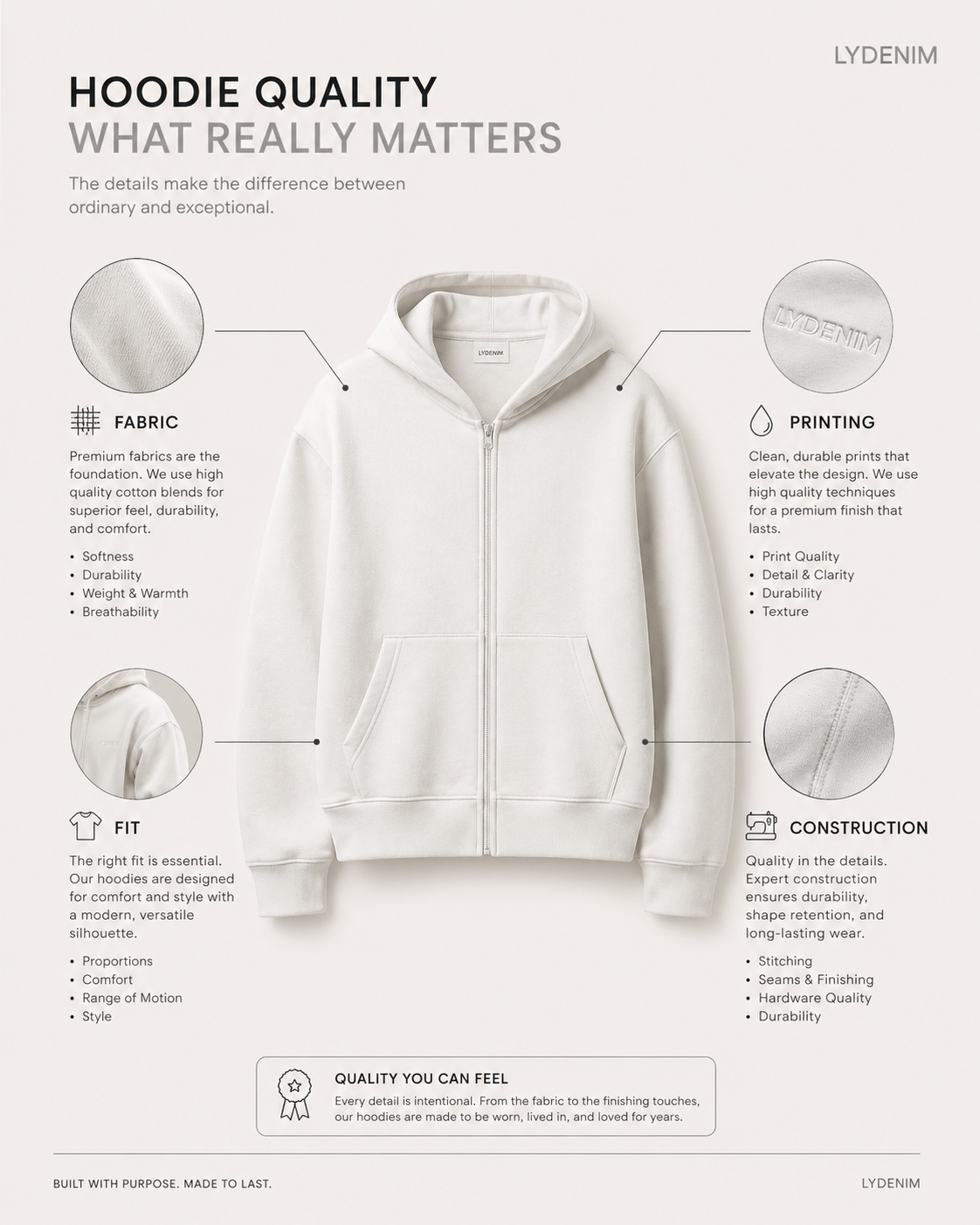
Tabla de especificaciones para un abastecimiento más rápido
| Punto de decisión | Opciones para comparar | Por qué es importante | Pregunta del comprador |
|---|---|---|---|
| Tipo de producto | Sudaderas con capucha, camisetas, vaqueros, chaquetas, ropa personalizada | Controla las opciones de tela, estampado, decoración y confección. | ¿Qué producto estás desarrollando? |
| Personalización | Bordado, serigrafía, estampado en relieve, flocado, lavado | Afecta al coste de la muestra, la cantidad mínima de pedido y el plazo de entrega. | ¿Tienes referencias artísticas o técnicas? |
| Tejido y GSM | Opciones ligeras, medianas o pesadas | Determina la sensación al tacto, la temporada y el posicionamiento en el punto de venta. | ¿Qué sensación al tacto y qué nivel de precio busca? |
| Plan de pedidos | Prototipo, lote pequeño, producción en masa | Modifica los precios, el cronograma y la configuración de producción. | ¿Necesita muestras o un presupuesto para pedidos al por mayor primero? |
Aplicaciones y opciones personalizadas
Desarrollo de productos
Utilice esta guía para convertir las ideas de diseño en requisitos de tela, prenda, acabado y muestras.
Comparación de proveedores
Compare a los proveedores en función del soporte de muestras, la claridad técnica, la estabilidad del volumen de producción y la velocidad de comunicación.
Producción a granel
Confirme los estándares de calidad, las muestras aprobadas y el cronograma antes de realizar los pedidos de producción.
Puntos de control de calidad antes de realizar un pedido al por mayor.
- DE ACUERDOAprobación de la muestra: Confirme la tela, el color, el tacto, la confección y el acabado antes de la producción en masa.
- DE ACUERDOConsistencia volumétrica: Comparar los lotes a granel con la muestra aprobada bajo las mismas condiciones de luz y de prueba.
- DE ACUERDOPruebas de rendimiento: Compruebe la contracción, la solidez del color, la recuperación elástica o la durabilidad de la decoración, según corresponda.
- DE ACUERDOClaridad de la cita: Indique la cantidad, el destino, las necesidades de embalaje y el plazo de entrega previsto para evitar precios imprecisos.
Proceso de desarrollo de muestras
| Paso | El comprador proporciona | El proveedor confirma |
|---|---|---|
| 1. Breve | Aplicación, imágenes de referencia, calidad y cantidad objetivo | Viabilidad, materiales recomendados y opciones personalizadas. |
| 2. Muestra | Comentarios sobre el color, el tacto, el patrón o el acabado preferidos. | Stock disponible, instrucciones personalizadas y coste de la muestra. |
| 3. Muestra | Plan de prueba de prendas, necesidades de talla o metraje | Cronograma de muestreo y repetibilidad de la producción |
| 4. Cotización al por mayor | Cantidad del pedido, destino de entrega y necesidades de embalaje | Precio unitario, cantidad mínima de pedido, plazo de entrega y puntos de control de calidad. |
Guía detallada
Tiempo estimado de lectura: ~5 minutos
Pedidos sudaderas con capucha personalizadas de alta calidad La primera vez puede resultar abrumador, no porque el producto sea complicado, sino porque hay que tomar demasiadas decisiones a la vez.
Debes elegir el gramaje adecuado de la tela, comprender los métodos de impresión, evaluar a los proveedores y controlar los costes, todo ello antes incluso de realizar tu primer pedido.
La realidad es que la mayoría de los principiantes no fracasan por tener malas ideas, sino porque pasan por alto detalles pequeños pero cruciales durante el proceso de búsqueda de proveedores.
Esta guía está diseñada para simplificar ese proceso y ayudarte a tomar decisiones con confianza, paso a paso.
Puntos débiles en la confección de ropa a medida
¿Qué hace que una sudadera con capucha sea realmente de alta calidad?
Antes de entrar en detalles técnicos, es importante comprender qué significa realmente "alta calidad" en términos prácticos.
Una sudadera con capucha no se siente de alta calidad solo por una característica, sino por la combinación de múltiples factores que trabajan juntos:
- Tela → ¿Es suave pero estructurado? ¿Mantiene su forma después del lavado?
- Impresión o bordado → ¿Es limpio, afilado y duradero?
- Adaptar → ¿Se ajusta bien al cuerpo o resulta incómodo?
- Construcción → ¿Son resistentes las costuras y el acabado impecable?
Si alguno de estos elementos es débil, los clientes lo notarán de inmediato, aunque no puedan explicar por qué.
Sudadera con capucha de alta calidad
Consejo 1: Empiece por determinar el gramaje de la tela (GSM) antes que nada.
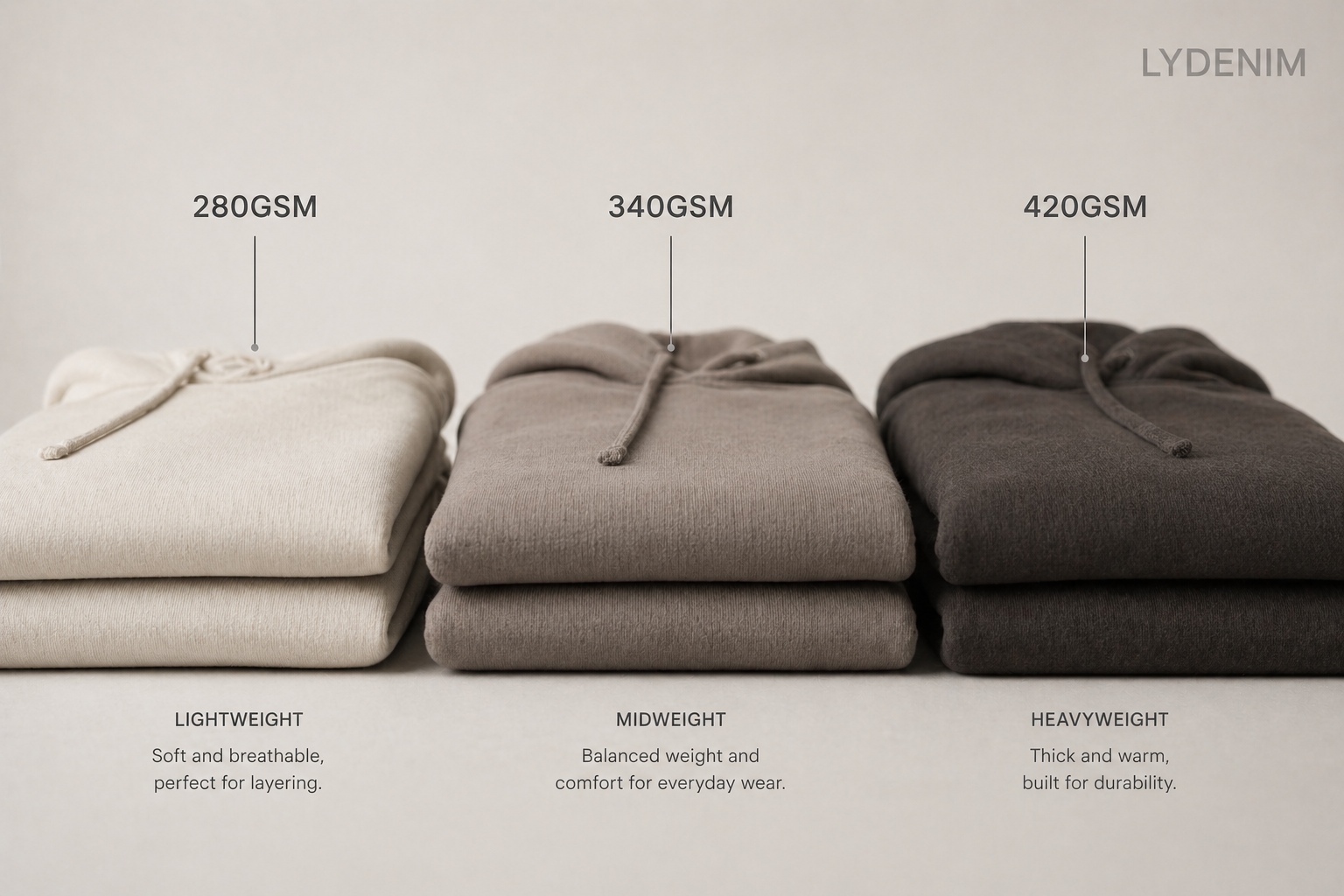
Una de las decisiones más importantes y fáciles que puedes tomar es elegir la correcta. GSM (gramos por metro cuadrado).
El GSM determina el grosor, el peso y la calidad que se siente al tacto de tu sudadera con capucha.
Comprender GSM en su uso real:
- 280–300 GSM (Ligero)
Se siente más ligero y transpirable.
Adecuado para climas cálidos o productos económicos.
Pero puede que se perciba como menos "premium". - 320–360 GSM (Peso medio / Estándar)
La gama más utilizada
Cómodo, duradero y versátil.
Ideal para quienes compran por primera vez. - 380–420 GSM (Grosor elevado)
Notablemente más grueso y cálido.
Se siente más prémium en la mano.
Se utiliza con frecuencia en marcas de ropa urbana. - Más de 420 g/m² (peso ultra pesado)
Muy grueso, estructurado y de alta gama.
Mayor costo y peso de envío
Utilizado para el posicionamiento de lujo
👉 Consejos prácticos:
Si no estás seguro, elige 320–380 G/M —Te ofrece un excelente equilibrio entre costo, comodidad y calidad.
Peso de la tela
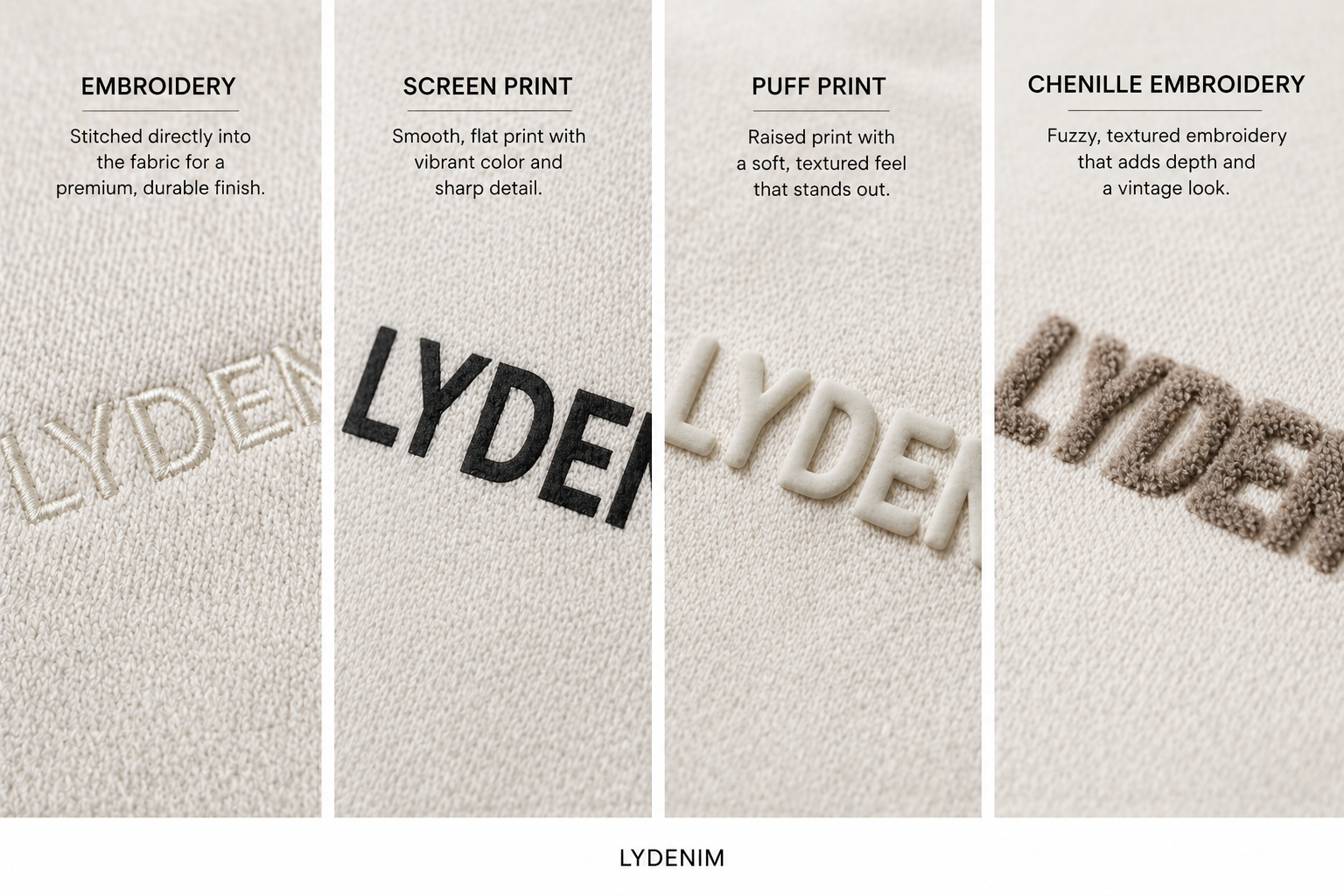
Consejo 2: Elija el método de impresión o decoración adecuado (según el tamaño del pedido).
La impresión es un ámbito donde muchos principiantes cometen errores costosos, ya sea por elegir el método incorrecto o por no comprender sus limitaciones.
Aquí hay un desglose práctico de los métodos comúnmente utilizados para sudaderas con capucha personalizadas de alta calidad:
Bordado (Bordado a máquina)
Ideal para logotipos y marcas.
✔ Aspecto premium y texturizado
✔ Extremadamente duradero (puede soportar más de 50 lavados)
✔ Fuerte percepción de marca
✘ Mayor costo
✘ No apto para diseños grandes
👉 Ideal para: logotipos de marcas, diseños minimalistas
Bordado plano
✔ Limpio y consistente
✔ Más rentable que el bordado complejo
✔ Adecuado para producción en masa
✘ Profundidad visual limitada
Serigrafía
✔ La mejor opción para pedidos grandes
✔ Colores vibrantes con gran durabilidad
✔ No se siente como "plástico"
✘ Requiere costo de instalación
✘ No es ideal para pequeñas cantidades
Impresión por transferencia térmica (DTF / HTV)
✔ Ideal para tiradas cortas o para probar diseños.
✔ Puede manejar gráficos complejos o multicolor
✘ Ligeramente menos transpirable
✘ Puede agrietarse o pelarse con el tiempo.
Impresión en relieve
✔ Crea un efecto 3D en relieve.
✔ Popular en la moda urbana
✘ Puede aplanarse o agrietarse después de un uso intensivo.
Impresión sobre silicona
✔ Suave, flexible y duradero
✔ Funciona bien para ropa deportiva
✘ Mayor costo de producción
Bordado de chenilla
✔ Textura gruesa, suave y de primera calidad
✔ Fuerte identidad visual
✘ Caro
✘ Requiere un mantenimiento cuidadoso
Relieve 3D
✔ Sin tinta: tacto limpio y de primera calidad.
✔ Sutil y de alta gama
✘ Requiere moldes
✘ No apto para todo tipo de tejidos
👉 Estrategia para principiantes:
- Pedido pequeño → Transferencia de calor
- De tamaño mediano a grande → Serigrafía
- Posicionamiento premium → Bordado

Comparación de procesos personalizados
Consejo 3: Mantén tu primer diseño simple y centrado.
Uno de los mayores errores que cometen los principiantes es intentar abarcar demasiado en su primer producto.
Más colores, más ubicaciones, más detalles = más problemas.
En cambio:
- Comience con 1-2 colocaciones de diseño
- Uso logotipos sencillos o gráficos basados en texto
- Evite los degradados demasiado complejos o las impresiones de gran tamaño.
Una sudadera con capucha sencilla y sin adornos es más fácil de producir y, a menudo, también más fácil de vender.
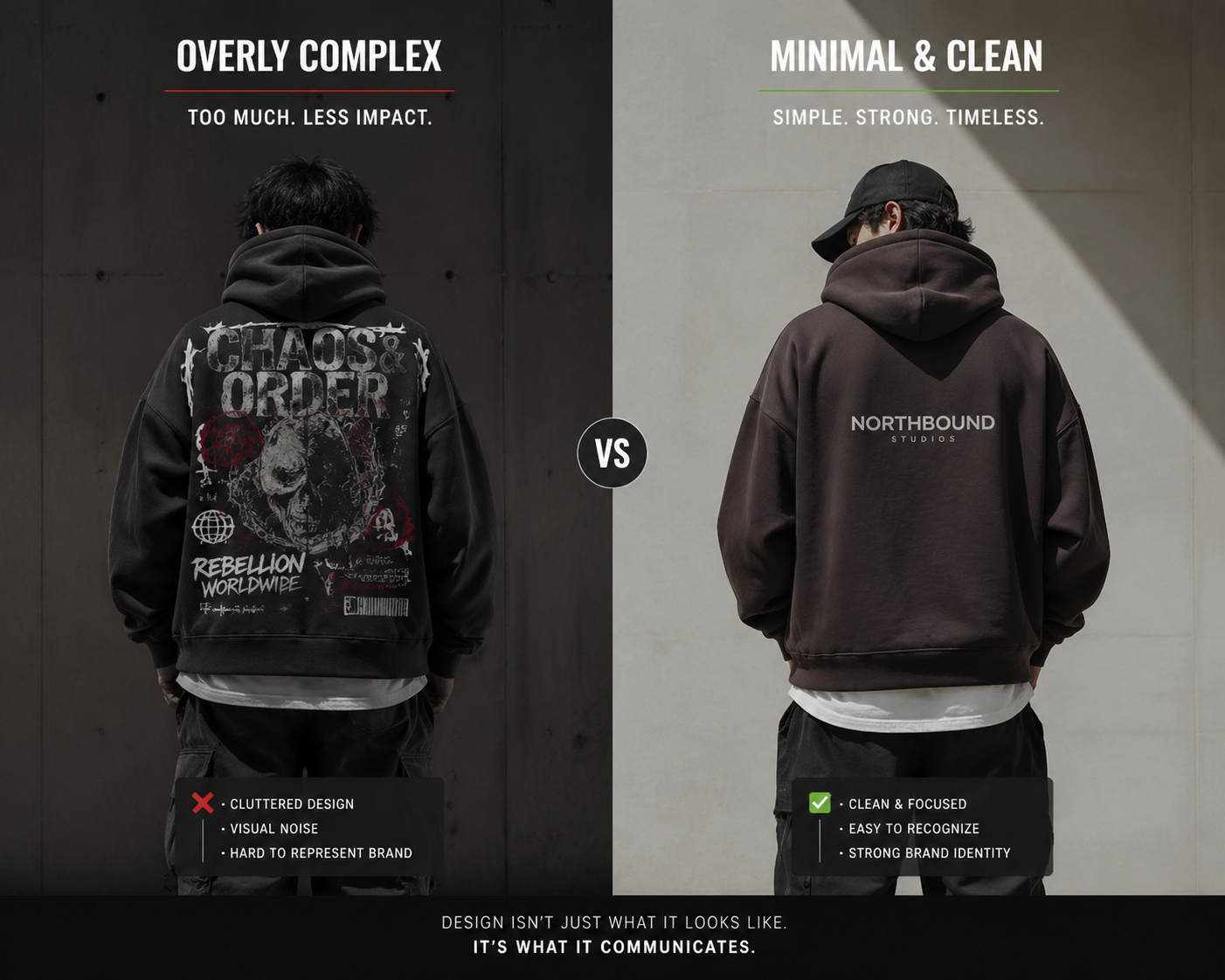
Comparación entre lo complejo y lo simple (personalizado)
Consejo 4: Presta mucha atención al ajuste y la talla.
Los problemas de tallaje son una de las principales razones de las devoluciones de prendas de vestir.
Para sudaderas con capucha personalizadas de alta calidadNunca debes confiar únicamente en etiquetas como S, M o L.
Lo que debes hacer:
- Solicitar un Tabla de tallas completa con medidas
- Confirme las unidades (cm o pulgadas)
- Pregunte sobre la tolerancia (±1–2 cm es lo estándar).
- Prueba de ajuste con personas reales
👉 Si tu mercado es Estados Unidos o Europa, la precisión en las tallas se vuelve aún más importante.
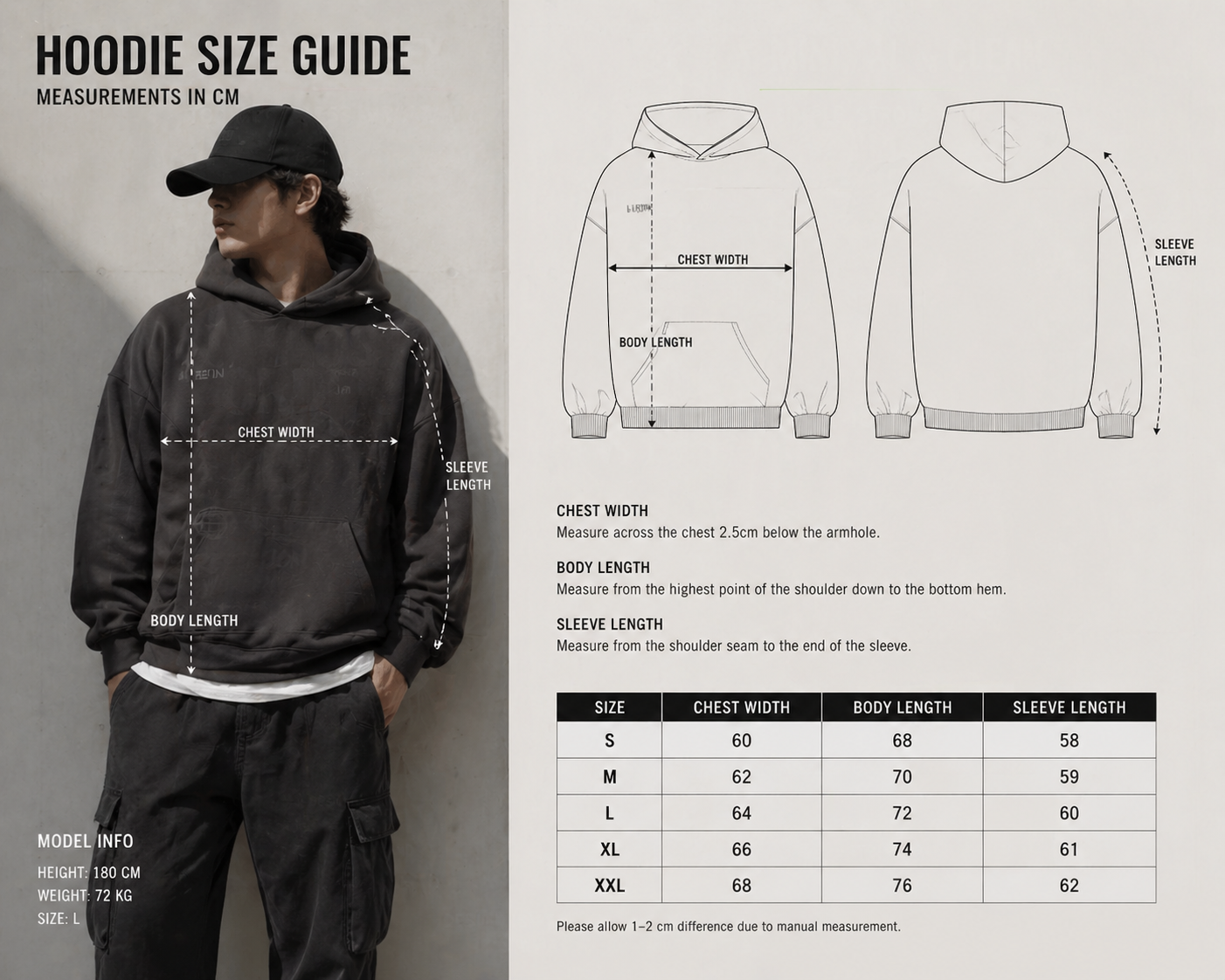
Tabla de medidas personalizada + Efecto en la parte superior del cuerpo
Consejo 5: No ignores los pequeños detalles (ellos definen la calidad).
Los clientes suelen juzgar la calidad basándose en pequeños detalles, incluso de forma subconsciente.
Áreas clave a revisar:
- Cordones ajustables (grosor, acabado)
- Puños de costilla (recuperación elástica)
- Costuras (apretadas y uniformes)
- Etiquetas y rótulos
Actualizar ligeramente estos elementos puede mejorar significativamente cómo su sudaderas con capucha personalizadas de alta calidad son percibidos.
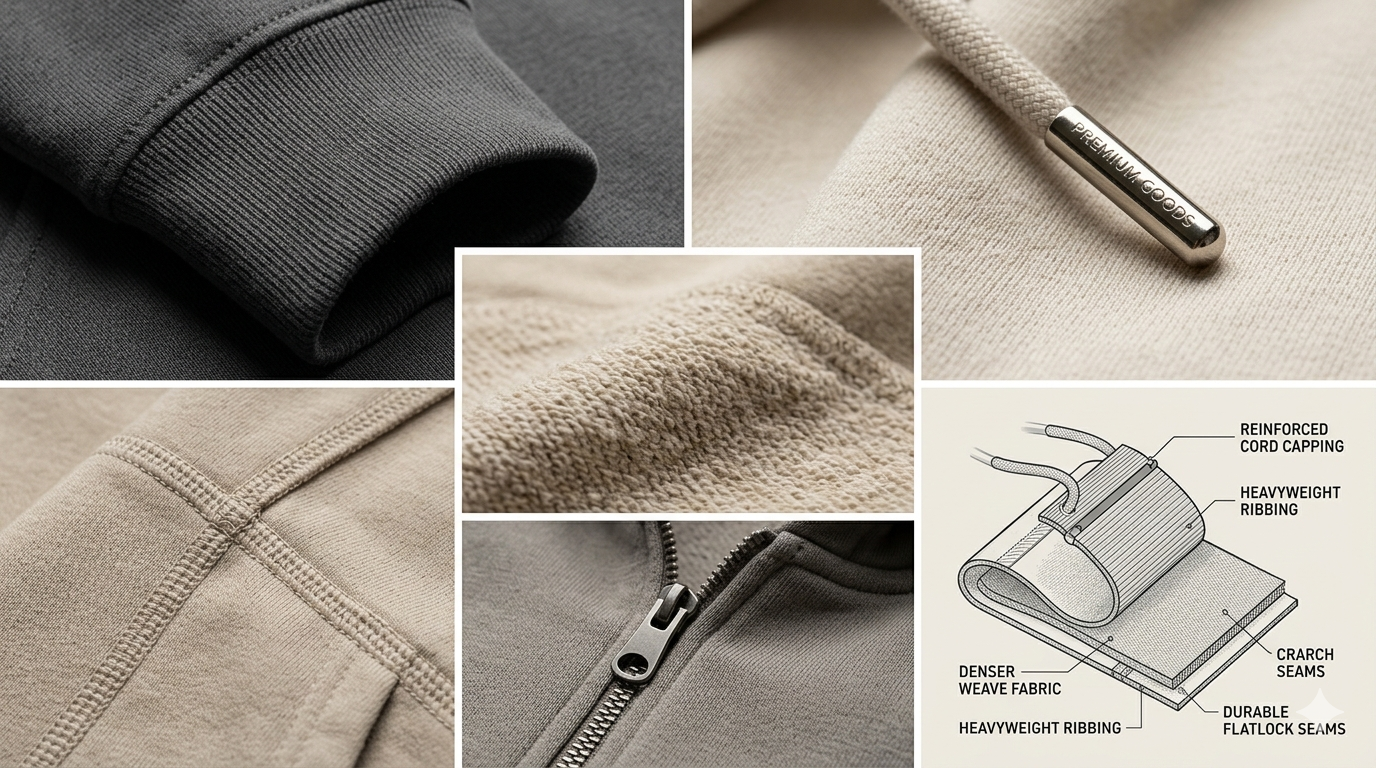
Detalles personalizados
Consejo 6: Trabaje con el fabricante adecuado (no solo con el más barato).
Elegir un fabricante no es solo cuestión de precio, sino también de fiabilidad.
Un buen proveedor te ayuda a:
- Evite errores de producción
- Mantener una calidad constante
- Entregar a tiempo
👉 Aquí puedes explorar la producción de sudaderas personalizadas:
https://liangyuantextile.m.en.alibaba.com
Para principiantes, busquen:
- Comunicación clara
- Soporte de muestra
- Experiencia con pedidos de exportación
Consejo 7: Empiece siempre con una muestra (no negociable).
Omitir el muestreo es uno de los errores más costosos en la producción de prendas de vestir.
El muestreo le permite:
- Siente la tela
- Comprobar la calidad de impresión
- Tamaño de la prueba
- Identifique los problemas a tiempo
Aunque suponga un coste adicional, a la larga supone un ahorro mucho mayor.
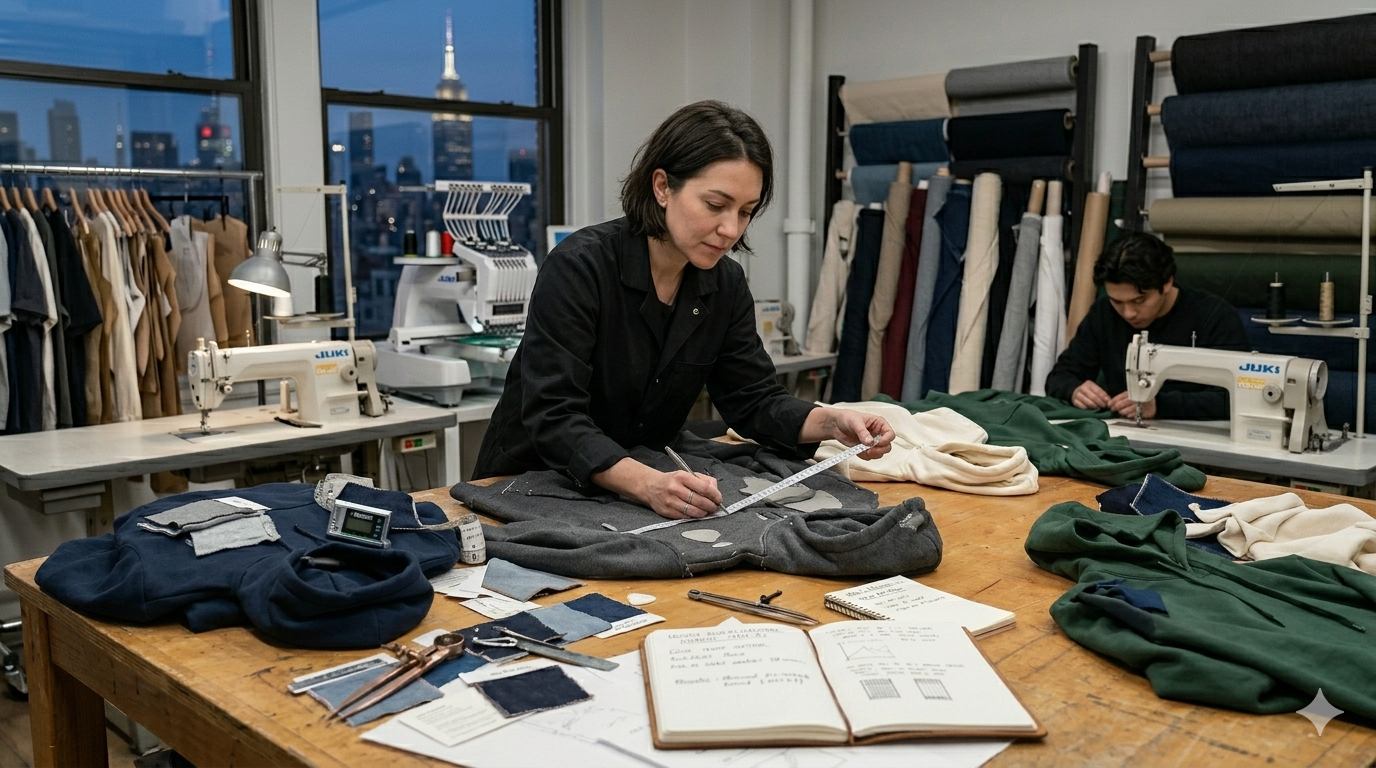
Muestras personalizadas
Ejemplos de casos reales
Caso 1 – Lanzamiento de marca por primera vez
Una empresa emergente encargó 80 sudaderas con capucha fabricadas con tejido de 340 g/m² e impresión por transferencia térmica.
Resultado:
- Presupuesto controlado
- Producción rápida
- Prueba de mercado exitosa
Caso 2 – Actualización a Premium
Una marca mejoró su gramaje de 300 GSM a 400 GSM y optó por el bordado.
Resultado:
- Precio de venta al público más elevado
- Mejor retroalimentación de los clientes
- Identidad de marca más sólida
Caso 3 – Omisión del muestreo
Un comprador encargó 300 sudaderas con capucha sin probarlas previamente.
Resultado:
- Tamaño incorrecto
- Defectos de impresión
- pérdida financiera
👉 Lección: El muestreo es esencial.
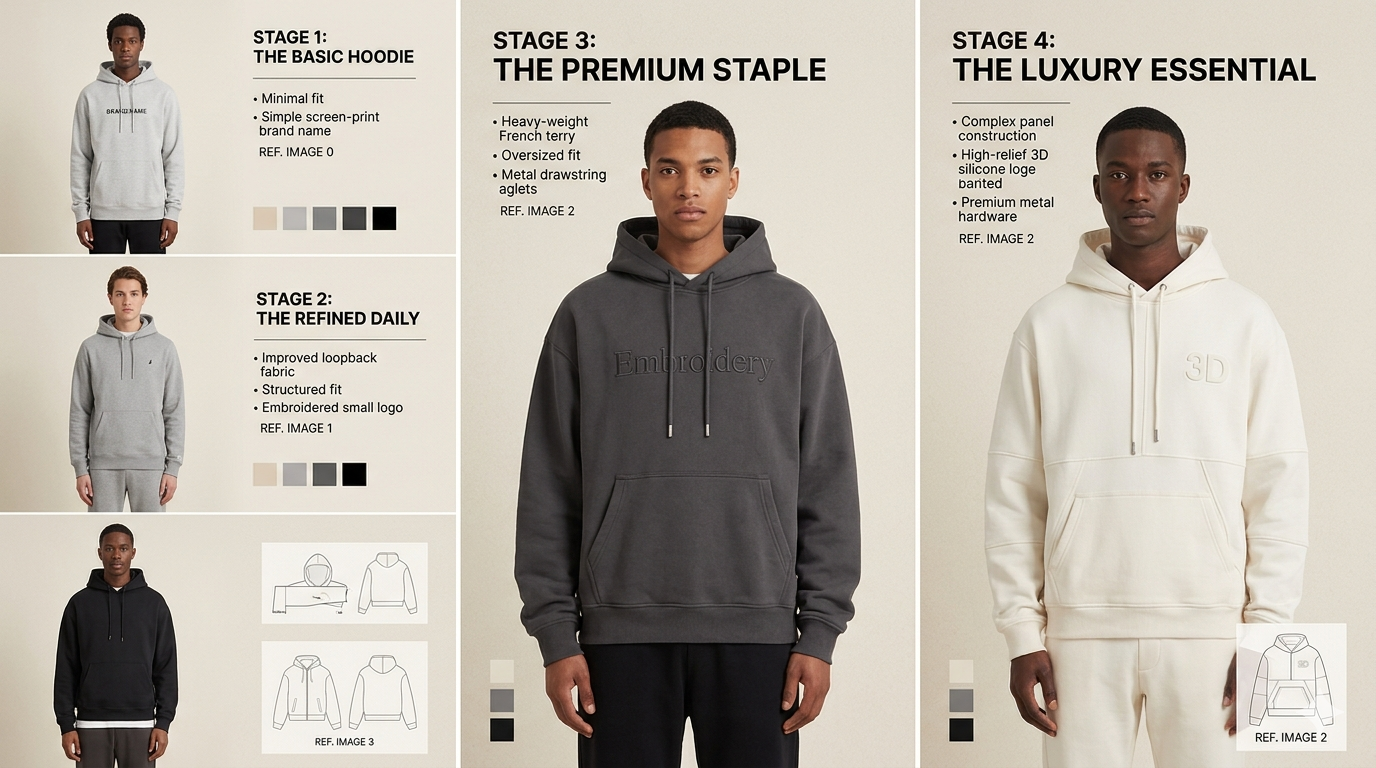
Ejemplos de casos personalizados
Conclusión: Céntrese en dominar los fundamentos.
No es necesario que todo salga perfecto en tu primer pedido.
Si te centras en:
- El GSM correcto
- Método de impresión adecuado
- Diseño sencillo
- Proveedor confiable
Ya puedes crear sudaderas con capucha personalizadas de alta calidad que se distinguen de la mayoría de los productos para principiantes.
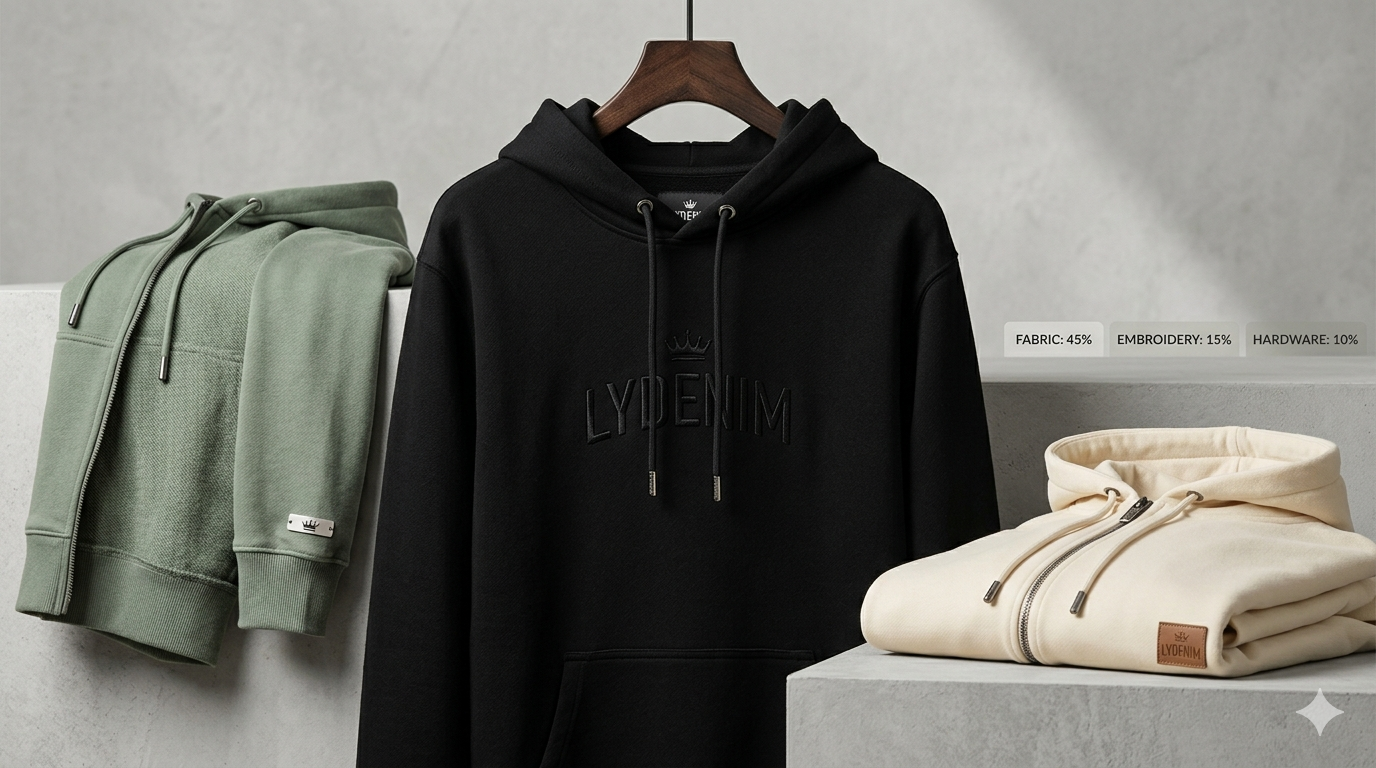
LYDENM personalizado
❓ Preguntas frecuentes: Sudaderas con capucha personalizadas de alta calidad
¿Qué programa GSM deberían elegir los principiantes?
Los tejidos de 320 a 380 g/m² ofrecen el mejor equilibrio entre calidad y precio.
¿Cuál es el mejor método para pedidos pequeños?
Transferencia térmica o impresión digital.
¿Qué es lo que dura más tiempo?
Bordado y serigrafía.
¿Con cuántas piezas debería empezar?
Entre 50 y 100 piezas es un punto de partida práctico.
¿Puedo combinar varias técnicas?
Sí, pero aumenta la complejidad y el coste.
Servicios de personalización de LYDENIM
🎨 Diseño personalizado
Diseña tu propia colección de telas o prenda con los materiales premium de LYDENIM. Desde lujosas mezclas de algodón hasta innovadores textiles ecológicos, explora colores, tejidos y acabados que se adaptan perfectamente a tu marca o visión de diseño. Visita LYDENIM Para saber más.
🛍️ Soluciones de prendas a medida
Da vida a tus diseños con nuestros servicios de personalización de prendas. Ya sean trajes a medida, vestidos elegantes o ropa de trabajo resistente, garantizamos un ajuste perfecto, comodidad superior y calidad duradera. Explora las opciones de personalización en Mialibaba.
📩 Contáctanos
¿Tienes un proyecto en mente? Contacta con nuestro equipo en malone@lydenim.com para discutir sobre telas personalizadas, diseño de prendas o soluciones textiles sustentables.
Transforme sus ideas en realidad con LYDENIM, su socio de confianza para telas innovadoras y de alta calidad y soluciones de indumentaria a medida.
Preguntas frecuentes
¿Se puede personalizar para mi marca o colección?
Sí. Envíe su solicitud, imágenes de referencia, la calidad y cantidad deseadas, y los requisitos del mercado para que el proveedor pueda recomendarle las opciones de tela, prenda o acabado más adecuadas.
¿Qué información debo enviar antes de solicitar un presupuesto?
Prepare el tipo de producto, el tejido o la técnica de destino, la dirección del color, las necesidades de muestras, la cantidad, el país de destino y el plazo de entrega previsto.
¿Debo solicitar muestras antes de la producción en masa?
Sí. Las muestras y los metrajes de muestra reducen el riesgo antes de realizar pedidos al por mayor, especialmente cuando el color, el tacto, la elasticidad, el acabado o la calidad de la decoración son importantes.
¿Cómo puedo evitar problemas de calidad en pedidos al por mayor?
Aprobar un estándar de muestra claro, definir los requisitos de prueba, confirmar las tolerancias y comparar la producción a granel con la muestra aprobada antes del envío.
¿Necesitas ayuda para convertir esto en un brief de abastecimiento listo para la producción?
Envíanos el producto que buscas, el tipo de tejido, la cantidad y las muestras que necesitas. LY Denim te ayudará a comparar opciones y a preparar un presupuesto.