


เสื้อฮู้ดสั่งทำพิเศษคุณภาพสูง: 7 เคล็ดลับที่เป็นประโยชน์สำหรับผู้ซื้อครั้งแรก
เสื้อฮู้ดสั่งทำพิเศษคุณภาพสูง: 7 เคล็ดลับที่เป็นประโยชน์สำหรับผู้ซื้อครั้งแรก
เสื้อฮู้ดแบบกำหนดเองคุณภาพสูงสำหรับผู้เริ่มต้น เรียนรู้ระบบ GSM แบบมีฮู้ด วิธีการพิมพ์ ต้นทุน และวิธีเลือกผู้ผลิตที่เหมาะสมทีละขั้นตอน
สรุปผู้ซื้อ
สำหรับแบรนด์เครื่องแต่งกายและทีมขนาดเล็ก หัวข้อนี้ควรเชื่อมโยงการตัดสินใจด้านการออกแบบกับการสุ่มตัวอย่าง การผลิต ปริมาณขั้นต่ำ วิธีการตกแต่ง และความพร้อมในการเสนอราคา
- ผู้ซื้อที่เหมาะสมแบรนด์แฟชั่น ทีมจัดหา ผู้ค้าส่ง โรงงานตัดเย็บเสื้อผ้า และผู้พัฒนาผลิตภัณฑ์
- สิ่งที่ต้องยืนยันเป้าหมายผลิตภัณฑ์ ทิศทางของผ้า ผิวสำเร็จ ความต้องการตัวอย่าง ปริมาณ และตลาดการจัดส่ง
- ความเสี่ยงของผู้ซื้อข้อมูลจำเพาะที่ไม่ชัดเจนอาจนำไปสู่ตัวอย่างที่ไม่ถูกต้อง คุณภาพปริมาณมากไม่แน่นอน และการเสนอราคาที่ช้า
- CTA ที่แนะนำขอตัวอย่างหรือใบเสนอราคาตัวอย่างก่อนที่จะดำเนินการผลิตจำนวนมาก
เหตุใดจึงสำคัญสำหรับผู้ซื้อ B2B
ยืนยันเนื้อผ้า โครงสร้าง เทคนิคโลโก้ ความต้องการตัวอย่าง และปริมาณการสั่งซื้อก่อนเปรียบเทียบซัพพลายเออร์
เสื้อฮู้ดแบบกำหนดเองคุณภาพสูงสำหรับผู้เริ่มต้น เรียนรู้ระบบ GSM แบบมีฮู้ด วิธีการพิมพ์ ต้นทุน และวิธีเลือกผู้ผลิตที่เหมาะสมทีละขั้นตอน
ตารางข้อมูลจำเพาะสำหรับการจัดหาที่เร็วขึ้น
| จุดตัดสินใจ | ตัวเลือกในการเปรียบเทียบ | ทำไมมันถึงสำคัญ | คำถามของผู้ซื้อ |
|---|---|---|---|
| ประเภทสินค้า | เสื้อฮู้ด เสื้อยืด กางเกงยีนส์ แจ็คเก็ต เครื่องแต่งกายตามสั่ง | ควบคุมการเลือกผ้า ลวดลาย การตกแต่ง และการก่อสร้าง | คุณกำลังพัฒนาผลิตภัณฑ์ใด? |
| การปรับแต่ง | งานปัก งานสกรีน งานพิมพ์พัฟ งานปัก งานซัก | ส่งผลต่อต้นทุนตัวอย่าง ขั้นต่ำ และเวลานำ | คุณมีอาร์ตเวิร์คหรือเทคนิคอ้างอิงหรือไม่? |
| ผ้าและ GSM | ตัวเลือกเบา ปานกลาง หรือเฮฟวี่เวท | กำหนดความรู้สึกมือ ฤดูกาล และตำแหน่งการขายปลีก | คุณต้องการความรู้สึกมือและระดับราคาแบบใด |
| แผนการสั่งซื้อ | ต้นแบบ ชุดเล็ก การผลิตจำนวนมาก | เปลี่ยนแปลงราคา ไทม์ไลน์ และการตั้งค่าการผลิต | คุณต้องการตัวอย่างหรือใบเสนอราคาจำนวนมากก่อนหรือไม่? |
แอปพลิเคชันและตัวเลือกแบบกำหนดเอง
การพัฒนาผลิตภัณฑ์
ใช้คู่มือนี้เพื่อเปลี่ยนแนวคิดการออกแบบให้เป็นข้อกำหนดด้านเนื้อผ้า เครื่องแต่งกาย การตกแต่ง และตัวอย่าง
การเปรียบเทียบซัพพลายเออร์
เปรียบเทียบซัพพลายเออร์ตามการสนับสนุนตัวอย่าง ความชัดเจนทางเทคนิค ความเสถียรของปริมาณรวม และความเร็วในการสื่อสาร
การผลิตจำนวนมาก
ยืนยันมาตรฐานคุณภาพ ตัวอย่างที่ได้รับอนุมัติ และไทม์ไลน์ก่อนสั่งผลิต
จุดควบคุมคุณภาพก่อนสั่งซื้อจำนวนมาก
- OKการอนุมัติตัวอย่าง: ยืนยันผ้า สี ความรู้สึกมือ โครงสร้าง และการตกแต่งก่อนการผลิตจำนวนมาก
- OKความสม่ำเสมอเป็นกลุ่ม: เปรียบเทียบล็อตจำนวนมากกับตัวอย่างที่ได้รับอนุมัติภายใต้แสงและสภาวะการทดสอบเดียวกัน
- OKการทดสอบประสิทธิภาพ: ตรวจสอบการหดตัว ความคงทนของสี การยืดตัวคืนสภาพ หรือความทนทานของการตกแต่งตามที่เกี่ยวข้อง
- OKความชัดเจนของคำพูด: ส่งปริมาณ ปลายทาง ความต้องการบรรจุภัณฑ์ และเวลานำเป้าหมายเพื่อหลีกเลี่ยงการกำหนดราคาที่คลุมเครือ
กระบวนการพัฒนาตัวอย่าง
| ขั้นตอน | ผู้ซื้อจัดให้ | ซัพพลายเออร์ยืนยัน |
|---|---|---|
| 1. บรีฟ | การใช้งาน รูปภาพอ้างอิง คุณภาพและปริมาณเป้าหมาย | ความเป็นไปได้ วัสดุที่แนะนำ และตัวเลือกแบบกำหนดเอง |
| 2. สวอตช์ผ้า | สี สัมผัสมือ รูปแบบ หรือการตอบสนองขั้นสุดท้ายที่ต้องการ | สต็อกที่มีอยู่ ทิศทางที่กำหนดเอง และต้นทุนตัวอย่าง |
| 3. ตัวอย่าง | แผนการทดสอบเสื้อผ้า ขนาด หรือความต้องการระยะ | เส้นเวลาการสุ่มตัวอย่างและความสามารถในการทำซ้ำของการผลิต |
| 4. ใบเสนอราคาจำนวนมาก | ปริมาณการสั่งซื้อ ปลายทางการจัดส่ง และความต้องการบรรจุภัณฑ์ | ราคาต่อหน่วย, ขั้นต่ำ, เวลานำและจุดตรวจควบคุมคุณภาพ |
คู่มือโดยละเอียด
เวลาอ่านโดยประมาณ: ~5 นาที
การสั่งซื้อ เสื้อฮู้ดแบบกำหนดเองคุณภาพสูง เป็นครั้งแรกที่รู้สึกล้นหลาม ไม่ใช่เพราะผลิตภัณฑ์มีความซับซ้อน แต่เนื่องจากมีการตัดสินใจมากเกินไปในคราวเดียว
คุณต้องเลือกน้ำหนักผ้าที่เหมาะสม ทำความเข้าใจวิธีการพิมพ์ ประเมินซัพพลายเออร์ และควบคุมต้นทุน ทั้งหมดนี้ก่อนที่คุณจะทำการสั่งซื้อครั้งแรกด้วยซ้ำ
ความจริงก็คือ ผู้เริ่มต้นส่วนใหญ่ไม่ได้ล้มเหลวเพราะความคิดที่ไม่ดี พวกเขาล้มเหลวเนื่องจากพลาดรายละเอียดเล็กๆ น้อยๆ แต่สำคัญในระหว่างกระบวนการจัดหา
คู่มือนี้จัดทำขึ้นเพื่อทำให้กระบวนการนั้นง่ายขึ้น และช่วยให้คุณตัดสินใจได้อย่างมั่นใจทีละขั้นตอน
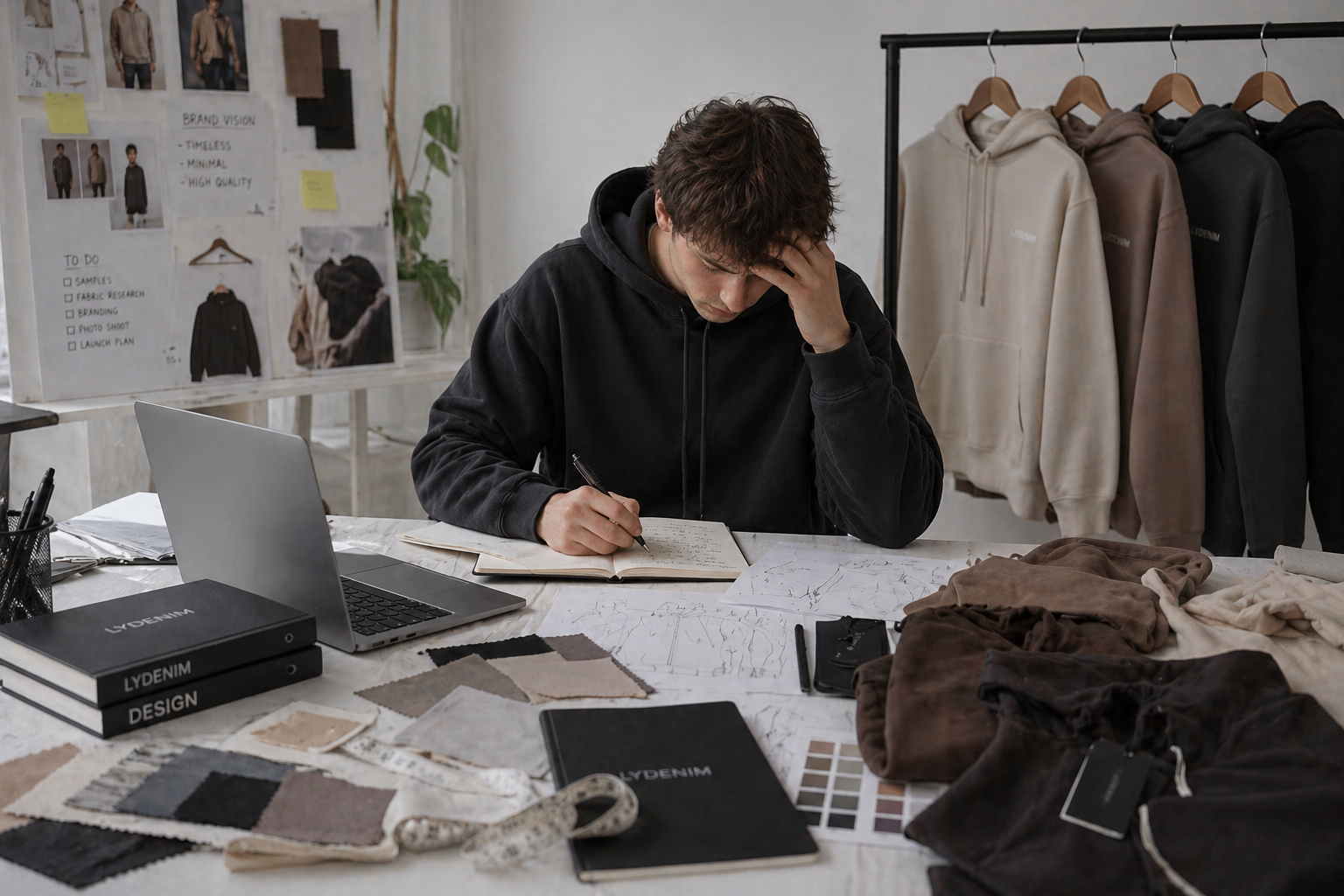
จุดปวดในการแต่งกายสั่งทำพิเศษ
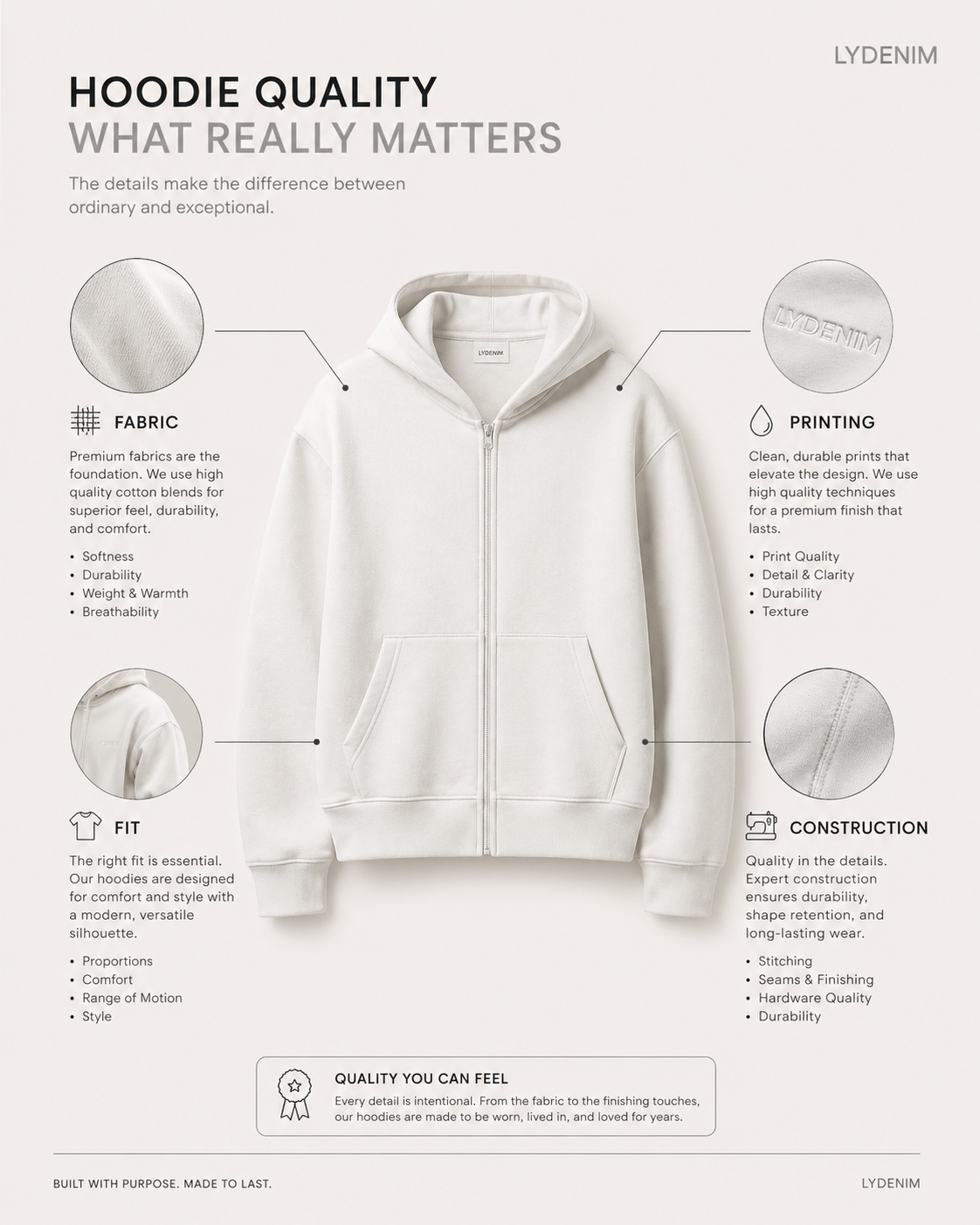
อะไรทำให้เสื้อมีฮู้ดมีคุณภาพสูงอย่างแท้จริง?
ก่อนที่จะลงรายละเอียดทางเทคนิค สิ่งสำคัญคือต้องเข้าใจว่าจริงๆ แล้ว "คุณภาพสูง" หมายถึงอะไรในทางปฏิบัติ
เสื้อฮู้ดไม่ได้ให้ความรู้สึกพรีเมี่ยมเพียงเพราะคุณสมบัติเดียวเท่านั้น แต่เป็นการผสมผสานระหว่างปัจจัยหลายอย่างที่ทำงานร่วมกัน:
- ผ้า → รู้สึกนุ่มแต่มีโครงสร้างไหม? มันคงรูปร่างหลังจากการซักหรือไม่?
- การพิมพ์หรือเย็บปักถักร้อย → สะอาด คม และทนทานไหม?
- พอดี → มันนั่งได้ดีกับร่างกายหรือรู้สึกอึดอัดหรือไม่?
- การก่อสร้าง → ตะเข็บแข็งแรงและตกแต่งเรียบร้อยหรือไม่?
หากองค์ประกอบใดองค์ประกอบหนึ่งเหล่านี้อ่อนแอ ลูกค้าจะสังเกตเห็นได้ทันที แม้ว่าจะอธิบายไม่ได้ว่าทำไมก็ตาม
เสื้อฮู้ดคุณภาพสูง
เคล็ดลับที่ 1 – เริ่มต้นด้วยน้ำหนักผ้า (GSM) ก่อนสิ่งอื่นใด
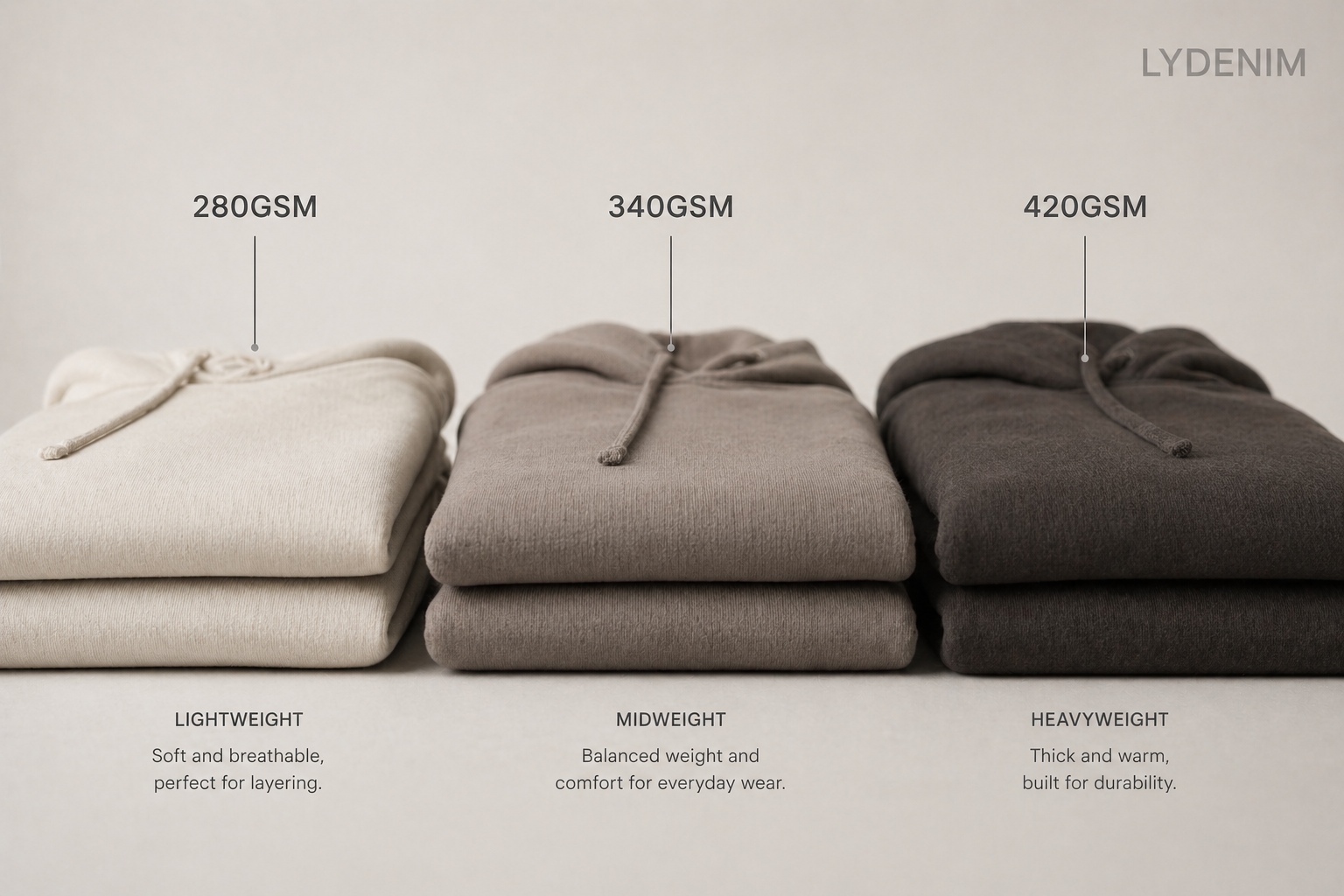
หนึ่งในการตัดสินใจที่สำคัญและง่ายที่สุดที่คุณสามารถทำได้คือการเลือกสิ่งที่ถูกต้อง GSM (กรัมต่อตารางเมตร).
GSM จะกำหนดความรู้สึกของเสื้อฮู้ดที่หนา หนัก และพรีเมียม
ทำความเข้าใจ GSM ในการใช้งานจริง:
- 280–300 GSM (น้ำหนักเบา)
รู้สึกเบาขึ้นและระบายอากาศได้ดีขึ้น
เหมาะสำหรับสภาพอากาศที่อบอุ่น หรือผลิตภัณฑ์ที่มีราคาประหยัด
แต่อาจรู้สึกว่ามันไม่ได้มีความพิเศษหรือระดับพรีเมียมเท่าไหร่ - 320–360 GSM (มิดเวท / มาตรฐาน)
ช่วงที่ใช้กันมากที่สุด
สบาย ทนทาน และใช้งานได้หลากหลาย
เหมาะสำหรับผู้ซื้อครั้งแรก - 380–420 GSM (เฮฟวี่เวท)
หนาและอุ่นกว่าอย่างเห็นได้ชัด
รู้สึกพรีเมียมมากขึ้นเมื่อสัมผัส
นิยมใช้ในแบรนด์สตรีทแวร์ - 420+ GSM (รุ่นหนาพิเศษ)
หนามาก มีโครงสร้าง และระดับพรีเมียม
ต้นทุนที่สูงขึ้นและน้ำหนักในการจัดส่ง
ใช้สำหรับการวางตำแหน่งสินค้าหรูหรา
👉 คำแนะนำการปฏิบัติ:
หากคุณไม่แน่ใจ ให้เลือก 320–380 แกรม — ช่วยให้คุณมีความสมดุลระหว่างราคา ความสะดวกสบาย และคุณภาพ
น้ำหนักผ้า
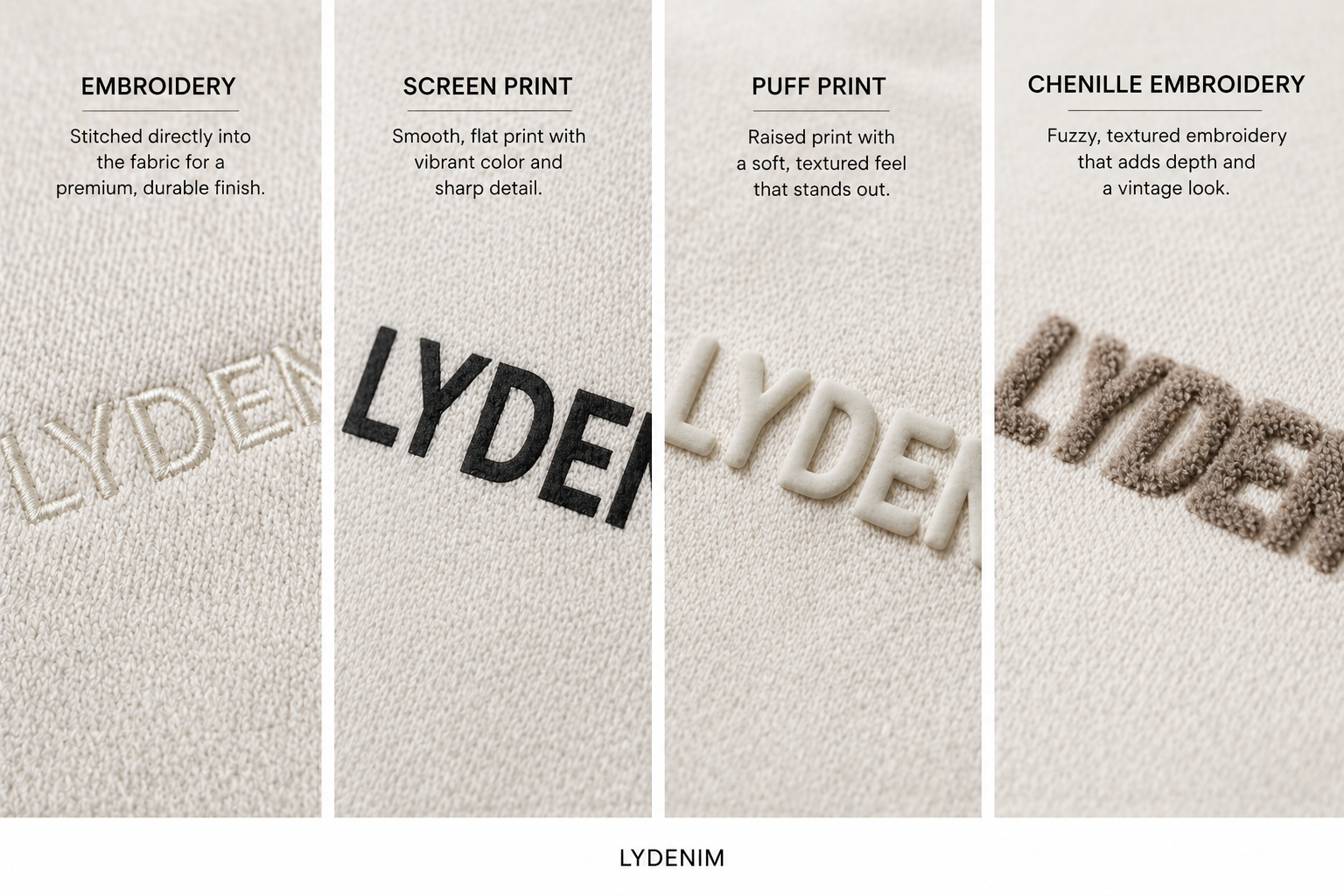
เคล็ดลับ 2 – เลือกวิธีการพิมพ์หรือการตกแต่งที่เหมาะสม (ขึ้นอยู่กับขนาดการสั่งซื้อ)
การพิมพ์เป็นจุดที่ผู้เริ่มต้นจำนวนมากทำผิดพลาดโดยเลือกวิธีการผิดหรือเข้าใจผิดถึงข้อจำกัดของมัน
ต่อไปนี้เป็นรายละเอียดเชิงปฏิบัติของวิธีการที่ใช้กันทั่วไปสำหรับ เสื้อฮู้ดแบบกำหนดเองคุณภาพสูง:
การปัก (การปักด้วยเครื่องจักร)
ดีที่สุดสำหรับโลโก้และการสร้างแบรนด์
✔ ดีไซน์พรีเมียม ที่มีลวดลายพิเศษ
✔ มีความทนทานสูงมาก (สามารถซักได้มากกว่า 50 ครั้ง)
✔ ความรู้สึกต่อแบรนด์ที่ชัดเจนและเข้มแข็ง
✘ ค่าใช้จ่ายที่สูงขึ้น
✘ ไม่เหมาะสำหรับการออกแบบขนาดใหญ่
👉 เหมาะสำหรับ: โลโก้แบรนด์ ดีไซน์มินิมอล
เย็บปักถักร้อยแบบแบน
✔ สะอาดและสม่ำเสมอ
✔ มีความคุ้มค่ามากกว่าการปักลวดลายที่ซับซ้อน
✔ เหมาะสำหรับการผลิตในปริมาณมาก
✘ ความลึกของภาพมีจำกัด
การพิมพ์สกรีน
✔ ตัวเลือกที่ดีที่สุดสำหรับคำสั่งซื้อจำนวนมาก
✔ สีสันสดใสและทนทานมาก
✔ ไม่มีความรู้สึกเหมือนพลาสติก
✘ ต้องมีค่าใช้จ่ายในการติดตั้ง
✘ ไม่เหมาะสำหรับปริมาณน้อย
การพิมพ์แบบถ่ายเทความร้อน (DTF / HTV)
✔ เหมาะอย่างยิ่งสำหรับการวิ่งระยะสั้นหรือการทดสอบการออกแบบ
✔ สามารถจัดการกับกราฟิกที่ซับซ้อนหรือมีหลายสีได้
✘ ความสามารถในการระบายอากาศต่ำกว่าเล็กน้อย
✘ อาจแตกหรือลอกเป็นชั้นๆ เมื่อเวลาผ่านไป
การพิมพ์พัฟ
✔ สร้างเอฟเฟกต์ 3 มิติแบบยกขึ้น
✔ ได้รับความนิยมในวงการสตรีทเว어
✘ สามารถแบนหรือแตกได้หลังการใช้งานหนัก
การพิมพ์ซิลิโคน
✔ นุ่ม ยืดหยุ่น และทนทาน
✔ เหมาะอย่างยิ่งสำหรับเสื้อผ้ากีฬา
✘ต้นทุนการผลิตที่สูงขึ้น
งานปักเชนิลล์
✔ ผิวหนา นุ่ม และมีคุณภาพสูง
✔ ลักษณะทางภาพที่เด่นชัด
✘ มีราคาแพง
✘ ต้องดูแลรักษาอย่างระมัดระวัง
การปั๊มนูน 3D
✔ ไม่มีหมึก – ใช้งานสะอาด มีความรู้สึกเหนือชั้น
✔ มีความละเอียดอ่อนและสูงระดับ
✘ ต้องใช้แม่พิมพ์
✘ ไม่เหมาะสำหรับผ้าทุกชนิด
👉 กลยุทธ์เริ่มต้น:
- คำสั่งขนาดเล็ก → การถ่ายเทความร้อน
- ขนาดกลางถึงขนาดใหญ่ → การพิมพ์สกรีน
- ตำแหน่งระดับพรีเมียม → งานปัก

การเปรียบเทียบกระบวนการที่ปรับแต่งเอง
เคล็ดลับ 3 – ทำให้การออกแบบแรกของคุณเรียบง่ายและมุ่งเน้น
หนึ่งในข้อผิดพลาดที่ใหญ่ที่สุดที่ผู้เริ่มต้นทำคือการพยายามทำมากเกินไปในผลิตภัณฑ์แรก
สีมากขึ้น ตำแหน่งมากขึ้น รายละเอียดมากขึ้น = ปัญหามากขึ้น
แทน:
- เริ่มต้นด้วย ตำแหน่งการออกแบบ 1–2 ตำแหน่ง
- การใช้งาน โลโก้ธรรมดาหรือกราฟิกแบบข้อความ
- หลีกเลี่ยงการไล่ระดับสีที่ซับซ้อนมากเกินไปหรืองานพิมพ์ขนาดใหญ่
เสื้อฮู้ดที่เรียบง่ายและสะอาดตาผลิตได้ง่ายกว่า และมักจะขายได้ง่ายกว่า
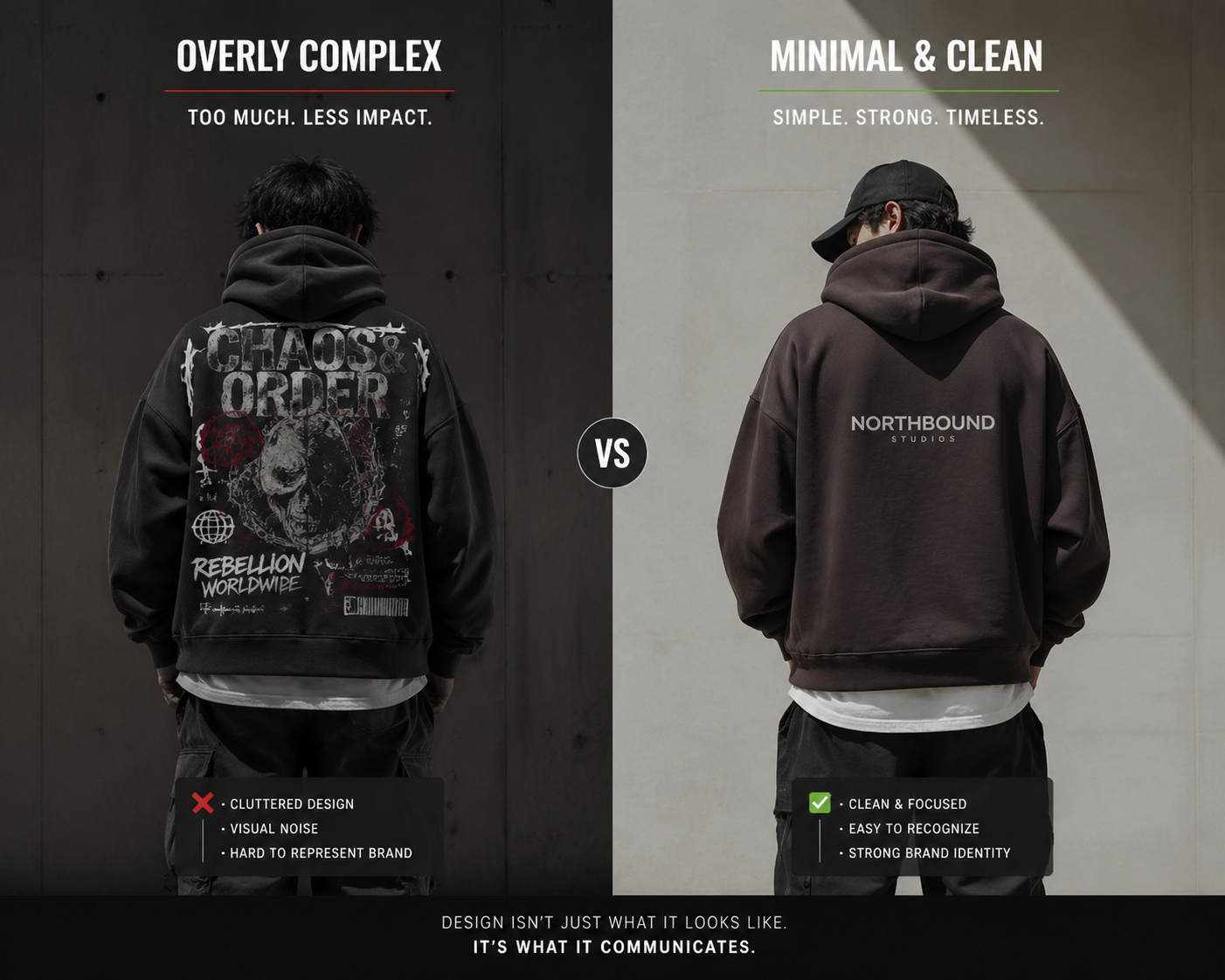
การเปรียบเทียบที่ซับซ้อนที่กำหนดเองกับการเปรียบเทียบอย่างง่าย
เคล็ดลับ 4 – ให้ความสำคัญกับความพอดีและขนาด
ปัญหาเรื่องขนาดเป็นสาเหตุสำคัญประการหนึ่งในการคืนสินค้าเครื่องแต่งกาย
สำหรับ เสื้อฮู้ดแบบกำหนดเองคุณภาพสูงคุณไม่ควรพึ่งพาเฉพาะป้ายกำกับเช่น S, M หรือ L
สิ่งที่คุณควรทำ:
- ขอ แผนภูมิขนาดเต็มพร้อมการวัด
- ยืนยันหน่วย (ซม. หรือนิ้ว)
- ถามเกี่ยวกับความอดทน (± 1–2 ซม. เป็นมาตรฐาน)
- ทดสอบความฟิตกับคนจริง
👉 หากตลาดของคุณคือสหรัฐอเมริกาหรือยุโรป ความแม่นยำในการกำหนดขนาดจะยิ่งมีความสำคัญมากยิ่งขึ้น
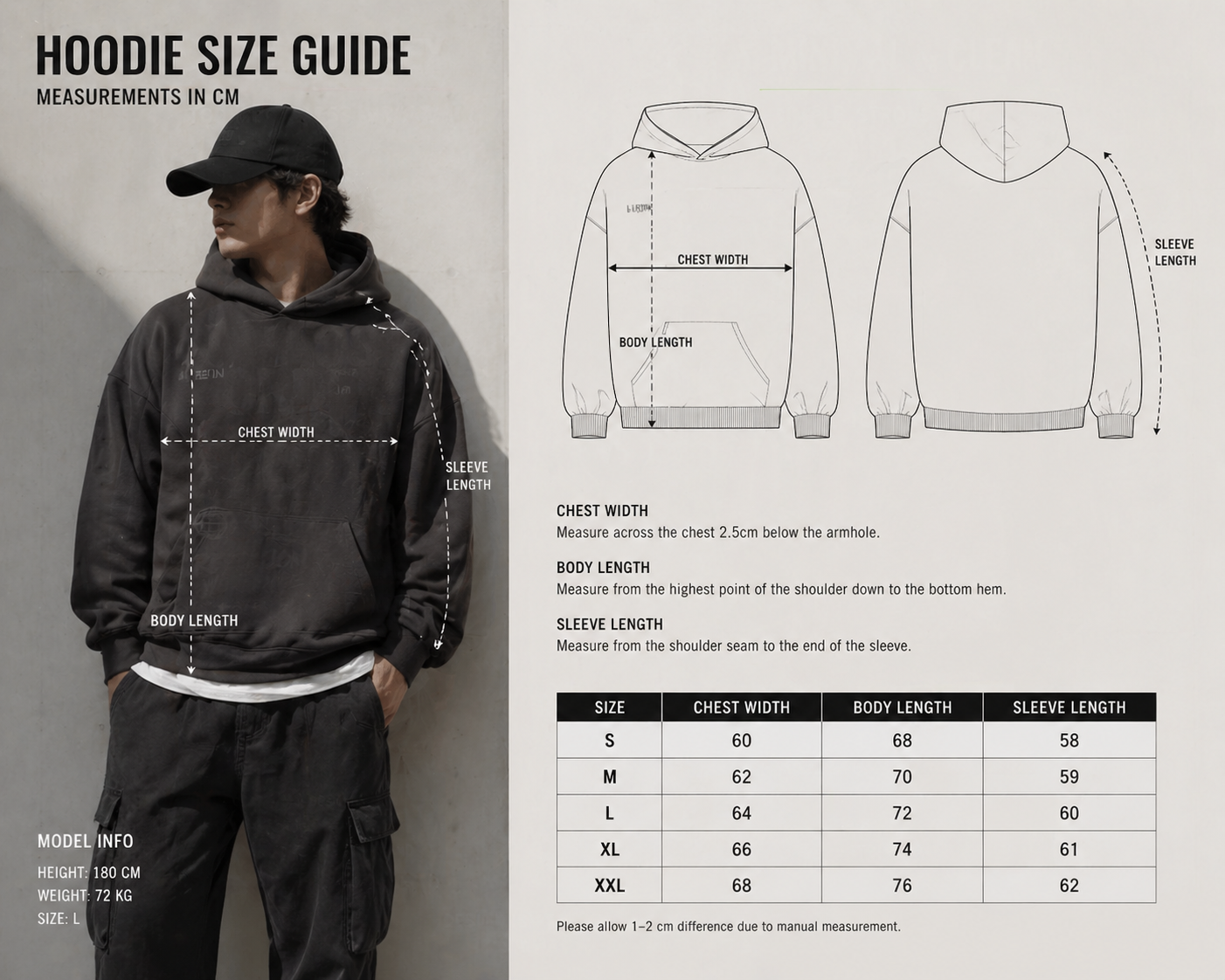
แผนภูมิการวัดแบบกำหนดเอง + เอฟเฟกต์ร่างกายส่วนบน
เคล็ดลับ 5 – อย่าละเลยรายละเอียดเล็กๆ น้อยๆ (สิ่งเหล่านี้เป็นตัวกำหนดคุณภาพ)
ลูกค้ามักจะตัดสินคุณภาพจากรายละเอียดเล็กๆ น้อยๆ แม้จะเป็นเพียงจิตใต้สำนึกก็ตาม
พื้นที่สำคัญที่ต้องตรวจสอบ:
- Drawstrings (ความหนา, เสร็จสิ้น)
- ข้อมือซี่โครง (การฟื้นตัวแบบยืดหยุ่น)
- เย็บ (แน่นและสม่ำเสมอ)
- ป้ายกำกับและแท็ก
การอัพเกรดองค์ประกอบเหล่านี้เล็กน้อยสามารถปรับปรุงวิธีการของคุณได้อย่างมาก เสื้อฮู้ดแบบกำหนดเองคุณภาพสูง ได้รับการรับรู้
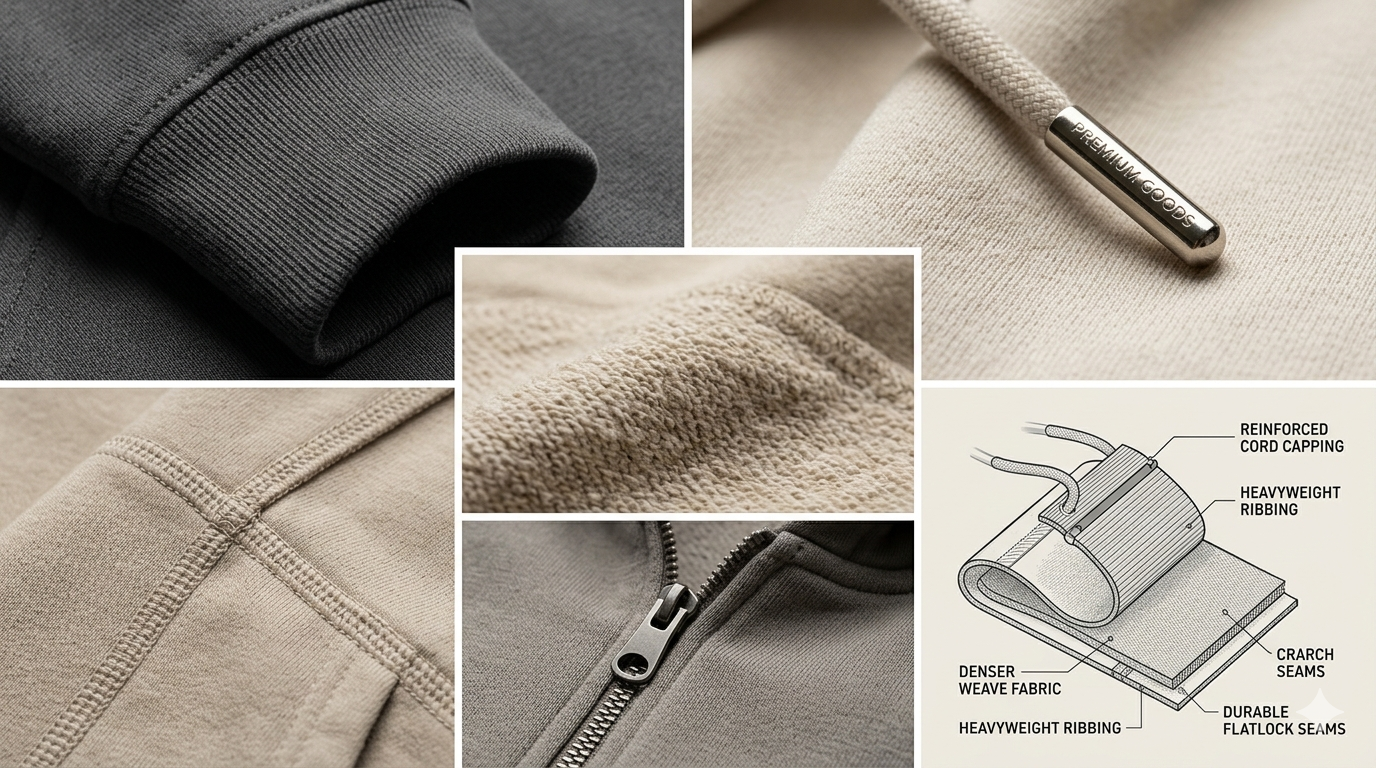
รายละเอียดที่กำหนดเอง
เคล็ดลับ 6 – ทำงานร่วมกับผู้ผลิตที่เหมาะสม (ไม่ใช่แค่ราคาถูกที่สุด)
การเลือกผู้ผลิตไม่ใช่แค่เรื่องราคาเท่านั้น แต่ยังเกี่ยวกับความน่าเชื่อถือด้วย
ซัพพลายเออร์ที่ดีจะช่วยคุณ:
- หลีกเลี่ยงข้อผิดพลาดในการผลิต
- รักษาคุณภาพให้สม่ำเสมอ
- ส่งมอบตรงเวลา
👉 คุณสามารถสำรวจการผลิตเสื้อฮู้ดแบบกำหนดเองได้ที่นี่:
https://liangyuantextile.m.en.alibaba.com
สำหรับผู้เริ่มต้น ให้มองหา:
- การสื่อสารที่ชัดเจน
- การสนับสนุนตัวอย่าง
- มีประสบการณ์ในการสั่งส่งออก
เคล็ดลับ 7 – เริ่มต้นด้วยการสุ่มตัวอย่างเสมอ (ไม่สามารถต่อรองได้)
การข้ามการเก็บตัวอย่างถือเป็นข้อผิดพลาดที่แพงที่สุดประการหนึ่งในการผลิตเครื่องแต่งกาย
การสุ่มตัวอย่างช่วยให้คุณ:
- สัมผัสได้ถึงเนื้อผ้า
- ตรวจสอบคุณภาพการพิมพ์
- ทดสอบขนาด
- ระบุปัญหาตั้งแต่เนิ่นๆ
แม้จะมีค่าใช้จ่ายเพิ่มเติม แต่ก็ประหยัดได้มากกว่าในระยะยาว
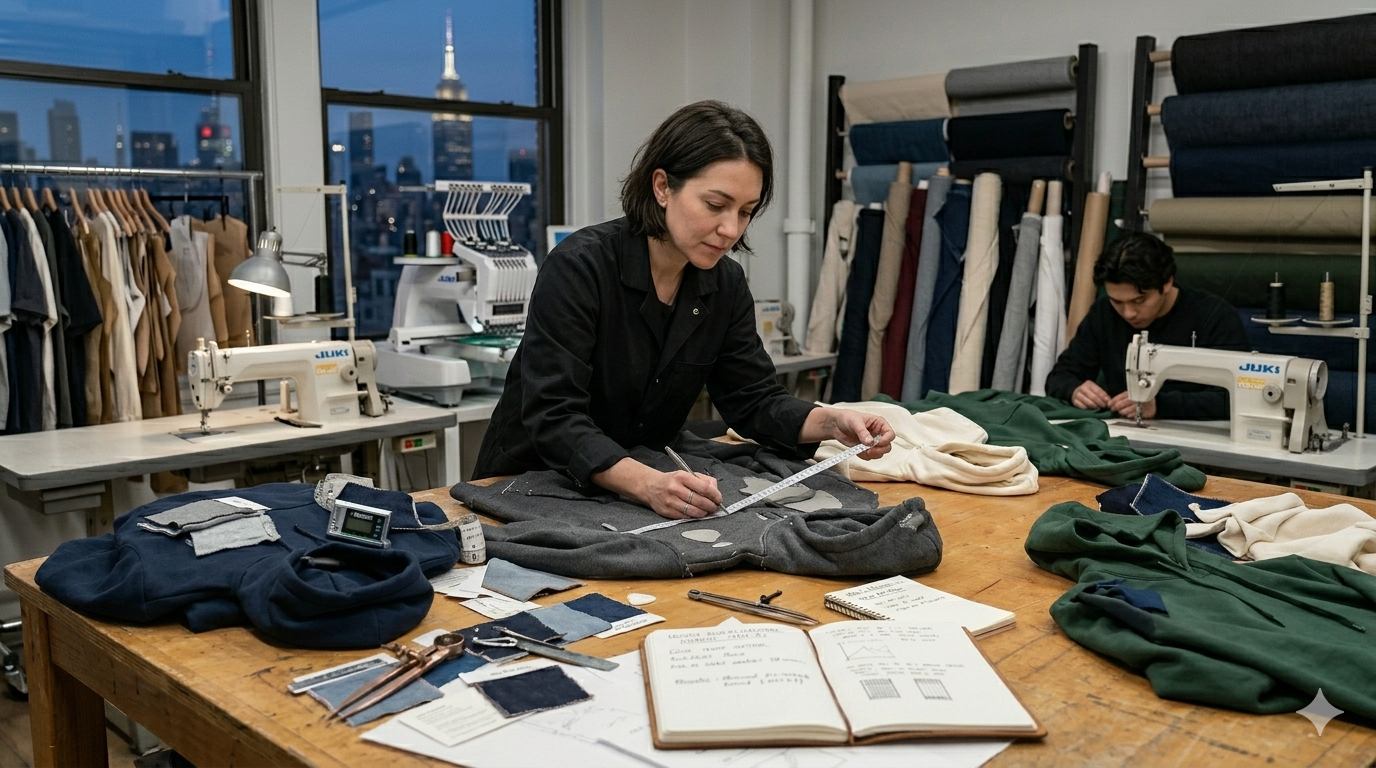
ตัวอย่างที่กำหนดเอง
ตัวอย่างกรณีจริง
กรณีที่ 1 – การเปิดตัวแบรนด์ครั้งแรก
สตาร์ทอัพสั่งเสื้อฮู้ด 80 ตัวโดยใช้ผ้า 340 GSM และการพิมพ์แบบถ่ายเทความร้อน
ผลลัพธ์:
- งบประมาณที่ได้รับการควบคุม
- การผลิตที่รวดเร็ว
- การทดสอบตลาดที่ประสบความสำเร็จ
กรณีที่ 2 – อัปเกรดเป็นพรีเมียม
แบรนด์หนึ่งอัปเกรดจาก 300 GSM เป็น 400 GSM และเปลี่ยนมาใช้งานปัก
ผลลัพธ์:
- ราคาขายปลีกที่สูงขึ้น
- ผลตอบรับจากลูกค้าดีขึ้น
- เอกลักษณ์ของแบรนด์ที่แข็งแกร่งยิ่งขึ้น
กรณีที่ 3 – การข้ามการสุ่มตัวอย่าง
ผู้ซื้อสั่งซื้อเสื้อมีฮู้ด 300 ตัวโดยไม่มีการทดสอบ
ผลลัพธ์:
- ขนาดไม่ถูกต้อง
- ข้อบกพร่องในการพิมพ์
- การสูญเสียทางการเงิน
👉 บทเรียน: การสุ่มตัวอย่างเป็นสิ่งจำเป็น
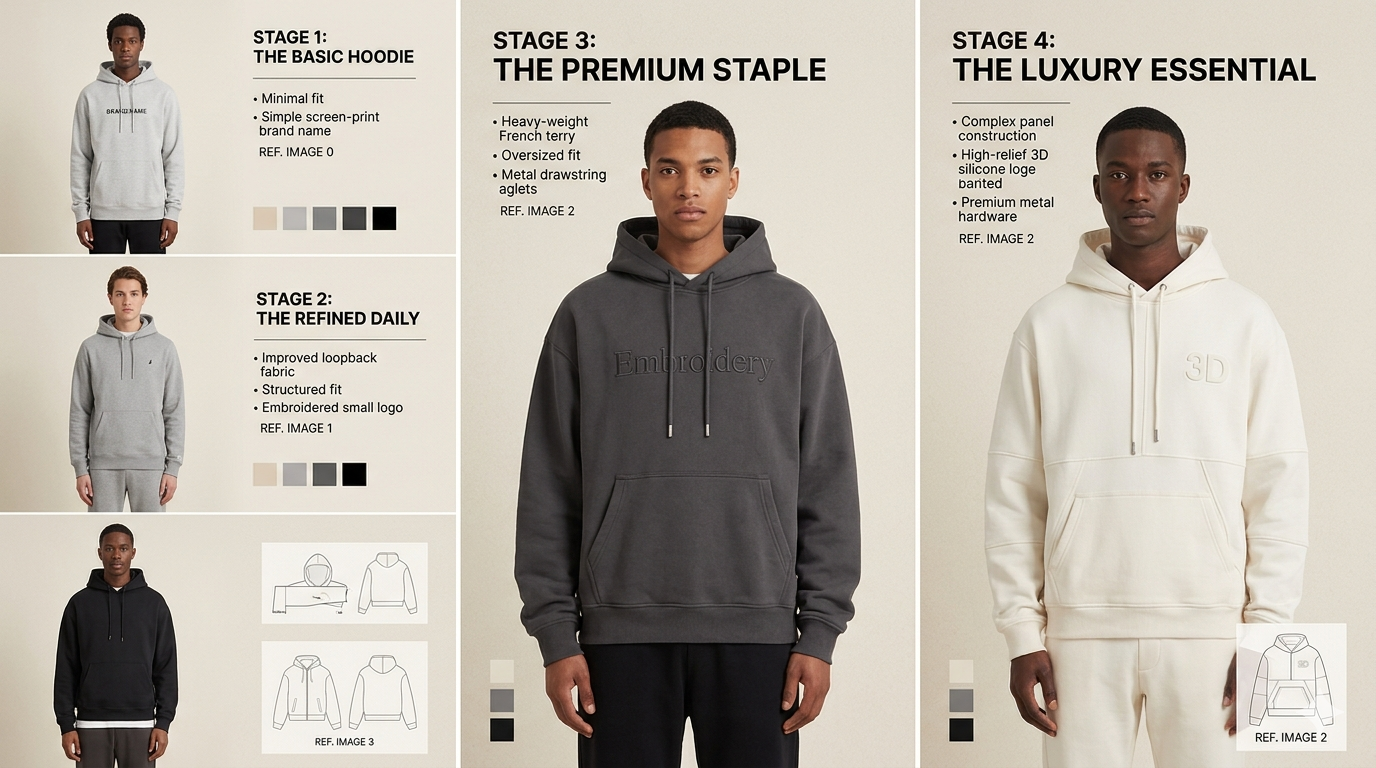
ตัวอย่างกรณีที่กำหนดเอง
บทสรุป: มุ่งเน้นไปที่การได้รับความรู้พื้นฐานที่ถูกต้อง
คุณไม่จำเป็นต้องทำทุกอย่างให้สมบูรณ์แบบในการสั่งซื้อครั้งแรก
หากคุณมุ่งเน้นไปที่:
- GSM ที่ถูกต้อง
- วิธีการพิมพ์ที่เหมาะสม
- การออกแบบที่เรียบง่าย
- ซัพพลายเออร์ที่เชื่อถือได้
คุณสามารถสร้างได้แล้ว เสื้อฮู้ดแบบกำหนดเองคุณภาพสูง ที่โดดเด่นจากผลิตภัณฑ์สำหรับมือใหม่ส่วนใหญ่
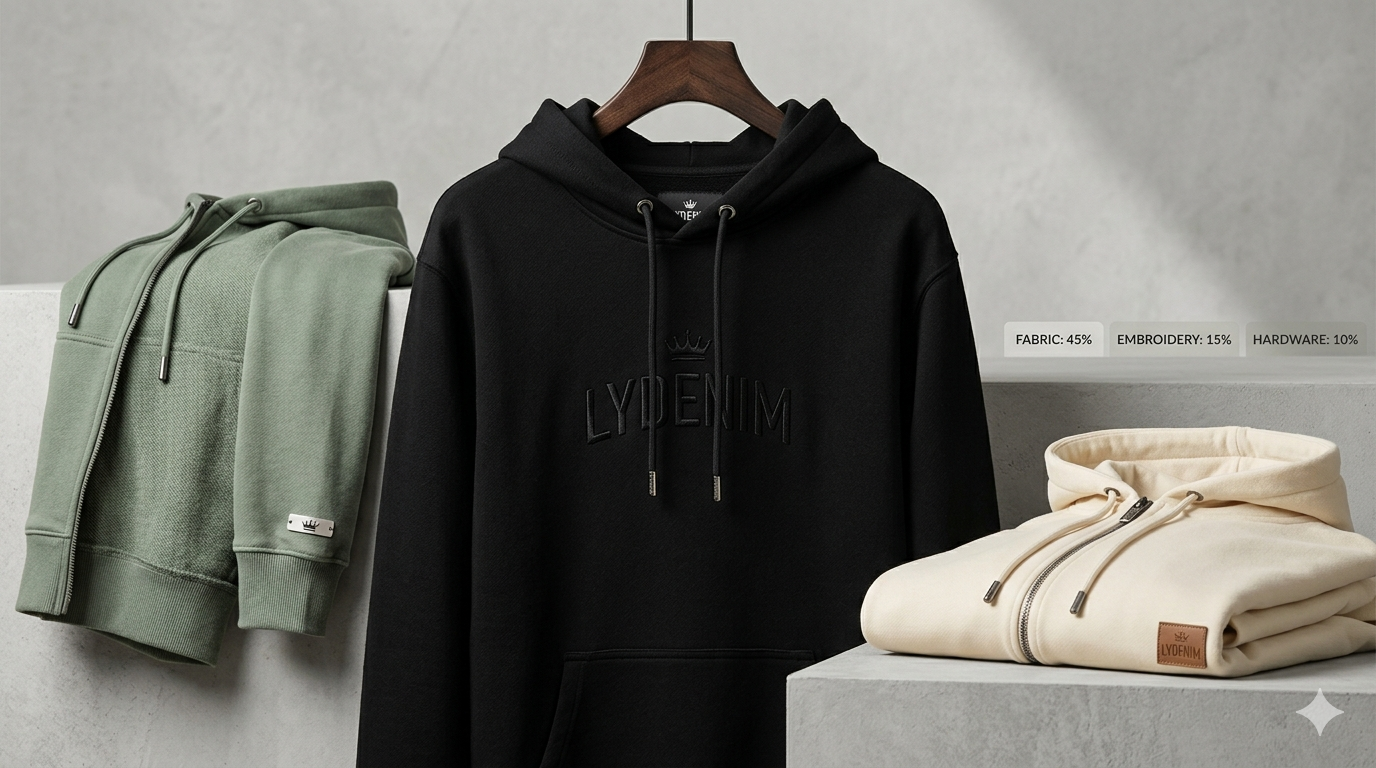
ลีเดนม์ ปรับแต่งเอง
❓ คำถามที่พบบ่อย: เสื้อฮู้ดสั่งทำคุณภาพสูง
ผู้เริ่มต้นควรเลือก GSM ใด
320–380 GSM ให้สมดุลระหว่างคุณภาพและราคาที่ดีที่สุด
วิธีที่ดีที่สุดสำหรับการสั่งซื้อขนาดเล็กคืออะไร?
การถ่ายเทความร้อนหรือการพิมพ์ดิจิทัล
อะไรกินเวลานานที่สุด?
งานปักและงานสกรีน.
ควรเริ่มด้วยกี่ชิ้น?
50–100 ชิ้นเป็นจุดเริ่มต้นที่ใช้งานได้จริง
ฉันสามารถรวมเทคนิคหลายอย่างเข้าด้วยกันได้หรือไม่?
ใช่ แต่มันเพิ่มความซับซ้อนและต้นทุน
บริการปรับแต่งโดย LYDENIM
🎨 การออกแบบเฉพาะตามความต้องการ
ออกแบบคอลเลกชันผ้าหรือเสื้อผ้าของคุณเองด้วยวัสดุระดับพรีเมียมจาก LY Denim ไม่ว่าจะเป็นส่วนผสมฝ้ายหรูหรา หรือผ้าที่เป็นมิตรต่อสิ่งแวดล้อมและมีความสร้างสรรค์ ลองสำรวจสี สไตล์การพันผ้า และเทคนิคการตกแต่งที่เข้ากันได้อย่างลงตัวกับแบรนด์หรือแนวคิดการออกแบบของคุณ รับชมเพิ่มเติมได้ที่ ลีเดนิม เพื่อเรียนรู้เพิ่มเติม
🛍️ โซลูชั่นเสื้อผ้าตัดเย็บตามสั่ง
มอบความเป็นจริงให้กับการออกแบบของคุณผ่านบริการผลิตเสื้อผ้าตามคำสั่งเฉพาะของเรา ไม่ว่าจะเป็นชุดสูทที่ตัดพอดี ชุดเดรสสไตล์หรู หรือเสื้อผ้าทำงานที่ทนทาน เราให้ความมั่นใจในความพอดีอย่างสมบูรณ์ ความสบายระดับพรีเมียม และคุณภาพที่ยั่งยืน สำรวจตัวเลือกการปรับแต่งได้ที่ มายอาลีบาบา
📩 ติดต่อเราได้เลย
คุณมีโครงการใดๆ ที่สนใจไหม? กรุณาติดต่อทีมของเราที่ Malone@lydenim.com เพื่อหารือเกี่ยวกับผ้าที่ออกแบบเฉพาะ การออกแบบเสื้อผ้า หรือแนวทางการผลิตสิ่งทออย่างยั่งยืน
เปลี่ยนไอเดียของคุณให้กลายเป็นความจริงด้วย LY Denim — ผู้ร่วมทางที่เชื่อถือได้ในด้านผ้าคุณภาพสูงที่มีนวัตกรรม และโซลูชันเสื้อผ้าที่ออกแบบเฉพาะตามความต้องการ
คำถามที่พบบ่อย
สามารถปรับแต่งให้เหมาะกับแบรนด์หรือคอลเลกชันของฉันได้หรือไม่?
ใช่ ส่งใบสมัคร รูปภาพอ้างอิง คุณภาพเป้าหมาย ปริมาณ และข้อกำหนดของตลาด เพื่อให้ซัพพลายเออร์สามารถแนะนำตัวเลือกผ้า เครื่องแต่งกาย หรือการตกแต่งที่เหมาะสมได้
ฉันควรส่งข้อมูลอะไรบ้างก่อนที่จะขอใบเสนอราคา?
จัดเตรียมประเภทผลิตภัณฑ์ ผ้าหรือเทคนิคเป้าหมาย ทิศทางสี ความต้องการตัวอย่าง ปริมาณ ประเทศปลายทาง และระยะเวลารอคอยสินค้าที่คาดหวัง
ฉันควรขอตัวอย่างก่อนการผลิตจำนวนมากหรือไม่
ใช่ ตัวอย่างและระยะตัวอย่างจะช่วยลดความเสี่ยงก่อนสั่งซื้อจำนวนมาก โดยเฉพาะอย่างยิ่งเมื่อคุณภาพสี ความรู้สึกทางมือ การยืด พื้นผิว หรือการตกแต่งมีความสำคัญ
ฉันจะหลีกเลี่ยงปัญหาด้านคุณภาพในคำสั่งซื้อจำนวนมากได้อย่างไร
อนุมัติมาตรฐานตัวอย่างที่ชัดเจน กำหนดข้อกำหนดในการทดสอบ ยืนยันความคลาดเคลื่อน และเปรียบเทียบผลผลิตจำนวนมากกับตัวอย่างที่ได้รับอนุมัติก่อนจัดส่ง
ต้องการความช่วยเหลือในการเปลี่ยนสิ่งนี้ให้เป็นบรีฟการจัดหาที่พร้อมสำหรับการผลิตหรือไม่
ส่งสินค้าเป้าหมายของคุณ ทิศทางผ้า ปริมาณ และความต้องการตัวอย่าง LY Denim สามารถช่วยเปรียบเทียบตัวเลือกและเตรียมใบเสนอราคาได้