


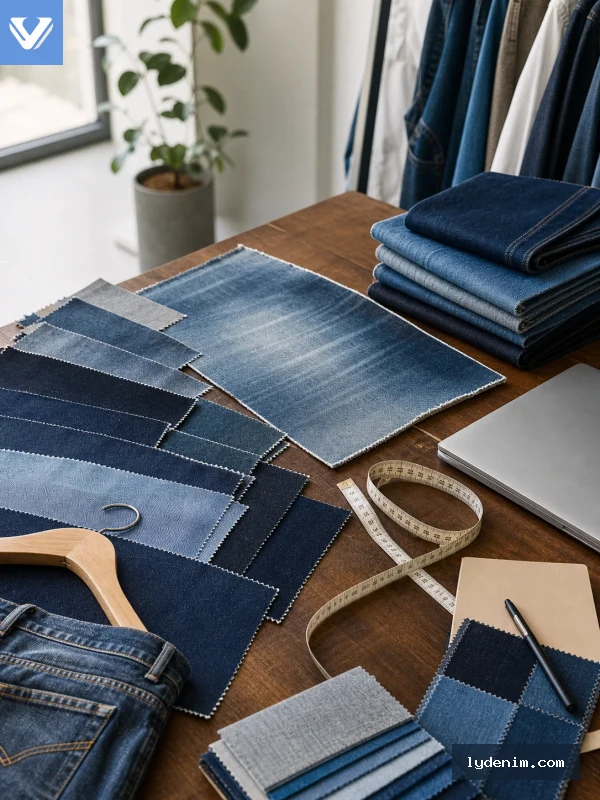
Buyer Summary
Requesting denim fabric samples should answer a production decision, not just a curiosity. A good sample request helps a buyer confirm handfeel, construction, wash behavior, width and weight tolerance, and whether the factory should move to quotation, lab dip, trial yardage, or bulk planning. If the buyer does not define those questions in advance, the sample round often becomes slow, expensive, and hard to compare.
For LYDENIM, the safe operating rule is simple: sampling is supported as part of the custom development process, but the exact sample format, sample charge, freight arrangement, and sample lead time must be confirmed case by case. Those terms depend on the product model, customization complexity, material availability, and production schedule. That means the buyer should send a structured brief first, then confirm which sample path is practical for the specific fabric or garment project.
What Kind of Sample Are You Actually Requesting?
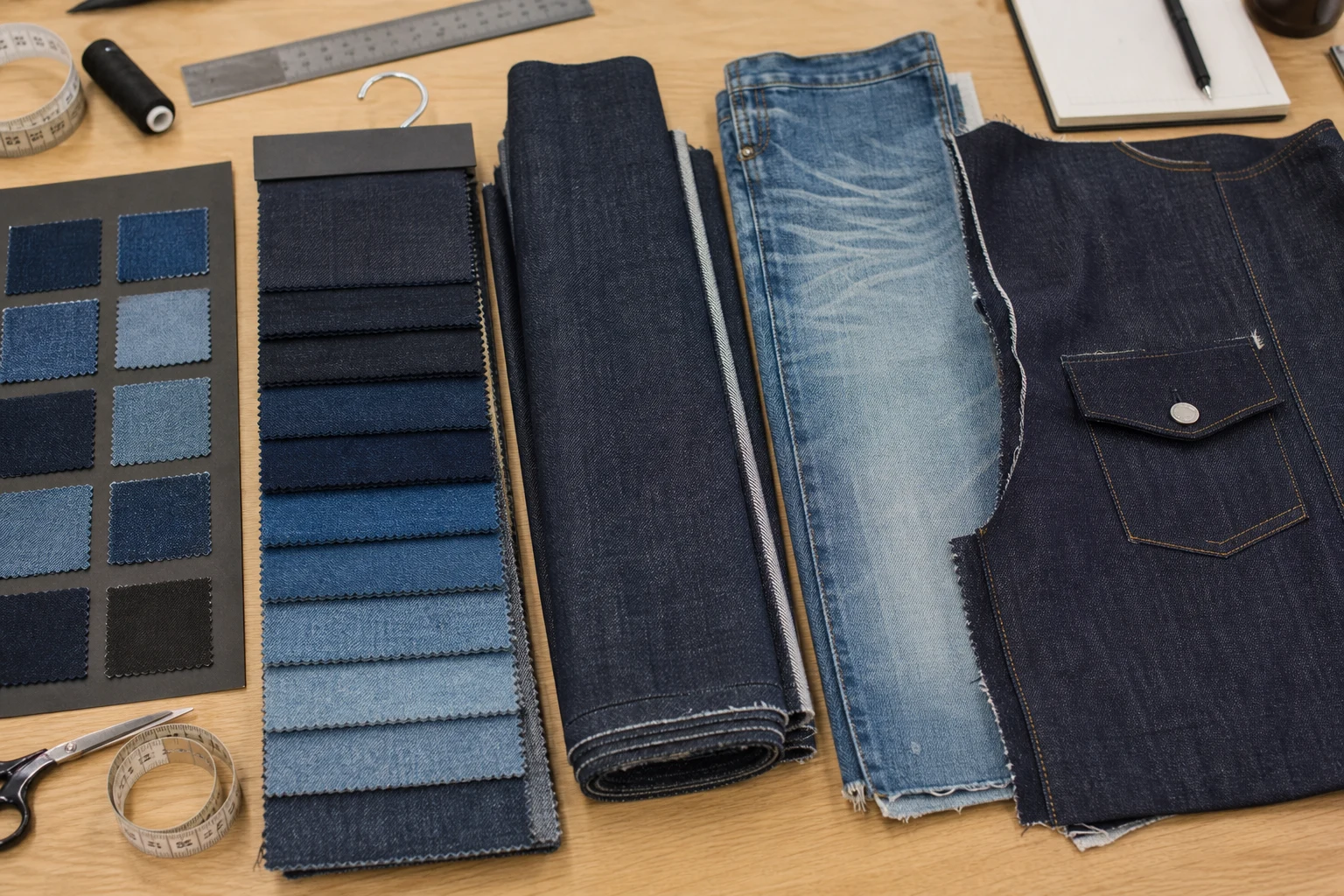
Buyers often say “send samples” when they actually mean different things. Clarifying the format upfront reduces misunderstanding.
| Sample format | When buyers usually use it | What it can answer | What it cannot answer on its own |
|---|---|---|---|
| Small swatch or hanger | Early screening of color, face effect, and handle | General material direction | Real wash result, shrinkage, seam behavior |
| Swatch card with several options | Comparing multiple constructions or finishes | Fast side-by-side narrowing | Final approval for bulk |
| Raw fabric yardage | Trial cutting, sewing, and wash development | Width, weight, sewing performance, wash tests | Final bulk consistency |
| Washed sample or washed panel | Evaluating the intended wash route | Shade change, texture change, distortion risk | Ongoing bulk repeatability |
| Reference garment or proto panel | Confirming application on a real style | Placement, drape, friction points, panel balance | Full production readiness without test records |
For a denim sourcing project, the buyer should decide whether the first round is for screening, testing, or approval. If the purpose is not clear, both sides may prepare the wrong sample format.
Buyer Brief Checklist Before You Ask
The most useful sample request is attached to a buyer brief. At minimum, the request should cover:
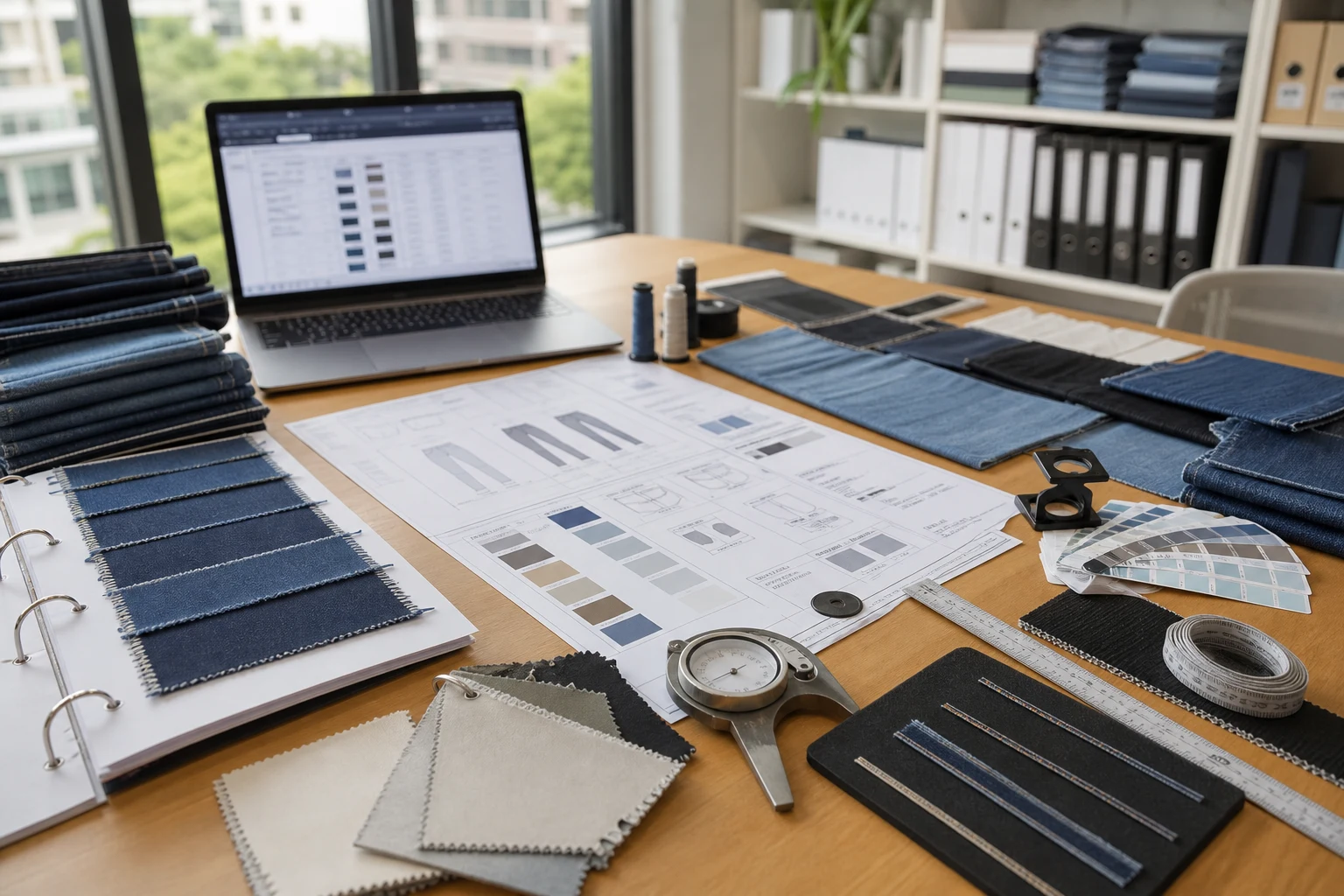
- Intended use: jeans, jacket, overshirt, skirt, workwear, bag, or mixed development.
- Fabric type direction: rigid denim, stretch denim, slub, jacquard, flocked, coated, or other special effect.
- Target weight and width if already known.
- Stretch requirement and composition expectation.
- Color direction or wash direction.
- Estimated order quantity and whether the project is in-stock sourcing or custom development.
- Destination market and expected launch window.
- Key risk points to test: shrinkage, colorfastness, seam puckering, wash result, recovery, abrasion, or handfeel.
- Whether the request needs a fabric sample, garment panel, or a sewn reference.
- Any reference sample, photo, or technical sheet.
If you already have a fabric direction in mind, add it to the sample request. The LYDENIM denim fabric range is a simple place to start, whether you are looking for stretch, slub, jacquard, colored denim, or another denim base.
Cost, Freight, and Commercial Clarifications
This is where many sample requests fail. Buyers often ask whether samples are free, how freight is handled, or whether charges are refundable after a bulk order. The correct answer is not a universal promise.
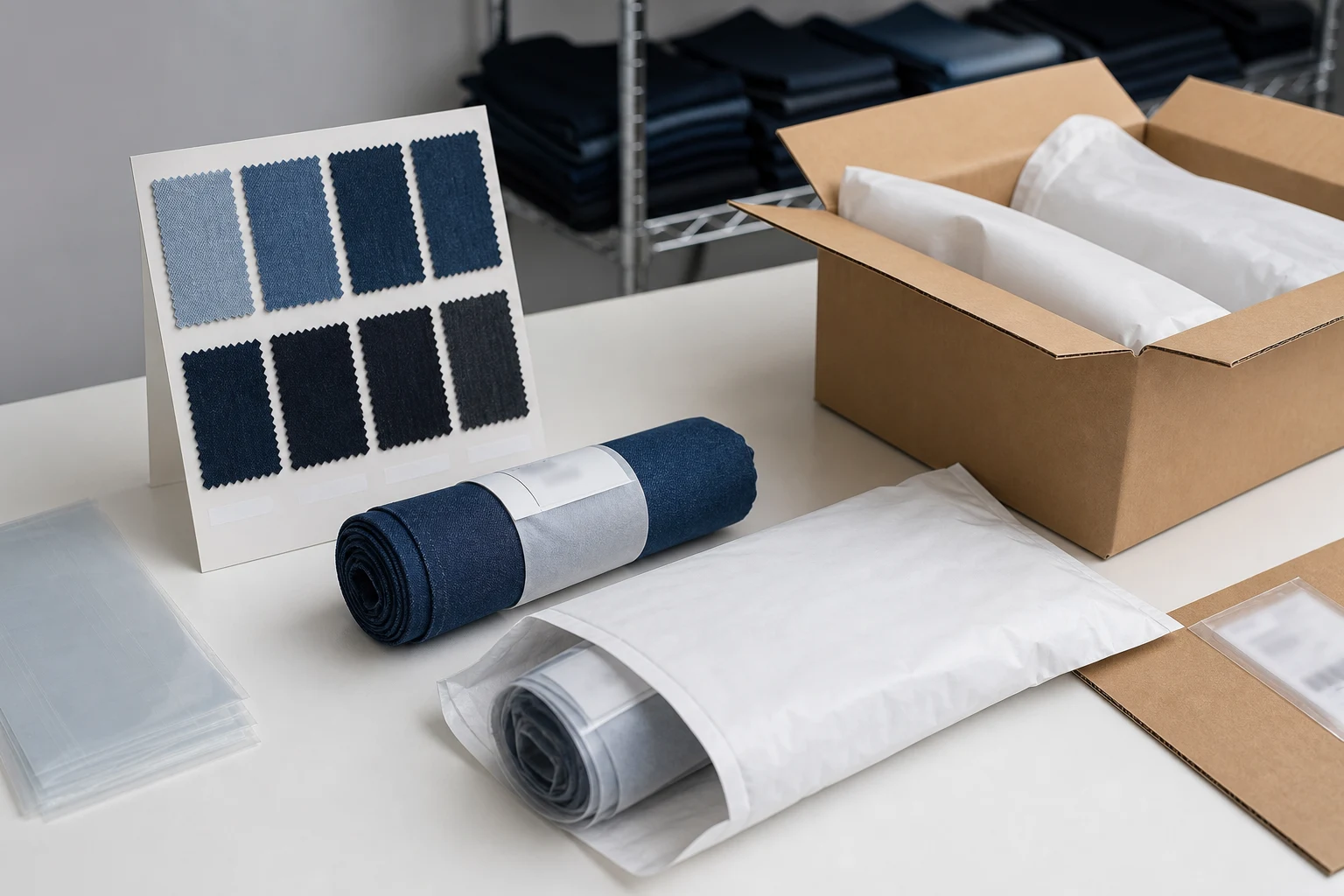
What is publicly supported is narrower:
- sampling is available as part of the custom development process
- sample cost depends on the product model and customization complexity
- sample lead time depends on material availability and production schedule
So the buyer should explicitly ask three things in the same email or RFQ:
- Is this request treated as in-stock sampling, custom development sampling, or garment development sampling?
- Does the current case require a sample charge, freight collection, or another commercial step before dispatch?
- If the team moves forward after approval, does LYDENIM want the approved sample ID or technical note cited again during quotation and bulk planning?
This avoids a common error: treating a simple swatch request and a custom-development sample request as if they follow the same commercial policy.
What To Test Once the Sample Arrives
Sample requests only create value when the buyer knows what to evaluate. The first testing list usually includes:
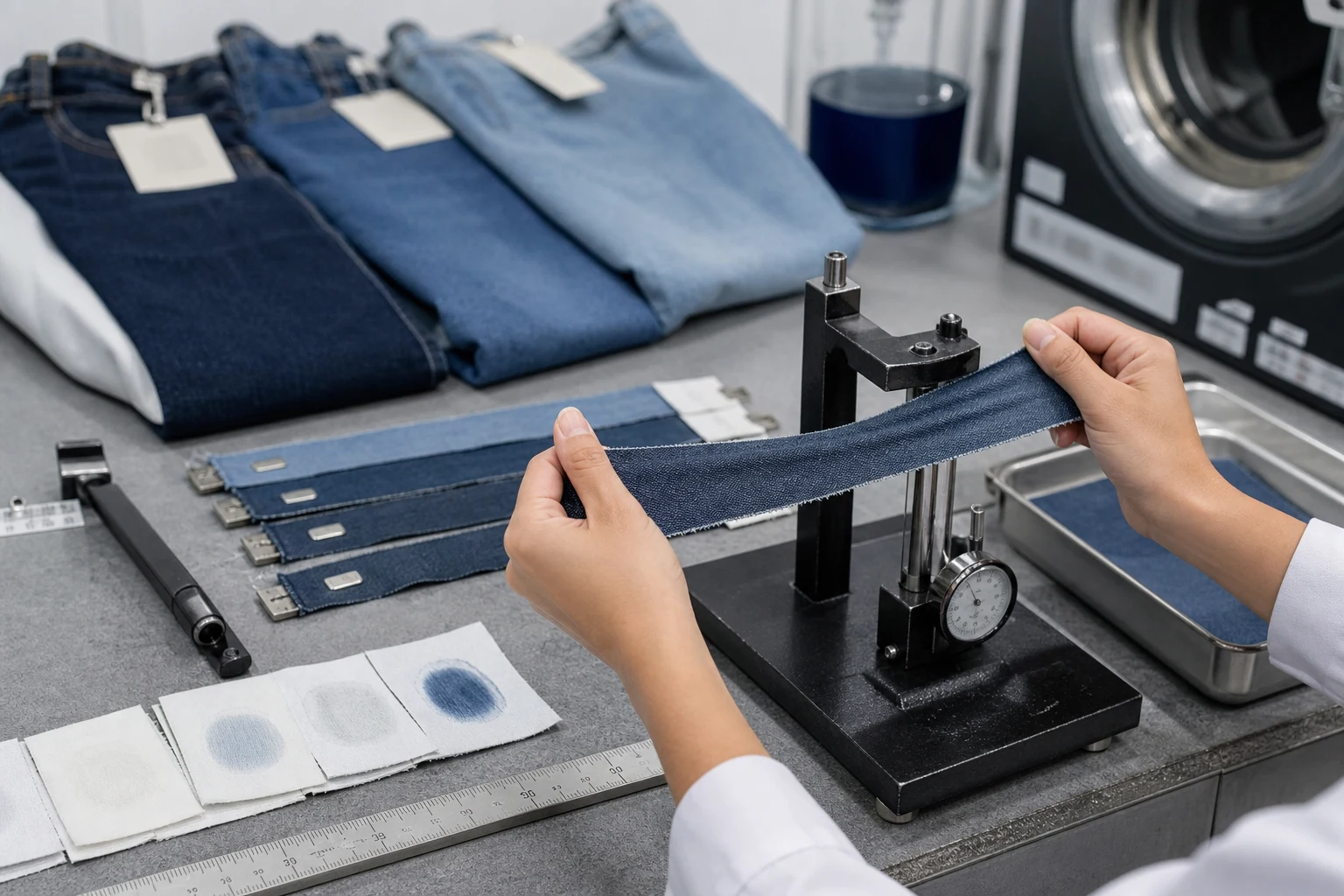
- handfeel and face appearance under the target lighting
- width and weight consistency against the brief
- stretch and recovery if the project is not rigid
- colorfastness and crocking risk when relevant
- shrinkage after the intended wash route
- shade movement before and after wash
- sewing behavior on the actual seam types
- panel distortion, skew, or torque if the pattern is directional
The exact list changes by product. A rigid fashion jacket may focus on surface story and wash behavior, while a stretch denim bottom will focus much more on recovery and panel stability. The point is to connect the sample to a real decision before bulk.
Keep an Approval Record Before Quotation or Bulk
A surprising number of disputes happen because the buyer approves a sample informally and never records what “approved” meant. Before the project moves to quotation or bulk confirmation, keep a simple approval record with:
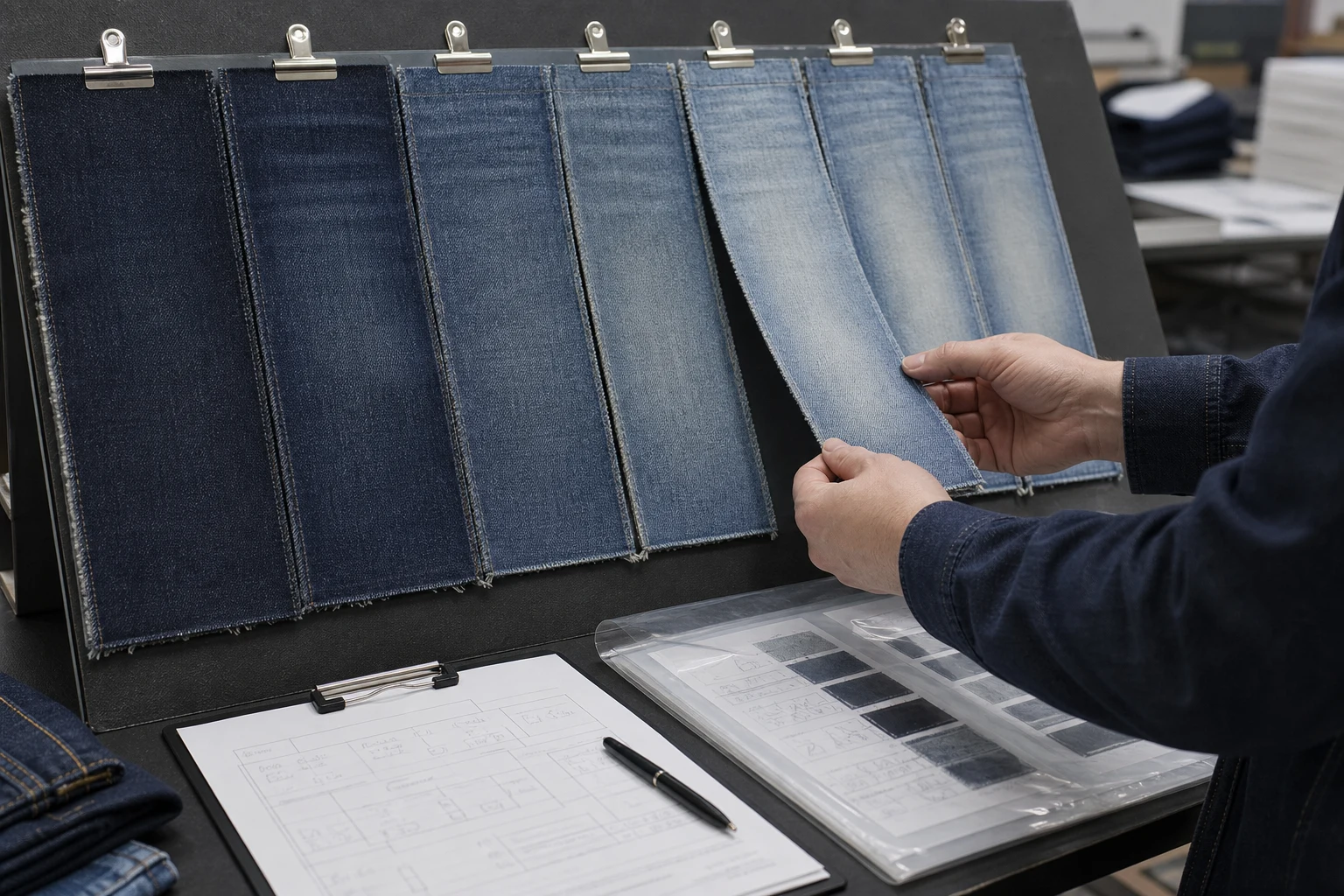
- sample ID or internal reference
- date received and date reviewed
- weight and width notes
- shade or wash comments
- test results or supplier comments
- approved use case
- known limitations that were accepted
If the sample is only a screening sample, label it that way. If it is the approval standard, label it that way too. The record is often more important than the first message that requested the sample.
How Sample Approval Connects to MOQ and Bulk Planning
Sample approval should not sit in a separate silo from MOQ and quotation. Once the sample works, the buyer usually needs to move directly into:
- MOQ confirmation
- price confirmation
- lab dip or color confirmation if required
- trial yardage or pre-production sample where necessary
- bulk schedule review
For LYDENIM, the public baseline is that the in-stock fabric reference MOQ is stated as 5,000 yards per color on the wholesaler service page. That figure should not be copied into custom developments, special finishes, jacquard, flocked denim, selvedge, or apparel customization projects. Those must be confirmed case by case.
That is why the sample stage should already collect the information needed for the next commercial step.
LYDENIM Buyer Reference Paths
Use these links according to the project stage:
- Start with the LYDENIM denim fabric range when you need to point to a fabric family or reference direction.
- Use Custom Denim Fabric when the request is clearly a development project rather than a stock inquiry.
- Use Service for Fabric Wholesalers when the buyer is comparing in-stock sourcing logic, MOQ mechanics, and wholesale handling.
- Use the LYDENIM fabric RFQ form when you want the request routed with the key technical details already attached.
If the buyer has already selected a specific fabric type, the request should include that matching product or category reference instead of staying generic.
FAQ
Can I request denim fabric samples before deciding on bulk?
Yes, but the sample should be tied to a real evaluation plan. Otherwise the team may review the sample visually without collecting the information needed for quotation or bulk approval.
Are samples always free?
Do not assume that. Sample cost, freight, and any refund-on-order logic should be confirmed case by case because they depend on the product model, customization complexity, material availability, and production schedule.
What details should I send with a sample request?
At minimum: intended use, fabric type, weight or width target if known, stretch requirement, color or wash direction, estimated quantity, market, timeline, and any reference sample or photo.
Should I ask for a swatch or for yardage?
That depends on the decision you need to make. A swatch is useful for early screening. Yardage or a washed panel is usually more useful when the team needs to test sewing, wash performance, or panel behavior.
Customization Services by LYDENIM
🎨 Custom Design
Design your own fabric collection or garment with LYDENIM’s premium materials. From luxurious cotton blends to innovative eco-friendly textiles, explore colors, weaves, and finishes that match your brand’s product direction. Visit LYDENIM to learn more.
🛍️ Tailored Garment Solutions
Bring your designs to life with custom garment services. Whether you are developing jeans, denim jackets, skirts, workwear, or small-batch fashion collections, LYDENIM can support fit, comfort, durability, and production planning. Explore customization options on My Alibaba.
📩 Get in Touch
Have a project in mind? Contact our team at malone@lydenim.com to discuss custom fabrics, garment design, sampling and production planning, or sustainable textile solutions.
Transform your ideas into reality with LYDENIM–your trusted partner for innovative, high-quality fabrics and bespoke apparel solutions.
Need help turning this into a production-ready sourcing brief?
Send your target product, fabric direction, quantity and sample needs. LY Denim can help compare options and prepare a quote.