


Estimated reading time: ~6 minutes
Stretch denim that bags out after a few hours of wear leads to unhappy customers and costly returns—especially when you’re ordering small quantities. For low-MOQ buyers, every yard counts. Proper low MOQ stretch denim recovery testing before you commit to bulk production can save you from those headaches. Many small-batch brands skip this step, only to discover that their “stretch” jeans lose shape after the first day on the rack.
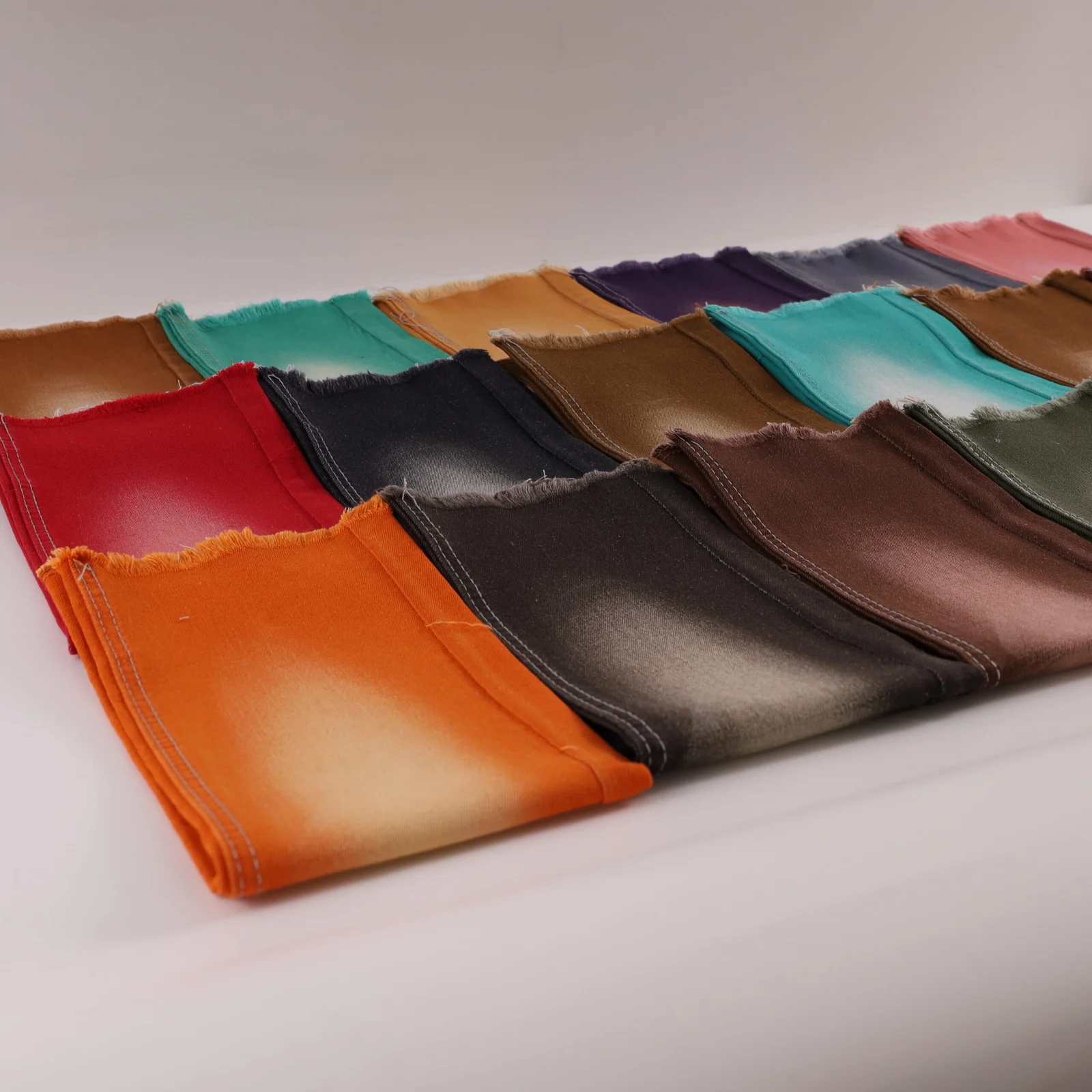
Fabric recovery isn’t just about elastane percentage. The yarn type, weave construction, and finishing processes all influence how well your denim snaps back. Testing must happen after the intended garment wash—never on greige fabric—because shrinkage and chemical effects can permanently alter stretch performance. Here’s how to set up a low MOQ stretch denim recovery testing protocol that matches your real-world wear conditions.
Why Small-Order Buyers Can’t Afford to Skip Recovery Testing
When you order 300 pairs instead of 3,000, you have less room for error. A bad batch means you either absorb the loss or pass defective garments to your customers. Stretch recovery is the top complaint in fitted denim, and a simple series of tests can predict bagging before it happens. The good news: you don’t need a full lab setup to screen fabrics. A mix of hands-on checks and third-party verification gives you confidence at any order size.
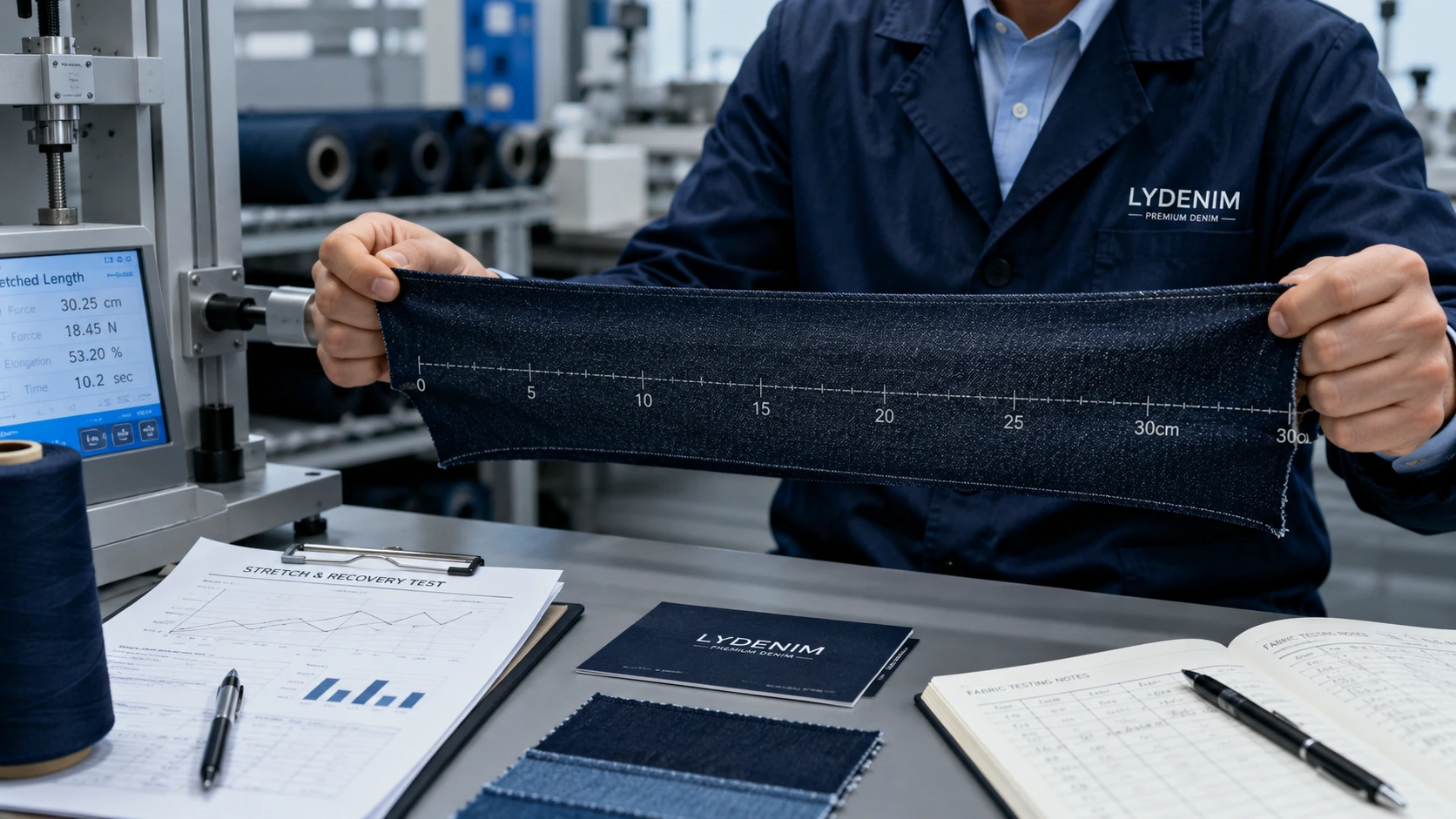
Test Elastic Denim Fabric
5 Proven Stretch Denim Recovery Tests
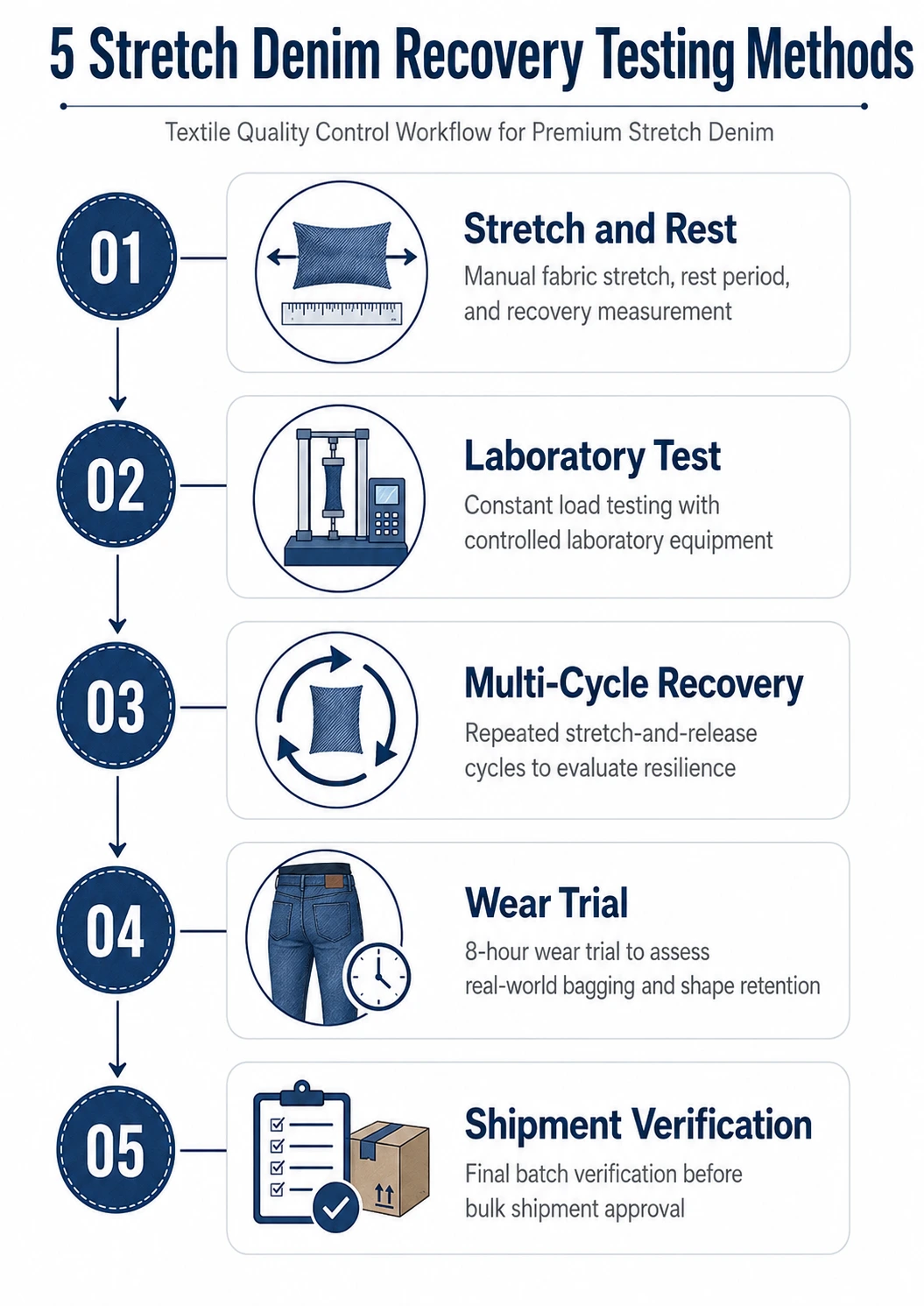
Here are the five methods that cover everything from quick swatch comparisons to final wear trials.
- Home/Studio Stretch-and-Rest
Cut a 25 cm swatch, mark a 20 cm gauge section, stretch it by 30% (about 6 cm) and hold for 10 seconds. Release and let it rest for 10 minutes. Measure the distance between marks; growth over 5% indicates poor recovery. This screening test is ideal for comparing multiple candidate fabrics on your desk. - Laboratory Constant-Load Test
Send a washed sample to an accredited lab for testing according to the standard method for woven fabric stretch and recovery (commonly referenced as ASTM D3107). In this procedure, a 1.5 kg weight stretches the specimen for 30 minutes, then recovery is measured after 30 minutes of rest. Aim for growth no more than 3–5%, depending on the fit. Insist on a written report that details the method used. - Cyclic Multi-Cycle Stretch
Request that the mill or lab perform 5 or more stretch-and-recovery cycles. A single pull is unrealistic; real garments go through repeated stress. Cyclic data reveals whether the elastic memory degrades over time. Specify this in your fabric inquiry. Good mills can provide a graph showing recovery rate across cycles. - Pre-Production Sample Wear Trial
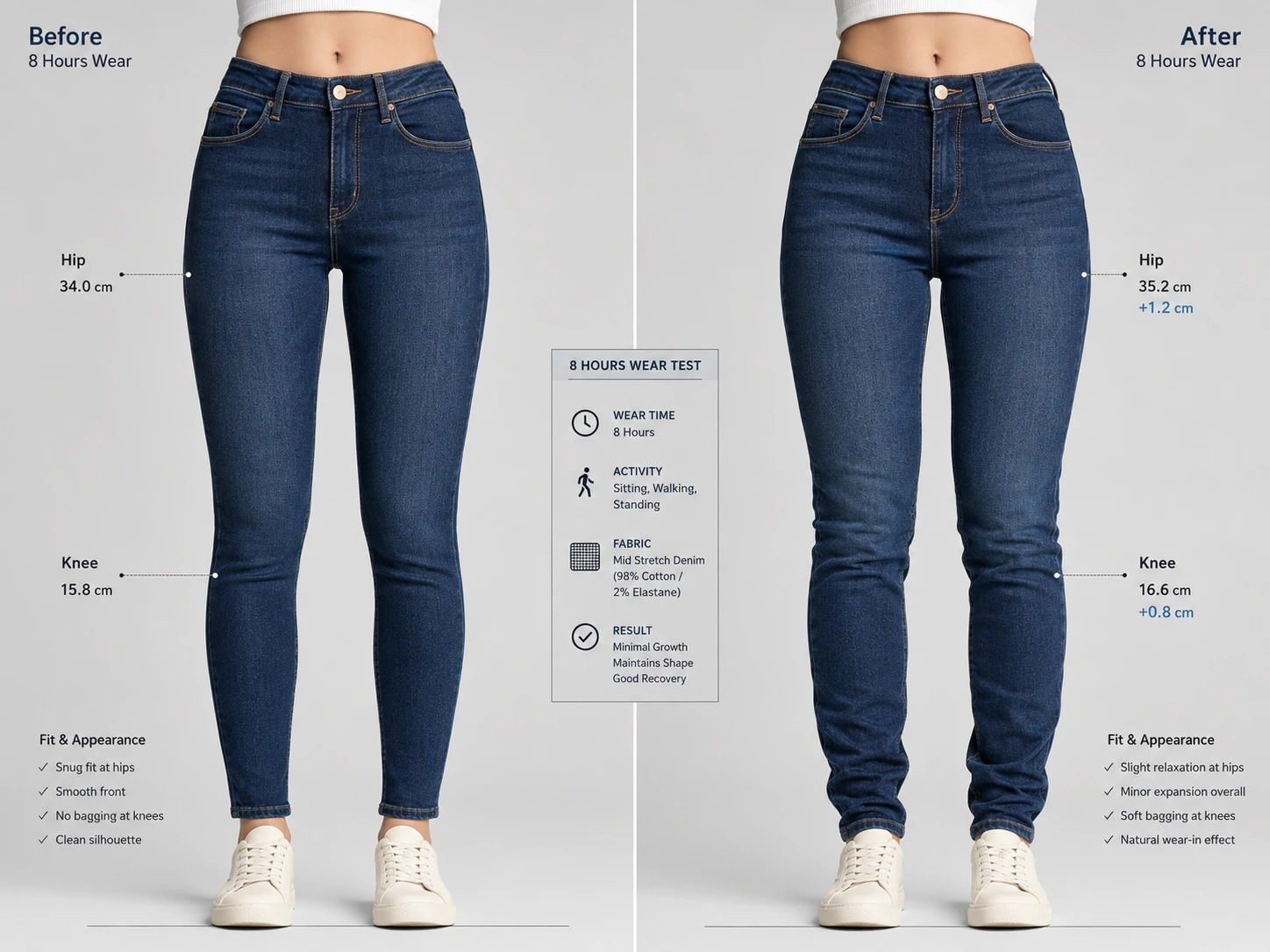
Once you have a PPS made in your target wash, have a fit model wear the garment for a full 8-hour day. Measure the knee and hip circumference before and after. A difference greater than 3% (or more than 0.5 cm in a critical area) means the garment will bag noticeably. Photograph the before/after to share with the supplier. - Bulk Shipment Verification
Before accepting a production run, repeat a quick version of the lab test on a randomly pulled pre-shipment sample. This ensures the bulk fabric matches the approved lab dip or prototype. If growth exceeds your agreed tolerance, you can reject the lot before it ships.
Stretch & Recovery Test Flowchart
| Test Type | What It Shows | Acceptable Threshold | When to Use |
|---|---|---|---|
| Home stretch-and-rest | Immediate growth after simple pull | ≤5% growth | Initial swatch shortlisting |
| Lab constant-load (standard method) | Recovery under controlled tension | ≤3–5% growth | Fabric approval |
| Cyclic multi-cycle | Elastic performance over repeated wear | ≤3% after 5 cycles | Fabric development |
| PPS wear trial | Real-life bagging after long wear | ≤3% circumference change | Fit confirmation |
| Shipment spot check | Batch consistency | matches approved lab result | Pre-production QA |
Common Mistakes That Undermine Your Testing
- Testing before the final wash: Fabric shrinks and finishes change. Always test after your intended garment wash.
- Using only a single-pull test: Cyclic stretch gives a true picture of long-term behavior.
- Ignoring fit requirements: Skinny and jegging demand 95–98% recovery; relaxed fits can accept 90–95%.
- Not asking for method details: Two labs can report “95% recovery” using different test conditions. Always specify the standard you require.
- Skipping the wear trial: Lab numbers don’t capture how the fabric bends at the knee or seat.
Pre-Production Sample Wear Trial
How to Write Your RFQ for Stretch Denim
A clear request for quotation gets you accurate pricing and the right test data. Include these points:
- Garment fit (e.g., skinny, slim, relaxed)
- Desired elastane percentage range
- Fabric weight (oz/yd² or gsm)
- Intended wash type (dark rinse, medium stonewash, etc.)
- Target recovery percentage and the test method you expect
- Required order quantity and whether it’s a stock or custom development
- Any certifications (OEKO-TEX, GOTS, etc.)
Specifying these details up front helps mills recommend appropriate constructions and avoid guesswork. Small-volume buyers often benefit from stock fabrics where test reports already exist.
Frequently Asked Questions
What recovery rate is good enough for skinny jeans?
Aim for at least 95% recovery under a standard lab method. Jeggings and super-skinny fits need 98% to hold shape throughout the day.
Can I develop custom stretch denim on a low MOQ?
Custom dye lots often require 3,000–4,000 meters, but many mills offer in-stock stretch qualities that you can order from 100 meters. Always request the existing test reports for those stock fabrics. If you need a unique elastane blend, discuss sample yardage options with your supplier.
How do I verify that the mill’s recovery claims are true?
Ask for a report detailing the test method, number of cycles, specimen size, and environmental conditions. Cross-check by ordering a few meters for your own screening test and, if possible, send a cut to a third-party lab.
Is it necessary to do a wear trial for every order?
Not always. If you re-order the same fabric from the same production lot, you can rely on previous approvals. For new fabrics or suppliers, a PPS wear trial is strongly recommended.
Conclusion
Low MOQ stretch denim recovery testing doesn’t require a huge budget—just a disciplined approach that combines quick bench checks with targeted lab verification. By screening early, specifying your requirements clearly, and verifying on pre-production samples, you protect your brand’s reputation and reduce costly returns. Remember: recovery data from the mill is only as good as the method behind it, so always confirm testing conditions.
Customization Services by LYDENIM
🎨 Custom Design
Design your own fabric collection or garment with LYDENIM’s premium materials. From luxurious cotton blends to innovative eco-friendly textiles, explore colors, weaves, and finishes that match your brand’s product direction. Visit LYDENIM to learn more.
🛍️ Tailored Garment Solutions
Bring your designs to life with custom garment services. Whether you are developing jeans, denim jackets, skirts, workwear, or small-batch fashion collections, LYDENIM can support fit, comfort, durability, and production planning. Explore customization options on My Alibaba.
📩 Get in Touch
Have a project in mind? Contact our team at malone@lydenim.com to discuss custom fabrics, garment design, low-MOQ sampling, or sustainable textile solutions.
Transform your ideas into reality with LYDENIM–your trusted partner for innovative, high-quality fabrics and bespoke apparel solutions.
Need help turning this into a production-ready sourcing brief?
Send your target product, fabric direction, quantity and sample needs. LY Denim can help compare options and prepare a quote.