


Estimated reading time: ~3 minutes
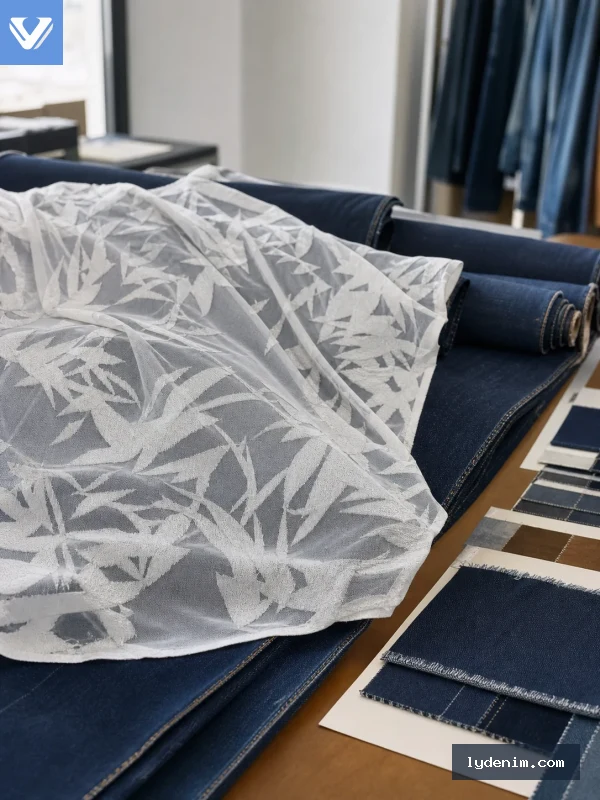
Burnout (devoré) is a chemical technique that dissolves cellulose fibers (cotton, rayon) in a blend, leaving polyester as a sheer, patterned ground. It is not a print, laser effect, or distress wash. The process permanently removes fiber mass, so the substrate must contain a synthetic component. On 100% cotton denim, this simply creates holes, not a sheer pattern. For denim-inspired capsules, think of a cotton/polyester twill or a panel-mix approach—burnout panels on rigid denim jackets, for example. But only proceed after confirming wash durability and seam reinforcement.
Burnout Fabric Buyer Checklist
For B2B sourcing, burnout should be reviewed as both a design effect and a performance risk. A beautiful swatch is not enough; buyers need to confirm the base fabric, effect placement, openness level, wash plan and bulk QC limit before approving development.
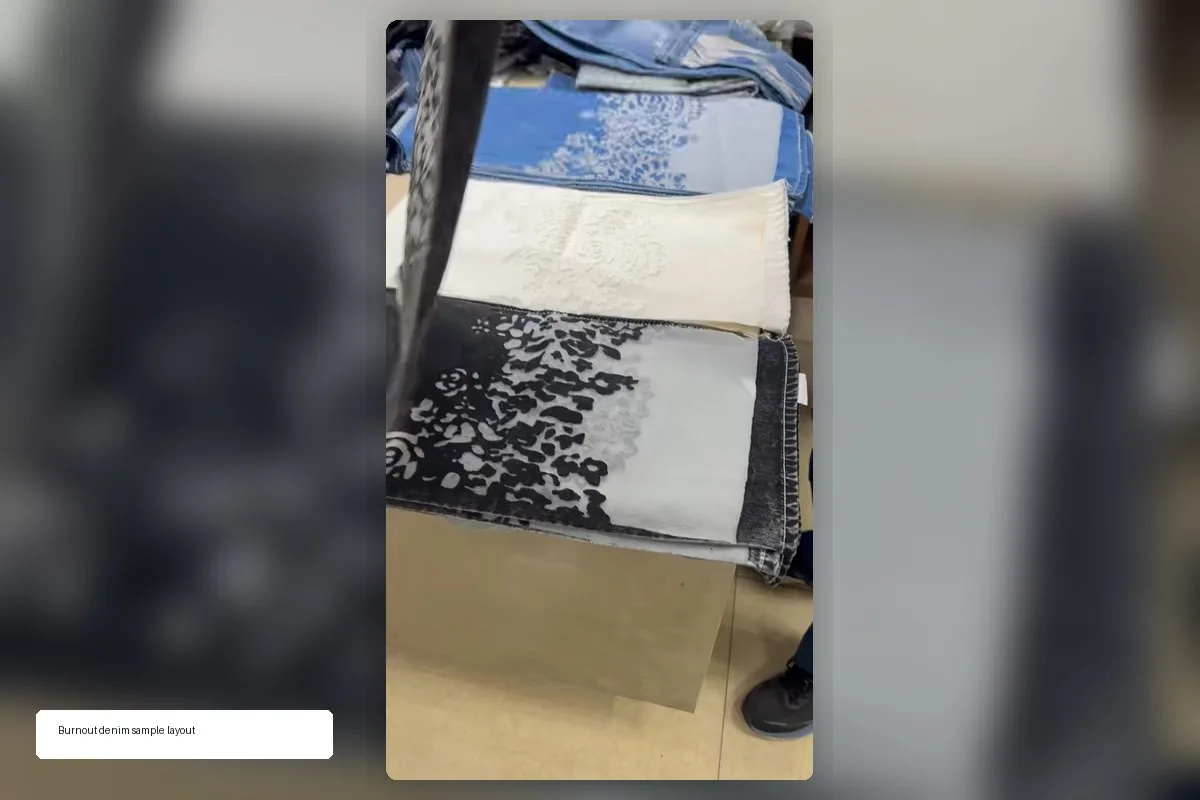
- Base fabric: confirm fiber blend, weight and construction before strike-off.
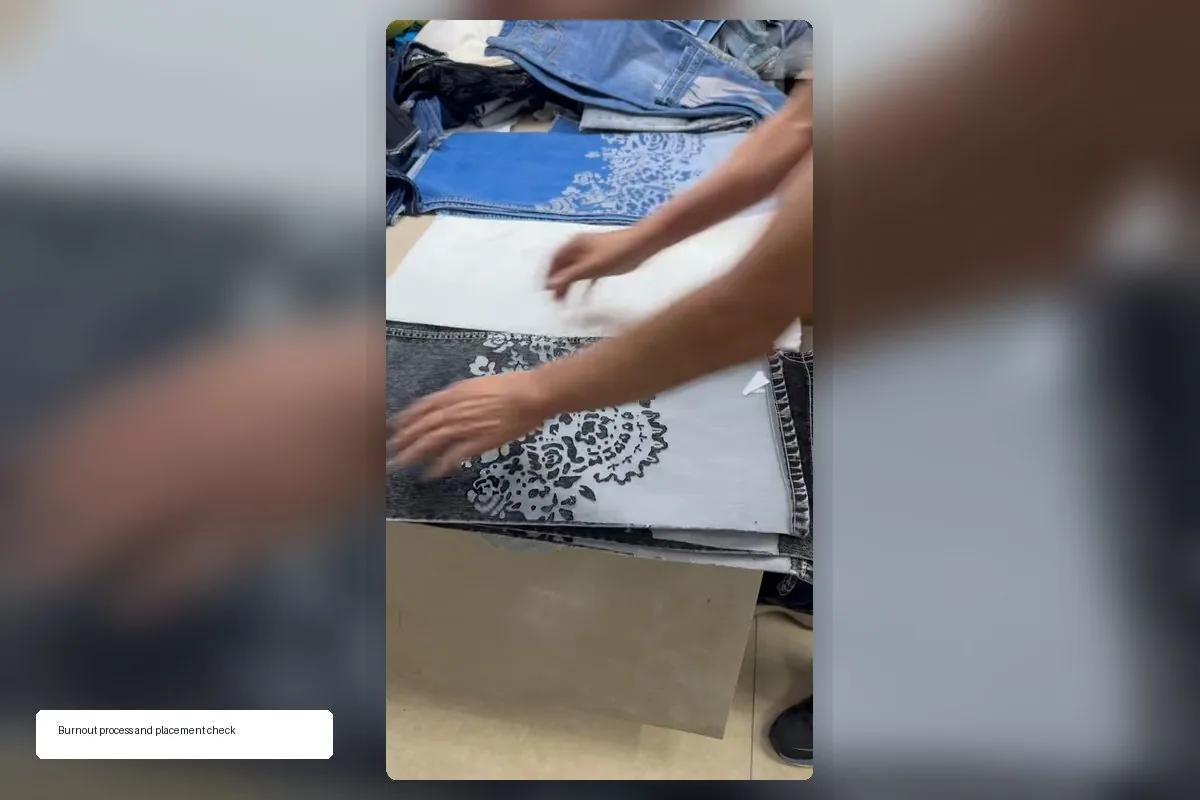
- Placement: decide where the burnout effect can appear and where it should not.
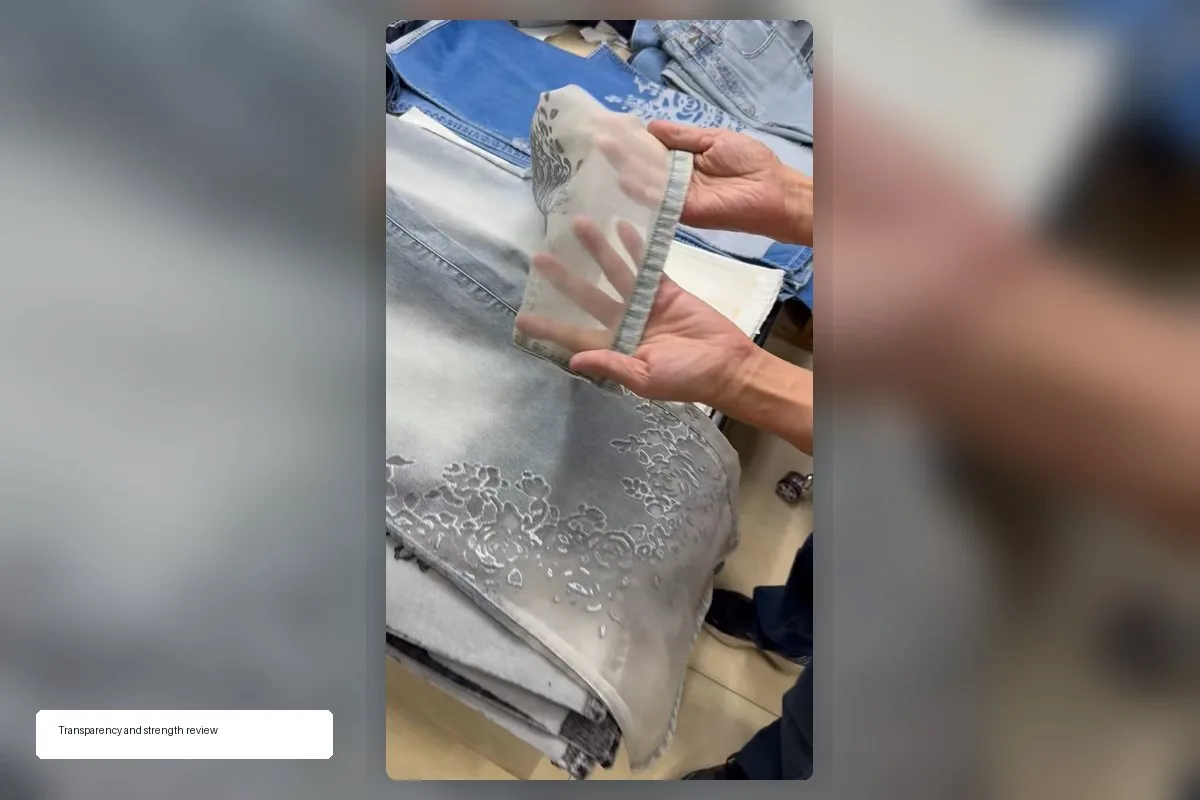
- Transparency: check lining, layering and market acceptability.
- Bulk control: keep an approved swatch and product-context sample as references.
Sample Review and QC Points
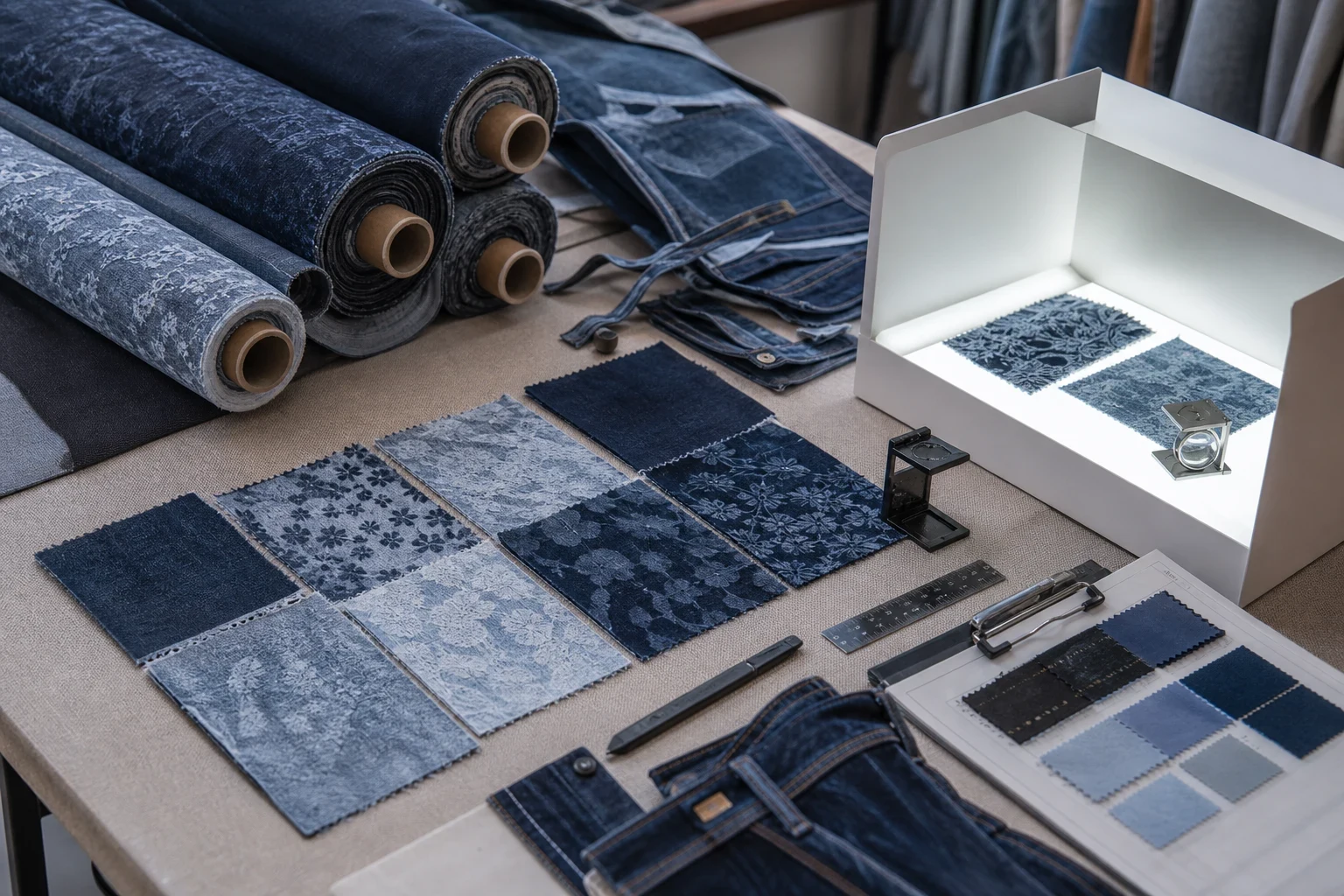
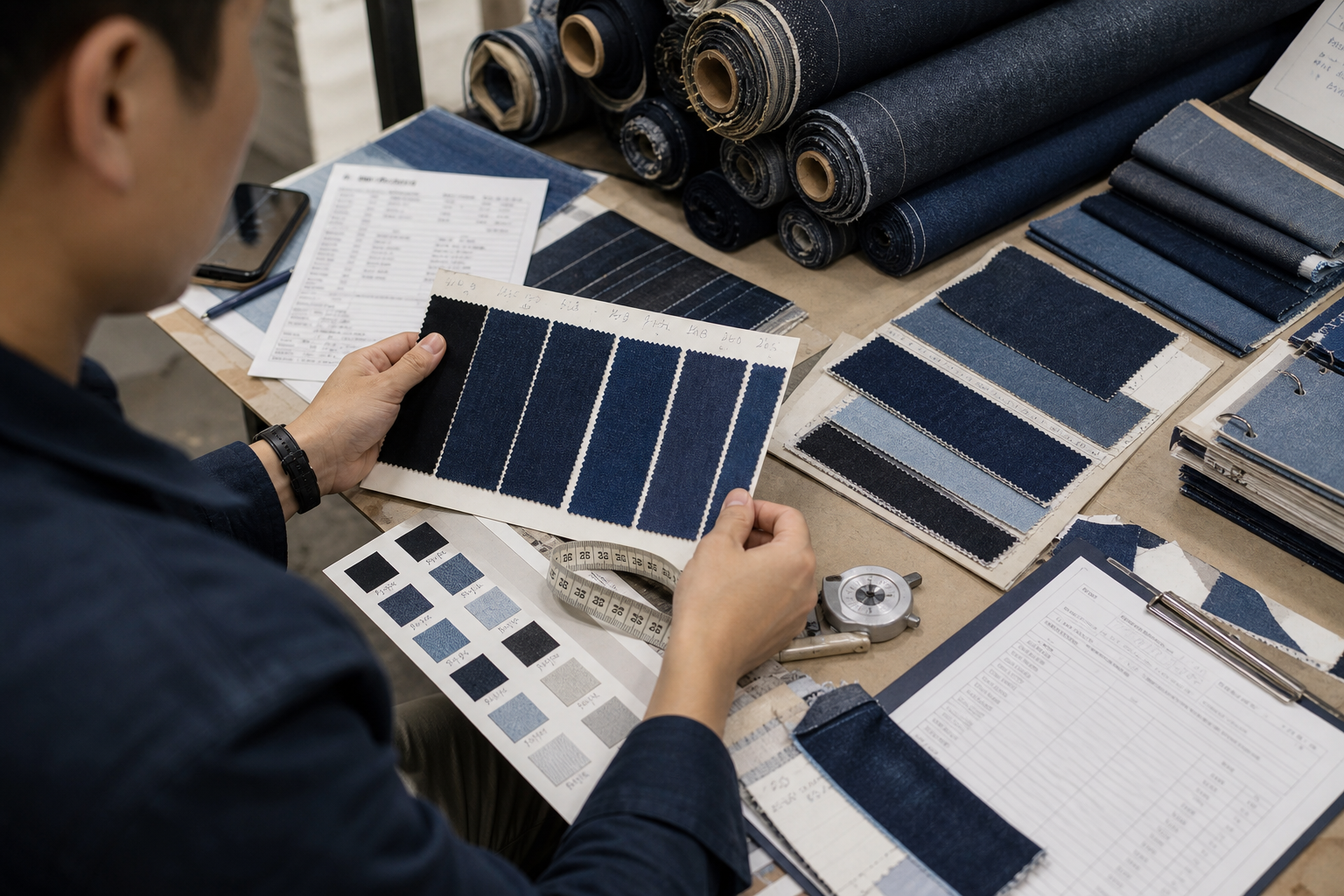
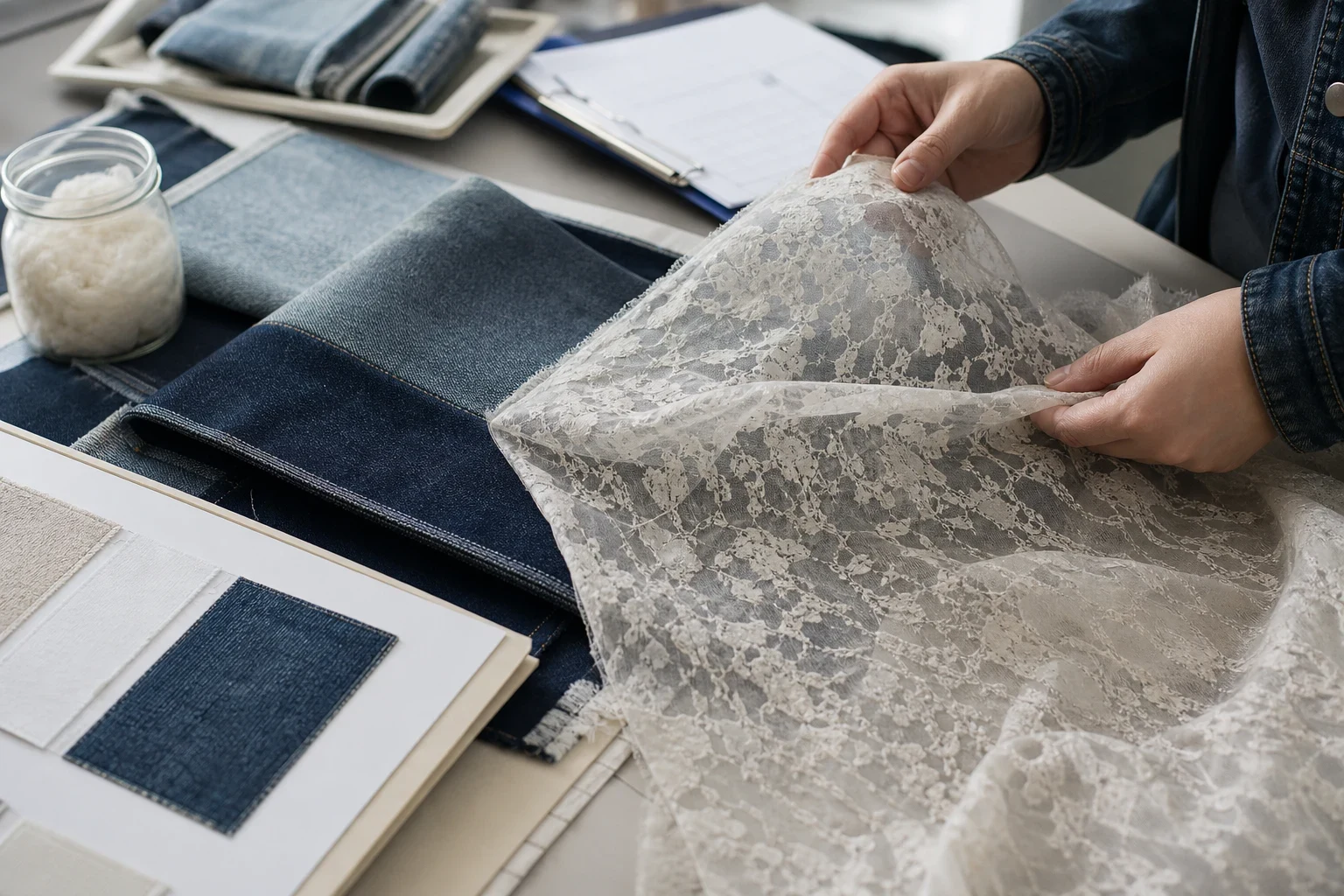
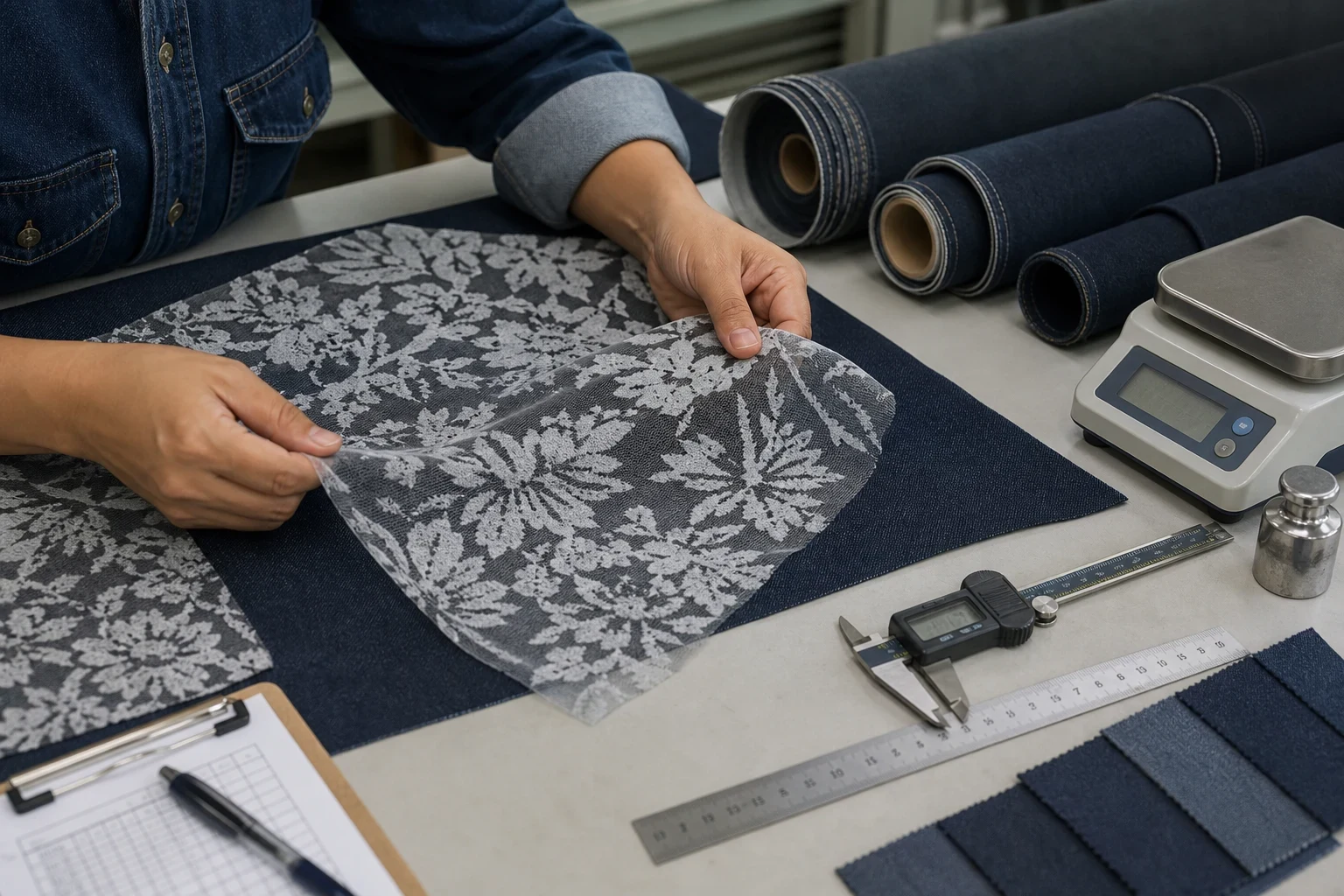
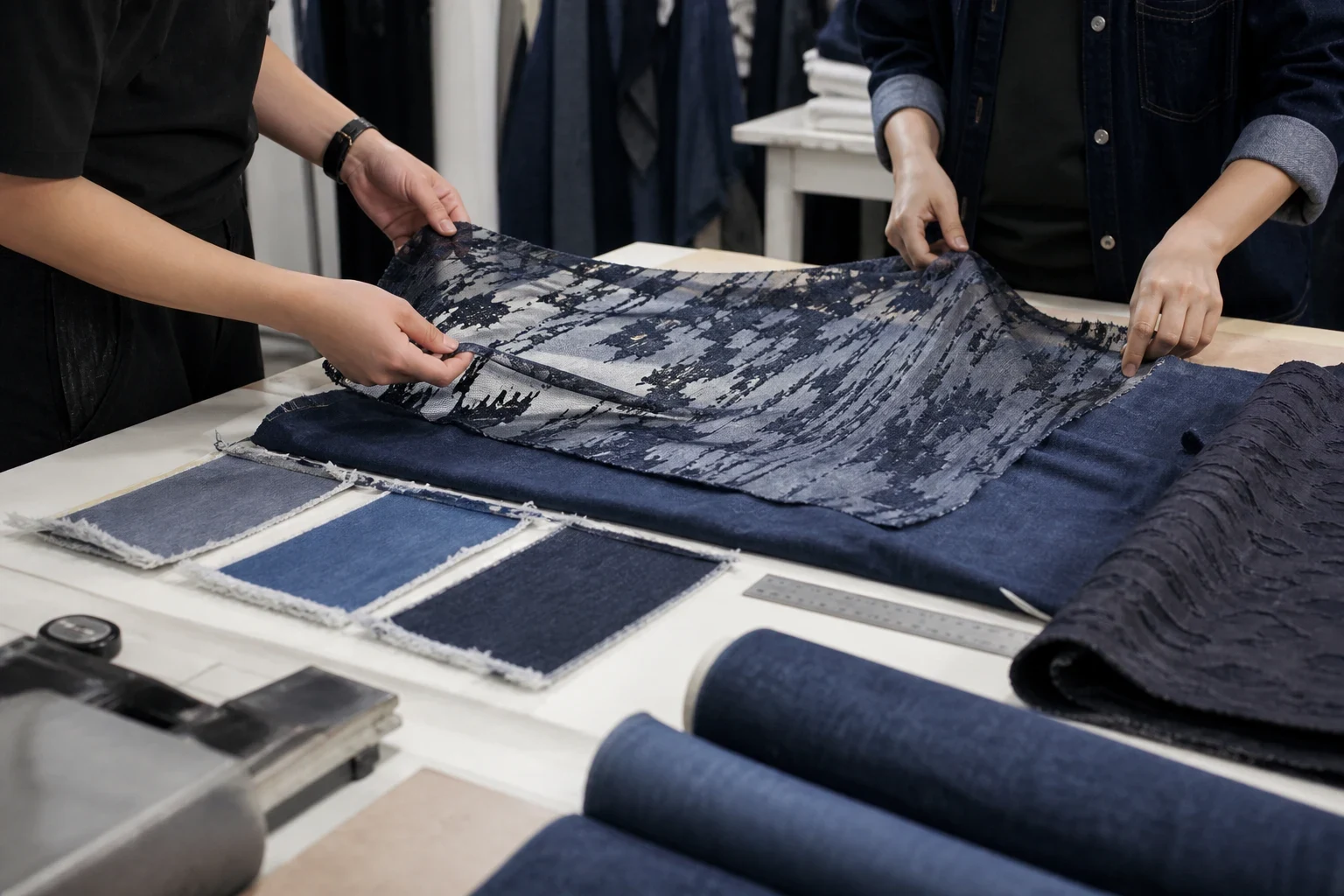
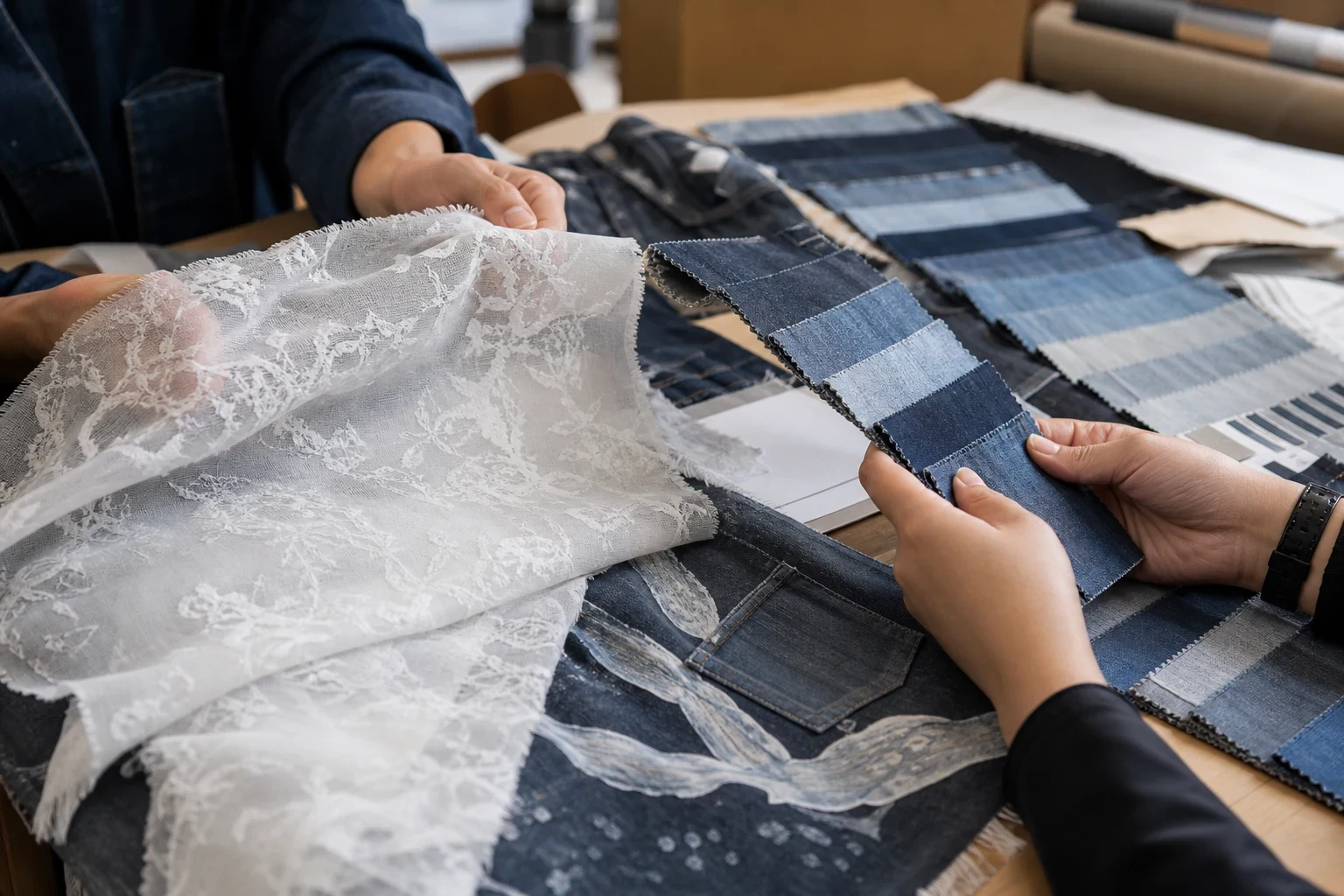
The video-derived visuals show why burnout needs hands-on inspection. Buyers should lift the sample, check transparency against a real background, and review edge stability before bulk production.
Technique Comparison
| Technique | Key Mechanism | Substrate | Sheer Effect | Durability Risks |
|---|---|---|---|---|
| Burnout | Chemical removal of cellulose | Cotton/poly, rayon/poly | Yes, semi-transparent pattern | Tearing, fraying, wash damage |
| Distressing | Mechanical abrasion | Any denim | No, faded/worn look | Holes if overdone |
| Laser marking | Vaporizing dye, no fiber loss | Indigo denim | No, precise contrast | Burn marks, stiff hand |
| Surface ink/paste adhesion | Most fabrics | No, opaque graphic | Cracking, peeling | |
| Flocking | Electrostatic fiber adhesion | Twills, denim | No, velvety texture | Fiber loss, adhesive failure |
Buyer’s Confirmation Sequence
- Strike-off on your exact fabric (same composition, weight, weave, dye).
- Test tear strength in burnout vs. solid areas; drops over 30 % require reinforcement.
- Wash-cycle test with your intended finish—enzyme, rinse, or softener—to check distortion.
- Placement sample to verify alignment, seam handling, and need for a lightweight lining behind sheer panels.
Common Mistakes to Avoid
- Treating burnout like a print – sheer zones weaken the structure and need backing or special seam construction.
- Using 100% cotton denim – no synthetic fiber to hold the pattern; result is holes, not sheerness.
- Skipping wash tests – dry appearance often differs dramatically from post-wash stability.
- Ignoring edge weakness – stitch lines on burnout panels may tear without reinforcement tape or lining.
Quick Quote Checklist
- Base fabric: fiber blend (%), weight (oz/gsm), weave, stretch.
- Burnout placement: allover, motif panel, back yoke, etc.
- Sheerness expectation and lining requirement.
- Garment type and wash direction.
- MOQ for lab strike-off, sample yardage, bulk.
Supplier Questions (Copy-Paste)
- Can you produce burnout on my specific blend? If not, suggest a denim-like polyester twill alternative.
- Expected tensile strength loss and recommended seam construction.
- Lining suggestion for sheer panels and test results with our wash recipe.
- MOQ breakdown: strike-off / sample / bulk. Can we pre-production test?
- How do you control pattern-to-panel consistency and alignment?
FAQ
Can burnout work on denim? Pure cotton denim cannot; the synthetic component is essential. Use a cotton/poly twill or apply burnout only as a panel insert on a rigid denim garment. Always test the exact blend and wash first.
What should I confirm before ordering? The base fabric’s synthetic percentage, placement, lining needs, wash-cycle durability (via strike-off), and minimum tear strength in sheer areas. Without these, bulk orders risk quality claims.
How do I verify a supplier’s capability? Request a burnout strike-off on your target substrate, production references showing similar effects, and clear sampling/MOQ terms. A supplier that explains shrinkage and durability limitations is far more reliable than one promising every effect without data.
Conclusion
Use the article checklist, sample requirements, and supplier questions to confirm the next practical procurement step before moving into quotation or production.
Customization Services by LYDENIM
🎨 Custom Design
Design your own fabric collection or garment with LYDENIM’s premium materials. From luxurious cotton blends to innovative eco-friendly textiles, explore colors, weaves, and finishes that match your brand’s product direction. Visit LYDENIM to learn more.
🛍️ Tailored Garment Solutions
Bring your designs to life with custom garment services. Whether you are developing jeans, denim jackets, skirts, workwear, or small-batch fashion collections, LYDENIM can support fit, comfort, durability, and production planning. Explore customization options on My Alibaba.
📩 Get in Touch
Have a project in mind? Contact our team at malone@lydenim.com to discuss custom fabrics, garment design, low-MOQ sampling, or sustainable textile solutions.
Transform your ideas into reality with LYDENIM–your trusted partner for innovative, high-quality fabrics and bespoke apparel solutions.
Need help turning this into a production-ready sourcing brief?
Send your target product, fabric direction, quantity and sample needs. LY Denim can help compare options and prepare a quote.