


Estimated reading time: ~6 minutes
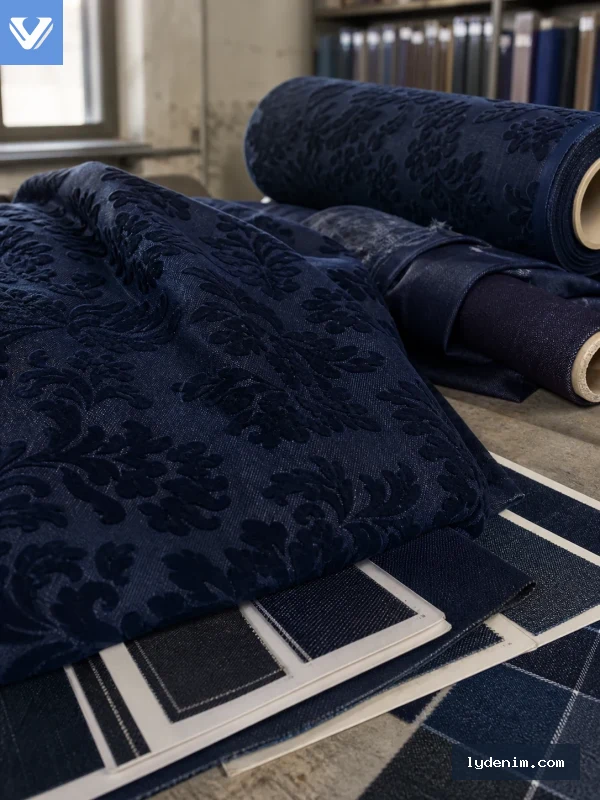
Flocking fabric is created by bonding short fibers onto a textile surface so they stand upright and create a soft, raised texture. For denim buyers, that technical definition immediately leads to the real sourcing question: will the flocked surface survive rubbing, washing, cutting, sewing, and repeated garment use?
Flocked Denim Swatch Options for Buyers
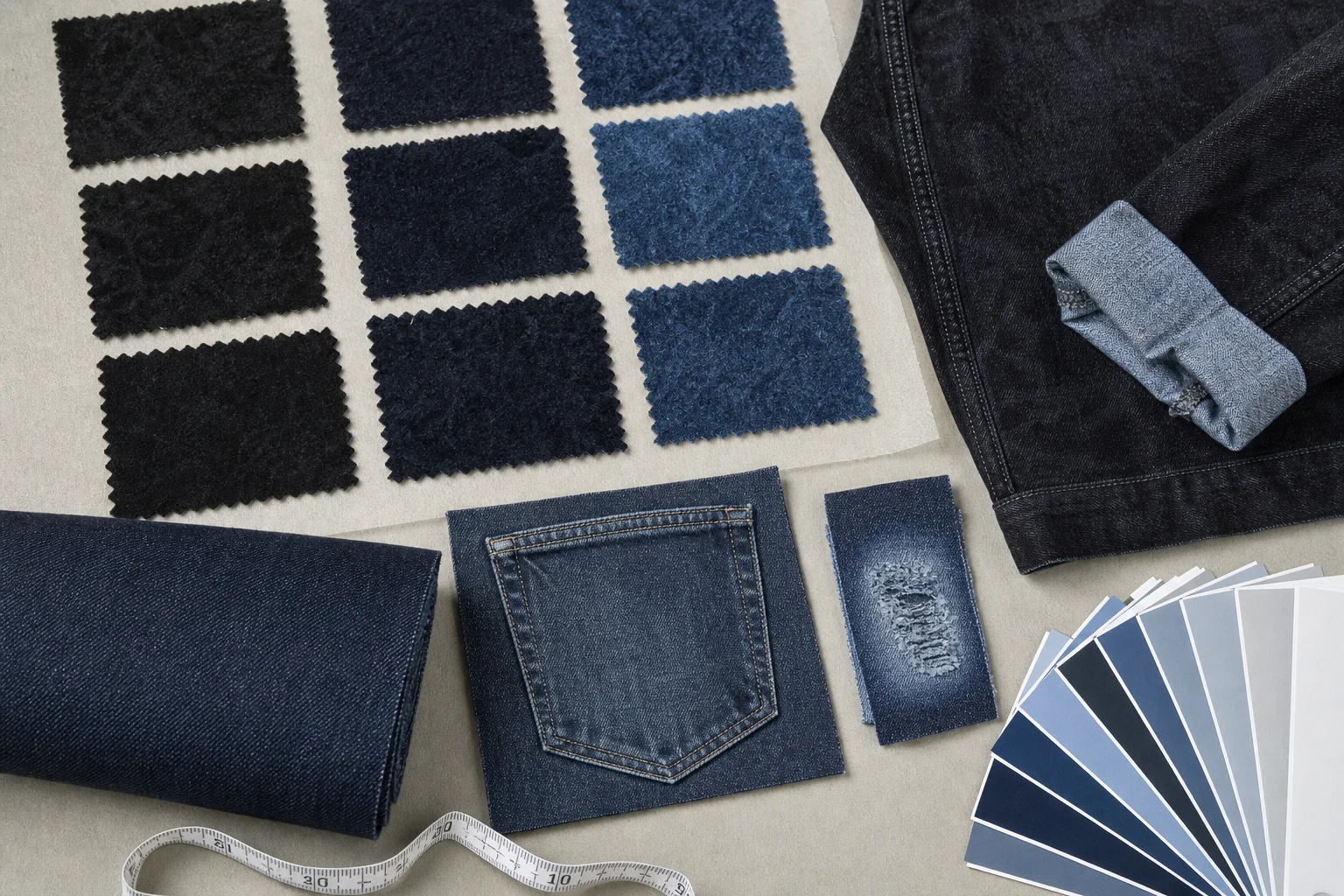
Use real swatches to decide whether the flocked effect should become the main fabric story or a smaller design accent. A buyer brief should include the target garment, pattern direction, color range and expected touch, so the supplier can recommend a workable flocked denim route.
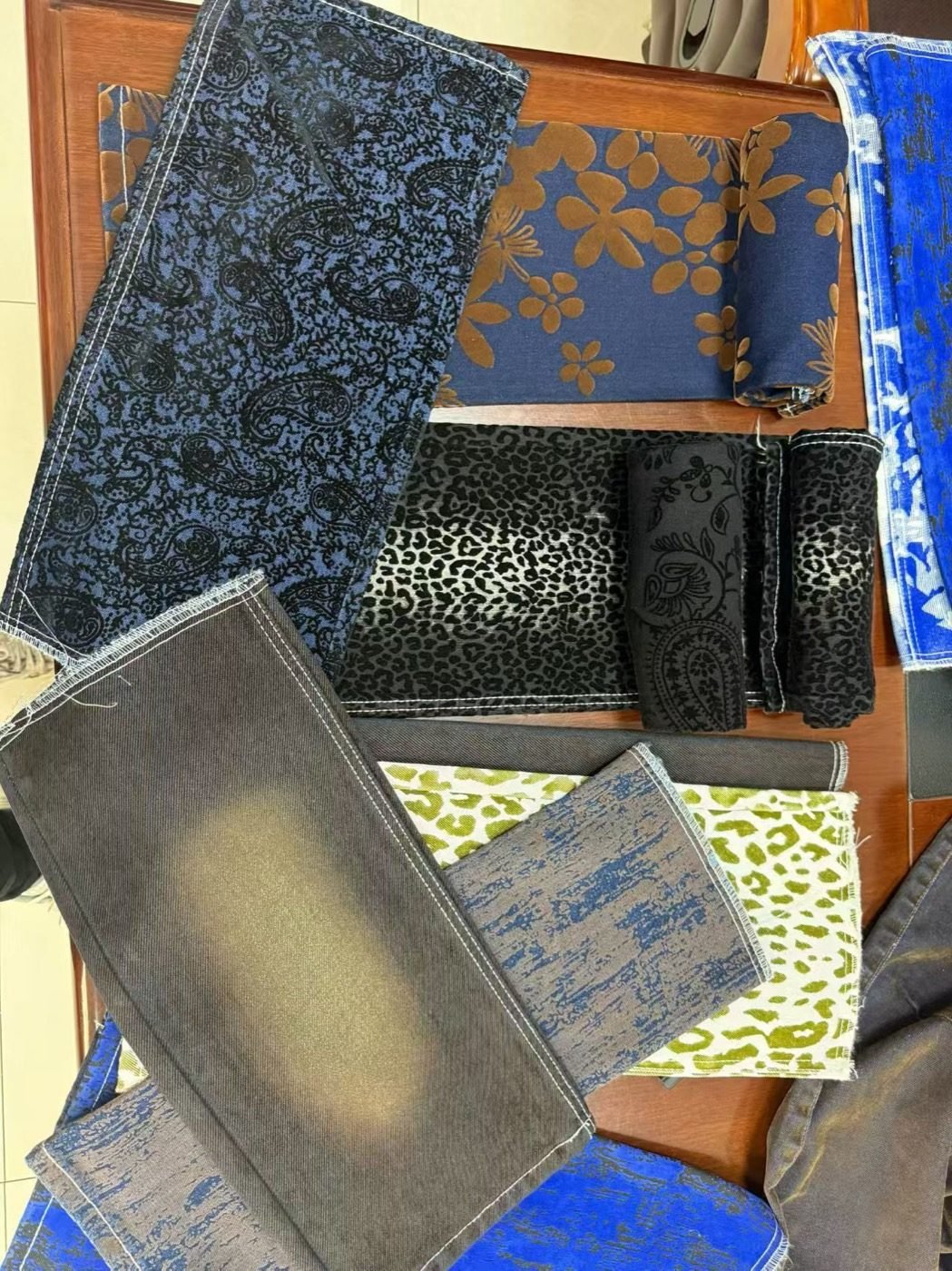
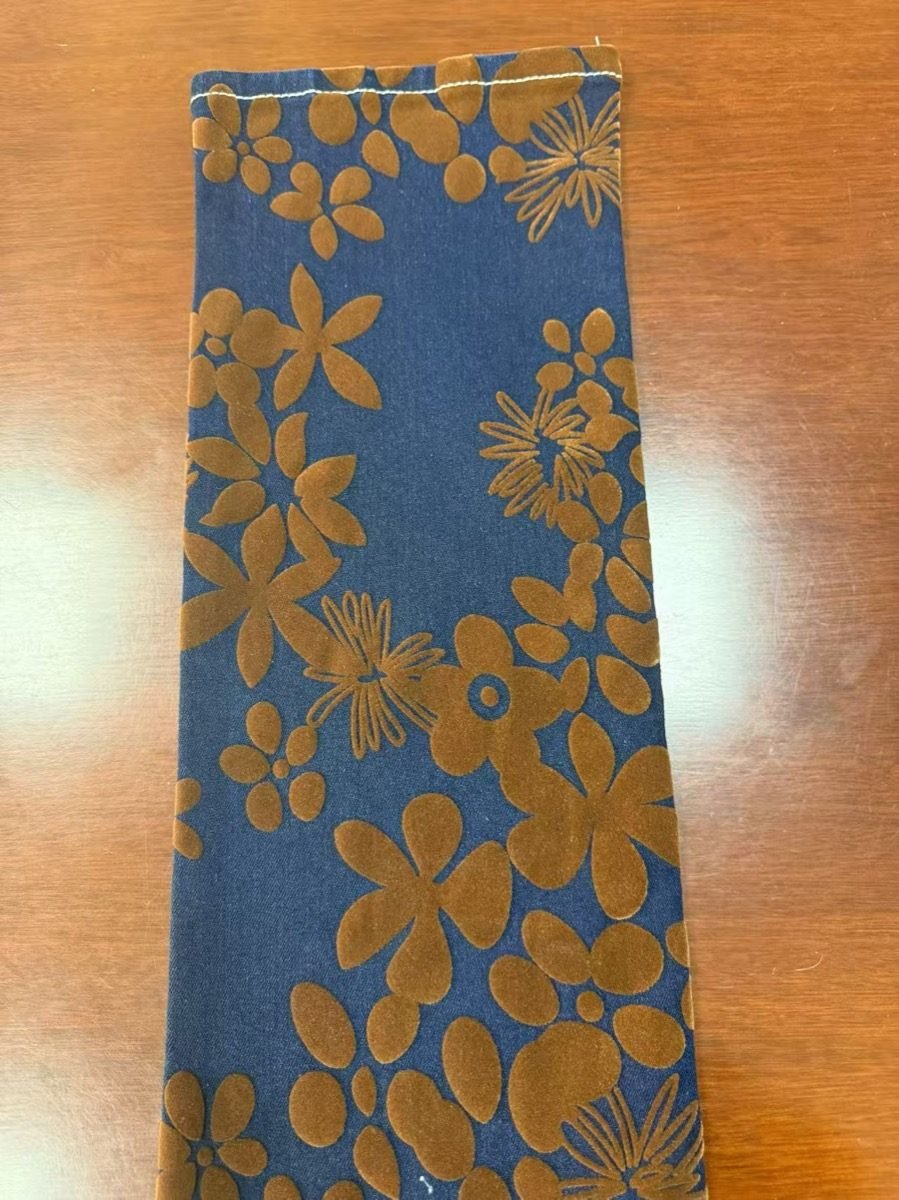
- Pattern scale: confirm whether the repeat works for jeans, jackets, skirts or trim panels.
- Base fabric: check denim weight, stretch level and construction before strike-off.
- Color options: align flocking color with the collection palette before bulk quotation.
- Sampling route: keep approved swatches as references for shade, pile density and surface feel.
Color, Pattern and Base Fabric Options
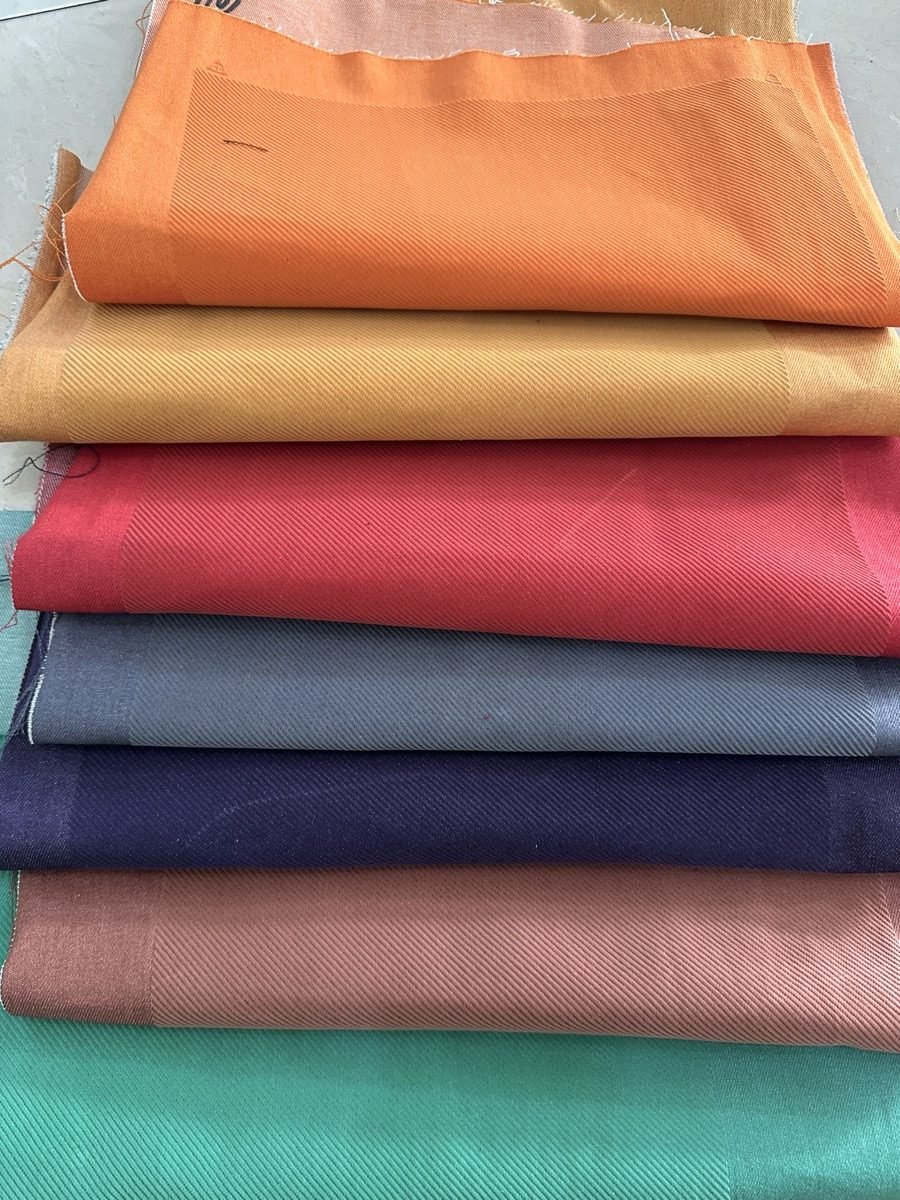
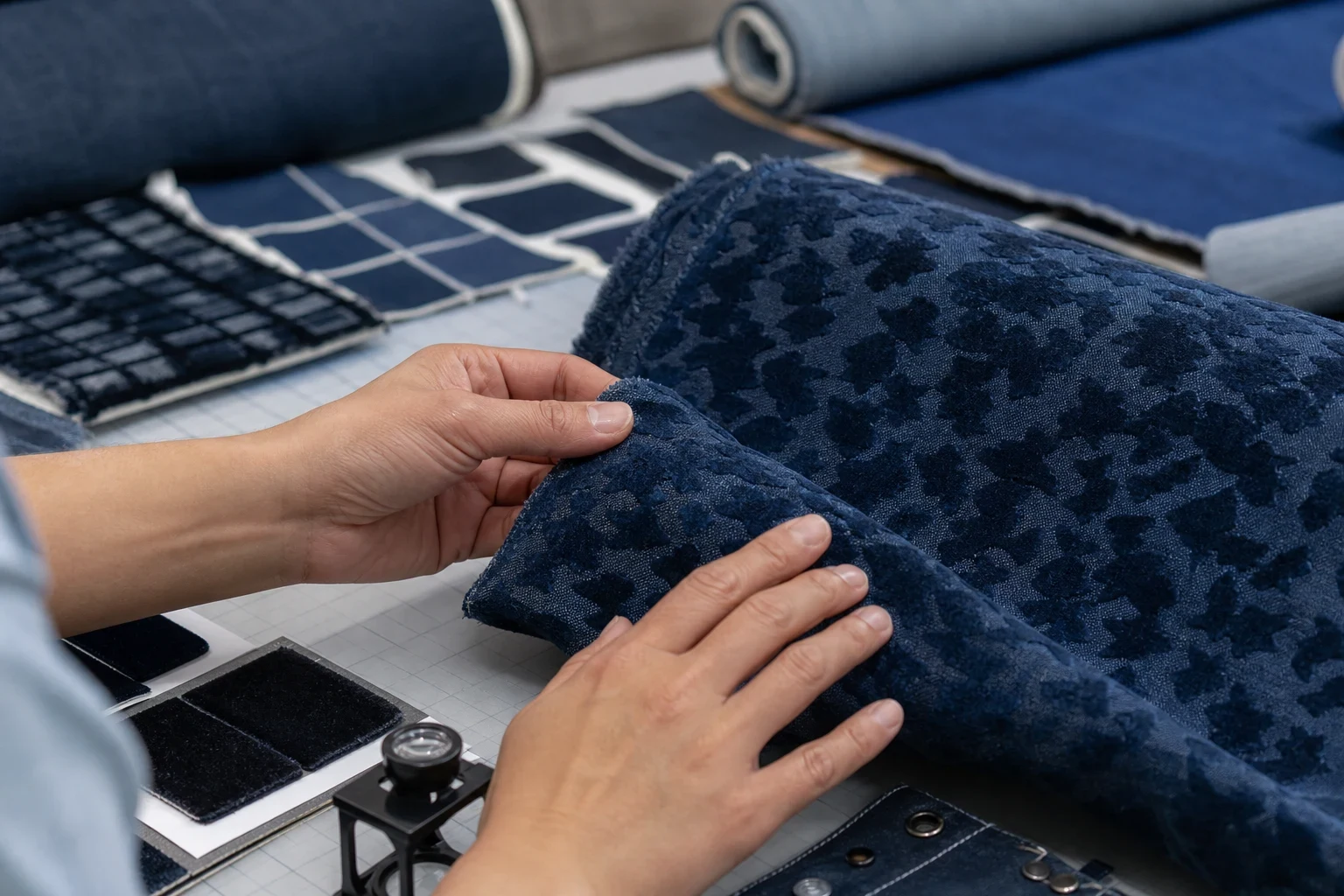
Flocked denim can be developed on different denim bases and color directions. The most useful buyer reference is a small set of physical swatches, because photos alone cannot fully show raised texture, softness or pile coverage.
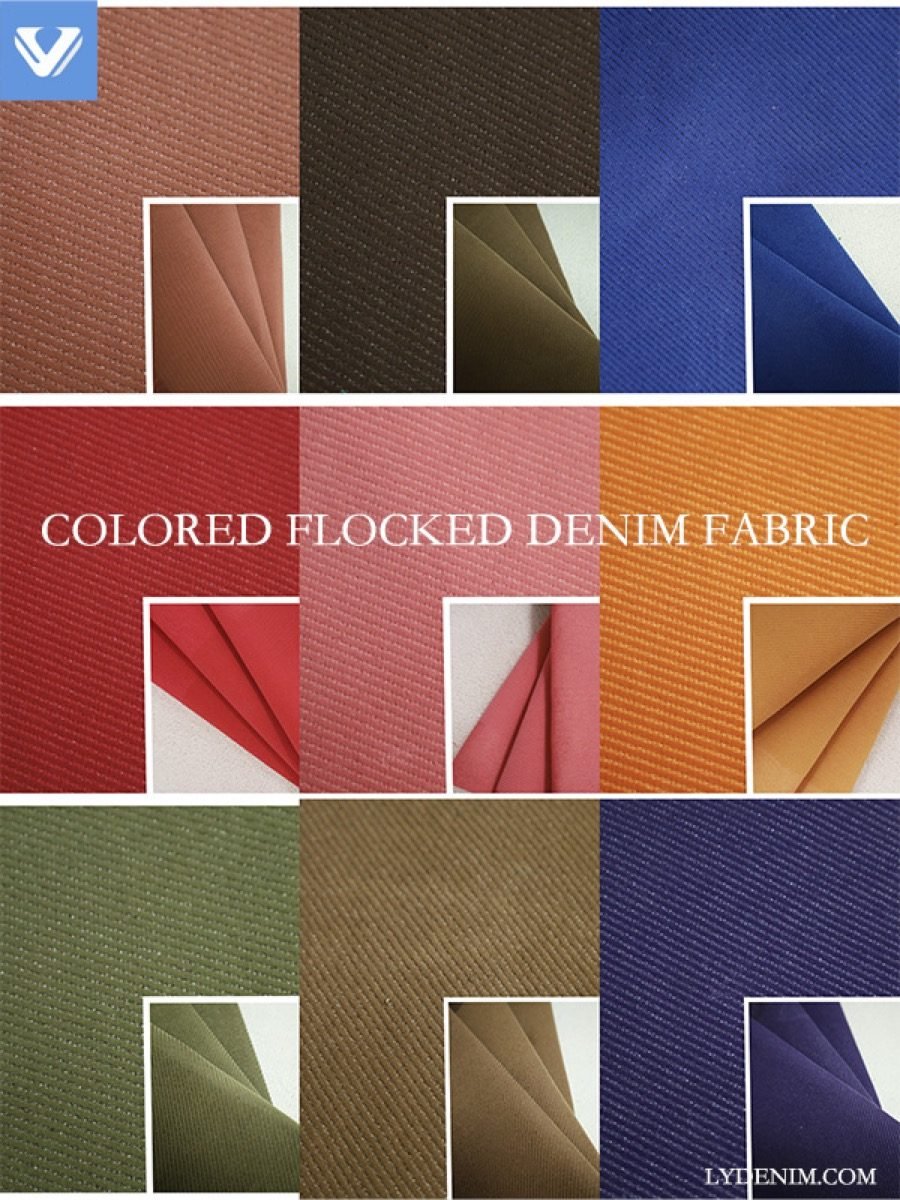
That is why flocking should be treated as a sourcing decision, not just a visual effect. In denim it can create premium texture, stronger contrast, and trend-forward surface identity. But the effect only works commercially when the brand tests the right points before bulk order and chooses the right application route for the product.
Buyer Summary
- Best for: premium denim capsules, jackets, skirts, trims, panels, logos, and tactile fashion stories
- Main value: creates soft raised texture and visual contrast without changing the full weave structure
- What to prepare before development: target product, desired texture level, placement plan, wash requirement, quantity, and timeline
- Main buyer risk: approving the look before checking adhesion, rubbing fastness, and seam-area durability
Why Flocking Matters for B2B Buyers
Flocking changes denim from a standard woven substrate into a performance-sensitive surface effect. That means the buyer should care about more than appearance:
- the base fabric must accept the flocking system properly
- the flocked area must survive garment handling and finishing
- the chosen product category must match the durability limits of the effect
- the brand must decide early whether flocking happens on fabric or on a finished garment
When these decisions are made well, flocking can help a collection stand out. When they are skipped, the sample may look strong in photos but fail quickly under real use.
What Flocking Fabric Is – and What It Is Not
Flocking is not velvet, and it is not jacquard. It is also not simply a print with more texture. The effect is built by adding fibers to the surface with adhesive, usually through electrostatic alignment so the fibers stand vertically.
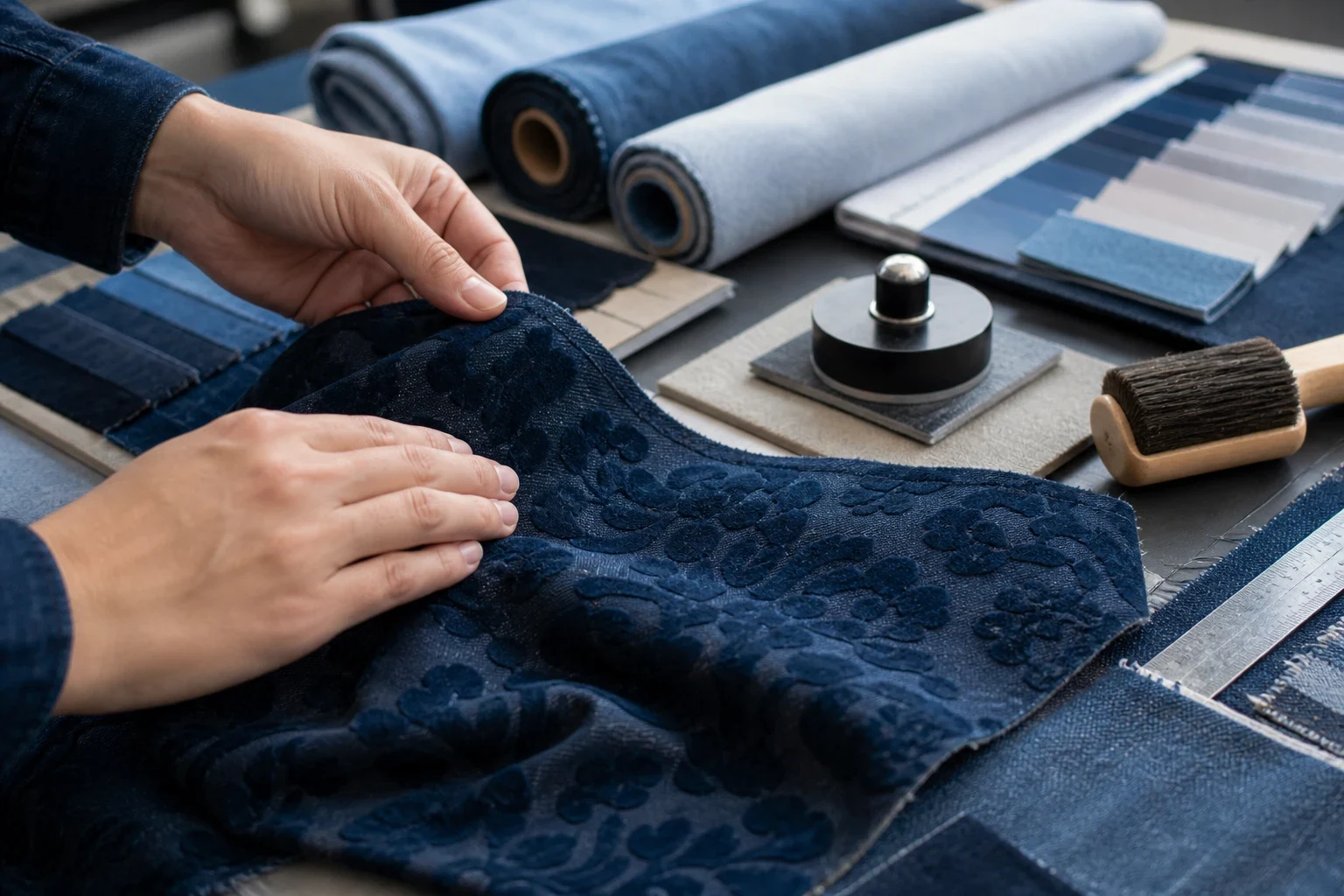
That gives the material a soft, tactile handfeel and stronger light-shadow contrast. But because the effect sits on top of the substrate, the buyer has to judge it like a finish system: by adhesion quality, friction resistance, and compatibility with the denim base and wash route.
Flocking Fabric vs Flocked Denim, Velvet, and Print
| Effect | How it is created | What it gives the buyer | Main risk |
|---|---|---|---|
| Flocking fabric | Short fibers bonded to surface with adhesive | Raised texture, soft hand, visual depth | Pile loss, weak adhesion, seam-edge damage |
| Flocked denim | Denim that has gone through flocking | Denim-specific texture story | Wash and abrasion issues if poorly tested |
| Velvet | Pile structure built into fabric construction | Soft luxurious surface with different drape | Different base behavior, not directly comparable to denim flocking |
| Ink or coating added to surface | Easier graphic flexibility | No tactile pile, may crack or fade | |
| Jacquard | Pattern built into weave structure | Durable structural pattern | Higher development complexity |
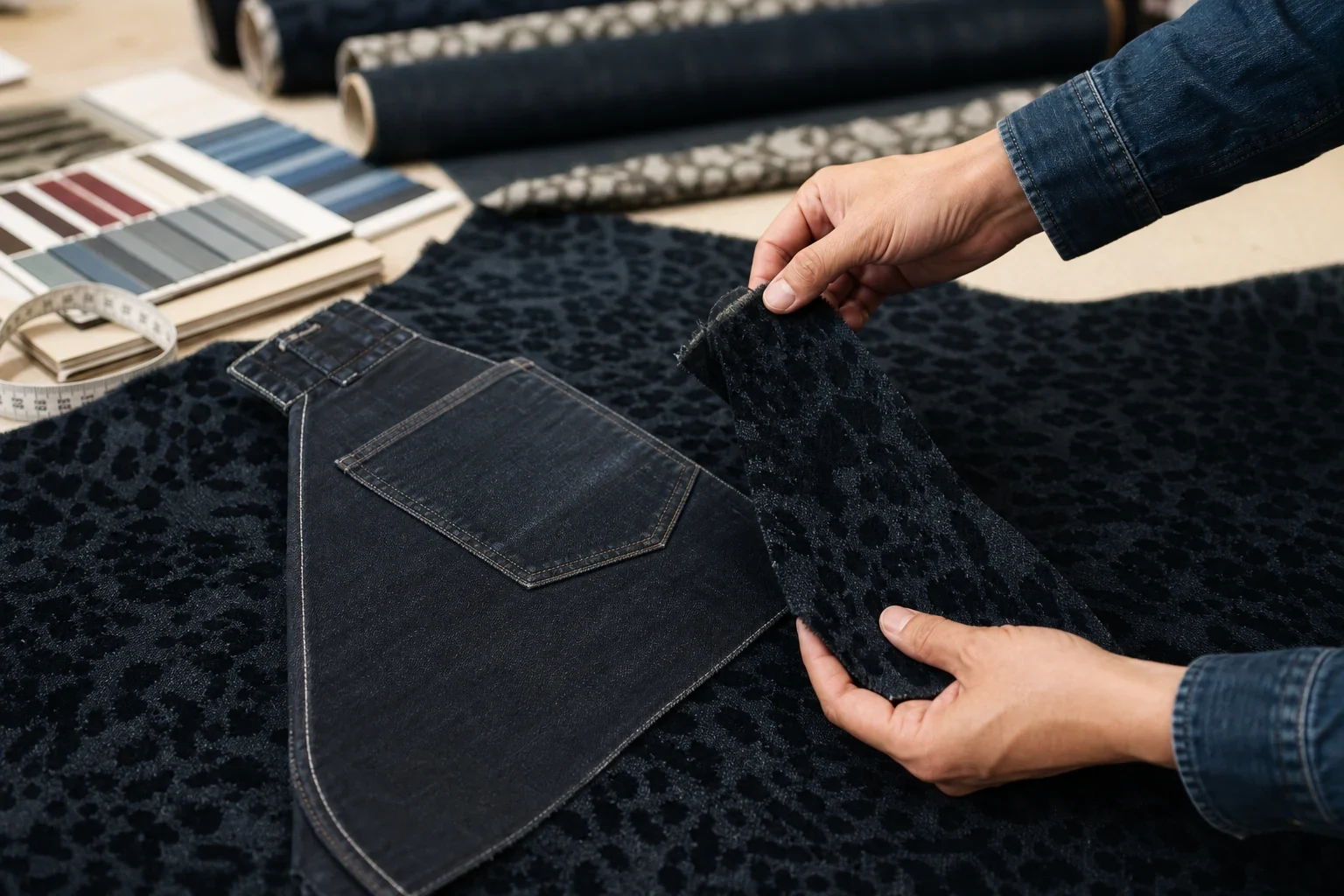
For denim buyers, the practical takeaway is simple: flocking sits between design and performance. It can elevate the collection, but it must be tested like a finish, not assumed to behave like ordinary denim.
Fabric-Stage vs Garment-Stage Flocking
One of the most important sourcing decisions is when the flocking happens.
| Route | Better for | Advantages | Buyer watch-outs |
|---|---|---|---|
| Fabric-stage flocking | allover effect, repeated yardage, large-area design | more consistent surface across fabric width, easier bulk fabric planning | stitching through flock can weaken edges, waste rises if placement is partial |
| Garment-stage flocking | logos, local panels, targeted placement, smaller drops | better control around seams and style placement, less unnecessary waste | higher unit handling cost, placement tolerance must be managed carefully |
A good supplier should explain which route fits your product, not just say yes to both. For larger allover programs, fabric-stage can make sense. For targeted denim panels or logos, garment-stage often gives cleaner commercial control.
When Flocking Works Best on Denim
Flocking is strongest when the design brief needs tactile contrast, not just another graphic. Typical commercial uses include:
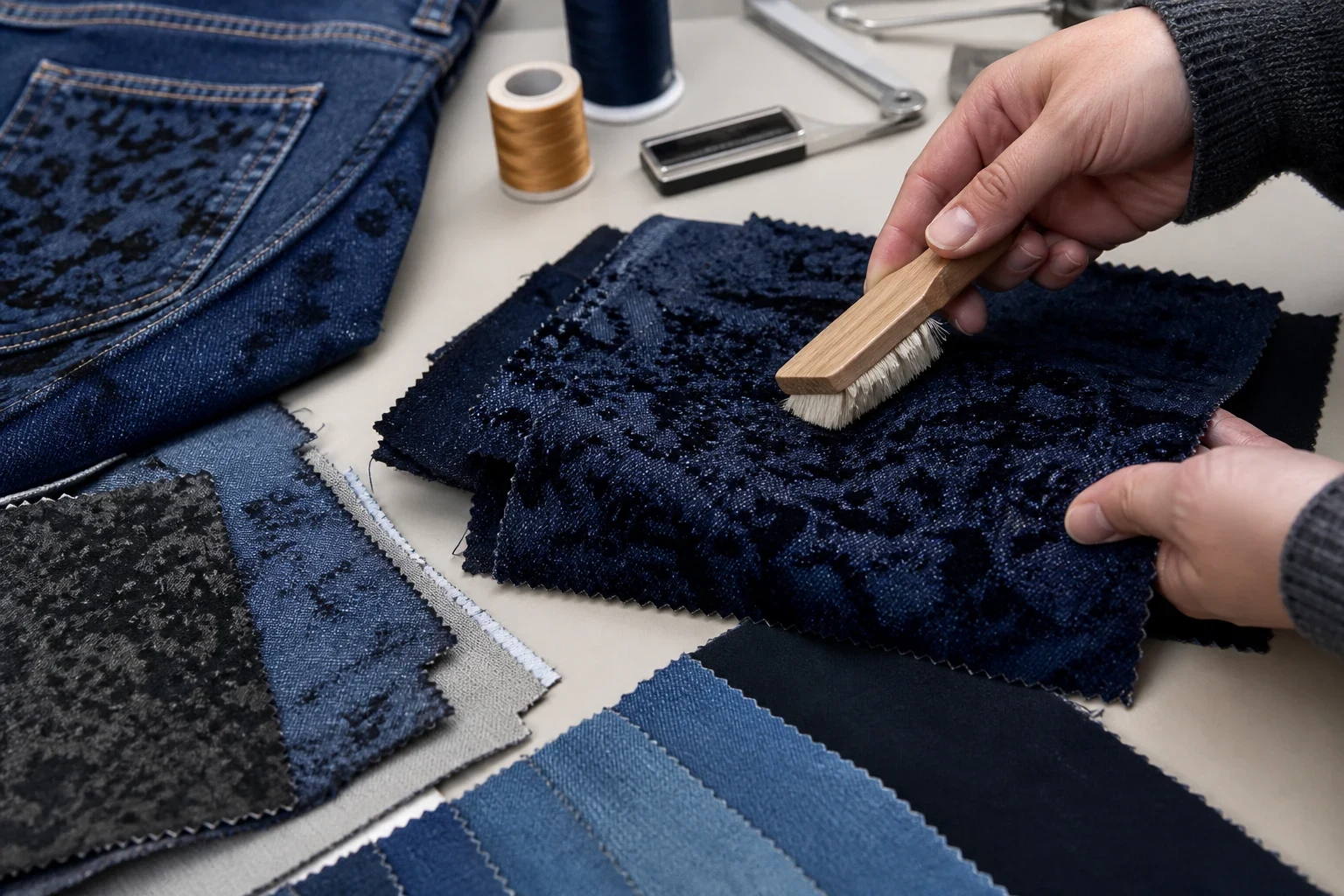
- premium jackets with localized flock panels
- fashion skirts or overshirts with a surface story
- logos, trims, or feature panels in capsule collections
- collection concepts where touch and light play matter as much as color
It becomes less convincing when the garment will take heavy abrasion, aggressive washing, or uncontrolled rubbing in every wear cycle. In those situations, the supplier should either change the placement or recommend a different effect.
What Buyers Should Confirm Before Sampling
Before you request a flocking sample, define:
- target product category
- desired texture level and pile density
- placement of the flocked area
- expected rubbing or wash exposure
- whether the effect is the main fabric identity or a smaller accent
- quantity, pricing target, and approval timeline
This is what allows the supplier to recommend the right flock system and lets the buyer judge whether the sample is commercially realistic.
Testing and Bulk QC Priorities
The most useful flocking article is the one that helps buyers avoid preventable bulk failures. Minimum checks should include:
- dry rubbing performance
- wet rubbing performance
- wash compatibility with the intended recipe
- seam and fold abrasion review
- consistency of pile density and edge cleanliness
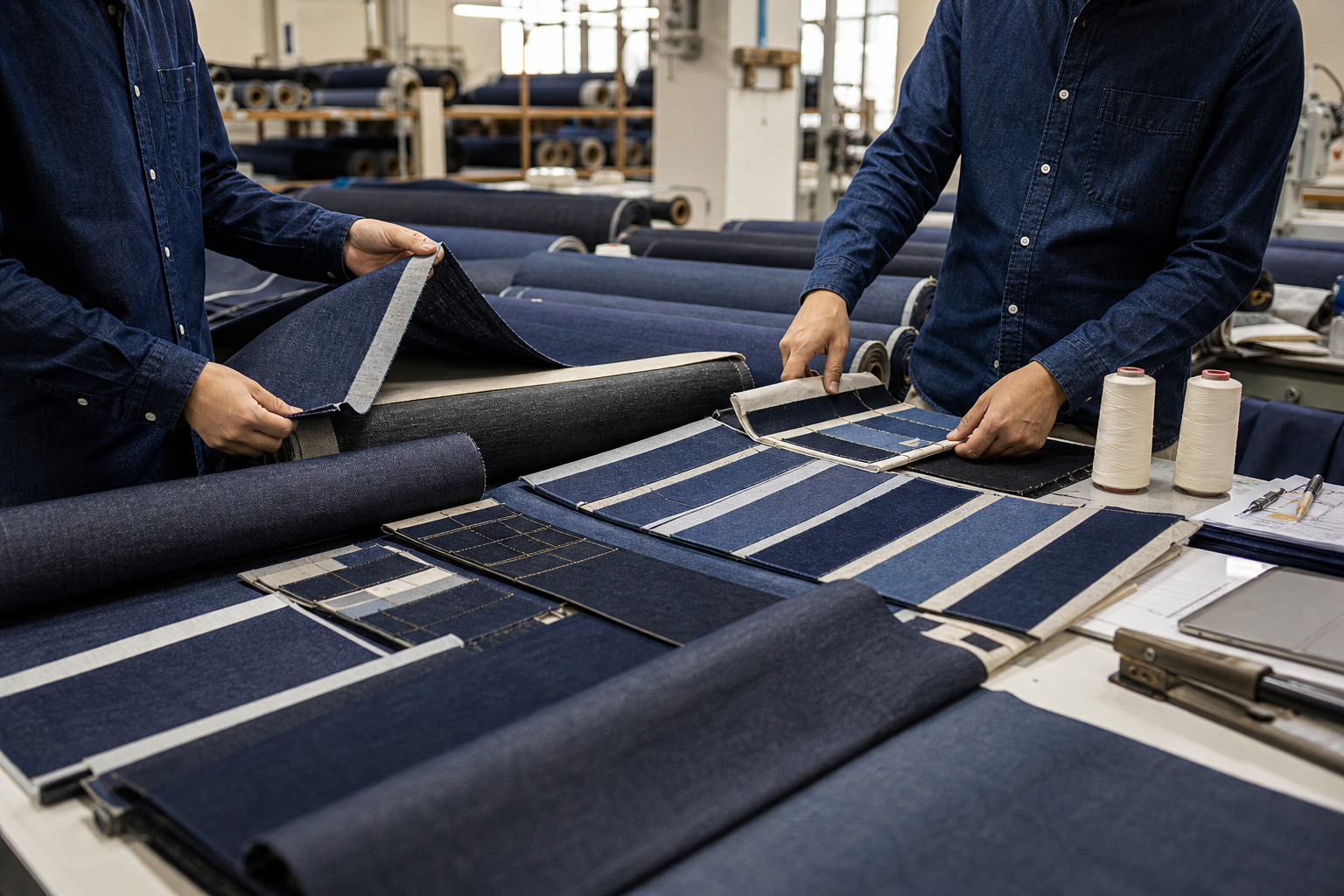
- comparison against an approved swatch or garment panel
Practical test sequence
- Review the first swatch for visual density, edge cleanliness, and handfeel.
- Rub test the flocked area by hand and through a simple lab standard.
- If the style will be washed, test the exact wash recipe on the sample.
- Review seam-adjacent zones, folds, and high-friction points on a panel or proto garment.
- Keep one approved reference for pile density, color, and surface feel before bulk starts.
When Buyers Should Avoid Flocking
The effect is not wrong for denim, but it is not right for every program. Be cautious when:
- the design sits directly in high-friction seat or knee zones
- the wash route is aggressive and still not validated
- the product requires long-term heavy abrasion resistance
- the team is choosing the effect only from a moodboard without performance testing
If a supplier cannot explain where flocking should not be used, that is usually a warning sign.
Supplier Questions Before Bulk Approval
Use these questions early:
- Which base denim constructions have you flocked successfully before?
- Should this style be flocked at fabric stage or garment stage, and why?
- What rubbing and wash tests do you recommend for this exact use case?
- How do you control pile consistency and edge cleanliness in bulk?
- Which zones of the garment should avoid flocking because of seam or fold abrasion?
- What MOQ and lead-time difference should we expect between the two application routes?
FAQ
What is the difference between flocking fabric and flocked fabric?
In everyday use the terms often overlap. Flocking usually describes the process or category, while flocked fabric describes the finished material after the process.
Can flocking be used on denim garments?
Yes. It can be applied to denim fabric or to finished garments depending on the effect, placement, and workflow needed.
What should I test before bulk production?
At minimum, test rubbing performance, adhesion stability, wash compatibility, and behavior around seams or other high-friction zones.
Is flocking better than jacquard or burnout?
It depends on the goal. Flocking is best for tactile raised texture. Jacquard is better for woven structure. Burnout is better for contrast through transparency or partial openness.
Conclusion
Flocking works best when the buyer connects the design idea with production control. Decide the application stage early, test the effect under real garment conditions, and lock an approval standard before bulk. That is how a strong tactile surface idea becomes a reliable denim program instead of a short-lived sample story.
Customization Services by LYDENIM
🎨 Custom Design
Design your own fabric collection or garment with LYDENIM’s premium materials. From luxurious cotton blends to innovative eco-friendly textiles, explore colors, weaves, and finishes that match your brand’s product direction. Visit LYDENIM to learn more.
🛍️ Tailored Garment Solutions
Bring your designs to life with custom garment services. Whether you are developing jeans, denim jackets, skirts, workwear, or small-batch fashion collections, LYDENIM can support fit, comfort, durability, and production planning. Explore customization options on My Alibaba.
📩 Get in Touch
Have a project in mind? Contact our team at malone@lydenim.com to discuss custom fabrics, garment design, low-MOQ sampling, or sustainable textile solutions.
Need help turning this into a production-ready sourcing brief?
Send your target product, fabric direction, quantity and sample needs. LY Denim can help compare options and prepare a quote.