


Estimated reading time: ~5 minutes
Flocked denim should be tested as a performance-sensitive effect, not just approved by touch and appearance. A sample that feels premium in hand can still fail under rubbing, folding, washing, or seam stress if the test process is too shallow. Buyers need a review flow that reflects how denim is actually worn and processed.
Visual Checks Before Performance Testing
Visual inspection should happen before lab testing and wear testing. Patterned flocked denim needs special attention because uneven pile, fuzzy edges or shade drift can become obvious after cutting and sewing.
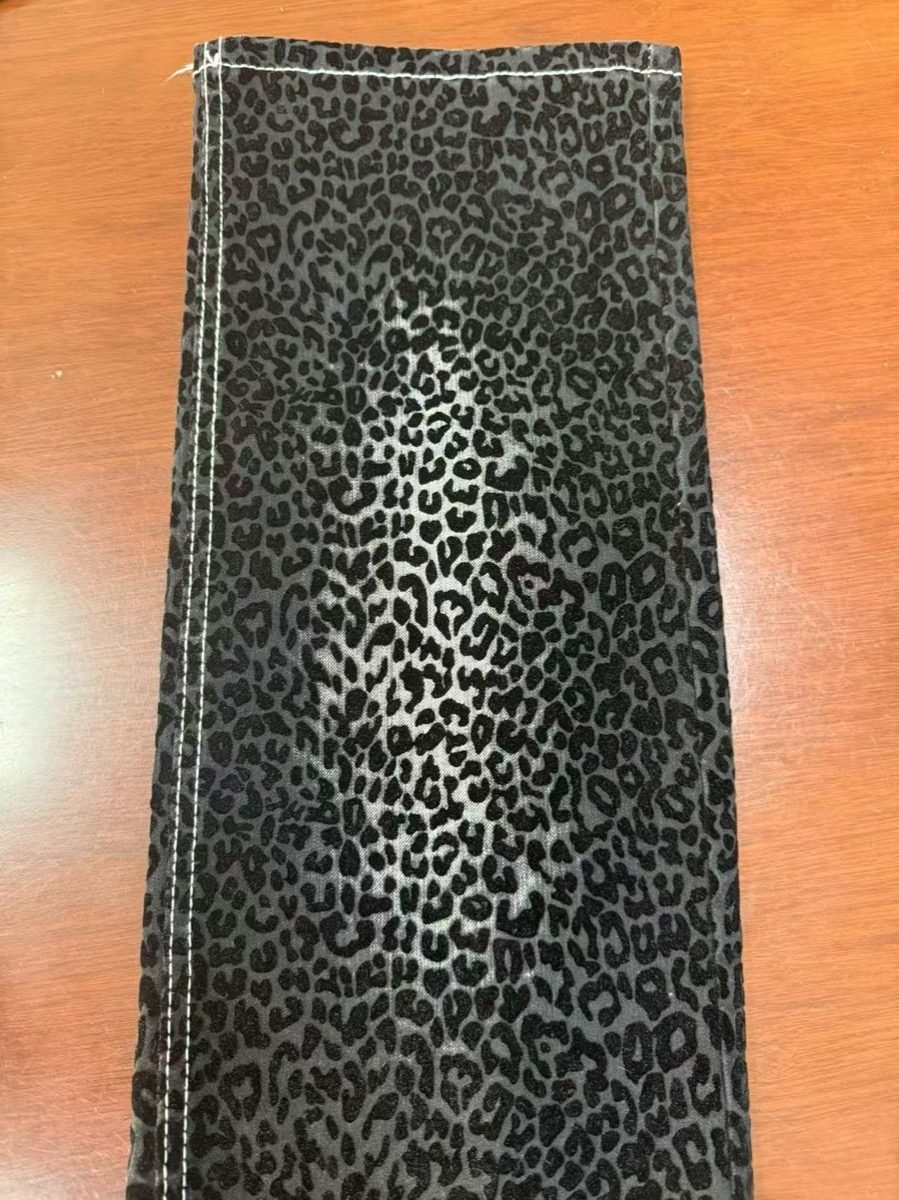
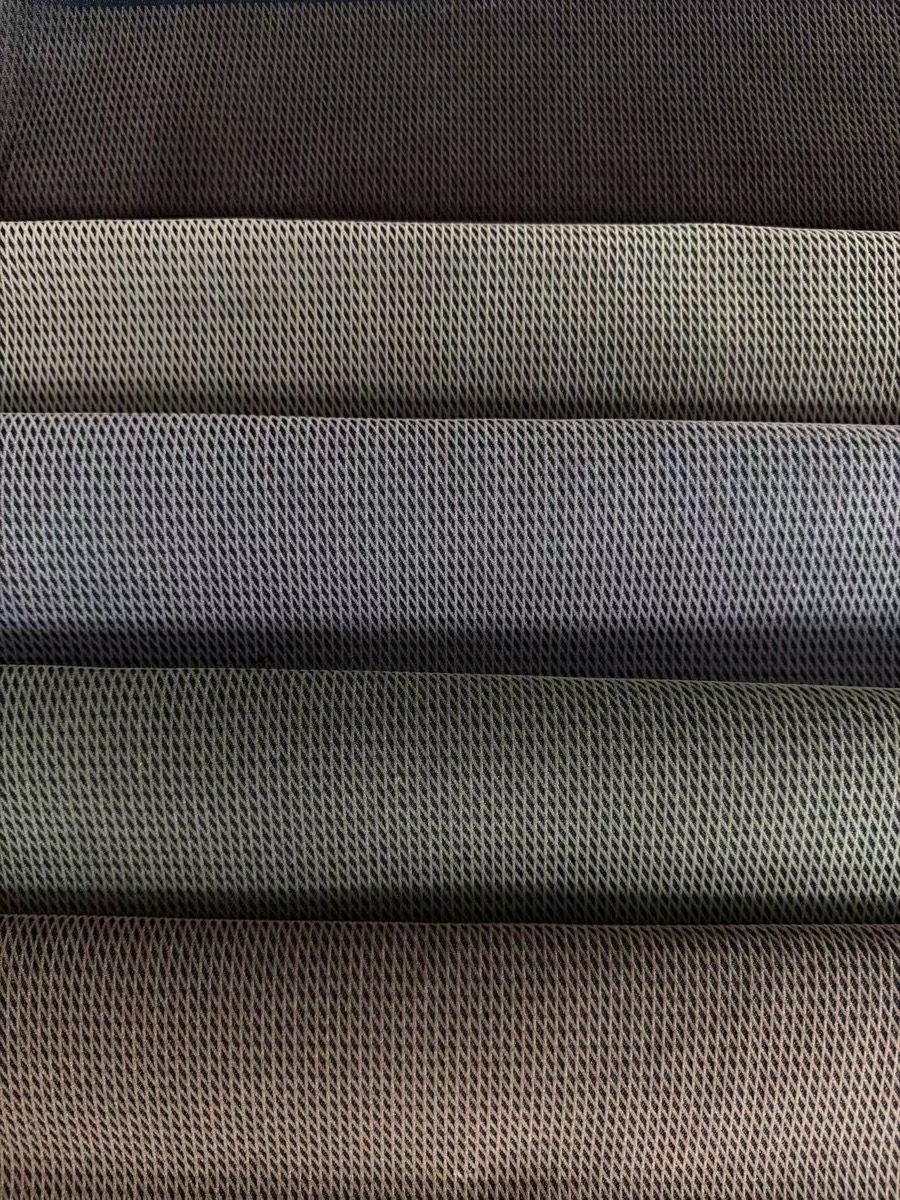
- Pile density: compare raised fiber coverage across the full swatch.
- Edge clarity: review sharp pattern borders, especially on animal, floral or geometric effects.
- Repeat consistency: check whether the pattern stays stable from sample to bulk.
- Color shade: approve a reference swatch before cutting bulk fabric.
Seam and Folding Zones Need Separate Review
Flocked surfaces often fail first where fabric rubs, folds or is stitched. Ask the supplier to review seam zones, pocket edges, hems and folding areas before confirming the final garment construction.
Buyer Summary
- The first sample review should include both appearance and performance
- Dry rub, wet rub, wash, and seam-edge checks are the minimum useful starting set
- Denim-specific testing matters because the substrate and garment use are harsher than many generic flocking applications
- Flat swatches are useful, but a sewn panel or proto garment reveals the real risk zones
Step 1: Define the Test Context Before You Touch the Sample
Before judging the flock itself, clarify the product conditions:
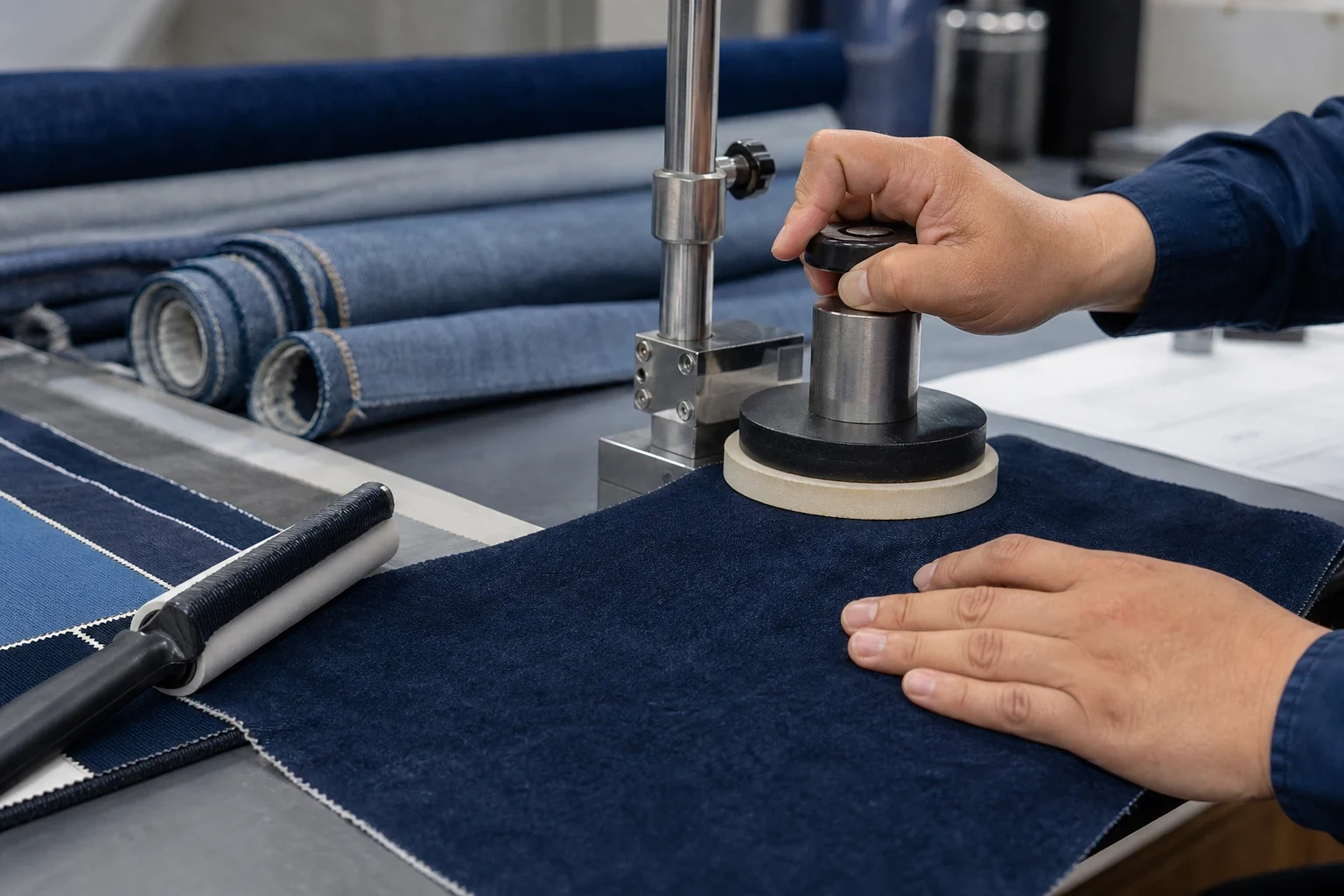
- is the effect applied at fabric stage or garment stage?
- which zones will take the most friction?
- will the garment be rinsed, enzyme washed, or otherwise finished after application?
- is the texture the main collection story or a small accent detail?
A strong test only works when it matches the real use case. A flocked jacket panel and a flocked jean back pocket should not be approved by the same standard.
Step 2: Appearance Consistency Review
Check:
- pile density
- visual depth
- edge cleanliness
- whether the flocked area matches the approved design brief
- whether the handfeel is consistent across the whole treated zone
This is the easy part, but it should still be documented before performance tests begin. If the first sample already shows thin zones or dirty edges, the program is not ready for bulk discussion.
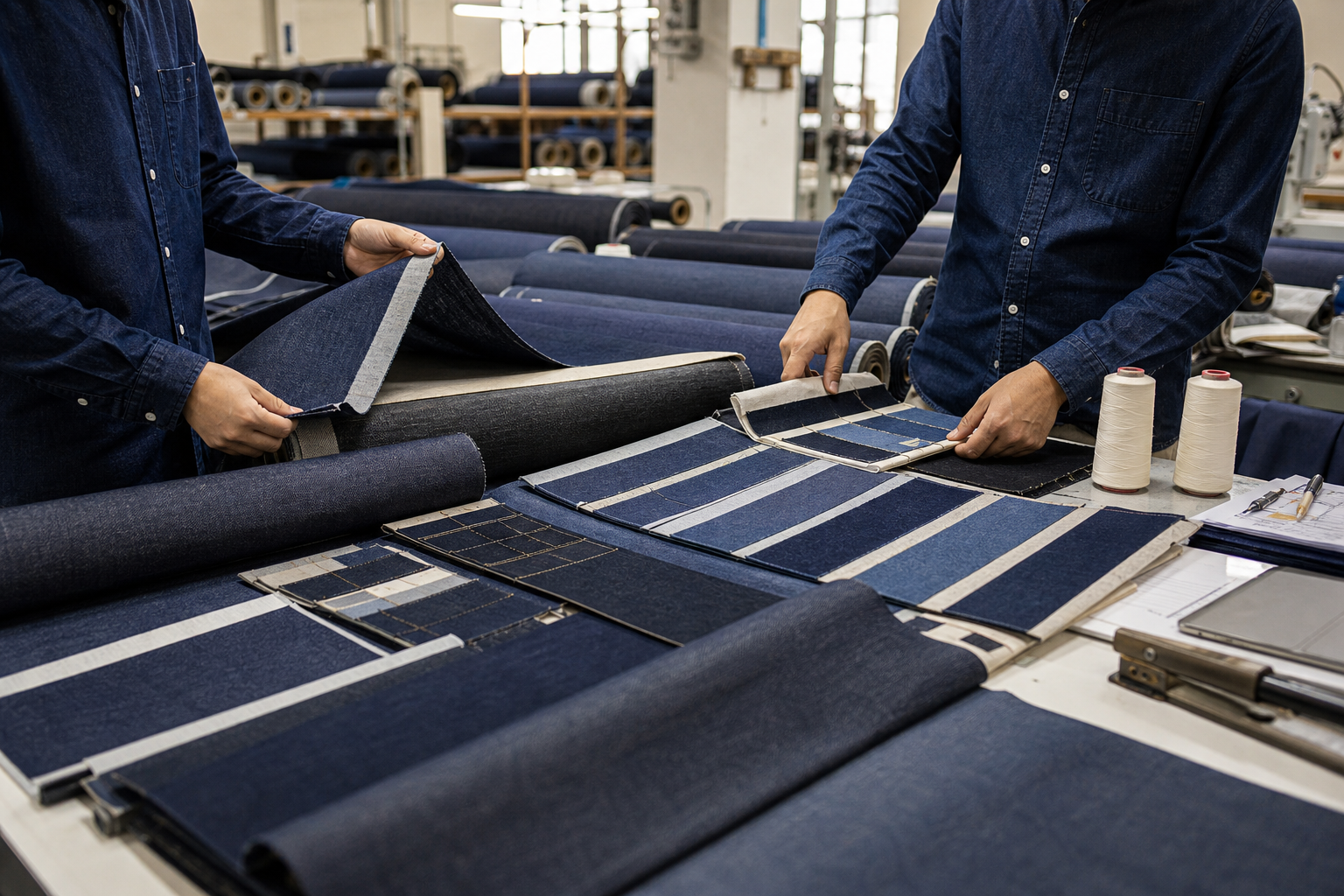
Step 3: Dry Rubbing Test
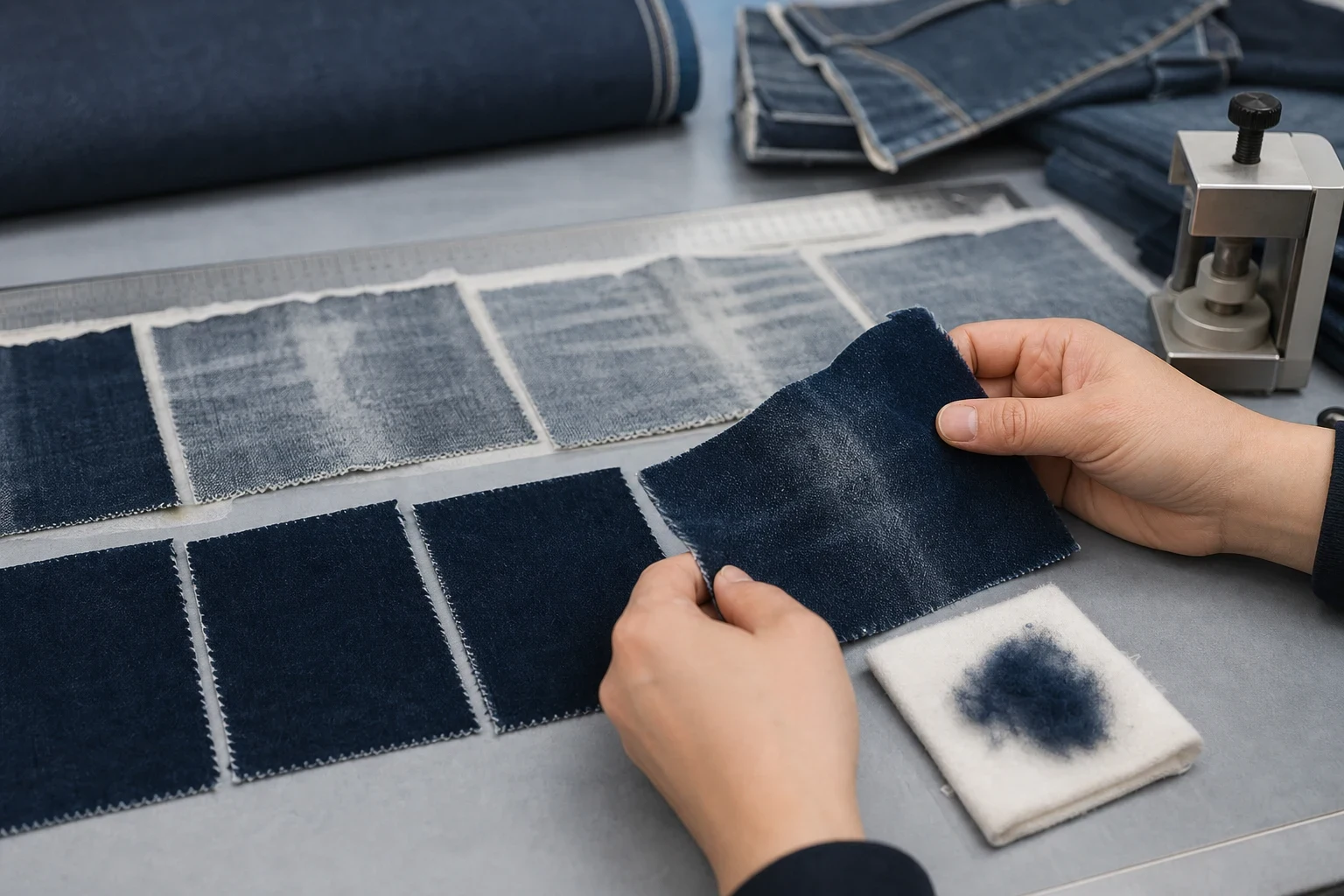
Dry rubbing is one of the fastest ways to identify weak adhesion.
Check whether the surface:
- sheds too easily
- loses visual density
- changes texture after repeated handling
- shows premature wear on corners or edge zones
If the style will be touched often in retail or worn in high-contact areas, a weak dry-rub result is already enough reason to hold the approval.
Step 4: Wet Rubbing and Wash Response
If the product will face moisture or laundering, review:
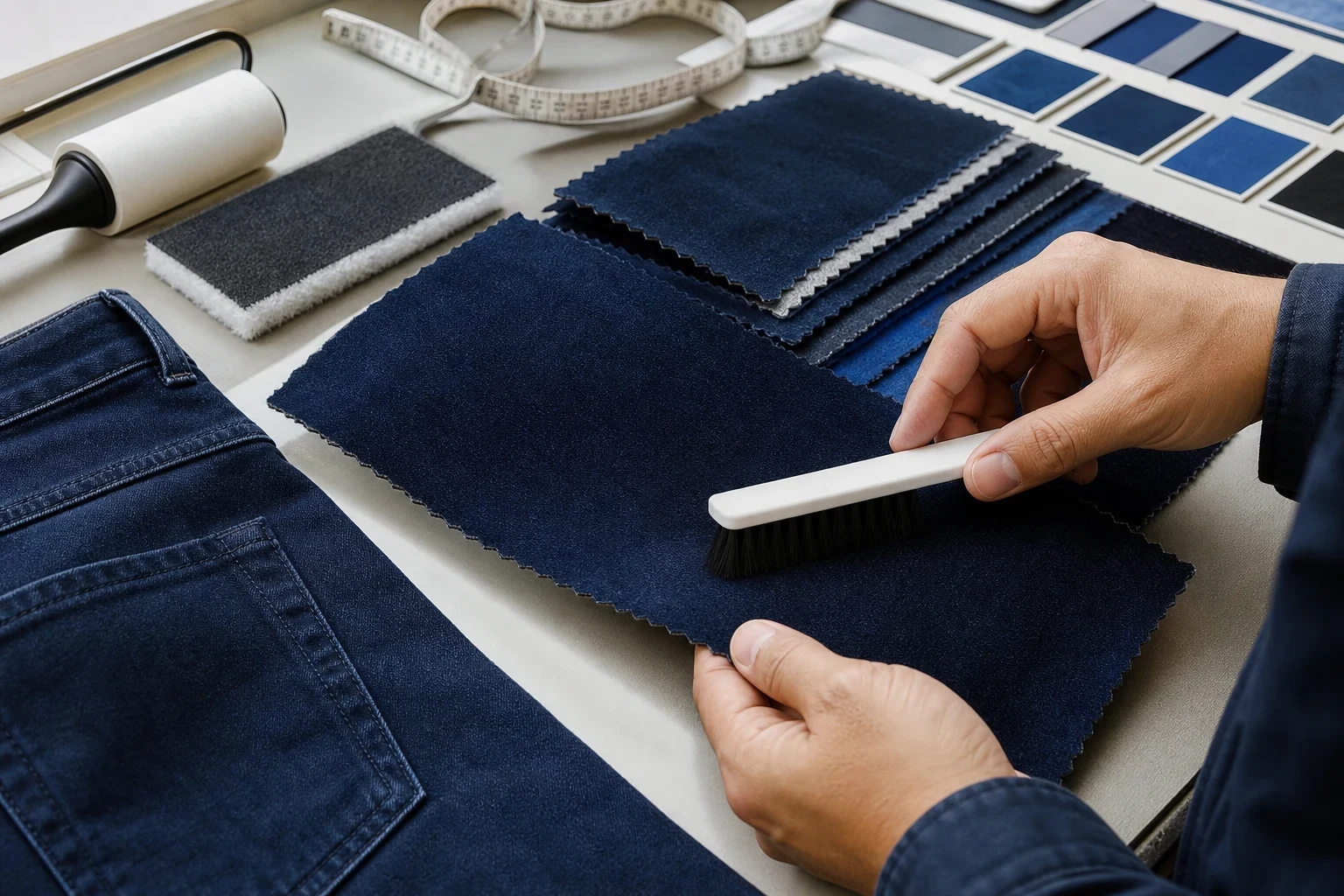
- color transfer
- pile loss
- adhesive stability
- visual change after the wash process
- whether the treated zone stiffens, breaks, or becomes patchy
Testing should match the real wash recipe as closely as possible. Denim buyers should not accept a generic “wash safe” claim without seeing the sample go through the intended finish route.
Step 5: Seam and Folding Zone Review
Pay extra attention to:
- pocket openings
- hem folds
- side seams
- plackets and collars
- any area where the garment bends repeatedly
These are often the first failure points in bulk use. If the flock extends too close to stitching or fold lines, the sample should be revised before quantity, price, or delivery is discussed further.
Step 6: Product-Context and Wear Simulation Review
Do not stop at a flat sample. Review one of the following:
- a sewn panel
- a half-garment
- a full proto sample
This is where friction, drape, seam placement, and movement issues become visible. It is also where the buyer can decide whether the effect still makes sense for the intended product category.
Suggested Acceptance Table
| Test area | What to confirm | Typical decision outcome |
|---|---|---|
| Visual review | pile density, clean edge, tone consistency | approve appearance or request remade sample |
| Dry rub | no obvious shedding or fast flattening | proceed only if the surface remains commercially stable |
| Wet rub | no excessive transfer or peeling | hold if moisture causes visible failure |
| Wash test | finish survives intended wash route | rework if pile loss or patchiness appears |
| Seam/fold zones | edges remain intact near stress points | change placement if damage concentrates in these zones |
| Proto context | effect still suits garment use and silhouette | confirm bulk only after this final check |
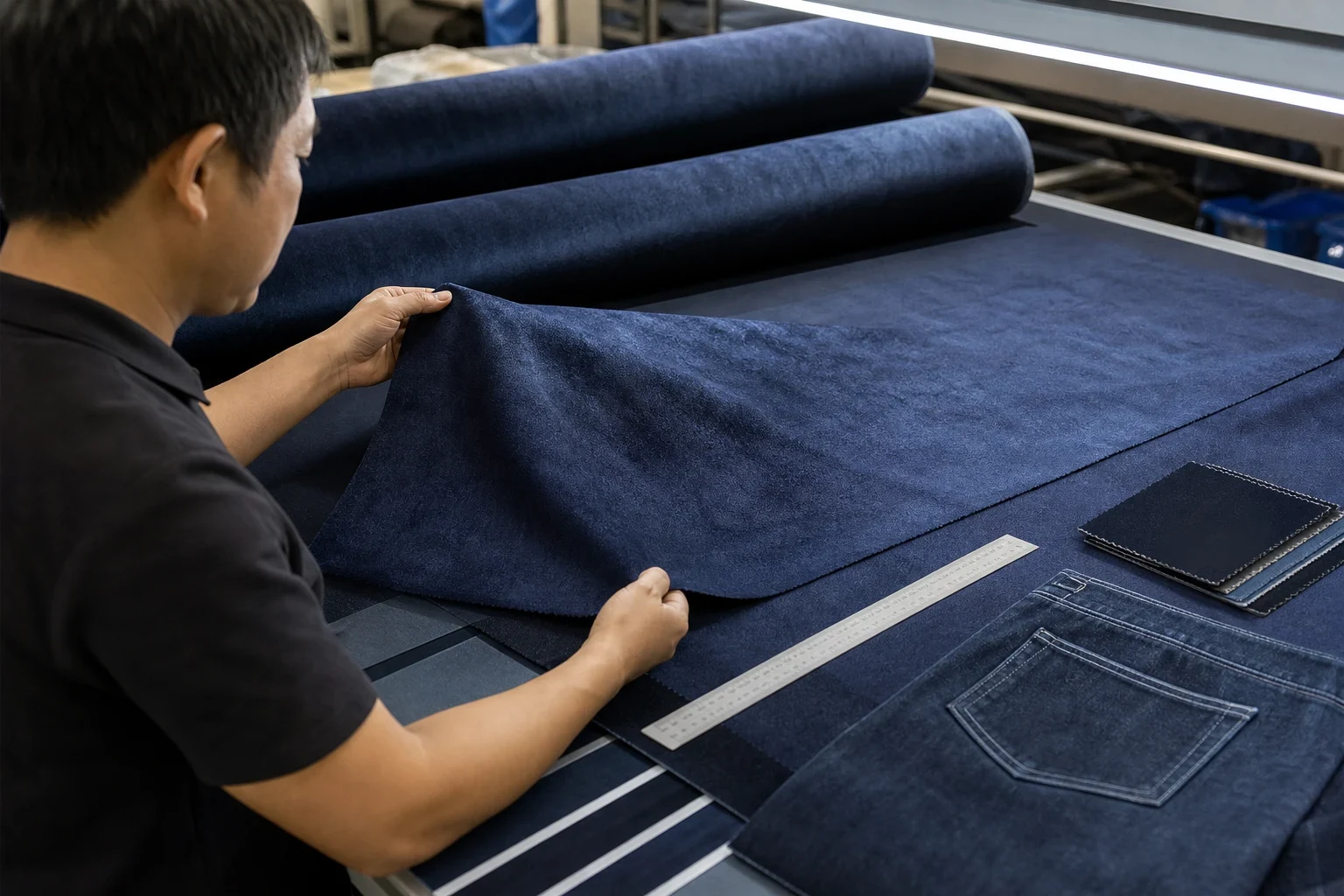
Supplier Signoff Package Before Bulk
Ask the supplier to confirm:
- the exact flock route used on the approved sample
- the base denim construction and any chemical finish underneath
- the wash route used during testing
- the reference standard for visual density and handfeel
- the zones that should be excluded from flocking in bulk
- the production tolerance for pile consistency and edge cleanliness
This package is what turns a sample review into a usable bulk standard.
Most Common Buyer Oversights
The most common flocked denim approval mistakes are:
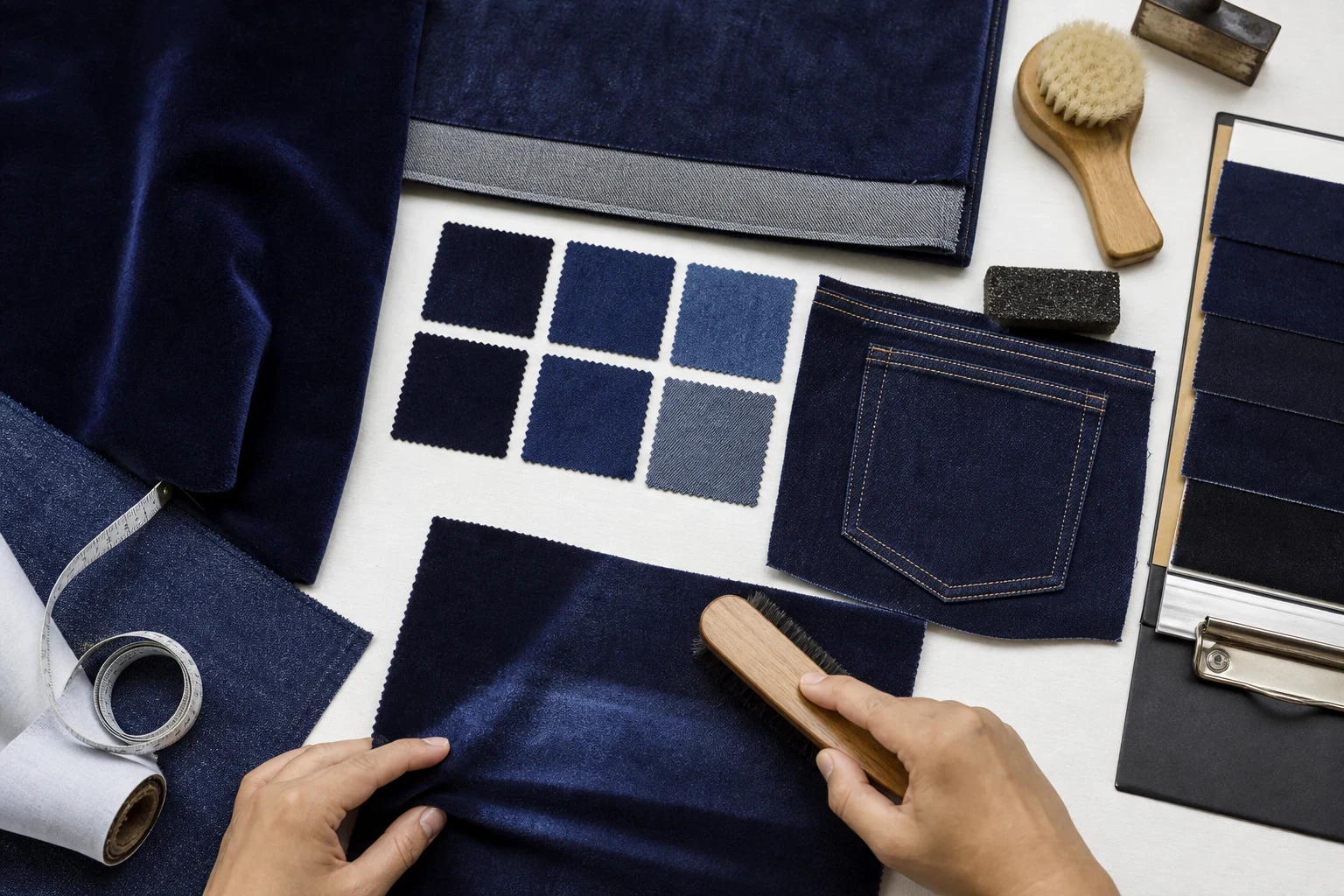
- approving softness and look without testing abrasion-sensitive zones
- running only one rub test and skipping wash review
- judging from fabric alone without garment-context stress points
- placing the effect too close to seams, folds, or heavy-friction areas
- assuming every denim base will accept flocking the same way
These errors are preventable when the testing flow is simple but strict.
FAQ
Is one rub test enough?
No. Buyers should combine visual review, handling, seam-zone review, and wash checks where relevant.
Should every flocked denim project be washed?
If the final product will be washed, the sample should reflect that. Otherwise the approval does not represent real production.
What is the most common oversight?
Approving the softness and visual appeal without testing abrasion-sensitive zones or the actual finish route.
When should a sample be rejected immediately?
Reject it when the effect sheds heavily in early dry rub, peels near edges, or changes too much after the intended wash.
Conclusion
The best flocked denim test process is simple but demanding: verify the appearance, stress the surface, review seam zones, and test the real product context before bulk. That is the difference between a striking sample and a production-ready flocked denim program.
Customization Services by LYDENIM
🎨 Custom Design
Design your own fabric collection or garment with LYDENIM’s premium materials. From luxurious cotton blends to innovative eco-friendly textiles, explore colors, weaves, and finishes that match your brand’s product direction. Visit LYDENIM to learn more.
🛍️ Tailored Garment Solutions
Bring your designs to life with custom garment services. Whether you are developing jeans, denim jackets, skirts, workwear, or small-batch fashion collections, LYDENIM can support fit, comfort, durability, and production planning. Explore customization options on My Alibaba.
📩 Get in Touch
Have a project in mind? Contact our team at malone@lydenim.com to discuss custom fabrics, garment design, low-MOQ sampling, or sustainable textile solutions.
Need help turning this into a production-ready sourcing brief?
Send your target product, fabric direction, quantity and sample needs. LY Denim can help compare options and prepare a quote.