


Estimated reading time: ~10 minutes
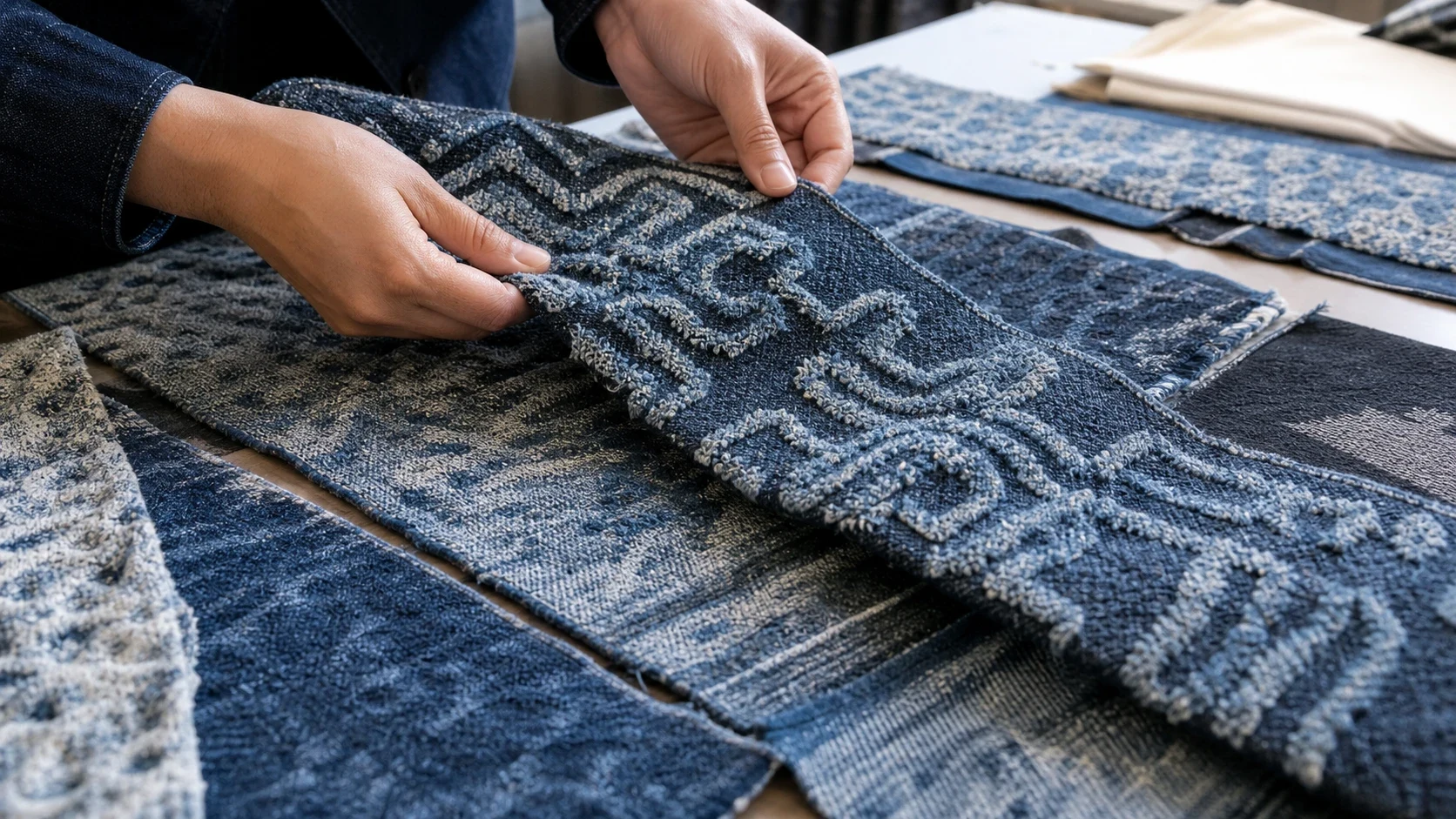
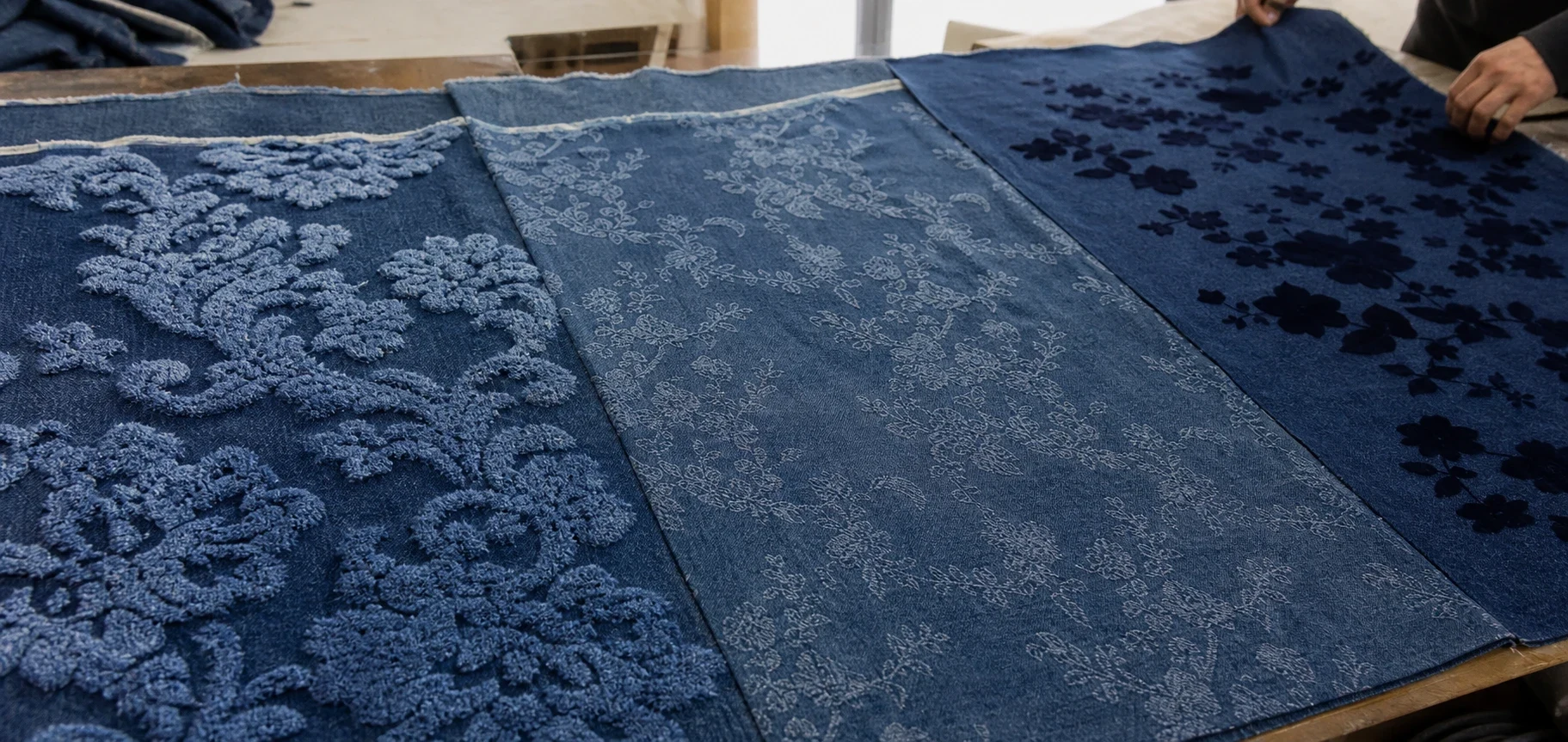
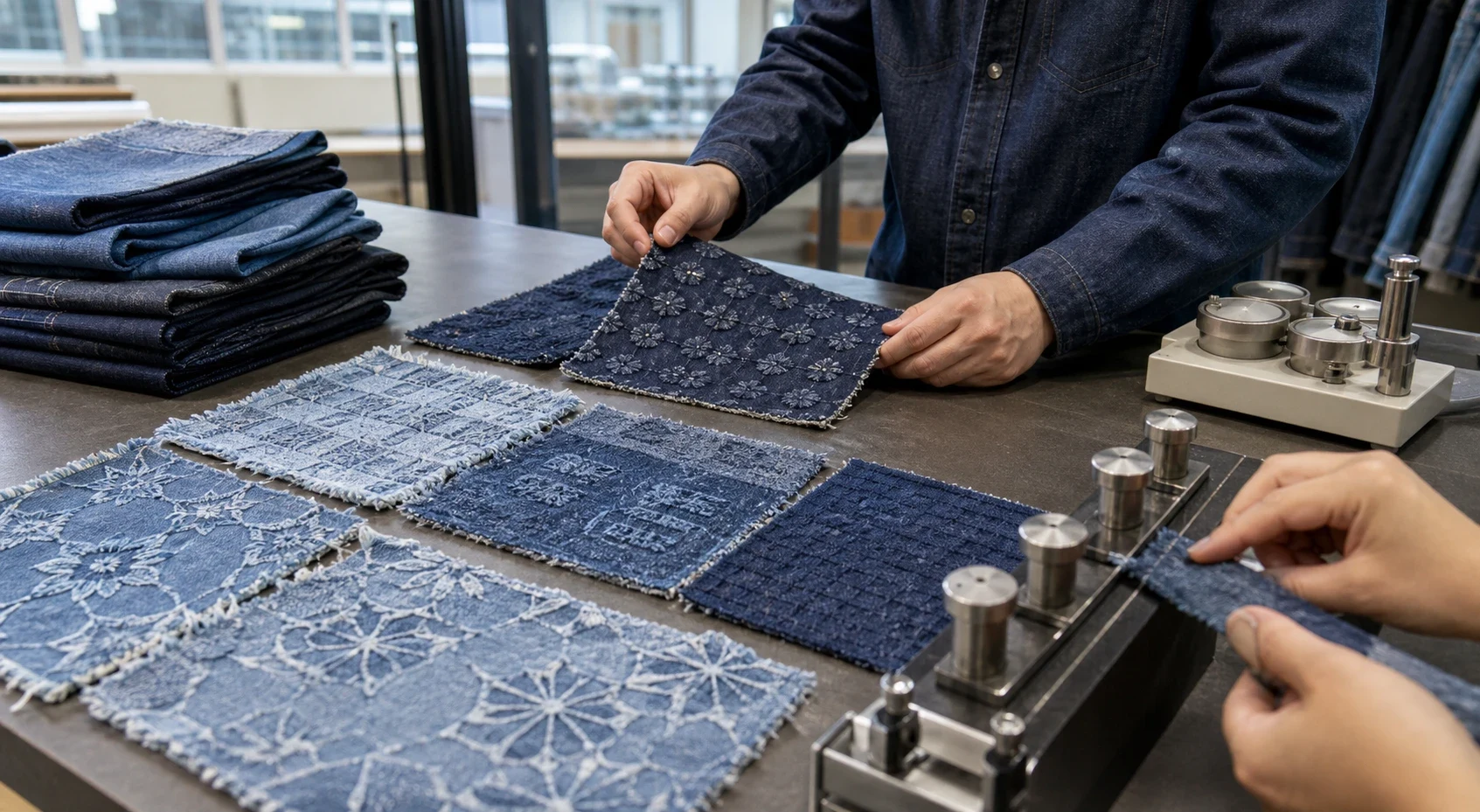
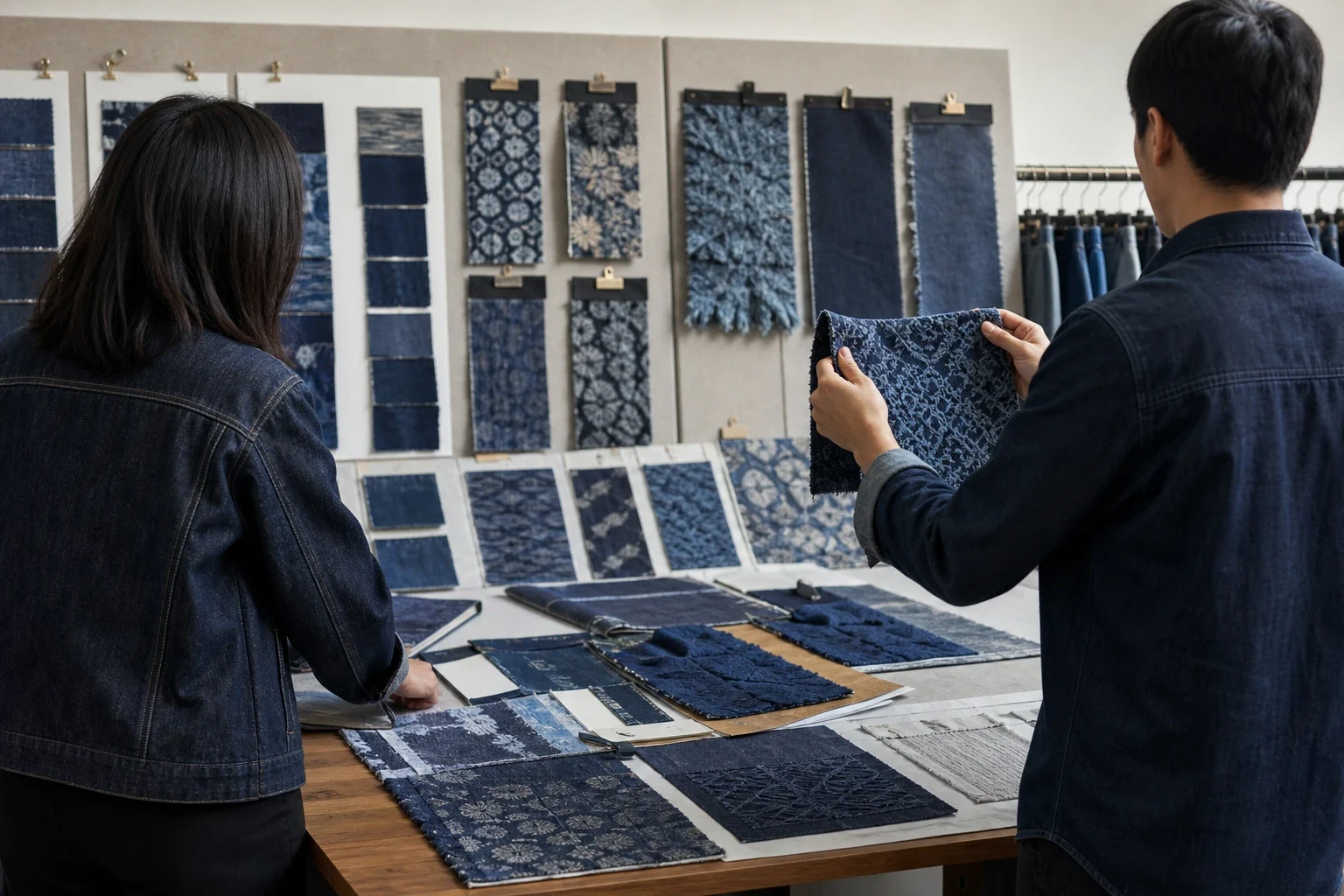
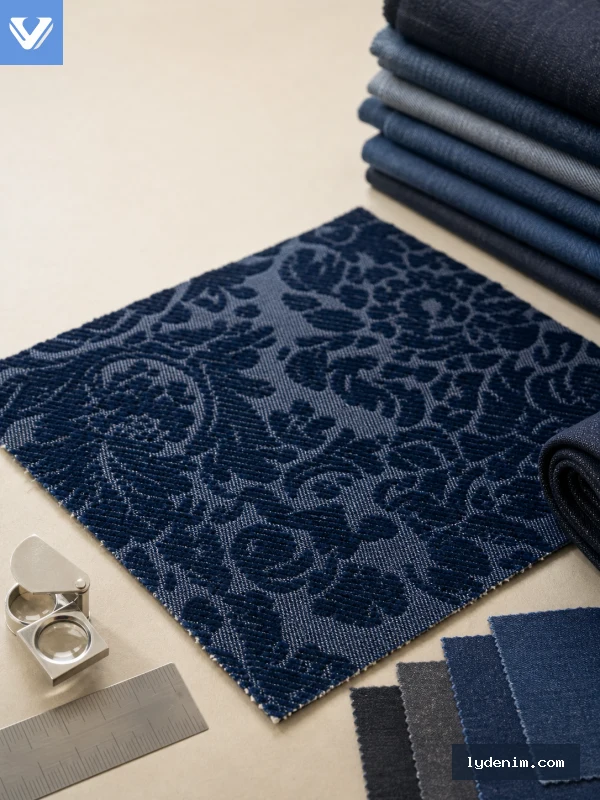
Chenille jacquard denim fabric gives buyers a surface effect that looks richer than ordinary woven pattern denim, but it also introduces extra risk at development and bulk stage. The raised chenille yarn can improve depth and softness, yet it can also change abrasion behavior, snag resistance, and wash stability. That means the right question is not only whether the fabric looks premium on a hanger. The practical question is whether the motif, pile, and denim base will still look controlled after cutting, sewing, washing, packing, and shipment.
For B2B sourcing teams, chenille jacquard works best when the aesthetic goal is already clear and the fabric brief is specific. Buyers usually need to confirm where the chenille sits in the construction, whether the backside floats will affect comfort or seam stability, and how much visual change is acceptable between approved sample and bulk. If those points are not defined early, a beautiful first sample can still become a costly bulk dispute.
Buyer Summary
- Chenille jacquard denim is a woven structure with raised chenille effect, not a surface print or simple finish.
- It can create premium depth and texture, but it needs stricter testing for snagging, shedding, pilling, shrinkage, and repeat consistency.
- The best developments start with a clear brief covering application, weight, stretch, motif scale, wash route, and target market.
- Sample approval should happen on garment panels or proto garments, not from a small swatch alone.
- Bulk approval standards should define both visual tolerance and durability tolerance before production starts.
What Chenille Jacquard Denim Fabric Is
Chenille jacquard denim combines two ideas in one fabric. The jacquard part means the pattern is built into the weave structure rather than added later by printing. The chenille part means some of the design effect comes from soft, fuzzy, or raised yarn that changes the hand feel and surface depth. In practical sourcing terms, buyers are not purchasing only a motif. They are purchasing a construction that affects face texture, backside structure, weight balance, sewing behavior, and wash response.
That is why chenille jacquard should be briefed as a construction project rather than only a visual project. A buyer normally needs to confirm:
- which yarns create the raised effect
- whether the chenille sits on the face only or influences the back as well
- how dense the motif is across the width
- whether the pattern repeat must match across seams
- how much flattening, fuzz loss, or shading change is acceptable after washing
On garments, the fabric can look premium because the woven pile catches light differently from flat denim. At the same time, that same raised effect can become the first failure point if the garment is rubbed hard, stone washed aggressively, or sewn into high-friction zones without planning.
Chenille Jacquard Denim vs Standard Jacquard vs Flocking
Buyers often compare chenille jacquard with standard jacquard or flocking because all three can create a decorative surface. The sourcing logic is different for each one.
| Fabric direction | How the effect is built | Main buyer advantage | Main risk to test early |
|---|---|---|---|
| Standard jacquard denim | Pattern formed through woven structure and yarn arrangement | Strong woven identity, better structural authenticity, broad motif options | Repeat consistency, seam alignment, shrinkage, weight balance |
| Chenille jacquard denim | Woven jacquard plus raised chenille yarn effect | Softer, richer surface depth and premium visual texture | Snagging, pile wear, fuzz loss, abrasion behavior, wash flattening |
| Flocking on denim | Surface fibers applied on top of a base material | Strong contrast and short-lead visual effect for certain concepts | Adhesion, wash durability, rubbing loss, surface wear |
If the goal is to keep the pattern and texture as part of the fabric identity, chenille jacquard is usually closer to a woven premium direction than flocking. If the goal is a more obvious surface coating effect, flocking may be the better comparison. Buyers should avoid treating them as interchangeable just because both create depth on the fabric face.
Where Chenille Jacquard Works Best and Where Friction Becomes a Problem
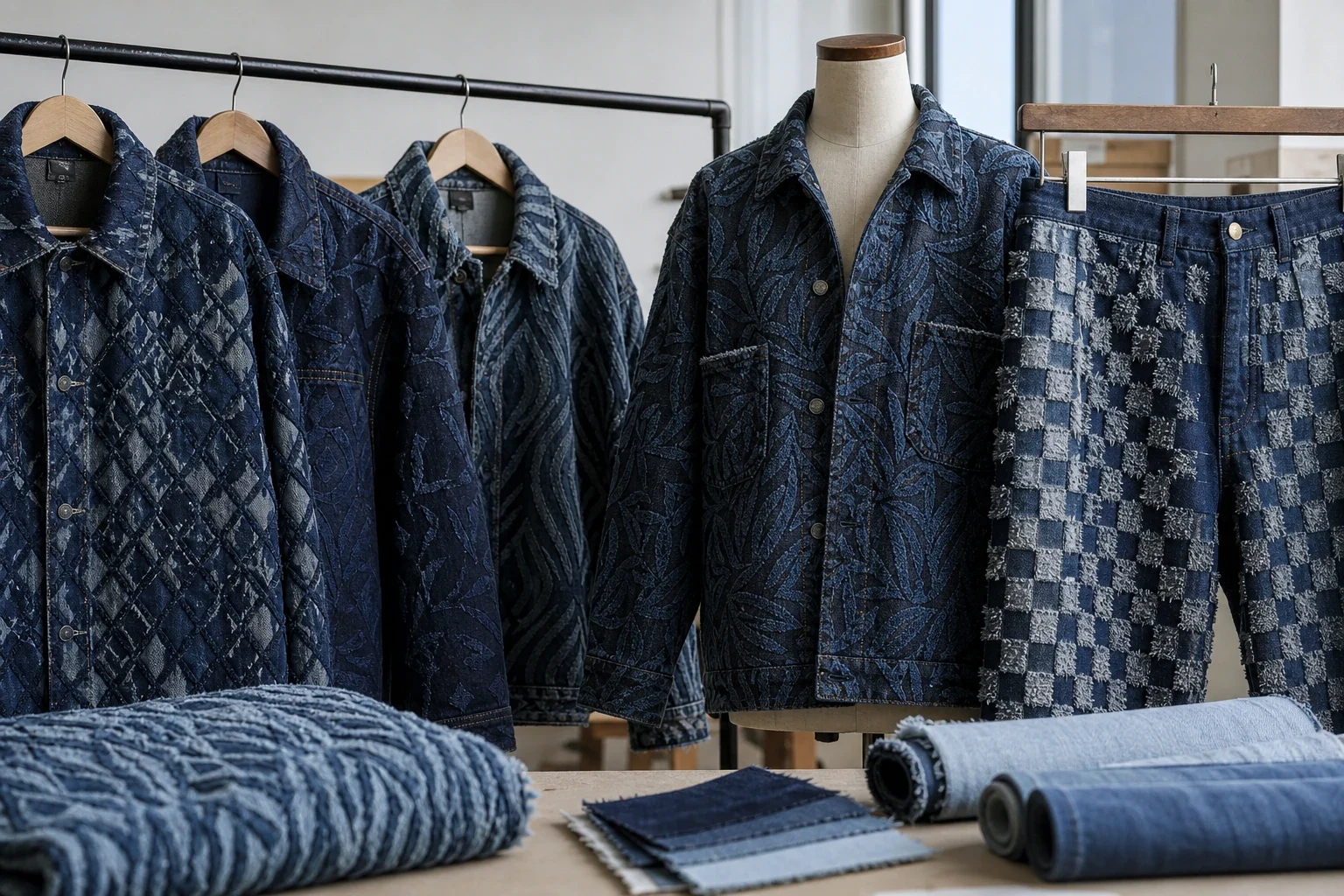
Chenille jacquard usually performs better when the garment lets the fabric show its surface story without placing the raised areas under constant abrasion. The decision should be made by application, not only by visual appeal.
| Application | Suitability | Why it can work | What needs caution |
|---|---|---|---|
| Overshirts and light jackets | High | Large panels show motif and depth well | Sleeve friction, lining rub, wash route |
| Fashion tops, skirts, or statement sets | High | Decorative value is visible and easier to control | Seam matching, motif placement, snag risk in wear |
| Structured bags or accessories | Medium | Texture can create strong shelf appeal | Abrasion, corner wear, backside support |
| Wide-leg jeans or low-friction denim bottoms | Medium | Possible if motif placement is controlled | Seat, thigh, knee, and pocket abrasion |
| Tight or heavy-friction jeans | Low to medium | Only selective use may be practical | Rapid pile wear, flattening, rubbing marks |
High-friction zones deserve special review. Seat panels, inner thighs, pocket openings, cuff edges, belt loops, and underarm rubbing points can shorten the visual life of chenille areas. If the style direction requires those zones, buyers should test the real garment construction before confirming bulk.
Backside floats also matter. Some jacquard constructions leave a more complex back than ordinary denim. That can affect comfort, seam bulk, fraying tendency, and sewing stability. For garments worn close to skin, buyers should review both face effect and backside practicality.
Specifications to Send Before Sampling
Chenille jacquard development goes more smoothly when the first brief is detailed. A weak brief often causes avoidable sample rounds because the supplier has to guess which part of the concept matters most.
At minimum, send the supplier:
- End use: jacket, overshirt, skirt, jeans, bag, or display fabric.
- Target fabric weight: for example, light, medium, or heavy direction in oz or gsm if the team has a target.
- Stretch requirement: rigid, comfort stretch, or fashion stretch.
- Motif direction: floral, geometric, abstract, vintage, placement-sensitive, or all-over repeat.
- Repeat size expectation: small repeat, medium repeat, or statement repeat.
- Color direction: indigo base, black base, yarn-dyed contrast, or washed vintage direction.
- Wash route: rinse, garment wash, enzyme, stone effect, tint, or no wash.
- Quantity target: sample only, trial order, or expected bulk band.
- Delivery market: because hand feel, durability tolerance, and complaint risk can vary by end market.
- Garment risk points: seam matching, embroidery overlap, lining contact, trimming, or rubbing zones.
For chenille jacquard, it also helps to say which point matters most: visual softness, repeat sharpness, durability after wash, or price control. A mill can rarely optimize all four equally without trade-offs.
Which Tests Matter Before Bulk Production
The right test plan should match the end use. Buyers do not need every possible laboratory test, but they do need the ones that explain whether the raised structure will survive the intended garment route.
Priority checks usually include:
- Abrasion test: shows how quickly the raised chenille effect flattens or wears away.
- Pilling test: helps evaluate whether the face becomes fuzzy in an uncontrolled way rather than a premium way.
- Snagging review: especially important if the motif has loops or more exposed texture.
- Shedding observation: useful when the chenille face could release loose fibers during handling or early wear.
- Shrinkage test: confirm both dimensional change and repeat distortion after wash. A simple buyer formula is
(before - after) / before x 100%. - Colorfastness and rubbing review: still important for indigo and darker grounds, especially when chenille contrasts with the base.
- Wash simulation: match the intended garment wash rather than using a random soft wash as a placeholder.
Testing should be done on a sample size that reflects real cutting and sewing behavior whenever possible. Flat swatch testing is useful, but it does not fully show how repeat alignment, seam distortion, or fused areas behave in a garment.
How to Approve the Sample Before Bulk
Sample approval for chenille jacquard should combine visual approval and risk approval. A buyer can like the look and still reject the sample for bulk if the fabric cannot repeat reliably.
Use a checklist like this:
- Confirm the approved color under the same lighting condition that the team will use for bulk review.
- Check whether the repeat remains balanced across panel width and not only at the center.
- Review the face after handling, folding, and light rubbing to see if the raised effect changes too quickly.
- Inspect the backside for floats, roughness, or sewing risk.
- Confirm whether the motif survives the intended wash route without losing too much definition.
- Measure shrinkage after wash and compare it with the target tolerance.
- Review seam areas, especially when the style depends on visible pattern continuity.
- Record what is acceptable in bulk: shade difference, hand feel shift, pile flattening, and repeat deviation.
The approval goal is not perfection in a single swatch. The goal is agreement on what bulk must reproduce consistently.
Supplier Questions Buyers Should Ask Before RFQ Confirmation
The fastest way to reduce surprises is to ask direct operational questions. Buyers can copy questions like these:
- Which yarn creates the chenille effect, and where is it positioned in the construction?
- Does this design have backside floats that may affect comfort or sewing?
- Which wash routes have already been tried on similar structures?
- Where do you see the first likely failure point: abrasion, pilling, snagging, or shade variation?
- What sample format do you recommend for approval: swatch, panel, or proto garment?
- What repeat tolerance should we expect between sample and bulk?
- Which details will most strongly change cost: motif size, yarn complexity, width, stretch, or wash route?
For RFQ, the buyer should also send a concise brief with application, target weight, color direction, motif, quantity, and delivery market. That gives the supplier enough context to answer commercially and technically, instead of only sending a generic quote.
FAQ
Is chenille jacquard denim fabric suitable for jeans?
It can be, but buyers should be selective. Jeans place more friction on seat, thigh, pocket, and knee zones than many tops or jackets. If the concept is for denim bottoms, test the exact style and wash route before bulk.
Is chenille jacquard the same as flocking?
No. Chenille jacquard is primarily a woven construction effect, while flocking is a surface application. They may look comparable in mood from a distance, but their sourcing risks and durability questions are different.
Should buyers approve from a swatch only?
Usually no. A swatch helps review hand feel and motif, but it cannot fully show seam matching, garment distortion, or high-friction wear points. Panel or proto approval is safer for bulk.
What is the main durability concern?
It depends on end use, but common concerns are snagging, pile wear, pilling, and flattening after wash or repeated rubbing. That is why abrasion and wash simulation are usually more useful than visual inspection alone.
What matters most in the first development brief?
End use, target weight, stretch direction, motif scale, wash route, and quantity expectation are usually the most important starting points. Without those details, the supplier may guess the wrong construction priorities.
Chenille Jacquard Options To Feel Before Sampling
Chenille jacquard is hard to judge from photos alone. The surface can look beautiful on screen, but the real decision comes from touch, pile height, and how the raised yarn behaves after washing and sewing.
Jacquard Denim 1111: a raised jacquard starting point
Start with 1111 if you like the idea of a raised woven pattern but are still deciding how bold the surface should be. It helps you compare texture depth, contrast, and whether the reverse side needs to stay clean for your garment construction.
Chenille Jacquard Denim 1104: soft surface with a plush handfeel
Choose 1104 when softness is part of the look. Ask for a swatch if the fabric will be used near pockets, seams, or high-friction areas, because those places show quickly whether the chenille pile will stay attractive after wear and wash.
Chenille Jacquard Denim 1098: clearer pattern definition
Use 1098 when the motif needs to stay visible and tidy. It is a useful option for comparing pattern clarity, color separation, and how much variation your brand can accept between sample approval and bulk fabric.
Next Steps with LYDENIM
For broader development options, review the LYDENIM Jacquard Denim range and submit your specifications through the LYDENIM fabric RFQ form. Use it to share target weight, repeat direction, wash plan, sampling priorities, and bulk timing before quotation.
Conclusion
Chenille jacquard denim fabric is most valuable when buyers treat it as a controlled development project, not just a decorative idea. The right decision usually comes from matching the texture effect to the garment use, defining risk zones early, and approving the sample against real wash and durability expectations. If the brief, test plan, and bulk tolerance are clear, chenille jacquard can move from visual inspiration to a workable sourcing program with fewer surprises.
Customization Services by LYDENIM
🎨 Custom Design
Design your own fabric collection or garment with LYDENIM’s premium materials. From luxurious cotton blends to innovative eco-friendly textiles, explore colors, weaves, and finishes that match your brand’s product direction. Visit LYDENIM to learn more.
🛍️ Tailored Garment Solutions
Bring your designs to life with custom garment services. Whether you are developing jeans, denim jackets, skirts, workwear, or small-batch fashion collections, LYDENIM can support fit, comfort, durability, and production planning. Explore customization options on My Alibaba.
📩 Get in Touch
Have a project in mind? Contact our team at malone@lydenim.com to discuss custom fabrics, garment design, sampling and production planning, or sustainable textile solutions.
Transform your ideas into reality with LYDENIM–your trusted partner for innovative, high-quality fabrics and bespoke apparel solutions.
Need help turning this into a production-ready sourcing brief?
Send your target product, fabric direction, quantity and sample needs. LY Denim can help compare options and prepare a quote.